
Compound Monograph
N-Methyltetrahydro-β-carboline
N-Methyltetrahydro-β-carboline (2-methyl-1,2,3,4-tetrahydro-β-carboline, or 2-methyltryptoline) is a simple tetrahydro-β-carboline alkaloid found as a trace plant constituent and formed endogenously in the mammalian brain. Its dedicated pharmacology is sparse; most of what is known is inherited from the wider tryptoline family.

Sources · 4
Where Does It Come From?
N-Methyltetrahydro-β-carboline is a naturally occurring (and made in the body) β-carboline alkaloid, found in Chaliponga and 3 other sources. It is well tolerated orally (low toxicity).
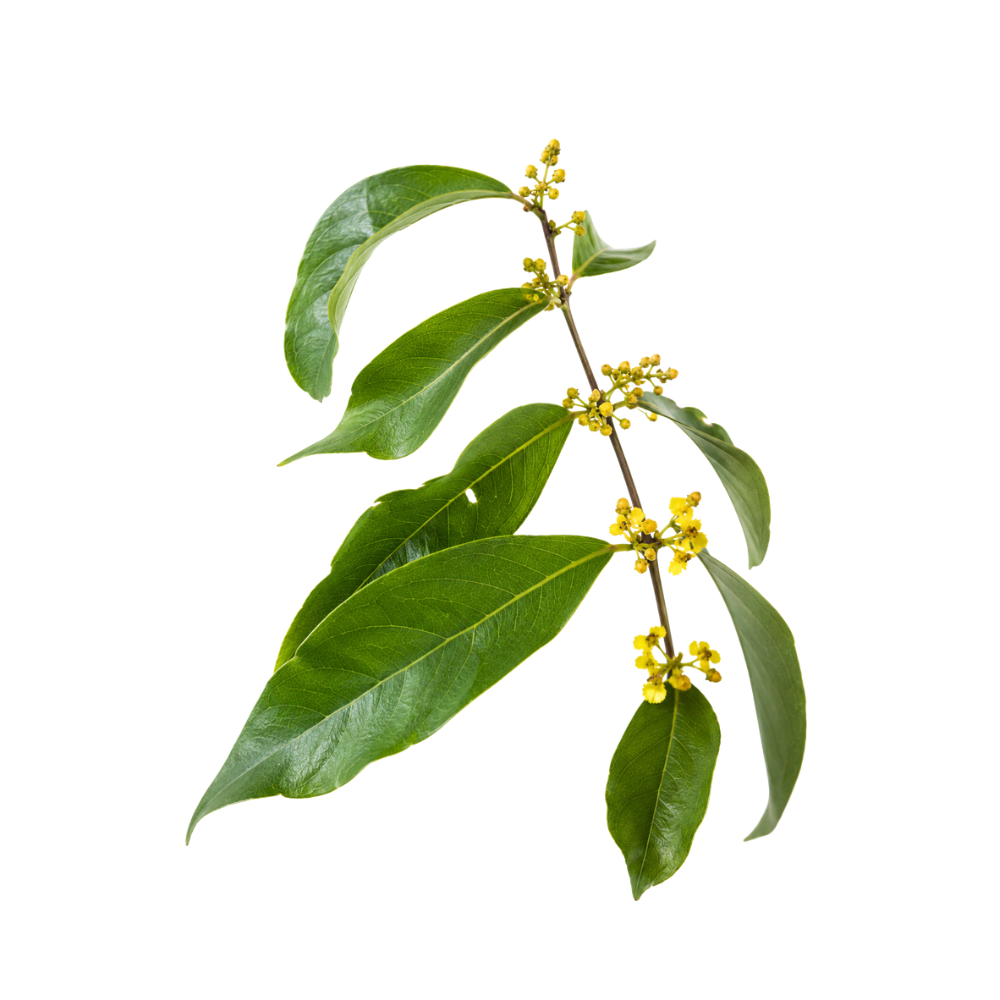 Principal source Chagro-Panga Diplopterys cabrerana Herb monograph →
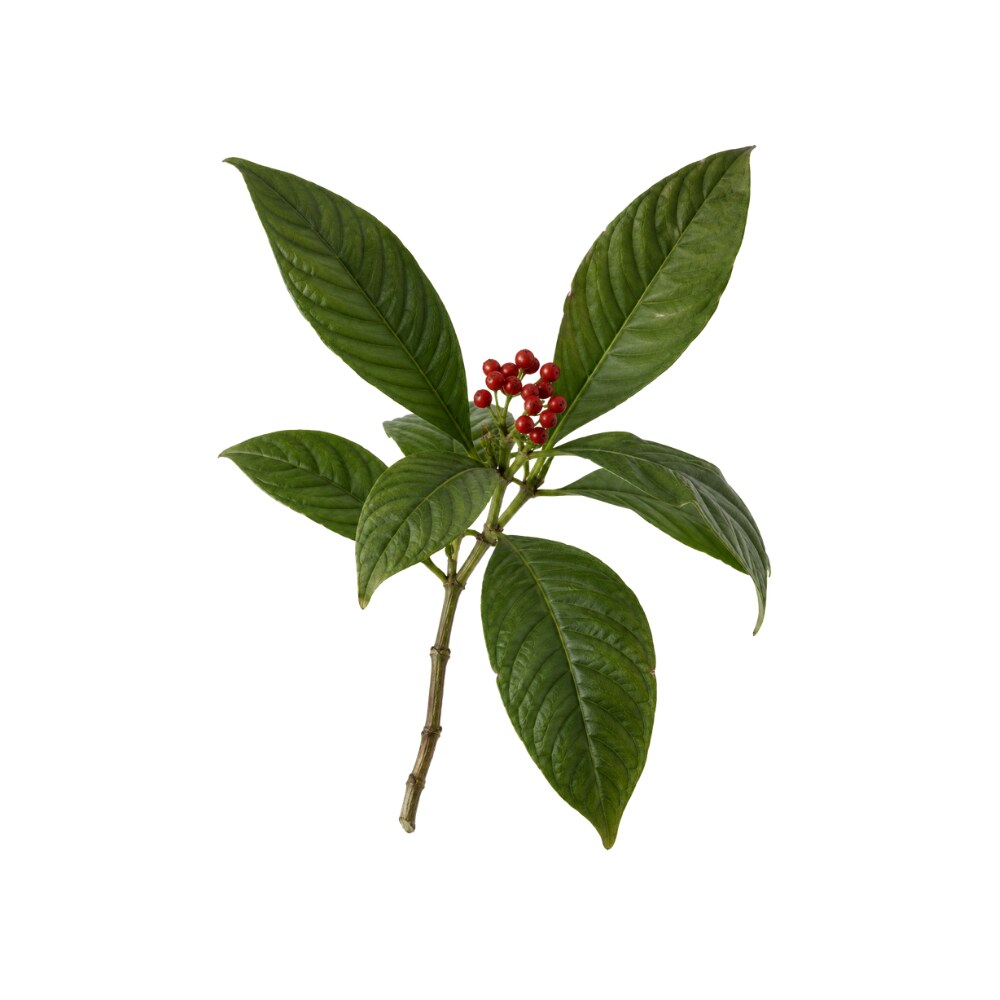 Source Chacruna Psychotria viridis Herb monograph →
Concentration
Content by Source
Concentrations not reported. No percent-dry-weight or mg/g figures have been published for this compound in its source plants.
N-Methyltetrahydro-β-carboline at a Glance
N-Methyltetrahydro-β-carboline is a simple tetrahydro-β-carboline (THβC) alkaloid — the small, ring-closed relatives of the serotonin and tryptamine family, and structural cousins of tetrahydroharman. Systematically it is 2-methyl-1,2,3,4-tetrahydro-β-carboline (also called 2-methyltryptoline; C₁₂H₁₄N₂, 186.25 g/mol; CAS 13100-00-0): the tetrahydro-β-carboline scaffold with a methyl group on the ring nitrogen (N-2).
It occurs two ways. As a plant constituent it was reported as a trace leaf alkaloid of Diplopterys cabrerana (chaliponga), one of the tryptamine-bearing leaves used in some ayahuasca preparations 1Reference 1Alkaloid content of Banisteriopsis rusbyanaView study →. As an endogenous compound it belongs to a family of tetrahydro-β-carbolines that form spontaneously in the mammalian body — and in fermented and heated foods — from indole amines and small aldehydes.
This is an honest, lean page. The literature on this specific isomer is very thin: it is essentially an isolation-and-structure entry, and almost everything said about its neurochemistry below is inherited from the broader tryptoline family rather than measured on the molecule itself.
Which “N-Methyl”? Structure & Identity
“N-Methyltetrahydro-β-carboline” is ambiguous unless the position of the methyl group is pinned down, so it is worth being explicit — the tetrahydro-β-carboline ring has three distinct positions a methyl group can sit on:
- 1-methyl (on the carbon next to the ring nitrogen) = tetrahydroharman (1-methyl-1,2,3,4-tetrahydro-β-carboline; syn. elaeagnine). A different molecule with its own page.
- 2-methyl (on the ring nitrogen, N-2) = this molecule — 2-methyl-1,2,3,4-tetrahydro-β-carboline / 2-methyltryptoline.
- 9-methyl (on the indole nitrogen) — a further variant, not this compound.
The slug and the name under which it was catalogued denote the N-2 (nitrogen-methylated) congener, confirmed against PubChem (CID 121896; InChIKey JOFKCNJIUXPJAC-UHFFFAOYSA-N). The unmethylated parent of the series is tryptoline (1,2,3,4-tetrahydro-β-carboline). Keeping the 1-methyl and 2-methyl isomers distinct matters: they are made from different precursors and are separate chemical entities.
Endogenous Formation & the Tryptoline Family
The compound-defining feature of this molecule is not a pharmacology it uniquely possesses but how tetrahydro-β-carbolines come to exist. They form by a Pictet–Spengler condensation: an indole amine reacts with a small aldehyde (or α-keto acid), forming an iminium intermediate that cyclises onto the indole ring to close the third ring 3,
The parent tryptoline arises from tryptamine plus formaldehyde. The N-2-methyl congener specifically traces to N-methyltryptamine condensing with formaldehyde, or to methylation of the parent ring — i.e. it is the ring-closed relative of N-methyltryptamine. This endogenous-formation chemistry, shared across the family, is the honest through-line of the page; the molecule is better understood as one member of a spontaneously-forming class than as an agent studied in its own right.
What It's Used For
There is no clinical or dedicated preclinical pharmacology for the isolated 2-methyl congener. What follows is family-level neurochemistry for tetrahydro-β-carbolines (tryptolines), flagged as such — it should be read as context, not as measured properties of this molecule.
Mechanisms
The table is family-level for tetrahydro-β-carbolines; none of these have been quantified for the 2-methyl congener specifically.
| Target / pathway | Effect | Relevant to |
|---|---|---|
| Serotonin transporter (reuptake) | Tryptolines competitively inhibit serotonin uptake, more strongly than dopamine/noradrenaline; the parent tryptoline is more potent than its 1-methyl derivative | family-level neurochemistry |
| Monoamine oxidase (esp. MAO-A) | Some tetrahydro-β-carbolines are weak, reversible MAO-A inhibitors; in ayahuasca this trace congener’s MAO contribution is negligible versus the caapi harmalas | MAO / ayahuasca context |
| Radical scavenging | Tetrahydro-β-carbolines act as antioxidants/radical scavengers in vitro (ABTS assay) | food / biological-system context |
The load-bearing caveat: every row is inherited from the wider family. No row is a measured property of 2-methyl-1,2,3,4-tetrahydro-β-carboline itself.
Pharmacokinetics
No pharmacokinetic data exist for this molecule. Absorption, oral bioavailability, distribution, metabolism, active metabolites and half-life are all uncharacterised for the 2-methyl congener. Because it is a small, lipophilic amine of the tryptoline class, family behaviour would be the only (weak) guide — but no numbers can honestly be attached to this compound.
Clinical Trials
No clinical trials of N-methyltetrahydro-β-carboline have been conducted; it is not a studied therapeutic agent.
| Completed | Planned | Terminated | Preclinical |
|---|---|---|---|
| — | — | — | Family-level neurochemistry only (uptake/MAO assays on parent tryptolines) 3, |
Last checked: July 2026.
Prevalence in Nature
The molecule was reported as a trace leaf alkaloid of Diplopterys cabrerana (chaliponga / chagropanga; historically Banisteriopsis rusbyana), alongside the leaf’s principal tryptamine N,N-DMT and trace 5-MeO-DMT 1Reference 1Alkaloid content of Banisteriopsis rusbyanaView study →. It was present only in trace amounts, and no reliable quantitative percentage was reported for it 1,
Beyond that single well-documented plant record, its wider occurrence is best described at the family level. Tetrahydro-β-carbolines form endogenously in mammalian tissue, including brain, from indole amines and aldehydes 5Reference 5Tetrahydro-β-carboline alkaloids that occur in foods and biological systems act as radical scavengers and antioxidants in the ABTS assayView study →, and the family is widespread in fermented and heated foods — wine, beer, vinegar, sauces and cooked or toasted products — where related tetrahydro-β-carbolines and their carboxylic acids have been quantified 6Reference 6Tetrahydro-β-carbolines in alcoholic beverages: quantitation, neurochemical and ethanol drinking effectsView study →. Whether the specific 2-methyl congener has been separately measured in any of these foods is not established here.
Discovery & Synthesis
The molecule entered the literature through phytochemistry, not synthesis: Agurell, Holmstedt and Lindgren identified it among the alkaloids of Banisteriopsis rusbyana (now Diplopterys cabrerana) in 1968, during the wave of mid-century work characterising the tryptamine and β-carboline constituents of South American psychoactive plants 1Reference 1Alkaloid content of Banisteriopsis rusbyanaView study →. Its first deliberate chemical synthesis is not well documented as a distinct event, because tetrahydro-β-carbolines of this type are made by the Pictet–Spengler reaction — a classical, well-established condensation of an indole amine with an aldehyde that long predates this specific compound and gives the whole ring system readily 3,
Patents: not yet researched.
Toxicity & Safety
N-Methyltetrahydro-β-carboline carries a low toxicity flag, applied conservatively. There is no isolated-compound toxicity dataset — no genotoxicity, repeat-dose or reproductive-toxicity package for the pure molecule — so “low” reflects the fact that it is encountered only at trace natural and endogenous levels, not a clean bill of health from testing. Human exposure is negligible and incidental (a trace plant constituent, an endogenous metabolite, and a minor member of the food-borne tetrahydro-β-carboline family), and at those levels no adverse effect is documented.
- Trace, incidental exposure. Encountered only at very low levels as a plant/endogenous/food-borne tetrahydro-β-carboline — not something taken deliberately at meaningful doses.
- β-Carboline monoamine caution (theoretical). As a member of a family that can interact with serotonin reuptake and monoamine oxidase, the class-level interaction caution applies in principle — though this trace congener’s own activity is unquantified and, in ayahuasca, negligible next to the harmala alkaloids.
- Not a characterised safety profile. No isolated-compound toxicity, genotoxicity or reproductive-toxicity data exist; “low” is an exposure-based, conservative flag, not a tested conclusion.
References
- Agurell S, Holmstedt B, Lindgren JE (1968). Alkaloid content of Banisteriopsis rusbyana. American Journal of Pharmaceutical Sciences Supporting Public Health. https://pubmed.ncbi.nlm.nih.gov/5698439/
- McKenna DJ, Towers GHN, Abbott F (1984). Monoamine oxidase inhibitors in South American hallucinogenic plants: tryptamine and β-carboline constituents of ayahuasca. Journal of Ethnopharmacology. https://pubmed.ncbi.nlm.nih.gov/6587171/
- Komulainen H, Tuomisto J, Airaksinen MM, Kari I, Peura P, Pollari L (1980). Tetrahydro-β-carbolines and corresponding tryptamines: in vitro inhibition of serotonin, dopamine and noradrenaline uptake in rat brain synaptosomes. Acta Pharmacologica et Toxicologica. https://pubmed.ncbi.nlm.nih.gov/7368949/
- Rommelspacher H, Bade P, Coper H, Kossmehl G (1976). Inhibition of the reuptake of serotonin by tryptoline. Naunyn-Schmiedeberg’s Archives of Pharmacology. https://pubmed.ncbi.nlm.nih.gov/934360/
- Herraiz T, Galisteo J (2002). Tetrahydro-β-carboline alkaloids that occur in foods and biological systems act as radical scavengers and antioxidants in the ABTS assay. Free Radical Research. https://pubmed.ncbi.nlm.nih.gov/12420751/
- Bosin TR, Krogh SE, Zabik JE (1987). Tetrahydro-β-carbolines in alcoholic beverages: quantitation, neurochemical and ethanol drinking effects. Alcohol and Alcoholism Supplement. https://pubmed.ncbi.nlm.nih.gov/2447902/



