
Compound Monograph
N-Methyltryptamine
N-methyltryptamine (NMT) is a simple tryptamine — the mono-N-methyl intermediate between tryptamine and DMT in the biosynthetic methylation pathway. It occurs in Acacia, Mimosa and Desmanthus and endogenously as a trace amine, but is a monoamine-oxidase substrate and is not orally psychoactive on its own.

Sources · 8
Where Does It Come From?
N-Methyltryptamine is a naturally occurring (and made in the body) tryptamine, found in Acacia confusa, Jurema, Illinois bundleflower and 5 other sources. It is well tolerated orally (low toxicity).
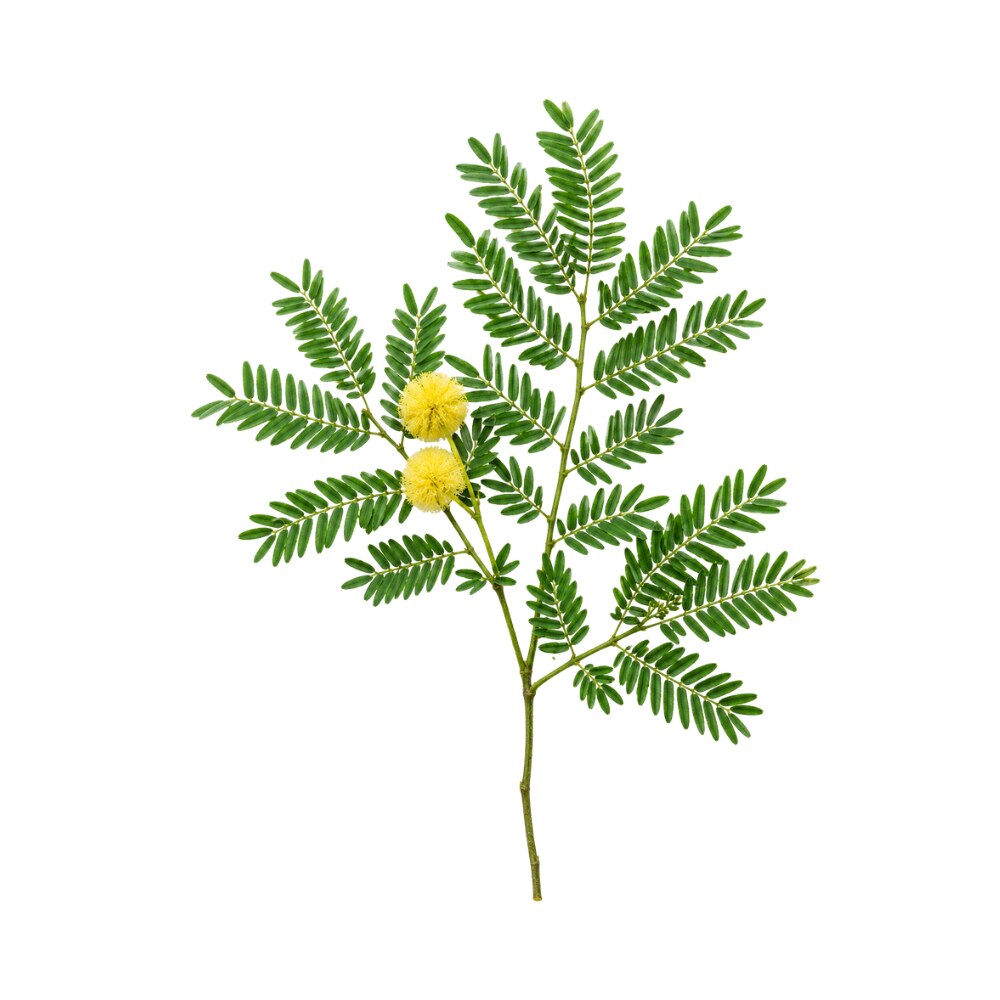 Source Acacia Acacia, Vachellia & Senegalia spp. Herb monograph →
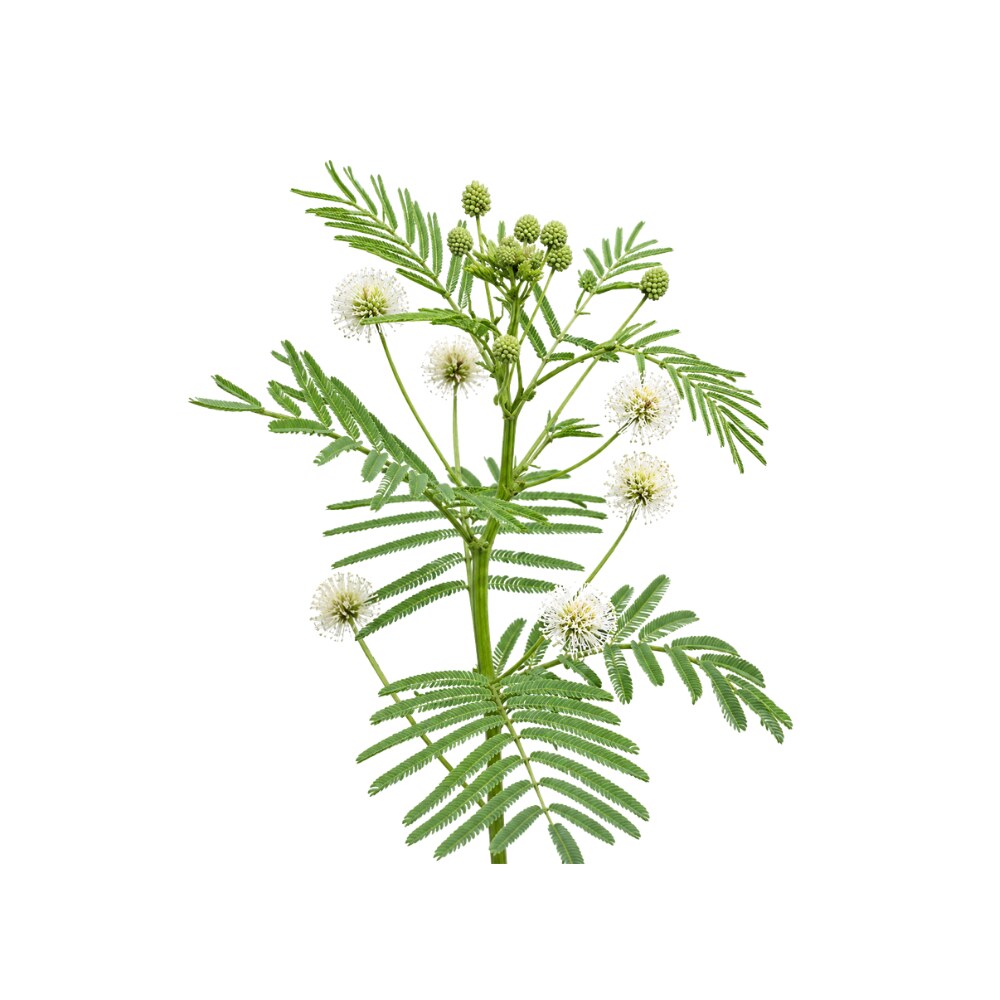 Source Bundleflower Desmanthus illinoensis Herb monograph →
 Source Butterfly Bush (Petalostylis) Petalostylis cassioides Herb monograph →
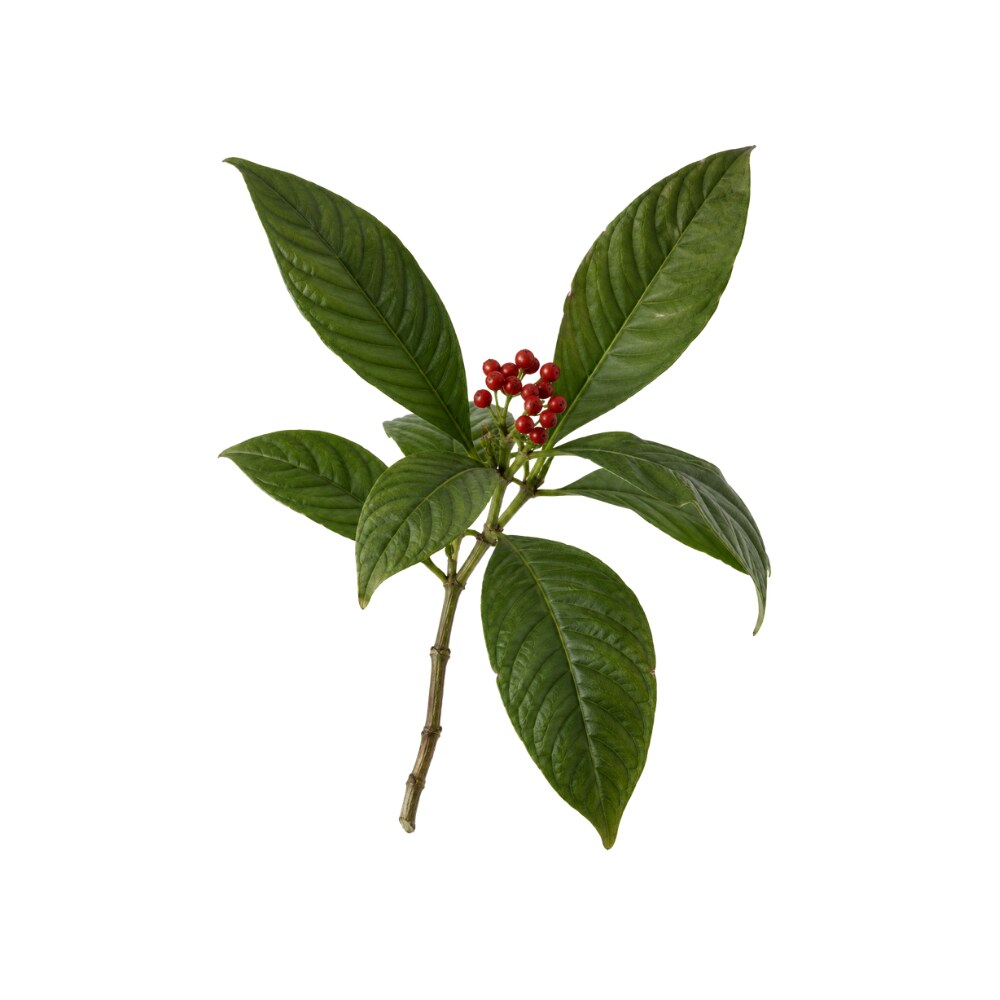 Source Chacruna Psychotria viridis Herb monograph →
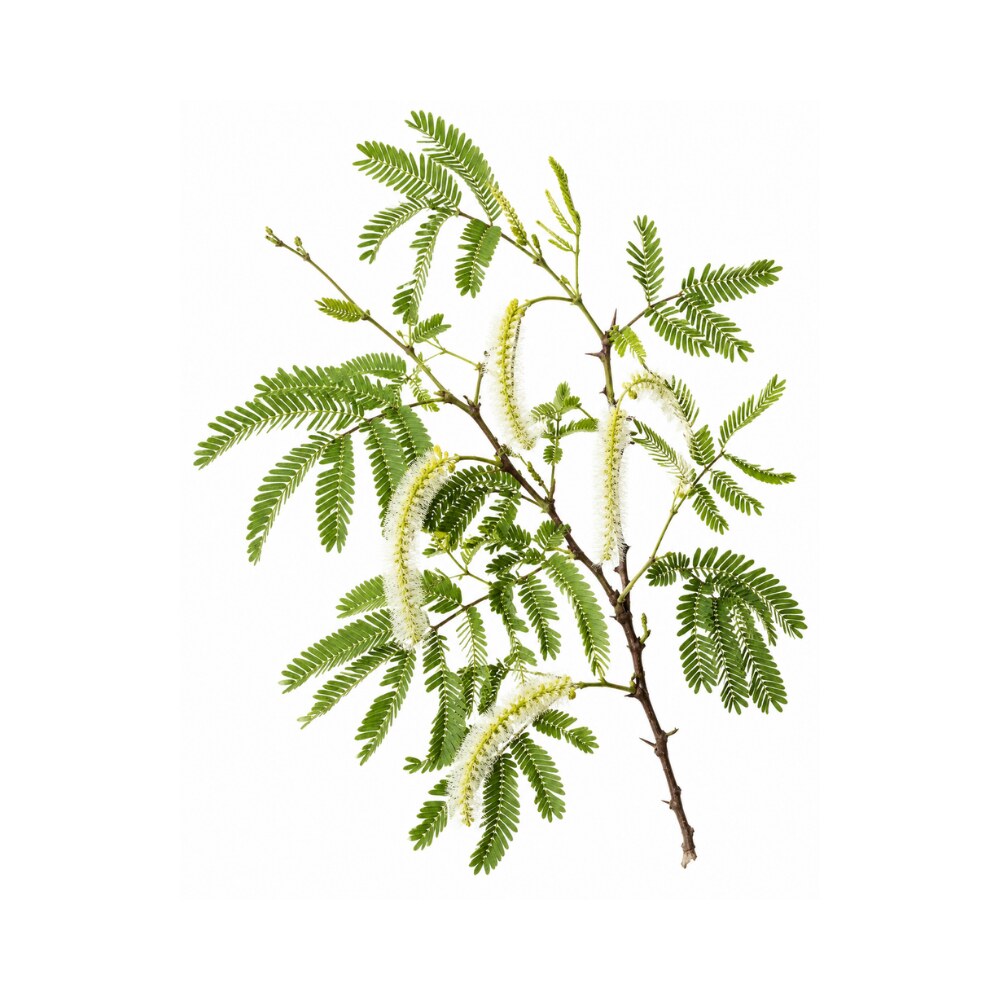 Source Jurema Mimosa tenuiflora Herb monograph →
Concentration
Content by Source
Concentrations not reported. No percent-dry-weight or mg/g figures have been published for this compound in its source plants.
N-Methyltryptamine at a Glance
N-methyltryptamine (NMT) is one of the simplest tryptamines — the parent indole amine tryptamine carrying a single methyl group on its side-chain nitrogen. It sits one step along the biosynthetic methylation ladder that runs from tryptamine → NMT → N,N-dimethyltryptamine (DMT), the successive N-methylations catalysed by the enzyme indolethylamine N-methyltransferase (INMT) 2,
It is found as a minor alkaloid in several plants used as tryptamine sources — Acacia confusa, jurema (Mimosa tenuiflora), Illinois bundleflower (Desmanthus illinoensis) and Phalaris grasses — and is also present in mammals, including humans, as an endogenous trace amine 1,
The honest framing for this molecule is narrow. NMT is not a recreational psychedelic: it is a substrate of monoamine oxidase (MAO), rapidly broken down before it can reach the brain in quantity, and it is not orally psychoactive on its own and only weakly active at best 4,
The Methylation Ladder
The single feature that defines this molecule is its position in a two-step N-methylation sequence. Starting from the amino acid tryptophan, plants and animals decarboxylate it to tryptamine; a first N-methylation gives N-methyltryptamine; a second gives N,N-dimethyltryptamine 2Reference 2N,N-Dimethyltryptamine production in Phalaris aquatica seedlings: a mathematical model for its synthesisView study →. In Phalaris seedlings this was resolved enzymatically: tryptophan decarboxylase plus two N-methyl-transferase activities together account for DMT synthesis, with NMT as the obligatory mono-methylated intermediate 2Reference 2N,N-Dimethyltryptamine production in Phalaris aquatica seedlings: a mathematical model for its synthesisView study →.
In mammals the same ladder is attributed to indolethylamine N-methyltransferase (INMT), which methylates tryptamine (and the 5-hydroxy series, serotonin → bufotenin) using S-adenosyl-methionine as the methyl donor 3,
The practical consequence of being a mid-ladder intermediate is that NMT rarely accumulates. It is either methylated onward to DMT or degraded, which is part of why it is usually a minor constituent and a trace amine rather than a stored end-product.
What It's Used For
There is no body of clinical or applied research on N-methyltryptamine as a substance in its own right, so there is no meaningful “evidence by application” to rank. What exists is mechanistic and biochemical: where NMT sits in tryptamine metabolism, what receptor family it belongs to, and why it is not orally active. The sections below state that directly.
Mechanisms
| Target / pathway | Effect | Relevant to |
|---|---|---|
| INMT (indolethylamine N-methyltransferase) | substrate — methylated onward to DMT (and is itself the product of tryptamine methylation) | biosynthesis / methylation ladder |
| Monoamine oxidase (MAO) | substrate — oxidatively deaminated, giving rapid clearance and no oral activity on its own | pharmacokinetics / why inactive |
| TAAR1 (trace-amine-associated receptor 1) | trace amines of this class are TAAR1 agonists; NMT is grouped with tryptamine as an endogenous trace amine | trace-amine signalling |
| Serotonin (5-HT) receptors | as a simple tryptamine it is structurally related to serotonin and DMT, but its own receptor pharmacology is poorly characterised | context only |
The load-bearing rows are the first two: NMT is defined by being a substrate — of INMT (which makes and consumes it) and of MAO (which clears it). Its status as a trace amine and its structural kinship to serotonin place it in the family, but do not make it a psychoactive drug.
Pharmacokinetics
The decisive pharmacokinetic fact is that NMT, like tryptamine itself, is a monoamine-oxidase substrate and is degraded rapidly. Endogenous methylated tryptamines are detectable only in minute quantities in blood and tissue and turn over quickly 4,
Taken by mouth without MAO inhibition, NMT would be expected to be extensively first-pass metabolised and not to reach the brain in psychoactive amounts — consistent with its reputation as, at most, only weakly active. No formal human bioavailability, half-life or metabolite dataset for isolated NMT has been characterised.
Clinical Trials
No clinical trials of N-methyltryptamine have been conducted. The molecule appears in the literature as a plant alkaloid, a biosynthetic intermediate and an endogenous trace amine, not as an investigational agent.
| Completed | Planned | Terminated | Preclinical |
|---|---|---|---|
| — | — | — | Biochemical / enzymatic only (INMT, MAO, TAAR1 context) |
Last checked: July 2026.
Isolate vs. Plant Studies
Almost nothing about NMT rests on the isolated molecule being tested for an effect. The plant work that names it is phytochemical — identifying and quantifying NMT as one alkaloid among several in Acacia confusa, jurema and related species 1Reference 1NMR spectral assignments of a new chlorotryptamine alkaloid and its analogues from Acacia confusaView study → — not pharmacological. The animal work is enzymatic, tracing NMT’s place in tryptamine methylation 2,
Prevalence in Nature
N-methyltryptamine is a minor and inconsistent constituent rather than a signature compound of any one plant. It has been isolated from the bark of Acacia confusa, alongside other tryptamine alkaloids 1Reference 1NMR spectral assignments of a new chlorotryptamine alkaloid and its analogues from Acacia confusaView study →, and is reported among the tryptamines of jurema (Mimosa tenuiflora), Illinois bundleflower (Desmanthus illinoensis) and Phalaris grasses — the same taxa cultivated or foraged as sources of DMT, in which NMT appears as the accompanying mono-methylated intermediate 2Reference 2N,N-Dimethyltryptamine production in Phalaris aquatica seedlings: a mathematical model for its synthesisView study →. Because it is a mid-pathway intermediate, its concentration tends to be low and variable, shifting with species, plant part, provenance and growth stage; published quantitative figures for NMT specifically are sparse.
It is not confined to plants. As an endogenous trace amine, NMT (with tryptamine, DMT and bufotenin) occurs in mammalian tissue in trace quantities, formed in situ by N-methylation of tryptamine 3,
Discovery & Synthesis
N-methyltryptamine was characterised as a plant tryptamine alkaloid over the mid-twentieth-century period of indole-alkaloid surveys of Acacia, Mimosa, Desmanthus and Phalaris, and was recognised in parallel as an endogenous trace amine and as the mono-N-methyl intermediate in the biosynthesis of DMT — the reaction sequence later mapped enzymatically in Phalaris seedlings 2Reference 2N,N-Dimethyltryptamine production in Phalaris aquatica seedlings: a mathematical model for its synthesisView study → and attributed in mammals to INMT 3,
Synthetically, NMT is a straightforward mono-N-methyl tryptamine and arises as an intermediate or by-product in tryptamine methylation chemistry; analyses of amateur DMT syntheses, for example, report mixed mono- and di-methylated and quaternary products rather than clean DMT, which is where compounds of this class surface incidentally 8Reference 8Characterisation of a proposed internet synthesis of N,N-dimethyltryptamine using liquid chromatography/electrospray ionisation tandem mass spectrometryView study →. It is not manufactured as a commercial product in its own right.
Patents: not yet researched.
Toxicity & Safety
N-methyltryptamine carries a low toxicity flag. It is an endogenous trace amine and a monoamine-oxidase substrate, cleared rapidly under normal conditions, and there is no evidence base indicating that isolated NMT is acutely hazardous at the trace levels at which it naturally occurs. There is, equally, no dedicated isolate toxicology dataset — no characterised repeat-dose, genotoxicity or reproductive-toxicity package — so the low rating reflects the absence of a known hazard signal for a trace amine, not a positive demonstration of safety.
The one safety consideration that follows directly from its biochemistry is the trace-amine / MAO-inhibitor interaction. Because NMT is normally kept low by MAO, inhibiting that enzyme (with a pharmaceutical MAOI or with β-carboline-rich preparations such as those built around harmine) removes the brake that clears trace amines — the same principle that makes dietary tyramine hazardous with MAOIs, and the same principle that makes DMT orally active in ayahuasca. This is a class caution about combining trace-amine-containing material with MAO inhibition, stated here as biochemistry rather than as use guidance.
- Endogenous trace amine, rapidly metabolised. Occurs naturally at trace levels and is cleared by monoamine oxidase; no known hazard signal at those levels.
- MAO-inhibitor interaction (class caution). MAO inhibition removes the enzyme that normally clears trace amines, so combining trace-amine-bearing material with an MAOI changes its pharmacology — the tyramine/ayahuasca principle.
- No isolate toxicology dataset. No characterised repeat-dose, genotoxicity or reproductive-toxicity data exist for the pure compound; low is the absence of a signal, not a safety demonstration.
Dosage
There is no established or recommended dose for N-methyltryptamine. It is not used as a stand-alone substance: it is not orally psychoactive on its own, is a monoamine-oxidase substrate, and is of interest as a biosynthetic precursor and endogenous trace amine rather than as a preparation to be taken. No research dosing figures for isolated NMT exist to report. This is a statement of fact about the molecule, not a personal recommendation.
References
- Buchanan MS, Carroll AR, Pass D, Quinn RJ (2007). NMR spectral assignments of a new chlorotryptamine alkaloid and its analogues from Acacia confusa. Magnetic Resonance in Chemistry. https://pubmed.ncbi.nlm.nih.gov/17310474/
- Mack JP, Mulvena DP, Slaytor M (1988). N,N-Dimethyltryptamine production in Phalaris aquatica seedlings: a mathematical model for its synthesis. Plant Physiology. https://pubmed.ncbi.nlm.nih.gov/16666301/
- Glynos NG, Carter L, Lee SJ, et al. (2023). Indolethylamine N-methyltransferase (INMT) is not essential for endogenous tryptamine-dependent methylation activity in rats. Scientific Reports. https://pubmed.ncbi.nlm.nih.gov/36609666/
- Kärkkäinen J, Forsström T, Tornaeus J, et al. (2005). Potentially hallucinogenic 5-hydroxytryptamine receptor ligands bufotenine and dimethyltryptamine in blood and tissues. Scandinavian Journal of Clinical and Laboratory Investigation. https://pubmed.ncbi.nlm.nih.gov/16095048/
- Nichols DE (2018). N,N-dimethyltryptamine and the pineal gland: separating fact from myth. Journal of Psychopharmacology. https://pubmed.ncbi.nlm.nih.gov/29095071/
- Khan MZ, Nawaz W (2016). The emerging roles of human trace amines and human trace amine-associated receptors (hTAARs) in the central nervous system. Biomedicine & Pharmacotherapy. https://pubmed.ncbi.nlm.nih.gov/27424325/
- Bunzow JR, Sonders MS, Arttamangkul S, et al. (2001). Amphetamine, 3,4-methylenedioxymethamphetamine, lysergic acid diethylamide, and metabolites of the catecholamine neurotransmitters are agonists of a rat trace amine receptor. Molecular Pharmacology. https://pubmed.ncbi.nlm.nih.gov/11723224/
- Martins CPB, Freeman S, Alder JF, Brandt SD (2009). Characterisation of a proposed internet synthesis of N,N-dimethyltryptamine using liquid chromatography/electrospray ionisation tandem mass spectrometry. Journal of Chromatography A. https://pubmed.ncbi.nlm.nih.gov/19592003/



