
Materia Medica
Jurema
Mimosa tenuiflora
Jurema is a thorny tree of dry tropical America whose bark is rich in tannins and whose root bark contains the psychedelic alkaloid DMT. In northeastern Brazil the root bark is made into the ritual drink vinho da jurema, and in Mexico the powdered bark, called tepezcohuite, is applied to burns and wounds.
What Is Jurema?
Jurema is a thorny, fast-growing tree of the legume family, valued for two quite different preparations of its bark. In northeastern Brazil the root bark is made into vinho da jurema, a ritual drink containing the psychedelic alkaloid N,N-DMT. In Mexico and Central America the powdered bark, called tepezcohuite, is applied to burns and skin wounds.
Mimosa tenuiflora, long known as M. hostilis, is a small tree of the hot, dry country from Mexico to northeastern Brazil, where it is called jurema preta (“black jurema”) 10,
The bark is rich in tannins, and the root bark contains DMT 1,
Several other Mimosa species are also called jurema 13Reference 13Novel chemical constituents identified by UPLC-QTOF-MS/MS and biological activities of three Mimosa speciesView study →.
How Is Jurema Used?
- Root bark drink — vinho da jurema, taken in Indigenous and syncretic religious ceremony in northeastern Brazil 14,
19Reference 14Duarte-Filho, L. A. M. S., Amariz, I. A., Nishimura, R. H. V., et al. (2022). β-carboline-independent antidepressant-like effect of the standardized extract of the barks of Mimosa tenuiflora. Journal of Psychopharmacology. https://pubmed.ncbi.nlm.nih.gov/35723216/View study →Reference 19Unraveling the metabolomic profile and acute toxicity of ethanolic extract from Mimosa tenuiflora root barkView study → . - Powdered bark — tepezcohuite, applied to burns, wounds and skin lesions in Mexico and Central America 5,
28Reference 5Arabinogalactans from Mimosa tenuiflora bark as active principles for wound healing: enhancement of dermal fibroblast activityView study →Reference 28Pharmacognostical studies of the plant drug Mimosae tenuiflorae cortex — pharmacognosyView study → . - Bark extracts — in gels tested on skin ulcers 3,
27Reference 3RCTA randomised comparative trial on the use of a hydrogel with tepescohuite extract (Mimosa tenuiflora cortex extract-2G) in the treatment of venous leg ulcers — randomised, double-blind, placebo-controlled trialView study →Reference 27RCTTherapeutic effectiveness of a Mimosa tenuiflora cortex extract in venous leg ulceration treatment — randomised, double-blind, placebo-controlled trialView study → , and in skin and hair cosmetics. - Root bark as a DMT source — traded outside Brazil and sometimes combined with MAOI-containing plants in ayahuasca-style preparations.
Traditional Uses
Brazilian Indigenous and Folk Practice
The root bark, reddish and fibrous, is dug and dried. Among Indigenous and mestizo peoples of the northeastern caatinga it is prepared as vinho da jurema, “jurema wine”, a sacred drink taken in religious ritual 14,
DMT is not active by mouth on its own unless an MAO inhibitor is also taken. Unlike Amazonian ayahuasca, which pairs its DMT plant with an MAOI vine, the jurema tradition has no consistently recorded MAOI partner plant.
As a household remedy, jurema preta is used in Brazil for bronchitis, fever, headache and inflammation 11Reference 11Orofacial antinociceptive effect of Mimosa tenuiflora (Willd.) PoiretView study →. In Contendas do Sincorá, Bahia, the bark is used for coughs and for wound healing 10Reference 10Antinociceptive and anti-inflammatory activities of the ethanolic extract, fractions and flavones isolated from Mimosa tenuifloraView study →.
Mexican and Central American Folk Medicine
In Mexico the same tree’s bark is tepezcohuite. It is commonly used in Mexico and Central America for burns and skin lesions, and here the tradition is about the skin rather than the root or its alkaloids 28Reference 28Pharmacognostical studies of the plant drug Mimosae tenuiflorae cortex — pharmacognosyView study →. The bark is powdered and applied directly to burns, wounds and other skin lesions 6,
Indications
- Burns and skin wounds [powdered bark; Mexican and Central American folk use]
- Venous leg ulcers [bark extract in a gel] Caution: Two small placebo-controlled trials disagreed. One reported a 92% average reduction in ulcer size at eight weeks; the other found no difference from the plain gel 3,
27 . - Coughs and bronchitis [bark; Brazilian folk use]
- Fever, headache and inflammation [Brazilian folk use]
- Ritual visionary drink [root bark; northeastern Brazilian religious use]
Botany
Jurema is a very spiny, deciduous tree in the legume family (Fabaceae) 29Reference 29Fern, K. (n.d.). Mimosa tenuiflora (Willd.) Poir. — habit, range, habitat and cultivation — species database. Useful Tropical Plants Database. https://tropical.theferns.info/viewtropical.php?id=Mimosa+tenuifloraView study →. It usually grows 4–6 m tall, with a sparse, irregular crown and a slightly leaning trunk 20–30 cm across 29Reference 29Fern, K. (n.d.). Mimosa tenuiflora (Willd.) Poir. — habit, range, habitat and cultivation — species database. Useful Tropical Plants Database. https://tropical.theferns.info/viewtropical.php?id=Mimosa+tenuifloraView study →. Its dark bark sets it apart from other Mimosa species in the Brazilian semi-arid region 30Reference 30Mimosa tenuiflora (Willd.) PoirView study →.
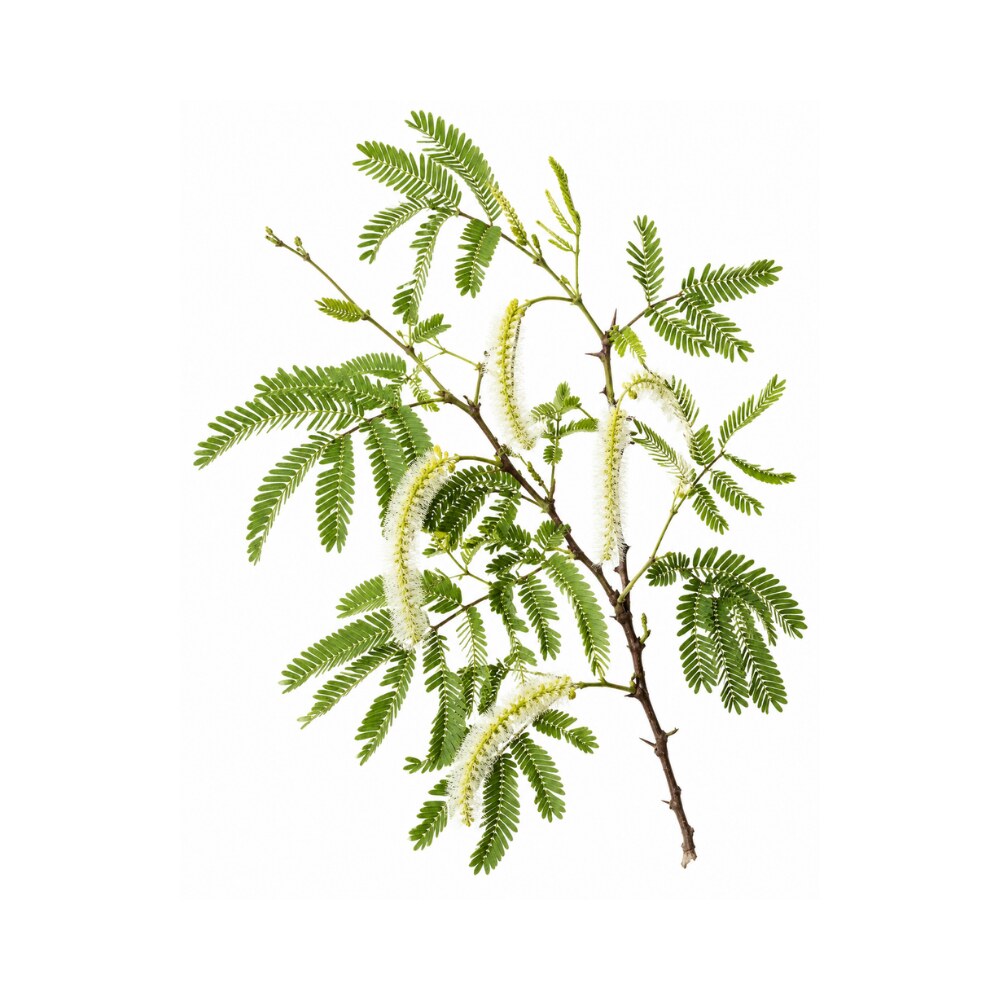
The leaves are twice-divided, with four to seven pairs of side branches, each carrying 15–30 pairs of narrow leaflets 30Reference 30Mimosa tenuiflora (Willd.) PoirView study →. The small white flowers grow in cylindrical spikes from the leaf axils, with white stamens that stick out beyond the petals 30Reference 30Mimosa tenuiflora (Willd.) PoirView study →.
The fruit is a flat pod that breaks apart into four to eight segments 30Reference 30Mimosa tenuiflora (Willd.) PoirView study →. Like many legumes, jurema forms root nodules with nitrogen-fixing bacteria 29Reference 29Fern, K. (n.d.). Mimosa tenuiflora (Willd.) Poir. — habit, range, habitat and cultivation — species database. Useful Tropical Plants Database. https://tropical.theferns.info/viewtropical.php?id=Mimosa+tenuifloraView study →.
Distribution
Jurema grows from Mexico through Guatemala, Honduras, El Salvador, Nicaragua and Panama to Colombia, Venezuela and Brazil 29Reference 29Fern, K. (n.d.). Mimosa tenuiflora (Willd.) Poir. — habit, range, habitat and cultivation — species database. Useful Tropical Plants Database. https://tropical.theferns.info/viewtropical.php?id=Mimosa+tenuifloraView study →. It is most abundant in the caatinga dry forest of northeastern Brazil, where there are usually 6–11 months without rain and 250–1,000 mm of rain a year 29Reference 29Fern, K. (n.d.). Mimosa tenuiflora (Willd.) Poir. — habit, range, habitat and cultivation — species database. Useful Tropical Plants Database. https://tropical.theferns.info/viewtropical.php?id=Mimosa+tenuifloraView study →.
In the caatinga it grows mainly in regrowing forest on river floodplains, on deep, fertile, often alkaline soils 29Reference 29Fern, K. (n.d.). Mimosa tenuiflora (Willd.) Poir. — habit, range, habitat and cultivation — species database. Useful Tropical Plants Database. https://tropical.theferns.info/viewtropical.php?id=Mimosa+tenuifloraView study →. In Colombia it grows on the Caribbean plain below 250 m, and in Venezuela in savannas and deciduous forest 30Reference 30Mimosa tenuiflora (Willd.) PoirView study →.
Jurema is a pioneer species. It can invade pasture within its native range, and cattle ranchers treat it as a weed 29Reference 29Fern, K. (n.d.). Mimosa tenuiflora (Willd.) Poir. — habit, range, habitat and cultivation — species database. Useful Tropical Plants Database. https://tropical.theferns.info/viewtropical.php?id=Mimosa+tenuifloraView study →.
Growing Conditions
Cultivation snapshot for Jurema
- Very drought-hardy — adapted to long dry seasons on as little as ~250 mm of rain a year, which makes it a go-to species for arid-land planting.
- Wants a hot, sunny, frost-free position (roughly USDA zones 9–11); it is a full-sun pioneer, not a shade plant.
- Tolerates poor ground but grows best on well-drained, fertile, often alkaline soil; as a nitrogen-fixer it also improves the soil around it.
- Grow from seed with the hard coat scarified (near-boiling water, then a 12–24 h soak); it germinates in a couple of weeks and coppices readily.
Grow it yourself
Farm Wiki is our cultivation-focused sister site, also run by Justin Cooke.
Pharmacology & Research
Jurema has two research literatures, matching its two traditions. The first concerns the bark’s tannins and phenolic compounds: antimicrobial, anti-inflammatory, antioxidant and wound-healing studies grounded in the Mexican tepezcohuite tradition. The second concerns the DMT in the root bark and the Brazilian ritual use.
Two small placebo-controlled trials have tested a bark-extract gel in venous leg ulcers. The first reported healing in every treated patient, and the second found no benefit over the plain gel 3,
A separate body of work shows that the plant causes birth defects and embryo loss in livestock and rats that eat it 20,
-
Best-supported: broad antimicrobial activity against bacteria, yeasts and dermatophytes 6,
7, , and anti-inflammatory and pain-relieving activity in animal models, partly traced to the flavanone sakuranetin 10,9Reference 6Experimental evaluation of Mimosa tenuiflora (tepescohuite) I: screening of antimicrobial properties of bark extractsView study →Reference 7In vitroPharmacological properties in vitro of various extracts of Mimosa tenuiflora (tepescohuite)View study →Reference 9ReviewMimosa tenuiflora’s antimicrobial activity on bacteria and fungi of medical importance: an integrative reviewView study → 11, .12Reference 10Antinociceptive and anti-inflammatory activities of the ethanolic extract, fractions and flavones isolated from Mimosa tenuifloraView study →Reference 11Orofacial antinociceptive effect of Mimosa tenuiflora (Willd.) PoiretView study →Reference 12Neutralizing effects of Mimosa tenuiflora extracts against inflammation caused by Tityus serrulatus scorpion venomView study → -
Emerging, worth watching: antidepressant- and anxiety-reducing effects of bark extracts and the root-bark alkaloid fraction in rodents and zebrafish 14,
15, , and DMT as a nerve-protective agent after spinal root injury in rats 17Reference 17AnimalCombined neuroprotective effects of N,N-dimethyltryptamine and ventral root reimplantation following spinal root avulsion in ratsView study →.16Reference 14Duarte-Filho, L. A. M. S., Amariz, I. A., Nishimura, R. H. V., et al. (2022). β-carboline-independent antidepressant-like effect of the standardized extract of the barks of Mimosa tenuiflora. Journal of Psychopharmacology. https://pubmed.ncbi.nlm.nih.gov/35723216/View study →Reference 15The anxiolytic-like effect of the alkaloid fraction of the psychedelic plant Mimosa tenuifloraView study →Reference 16Neuropharmacological potential of Mimosa tenuiflora in adult zebrafish: GABAergic and serotonergic neuromodulationView study → -
Mechanistically thin: wound healing, the traditional flagship use, rests on in vitro fibroblast data and two ulcer trials with opposite results 3,
5, .27Reference 3RCTA randomised comparative trial on the use of a hydrogel with tepescohuite extract (Mimosa tenuiflora cortex extract-2G) in the treatment of venous leg ulcers — randomised, double-blind, placebo-controlled trialView study →Reference 5Arabinogalactans from Mimosa tenuiflora bark as active principles for wound healing: enhancement of dermal fibroblast activityView study →Reference 27RCTTherapeutic effectiveness of a Mimosa tenuiflora cortex extract in venous leg ulceration treatment — randomised, double-blind, placebo-controlled trialView study → -
The caveat: very little human data, no standardised medicinal dose, and a documented birth-defect finding in animals 20,
21, .22, 23, 24Reference 20Systematic reviewPhytochemistry and teratogenic potential of Mimosa tenuiflora in ruminants: a systematic reviewView study →Reference 21Embryonic death in goats caused by the ingestion of Mimosa tenuifloraView study →Reference 22AnimalTeratogenic effects of Mimosa tenuiflora in a rat model and possible role of N-methyl- and N,N-dimethyltryptamineView study →Reference 23Mimosa tenuiflora as a cause of malformations in ruminants in the northeastern Brazilian semiarid rangelandsView study →Reference 24AnimalTeratogenicity of Mimosa tenuiflora seeds to pregnant ratsView study →
The two halves of the plant’s pharmacology come from different compounds. The skin and antimicrobial findings follow the bark’s tannins and phenolics, and the mood findings follow the root bark’s alkaloids. A result for one preparation says nothing about the other.
1. Antimicrobial
This is the best-replicated activity. Early Mexican work showed that water and ethanol extracts of the dried bark inhibit a broad panel of Gram-positive and Gram-negative bacteria, yeasts and dermatophytes in vitro 6Reference 6Experimental evaluation of Mimosa tenuiflora (tepescohuite) I: screening of antimicrobial properties of bark extractsView study →. A follow-up found the antimicrobial activity in the tannin-rich ethyl-acetate extract 7Reference 7In vitroPharmacological properties in vitro of various extracts of Mimosa tenuiflora (tepescohuite)View study →.
A 2021 review of the previous decade’s studies found consistent in vitro activity against bacteria and fungi of medical importance, and pointed to flavonoids and tannins as the likely active compounds 9Reference 9ReviewMimosa tenuiflora’s antimicrobial activity on bacteria and fungi of medical importance: an integrative reviewView study →.
In a rabbit burn model, sterile bark powder, 2% mupirocin ointment and saline gave statistically indistinguishable results. The authors judged the bark’s efficacy low and, citing possible liver toxicity, advised against its use in people 8Reference 8Cicatricial, antibacterial and antimycotic effects of tepescohuite in experimental animalsView study →.
The activity follows the caffeic acid, gallic acid and condensed-tannin content rather than the DMT, so it belongs to the topical bark preparation, not the ritual drink.
Gap: almost all data are in-vitro zone-of-inhibition or MIC screens; there is no controlled clinical trial of jurema bark as a topical antiseptic in humans.
2. Anti-Inflammatory & Antinociceptive
Rodent studies agree here. A bark ethanol extract reduced writhing (100–200 mg/kg), the second phase of the formalin test (50–200 mg/kg) and mechanical hypernociception (100 mg/kg) in mice. At 100 mg/kg it cut neutrophil migration and myeloperoxidase activity and lowered ICAM-1 expression. The isolated flavanone sakuranetin reduced writhing and neutrophil migration 10Reference 10Antinociceptive and anti-inflammatory activities of the ethanolic extract, fractions and flavones isolated from Mimosa tenuifloraView study →.
A separate group tested the bark’s ethyl-acetate fraction in mouse models of face and jaw pain. It reduced pain behaviour from several chemical triggers and reversed neuropathic pain, and the effect was blocked by naloxone, L-NAME and glibenclamide. This points to opioid, nitric-oxide and ATP-sensitive potassium-channel signalling 11Reference 11Orofacial antinociceptive effect of Mimosa tenuiflora (Willd.) PoiretView study →.
Bark extract also reduced the inflammatory response to Tityus serrulatus scorpion venom in mice, lowering IL-6, IL-12 and IL-1β 12Reference 12Neutralizing effects of Mimosa tenuiflora extracts against inflammation caused by Tityus serrulatus scorpion venomView study →.
Every study is in animals, and neither the doses nor the extract types map onto a human oral or topical regimen.
3. Antioxidant
The bark’s high load of phenolic acids and condensed tannins gives it consistent radical-scavenging activity 11,
A 2025 study of the stem bark of three Mimosa species found that M. tenuiflora had the highest total phenol content and the strongest antioxidant and anticholinesterase activity of the three 13Reference 13Novel chemical constituents identified by UPLC-QTOF-MS/MS and biological activities of three Mimosa speciesView study →.
Condensed tannins from a water extract of the bark also suppress aflatoxin B1 production by Aspergillus flavus without affecting the mould’s growth 18Reference 18Mimosa tenuiflora aqueous extract: role of condensed tannins in anti-aflatoxin B1 activity in Aspergillus flavusView study →.
These are measurements in the test tube. No study shows a whole-body antioxidant effect in an animal or a person.
4. Neuropsychiatric (Anxiolytic / Antidepressant)
A standardised bark extract containing 24.7 mg/g DMT, along with yuremamine, had an antidepressant-like effect in the mouse tail-suspension and forced-swim tests 14Reference 14Duarte-Filho, L. A. M. S., Amariz, I. A., Nishimura, R. H. V., et al. (2022). β-carboline-independent antidepressant-like effect of the standardized extract of the barks of Mimosa tenuiflora. Journal of Psychopharmacology. https://pubmed.ncbi.nlm.nih.gov/35723216/View study →. The effect did not need added harmine, and it was blocked by the 5-HT2A/2C antagonist ketanserin, pointing to a serotonergic mechanism 14Reference 14Duarte-Filho, L. A. M. S., Amariz, I. A., Nishimura, R. H. V., et al. (2022). β-carboline-independent antidepressant-like effect of the standardized extract of the barks of Mimosa tenuiflora. Journal of Psychopharmacology. https://pubmed.ncbi.nlm.nih.gov/35723216/View study →.
An alkaloid fraction of the root bark, in which DMT was identified, reduced anxiety-like behaviour in mice in two standard tests 15Reference 15The anxiolytic-like effect of the alkaloid fraction of the psychedelic plant Mimosa tenuifloraView study →.
In adult zebrafish, the bark’s ethyl-acetate fraction, whose main compound is benzyloxyamine, had anxiety-reducing effects similar to diazepam and antidepressant-like effects similar to fluoxetine. Both were reversed by GABAergic and serotonergic antagonists 16Reference 16Neuropharmacological potential of Mimosa tenuiflora in adult zebrafish: GABAergic and serotonergic neuromodulationView study →.
Gap: all effects are in animal behavioural models, and the psychoactivity is inseparable from DMT’s controlled status and its MAOI-dependent oral activity — there is no controlled study of jurema as an oral antidepressant.
5. Wound Healing & Skin Regeneration
In vitro, a plain water extract of the bark reduced the viability of dermal fibroblasts. The arabinogalactans precipitated from it with ethanol did the opposite, stimulating fibroblast activity and proliferation while barely affecting keratinocytes 5Reference 5Arabinogalactans from Mimosa tenuiflora bark as active principles for wound healing: enhancement of dermal fibroblast activityView study →.
Two randomised, double-blind, placebo-controlled trials have tested a bark-extract hydrogel in venous leg ulcers. In the first, the gel contained 5% of a crude extract standardised to 1.8% tannins. After eight weeks, ulcer size fell by 92% on average in the extract group, while only one control patient improved 27Reference 27RCTTherapeutic effectiveness of a Mimosa tenuiflora cortex extract in venous leg ulceration treatment — randomised, double-blind, placebo-controlled trialView study →.
In the second, 41 patients used a hydrogel containing M. tenuiflora cortex extract or the same gel alone. Ulcer area fell by 6.29 cm² with the extract and 5.85 cm² without it, a difference that was not significant (p = 0.815) 3Reference 3RCTA randomised comparative trial on the use of a hydrogel with tepescohuite extract (Mimosa tenuiflora cortex extract-2G) in the treatment of venous leg ulcers — randomised, double-blind, placebo-controlled trialView study →.
A systematic review with meta-analysis pooled these two trials, 42 patients in all, found high heterogeneity, and described the extract as promising 4Reference 4Meta-analysisThe use of medicinal plants in venous ulcers: a systematic review with meta-analysisView study →.
Gap: the two controlled trials disagree, both are small, and the fibroblast effect has not been linked to a clinical outcome.
6. Neuroprotective
A 2026 rat study tested DMT extracted from M. tenuiflora roots after the L4–L6 spinal nerve roots were torn away. Daily DMT injections for two weeks, at 1 mg/kg (the best of the three doses tested), improved motor-neuron survival, reduced glial reactivity and preserved nerve terminals 17Reference 17AnimalCombined neuroprotective effects of N,N-dimethyltryptamine and ventral root reimplantation following spinal root avulsion in ratsView study →. The effect was stronger when combined with surgical reimplantation of the roots, which also raised GDNF expression 17Reference 17AnimalCombined neuroprotective effects of N,N-dimethyltryptamine and ventral root reimplantation following spinal root avulsion in ratsView study →.
This is one animal study of a purified constituent, not of any jurema preparation.
Mechanisms
The bark’s tannins, phenolic acids and the flavanone sakuranetin have been studied for antimicrobial, antioxidant and anti-inflammatory activity. This chemistry underlies the tepezcohuite skin tradition. Arabinogalactans from the bark have been studied for their effect on skin fibroblasts.
The root bark’s tryptamine alkaloids, N,N-DMT and N-methyltryptamine, act at serotonin receptors and account for the psychoactive effect. DMT is not active by mouth on its own unless an MAO inhibitor is also taken.
| Mechanism | Drives | Key compounds |
|---|---|---|
| Tannin/polyphenol protein-binding & radical scavenging | antimicrobialantioxidantanti-aflatoxin | caffeic acid, gallic acid, condensed tannins |
| Neutrophil migration ↓, MPO ↓, ICAM-1 ↓; IL-6/IL-12/IL-1β ↓ | anti-inflammatoryantinociceptive | sakuranetin, bark extract |
| Opioid + nitric-oxide + K⁺-ATP channel modulation | antinociceptive (orofacial/neuropathic) | bark ethyl-acetate fraction |
| 5-HT2A/2C agonism; GABA-A / serotonergic binding | antidepressant-anxiolytic-likepsychedelic | N,N-DMT, yuremamine |
| Dermal fibroblast proliferation | wound healing (proposed) | arabinogalactans |
Clinical Trials
Two completed randomised trials exist, both of a topical bark-extract hydrogel for venous leg ulcers, with opposite results 3,
| Completed | Planned | Terminated | Preclinical |
|---|---|---|---|
| 2 | 0 | 0 | ~100 |
Last checked: September 2026.
Phytochemistry
The root bark contains the indole alkaloid N,N-DMT, reported at roughly 1–1.7% of dry weight 1Reference 1N,N-dimethyltryptamine alkaloid in Mimosa tenuiflora bark (tepescohuite)View study →. Its biosynthetic precursor N-methyltryptamine occurs alongside it 22Reference 22AnimalTeratogenic effects of Mimosa tenuiflora in a rat model and possible role of N-methyl- and N,N-dimethyltryptamineView study →. An ethanolic extract of the root bark also contained eight type-B proanthocyanidins, three alkaloids, a flavonol glycoside and a dihydrochalcone 19Reference 19Unraveling the metabolomic profile and acute toxicity of ethanolic extract from Mimosa tenuiflora root barkView study →.
Tannins are the largest group of compounds in the bark. In genuine tepezcohuite bark they make up about 16%, mostly as proanthocyanidins, while saponins are present only in very small amounts 28Reference 28Pharmacognostical studies of the plant drug Mimosae tenuiflorae cortex — pharmacognosyView study →. The bark also contains phenolic acids such as caffeic acid and gallic acid, the triterpene lupeol and the chalcone kukulkanin B 2Reference 2ReviewPhytochemistry and diverse pharmacology of genus Mimosa: a reviewView study →.
The chemistry of the stem bark changes with the seasons. Over two years in Pernambuco, flavonoids and other phenolics rose with water stress, sunlight and heat, while DMT fell as sunlight and temperature rose 25Reference 25Seasonal effect on the chemical composition of Mimosa tenuiflora stem bark from the semi-arid region of Pernambuco, BrazilView study →.
Constituent Summary
Amounts vary with the plant part and the season, and most constituents other than DMT and the tannins have not been quantified.
Indole Alkaloid1 compound1 with data
Tannin1 compound1 with data
Saponin1 compound1 with data
Triterpene1 compoundno data
Chalcone1 compoundno data
Dosage
Jurema has no standardised medicinal dose. The topical tepezcohuite tradition applies powdered bark directly, and the ritual drink is prepared within ceremony without a weighed dose.
| Indication | Preparation | Dose | Est. dried-herb equivalent | Source |
|---|---|---|---|---|
| Venous leg ulcers | Hydrogel with 5% crude bark extract (1.8% tannins), topical | Applied with dressings; ulcer size measured over 13 weeks | — | 27Reference 27RCTTherapeutic effectiveness of a Mimosa tenuiflora cortex extract in venous leg ulceration treatment — randomised, double-blind, placebo-controlled trialView study → — positive |
| Venous leg ulcers | Hydrogel containing M. tenuiflora cortex extract, topical | Applied daily after cleansing, with compression | — | 3Reference 3RCTA randomised comparative trial on the use of a hydrogel with tepescohuite extract (Mimosa tenuiflora cortex extract-2G) in the treatment of venous leg ulcers — randomised, double-blind, placebo-controlled trialView study → — null result |
| Anti-inflammatory / antinociceptive | Bark ethanol extract, oral (mice) | 50–200 mg/kg | — (rodent dose, not convertible) | 10Reference 10Antinociceptive and anti-inflammatory activities of the ethanolic extract, fractions and flavones isolated from Mimosa tenuifloraView study → |
| Antidepressant-like | Standardised bark extract, 24.7 mg/g DMT (mice) | — | — | 14Reference 14Duarte-Filho, L. A. M. S., Amariz, I. A., Nishimura, R. H. V., et al. (2022). β-carboline-independent antidepressant-like effect of the standardized extract of the barks of Mimosa tenuiflora. Journal of Psychopharmacology. https://pubmed.ncbi.nlm.nih.gov/35723216/View study → |
| Neuroprotective | Purified DMT, intraperitoneal (rats) | 1 mg/kg | — | 17Reference 17AnimalCombined neuroprotective effects of N,N-dimethyltryptamine and ventral root reimplantation following spinal root avulsion in ratsView study → |
Traditional Dosage
| System | Preparation | Dose |
|---|---|---|
| Mexican / Central American folk (topical) | Powdered dried bark (tepezcohuite), applied to burns and wounds | Not quantified |
| Northeastern Brazilian (ceremonial) | Root bark prepared as vinho da jurema | Prepared within ritual practice; not quantified |
Safety & Pregnancy
Jurema carries two separate sets of risks. The ritual drink brings the risks of DMT and of any MAOI plant taken with it. The plant itself causes birth defects and embryo loss in livestock and rats that eat it, which matters because the bark is also sold widely in skin products.
- Birth defects in animals — avoid in pregnancy. The plant causes malformations and embryonic death in goats and sheep that eat it, and its seeds cause skeletal malformations in rat fetuses 20,
21, . In a rat study, the plant’s tryptamine alkaloids reproduced the effect 22Reference 22AnimalTeratogenic effects of Mimosa tenuiflora in a rat model and possible role of N-methyl- and N,N-dimethyltryptamineView study →.22, 23, 24Reference 20Systematic reviewPhytochemistry and teratogenic potential of Mimosa tenuiflora in ruminants: a systematic reviewView study →Reference 21Embryonic death in goats caused by the ingestion of Mimosa tenuifloraView study →Reference 22AnimalTeratogenic effects of Mimosa tenuiflora in a rat model and possible role of N-methyl- and N,N-dimethyltryptamineView study →Reference 23Mimosa tenuiflora as a cause of malformations in ruminants in the northeastern Brazilian semiarid rangelandsView study →Reference 24AnimalTeratogenicity of Mimosa tenuiflora seeds to pregnant ratsView study → - MAOI combination. Jurema-based brews risk serotonin toxicity or hypertensive crisis, especially with SSRIs and other serotonergic or sympathomimetic drugs.
- Intensely disorienting. A safe set, setting and sober sitter are essential.
- Widely controlled. DMT is a controlled substance in most countries regardless of plant source.
- Composition is not stable. The bark’s chemistry, including its DMT content, shifts with the seasons 25Reference 25Seasonal effect on the chemical composition of Mimosa tenuiflora stem bark from the semi-arid region of Pernambuco, BrazilView study →.
Full Safety Detail
Reproductive harm in animals. Craniofacial defects, eye malformations and bent forelimbs are common in ruminants grazing the semi-arid rangelands of northeastern Brazil. Goats fed fresh M. tenuiflora through pregnancy produced kids with similar defects 23Reference 23Mimosa tenuiflora as a cause of malformations in ruminants in the northeastern Brazilian semiarid rangelandsView study →. Goats fed the plant for the first 30 days of pregnancy lost their embryos 21Reference 21Embryonic death in goats caused by the ingestion of Mimosa tenuifloraView study →.
Rats fed a ration containing 10% M. tenuiflora seeds had fetuses with bone malformations: 90 malformations in 40 of 101 fetuses, against four in three of 58 controls 24Reference 24AnimalTeratogenicity of Mimosa tenuiflora seeds to pregnant ratsView study →. In another rat study, plant material, its alkaloid extracts and the purified tryptamines N-methyltryptamine and DMT all raised the rate of cleft palate and skeletal malformations 22Reference 22AnimalTeratogenic effects of Mimosa tenuiflora in a rat model and possible role of N-methyl- and N,N-dimethyltryptamineView study →. A 2021 review of 24 studies concluded that the plant is embryotoxic, fetotoxic and abortive in farm animals, especially sheep and goats 20Reference 20Systematic reviewPhytochemistry and teratogenic potential of Mimosa tenuiflora in ruminants: a systematic reviewView study →.
Skin products. All of this evidence comes from animals eating the plant. Exposure through the skin has not been studied, and the same species is sold widely as tepezcohuite in skin and hair products.
General toxicity. In mice, a single oral dose of root-bark ethanolic extract up to 2,000 mg/kg caused no deaths, but it changed kidney weights and blood and biochemical markers, and caused tissue changes in the heart, liver and kidneys 19Reference 19Unraveling the metabolomic profile and acute toxicity of ethanolic extract from Mimosa tenuiflora root barkView study →. An older study examined tepezcohuite for mutagenic potential in the Drosophila wing-spot test 26Reference 26Evaluation of the mutagenic potential of tepezcohuite in the Drosophila wing spot testView study →. The authors of a rabbit burn study advised against human use of the bark powder, citing possible liver toxicity and low efficacy 8Reference 8Cicatricial, antibacterial and antimycotic effects of tepescohuite in experimental animalsView study →.
Ritual use. DMT on its own is short-acting, but combining it with MAO inhibitors, as in jurema-based brews, brings serious risks. These include dangerous interactions with tyramine-rich foods and with many medications, especially SSRIs and other serotonergic or sympathomimetic drugs, and a risk of serotonin toxicity or hypertensive crisis. The effects can be intensely disorienting, and DMT is a controlled substance in most countries regardless of plant source.
Variable composition. The chemistry of the stem bark shifts through the year, including its DMT content 25Reference 25Seasonal effect on the chemical composition of Mimosa tenuiflora stem bark from the semi-arid region of Pernambuco, BrazilView study →, so neither the topical nor the ceremonial preparation is standardised.
Avoid. Mimosa tenuiflora causes malformations and embryonic death in goats and sheep that eat it 20,
Avoid it entirely during pregnancy and breastfeeding. Skin exposure has not been studied, so avoiding topical tepezcohuite products during pregnancy is the cautious course.
References
- Meckes-Lozoya, M., Lozoya, X., Marles, R. J., et al. (1990). N,N-dimethyltryptamine alkaloid in Mimosa tenuiflora bark (tepescohuite). Archivos de Investigación Médica (Mexico). https://pubmed.ncbi.nlm.nih.gov/2103707/
- Rizwan, K., Majeed, I., Bilal, M., et al. (2022). Phytochemistry and diverse pharmacology of genus Mimosa: a review. Biomolecules. https://pubmed.ncbi.nlm.nih.gov/35053231/
- Lammoglia-Ordiales, L., Vega-Memije, M. E., Herrera-Arellano, A., Rivera-Arce, E., et al. (2012). A randomised comparative trial on the use of a hydrogel with tepescohuite extract (Mimosa tenuiflora cortex extract-2G) in the treatment of venous leg ulcers — randomised, double-blind, placebo-controlled trial. International Wound Journal, 9(4), 412–418. https://pubmed.ncbi.nlm.nih.gov/22128789/
- Freitas, A. L., Santos, C. A., Souza, C. A., et al. (2017). The use of medicinal plants in venous ulcers: a systematic review with meta-analysis. International Wound Journal. https://pubmed.ncbi.nlm.nih.gov/28488305/
- Zippel, J., Deters, A., & Hensel, A. (2009). Arabinogalactans from Mimosa tenuiflora bark as active principles for wound healing: enhancement of dermal fibroblast activity. Journal of Ethnopharmacology. https://pubmed.ncbi.nlm.nih.gov/19505559/
- Lozoya, X., Navarro, V., Arnason, J. T., & Kourany, E. (1989). Experimental evaluation of Mimosa tenuiflora (tepescohuite) I: screening of antimicrobial properties of bark extracts. Archivos de Investigación Médica (Mexico). https://pubmed.ncbi.nlm.nih.gov/2764672/
- Meckes-Lozoya, M., Lozoya, X., González, J. L., et al. (1990). Pharmacological properties in vitro of various extracts of Mimosa tenuiflora (tepescohuite). Archivos de Investigación Médica (Mexico). https://pubmed.ncbi.nlm.nih.gov/2103705/
- Palacios, C., Reyes, R. E., López-Martínez, R., et al. (1991). Cicatricial, antibacterial and antimycotic effects of tepescohuite in experimental animals. Revista de Investigación Clínica. https://pubmed.ncbi.nlm.nih.gov/1818366/
- Ferreira, T. L., & Evangelista, A. J. J. (2021). Mimosa tenuiflora’s antimicrobial activity on bacteria and fungi of medical importance: an integrative review. Arch Microbiol. https://pubmed.ncbi.nlm.nih.gov/33885936/
- Cruz, M. P., Andrade, C. M., Silva, K. O., et al. (2016). Antinociceptive and anti-inflammatory activities of the ethanolic extract, fractions and flavones isolated from Mimosa tenuiflora. PLOS ONE. https://pubmed.ncbi.nlm.nih.gov/26954375/
- Magalhães, F. E. A., Batista, F. L. A., Serpa, O. F., et al. (2018). Orofacial antinociceptive effect of Mimosa tenuiflora (Willd.) Poiret. Biomedicine & Pharmacotherapy. https://pubmed.ncbi.nlm.nih.gov/29793320/
- Bitencourt, M. A., de Souza Lima, M. C., Torres-Rêgo, M., et al. (2014). Neutralizing effects of Mimosa tenuiflora extracts against inflammation caused by Tityus serrulatus scorpion venom. BioMed Research International. https://pubmed.ncbi.nlm.nih.gov/25013776/
- Santiago RF, Chaves MH, da Silva Gomes JP, et al. (2025). Novel chemical constituents identified by UPLC-QTOF-MS/MS and biological activities of three Mimosa species. Journal of Toxicology and Environmental Health, Part A. https://pubmed.ncbi.nlm.nih.gov/40296321/
- Duarte-Filho, L. A. M. S., Amariz, I. A., Nishimura, R. H. V., et al. (2022). β-carboline-independent antidepressant-like effect of the standardized extract of the barks of Mimosa tenuiflora. Journal of Psychopharmacology. https://pubmed.ncbi.nlm.nih.gov/35723216/
- Ferreira JVBP, Pessoa AMF, Sousa RCL, et al. (2025). The anxiolytic-like effect of the alkaloid fraction of the psychedelic plant Mimosa tenuiflora. Natural Product Research. https://pubmed.ncbi.nlm.nih.gov/39291339/
- Feitosa de Araújo JI, Alves do Nascimento G, Vieira-Neto AE, et al. (2025). Neuropharmacological potential of Mimosa tenuiflora in adult zebrafish: GABAergic and serotonergic neuromodulation. Behavioural Brain Research. https://pubmed.ncbi.nlm.nih.gov/39761753/
- Aponte PAC, Montoya EH, Mazali IO, et al. (2026). Combined neuroprotective effects of N,N-dimethyltryptamine and ventral root reimplantation following spinal root avulsion in rats. Journal of Neurochemistry. https://pubmed.ncbi.nlm.nih.gov/41612619/
- Hernandez, C., Cadenillas, L., Maghubi, A. E., et al. (2021). Mimosa tenuiflora aqueous extract: role of condensed tannins in anti-aflatoxin B1 activity in Aspergillus flavus. Toxins. https://pubmed.ncbi.nlm.nih.gov/34072350/
- de Sousa RP, de Oliveira CMF, de Lima Sousa RC, et al. (2024). Unraveling the metabolomic profile and acute toxicity of ethanolic extract from Mimosa tenuiflora root bark. Toxicon. https://pubmed.ncbi.nlm.nih.gov/39179178/
- Lima Bezerra, J. J., Vieira Pinheiro, A. A., Barbosa Lucena, R., et al. (2021). Phytochemistry and teratogenic potential of Mimosa tenuiflora in ruminants: a systematic review. Toxicon. https://pubmed.ncbi.nlm.nih.gov/33727031/
- Dantas, A. F., et al. (2012). Embryonic death in goats caused by the ingestion of Mimosa tenuiflora. Toxicon. https://pubmed.ncbi.nlm.nih.gov/22178006/
- Gardner, D. R., et al. (2014). Teratogenic effects of Mimosa tenuiflora in a rat model and possible role of N-methyl- and N,N-dimethyltryptamine. Journal of Agricultural and Food Chemistry. https://pubmed.ncbi.nlm.nih.gov/24689494/
- Pimentel, L. A., et al. (2007). Mimosa tenuiflora as a cause of malformations in ruminants in the northeastern Brazilian semiarid rangelands. Veterinary Pathology. https://pubmed.ncbi.nlm.nih.gov/18039908/
- Medeiros, R. M. T., et al. (2008). Teratogenicity of Mimosa tenuiflora seeds to pregnant rats. Toxicon. https://pubmed.ncbi.nlm.nih.gov/18078971/
- de Souza NAC, Sá PGS, Araújo TCL, et al. (2025). Seasonal effect on the chemical composition of Mimosa tenuiflora stem bark from the semi-arid region of Pernambuco, Brazil. Chemistry & Biodiversity. https://pubmed.ncbi.nlm.nih.gov/40986385/
- Pimentel, A. E., Cruces, M. P., Zimmering, S., et al. (1991). Evaluation of the mutagenic potential of tepezcohuite in the Drosophila wing spot test. Mutation Research. https://pubmed.ncbi.nlm.nih.gov/1944392/
- Rivera-Arce, E., Chávez-Soto, M. A., Herrera-Arellano, A., Arzate, S., Agüero, J., Feria-Romero, I. A., Cruz-Guzmán, A., & Lozoya, X. (2007). Therapeutic effectiveness of a Mimosa tenuiflora cortex extract in venous leg ulceration treatment — randomised, double-blind, placebo-controlled trial. Journal of Ethnopharmacology, 109(3), 523–528. https://pubmed.ncbi.nlm.nih.gov/17088036/
- Rivera-Arce, E., Gattuso, M., Alvarado, R., Zárate, E., Agüero, J., Feria, I., & Lozoya, X. (2007). Pharmacognostical studies of the plant drug Mimosae tenuiflorae cortex — pharmacognosy. Journal of Ethnopharmacology, 113(3), 400–408. https://pubmed.ncbi.nlm.nih.gov/17709219/
- Fern, K. (n.d.). Mimosa tenuiflora (Willd.) Poir. — habit, range, habitat and cultivation — species database. Useful Tropical Plants Database. https://tropical.theferns.info/viewtropical.php?id=Mimosa+tenuiflora
- GBIF (n.d.). Mimosa tenuiflora (Willd.) Poir. — species descriptions from the Catálogo florístico de la Faja Petrolífera del Orinoco, the Catálogo de Plantas y Líquenes de Colombia and a Fabaceae survey of a conservation unit in semi-arid Paraíba — species database. https://www.gbif.org/species/2969531



