
Compound Monograph
Paynantheine
Paynantheine is the second most abundant alkaloid in kratom leaf (Mitragyna speciosa) — roughly 8-9% of the alkaloid fraction — yet it is a weak partial agonist at the mu-opioid receptor and contributes little of kratom's opioid effect. Its clearest documented activity is serotonergic (5-HT1A) rather than opioid, and its main practical role is as an analytical marker of kratom exposure.

Sources · 1
Where Does It Come From?
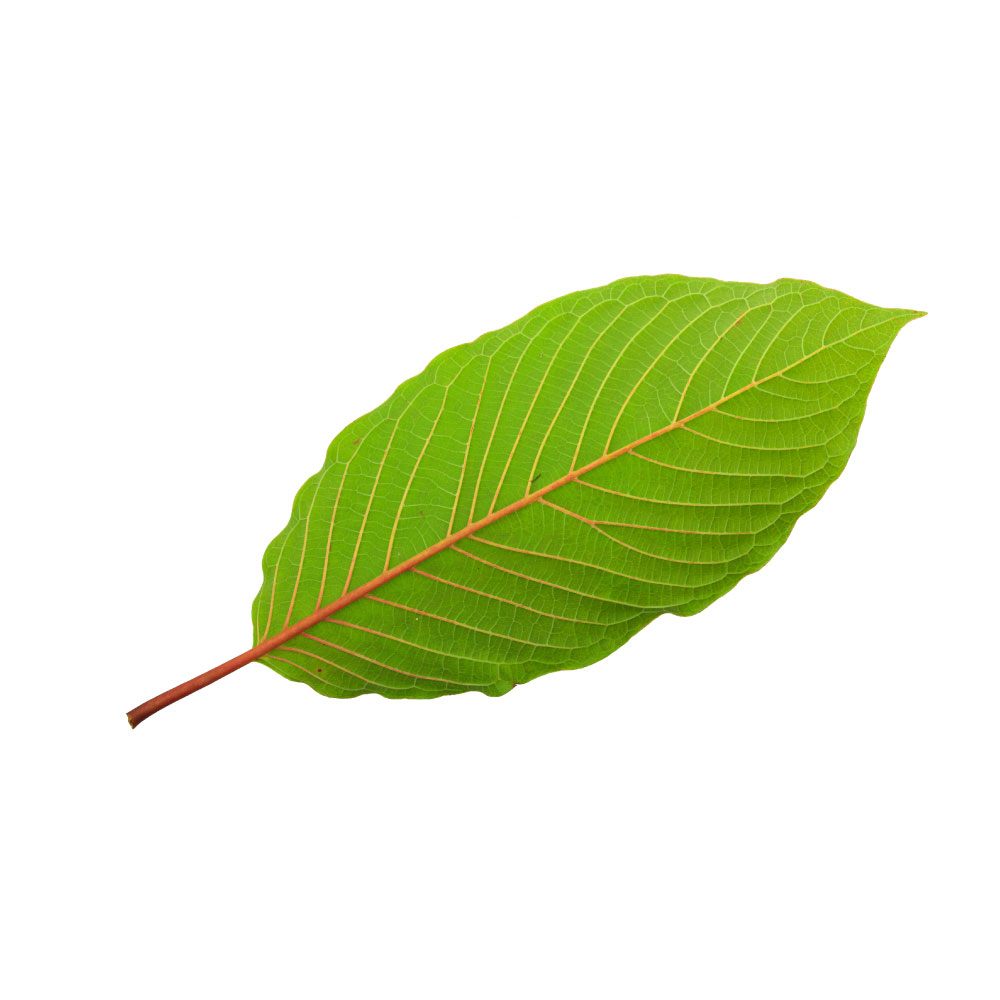
Paynantheine is a naturally occurring corynanthe-type monoterpene indole alkaloid (9-methoxy corynanthe group), found in Kratom. It is flagged as moderately toxic.
Concentration
Content by Source
Reported concentrations across the plants that contain paynantheine — the bar marks the typical level, the line shows the reported range.
Literature figures for varying plant parts and preparations. Read them as a comparative guide, not exact assays.
Paynantheine at a Glance
Paynantheine is a corynanthe-type monoterpene indole alkaloid and the second most abundant alkaloid in the leaf of kratom (Mitragyna speciosa) — commonly quoted at around 8-9% of the total alkaloid fraction, behind mitragynine and roughly level with speciogynine 2Reference 2In vitroExploring the chemistry of alkaloids from Malaysian Mitragyna speciosa (kratom) and the role of oxindoles on human opioid receptors — in vitroView study →. Structurally it is mitragynine’s 3-dehydro relative: the same 9-methoxy corynanthe skeleton with a vinyl group in place of the ethyl side chain, which also makes it the dehydro analogue of speciogynine 19Reference 19The chemistry of kratom [Mitragyna speciosa]: updated characterization data and methods to elucidate indole and oxindole alkaloidsView study →.
It is the clearest case in the kratom alkaloid set of abundance without potency. At the mu-opioid receptor its affinity is about 410 nM — roughly 2.5 times weaker than mitragynine and about a hundred times weaker than morphine 2,
This page is a scholarly pharmacology and toxicology reference for the isolated molecule. It gives no dose for effect and no preparation, extraction or synthesis guidance. The honest summary of the evidence base is that it is thin and almost entirely preclinical — a handful of receptor-binding studies, one rodent behavioural paper, some pharmacokinetics obtained inside whole-kratom dosing, and a large analytical literature that treats paynantheine mainly as a marker molecule for detecting kratom use.
Abundance Without Potency
If you assume the second-most-abundant compound in a plant is the second-most-important one, kratom is the counterexample. Paynantheine is present at roughly eight to nine times the level of 7-hydroxymitragynine — and 7-hydroxymitragynine, at under 2% of the alkaloid fraction, is the constituent that carries most of kratom’s opioid effect and essentially all of its abuse liability. Paynantheine, at 8-9%, carries very little of either.
Three measurements make the point:
| Alkaloid | Approx. share of alkaloid fraction | Mu-opioid Kᵢ |
|---|---|---|
| Mitragynine | ~66% | 161 nM 2Reference 2In vitroExploring the chemistry of alkaloids from Malaysian Mitragyna speciosa (kratom) and the role of oxindoles on human opioid receptors — in vitroView study → |
| Paynantheine | ~8-9% | 410 nM 2, |
| Speciogynine | ~7% | 728 nM 2Reference 2In vitroExploring the chemistry of alkaloids from Malaysian Mitragyna speciosa (kratom) and the role of oxindoles on human opioid receptors — in vitroView study → |
| Speciociliatine | ~1-3% | 54.5 nM 2Reference 2In vitroExploring the chemistry of alkaloids from Malaysian Mitragyna speciosa (kratom) and the role of oxindoles on human opioid receptors — in vitroView study → |
| Morphine (reference) | — | 4.19 nM 2Reference 2In vitroExploring the chemistry of alkaloids from Malaysian Mitragyna speciosa (kratom) and the role of oxindoles on human opioid receptors — in vitroView study → |
The pattern is that abundance and mu-affinity are close to uncorrelated across the kratom alkaloids: speciociliatine is a minor constituent with the strongest mu binding of the four, and paynantheine is a major constituent with among the weakest. Kratom’s pharmacology is therefore not a simple weighted sum of its alkaloids, and a product’s paynantheine content tells you very little about how opioid-like it will be.
Two further facts blunt paynantheine’s contribution even at 8-9%. First, in vivo it behaves less like an agonist than a weak competitor: in mice, 30 mg/kg blocked morphine’s antinociception rather than producing its own, and the authors concluded it is “a weak partial agonist at the μOR and δOR, with functional antagonistic activity at the µOR in the presence of a more potent agonist” 6Reference 6In vitroEvaluation of kratom opioid derivatives as potential treatment option for alcohol use disorder — in vitro and in miceView study →. Second, its systemic exposure after an oral kratom dose is short-lived — in rats it was quantifiable only up to one hour post-dose, while mitragynine and speciociliatine were still measurable at eight 10Reference 10AnimalPharmacokinetics of eleven kratom alkaloids following an oral dose of either traditional or commercial kratom products in ratsView study →.
Paynantheine & Its Diastereomers
Kratom carries several molecules of the same mass that differ only in stereochemistry, and separating them is most of the analytical difficulty in this plant. Nineteen alkaloids have been fully re-characterised by modern NMR and ECD for exactly this reason 19Reference 19The chemistry of kratom [Mitragyna speciosa]: updated characterization data and methods to elucidate indole and oxindole alkaloidsView study →.
- Speciogynine is paynantheine’s saturated counterpart — paynantheine is the 3-dehydro (vinyl) analogue of it. The two track each other closely in the leaf, at roughly equal abundance, and share the high 5-HT1A/5-HT2B affinity that mitragynine lacks 5Reference 5In vitroActivity of Mitragyna speciosa (“kratom”) alkaloids at serotonin receptors — in vitro and in ratsView study →.
- Isopaynantheine is paynantheine’s 3R diastereomer, and pharmacologically a different animal: it is the first kratom-derived kappa-opioid agonist identified in vivo, with reduced β-arrestin-2 recruitment 26Reference 26In vitroKratom alkaloids as probes for opioid receptor function: pharmacological characterization of minor indole and oxindole alkaloids from kratom — in vitro and in miceView study →. It is a separate molecule with a separate metabolic fate 13Reference 13AnimalMetabolism studies of the kratom alkaloids mitraciliatine and isopaynantheine, diastereomers of the main alkaloids mitragynine and paynantheine, in rat and human urineView study →, and none of its kappa pharmacology should be read onto paynantheine.
- Epiallo-isopaynantheine and the corresponding N(4)-oxides round out the family and were only formally characterised in 2020 19Reference 19The chemistry of kratom [Mitragyna speciosa]: updated characterization data and methods to elucidate indole and oxindole alkaloidsView study →.
The 3S/3R split is not cosmetic. In the first human pharmacokinetic study of kratom, the 3S alkaloids (mitragynine, speciogynine, paynantheine) behaved as one group and the 3R alkaloids (mitraciliatine, speciociliatine, isopaynantheine) as another, with markedly different distribution volumes, clearances, AUCs and half-lives 9Reference 9Clinical trialClinical pharmacokinetic assessment of kratom (Mitragyna speciosa), a botanical product with opioid-like effects, in healthy adult participants — human studyView study →. Stereochemistry, not abundance, is what sorts these molecules kinetically.
Vein Colour & the Alkaloid Fingerprint
Consumer kratom is sold by leaf-vein colour — red, green, white — with the near-universal claim that the colour signals a different alkaloid ratio and therefore a different effect. That claim does not survive checking.
Two independent studies tested it directly and found no difference:
- A survey of 611 Thai kratom samples (57% green-veined, 29% red-veined) compared mitragynine, paynantheine and speciogynine content between red- and green-veined plants and reported alkaloid production similar in both leaf types, without significant differences. The authors suggested vein colour probably reflects soil type and nutrients rather than a genetic or chemical distinction 1Reference 1Seasonal and geographic variation in alkaloid content of kratom (Mitragyna speciosa (Korth.) Havil.) from ThailandView study →.
- A 2026 study of eight Thai accessions selected for visible variation in leaf morphology and vein colouration, genotyped by four DNA barcodes and profiled for 17 alkaloids, found that “despite visible distinction in leaf vein coloration, alkaloid profiles at maturity remained largely consistent across all accessions.” Leaf developmental stage mattered far more than accession or haplotype — juvenile leaves accumulated speciociliatine as the dominant alkaloid while mature leaves accumulated mitragynine 20Reference 20Comparative analysis of monoterpene indole alkaloid composition and genotypic variation in Thai Mitragyna speciosaView study →.
What does move the paynantheine ratio is real, just not the thing being sold:
- Geography. The mitragynine:paynantheine:speciogynine ratio runs about 7:1:1 in Thai material, about 10:1:1 in Malaysian material, and roughly 0.2:0.2:1 in US-grown plants — where speciogynine, not mitragynine, is the dominant alkaloid 1,
2, . US-grown M. speciosa is effectively a different chemotype 18Reference 18Kratom (Mitragyna speciosa) validation: quantitative analysis of indole and oxindole alkaloids reveals chemotypes of plants and productsView study →.31Reference 1Seasonal and geographic variation in alkaloid content of kratom (Mitragyna speciosa (Korth.) Havil.) from ThailandView study →Reference 2In vitroExploring the chemistry of alkaloids from Malaysian Mitragyna speciosa (kratom) and the role of oxindoles on human opioid receptors — in vitroView study →Reference 31Phytochemical characterization of the leaves of Mitragyna speciosa grown in U.S.AView study → - Season and harvest timing. Alkaloid accumulation in Thai leaf peaked in the June-August collection and was lowest in the rainy season, with paynantheine contributing significantly to the difference in total alkaloid content between periods 1Reference 1Seasonal and geographic variation in alkaloid content of kratom (Mitragyna speciosa (Korth.) Havil.) from ThailandView study →.
- Post-harvest handling. In the cultivar ‘Hawaii’, 12 hours of withering followed by drying below 40 °C raised paynantheine by 35-67% 21Reference 21Alkaloid biosynthesis in medicinal crop kratom (Mitragyna speciosa) varies with postharvest, genetic, and seasonal factorsView study →. How the leaf is dried shifts the fingerprint more than any colour label.
The practical reading: paynantheine ratios are a genuine origin and processing signature, which is why forensic and product-authentication labs measure them 18,
What It's Used For
The isolate literature on paynantheine is small. Almost all of it is receptor binding, one rodent behavioural paper, and pharmacokinetics measured inside whole-kratom dosing. There are no human studies of paynantheine as an isolated compound.
Support is an experimental score — weighted by study type (human > animal > in vitro) and volume. A beta, not a validated metric. Every row here is preclinical; nothing here is supported by a human outcome study of the isolated molecule, so the whole scale sits low by design.
The best-evidenced thing paynantheine does is identify kratom. Because it is abundant, structurally distinctive and confined to M. speciosa, it appears in essentially every validated kratom assay: a five-alkaloid urine method by LC-Q/TOF-MS with limits of quantitation of 0.5-1 ng/mL 23Reference 23Identification of five Mitragyna alkaloids in urine using liquid chromatography-quadrupole/time of flight mass spectrometryView study →; an 11-alkaloid human plasma method 11Reference 11Clinical trialQuantification of 11 kratom alkaloids including mitragynine and its main metabolites in human plasma using LC-MS/MS — clinical study samplesView study →; a 10-alkaloid product method used to quantify it at 0.3-12.8% w/w across commercial extracts and powders 4Reference 4Simultaneous quantification of ten key kratom alkaloids in Mitragyna speciosa leaf extracts and commercial products by ultra-performance liquid chromatography-tandem mass spectrometryView study →; and, unusually, a forensic fingernail method in which paynantheine was quantified at 2 pg/mg alongside mitragynine at 229 pg/mg 24Reference 24Case reportTesting for kratom alkaloids in fingernail clippings — not only mitragynine; case reportView study →.
Its metabolites matter here too: the dehydro compounds first seen in kratom users’ urine but absent after pure mitragynine dosing turned out to be paynantheine metabolites, and adding them to a screen improves specificity for kratom rather than mitragynine alone 12Reference 12AnimalUse of liquid chromatography coupled to low- and high-resolution linear ion trap mass spectrometry for studying the metabolism of paynantheine, an alkaloid of the herbal drug kratom, in rat and human urineView study →.
Gap: this is analytical chemistry, not pharmacology. No interpretive reference ranges exist for paynantheine in any matrix, so a measured concentration cannot currently be read as a dose or an effect 24Reference 24Case reportTesting for kratom alkaloids in fingernail clippings — not only mitragynine; case reportView study →.
The most interesting isolate finding on this molecule, and the one that separates it from mitragynine. In a dedicated screen of kratom alkaloids at serotonin receptors, paynantheine and speciogynine showed high affinity for 5-HT1A and 5-HT2B receptors, unlike mitragynine 5Reference 5In vitroActivity of Mitragyna speciosa (“kratom”) alkaloids at serotonin receptors — in vitro and in ratsView study →.
In rats both produced antinociception through an opioid-receptor-independent mechanism, and both induced lower-lip retraction — a classic 5-HT1A behavioural signature — which a selective 5-HT1A antagonist blocked. Functional assays then showed the in-vivo 5-HT1A agonism is likely driven by the metabolites 9-O-desmethylpaynantheine and 9-O-desmethylspeciogynine rather than the parent alkaloids. Neither metabolite activated 5-HT2B, which the authors read as a low inherent risk of the valvulopathy associated with 5-HT2B agonists. They suggested this 5-HT1A route may contribute to the mood-related effects reported with kratom 5Reference 5In vitroActivity of Mitragyna speciosa (“kratom”) alkaloids at serotonin receptors — in vitro and in ratsView study →.
Gap: pure isolate work in rats, with the active species being a metabolite rather than paynantheine itself. Whether the concentrations reached after ordinary leaf consumption are anywhere near those needed has not been established 5,
Real but weak, and directionally surprising. Paynantheine binds the human mu-opioid receptor with Kᵢ ≈ 410 nM — against 161 nM for mitragynine, 54.5 nM for speciociliatine and 4.19 nM for morphine 2,
Like the rest of the scaffold it is G-protein-biased, recruiting little or no β-arrestin 7,
In vivo the picture is antagonist-flavoured: in mice, neither 10 nor 30 mg/kg (i.p.) produced meaningful tail-flick antinociception, but 30 mg/kg dose-dependently blocked morphine’s antinociception and its hyperlocomotion; 10 mg/kg produced aversion rather than place preference. The authors’ conclusion was a weak partial agonist at mu and delta with functional mu antagonism in the presence of a stronger agonist, carrying low reward liability but limited by low potency 6Reference 6In vitroEvaluation of kratom opioid derivatives as potential treatment option for alcohol use disorder — in vitro and in miceView study →.
A related derivative, 7-hydroxypaynantheine, has delta-receptor potency and reduced voluntary alcohol intake in wild-type but not delta-knockout mice — but that is a modified molecule, not the natural alkaloid 6,
Gap: isolate work in rodents at injected doses; nothing here has been tested in humans, and none of mitragynine’s opioid clinical literature transfers to this molecule 6Reference 6In vitroEvaluation of kratom opioid derivatives as potential treatment option for alcohol use disorder — in vitro and in miceView study →.
A single in-vitro line of work, included for completeness. Docking plus cell assays in two drug-resistant cancer lines (EPG85.257RDB gastric, MCF7MX breast) found paynantheine bound ABCB1 (P-glycoprotein) more strongly than morphine did and both paynantheine and speciociliatine bound ABCG2 more strongly than morphine; paynantheine was also more cytotoxic to both resistant lines in MTT assay and reduced ABCB1 gene and protein expression 17Reference 17In vitroPaynantheine more effectively reverses multidrug resistance in malignant EPG85.257RDB and MCF7MX cells than morphine and speciociliatine — in vitroView study →.
Gap: one paper, in isolated resistant cancer cell lines, heavily docking-led, with no animal or human follow-up. Treat as hypothesis-generating only 17Reference 17In vitroPaynantheine more effectively reverses multidrug resistance in malignant EPG85.257RDB and MCF7MX cells than morphine and speciociliatine — in vitroView study →.
The claim most often attached to paynantheine, and the one that could not be verified. Consumer sources, encyclopedia entries and several review papers describe paynantheine as a “smooth-muscle relaxant” — and the descriptor has leaked back into the primary literature: a 2025 mass-spectrometry-imaging paper calls it “a partial μ-opioid receptor agonist with muscle relaxant properties,” citing a rodent alcohol-and-opioid pharmacology paper that contains no smooth-muscle experiment at all 30,
Gap: the claim is not disproven — it is unsourced. Until someone runs an isolated-tissue experiment on paynantheine, this site treats “smooth-muscle relaxant” as an unverified legacy descriptor, not a finding.
Mechanisms
| Target / pathway | Effect | Relevant to |
|---|---|---|
| 5-HT1A receptor | high affinity; functional agonism in vivo via the metabolite 9-O-desmethylpaynantheine (blocked by a selective 5-HT1A antagonist) | serotonergic activityopioid-independent antinociception |
| 5-HT2B receptor | high binding affinity, but no activation by parent or 9-O-desmethyl metabolite | low inferred valvulopathy risk |
| Mu-opioid receptor | weak partial agonist, Kᵢ ≈ 410 nM; functionally antagonistic against a stronger agonist in vivo; G-protein-biased, minimal β-arrestin | opioid activitylow reward liability |
| Delta-opioid receptor | weak partial agonism; the 7-hydroxy derivative is the delta-potent one | alcohol-intake research (derivativenot the natural alkaloid) |
| CYP2D6 | moderate inhibition (weaker than mitragynine or corynantheidine) | drug-interaction potential |
| CYP3A4/5 | inhibition of midazolam hydroxylase activity, but not testosterone hydroxylation — substrate-dependent | drug-interaction potential |
| hERG / rapid delayed-rectifier K⁺ current (I_Kr) | dose-dependent suppression in human iPSC-derived cardiomyocytes (IC50 range 0.91-2.47 µM across mitragynine and analogues) | cardiac safety |
| ABCB1 (P-gp) / ABCG2 | binding and reduced ABCB1 expression in resistant cancer lines | multidrug-resistance reversalin vitro only |
The load-bearing contrast is that paynantheine’s strongest receptor interactions are serotonergic, while its opioid interaction is weak enough that in the presence of a real opioid it behaves as a competitor. That is the opposite of what an 8-9% abundance share would lead you to expect.
Pharmacokinetics
Paynantheine has the unusual distinction of having been measured in humans without ever having been given to one. Every human number comes from whole-kratom dosing.
In the first comprehensive human kratom pharmacokinetic study — a single 2 g oral dose of a characterised product in six healthy participants — paynantheine grouped with the other 3S alkaloids (mitragynine, speciogynine): median Tmax 1-2 h, AUC 430-490 nM·h, terminal half-life 24-45 h, and a very large apparent terminal volume of distribution (960-12,700 L). The 3R alkaloids in the same subjects behaved quite differently — later Tmax, far higher AUC, shorter half-life and small volumes — with the difference attributed to differential hepatic/intestinal metabolism, plasma protein binding and blood-to-plasma partitioning 9Reference 9Clinical trialClinical pharmacokinetic assessment of kratom (Mitragyna speciosa), a botanical product with opioid-like effects, in healthy adult participants — human studyView study →. In rats given oral kratom, paynantheine and speciogynine were quantifiable only up to one hour post-dose, while mitragynine, 7-hydroxymitragynine, speciociliatine and corynantheidine were still measurable at eight — i.e. low and brief systemic exposure relative to abundance 10Reference 10AnimalPharmacokinetics of eleven kratom alkaloids following an oral dose of either traditional or commercial kratom products in ratsView study →. In a 15-day repeat-dose human study paynantheine was reliably quantifiable in plasma but, unlike mitragynine, speciogynine and speciociliatine, did not accumulate 11Reference 11Clinical trialQuantification of 11 kratom alkaloids including mitragynine and its main metabolites in human plasma using LC-MS/MS — clinical study samplesView study →.
Metabolism is well mapped, and was worked out backwards. Investigators studying mitragynine kept finding unexplained “dehydro” analogues in the urine of kratom users that never appeared in rats dosed with pure mitragynine; administering purified paynantheine to rats showed these were paynantheine metabolites. Phase I products include 9-O-demethyl, 17-O-demethyl, 16-carboxy and 9,17-O-bisdemethyl paynantheine plus several 16,17-dihydro forms, many excreted as glucuronides or sulfates — the same pathways mitragynine uses 12Reference 12AnimalUse of liquid chromatography coupled to low- and high-resolution linear ion trap mass spectrometry for studying the metabolism of paynantheine, an alkaloid of the herbal drug kratom, in rat and human urineView study →. The 9-O-desmethyl metabolite is the pharmacologically interesting one, since it, not the parent, appears to drive the 5-HT1A effects 5Reference 5In vitroActivity of Mitragyna speciosa (“kratom”) alkaloids at serotonin receptors — in vitro and in ratsView study →.
Distribution into the brain is not the limiting step: in a PAMPA blood-brain-barrier assay, paynantheine — with mitragynine, speciogynine and speciociliatine — showed excellent in-vitro BBB permeability 22Reference 22In vitroKratom alkaloids: a blood-brain barrier specific membrane permeability assay-guided isolation and cyclodextrin complexation study — in vitroView study →. The constraint is systemic exposure and receptor potency, not access.
Clinical Trials
None. There are no completed, ongoing or registered trials of isolated paynantheine, and no human study has administered it. Human data exist only as plasma and urine measurements taken inside whole-kratom pharmacokinetic and forensic studies 9,
| Completed | Planned | Terminated | Preclinical |
|---|---|---|---|
| —(measured in humans only as part of whole-kratom PK) | — | — | Receptor binding, rodent behaviour, rat metabolism, in-vitro cardiac & CYP |
Last checked: July 2026.
Isolate vs. Plant Studies
This molecule sits in an unusual position: the mechanistic work is genuinely on the isolate, and the human work is entirely on the plant.
The isolate side is real. Paynantheine has been isolated from kratom leaf and administered as a pure compound to rats for the metabolism study 12Reference 12AnimalUse of liquid chromatography coupled to low- and high-resolution linear ion trap mass spectrometry for studying the metabolism of paynantheine, an alkaloid of the herbal drug kratom, in rat and human urineView study →, to rats for the serotonin-receptor behavioural work 5Reference 5In vitroActivity of Mitragyna speciosa (“kratom”) alkaloids at serotonin receptors — in vitro and in ratsView study →, and to mice for the opioid behavioural work 6Reference 6In vitroEvaluation of kratom opioid derivatives as potential treatment option for alcohol use disorder — in vitro and in miceView study →; it has been assayed as purified material for mu-opioid binding 2,
The plant side is where the humans are. Every human measurement of paynantheine — the six-participant pharmacokinetic study 9Reference 9Clinical trialClinical pharmacokinetic assessment of kratom (Mitragyna speciosa), a botanical product with opioid-like effects, in healthy adult participants — human studyView study →, the 15-day repeat-dose plasma work 11Reference 11Clinical trialQuantification of 11 kratom alkaloids including mitragynine and its main metabolites in human plasma using LC-MS/MS — clinical study samplesView study →, the urine metabolite mapping 12Reference 12AnimalUse of liquid chromatography coupled to low- and high-resolution linear ion trap mass spectrometry for studying the metabolism of paynantheine, an alkaloid of the herbal drug kratom, in rat and human urineView study →, the fingernail case 24Reference 24Case reportTesting for kratom alkaloids in fingernail clippings — not only mitragynine; case reportView study → — comes from people who consumed whole kratom, in which paynantheine is a minority component alongside a dominant mitragynine. The transferability problem therefore runs in the usual direction: nothing observed in a kratom user can be attributed to paynantheine, and given its weak mu affinity, its in-vivo antagonism of morphine, and its brief systemic exposure, the reasonable prior is that it contributes little to what kratom does. The one caveat is its 5-HT1A metabolite, which is the plausible route by which an abundant but opioid-weak alkaloid could still matter 5Reference 5In vitroActivity of Mitragyna speciosa (“kratom”) alkaloids at serotonin receptors — in vitro and in ratsView study →.
Paynantheine as an Analytical Marker
Paynantheine’s most reliable role is forensic and analytical. Because mitragynine alone can be ambiguous — it degrades, it is the target of adulteration, and it does not describe a product’s origin — paynantheine is routinely included as a co-marker.
- Detecting use. Validated methods quantify it in urine 23Reference 23Identification of five Mitragyna alkaloids in urine using liquid chromatography-quadrupole/time of flight mass spectrometryView study →, plasma 11Reference 11Clinical trialQuantification of 11 kratom alkaloids including mitragynine and its main metabolites in human plasma using LC-MS/MS — clinical study samplesView study →, and fingernail clippings 24Reference 24Case reportTesting for kratom alkaloids in fingernail clippings — not only mitragynine; case reportView study →. Its distinctive dehydro metabolites are what allowed kratom-specific ingestion to be distinguished from pure mitragynine exposure 12Reference 12AnimalUse of liquid chromatography coupled to low- and high-resolution linear ion trap mass spectrometry for studying the metabolism of paynantheine, an alkaloid of the herbal drug kratom, in rat and human urineView study →.
- Authenticating product. Paynantheine is one of the alkaloids used to fingerprint commercial powders, teas, liquid shots and alkaloid partitions, where its concentration varies enormously between products 18,
4Reference 18Kratom (Mitragyna speciosa) validation: quantitative analysis of indole and oxindole alkaloids reveals chemotypes of plants and productsView study →Reference 4Simultaneous quantification of ten key kratom alkaloids in Mitragyna speciosa leaf extracts and commercial products by ultra-performance liquid chromatography-tandem mass spectrometryView study → . - Chemotaxonomy. In a metabolomic comparison of four Mitragyna species growing in Thailand, paynantheine was among the significant discriminants separating M. speciosa from M. hirsuta, M. diversifolia and M. rotundifolia — it is effectively a kratom-species marker, not a genus-wide one 25Reference 25Interspecific and environmental influence on the foliar metabolomes of Mitragyna species through recursive OPLS-DA modelingView study →.
- Tissue localisation. High-resolution imaging mass spectrometry resolved paynantheine from its isobaric interferences and mapped it throughout kratom twig tissue except the xylem 30Reference 30Spatial mapping of stereoisomeric and isobaric alkaloids in Mitragyna speciosa tissues by high-resolution DESI-cIM-MSView study →.
A practical caution runs through all of this: paynantheine is one of a set of isobaric, near-isobaric and stereoisomeric alkaloids, and methods that do not chromatographically or ion-mobility-resolve them will mis-assign it 19,
Its Role in Plants
Paynantheine is a monoterpene indole alkaloid, built from the same strictosidine-derived pathway that produces mitragynine and the rest of kratom’s corynanthe-type alkaloids. Its 9-methoxy corynanthe skeleton is shared with mitragynine and speciogynine, and the three are usually discussed together as the plant’s dominant 3S indoles 2,
Where the pathway sits in the plant is now partly mapped. Strictosidine — the central precursor of monoterpene indole alkaloid biosynthesis — is detectable only in juvenile leaves, which also carry higher levels of upstream intermediates such as corynantheidine; mature leaves accumulate the downstream 3S alkaloids instead 20Reference 20Comparative analysis of monoterpene indole alkaloid composition and genotypic variation in Thai Mitragyna speciosaView study →. Imaging mass spectrometry places paynantheine throughout twig tissue except the xylem, a distribution the authors read as reflecting distinct biosynthesis, transport and storage roles among the alkaloids rather than passive diffusion 30Reference 30Spatial mapping of stereoisomeric and isobaric alkaloids in Mitragyna speciosa tissues by high-resolution DESI-cIM-MSView study →.
Its ecological function is not established. The usual assumption for indole alkaloids in Rubiaceae is herbivore deterrence, but no experiment has tested paynantheine specifically in that role.
Prevalence in Nature
Paynantheine is, for practical purposes, a kratom molecule. It has not been reported as a meaningful constituent of any plant outside Mitragyna speciosa, and in a four-species metabolomic survey it was one of the compounds that separated M. speciosa from its congeners 25Reference 25Interspecific and environmental influence on the foliar metabolomes of Mitragyna species through recursive OPLS-DA modelingView study →.
In the leaf. Across 20 sites spanning northern, central and southern Thailand, paynantheine ranged 0.11-0.31% of dried leaf weight (median ≈0.20%), against mitragynine’s 0.48-2.03% in the same samples 1Reference 1Seasonal and geographic variation in alkaloid content of kratom (Mitragyna speciosa (Korth.) Havil.) from ThailandView study →. Expressed as a share of the alkaloid fraction it sits at roughly 8-9% — paynantheine and speciogynine together account for about 16% of total alkaloids 2Reference 2In vitroExploring the chemistry of alkaloids from Malaysian Mitragyna speciosa (kratom) and the role of oxindoles on human opioid receptors — in vitroView study →. The mitragynine:paynantheine:speciogynine ratio was approximately 7:1:1 in 19 of 20 Thai samples 1Reference 1Seasonal and geographic variation in alkaloid content of kratom (Mitragyna speciosa (Korth.) Havil.) from ThailandView study →.
Geographic chemotypes. Malaysian material runs closer to 10:1:1 1,
Season, nutrition and handling. Alkaloid accumulation in Thai leaf peaked in June-August and was lowest in the rainy season, with paynantheine significantly affecting total alkaloid content between collection periods; soil calcium and magnesium correlated with alkaloid production 1Reference 1Seasonal and geographic variation in alkaloid content of kratom (Mitragyna speciosa (Korth.) Havil.) from ThailandView study →. Post-harvest, 12 hours of withering followed by drying below 40 °C raised paynantheine 35-67% in one cultivar, and low drying temperatures preserved it across cultivars 21Reference 21Alkaloid biosynthesis in medicinal crop kratom (Mitragyna speciosa) varies with postharvest, genetic, and seasonal factorsView study →. Leaf developmental stage is a further axis — juvenile and mature leaves carry different alkaloid balances 20Reference 20Comparative analysis of monoterpene indole alkaloid composition and genotypic variation in Thai Mitragyna speciosaView study →.
In products. Commercial powders, teas and alkaloid extracts span 0.3-12.8% w/w paynantheine, the top of that range reflecting concentrated alkaloid fractions rather than leaf 4Reference 4Simultaneous quantification of ten key kratom alkaloids in Mitragyna speciosa leaf extracts and commercial products by ultra-performance liquid chromatography-tandem mass spectrometryView study →; across a separate product set the levels “varied in concentration from product to product” 18Reference 18Kratom (Mitragyna speciosa) validation: quantitative analysis of indole and oxindole alkaloids reveals chemotypes of plants and productsView study →.
Discovery & Synthesis
Paynantheine emerged from the mid-1960s effort by A. H. Beckett, E. J. Shellard, J. D. Phillipson and C. M. Lee at Chelsea College, London, who systematically resolved the alkaloid complement of Mitragyna speciosa and its Asian congeners. Their 1965 note in the Journal of Pharmacy and Pharmacology 28Reference 28Alkaloids from Mitragyna speciosa (Korth.)View study → and the fuller 1966 account in Planta Medica — “The Mitragyna species of Asia. VII. Indole alkaloids from the leaves of Mitragyna speciosa Korth.” 29Reference 29The Mitragyna species of AsiaView study → — are the papers in which the mitragynine-related indoles, paynantheine among them, were first described. The name follows the plant-alkaloid convention of the series rather than any pharmacological property.
Total synthesis came much later. In 2012, Kerschgens, Claveau, Wanner, Ingemann, van Maarseveen and Hiemstra in Amsterdam prepared (-)-mitragynine, (+)-paynantheine and (+)-speciogynine in nine steps from 4-methoxytryptamine, using an enantioselective thiourea-catalysed Pictet-Spengler reaction to build the tetrahydro-β-carboline core and a palladium-catalysed Tsuji-Trost allylic alkylation to close the D-ring 27Reference 27Total syntheses of mitragynine, paynantheine and speciogynine via an enantioselective thiourea-catalysed Pictet-Spengler reactionView study →. This is the reference synthesis for the family.
Today, paynantheine reaching researchers is isolated from kratom leaf, not synthesised — the standard route is chromatographic purification of an alkaloid-enriched leaf extract, which is how the reference standards used in the binding, metabolism and analytical studies above were obtained 2,
Patents: not yet researched.
Legal Status
Paynantheine itself is not a scheduled substance in any major jurisdiction — it is regulated only indirectly, through the legal status of the plant it comes from.
Kratom’s status is fragmented and changes often. It is banned outright in a number of countries, including Myanmar, Australia, New Zealand and South Korea, among others 1Reference 1Seasonal and geographic variation in alkaloid content of kratom (Mitragyna speciosa (Korth.) Havil.) from ThailandView study →. Thailand decriminalised kratom in 2021, after which large-scale sampling of Thai plantations became possible for the first time 1Reference 1Seasonal and geographic variation in alkaloid content of kratom (Mitragyna speciosa (Korth.) Havil.) from ThailandView study →. In the United States kratom is federally unscheduled but is prohibited or restricted by several states and municipalities, and is the subject of ongoing regulatory attention — particularly concentrated 7-hydroxymitragynine products, which are pharmacologically nothing like leaf. Systematic reviews of the human literature repeatedly note that the regulatory picture has moved faster than the evidence 32Reference 32Systematic reviewA systematic review of (pre)clinical studies on the therapeutic potential and safety profile of kratom in humansView study →.
Anyone handling paynantheine as an analytical standard or research chemical should assume local kratom law governs, and check it. Nothing here is legal advice.
Toxicity & Safety
Paynantheine carries a moderate flag. It is not acutely poisonous, shows no reward liability in animals, and has only weak cytotoxicity — but three preclinical findings keep it above “low”, and they are the reasons below. The wider point is that almost nothing is known about this molecule in humans on its own, so absence of reported harm is not evidence of safety.
Cardiac (hERG / I_Kr) Signal
The most substantive safety finding. In human induced-pluripotent-stem-cell-derived cardiomyocytes, mitragynine, paynantheine, speciogynine and speciociliatine all dose-dependently suppressed the rapid delayed-rectifier potassium current (I_Kr) by 67-84%, with IC50 values across the set of 0.91-2.47 µM. Mitragynine at 10 µM prolonged action-potential duration and induced arrhythmia without affecting L-type calcium current, and the authors concluded the alkaloids “may potentiate Torsade de Pointes through inhibition of I_Kr in human cardiomyocytes” 15Reference 15In vitroEvaluation of the cardiotoxicity of mitragynine and its analogues using human induced pluripotent stem cell-derived cardiomyocytes — in vitroView study →. This is an in-vitro finding at micromolar concentrations, and whether ordinary kratom use reaches them is unresolved — but it is a class effect that includes paynantheine, not a mitragynine-only issue.
Seizure Signal in Mice
At 30 mg/kg (i.p.), paynantheine produced Racine level 1-2 convulsive behaviours in mice, equally in wild-type and delta-opioid-receptor knockouts — so the effect is not delta-mediated. The investigators specifically flagged that paynantheine’s usefulness “may be limited by its low potency in vivo, and seizure effects that are not δOR-mediated” 6Reference 6In vitroEvaluation of kratom opioid derivatives as potential treatment option for alcohol use disorder — in vitro and in miceView study →. This is an injected rodent dose far above anything achieved by consuming leaf, but it is the clearest adverse signal in the isolate literature.
Drug Interactions (CYP450)
Paynantheine showed moderate inhibition of CYP2D6 — weaker than mitragynine (IC50 2.2 µM) or corynantheidine (4.2 µM), which were the potent inhibitors in that screen. It also inhibited CYP3A4/5 activity when midazolam was the probe substrate, but not when testosterone was — a substrate-dependent, site-specific inhibition 14Reference 14In vitroExploration of cytochrome P450 inhibition mediated drug-drug interaction potential of kratom alkaloids — in vitro, human liver microsomesView study →. The clinically consequential CYP2D6 interaction risk in kratom belongs mainly to mitragynine and corynantheidine; paynantheine adds to, rather than drives, it. Because CYP2D6 handles many antidepressants, antipsychotics, opioids and beta-blockers, and CYP3A4 handles a large share of everything else, this is the interaction axis to take seriously in a kratom user.
Cytotoxicity
Paynantheine isolated from kratom leaf showed only weak cytotoxicity against both the HepG2 hepatoma line and the normal HL-7702 liver line, compared with mitragynine’s moderate inhibition of HepG2 (IC50 42.11 µM) 16Reference 16In-vitro hepatotoxic activity of mitragynine and paynantheine isolated from the leaves of Mitragyna speciosa Korth. (kratom)View study →. In resistant cancer lines it was more cytotoxic than morphine, which is being read there as a therapeutic signal rather than a hazard 17Reference 17In vitroPaynantheine more effectively reverses multidrug resistance in malignant EPG85.257RDB and MCF7MX cells than morphine and speciociliatine — in vitroView study →. There is no repeat-dose, genotoxicity or reproductive-toxicity package for the isolated molecule; kratom’s own hepatotoxicity case literature concerns the whole product, not this alkaloid.
Reproductive note (prose only). No reproductive or developmental toxicity data exist for isolated paynantheine. Pregnancy and lactation decisions belong on the herb or product page where intake is actually decided, not on a molecule-level phytochemistry page.
- No reward or dependence signal in animals. Paynantheine produced aversion rather than conditioned place preference in mice, and blocked rather than mimicked morphine’s effects.
- Cardiac potassium-channel (hERG/I_Kr) suppression in vitro. A class effect shared with mitragynine and the other major kratom indoles, with a theoretical QT-prolongation / Torsade risk.
- Convulsive behaviour in mice at a high injected dose (30 mg/kg), not delta-opioid-mediated.
- CYP2D6 and CYP3A4/5 inhibition. Moderate for this alkaloid, substantial for kratom as a whole — relevant to antidepressants, antipsychotics, opioids, beta-blockers and much else.
- Essentially no human safety data for the isolated molecule. Everything above is in vitro or rodent; nothing here should be read as a safety clearance.
Dosage
There is no dose of paynantheine. It has never been administered to a human as an isolated compound, has no established therapeutic use, and no recommended intake exists for any purpose. No dosing-for-effect information is given here.
For completeness, the figures that appear in the research literature are rodent research doses given by injection for mechanistic purposes:
| Context | Species / route | Dose reported | Result |
|---|---|---|---|
| Opioid behavioural pharmacology | Mouse, i.p. | 10 and 30 mg/kg | No meaningful antinociception; 30 mg/kg blocked morphine’s 6Reference 6In vitroEvaluation of kratom opioid derivatives as potential treatment option for alcohol use disorder — in vitro and in miceView study → |
| Seizure assessment | Mouse, i.p. | 30 mg/kg | Racine level 1-2 convulsive behaviour 6Reference 6In vitroEvaluation of kratom opioid derivatives as potential treatment option for alcohol use disorder — in vitro and in miceView study → |
| Metabolite identification | Rat, oral (purified alkaloid) | — (mapping study) | Full phase I/II metabolite profile 12Reference 12AnimalUse of liquid chromatography coupled to low- and high-resolution linear ion trap mass spectrometry for studying the metabolism of paynantheine, an alkaloid of the herbal drug kratom, in rat and human urineView study → |
Human exposure is only ever indirect, as a minority alkaloid within kratom leaf or a kratom product — roughly 0.11-0.31% of dried Thai leaf by weight 1Reference 1Seasonal and geographic variation in alkaloid content of kratom (Mitragyna speciosa (Korth.) Havil.) from ThailandView study →, and 0.3-12.8% w/w of commercial powders and extracts 4Reference 4Simultaneous quantification of ten key kratom alkaloids in Mitragyna speciosa leaf extracts and commercial products by ultra-performance liquid chromatography-tandem mass spectrometryView study →. These are research figures and product analyses, not a personal recommendation.
References
- Sengnon N, et al. (2023). Seasonal and geographic variation in alkaloid content of kratom (Mitragyna speciosa (Korth.) Havil.) from Thailand. Plants (Basel). https://pubmed.ncbi.nlm.nih.gov/36840297/
- Chear NJ, et al. (2021). Exploring the chemistry of alkaloids from Malaysian Mitragyna speciosa (kratom) and the role of oxindoles on human opioid receptors — in vitro. Journal of Natural Products. https://pubmed.ncbi.nlm.nih.gov/33635670/
- Obeng S, et al. (2020). Investigation of the adrenergic and opioid binding affinities, metabolic stability, plasma protein binding properties, and functional effects of selected indole-based kratom alkaloids — in vitro and in rats. Journal of Medicinal Chemistry. https://pubmed.ncbi.nlm.nih.gov/31834797/
- Sharma A, et al. (2019). Simultaneous quantification of ten key kratom alkaloids in Mitragyna speciosa leaf extracts and commercial products by ultra-performance liquid chromatography-tandem mass spectrometry. Drug Testing and Analysis. https://pubmed.ncbi.nlm.nih.gov/30997725/
- León F, et al. (2021). Activity of Mitragyna speciosa (“kratom”) alkaloids at serotonin receptors — in vitro and in rats. Journal of Medicinal Chemistry. https://pubmed.ncbi.nlm.nih.gov/34467758/
- Gutridge AM, et al. (2021). Evaluation of kratom opioid derivatives as potential treatment option for alcohol use disorder — in vitro and in mice. Frontiers in Pharmacology. https://pubmed.ncbi.nlm.nih.gov/34803709/
- Gutridge AM, et al. (2020). G protein-biased kratom-alkaloids and synthetic carfentanil-amide opioids as potential treatments for alcohol use disorder — in vitro and in mice. British Journal of Pharmacology. https://pubmed.ncbi.nlm.nih.gov/31705528/
- Kruegel AC, et al. (2016). Synthetic and receptor signaling explorations of the Mitragyna alkaloids: mitragynine as an atypical molecular framework for opioid receptor modulators — in vitro. Journal of the American Chemical Society. https://pubmed.ncbi.nlm.nih.gov/27192616/
- Tanna RS, et al. (2022). Clinical pharmacokinetic assessment of kratom (Mitragyna speciosa), a botanical product with opioid-like effects, in healthy adult participants — human study. Pharmaceutics. https://pubmed.ncbi.nlm.nih.gov/35335999/
- Kamble SH, et al. (2021). Pharmacokinetics of eleven kratom alkaloids following an oral dose of either traditional or commercial kratom products in rats. Journal of Natural Products. https://pubmed.ncbi.nlm.nih.gov/33620222/
- Sempio C, et al. (2025). Quantification of 11 kratom alkaloids including mitragynine and its main metabolites in human plasma using LC-MS/MS — clinical study samples. Analytical and Bioanalytical Chemistry. https://pubmed.ncbi.nlm.nih.gov/39644381/
- Philipp AA, et al. (2010). Use of liquid chromatography coupled to low- and high-resolution linear ion trap mass spectrometry for studying the metabolism of paynantheine, an alkaloid of the herbal drug kratom, in rat and human urine. Analytical and Bioanalytical Chemistry. https://pubmed.ncbi.nlm.nih.gov/19902190/
- Philipp AA, et al. (2011). Metabolism studies of the kratom alkaloids mitraciliatine and isopaynantheine, diastereomers of the main alkaloids mitragynine and paynantheine, in rat and human urine. Journal of Chromatography B. https://pubmed.ncbi.nlm.nih.gov/21450536/
- Kamble SH, et al. (2020). Exploration of cytochrome P450 inhibition mediated drug-drug interaction potential of kratom alkaloids — in vitro, human liver microsomes. Toxicology Letters. https://pubmed.ncbi.nlm.nih.gov/31707106/
- Lu J, et al. (2014). Evaluation of the cardiotoxicity of mitragynine and its analogues using human induced pluripotent stem cell-derived cardiomyocytes — in vitro. PLoS One. https://pubmed.ncbi.nlm.nih.gov/25535742/
- Karunakaran T, et al. (2025). In-vitro hepatotoxic activity of mitragynine and paynantheine isolated from the leaves of Mitragyna speciosa Korth. (kratom). Natural Product Research. https://pubmed.ncbi.nlm.nih.gov/38982630/
- Abdali N, et al. (2024). Paynantheine more effectively reverses multidrug resistance in malignant EPG85.257RDB and MCF7MX cells than morphine and speciociliatine — in vitro. Cell Biology International. https://pubmed.ncbi.nlm.nih.gov/38480672/
- Manwill PK, et al. (2022). Kratom (Mitragyna speciosa) validation: quantitative analysis of indole and oxindole alkaloids reveals chemotypes of plants and products. Planta Medica. https://pubmed.ncbi.nlm.nih.gov/35468648/
- Flores-Bocanegra L, et al. (2020). The chemistry of kratom [Mitragyna speciosa]: updated characterization data and methods to elucidate indole and oxindole alkaloids. Journal of Natural Products. https://pubmed.ncbi.nlm.nih.gov/32597657/
- Ransden KE, et al. (2026). Comparative analysis of monoterpene indole alkaloid composition and genotypic variation in Thai Mitragyna speciosa. Frontiers in Plant Science. https://pubmed.ncbi.nlm.nih.gov/42158609/
- Zhang M, et al. (2025). Alkaloid biosynthesis in medicinal crop kratom (Mitragyna speciosa) varies with postharvest, genetic, and seasonal factors. Frontiers in Plant Science. https://pubmed.ncbi.nlm.nih.gov/41090093/
- Dohárszky A, et al. (2024). Kratom alkaloids: a blood-brain barrier specific membrane permeability assay-guided isolation and cyclodextrin complexation study — in vitro. Molecules. https://pubmed.ncbi.nlm.nih.gov/39598691/
- Basiliere S, Bryand K, Kerrigan S (2018). Identification of five Mitragyna alkaloids in urine using liquid chromatography-quadrupole/time of flight mass spectrometry. Journal of Chromatography B. https://pubmed.ncbi.nlm.nih.gov/29459087/
- Ameline A, et al. (2024). Testing for kratom alkaloids in fingernail clippings — not only mitragynine; case report. Journal of Pharmaceutical and Biomedical Analysis. https://pubmed.ncbi.nlm.nih.gov/38489958/
- Andriyas T, et al. (2025). Interspecific and environmental influence on the foliar metabolomes of Mitragyna species through recursive OPLS-DA modeling. Plants (Basel). https://pubmed.ncbi.nlm.nih.gov/40941886/
- Chakraborty S, et al. (2021). Kratom alkaloids as probes for opioid receptor function: pharmacological characterization of minor indole and oxindole alkaloids from kratom — in vitro and in mice. ACS Chemical Neuroscience. https://pubmed.ncbi.nlm.nih.gov/34213886/
- Kerschgens IP, et al. (2012). Total syntheses of mitragynine, paynantheine and speciogynine via an enantioselective thiourea-catalysed Pictet-Spengler reaction. Chemical Communications. https://pubmed.ncbi.nlm.nih.gov/23150886/
- Beckett AH, Shellard EJ, Phillipson JD, Lee CM (1965). Alkaloids from Mitragyna speciosa (Korth.). Journal of Pharmacy and Pharmacology. https://pubmed.ncbi.nlm.nih.gov/4379809/
- Beckett AH, Shellard EJ, Phillipson JD, Lee CM (1966). The Mitragyna species of Asia. VII. Indole alkaloids from the leaves of Mitragyna speciosa Korth. Planta Medica. https://pubmed.ncbi.nlm.nih.gov/5974955/
- Wisanpitayakorn P, et al. (2025). Spatial mapping of stereoisomeric and isobaric alkaloids in Mitragyna speciosa tissues by high-resolution DESI-cIM-MS. Analytical Chemistry. https://pubmed.ncbi.nlm.nih.gov/41234027/
- León F, et al. (2009). Phytochemical characterization of the leaves of Mitragyna speciosa grown in U.S.A. Natural Product Communications. https://pubmed.ncbi.nlm.nih.gov/19731590/
- Prevete E, et al. (2022). A systematic review of (pre)clinical studies on the therapeutic potential and safety profile of kratom in humans. Human Psychopharmacology. https://pubmed.ncbi.nlm.nih.gov/34309900/



