
Compound Monograph
Speciogynine
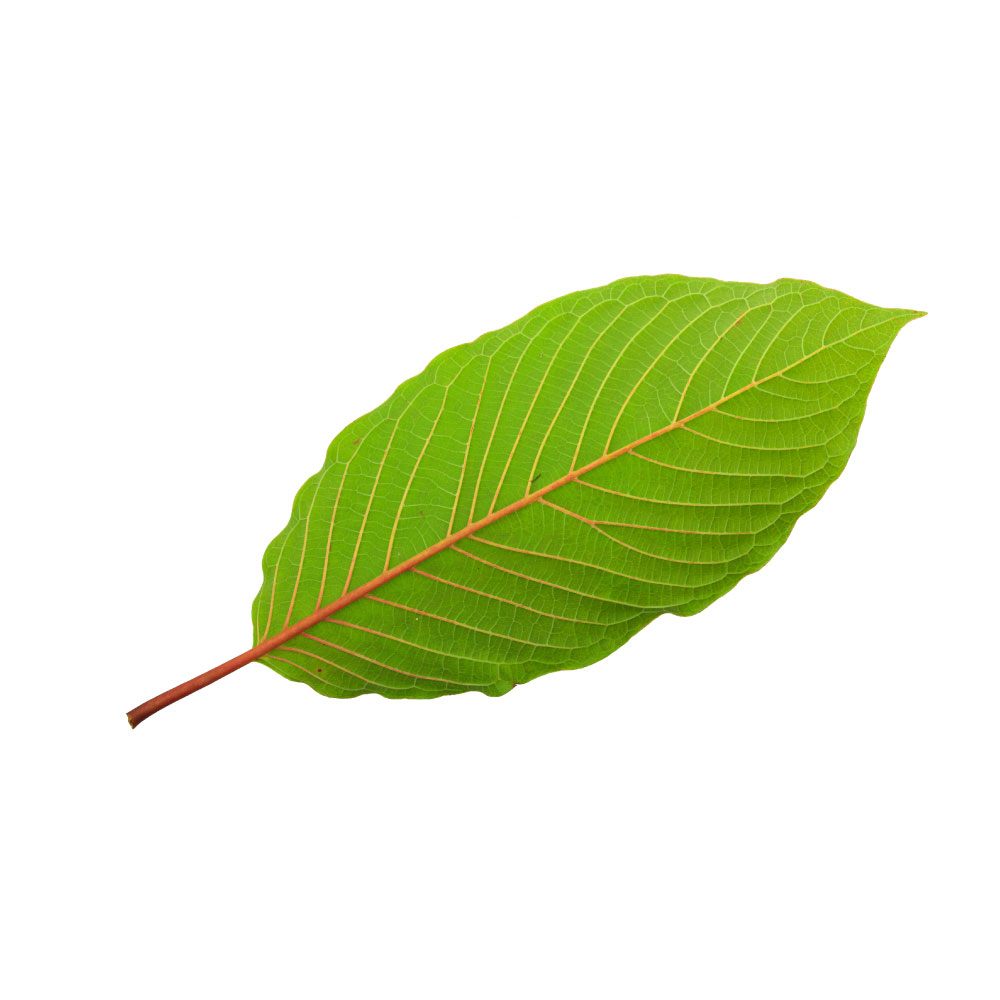
Speciogynine is the third most abundant alkaloid of kratom (Mitragyna speciosa) and a diastereomer of mitragynine — the same atoms with one stereocentre inverted, which abolishes opioid agonism and replaces it with nanomolar affinity at serotonin 5-HT1A and 5-HT2B receptors.

Sources · 2
Where Does It Come From?
Speciogynine is a naturally occurring corynanthe-type monoterpene indole alkaloid (mitragynine diastereomer), found in Kratom and 1 other source. It is flagged as moderately toxic.
Concentration
Content by Source
Reported concentrations across the plants that contain speciogynine — the bar marks the typical level, the line shows the reported range.
Literature figures for varying plant parts and preparations. Read them as a comparative guide, not exact assays.
Speciogynine at a Glance
Speciogynine is the third most abundant alkaloid in kratom leaf (Mitragyna speciosa), sitting behind mitragynine and paynantheine at roughly 7% of the leaf alkaloid fraction 9,
That one inversion changes almost everything. Mitragynine is a partial agonist at the human µ-opioid receptor; speciogynine is not an agonist at all, and instead binds serotonin 5-HT1A and 5-HT2B receptors at low-nanomolar concentrations that mitragynine never reaches 1,
Be clear about the depth of the evidence, though. Speciogynine has never been given to a human as an isolated compound. Its pharmacology rests on in-vitro receptor panels and a small number of rodent studies, mostly from one research group; its human data amount to appearing as a measured analyte in a single six-person kratom pharmacokinetic study 7Reference 7Clinical pharmacokinetic assessment of kratom (Mitragyna speciosa), a botanical product with opioid-like effects, in healthy adult participantsView study →. The widely repeated description of it as a “smooth-muscle relaxant” turns out to be difficult to source at all (see below).
The Three Mitragynine Diastereomers
Kratom leaf contains four molecules with the same formula and skeleton, differing only at stereocentres C-3 and C-20: mitragynine, speciogynine, speciociliatine and mitraciliatine 3,
| Alkaloid | C-3 | C-15 | C-20 | Ring C/D conformation | Relationship to mitragynine |
|---|---|---|---|---|---|
| Mitragynine | S | S | S | flat trans-quinolizidine | — (the reference) |
| Speciogynine | S | S | R | flat trans-quinolizidine | C-20 epimer |
| Speciociliatine | R | S | S | folded cis-quinolizidine | C-3 epimer |
| Mitraciliatine | R | S | R | folded cis-quinolizidine | both centres inverted |
Paynantheine shares speciogynine’s 3S,15S,20R configuration but carries a vinyl group at C-20 in place of speciogynine’s ethyl — which is why the two behave so similarly in receptor assays 2Reference 2Activity of Mitragyna speciosa (“kratom”) alkaloids at serotonin receptorsView study →.
The consequence of the C-20 inversion is geometric rather than electronic. In mitragynine the β-methoxyacrylate substituent sits roughly in the plane of the molecule; in speciogynine and paynantheine the 20R configuration swings it perpendicular to that plane 2Reference 2Activity of Mitragyna speciosa (“kratom”) alkaloids at serotonin receptorsView study →. The C-3 inversion does something different again — it folds the C/D ring junction from a flat trans-quinolizidine into a cis-quinolizidine, increasing the molecule’s volume and pushing the acrylate into an axial orientation 3,
Two Stereocentres, Two Different Consequences
The most useful thing to say is that the two stereocentres do not do the same job.
C-20 governs receptor pharmacology. Kruegel and colleagues characterised all four major alkaloids at human opioid receptors in G-protein BRET assays. Mitragynine was a partial agonist at hMOR (EC50 0.339 µM, Emax 34% of DAMGO). Speciogynine — differing only at C-20 — showed no measurable agonist activity at any human opioid receptor up to 100 µM, behaving instead as a weak competitive antagonist (IC50 5.7 µM at hMOR) 1Reference 1Synthetic and receptor signaling explorations of the Mitragyna alkaloids: mitragynine as an atypical molecular framework for opioid receptor modulatorsView study →. The authors’ own summary is blunt: epimerisation at that position “was sufficient to switch from agonist to antagonist activity”, and docking suggests the inverted C-20 substituent shifts the indole toward TM1, losing the hydrophobic contacts that mitragynine’s methoxy group makes with V143 and I144 1Reference 1Synthetic and receptor signaling explorations of the Mitragyna alkaloids: mitragynine as an atypical molecular framework for opioid receptor modulatorsView study →. The same inversion creates a serotonergic profile: speciogynine’s 5-HT1A affinity is roughly 150-fold higher than mitragynine’s 2Reference 2Activity of Mitragyna speciosa (“kratom”) alkaloids at serotonin receptorsView study →.
C-3 governs pharmacokinetics. In the only human pharmacokinetic study of a well-characterised kratom product, the six alkaloids measured split cleanly along the C-3 axis rather than by potency or abundance. The 3S alkaloids (mitragynine, speciogynine, paynantheine) reached peak plasma concentrations sooner (1–2 h vs 2.5–4.5 h), had lower exposure (AUC 430–490 vs 794–5,120 nM·h), a longer terminal half-life (24–45 h vs ~12–18 h) and a far larger apparent volume of distribution than the 3R alkaloids (speciociliatine, mitraciliatine, isopaynantheine) 7Reference 7Clinical pharmacokinetic assessment of kratom (Mitragyna speciosa), a botanical product with opioid-like effects, in healthy adult participantsView study →. Follow-up in-vitro work attributed the split to differences in hepatic/intestinal metabolism, plasma protein binding and blood-to-plasma partitioning 7Reference 7Clinical pharmacokinetic assessment of kratom (Mitragyna speciosa), a botanical product with opioid-like effects, in healthy adult participantsView study →.
So the same four molecules can be sorted two different ways depending on the question. Ask what does it do at a receptor and mitragynine groups with speciociliatine (both 20S); ask how does the body handle it and mitragynine groups with speciogynine (both 3S). That is an unusually clean natural experiment.
What It's Used For
Speciogynine’s isolate literature is small and concentrated in a handful of laboratories. Read the per-application basis carefully — none of it is human.
Support is an experimental score — weighted by study type (human > animal > in vitro) and volume. A beta, not a validated metric. All four rows here are preclinical; the scores rank the quality and quantity of preclinical evidence, not clinical usefulness.
The strongest speciogynine-specific signal, and entirely isolate work. León and colleagues screened kratom alkaloids across human serotonin receptors and found speciogynine and paynantheine were the only two to displace >50% of radioligand at 100 nM. Measured affinities were 5-HT1A Ki 38.5 nM and 5-HT2B Ki 23.0 nM, against mitragynine’s 5,880 nM and 1,260 nM 2Reference 2Activity of Mitragyna speciosa (“kratom”) alkaloids at serotonin receptorsView study →.
In rats, intraperitoneal speciogynine (17.8 mg/kg) produced lower-lip retraction — a 5-HT1A-mediated behaviour — in 100% of animals, and intravenous speciogynine produced antinociception with an ED50 of 5.92 mg/kg; both effects were blunted by the selective 5-HT1A antagonist WAY 100635, i.e. they were opioid-independent 2Reference 2Activity of Mitragyna speciosa (“kratom”) alkaloids at serotonin receptorsView study →.
The twist: speciogynine itself did not activate 5-HT1A in a cAMP assay. Its 9-O-desmethyl metabolite (gambirine) did, as a full agonist — a metabolite-driven mechanism directly analogous to mitragynine → 7-hydroxymitragynine, but on the serotonergic axis instead of the opioid one 2Reference 2Activity of Mitragyna speciosa (“kratom”) alkaloids at serotonin receptorsView study →.
Gap: one research group, rodents only, and the parent-versus-metabolite question is unresolved for oral exposure — the in-vivo work used intraperitoneal and intravenous routes, and metabolite formation after oral kratom has not been characterised 2Reference 2Activity of Mitragyna speciosa (“kratom”) alkaloids at serotonin receptorsView study →.
Important mainly as a negative result, and the reason it must not borrow mitragynine’s evidence. In human-receptor BRET assays, speciogynine bound hMOR with Ki 0.728 µM (mitragynine 0.233 µM; 7-hydroxymitragynine 0.047 µM) but produced no measurable agonist response at hMOR, hKOR or hDOR at concentrations up to 100 µM, acting only as a weak competitive antagonist (hMOR IC50 5.7 µM) 1Reference 1Synthetic and receptor signaling explorations of the Mitragyna alkaloids: mitragynine as an atypical molecular framework for opioid receptor modulatorsView study →.
Its affinity at hKOR was 3.2 µM and at hDOR >10 µM 1Reference 1Synthetic and receptor signaling explorations of the Mitragyna alkaloids: mitragynine as an atypical molecular framework for opioid receptor modulatorsView study →.
A separate binding panel from a different laboratory reached the same qualitative conclusion for the diastereomer set, though its absolute affinities differ — that panel put speciociliatine above mitragynine at hMOR, the opposite ordering to the BRET study, so the numbers are assay-dependent even where the direction of the SAR is not 25Reference 25Investigation of the adrenergic and opioid binding affinities, metabolic stability, plasma protein binding properties, and functional effects of selected indole-based kratom alkaloidsView study →.
Kruegel’s authors drew the ecologically interesting inference: because these non-agonist alkaloids together roughly match mitragynine’s share of the alkaloid fraction, crude kratom is a mixture of competing agonist and antagonist activity at the same receptor, not a mitragynine delivery vehicle 1Reference 1Synthetic and receptor signaling explorations of the Mitragyna alkaloids: mitragynine as an atypical molecular framework for opioid receptor modulatorsView study →.
Gap: speciogynine has not been tested for opioid-receptor function in vivo as an isolate, and derivatives point elsewhere — a synthetic 7-hydroxyspeciogynine showed δ-receptor potency with limited µ activity and reduced alcohol intake in mice, but that is a made analogue, not the natural alkaloid 22,
A single, recent, genuinely speciogynine-specific finding. Working from LC-MS/MS molecular networking of M. speciosa extracts, Garba and colleagues purified speciogynine and isopaynantheine from leaf and tested them in a zebrafish seizure model. Speciogynine produced a significant, dose-dependent reduction in hyperactive movement with what the authors described as mild toxic effects, and they flagged it as a possible anti-epileptic lead 19Reference 19Identification of the anti-epileptic effect of speciogynine through molecular network-aided metabolite profiling of M. speciosa alkaloids using zebrafishView study →.
This is purified-isolate work, not extract work — a strength — but it is one study in one model organism.
Gap: no mammalian seizure model, no mechanism, no replication. Nothing here supports any human use.
The claim the worklist arrived with — and the one that does not hold up. Kratom compendia and secondary sources routinely describe speciogynine as a “smooth-muscle relaxant”, but a systematic PubMed search for speciogynine paired with smooth muscle, ileum or tracheal preparations returns no primary study on the isolated alkaloid. The Mitragyna smooth-muscle literature that does exist was run on other molecules: the electrically-stimulated guinea-pig ileum work characterised mitragynine and speciociliatine, and corynantheidine’s ileum antagonism was likewise measured on corynantheidine, not speciogynine 3,
Antispasmodic effects reported for whole kratom leaf extract are extract-level findings that cannot be assigned to a single alkaloid.
Gap: this is an unsourced attribution, most likely propagated from a secondary compilation. Until someone runs speciogynine on an isolated-tissue preparation, the page should treat the muscle-relaxant label as unverified, not as thin evidence.
Mechanisms
| Target / pathway | Effect | Relevant to |
|---|---|---|
| 5-HT1A receptor | binds at Ki 38.5 nM (mitragynine 5,880 nM) but does not activate cAMP signalling; the 9-O-desmethyl metabolite is a full agonist | antinociceptionlower-lip retractionpossible mood effects |
| 5-HT2B receptor | binds at Ki 23.0 nM with no agonist activity; the metabolite is an inverse partial agonist | argues against 5-HT2B-mediated valvulopathy risk |
| 5-HT2A / 5-HT2C / 5-HT7 | weak — Ki 1,320 / 5,430 / 1,600 nM | probably not contributors |
| µ-opioid receptor (hMOR) | binds (Ki 0.728 µM) without activating; weak competitive antagonist (IC50 5.7 µM) | why speciogynine does not carry mitragynine’s opioid profile |
| κ- and δ-opioid receptors | Ki 3.2 µM (κ) and >10 µM (δ); no functional activity below 10 µM | negligible |
| hERG / IKr potassium current | inhibition in human iPSC-derived cardiomyocytes, IC50 1.02 µM | the main isolate toxicology signal |
| CYP2C19 and CYP2D6 | moderate inhibition in human liver microsomes | drug-interaction potential |
| Blood–brain barrier (PAMPA-BBB) | high in-vitro permeability, comparable to mitragynine | CNS availability |
The load-bearing contrast is the first two rows against the fourth: speciogynine occupies the µ-opioid receptor without turning it on, while binding two serotonin receptors two orders of magnitude more tightly than its famous diastereomer does.
Pharmacokinetics
Speciogynine crosses the blood–brain barrier readily in vitro — a PAMPA-BBB assay ranked it, with mitragynine, paynantheine and speciociliatine, among kratom’s BBB-permeable alkaloids 21Reference 21Kratom alkaloids: a blood-brain barrier specific membrane permeability assay-guided isolation and cyclodextrin complexation studyView study →. Systemic exposure after oral kratom is poor, though. In rats given either a traditional lyophilised kratom tea or a commercial liquid product, mitragynine, 7-hydroxymitragynine, speciociliatine and corynantheidine were still measurable eight hours post-dose, while speciogynine and paynantheine were quantifiable only out to one hour 8Reference 8AnimalPharmacokinetics of eleven kratom alkaloids following an oral dose of either traditional or commercial kratom products in ratsView study →. Given intravenously to rats at 1.25 mg/kg, speciogynine showed biexponential decay, a volume of distribution well above rat blood volume (extensive tissue distribution), and faster clearance than mitragynine — dose-normalised exposure for mitragynine was 1.7-fold higher 2Reference 2Activity of Mitragyna speciosa (“kratom”) alkaloids at serotonin receptorsView study →.
In humans, speciogynine has only ever been measured as an analyte after whole-kratom dosing. In six healthy adults given 2 g of a characterised kratom product, it behaved as a 3S alkaloid: median Tmax 1–2 h, comparatively low AUC (430–490 nM·h for the 3S group), a long terminal half-life of 24–45 h, and a very large apparent volume of distribution 7Reference 7Clinical pharmacokinetic assessment of kratom (Mitragyna speciosa), a botanical product with opioid-like effects, in healthy adult participantsView study →.
Metabolism was mapped by Philipp and colleagues, who identified nine phase I and eight phase II metabolites in rat urine but only three phase I and five phase II in human urine after kratom use — the smaller human set most likely reflecting the far lower dose reached through leaf consumption 9Reference 9AnimalPhase I and II metabolites of speciogynine, a diastereomer of the main kratom alkaloid mitragynine, identified in rat and human urine by liquid chromatography coupled to low- and high-resolution linear ion trap mass spectrometryView study →. The chromatography had to be substantially improved before speciogynine and its metabolites could be told apart from mitragynine’s, which is the recurring analytical theme of this molecule 9Reference 9AnimalPhase I and II metabolites of speciogynine, a diastereomer of the main kratom alkaloid mitragynine, identified in rat and human urine by liquid chromatography coupled to low- and high-resolution linear ion trap mass spectrometryView study →. The metabolite that matters pharmacologically is 9-O-desmethylspeciogynine (gambirine), the 5-HT1A agonist described above 2Reference 2Activity of Mitragyna speciosa (“kratom”) alkaloids at serotonin receptorsView study →.
Clinical Trials
No trial has ever administered isolated speciogynine to a person. The single piece of human data is its appearance as one of the alkaloids quantified in a six-participant pharmacokinetic study of a whole kratom product 7Reference 7Clinical pharmacokinetic assessment of kratom (Mitragyna speciosa), a botanical product with opioid-like effects, in healthy adult participantsView study →, plus validated bioanalytical methods that include it in human plasma and urine panels 9Reference 9AnimalPhase I and II metabolites of speciogynine, a diastereomer of the main kratom alkaloid mitragynine, identified in rat and human urine by liquid chromatography coupled to low- and high-resolution linear ion trap mass spectrometryView study →.
| Completed | Planned | Terminated | Preclinical |
|---|---|---|---|
| None for the isolate (one human whole-kratom PK study measured it as an analyte) | — | — | Human receptor binding/function, rat PK and antinociception, zebrafish seizure model, hERG cardiomyocyte assay |
Last checked: July 2026.
Its Role in the Kratom Alkaloid Fingerprint
Speciogynine’s most practical significance may be analytical rather than pharmacological. Because kratom’s four main indole alkaloids are stereoisomers with identical masses and near-identical fragmentation, distinguishing them is a genuine methodological problem — and speciogynine is one of the hardest to place.
Several strands of work exist purely to solve this. Flores-Bocanegra and colleagues generated full NMR, HRESIMS and ECD reference data for nineteen kratom alkaloids and built a decision tree that separates mitragynine from speciogynine, speciociliatine and mitraciliatine on a few key chemical shifts 14Reference 14The chemistry of kratom [Mitragyna speciosa]: updated characterization data and methods to elucidate indole and oxindole alkaloidsView study →. UPLC-MS/MS methods explicitly report chromatographic resolution of the diastereomers as a validation criterion 12Reference 12Simultaneous quantification of ten key kratom alkaloids in Mitragyna speciosa leaf extracts and commercial products by ultra-performance liquid chromatography-tandem mass spectrometryView study →, and Philipp’s urine work had to establish distinct retention times by dosing rats with each single alkaloid before human samples could be interpreted 9Reference 9AnimalPhase I and II metabolites of speciogynine, a diastereomer of the main kratom alkaloid mitragynine, identified in rat and human urine by liquid chromatography coupled to low- and high-resolution linear ion trap mass spectrometryView study →. Most recently, high-resolution cyclic ion-mobility imaging resolved the stereoisomers in situ in kratom tissue, showing that speciogynine and speciociliatine concentrate in the bark, especially the epidermis, while mitragynine is distributed broadly through the twig except the xylem 24Reference 24Spatial mapping of stereoisomeric and isobaric alkaloids in Mitragyna speciosa tissues by high-resolution DESI-cIM-MSView study →.
The ratios matter too. Quantitative surveys reveal distinct chemotypes: a US-grown M. speciosa “Rifat” line carried unusually high speciogynine (7.94–11.55 mg/g) with quantifiable isomitraphylline, a profile quite unlike the mitragynine-dominant commercial products in the same study 13Reference 13Kratom (Mitragyna speciosa) validation: quantitative analysis of indole and oxindole alkaloids reveals chemotypes of plants and productsView study →. Speciogynine is therefore a useful discriminator of plant provenance and product type, alongside mitragynine, paynantheine and ajmalicine 12,
Isolate vs. Plant Studies
This molecule inverts the usual caveat in an unusual way. Almost all of speciogynine’s evidence is isolate evidence — purified compound in receptor panels 1,
Here it is also the limitation, because the isolate work is entirely non-human. The only human evidence involving speciogynine is whole-plant: plasma concentration-time profiles after a 2 g kratom dose 7Reference 7Clinical pharmacokinetic assessment of kratom (Mitragyna speciosa), a botanical product with opioid-like effects, in healthy adult participantsView study →. So the transferability problem runs backwards from the usual direction — we know a fair amount about what pure speciogynine does to a receptor, and essentially nothing about what it does to a person.
There is a second, subtler transferability issue. Because speciogynine acts partly through a metabolite (9-O-desmethylspeciogynine), and because that metabolite’s formation depends on route and first-pass metabolism, in-vitro assays on the parent compound systematically understate its in-vivo activity — the León group observed exactly this discrepancy and proposed the metabolite to explain it 2Reference 2Activity of Mitragyna speciosa (“kratom”) alkaloids at serotonin receptorsView study →.
Prevalence in Nature
Speciogynine is, as far as the published record goes, effectively a Mitragyna molecule. Its principal source is kratom leaf (Mitragyna speciosa), where it is consistently the third most abundant alkaloid after mitragynine and paynantheine 9,
Absolute concentrations vary widely with chemotype, plant part, vein colour, season and geography. Quantitative NMR of Malaysian material found 7.69 mg/g in red-veined leaf (against 32.34 mg/g mitragynine), with lower levels in green-veined leaf, stem bark and fruit 20Reference 20Quantitative analysis of selected alkaloids of Mitragyna speciosa using 1H quantitative nuclear magnetic resonance spectroscopyView study →. US-grown “Rifat” plants reached 7.94–11.55 mg/g 13Reference 13Kratom (Mitragyna speciosa) validation: quantitative analysis of indole and oxindole alkaloids reveals chemotypes of plants and productsView study →. Across commercial powders, extracts and lyophilised teas, speciogynine ranged from 0.1% to 5.3% w/w 12Reference 12Simultaneous quantification of ten key kratom alkaloids in Mitragyna speciosa leaf extracts and commercial products by ultra-performance liquid chromatography-tandem mass spectrometryView study →. A 745-sample Thai survey tracked speciogynine alongside mitragynine and paynantheine across three regions and multiple seasons, and found alkaloid accumulation varied several-fold with season, soil calcium and magnesium, and geographic origin 26Reference 26Seasonal and geographic variation in alkaloid content of kratom (Mitragyna speciosa (Korth.) Havil.) from ThailandView study →. Within a single twig it is not evenly spread — ion-mobility imaging localised it chiefly to the bark and epidermis 24Reference 24Spatial mapping of stereoisomeric and isobaric alkaloids in Mitragyna speciosa tissues by high-resolution DESI-cIM-MSView study →.
Outside M. speciosa, speciogynine was isolated from the leaves of the West African Mitragyna inermis in 1971 18Reference 18Isolation of speciogynine from the leaves of Mitragyna inermis (Willd.), OView study →. Shellard’s systematic survey of the Asian Mitragyna species documented related corynanthe alkaloids in M. hirsuta and M. javanica, though the mitragynine-type set is characteristic of M. speciosa. No credible report places speciogynine outside the genus.
Discovery & Synthesis
Speciogynine was first reported in 1965 by Beckett, Shellard, Phillipson and Lee, in the course of the systematic King’s College survey of Asian Mitragyna alkaloids that also turned up speciociliatine and mitraciliatine 6Reference 6Alkaloids from Mitragyna speciosa (Korth.)View study →. The name follows the convention used across that series — specio- from speciosa, with the -gynine suffix shared with the corynantheidine-type indoles. Its absolute configuration was assigned in 1967 by Lee, Trager and Beckett, in a paper that placed all four diastereomers on a common stereochemical footing, and was chemically confirmed the following year 4,
Total synthesis arrived much later and has always been pursued alongside mitragynine. Kerschgens and colleagues reached (+)-speciogynine (with (−)-mitragynine and (+)-paynantheine) in nine steps from 4-methoxytryptamine, using an enantioselective thiourea-catalysed Pictet–Spengler reaction to build the tetrahydro-β-carboline and a palladium-catalysed Tsuji–Trost allylic alkylation to close the D-ring 16Reference 16Total syntheses of mitragynine, paynantheine and speciogynine via an enantioselective thiourea-catalysed Pictet-Spengler reactionView study →. A 2022 asymmetric route from Chiba University produced mitragynine, speciogynine and 7-hydroxymitragynine in 12 steps at >11% overall yield via an organocatalytic anti-selective Michael reaction 17Reference 17Asymmetric total syntheses of mitragynine, speciogynine, and 7-hydroxymitragynineView study →.
The most elegant route is biosynthetic. In 2023 Schotte and co-workers identified the enzymes responsible for the corynanthe scaffold and, critically, the mechanism by which the key stereocentre is set — then leveraged that understanding to produce mitragynine, the C-20 epimer speciogynine, and fluorinated analogues enzymatically 15Reference 15Directed biosynthesis of mitragynine stereoisomersView study →. Related work has established the wider kratom alkaloid pathway and reconstituted parts of it in yeast.
Manufacture today is not really manufacture. Speciogynine is not produced commercially; it exists as an analytical reference standard, obtained by chromatographic isolation from kratom leaf or extract 14,
Patents: not yet researched.
Toxicity & Safety
Speciogynine carries a moderate flag. Not because it has a documented human toxicity — it has none, in either direction — but because the isolate data that do exist include a real cardiac-channel signal, it inhibits two drug-metabolising enzymes, and it is a constituent of a plant that is regulated or prohibited in a number of jurisdictions.
- No µ-opioid agonism. In human receptor assays speciogynine occupies but does not activate µ, κ or δ receptors up to 100 µM — mitragynine’s opioid risk profile does not transfer to it 1Reference 1Synthetic and receptor signaling explorations of the Mitragyna alkaloids: mitragynine as an atypical molecular framework for opioid receptor modulatorsView study →.
- No 5-HT2B activation. Despite binding 5-HT2B at 23 nM, neither speciogynine nor its metabolite activates the receptor, which argues against the valvular heart risk associated with chronic 5-HT2B agonists 2Reference 2Activity of Mitragyna speciosa (“kratom”) alkaloids at serotonin receptorsView study →.
- A genuine hERG/QT signal. Speciogynine inhibited the IKr potassium current in human iPSC-derived cardiomyocytes with an IC50 of 1.02 µM — close to mitragynine’s 0.91 µM 10Reference 10Evaluation of the cardiotoxicity of mitragynine and its analogues using human induced pluripotent stem cell-derived cardiomyocytesView study →.
- Never given to a human as an isolate. No dose, no safety margin, no repeat-dose, genotoxicity or reproductive-toxicity dataset exists for the pure compound.
- Drug-interaction potential. Moderate inhibition of CYP2C19 and CYP2D6 in human liver microsomes; kratom as a whole is an established CYP3A inhibitor 11Reference 11Exploration of cytochrome P450 inhibition mediated drug-drug interaction potential of kratom alkaloidsView study →.
- Legal status. Kratom and its alkaloids are controlled or restricted in several countries and US states; what follows is pharmacology, not a use guide.
Full Safety & Interactions Detail
Cardiac (the main isolate finding). Lu and colleagues tested mitragynine and three of its analogues on human induced-pluripotent-stem-cell-derived cardiomyocytes. All four dose-dependently suppressed the rapid delayed-rectifier potassium current IKr; speciogynine’s IC50 was 1.02 µM, against 0.91 µM for mitragynine, 1.48 µM for speciociliatine and 2.47 µM for paynantheine, with maximum inhibition of about 68% at 100 µM 10Reference 10Evaluation of the cardiotoxicity of mitragynine and its analogues using human induced pluripotent stem cell-derived cardiomyocytesView study →. The downstream consequences — action-potential prolongation at APD50/APD90 and induced arrhythmia — were demonstrated for mitragynine specifically, not for speciogynine, so the honest statement is that speciogynine shares the channel-block liability but its arrhythmogenic potential has not been directly shown 10Reference 10Evaluation of the cardiotoxicity of mitragynine and its analogues using human induced pluripotent stem cell-derived cardiomyocytesView study →. The authors noted these concentrations sit close to plasma levels reported in fatal kratom cases.
Drug interactions. In human liver microsomes, speciogynine showed moderate inhibition of CYP2C19 (reported at an IC50 of roughly 19.5 µM) and moderate inhibition of CYP2D6, without activity at CYP1A2, 2C8, 2C9 or 3A4/5 11,
What is not known. There is no acute or repeat-dose toxicology for isolated speciogynine, no genotoxicity package, and no reproductive or developmental data. The zebrafish anticonvulsant study reported “mild toxic effects” at active concentrations without characterising them 19Reference 19Identification of the anti-epileptic effect of speciogynine through molecular network-aided metabolite profiling of M. speciosa alkaloids using zebrafishView study →. Kratom’s documented human harms — dependence, withdrawal, rare cholestatic liver injury, respiratory depression in overdose and polydrug settings — are attributed to mitragynine and 7-hydroxymitragynine, and should not be assigned to speciogynine, which lacks opioid agonist activity entirely 1,
Reproductive note (prose only). No reproductive or developmental toxicity data exist for isolated speciogynine. Pregnancy and lactation decisions belong on the kratom herb page, where intake is actually decided, not on a molecule-level phytochemistry page.
Doses Used in Research
There is no human dose for speciogynine, and this section is not dosing guidance. No preparation, extraction or use instructions are given here or anywhere else. The figures below are animal research doses, recorded so that the pharmacology above can be read in context.
| Setting | Species / route | Dose |
|---|---|---|
| Pharmacokinetics | Rat, intravenous | 1.25 mg/kg single dose 2Reference 2Activity of Mitragyna speciosa (“kratom”) alkaloids at serotonin receptorsView study → |
| Antinociception (hotplate) | Rat, intravenous | ED50 5.92 mg/kg (95% CI 4.13–8.35) 2Reference 2Activity of Mitragyna speciosa (“kratom”) alkaloids at serotonin receptorsView study → |
| Lower-lip retraction (5-HT1A behaviour) | Rat, intraperitoneal | 17.8 mg/kg 2Reference 2Activity of Mitragyna speciosa (“kratom”) alkaloids at serotonin receptorsView study → |
| Metabolite identification | Rat, oral, pure alkaloid | High single dose (unspecified in report) 9Reference 9AnimalPhase I and II metabolites of speciogynine, a diastereomer of the main kratom alkaloid mitragynine, identified in rat and human urine by liquid chromatography coupled to low- and high-resolution linear ion trap mass spectrometryView study → |
| Seizure model | Zebrafish larvae | Dose-dependent range 19Reference 19Identification of the anti-epileptic effect of speciogynine through molecular network-aided metabolite profiling of M. speciosa alkaloids using zebrafishView study → |
| Any human use | — | None. Never administered as an isolate. |
Human exposure occurs only incidentally, as one alkaloid among dozens in kratom leaf; in the one controlled human study, a 2 g kratom dose produced measurable but low speciogynine plasma concentrations 7Reference 7Clinical pharmacokinetic assessment of kratom (Mitragyna speciosa), a botanical product with opioid-like effects, in healthy adult participantsView study →. These are doses used in research and are not a personal recommendation.
References
- Kruegel AC, et al. (2016). Synthetic and receptor signaling explorations of the Mitragyna alkaloids: mitragynine as an atypical molecular framework for opioid receptor modulators. Journal of the American Chemical Society. https://pubmed.ncbi.nlm.nih.gov/27192616/
- León F, et al. (2021). Activity of Mitragyna speciosa (“kratom”) alkaloids at serotonin receptors. Journal of Medicinal Chemistry. https://pubmed.ncbi.nlm.nih.gov/34467758/
- Karunakaran T, et al. (2022). The chemical and pharmacological properties of mitragynine and its diastereomers: an insight review. Frontiers in Pharmacology. https://pubmed.ncbi.nlm.nih.gov/35281925/
- Lee CM, Trager WF, Beckett AH (1967). Corynantheidine-type alkaloids. II. Absolute configuration of mitragynine, speciociliatine, mitraciliatine and speciogynine. Tetrahedron. https://pubmed.ncbi.nlm.nih.gov/6037287/
- Trager WF, Phillipson JD, Beckett AH (1968). Chemical confirmation for the configurations assigned to the indole alkaloids, speciogynine, speciociliatine, mitraciliatine and hirsutine. Tetrahedron. https://pubmed.ncbi.nlm.nih.gov/5641278/
- Beckett AH, Shellard EJ, Phillipson JD, Lee CM (1965). Alkaloids from Mitragyna speciosa (Korth.). Journal of Pharmacy and Pharmacology. https://pubmed.ncbi.nlm.nih.gov/4379809/
- Tanna RS, et al. (2022). Clinical pharmacokinetic assessment of kratom (Mitragyna speciosa), a botanical product with opioid-like effects, in healthy adult participants. Pharmaceutics. https://pubmed.ncbi.nlm.nih.gov/35335999/
- Kamble SH, et al. (2021). Pharmacokinetics of eleven kratom alkaloids following an oral dose of either traditional or commercial kratom products in rats. Journal of Natural Products. https://pubmed.ncbi.nlm.nih.gov/33620222/
- Philipp AA, et al. (2010). Phase I and II metabolites of speciogynine, a diastereomer of the main kratom alkaloid mitragynine, identified in rat and human urine by liquid chromatography coupled to low- and high-resolution linear ion trap mass spectrometry. Journal of Mass Spectrometry. https://pubmed.ncbi.nlm.nih.gov/20967737/
- Lu J, et al. (2014). Evaluation of the cardiotoxicity of mitragynine and its analogues using human induced pluripotent stem cell-derived cardiomyocytes. PLoS One. https://pubmed.ncbi.nlm.nih.gov/25535742/
- Kamble SH, et al. (2020). Exploration of cytochrome P450 inhibition mediated drug-drug interaction potential of kratom alkaloids. Toxicology Letters. https://pubmed.ncbi.nlm.nih.gov/31707106/
- Sharma A, et al. (2019). Simultaneous quantification of ten key kratom alkaloids in Mitragyna speciosa leaf extracts and commercial products by ultra-performance liquid chromatography-tandem mass spectrometry. Drug Testing and Analysis. https://pubmed.ncbi.nlm.nih.gov/30997725/
- Manwill PK, et al. (2022). Kratom (Mitragyna speciosa) validation: quantitative analysis of indole and oxindole alkaloids reveals chemotypes of plants and products. Planta Medica. https://pubmed.ncbi.nlm.nih.gov/35468648/
- Flores-Bocanegra L, et al. (2020). The chemistry of kratom [Mitragyna speciosa]: updated characterization data and methods to elucidate indole and oxindole alkaloids. Journal of Natural Products. https://pubmed.ncbi.nlm.nih.gov/32597657/
- Schotte C, et al. (2023). Directed biosynthesis of mitragynine stereoisomers. Journal of the American Chemical Society. https://pubmed.ncbi.nlm.nih.gov/36883326/
- Kerschgens IP, et al. (2012). Total syntheses of mitragynine, paynantheine and speciogynine via an enantioselective thiourea-catalysed Pictet-Spengler reaction. Chemical Communications. https://pubmed.ncbi.nlm.nih.gov/23150886/
- Sakamoto J, Kitajima M, Ishikawa H (2022). Asymmetric total syntheses of mitragynine, speciogynine, and 7-hydroxymitragynine. Chemical and Pharmaceutical Bulletin. https://pubmed.ncbi.nlm.nih.gov/36047237/
- Shellard EJ, Sarpong K (1971). Isolation of speciogynine from the leaves of Mitragyna inermis (Willd.), O. Kuntze. Journal of Pharmacy and Pharmacology. https://pubmed.ncbi.nlm.nih.gov/4397465/
- Garba SA, et al. (2025). Identification of the anti-epileptic effect of speciogynine through molecular network-aided metabolite profiling of M. speciosa alkaloids using zebrafish. Fitoterapia. https://pubmed.ncbi.nlm.nih.gov/40499659/
- Garba SA, et al. (2024). Quantitative analysis of selected alkaloids of Mitragyna speciosa using 1H quantitative nuclear magnetic resonance spectroscopy. Magnetic Resonance in Chemistry. https://pubmed.ncbi.nlm.nih.gov/39189504/
- Dohárszky A, et al. (2024). Kratom alkaloids: a blood-brain barrier specific membrane permeability assay-guided isolation and cyclodextrin complexation study. Molecules. https://pubmed.ncbi.nlm.nih.gov/39598691/
- Gutridge AM, et al. (2021). Evaluation of kratom opioid derivatives as potential treatment option for alcohol use disorder. Frontiers in Pharmacology. https://pubmed.ncbi.nlm.nih.gov/34803709/
- Gutridge AM, et al. (2020). G protein-biased kratom-alkaloids and synthetic carfentanil-amide opioids as potential treatments for alcohol use disorder. British Journal of Pharmacology. https://pubmed.ncbi.nlm.nih.gov/31705528/
- Wisanpitayakorn P, et al. (2025). Spatial mapping of stereoisomeric and isobaric alkaloids in Mitragyna speciosa tissues by high-resolution DESI-cIM-MS. Analytical Chemistry. https://pubmed.ncbi.nlm.nih.gov/41234027/
- Obeng S, et al. (2020). Investigation of the adrenergic and opioid binding affinities, metabolic stability, plasma protein binding properties, and functional effects of selected indole-based kratom alkaloids. Journal of Medicinal Chemistry. https://pubmed.ncbi.nlm.nih.gov/31834797/
- Sengnon N, et al. (2023). Seasonal and geographic variation in alkaloid content of kratom (Mitragyna speciosa (Korth.) Havil.) from Thailand. Plants. https://pubmed.ncbi.nlm.nih.gov/36840297/



