
Compound Monograph
Petunidin
Petunidin is a purple-blue anthocyanidin pigment — the 3'-O-methyl ether of delphinidin, sitting between delphinidin and malvidin in the methylation series. It colors grapes, bilberries and blueberries as its glycosides (chiefly petunidin-3-glucoside), but as the free aglycone it is chemically unstable and barely bioavailable, so almost all evidence is class-level or whole-food.

Sources · 8
Where Does It Come From?
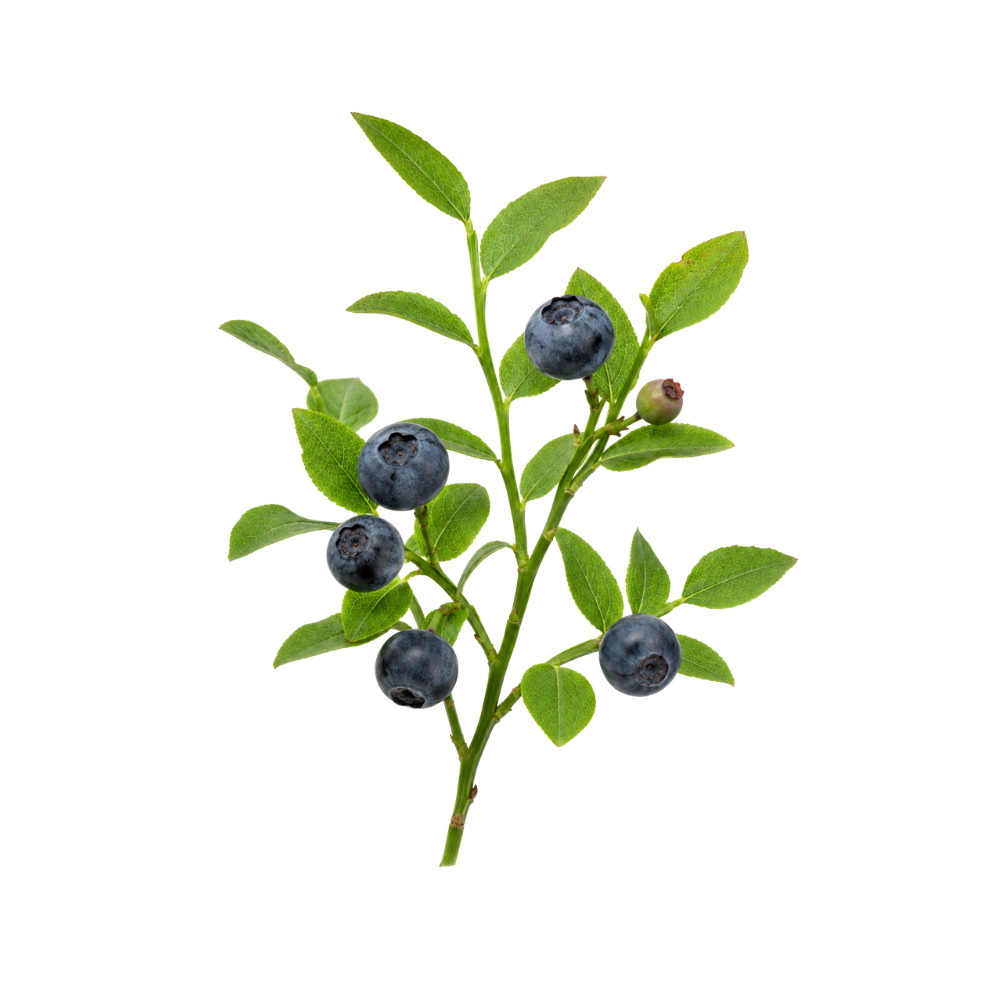
Petunidin is a naturally occurring anthocyanidin (o-methylated flavonoid aglycone), found in Grape, Bilberry, Blueberry and 5 other sources. It is well tolerated orally (low toxicity).
Concentration
Content by Source
Concentrations not reported. No percent-dry-weight or mg/g figures have been published for this compound in its source plants.
Petunidin at a Glance
Petunidin is a purple-blue anthocyanidin — one of the six common dietary anthocyanidin pigments, and structurally the 3’-O-methyl ether of delphinidin. It colors grapes, bilberries, blueberries and many other dark fruits, where, like all anthocyanidins, it occurs almost entirely as glycosides (sugar-bearing anthocyanins, chiefly petunidin-3-glucoside) rather than as the free aglycone.
The single most important thing to know is that petunidin as a free molecule is largely a paper entity in the body. Like its parent delphinidin and its relative cyanidin, the aglycone is chemically unstable at physiological pH and poorly bioavailable, so nearly every “petunidin” finding is really about its glycoside, an anthocyanin mixture (berry or grape extract), or the wider anthocyanin class — not the isolated pigment. Isolate-specific data are minimal.
Its documented properties are the ones shared across the anthocyanin family: antioxidant radical scavenging in the test tube, with a scattering of preclinical signals (antiglycation, bone-cell effects). None of this rests on human outcome trials of petunidin itself.
Petunidin in the Anthocyanidin Series
The six common anthocyanidins differ only in the substitution pattern of their B-ring, and petunidin sits at a specific rung of that ladder. Starting from delphinidin, which carries three hydroxyl groups on the B-ring (3’, 4’, 5’), progressive O-methylation of those meta hydroxyls generates the methylated pigments:
- Delphinidin — 3’,4’,5’-trihydroxy (no methylation); blue-purple.
- Petunidin — one hydroxyl methylated (3’-O-methyl, 4’-OH, 5’-OH); purple-blue. This is petunidin.
- Malvidin — two hydroxyls methylated (3’,5’-di-O-methyl, 4’-OH); the dominant blue-red pigment of red grapes and wine.
So petunidin is the single-methyl intermediate between delphinidin and malvidin. The parallel branch runs from cyanidin (3’,4’-dihydroxy) to peonidin (3’-O-methyl cyanidin), and pelargonidin (4’-hydroxy only) completes the six. Because methylation removes a free hydroxyl, it tends to modestly lower direct antioxidant capacity but improve pigment stability and color — the anthocyanin B-ring antioxidant activity rises with the number of free hydroxyls, so petunidin scavenges somewhat less avidly than delphinidin but more than the doubly-methylated malvidin 1Reference 1Antioxidant activity of anthocyanins and their aglyconsView study →.
That last sentence needs a qualification the hydroxyl count alone does not give. When 15 purified bilberry anthocyanins were ranked side by side against two separate oxidants, petunidin placed second only to delphinidin against superoxide — ahead of both malvidin and the unmethylated cyanidin — and level with cyanidin against peroxynitrite 8Reference 8In vitroSuperoxide radical- and peroxynitrite-scavenging activity of anthocyanins; structure-activity relationship and their synergism — in vitroView study →:
| Radical | Potency order (most → least) |
|---|---|
| Superoxide (O₂⁻) | delphinidin > petunidin > malvidin ≈ cyanidin > (+)-catechin > peonidin > pelargonidin |
| Peroxynitrite (ONOO⁻) | delphinidin > cyanidin ≈ petunidin > malvidin ≈ (+)-catechin > peonidin > pelargonidin |
The reason petunidin ranks higher than “one methyl group down from delphinidin” implies is which hydroxyl it lost. Methylation of the 4’-hydroxyl is what markedly reduces activity in this series, and petunidin’s methyl sits at 3’; its 4’-OH is intact 8Reference 8In vitroSuperoxide radical- and peroxynitrite-scavenging activity of anthocyanins; structure-activity relationship and their synergism — in vitroView study →. So the cost of that first methylation is modest, and petunidin keeps most of the parent’s scavenging power. The same study found that the aglycone structure mattered more than the attached sugar, and that the pigments assayed as a mixture scavenged synergistically — more than their individual activities predicted 8Reference 8In vitroSuperoxide radical- and peroxynitrite-scavenging activity of anthocyanins; structure-activity relationship and their synergism — in vitroView study →. A berry supplies the assortment, not the leader.
In nature petunidin is a characteristic, if usually minor pigment of dark berries and red grapes — bilberry, blueberry, bog bilberry, chokeberry and Vitis vinifera — where it and its glycosides co-occur with the delphinidin- and malvidin-type pigments 4,
What It's Used For
Petunidin’s pharmacology is best read as anthocyanin-class pharmacology, because the isolated aglycone is rarely the thing tested. The evidence splits by whether the study used petunidin itself, its glycoside, or a whole berry/grape mixture — and almost none of it is human.
Support is an experimental score — weighted by study type (human > animal > in vitro) and volume. A beta, not a validated metric. Petunidin has essentially no isolated human data, so scores stay low by design; read each row’s basis.
Petunidin’s B-ring still carries two free hydroxyls (4’, 5’) alongside the 3’-methyl ether, so it is a competent hydrogen-atom/electron donor. In a systematic comparison of anthocyanins and their aglycones, antioxidant activity rose with the number of free B-ring hydroxyls — placing petunidin below tri-hydroxy delphinidin and above the doubly-methylated malvidin 1Reference 1Antioxidant activity of anthocyanins and their aglyconsView study →.
A computational (DFT) profile of the isolated petunidin aglycone independently described strong antioxidant capacity and drug-like, low-predicted-toxicity properties 2Reference 2A computational exploration into the structure, antioxidant capacity, toxicity and drug-like activity of the anthocyanidin “Petunidin”View study →.
A direct ranking of purified bilberry anthocyanins put petunidin second to delphinidin against superoxide and level with cyanidin against peroxynitrite — higher than its methylation would suggest, because the methyl is at 3’ and the 4’-hydroxyl that dominates this activity is untouched 8Reference 8In vitroSuperoxide radical- and peroxynitrite-scavenging activity of anthocyanins; structure-activity relationship and their synergism — in vitroView study →.
Gap: these are cell-free and in silico results; no antioxidant benefit has been shown in humans for isolated petunidin, and the unstable molecule barely reaches tissues intact (see Pharmacokinetics) 1,
Screening bilberry (Vaccinium myrtillus) anthocyanins against methylglyoxal-driven glycation, petunidin-3-O-glucoside showed strong antiglycoxidant capability, with an IC₅₀ of ~132 µM in the methylglyoxal pre-column HPLC assay — among the more effective constituents identified 4Reference 4Screening and characterization of antiglycoxidant anthocyanins from Vaccinium myrtillus fruit using DPPH and methylglyoxal pre-column HPLC assaysView study →.
Gap: this is the glycoside in an in-vitro assay of a berry constituent, not the isolated aglycone and not a human endpoint; petunidin was one of several active anthocyanins 4Reference 4Screening and characterization of antiglycoxidant anthocyanins from Vaccinium myrtillus fruit using DPPH and methylglyoxal pre-column HPLC assaysView study →.
One of the few studies to test the aglycone directly: petunidin stimulated osteoblast differentiation and mineralised-matrix formation (with increased Bmp2/Ocn expression), suppressed sRANKL-induced osteoclastogenesis in culture, and reduced bone loss in an ovariectomised-mouse model 3Reference 3Petunidin, a B-ring 5’-O-methylated derivative of delphinidin, stimulates osteoblastogenesis and reduces sRANKL-induced bone lossView study →. The authors framed the effect as downstream of petunidin’s antioxidative activity.
Gap: a single cell-plus-rodent study; there is no human bone-outcome data for petunidin, and the doses/exposures used do not reflect what the poorly-bioavailable aglycone achieves from diet 3Reference 3Petunidin, a B-ring 5’-O-methylated derivative of delphinidin, stimulates osteoblastogenesis and reduces sRANKL-induced bone lossView study →.
Anthocyanins and anthocyanin-rich extracts show anti-carcinogenic activity in cell and animal models, as summarised in a cancer-prevention review that itself flags poor translation to human epidemiology 7Reference 7Anthocyanins and their role in cancer preventionView study →. Petunidin is one pigment within these mixtures.
Gap: mixtures/extracts, not isolated petunidin, with no confirmed human efficacy attributable to this pigment 7Reference 7Anthocyanins and their role in cancer preventionView study →.
Mechanisms
| Target / pathway | Effect | Relevant to |
|---|---|---|
| B-ring free hydroxyls (4’, 5’) — H-atom/electron donation | direct radical scavenging; activity scales with free-hydroxyl count (delphinidin > petunidin > malvidin) | antioxidant |
| The 4’-hydroxyl specifically | left free by 3’-O-methylation, so petunidin keeps most of delphinidin’s scavenging power; methylating 4’-OH is what collapses it 8Reference 8In vitroSuperoxide radical- and peroxynitrite-scavenging activity of anthocyanins; structure-activity relationship and their synergism — in vitroView study → | structure–activity |
| Methylglyoxal / advanced glycation end-products | trapping / inhibition of glycation (as petunidin-3-glucoside) | antiglycation |
| Osteoblast Bmp2/Ocn expression; sRANKL–osteoclast axis | ↑ osteoblastogenesis, ↓ osteoclastogenesis (aglycone, preclinical) | bone |
| NF-κB / oxidative-stress signalling (class) | suppression of pro-inflammatory/oxidative pathways | class-level anti-inflammatory |
Every row except the bone study reflects the anthocyanin class rather than petunidin tested as an isolate; the methylation of one B-ring hydroxyl is what distinguishes petunidin’s chemistry from delphinidin’s.
Pharmacokinetics
Petunidin shares the anthocyanin family’s defining liability: poor bioavailability and chemical instability. Intact anthocyanins circulate at nanomolar levels in humans, with most of an ingested dose recovered as downstream phenolic-acid and conjugated metabolites rather than the parent pigment 6Reference 6The pharmacokinetics of anthocyanins and their metabolites in humansView study →. The free aglycone is unstable at neutral pH — the colored flavylium cation opens to colorless carbinol and chalcone forms — so petunidin barely exists as such in plasma; it is a transient deglycosylation/breakdown species. Its 3’-O-methyl, 4’,5’-dihydroxy B-ring degrades to methylated phenolic acids, paralleling how cyanidin yields protocatechuic acid and delphinidin yields gallic-acid-type fragments. As with the class, much of any bioactivity attributed to “petunidin” may in practice belong to these metabolites 6Reference 6The pharmacokinetics of anthocyanins and their metabolites in humansView study →. Where those losses occur has been mapped in bilberry specifically: in healthy volunteers and ileostomists, about 30% of ingested anthocyanins survived the 8-hour passage through the upper intestine, mostly intact anthocyanins were absorbed from the small intestine, circulation was dominated by glucuronides, and subjects with an intact colon carried substantially more anthocyanins and degradants than those without — so the colon is a significant absorption site, not only a site of destruction 9Reference 9Clinical trialHuman intervention study to investigate the intestinal accessibility and bioavailability of anthocyanins from bilberries — human volunteersView study →. Formulation moves those numbers: whey-protein encapsulation modulated short-term bioavailability, and citrus-pectin encapsulation raised small-intestinal accessibility and altered plasma formation of the degradant phloroglucinol aldehyde 10Reference 10Clinical trialEncapsulation of anthocyanins from bilberries — effects on bioavailability and intestinal accessibility in humans — clinical trialView study →.
Clinical Trials
There are no clinical trials of isolated petunidin — its instability makes that impractical. Human data touching petunidin are anthocyanin pharmacokinetic studies 6,
| Completed | Planned | Terminated | Preclinical |
|---|---|---|---|
| —(isolate); mixture/PK only | — | — | Low–moderate |
Last checked: July 2026.
Prevalence in Nature
Petunidin occurs across dark berries and red grapes, almost always as its glycosides rather than the free aglycone. It is a characteristic pigment of bilberry (Vaccinium myrtillus), blueberry (Vaccinium spp.), bog bilberry (Vaccinium uliginosum) and chokeberry, and of red grapes (Vitis vinifera) and red wine, where petunidin-3-glucoside co-occurs with the delphinidin- and malvidin-type pigments 4,
Major Natural Sources
| Source (botanical) | Part | Form present | Notes |
|---|---|---|---|
| Grape (Vitis vinifera) | Skin / fruit | Petunidin-3-glucoside | Co-pigment with malvidin/delphinidin in red grapes & wine |
| Bilberry (Vaccinium myrtillus) | Fruit | Petunidin-3-glucoside/-galactoside/-arabinoside | One of the effective antiglycoxidant anthocyanins 4Reference 4Screening and characterization of antiglycoxidant anthocyanins from Vaccinium myrtillus fruit using DPPH and methylglyoxal pre-column HPLC assaysView study → |
| Blueberry (Vaccinium spp.) | Fruit | Petunidin glycosides | Profile varies by source/cultivar 5Reference 5Comparison of anthocyanin distribution in different blueberry sources by capillary zone electrophoresisView study → |
| Bog bilberry (Vaccinium uliginosum) | Fruit | Petunidin-3-glucoside | A predominant pigment in bog-bilberry products |
| Petunia (Petunia spp.) | Flower | Petunidin-based anthocyanins | Namesake ornamental source |
Quantitative, same-unit petunidin figures across these sources are not well documented — the holes are tracked in this compound’s gaps note rather than guessed at here.
Discovery & Synthesis
Petunidin is one of the six long-recognised common anthocyanidins of the classical plant-pigment chemistry established across the early twentieth century; it takes its name from the petunia (Petunia), in whose flowers its pigments occur. A precise first-isolation date and worker for the aglycone are not cleanly documented in the accessible literature (logged as a gap). It is isolated and handled as the stable petunidin chloride salt.
Manufacture today is not by dedicated synthesis of the aglycone. Petunidin reaches people almost entirely as its glycosides within whole foods and berry/grape extracts; for research, petunidin-3-O-glucoside has been prepared by optimized semi-synthesis from delphinidin-type precursors, but the free aglycone is not a commercial standalone ingredient because of its instability. There is no established total-synthesis or fermentation route in routine commercial use for the isolated pigment.
Patents: not yet researched.
Toxicity & Safety
Petunidin and its glycosides are ubiquitous dietary pigments, eaten routinely in blueberries, bilberries, grapes, red wine and other dark-colored fruits, and are regarded as low in toxicity at ordinary dietary levels. A computational toxicity profile of the isolated aglycone predicted low toxicity and drug-like properties 2Reference 2A computational exploration into the structure, antioxidant capacity, toxicity and drug-like activity of the anthocyanidin “Petunidin”View study →, consistent with the anthocyanin class’s food-safe track record.
- Ordinary dietary pigment. Consumed in berries, grapes and red wine with no significant toxicity at food levels; anthocyanin/berry supplements are well tolerated in trials above dietary intake.
- Not a characterised standalone supplement. The isolated aglycone is unstable and not sold or dosed on its own; safety data are class-level, not petunidin-specific.
- No isolate human safety dataset. Drug interactions, and reproductive/developmental effects of the pure molecule, have not been formally assessed; the poor systemic bioavailability limits, but does not itself establish, systemic safety.
There are no established drug interactions for isolated petunidin. Theoretical additive antioxidant or mild antiplatelet effects from anthocyanin-rich intake are unconfirmed, and the pigment’s poor systemic bioavailability further limits any systemic-toxicity concern. As with the other plant anthocyanidins, any reproductive or developmental caution is a per-food / per-supplement decision made where intake is decided, not a property established for this molecule — no dedicated isolate reproductive-toxicity dataset exists for petunidin.
Dosage
There is no established dose for isolated petunidin — it is not used as a standalone supplement and is chemically unstable. For research context only (mixture/glycoside figures, not aglycone dosing, and not a recommendation): human exposure is dietary, as petunidin glycosides within anthocyanin-rich foods; bilberry fruit carries roughly 300–700 mg total anthocyanins per 100 g fresh weight (of which petunidin is one of several pigments) 4Reference 4Screening and characterization of antiglycoxidant anthocyanins from Vaccinium myrtillus fruit using DPPH and methylglyoxal pre-column HPLC assaysView study →, and typical Western dietary anthocyanin intake is on the order of ~200 mg/day across all pigments 6Reference 6The pharmacokinetics of anthocyanins and their metabolites in humansView study →. These are research and dietary figures, not a personal recommendation.
References
- Kähkönen MP, Heinonen M (2003). Antioxidant activity of anthocyanins and their aglycons. Journal of Agricultural and Food Chemistry. https://pubmed.ncbi.nlm.nih.gov/12537433/
- Rajan VK, Ragi C, Muraleedharan K (2019). A computational exploration into the structure, antioxidant capacity, toxicity and drug-like activity of the anthocyanidin “Petunidin”. Heliyon. https://pubmed.ncbi.nlm.nih.gov/32346622/
- Nagaoka M, et al. (2019). Petunidin, a B-ring 5’-O-methylated derivative of delphinidin, stimulates osteoblastogenesis and reduces sRANKL-induced bone loss. International Journal of Molecular Sciences. https://pubmed.ncbi.nlm.nih.gov/31181661/
- Fraisse D, et al. (2020). Screening and characterization of antiglycoxidant anthocyanins from Vaccinium myrtillus fruit using DPPH and methylglyoxal pre-column HPLC assays. Antioxidants (Basel). https://pubmed.ncbi.nlm.nih.gov/32532151/
- Ichiyanagi T, et al. (2000). Comparison of anthocyanin distribution in different blueberry sources by capillary zone electrophoresis. Biological & Pharmaceutical Bulletin. https://pubmed.ncbi.nlm.nih.gov/10784434/
- de Ferrars RM, et al. (2014). The pharmacokinetics of anthocyanins and their metabolites in humans. British Journal of Pharmacology. https://pubmed.ncbi.nlm.nih.gov/24602005/
- Wang LS, Stoner GD (2008). Anthocyanins and their role in cancer prevention. Cancer Letters. https://pubmed.ncbi.nlm.nih.gov/18571839/
- Rahman MM, Ichiyanagi T, Komiyama T, et al. (2006). Superoxide radical- and peroxynitrite-scavenging activity of anthocyanins; structure-activity relationship and their synergism — in vitro. Free Radical Research. https://pubmed.ncbi.nlm.nih.gov/17015281/
- Mueller D, Jung K, Winter M, et al. (2017). Human intervention study to investigate the intestinal accessibility and bioavailability of anthocyanins from bilberries — human volunteers. Food Chemistry. https://pubmed.ncbi.nlm.nih.gov/28450007/
- Mueller D, Jung K, Winter M, et al. (2018). Encapsulation of anthocyanins from bilberries — effects on bioavailability and intestinal accessibility in humans — clinical trial. Food Chemistry. https://pubmed.ncbi.nlm.nih.gov/29329847/



