
Compound Monograph
Malvidin
Malvidin is the dominant red-wine and grape anthocyanidin — the O-methylated (3',5'-dimethoxy) relative of delphinidin, whose two methyl groups make it the most colour-stable of the six common anthocyanidins. In plants it occurs almost entirely as malvidin-3-glucoside (oenin); as a free aglycone it is unstable and, like all anthocyanins, poorly bioavailable, with syringic acid as its main human metabolite.

Sources · 7
Where Does It Come From?
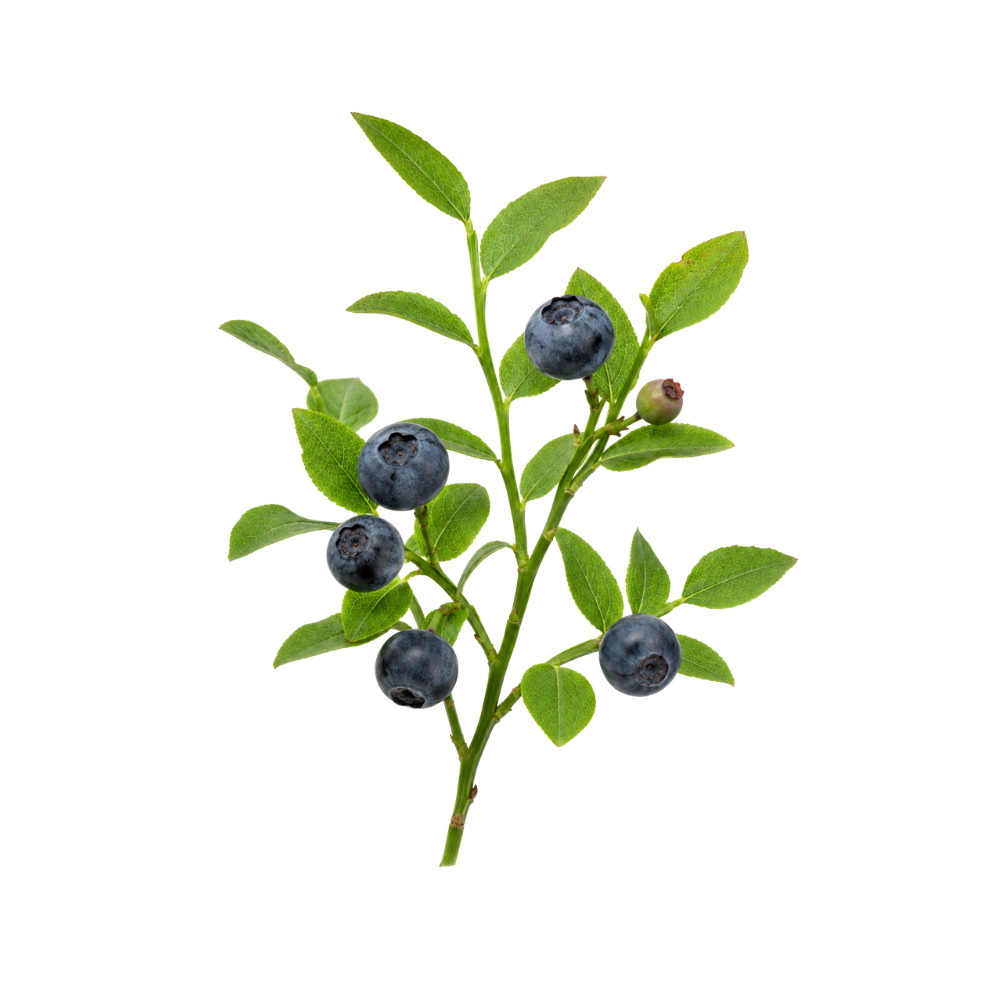
Malvidin is a naturally occurring anthocyanidin (o-methylated flavonoid aglycone), found in Grape skin and red wine, Blueberry and bilberry, Blackcurrant and 4 other sources. It is well tolerated orally (low toxicity).
Concentration
Content by Source
Concentrations not reported. No percent-dry-weight or mg/g figures have been published for this compound in its source plants.
Malvidin at a Glance
Malvidin is an anthocyanidin — one of the six common aglycone pigments behind the red, purple and blue colours of fruits and flowers. It is the dominant pigment of red grapes and red wine, and structurally it is the 3’,5’-dimethyl ether of delphinidin: two of delphinidin’s B-ring hydroxyls are capped with methoxy (–OCH₃) groups 1Reference 1Food Anthocyanins: Malvidin and Its Glycosides as Promising Antioxidant and Anti-Inflammatory Agents with Potential Health BenefitsView study →. That single change is the whole story of this molecule — the O-methylation makes malvidin the most colour-stable of the common anthocyanidins, which is exactly why grapes and wine rely on it 6Reference 6Anthocyanins: Factors Affecting Their Stability and DegradationView study →.
As with the rest of the family, the free aglycone is largely a paper entity in the body. In plants malvidin occurs almost entirely as glycosides — chiefly malvidin-3-glucoside (oenin) — and the free molecule is chemically unstable across physiological pH 6Reference 6Anthocyanins: Factors Affecting Their Stability and DegradationView study →. So nearly every “malvidin” finding is really about malvidin-3-glucoside or a whole red-wine, grape or blueberry mixture, and much of the circulating activity belongs to its downstream metabolite, syringic acid 1Reference 1Food Anthocyanins: Malvidin and Its Glycosides as Promising Antioxidant and Anti-Inflammatory Agents with Potential Health BenefitsView study →.
The honest headline: malvidin has more isolated mechanistic data than most anthocyanidins (endothelial, cardiac and enzyme studies used the pure glycoside or aglycone), but no human trials of the isolate, poor bioavailability, and a reputation heavily borrowed from red wine — where the alcohol, resveratrol and proanthocyanidins all confound any claim made for the pigment alone 3Reference 3Malvidin-3-glucoside bioavailability in humans after ingestion of red wine, dealcoholized red wine and red grape juiceView study →.
The Dominant Wine Anthocyanidin
Malvidin is the reason red wine is red. In Vitis vinifera grapes and the wines made from them, malvidin-3-glucoside (oenin) is the single most abundant anthocyanin, typically making up 60–90% of total grape and wine anthocyanins — far more than the cyanidin, delphinidin, petunidin and peonidin glycosides that accompany it 1Reference 1Food Anthocyanins: Malvidin and Its Glycosides as Promising Antioxidant and Anti-Inflammatory Agents with Potential Health BenefitsView study →. It is the principal red pigment of the skin, and its acylated (acetyl- and coumaroyl-) forms extend the palette further.
Why malvidin and not delphinidin? The answer is stability. Anthocyanidin colour and durability track the B-ring substitution pattern, and the rule is direct: stability increases with methylation and decreases with the number of free hydroxyl groups on the B-ring 6Reference 6Anthocyanins: Factors Affecting Their Stability and DegradationView study →. Delphinidin, with three free hydroxyls, is vividly blue-purple but fragile; capping two of them as methoxy groups to give malvidin removes the reactive handles that drive oxidative degradation, so malvidin resists heat, light and pH-driven breakdown better than any of its less-methylated relatives 6Reference 6Anthocyanins: Factors Affecting Their Stability and DegradationView study →. The grape’s most methylated pigment is also its most persistent — the trait that lets colour survive fermentation, ageing and storage.
That durability comes with a trade-off the marketing rarely mentions: the same missing hydroxyls that buy stability also blunt antioxidant power. A free catechol or pyrogallol B-ring (cyanidin, delphinidin) is a strong radical scavenger; methylating it lowers that capacity, so on a per-molecule basis malvidin is a weaker direct antioxidant than delphinidin even as it out-lasts it 2Reference 2Antioxidant activity of anthocyanins and their aglyconsView study →.
Against cyanidin the picture is closer than that summary suggests, and it depends on the radical. Ranking 15 purified bilberry anthocyanins side by side gave two different orders 11Reference 11In vitroSuperoxide radical- and peroxynitrite-scavenging activity of anthocyanins; structure-activity relationship and their synergism — in vitroView study →:
| Radical | Potency order (most → least) |
|---|---|
| Superoxide (O₂⁻) | delphinidin > petunidin > malvidin ≈ cyanidin > (+)-catechin > peonidin > pelargonidin |
| Peroxynitrite (ONOO⁻) | delphinidin > cyanidin ≈ petunidin > malvidin ≈ (+)-catechin > peonidin > pelargonidin |
Malvidin sits level with cyanidin against superoxide and only falls behind it against peroxynitrite 11Reference 11In vitroSuperoxide radical- and peroxynitrite-scavenging activity of anthocyanins; structure-activity relationship and their synergism — in vitroView study → — better than “two methyls, therefore weakest” predicts. The reason is which hydroxyls the methyls replaced. In this series it is methylation of the 4’-hydroxyl that markedly reduces activity, and malvidin’s two methyls are at 3’ and 5’: its 4’-OH is intact. Malvidin gives up the flanking hydroxyls, which cost it stability nothing and antioxidant capacity comparatively little, while keeping the one that does most of the work.
The same study makes a second point that cuts against isolating any one pigment: the anthocyanins assayed as a mixture scavenged synergistically, doing more than their individual activities predicted, and the aglycone structure mattered more than the attached sugar in setting potency 11Reference 11In vitroSuperoxide radical- and peroxynitrite-scavenging activity of anthocyanins; structure-activity relationship and their synergism — in vitroView study →. A grape delivers malvidin inside that assortment, never alone.
Its metabolic fate carries the same signature. Where cyanidin degrades to protocatechuic acid and delphinidin to gallic acid, malvidin’s characteristic gut/colonic metabolite is syringic acid — 3,5-dimethoxy-4-hydroxybenzoic acid, the methylated B-ring fragment cleaved from the pigment 1Reference 1Food Anthocyanins: Malvidin and Its Glycosides as Promising Antioxidant and Anti-Inflammatory Agents with Potential Health BenefitsView study →. Because intact malvidin-3-glucoside circulates only at nanomolar levels, syringic acid and related phenolic acids may account for much of whatever systemic activity “malvidin” appears to have 1,
Malvidin Among the Anthocyanidins
The six common anthocyanidins are the same flavylium core differing only in the B-ring — how many hydroxyls it carries and whether any are methylated. Reading down the table is reading increasing hydroxylation, then methylation:
| Anthocyanidin | B-ring pattern (3’,4’,5’) | Colour tendency | Typical signature source |
|---|---|---|---|
| Pelargonidin | 4’-OH (one hydroxyl) | orange-red | strawberry, red geranium |
| Cyanidin | 3’,4’-diOH (catechol) | magenta / crimson | blackberry, most red fruit |
| Peonidin | 3’-OMe, 4’-OH | rosy red | sour cherry, some grapes |
| Delphinidin | 3’,4’,5’-triOH (pyrogallol) | blue-purple | bilberry, delphinium |
| Petunidin | 3’-OMe, 4’,5’-diOH | purple | petunia, dark grapes |
| Malvidin | 3’,5’-diOMe, 4’-OH | red-purple (stable) | grape skin, red wine |
Peonidin, petunidin and malvidin are the methylated members, produced from cyanidin and delphinidin by O-methyltransferase enzymes. Malvidin is the endpoint of the delphinidin branch — delphinidin with both flanking hydroxyls methylated — and that maximal methylation is what makes it the most stable, and the grape’s pigment of choice 1,
What It's Used For
Malvidin’s evidence splits the usual anthocyanidin way — a fringe of genuine isolated-molecule mechanistic studies (a strength relative to cyanidin) wrapped around a core of whole red-wine, grape and blueberry data where the pigment is one actor among many. There are no human trials of the isolate.
Support is an experimental score — weighted by study type (human > animal > in vitro) and volume. A beta, not a validated metric. Malvidin has essentially no isolated human outcome data, so scores stay low by design; each application links to its write-up.
The most-populated isolate strand. Isolated malvidin-3-glucoside protected endothelial cells by up-regulating endothelial NO synthase (eNOS) and counteracting peroxynitrite-induced NF-κB activation, curbing the reactive-species/mitochondrial-apoptosis pathway 5Reference 5Malvidin-3-glucoside protects endothelial cells up-regulating endothelial NO synthase and inhibiting peroxynitrite-induced NF-κB activationView study →.
In a separate model, malvidin-3-glucoside (and malvidin-3-galactoside) from blueberry suppressed TNF-α–induced ICAM-1, VCAM-1 and MCP-1 in human endothelial cells by blocking IκBα degradation and p65 nuclear translocation, with the glucoside somewhat more active than the galactoside 7Reference 7Anti-inflammatory effect of the blueberry anthocyanins malvidin-3-glucoside and malvidin-3-galactoside in endothelial cellsView study →.
Gap: these are cell models of the isolated glycoside — encouraging because the pure compound was tested, but with no human vascular endpoint and no bridge across malvidin’s poor bioavailability 3Reference 3Malvidin-3-glucoside bioavailability in humans after ingestion of red wine, dealcoholized red wine and red grape juiceView study →.
Malvidin’s anti-inflammatory action is the endothelial NF-κB story seen from the inflammation side: malvidin-3-glucoside lowers NF-κB-driven mediators (iNOS, COX-2, IL-6, adhesion molecules) in endothelial cells 5,
Gap: consistent across cell models but entirely in vitro; the glucose-injury work points at diabetic retinopathy as a hypothesis, not a demonstrated clinical effect 8Reference 8Antioxidant and Anti-Inflammatory Effects of Blueberry Anthocyanins on High Glucose-Induced Human Retinal Capillary Endothelial CellsView study →.
As a flavylium pigment malvidin scavenges radicals, but it is the least potent antioxidant of the coloured trio: methylating delphinidin’s B-ring to make malvidin removes free hydroxyls, and antioxidant capacity falls with fewer hydroxyls 2,
Gap: cell-free/physicochemical chemistry; no human antioxidant outcome rests on isolated malvidin, and the unstable, barely-absorbed molecule reaches tissues only transiently 2,
One of the few studies to use the free aglycone: in isolated, Langendorff-perfused rat hearts, malvidin (10⁻¹⁰–10⁻⁶ mol/L) produced negative inotropism/lusitropism and coronary dilation, and acted as a post-conditioning agent protecting against ischaemia–reperfusion injury via a PI3K/NO/cGMP/PKG pathway, with supporting findings in human endothelial cells 9Reference 9Malvidin, a red wine polyphenol, modulates mammalian myocardial and coronary performance and protects the heart against ischemia/reperfusion injuryView study →.
Gap: a single ex-vivo animal-heart study of the isolate at sub-micromolar concentrations; no in-vivo or human cardiac outcome, and the concentrations were applied directly to the organ, bypassing the bioavailability problem 9Reference 9Malvidin, a red wine polyphenol, modulates mammalian myocardial and coronary performance and protects the heart against ischemia/reperfusion injuryView study →.
Screening gastrointestinally-digested soft-fruit extracts, malvidin-3-glucoside emerged as the standout competitive inhibitor of protein-tyrosine phosphatase 1B (PTP1B) — a negative regulator of insulin signalling — with Ki ≈ 3.8 µg/mL, confirmed by enzyme kinetics and molecular-dynamics docking 10Reference 10In vitroAnalysis of polyphenolic metabolites from in vitro gastrointestinal digested soft fruit extracts identify malvidin-3-glucoside as an inhibitor of PTP1BView study →. PTP1B inhibition is a recognised anti-diabetic target, and the retinal-cell work above adds a diabetic-complication angle 8Reference 8Antioxidant and Anti-Inflammatory Effects of Blueberry Anthocyanins on High Glucose-Induced Human Retinal Capillary Endothelial CellsView study →.
Gap: an in-vitro/in-silico enzyme result plus a cell model — mechanistically suggestive, but no animal glycaemic outcome and no human data for isolated malvidin 8,
A dedicated review catalogues preclinical anti-cancer activity for malvidin and its glycosides — reduced proliferation and metastasis, and induced apoptosis/autophagy across leukaemia, colorectal, gastric, liver, lung, oral and breast cell and animal models 1Reference 1Food Anthocyanins: Malvidin and Its Glycosides as Promising Antioxidant and Anti-Inflammatory Agents with Potential Health BenefitsView study →.
Gap: cell/animal models and mixtures, with no confirmed human efficacy; as with all anthocyanins, poor bioavailability of the parent undercuts direct translation 1,
Mechanisms
| Target / pathway | Effect | Relevant to |
|---|---|---|
| Endothelial NO synthase (eNOS) | up-regulated by malvidin-3-glucoside → ↑ NO availability | vascular |
| NF-κB (IκBα degradation, p65 translocation) | suppressed → ↓ ICAM-1, VCAM-1, MCP-1, iNOS, COX-2, IL-6 | anti-inflammatoryvascular |
| Peroxynitrite / reactive-species formation | counteracted; ↓ mitochondrial apoptotic pathway in endothelium | vascular / cytoprotective |
| Dimethoxy B-ring radical scavenging | direct antioxidant — but weaker than cyanidin/delphinidin (fewer free –OH) | antioxidant |
| PI3K / NO / cGMP / PKG | post-conditioning cardioprotection (isolated malvidin, ex-vivo heart) | cardioprotective |
| PTP1B | competitive inhibition (Ki ≈ 3.8 µg/mL, M3G) → potential ↑ insulin signalling | metabolic |
| Nox4 / VEGF (high glucose) | down-regulated by malvidin/M3G in retinal endothelium | metabolic / diabetic retinopathy |
The load-bearing structural point sits in two rows: the B-ring dimethylation that stabilises the pigment (colour, longevity) is the very thing that lowers its radical-scavenging power — malvidin is stable first, antioxidant second 2,
Pharmacokinetics
The central caveat, shared with the whole family. Malvidin-3-glucoside is poorly absorbed: after red wine, dealcoholised red wine or red grape juice, human plasma AUCs were only ~288, 214 and 662 nmol·h/L respectively — i.e. nanomolar intact-glycoside exposure — and in that study no aglycone, sulfate or glucuronide conjugate was detected in plasma or urine, implying the parent is either not much modified or rapidly degraded beyond detection 3Reference 3Malvidin-3-glucoside bioavailability in humans after ingestion of red wine, dealcoholized red wine and red grape juiceView study →. The broader anthocyanin tracer literature resolves this: intact anthocyanins circulate at nanomolar levels while a wide range of phenolic-acid metabolites dominate exposure 4Reference 4The pharmacokinetics of anthocyanins and their metabolites in humansView study →. For malvidin specifically the characteristic metabolite is syringic acid (the 3,5-dimethoxy B-ring fragment), the methylated analogue of cyanidin’s protocatechuic acid and delphinidin’s gallic acid 1Reference 1Food Anthocyanins: Malvidin and Its Glycosides as Promising Antioxidant and Anti-Inflammatory Agents with Potential Health BenefitsView study →. The free aglycone is chemically unstable across physiological pH — the red flavylium cation opens to colourless carbinol and chalcone forms above pH ~4 — so malvidin barely exists as such in plasma 6Reference 6Anthocyanins: Factors Affecting Their Stability and DegradationView study →. Much of the activity attributed to “malvidin” may in practice be that of syringic acid and other phenolic acids. The gut side of that story has been mapped directly in bilberry: in healthy volunteers and ileostomists, about 30% of ingested anthocyanins survived the 8-hour passage through the upper intestine, mostly intact anthocyanins were absorbed from the small intestine, circulation was dominated by glucuronides, and subjects with an intact colon carried substantially more anthocyanins and degradants than those without — making the colon a significant absorption site rather than only a place where pigments are lost 12Reference 12Clinical trialHuman intervention study to investigate the intestinal accessibility and bioavailability of anthocyanins from bilberries — human volunteersView study →. Formulation shifts the numbers again: whey-protein encapsulation modulated short-term bioavailability, and citrus-pectin encapsulation raised small-intestinal accessibility and altered plasma formation of the degradant phloroglucinol aldehyde 13Reference 13Clinical trialEncapsulation of anthocyanins from bilberries — effects on bioavailability and intestinal accessibility in humans — clinical trialView study →.
Clinical Trials
There are essentially no trials of isolated malvidin or malvidin-3-glucoside as a therapeutic. Human data labelled “malvidin” are bioavailability studies of red wine, grape juice and blueberry 3Reference 3Malvidin-3-glucoside bioavailability in humans after ingestion of red wine, dealcoholized red wine and red grape juiceView study →, or whole-diet/red-wine epidemiology; the “French paradox” is a whole-wine observation confounded by alcohol and co-occurring polyphenols, not evidence for the isolated pigment 3Reference 3Malvidin-3-glucoside bioavailability in humans after ingestion of red wine, dealcoholized red wine and red grape juiceView study →. Attribute human signals to the food matrix, not the molecule.
| Completed | Planned | Terminated | Preclinical |
|---|---|---|---|
| —(isolate); bioavailability / whole-food only 3Reference 3Malvidin-3-glucoside bioavailability in humans after ingestion of red wine, dealcoholized red wine and red grape juiceView study → | — | — | Moderate |
Last checked: July 2026.
Isolate vs. Plant Studies
Malvidin is better served by isolate data than most anthocyanidins — a genuine, if modest, strength. Several mechanistic studies used the pure compound: isolated malvidin-3-glucoside on endothelial eNOS/NF-κB 5Reference 5Malvidin-3-glucoside protects endothelial cells up-regulating endothelial NO synthase and inhibiting peroxynitrite-induced NF-κB activationView study →, the free aglycone on perfused rat hearts 9Reference 9Malvidin, a red wine polyphenol, modulates mammalian myocardial and coronary performance and protects the heart against ischemia/reperfusion injuryView study →, and malvidin-3-glucoside as a defined PTP1B inhibitor 10Reference 10In vitroAnalysis of polyphenolic metabolites from in vitro gastrointestinal digested soft fruit extracts identify malvidin-3-glucoside as an inhibitor of PTP1BView study →. That is more than cyanidin’s near-total reliance on its glycoside and mixtures.
But the human evidence inverts it completely. Every human dataset is a whole matrix — red wine, dealcoholised wine, grape juice, blueberry extract 3Reference 3Malvidin-3-glucoside bioavailability in humans after ingestion of red wine, dealcoholized red wine and red grape juiceView study → — in which malvidin co-occurs with resveratrol, proanthocyanidins, other anthocyanins and, in wine, ethanol. No human outcome can be assigned to malvidin alone, and the red-wine cardiovascular literature in particular is confounded by alcohol. The isolate work tells us what malvidin can do to a cell or an enzyme; it does not tell us what a glass of wine does to a person.
Prevalence in Nature
Malvidin is most famous as the grape pigment, but it is widespread among blue- and purple-pigmented plants. It is the dominant anthocyanin of Vitis vinifera grape skin and red wine, present overwhelmingly as malvidin-3-glucoside (oenin) and its acetyl-/coumaroyl-acylated derivatives, together commonly 60–90% of total grape and wine anthocyanins 1Reference 1Food Anthocyanins: Malvidin and Its Glycosides as Promising Antioxidant and Anti-Inflammatory Agents with Potential Health BenefitsView study →. Beyond the grape it is abundant in blueberries and bilberry (Vaccinium spp.), blackcurrant (Ribes nigrum), maqui, blackberry and many dark berries, and colours numerous blue/purple flowers (the mallows, Malva, from which it is named, and Primula, Petunia and others) 1Reference 1Food Anthocyanins: Malvidin and Its Glycosides as Promising Antioxidant and Anti-Inflammatory Agents with Potential Health BenefitsView study →.
As with the whole class, it occurs almost entirely as glycosides, not the free aglycone — the 3-glucoside dominating, with 3,5-diglucosides and acylated forms adding stability and hue 1,
Discovery & Synthesis
Malvidin’s name comes from the mallow genus Malva; its principal glycoside, oenin, from Greek oinos, “wine.” The molecule belongs to the anthocyanidin structures elucidated in the early 20th century by Richard Willstätter (Nobel laureate, 1915) and Robert Robinson, who worked out the flavylium framework and the hydroxylation/methylation patterns that distinguish the six common aglycones — malvidin being delphinidin with both flanking B-ring hydroxyls methylated 1Reference 1Food Anthocyanins: Malvidin and Its Glycosides as Promising Antioxidant and Anti-Inflammatory Agents with Potential Health BenefitsView study →. A first total synthesis of the free aglycone is not well documented in the accessible literature, and is not central to the compound’s story.
Manufacture today is by extraction, not synthesis. Malvidin-3-glucoside is recovered from grape skins and winemaking pomace — a by-product stream — and grape-skin anthocyanin extract is an approved food colourant (E163), used for the red-purple it lends to foods and drinks. The isolated free aglycone is a research reagent rather than a manufactured commodity, reflecting its instability.
Patents: not yet researched.
Toxicity & Safety
Malvidin carries a low flag. It is a ubiquitous dietary pigment eaten in grapes, wine, blueberries and countless coloured fruits, and grape-skin anthocyanin extract is an approved food colourant (E163) with a long record of safe dietary use. Its poor systemic bioavailability further limits any systemic-toxicity concern — very little intact malvidin ever reaches the circulation 3Reference 3Malvidin-3-glucoside bioavailability in humans after ingestion of red wine, dealcoholized red wine and red grape juiceView study →. There are no established drug interactions for the isolated compound; theoretical additive antioxidant or mild vascular effects from anthocyanin-rich intake are unconfirmed.
- Ubiquitous, well-tolerated dietary pigment. Consumed routinely in grapes, wine and berries; grape-skin anthocyanin extract is an approved colourant (E163).
- Poor bioavailability caps systemic risk. Only nanomolar intact malvidin-3-glucoside circulates after ingestion, so systemic exposure is inherently low.
- Red-wine “benefits” are whole-wine and confounded. The pigment’s cell-model activity is not a reason to drink — wine’s effects are dominated by alcohol and a mix of polyphenols, and alcohol carries its own well-established harms.
- No reproductive-safety data for the isolate. Dietary amounts are presumed safe; there are no studies of supraphysiologic/supplemental malvidin, so isolated-supplement use is uncharacterised. (Pregnancy/lactation decisions belong to the specific food or product page, not this molecule page.)
Dosage
There is no established dose for isolated malvidin — it is not sold or used as a standalone supplement, and the free aglycone is too unstable to make one practical. The research figures are for malvidin-3-glucoside or whole sources, framed for context and not a recommendation:
- The human bioavailability study delivered malvidin-3-glucoside via ~500 mL of red wine, dealcoholised red wine or red grape juice, and still saw only nanomolar plasma levels 3Reference 3Malvidin-3-glucoside bioavailability in humans after ingestion of red wine, dealcoholized red wine and red grape juiceView study →.
- Cell and enzyme studies used defined concentrations (e.g. malvidin 10⁻¹⁰–10⁻⁶ mol/L on perfused hearts 9Reference 9Malvidin, a red wine polyphenol, modulates mammalian myocardial and coronary performance and protects the heart against ischemia/reperfusion injuryView study →; malvidin-3-glucoside PTP1B Ki ≈ 3.8 µg/mL 10Reference 10In vitroAnalysis of polyphenolic metabolites from in vitro gastrointestinal digested soft fruit extracts identify malvidin-3-glucoside as an inhibitor of PTP1BView study →) that describe the molecule’s behaviour in vitro, not an intake.
Dietary anthocyanin intake in Western diets runs on the order of tens to low-hundreds of milligrams per day across all pigments combined. These are research and dietary figures, not a personal recommendation.
References
- Merecz-Sadowska A, et al. (2023). Food Anthocyanins: Malvidin and Its Glycosides as Promising Antioxidant and Anti-Inflammatory Agents with Potential Health Benefits. Nutrients. https://pubmed.ncbi.nlm.nih.gov/37447342/
- Kähkönen MP, Heinonen M (2003). Antioxidant activity of anthocyanins and their aglycons. Journal of Agricultural and Food Chemistry. https://pubmed.ncbi.nlm.nih.gov/12537433/
- Bub A, et al. (2001). Malvidin-3-glucoside bioavailability in humans after ingestion of red wine, dealcoholized red wine and red grape juice. European Journal of Nutrition. https://pubmed.ncbi.nlm.nih.gov/11697443/
- de Ferrars RM, et al. (2014). The pharmacokinetics of anthocyanins and their metabolites in humans. British Journal of Pharmacology. https://pubmed.ncbi.nlm.nih.gov/24602005/
- Paixão J, et al. (2012). Malvidin-3-glucoside protects endothelial cells up-regulating endothelial NO synthase and inhibiting peroxynitrite-induced NF-κB activation. Chemico-Biological Interactions. https://pubmed.ncbi.nlm.nih.gov/22959858/
- Enaru B, et al. (2021). Anthocyanins: Factors Affecting Their Stability and Degradation. Antioxidants. https://pubmed.ncbi.nlm.nih.gov/34943070/
- Huang W, et al. (2014). Anti-inflammatory effect of the blueberry anthocyanins malvidin-3-glucoside and malvidin-3-galactoside in endothelial cells. Molecules. https://pubmed.ncbi.nlm.nih.gov/25153881/
- Huang W, et al. (2018). Antioxidant and Anti-Inflammatory Effects of Blueberry Anthocyanins on High Glucose-Induced Human Retinal Capillary Endothelial Cells. Oxidative Medicine and Cellular Longevity. https://pubmed.ncbi.nlm.nih.gov/29682153/
- Quintieri AM, et al. (2013). Malvidin, a red wine polyphenol, modulates mammalian myocardial and coronary performance and protects the heart against ischemia/reperfusion injury. The Journal of Nutritional Biochemistry. https://pubmed.ncbi.nlm.nih.gov/23266283/
- Barik SK, et al. (2020). Analysis of polyphenolic metabolites from in vitro gastrointestinal digested soft fruit extracts identify malvidin-3-glucoside as an inhibitor of PTP1B. Biochemical Pharmacology. https://pubmed.ncbi.nlm.nih.gov/32569626/
- Rahman MM, Ichiyanagi T, Komiyama T, et al. (2006). Superoxide radical- and peroxynitrite-scavenging activity of anthocyanins; structure-activity relationship and their synergism — in vitro. Free Radical Research. https://pubmed.ncbi.nlm.nih.gov/17015281/
- Mueller D, Jung K, Winter M, et al. (2017). Human intervention study to investigate the intestinal accessibility and bioavailability of anthocyanins from bilberries — human volunteers. Food Chemistry. https://pubmed.ncbi.nlm.nih.gov/28450007/
- Mueller D, Jung K, Winter M, et al. (2018). Encapsulation of anthocyanins from bilberries — effects on bioavailability and intestinal accessibility in humans — clinical trial. Food Chemistry. https://pubmed.ncbi.nlm.nih.gov/29329847/



