
Compound Monograph
Psoralen
Psoralen is the parent linear furanocoumarin (furo[3,2-g]chromen-7-one) — the structural template for bergapten (5-MOP) and xanthotoxin (8-MOP). Its defining trait is phototoxicity: it slips between DNA base pairs and, on UVA light, forms interstrand cross-links, which underlies both phytophotodermatitis and the deliberate use of psoralens in PUVA photochemotherapy.

Sources · 9
Where Does It Come From?
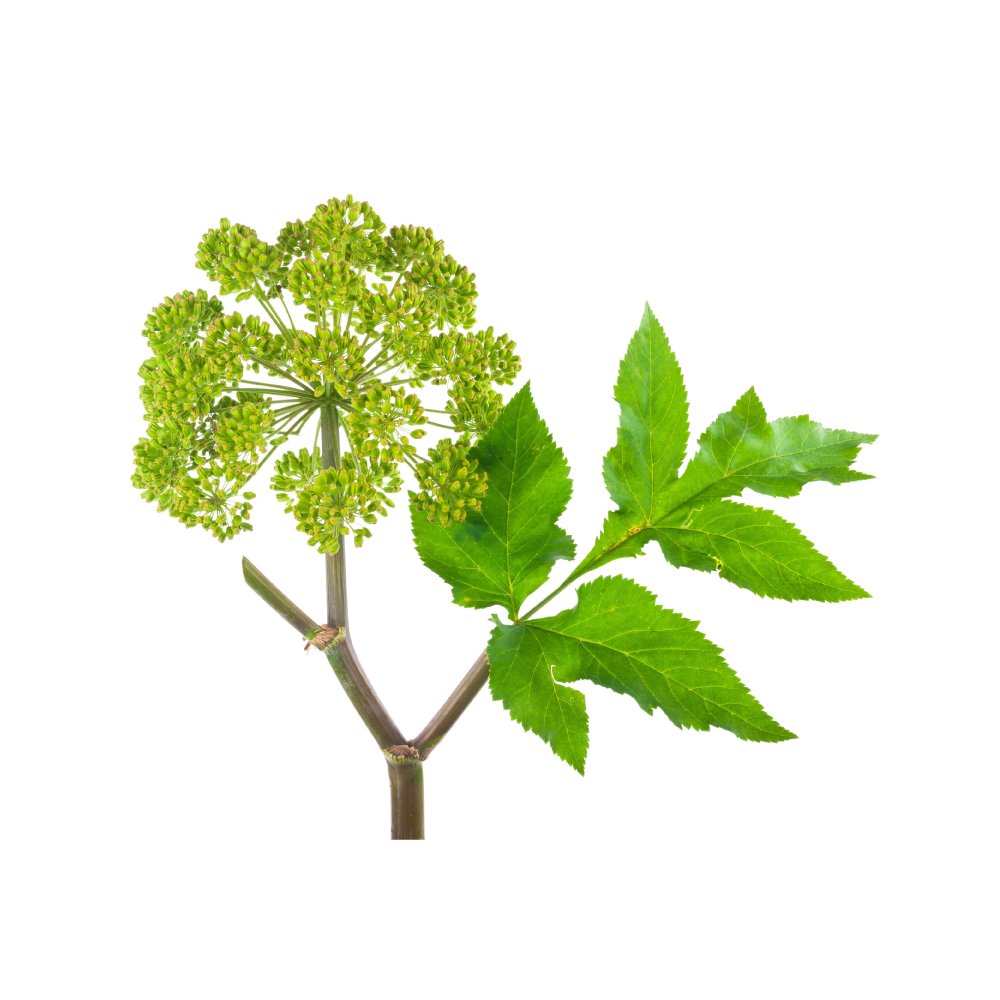
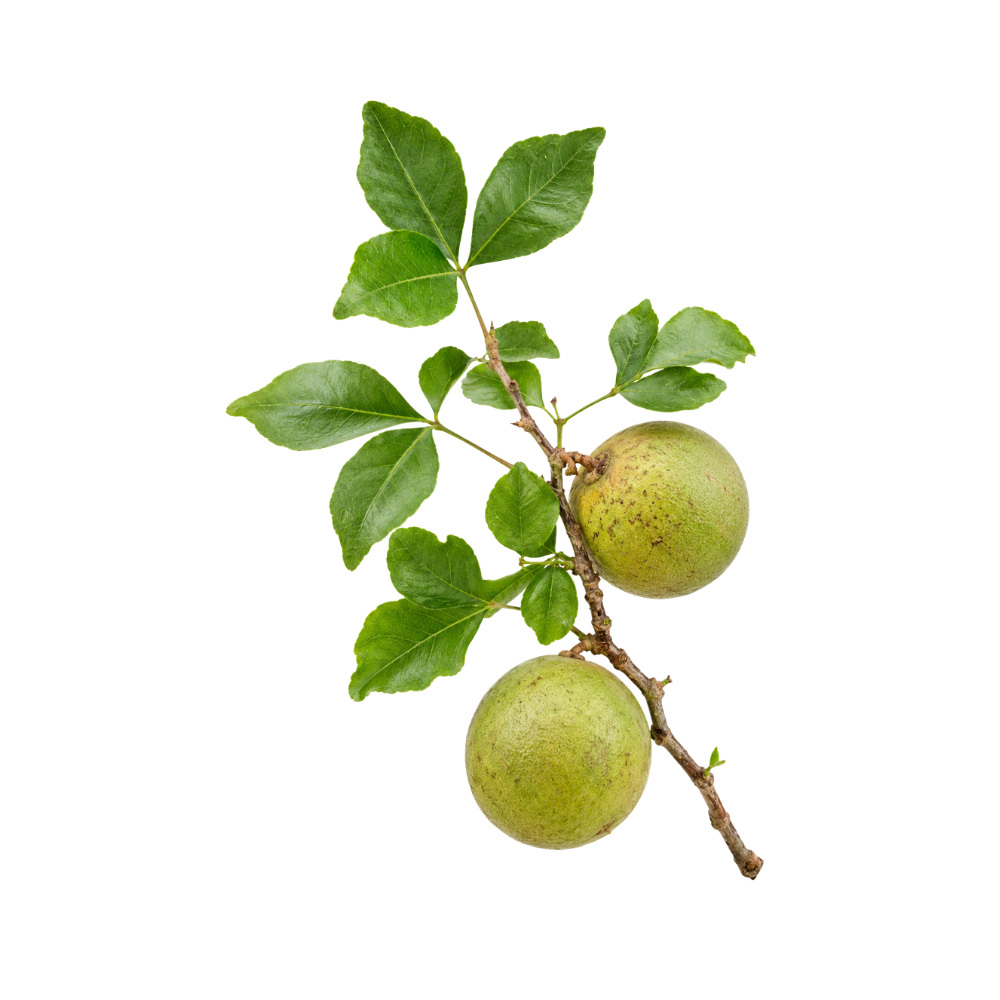
Psoralen is a naturally occurring furanocoumarin (linear; the parent psoralen), found in Babchi, Common rue, Fig and 6 other sources. It is flagged as moderately toxic.
Concentration
Content by Source
Concentrations not reported. No percent-dry-weight or mg/g figures have been published for this compound in its source plants.
Psoralen at a Glance
Psoralen is the parent linear furanocoumarin — a coumarin fused to a furan ring in a straight-line (linear) geometry, formally furo[3,2-g]chromen-7-one. It is the structural template for the whole psoralen family: adding a methoxy group at one position gives bergapten (5-methoxypsoralen, 5-MOP), and at another gives xanthotoxin (8-methoxypsoralen, 8-MOP), the two derivatives that dominate clinical use.
Its defining property is phototoxicity. Psoralen slips flat between the base pairs of DNA and, when the skin (or a sample) is then exposed to ultraviolet A (UVA) light, forms covalent adducts and cross-links with DNA 1,
The linear-versus-angular distinction is the point of this molecule. Linear psoralen can reach thymines on both strands and so forms DNA interstrand cross-links — a doubly damaging, strongly phototoxic lesion — whereas its angular isomer angelicin (isopsoralen) is geometrically limited to single-strand monoadducts 1Reference 1ReviewMechanisms of photosensitization by furocoumarinsView study →. Psoralen occurs in Psoralea corylifolia (babchi/bakuchi) and across the carrot, rue, citrus and fig families 10,
Linear vs. Angular: The Cross-Link That Defines Psoralen
The most important thing about psoralen is a matter of shape. Furanocoumarins come in two geometries — linear (psoralen, bergapten, xanthotoxin) and angular (angelicin) — and that geometry decides how dangerous the molecule is under UV light.
The photoreaction happens in two steps 1Reference 1ReviewMechanisms of photosensitization by furocoumarinsView study →:
- Intercalation, then a first UVA photon. In the dark, psoralen slides flat between DNA base pairs. A first photon of 320–400 nm UVA drives a [2+2] cycloaddition, forming a covalent monoadduct with a pyrimidine (usually thymine) at either the pyrone (3,4) or the furan (4’,5’) double bond.
- A second UVA photon. A monoadduct sitting at the furan side still has a reactive pyrone double bond. In linear psoralens that second reactive site points across the helix at a thymine on the opposite strand, so a second photon converts a fraction of the monoadducts into a DNA interstrand cross-link (ICL) — a covalent staple joining the two strands 1Reference 1ReviewMechanisms of photosensitization by furocoumarinsView study →.
Angular furanocoumarins cannot do step 2. In angelicin the two reactive double bonds are bent away from each other, so it is confined to monoadducts and is a far weaker photosensitiser 1Reference 1ReviewMechanisms of photosensitization by furocoumarinsView study →. This is why the linear psoralens are the phototoxic, therapeutically exploited, and laboratory-useful members of the family, while the angular ones are comparatively mild.
An interstrand cross-link is one of the most cytotoxic lesions a cell can face: it blocks both DNA replication and transcription, is removed only by a complex, error-prone repair pathway, and readily triggers cell death 1Reference 1ReviewMechanisms of photosensitization by furocoumarinsView study →. That single property is simultaneously the hazard (phytophotodermatitis, photocarcinogenicity) and the therapy (killing hyperproliferating skin cells) — the same molecular event, pointed at different ends.
Photochemotherapy (PUVA)
Psoralen’s established human role is PUVA — psoralen plus UVA — in which a psoralen is taken (or applied), then the skin is exposed to a metered UVA dose. Neither the drug nor the light does much alone; the therapeutic effect is the photochemistry between them 4,
The controlled DNA damage translates into three clinical uses:
- Psoriasis and cutaneous T-cell lymphoma. Cross-link-induced DNA damage inhibits keratinocyte proliferation and drives apoptosis of keratinocytes, dendritic cells and infiltrating T cells, damping the Th1/Th17 inflammation of plaque psoriasis and clearing the malignant T-cell infiltrate of mycosis fungoides 3,
5Reference 3Phototherapy and photochemotherapy for psoriasisView study →Reference 5ReviewMcNeely W, Goa KL (1998). 5-Methoxypsoralen. A review of its effects in psoriasis and vitiligo. Drugs. https://pubmed.ncbi.nlm.nih.gov/9806110/View study → . - Vitiligo. Here the goal is repigmentation rather than cell-killing: PUVA stimulates melanocyte proliferation, migration and melanogenesis in depigmented skin 4,
6Reference 4A deep dive into UV-based phototherapy: mechanisms of action and emerging molecular targets in inflammation and cancerView study →Reference 6Psoralen-ultraviolet A vs. narrow-band ultraviolet B phototherapy for the treatment of vitiligoView study → . - Extracorporeal photopheresis (ECP). In graft-versus-host disease and cutaneous lymphoma, a patient’s leukocytes are treated with 8-MOP and UVA outside the body and reinfused, triggering apoptosis of the treated lymphocytes and an immunomodulatory response 7Reference 7Extracorporeal photopheresis and the cellular mechanisms: effects of 8-methoxypsoralen and UVA treatment on red blood cells, platelets and reactive oxygen speciesView study →.
PUVA is genuinely effective, but it is no longer first-line for psoriasis or vitiligo: narrowband UVB gives comparable results without the systemic drug, the strict light-avoidance regimen, or the long-term skin-cancer signal 4,
What It's Used For
Psoralen is unusual for a compound page: almost all of its documented activity is light-dependent, and the clinical evidence largely attaches to its methoxylated analogues rather than to the parent molecule. What follows separates the genuine human-therapy signal from the (much thinner) claims for “dark,” non-photoactivated psoralen.
Support is an experimental score — weighted by study type (human > animal > in vitro) and volume. A beta, not a validated metric. Scores reward the established photochemotherapy drug class while noting that the dosed molecule is usually 8-MOP, not the parent psoralen.
The marquee use, and a genuine human therapy. Psoralen plus UVA inhibits keratinocyte proliferation and induces apoptosis in keratinocytes, dendritic cells and T lymphocytes while suppressing Th1/Th17 signalling — the basis for clearing psoriasis and the malignant infiltrate of cutaneous T-cell lymphoma 3,
The same 8-MOP/UVA reaction, applied to leukocytes outside the body in extracorporeal photopheresis, drives targeted lymphocyte apoptosis in graft-versus-host disease 7Reference 7Extracorporeal photopheresis and the cellular mechanisms: effects of 8-methoxypsoralen and UVA treatment on red blood cells, platelets and reactive oxygen speciesView study →.
The dosed psoralen is almost always the isolate — methoxsalen (8-MOP), sometimes bergapten (5-MOP) — given at a defined dose and precisely timed to a metered UVA exposure 8Reference 8Clinical pharmacokinetics of methoxsalen and other psoralensView study →.
Gap: the clinical record belongs to the methoxylated analogues (chiefly 8-MOP), not to the parent psoralen, and PUVA has been largely displaced by narrowband UVB, which matches it for psoriasis without the systemic drug or the photocarcinogenicity 12Reference 12ReviewCarcinogenic risks of psoralen UV-A therapy and narrowband UV-B therapy in chronic plaque psoriasis: a systematic literature reviewView study →.
A distinctively molecular “application.” Because linear psoralen forms photo-controllable interstrand cross-links, it is a standard laboratory reagent for covalently joining the two strands of DNA (and for cross-linking RNA) — used to probe nucleic-acid structure, map duplex regions, and study DNA-repair machinery; psoralen-based cross-linking agents remain a workhorse for imaging and dissecting the cellular ICL response 1,
Trimethylpsoralen and aminomethyl-trimethylpsoralen are the common derivatised versions.
Gap: this is a research-tool use of the pure isolate, not a therapy or a health claim; it is included because it is the clearest demonstration of the molecule’s defining chemistry 2Reference 2Imaging the cellular response to an antigen tagged interstrand crosslinking agentView study →.
The other historic clinical use, and mechanistically distinct from the psoriasis one: in depigmented skin, PUVA does not clear cells but stimulates melanocyte proliferation, migration and melanogenesis, promoting repigmentation 4Reference 4A deep dive into UV-based phototherapy: mechanisms of action and emerging molecular targets in inflammation and cancerView study →. Randomised comparison in vitiligo found PUVA effective but not superior to narrowband UVB, which is now generally preferred 6Reference 6Psoralen-ultraviolet A vs. narrow-band ultraviolet B phototherapy for the treatment of vitiligoView study →.
Gap: effect sizes are modest and slow, relapse is common, and the treatment has been overtaken by NB-UVB; the parent psoralen itself is rarely the dosed agent 6Reference 6Psoralen-ultraviolet A vs. narrow-band ultraviolet B phototherapy for the treatment of vitiligoView study →.
Separate from photochemotherapy, extracts of Psoralea corylifolia (which contain psoralen alongside isopsoralen, bakuchiol, psoralidin and bavachinin) show antibacterial, antitumour, antioxidant, anti-inflammatory and bone-protective activity in cell and animal work 10Reference 10ReviewPsoralea corylifolia L. (Buguchi) — folklore to modern evidence: reviewView study →. These are whole-extract signals in which psoralen is one constituent among many, tested without photoactivation.
Gap: almost entirely in-vitro/animal, on mixed extracts rather than isolated psoralen, and confounded by the extract’s other bioactives (notably bakuchiol) — no human efficacy rests on non-photoactivated psoralen 10Reference 10ReviewPsoralea corylifolia L. (Buguchi) — folklore to modern evidence: reviewView study →.
Mechanisms
| Target / pathway | Effect | Relevant to |
|---|---|---|
| DNA intercalation → [2+2] photocycloaddition (UVA) | forms 3,4- and 4’,5’-monoadducts with pyrimidines (thymine); a fraction convert to interstrand cross-links in a second UVA step (linear geometry only) | phototoxicity; PUVA; DNA-crosslinking tool |
| Singlet oxygen / reactive oxygen (Type II) | furanocoumarin triplet transfers energy to O₂ → ¹O₂; oxidises proteins and membrane lipids | erythema; phototoxic tissue damage |
| Apoptosis of keratinocytes & T lymphocytes | cross-link-induced DNA damage → cell-cycle arrest and apoptosis of hyperproliferating keratinocytes and infiltrating T cells | psoriasis; CTCL; photopheresis/GvHD |
| Melanocyte stimulation / melanogenesis | PUVA promotes melanocyte proliferation, migration and pigment synthesis in depigmented skin | vitiligo repigmentation |
| CYP3A4 (mechanism-based inhibition) | furanocoumarins covalently inactivate CYP3A4 (the grapefruit-juice effect); bergamottin/dihydroxybergamottin are the archetypes | drug interactions |
The first row is load-bearing: the interstrand cross-link — available only to the linear psoralens — is simultaneously the therapeutic effect and the toxic one.
Pharmacokinetics
The parent psoralen’s own clinical pharmacokinetics are poorly characterised; the well-studied member of the class is its analogue methoxsalen (8-MOP), and the numbers below are for that drug 8Reference 8Clinical pharmacokinetics of methoxsalen and other psoralensView study →. Psoralens are inactive without UVA, so pharmacokinetics matter only insofar as they set the skin drug level at the moment of irradiation. A standard oral methoxsalen dose is 0.5–0.7 mg/kg given ~2 hours before UVA; peak serum concentrations of ~50–250 µg/L appear 1–2 hours after ingestion, and the serum half-life is short (~0.5–2 h) 8Reference 8Clinical pharmacokinetics of methoxsalen and other psoralensView study →. Absorption is erratic — strongly affected by food and by formulation (liquid soft-gelatin capsules give higher, faster peaks than crystalline tablets) — and the drug undergoes high, variable first-pass metabolism, so inter-patient clearance ranges roughly 40–650 L/h 8Reference 8Clinical pharmacokinetics of methoxsalen and other psoralensView study →. This variability is why patients with high clearance and low peak levels often respond less to PUVA, and why serum-level monitoring has been used to individualise dosing 8Reference 8Clinical pharmacokinetics of methoxsalen and other psoralensView study →. Bergapten has similar kinetics; trioxsalen is poorly bioavailable orally 8Reference 8Clinical pharmacokinetics of methoxsalen and other psoralensView study →.
Clinical Trials
Human evidence is for the photochemotherapy drug class, not for isolated parent psoralen as a systemic medicine. PUVA (usually 8-MOP) is an established, extensively used treatment for psoriasis, cutaneous T-cell lymphoma and vitiligo, and 8-MOP/UVA photopheresis is established for GvHD 3,
| Completed | Planned | Terminated | Preclinical |
|---|---|---|---|
| Extensive: PUVA (psoriasis, CTCL, vitiligo) + 8-MOP/UVA photopheresis (GvHD) — chiefly as 8-MOP | — | — | “Dark” anticancer/antimicrobial/bone signals (mostly Psoralea extracts) |
Last checked: July 2026.
Isolate vs. Plant Studies
This molecule inverts the usual caveat. The isolate is the evidence — PUVA and photopheresis use a defined, purified psoralen (in practice 8-MOP) at a measured dose and a metered light exposure, and the laboratory cross-linking work uses pure psoralen or its trimethyl derivatives 2,
Its Role in Plants
Furanocoumarins are phytoalexins — chemical defences. Plants of the carrot, rue and fig families synthesise psoralen from the simple coumarin umbelliferone: umbelliferone is prenylated and cyclised (via marmesin) to the furan-fused psoralen skeleton, which is then methoxylated to give bergapten and xanthotoxin. In the plant, the same UVA-activated DNA-cross-linking chemistry that makes psoralen a drug makes it a broad-spectrum toxin against insect herbivores and microbes: a caterpillar that eats furanocoumarin-laden foliage in daylight suffers photo-activated tissue damage, so the compounds deter feeding 1,
Prevalence in Nature
Psoralen occurs across four plant families: the carrot family (Apiaceae) — celery, parsnip, giant hogweed, angelica; the rue/citrus family (Rutaceae) — common rue and citrus peel oils; the fig family (Moraceae), where it was one of its first-recognised sources (hence the synonym ficusin); and the legume family (Fabaceae), most notably the seeds of Psoralea corylifolia (babchi/bakuchi, now Cullen corylifolium), the traditional Ayurvedic and Chinese medicinal seed that gives the molecule its name 10,
Discovery & Synthesis
Psoralen takes its name directly from the plant genus Psoralea: it was first isolated in the 1930s from the seeds of Psoralea corylifolia, the babchi/bakuchi seed long used in Ayurvedic and Chinese medicine for vitiligo and other skin conditions 10Reference 10ReviewPsoralea corylifolia L. (Buguchi) — folklore to modern evidence: reviewView study →. The photochemotherapeutic idea is far older than the isolated molecule — furanocoumarin-bearing plants such as Ammi majus and Psoralea were used with sunlight to treat depigmented skin in ancient Egyptian and Indian practice, and psoralens have been “applied therapeutically since antiquity” 2,
Patents: not yet researched.
Toxicity & Safety
Psoralen carries a moderate flag. In the dark it is of low acute oral toxicity, but under UVA it is a DNA cross-linking agent, and that photochemistry drives every one of its real hazards.
- In the dark, low acute toxicity. Psoralen’s harms are almost entirely light-dependent — it is inactive without UVA.
- Phytophotodermatitis. Skin contact with furanocoumarin-rich sap (giant hogweed, rue, celery, parsnip, figs, wild parsnip) followed by sunlight causes burning, blistering and long-lasting pigmentation.
- Photocarcinogenicity with therapeutic PUVA. Long-term, high-cumulative PUVA raises squamous-cell skin-cancer risk in a strongly dose-dependent way; eye protection is required to avoid cataract.
- CYP3A4 inhibition. As a furanocoumarin, psoralen contributes to the mechanism-based CYP3A4 inhibition behind the grapefruit-juice/citrus drug-interaction effect.
- Psoralea corylifolia supplements. Babchi/bakuchi seed products carry a documented hepatotoxicity signal; source and dose matter.
Full Safety & Interactions Detail
Phytophotodermatitis. The commonest real-world harm. Furanocoumarins in plant sap penetrate skin, and subsequent UVA exposure triggers the same DNA-adduct/cross-link and singlet-oxygen chemistry as PUVA, producing a phototoxic (not allergic) dermatitis: burning, erythema and bullae in sun-exposed contact areas, often followed by prolonged hyperpigmentation. Giant hogweed, wild parsnip, celery, rue, figs and bergamot/citrus oils are classic culprits, and the reaction reflects the total furanocoumarin load of the exposure 11Reference 11New insights concerning phytophotodermatitis induced by phototoxic plantsView study →.
Photocarcinogenicity. The therapeutic use has a well-documented long-term cost. In the 30-year PUVA Follow-Up Study, the risk of squamous-cell carcinoma rose steeply with cumulative treatment — patients with 350–450 treatments had roughly a six-fold higher yearly SCC risk than those with fewer than 50, and the effect was far stronger when all tumours were counted; basal-cell risk rose much less 9Reference 9The risk of squamous cell and basal cell cancer associated with psoralen and ultraviolet A therapy: a 30-year prospective studyView study →. A systematic review likewise found PUVA to carry a greater cutaneous carcinogenic risk than narrowband UVB, informing session caps 12Reference 12ReviewCarcinogenic risks of psoralen UV-A therapy and narrowband UV-B therapy in chronic plaque psoriasis: a systematic literature reviewView study →. Methoxsalen-plus-UVA is treated by regulators as a human carcinogen, and eye protection during and after dosing is standard to prevent psoralen-mediated cataract 9,
Drug interactions. Furanocoumarins are mechanism-based (irreversible) inhibitors of CYP3A4 — the molecular basis of the grapefruit-juice interaction, in which bergamottin and dihydroxybergamottin are the archetypal inhibitors; psoralen belongs to the same inhibitory chemotype, so heavy furanocoumarin exposure can raise levels of CYP3A4-metabolised drugs 13Reference 13Analysis of inhibition kinetics of three beverage ingredients, bergamottin, dihydroxybergamottin and resveratrol, on CYP2C9 activityView study →. Because PUVA itself is a photosensitising treatment, concurrent photosensitising drugs compound the phototoxic risk.
Hepatotoxicity of Psoralea corylifolia supplements. Distinct from the photochemistry: babchi/bakuchi seed products (and related “bakuchiol” botanicals) have been associated with herb-induced liver injury. A meta-analysis and benefit–risk assessment of P. corylifolia found a real efficacy signal for bone disorders set against a measurable hepatotoxicity signal (raised ALT/AST), underscoring a narrow therapeutic window and dose dependence 14Reference 14Meta-analysisEfficacy and hepatotoxicity of Psoralea corylifolia L.: a meta-analysis and machine learning assessment in postmenopausal osteoporosisView study →; the furanocoumarins and other seed constituents are implicated 10Reference 10ReviewPsoralea corylifolia L. (Buguchi) — folklore to modern evidence: reviewView study →.
Reproductive note (prose only). No dedicated reproductive-toxicity dataset exists for isolated psoralen; as a photo-genotoxic DNA-cross-linking agent it warrants caution, and systemic PUVA is generally avoided in pregnancy at the treatment level. Pregnancy and lactation decisions belong to the herb or product page where intake is decided, not to this molecule page. No comprehensive isolate repeat-dose package is characterised here beyond the photobiology and the Psoralea-supplement toxicology above.
Dosage
There is no dietary or supplemental dose for psoralen — plant/food exposure is incidental and the molecule does nothing without ultraviolet light. Its only defined human dosing is medical PUVA, and in practice the dosed drug is the analogue methoxsalen (8-MOP), timed to a controlled UVA exposure and supervised by a dermatologist 8Reference 8Clinical pharmacokinetics of methoxsalen and other psoralensView study →:
| Application | Form | Dose (analogue: methoxsalen / 8-MOP) |
|---|---|---|
| Oral PUVA | Soft-gelatin capsule / tablet | ~0.5–0.7 mg/kg, ~1–2 h before UVA |
| Bath / topical PUVA | Dilute bath or lotion | Applied, then metered UVA |
| Extracorporeal photopheresis | 8-MOP added to leukapheresed cells | Cells treated with 8-MOP + UVA ex vivo, then reinfused |
The UVA dose is individualised to skin type and phototoxic threshold, and cumulative exposure is capped because of the photocarcinogenicity above. These are established clinical figures for the psoralen drug class, not a personal recommendation.
References
- Grossweiner LI (1984). Mechanisms of photosensitization by furocoumarins. National Cancer Institute Monograph. https://pubmed.ncbi.nlm.nih.gov/6397692/
- Bellani MA, et al. (2023). Imaging the cellular response to an antigen tagged interstrand crosslinking agent. DNA Repair. https://pubmed.ncbi.nlm.nih.gov/37320956/
- Racz E, Prens EP (2015). Phototherapy and photochemotherapy for psoriasis. Dermatologic Clinics. https://pubmed.ncbi.nlm.nih.gov/25412785/
- Vieyra-Garcia PA, Wolf P (2021). A deep dive into UV-based phototherapy: mechanisms of action and emerging molecular targets in inflammation and cancer. Pharmacology & Therapeutics. https://pubmed.ncbi.nlm.nih.gov/33316286/
- McNeely W, Goa KL (1998). 5-Methoxypsoralen. A review of its effects in psoriasis and vitiligo. Drugs. https://pubmed.ncbi.nlm.nih.gov/9806110/
- Parsad D, Kanwar AJ (2006). Psoralen-ultraviolet A vs. narrow-band ultraviolet B phototherapy for the treatment of vitiligo. Journal of the European Academy of Dermatology and Venereology. https://pubmed.ncbi.nlm.nih.gov/16441626/
- Budde H, et al. (2023). Extracorporeal photopheresis and the cellular mechanisms: effects of 8-methoxypsoralen and UVA treatment on red blood cells, platelets and reactive oxygen species. Vox Sanguinis. https://pubmed.ncbi.nlm.nih.gov/37401421/
- de Wolff FA, Thomas TV (1986). Clinical pharmacokinetics of methoxsalen and other psoralens. Clinical Pharmacokinetics. https://pubmed.ncbi.nlm.nih.gov/3512141/
- Stern RS; PUVA Follow-Up Study (2012). The risk of squamous cell and basal cell cancer associated with psoralen and ultraviolet A therapy: a 30-year prospective study. Journal of the American Academy of Dermatology. https://pubmed.ncbi.nlm.nih.gov/22264671/
- Chopra B, Dhingra AK, Dhar KL (2013). Psoralea corylifolia L. (Buguchi) — folklore to modern evidence: review. Fitoterapia. https://pubmed.ncbi.nlm.nih.gov/23831482/
- Grosu Dumitrescu C, et al. (2024). New insights concerning phytophotodermatitis induced by phototoxic plants. Life (Basel). https://pubmed.ncbi.nlm.nih.gov/39202761/
- Archier E, et al. (2012). Carcinogenic risks of psoralen UV-A therapy and narrowband UV-B therapy in chronic plaque psoriasis: a systematic literature review. Journal of the European Academy of Dermatology and Venereology. https://pubmed.ncbi.nlm.nih.gov/22512677/
- Akiyoshi T, et al. (2022). Analysis of inhibition kinetics of three beverage ingredients, bergamottin, dihydroxybergamottin and resveratrol, on CYP2C9 activity. Drug Metabolism and Pharmacokinetics. https://pubmed.ncbi.nlm.nih.gov/34979453/
- Yang H, et al. (2026). Efficacy and hepatotoxicity of Psoralea corylifolia L.: a meta-analysis and machine learning assessment in postmenopausal osteoporosis. Journal of Ethnopharmacology. https://pubmed.ncbi.nlm.nih.gov/42331197/



