
Materia Medica
Bael
Aegle marmelos
Bael is a thorny, sacred tree of the citrus family native to the Indian subcontinent. Its unripe fruit is one of Ayurveda's main remedies for diarrhoea and dysentery, and its ripe pulp is eaten as a cooling food and gentle laxative.
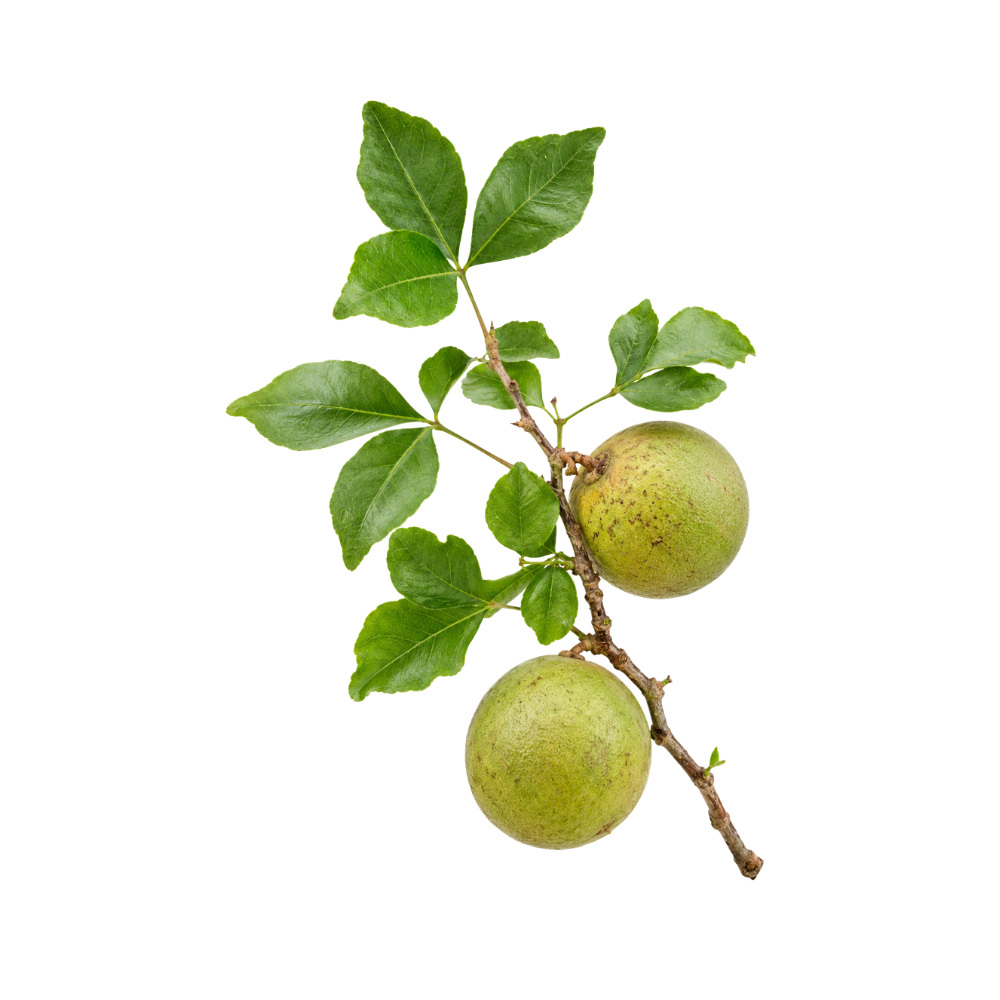
Bael (Aegle marmelos) is a thorny, aromatic tree of the citrus family, native to the Indian subcontinent and revered across South Asia. Its hard, woody-shelled fruit holds a fragrant orange pulp.
The tree is sacred to the Hindu god Shiva, and its leaves are offered in his worship 58Reference 58Aegle marmelos — habit, range, habitat, cultivation and uses — species databaseView study →. As Bilva it is one of the esteemed drugs of Ayurveda, and its root is one of the Dashamula (“ten roots”).
What Is Bael?
Bael is a slow-growing tree of the citrus family whose fruit is used as both medicine and food. The unripe fruit is hard and astringent, and it is the classic Ayurvedic remedy for diarrhoea and dysentery. The ripe fruit is sweet and mucilaginous, and it is eaten fresh or made into a cooling drink.
The tree grows wild in dry forests from the Himalayan foothills to Myanmar and is widely planted in India and Pakistan for its fruit, often in temple grounds 57,
The fruit carries tannins and coumarins such as marmelosin, and the leaf carries the alkaloid aegeline. Research has looked mostly at gut infections, blood sugar and inflammation, almost entirely in animals and cell cultures, with one small human trial of the leaf in type 2 diabetes 1,
How Is Bael Used?
The preparation depends on the ripeness of the fruit and the complaint.
- Unripe or half-ripe fruit — sliced, sun-dried, then powdered or decocted for diarrhoea and dysentery. The tender fruit is also made into a preserve, bael murabba.
- Ripe fruit pulp — eaten fresh or blended with water and sugar into a cooling summer drink (sharbat), used as a gentle laxative and nourishing tonic 57,
58Reference 57Aegle marmelos (Linn.) Correa — species description, distribution and uses — floraView study →Reference 58Aegle marmelos — habit, range, habitat, cultivation and uses — species databaseView study → . - Leaf juice or infusion — used for diabetes, fever and inflammatory complaints.
- Root and bark — used in classical decoctions, notably within Dashamula, and for fever.
Compound Ayurvedic preparations built around bael include Bilwadi churna, Bael avaleha and Bilva taila.
Traditional Uses
Ayurvedic Medicine
Bilva’s main action is grahi: an absorbent, binding drug that firms the stool and checks diarrhoea (atisara) and dysentery (pravahika). It is also deepana (kindles the digestive fire) and pachana (aids digestion), so it is used as a digestive as well as an anti-diarrhoeal.
Its heating, astringent and drying qualities are said to pacify Kapha and Vata. The unripe fruit is preferred for acute loose stools and the ripe fruit for depletion and constipation. The root enters Dashamula for Vata disorders and fever.
Siddha Medicine
Siddha practice uses the plant, as Vilvam, for bowel complaints and dysentery, and as a digestive and a remedy for fever.
Unani Medicine
Unani and folk practice use bael for diarrhoea, indigestion, intestinal worms and diabetes, and as a general tonic.
Indications
- Diarrhoea and dysentery [unripe fruit; Ayurveda, Siddha, Unani]
- Intestinal infections [unripe fruit]
- Indigestion and poor appetite [unripe fruit; Ayurveda]
- Constipation [ripe fruit; Ayurveda]
- Intestinal worms [fruit; Unani and folk use]
- Type 2 diabetes [leaf juice; Ayurveda, Unani]
- Stomach ulcers [unripe and ripe fruit extracts]
- Ulcerative colitis [fruit extracts]
- Fever [leaf, root; Ayurveda, Siddha]
- Inflammation and mild pain [leaf]
- Debility and convalescence [ripe fruit; Ayurveda, Unani]
Botany
Bael is a slow-growing deciduous tree that usually reaches 6–15 m in height 56,
The branches carry sharp spines 1–3 cm long, borne singly or in pairs 56,
The flowers are greenish-white and fragrant, with petals about 1 cm long 56,
The fruit is a round to pear-shaped berry about 5–12 cm across, with a hard shell about 3 mm thick that turns greenish-yellow as it ripens 56,
Distribution
Bael is native to India, Nepal and Myanmar 58Reference 58Aegle marmelos — habit, range, habitat, cultivation and uses — species databaseView study →. In Pakistan it grows along the sub-Himalayan tract and in the Salt Range and lower Baluchistan, up to about 1,200 m, and its range extends east into Indochina 57Reference 57Aegle marmelos (Linn.) Correa — species description, distribution and uses — floraView study →. In China it is grown only in cultivation, in southern Yunnan 56Reference 56Aegle marmelos (Linnaeus) Corrêa — species description and distribution — floraView study →.
In the wild it grows in dry forests on hills and plains, including mixed deciduous and dry dipterocarp forest 58Reference 58Aegle marmelos — habit, range, habitat, cultivation and uses — species databaseView study →. It is frequently cultivated on the plains of India and Pakistan for its fruit, and it is sometimes planted outside its native range 57,
Growing Conditions
Cultivation snapshot for Bael
Bael is a hardy tree. It tolerates drought, poor, stony, swampy and alkaline soils, and a wide range of temperatures, from light frost to intense heat 58Reference 58Aegle marmelos — habit, range, habitat, cultivation and uses — species databaseView study →. It grows from sea level to about 1,200 m and flowers and fruits best where there is a marked dry season 58Reference 58Aegle marmelos — habit, range, habitat, cultivation and uses — species databaseView study →. The fruit ripens in the dry season, after most of the leaves have fallen 58Reference 58Aegle marmelos — habit, range, habitat, cultivation and uses — species databaseView study →.
Seedling trees begin to bear at 6–7 years old 58Reference 58Aegle marmelos — habit, range, habitat, cultivation and uses — species databaseView study →.
Grow it yourself
Farm Wiki is our cultivation-focused sister site, also run by Justin Cooke.
Pharmacology & Research
Well over a hundred studies have been published on Aegle marmelos, most of them on the gut and almost all in animals and cell cultures.
The most detailed work concerns the unripe fruit and infectious diarrhoea. Several independent groups have found that it reduces the adherence and invasion of gut bacteria and interferes with their toxins, rather than killing them outright 1,
Other findings include a growing group of colitis studies in rodents and a large body of radioprotection work in mice. Type 2 diabetes is the only use tested in a human trial, and that trial was small and weakly blinded 12Reference 12RCTAegle marmelos leaf juice as a complementary therapy to control type 2 diabetes: randomised controlled trial in Gujarat, India — RCTView study →.
-
Best-supported: infectious diarrhoea and dysentery from the unripe fruit — reducing bacterial adherence and invasion and neutralising enterotoxins rather than killing outright 1,
4, ; adjunctive glucose-lowering, the only use with a human trial 8,6Reference 1In vitroStudies on the antidiarrhoeal activity of Aegle marmelos unripe fruit: validating its traditional usage — [in vitro]View study →Reference 4In vitroIsolation and partial characterisation of a novel lectin from Aegle marmelos fruit and its effect on adherence and invasion of Shigellae to HT29 cells — [in vitro]View study →Reference 6In vitroImperatorin a furocoumarin inhibits periplasmic Cu-Zn SOD of Shigella dysenteriae their by modulates its resistance towards phagocytosis during host pathogen interaction — [in vitro]View study → 12Reference 8Antidiabetic activity of Aegle marmelos and its relationship with its antioxidant properties — [animal]View study →Reference 12RCTAegle marmelos leaf juice as a complementary therapy to control type 2 diabetes: randomised controlled trial in Gujarat, India — RCTView study → . -
Emerging, worth watching: ulcerative colitis across multiple rodent models, driven partly by the alkaloid aegeline 19,
21Reference 19AnimalAegeline attenuates TNBS-induced colitis by suppressing the NFƙB-mediated NLRP3 inflammasome pathway in mice — [animal]View study →Reference 21AnimalAegle marmelos effectively attenuates DSS-induced colitis by restoring intestinal mucosal barrier and alleviating inflammation through modulation of gut microbiota in mice — [animal]View study → ; radioprotection of blood and gut against gamma radiation 30,31Reference 30AnimalFruit extract of Aegle marmelos protects mice against radiation-induced lethality — [animal]View study →Reference 31AnimalEffects of Aegle marmelos (L.) Correa on the peripheral blood and small intestine of mice exposed to gamma radiation — [animal]View study → . - Mechanistically thin: anticancer, cardioprotective, wound-healing and antidepressant claims rest on single-group animal or in-vitro work with varied preparations.
- The caveat: no human trial for the main gut use, no standardised extract, and effects differ between the unripe fruit, ripe pulp and leaf.
Results depend on the preparation. The unripe fruit, the ripe pulp, the leaf, the root and the bark have different chemistry, and a result shown in one does not carry over to the others.
1. Diarrhoea, Dysentery & Enteric Infection
A hot water decoction of dried unripe fruit showed only limited direct antibacterial activity. It did markedly reduce the adherence of enteropathogenic E. coli and the invasion of enteroinvasive E. coli and Shigella, interfered with the production and binding of cholera toxin and heat-labile toxin, and was active against Giardia and rotavirus 1Reference 1In vitroStudies on the antidiarrhoeal activity of Aegle marmelos unripe fruit: validating its traditional usage — [in vitro]View study →.
In animals the unripe-fruit extract slowed gastrointestinal transit and reduced castor-oil-induced fluid accumulation, antagonising acetylcholine-, histamine- and serotonin-evoked gut contraction 2Reference 2Investigation on the gastroprotective and antidiarrhoeal properties of Aegle marmelos unripe fruit extract — [animal]View study →.
A fruit lectin with N-acetylgalactosamine specificity blocks Shigella adherence and invasion of colonic cells 4Reference 4In vitroIsolation and partial characterisation of a novel lectin from Aegle marmelos fruit and its effect on adherence and invasion of Shigellae to HT29 cells — [in vitro]View study →. The aqueous extract restores Shigella susceptibility to β-lactam antibiotics by altering porin channels 5Reference 5In vitroDifferential expression of ompC and ompF in multidrug-resistant Shigella dysenteriae and Shigella flexneri by aqueous extract of Aegle marmelos, altering its susceptibility toward beta-lactam antibiotics — [in vitro]View study →, and its furanocoumarin imperatorin inhibits the pathogen’s periplasmic Cu-Zn superoxide dismutase, weakening its resistance to host phagocytosis 6Reference 6In vitroImperatorin a furocoumarin inhibits periplasmic Cu-Zn SOD of Shigella dysenteriae their by modulates its resistance towards phagocytosis during host pathogen interaction — [in vitro]View study →.
Against multidrug-resistant Salmonella Typhi, the methanol extract ranked among the strongest of 54 Ayurvedic plant extracts screened in vitro 3Reference 3In vitroAntimicrobial evaluation of some medicinal plants for their anti-enteric potential against multi-drug resistant Salmonella typhi — [in vitro]View study →, and decoctions enhanced intracellular killing of enterotoxigenic E. coli by macrophages at low concentrations 7Reference 7In vitroBactericidal Effect of Selected Antidiarrhoeal Medicinal Plants on Intracellular Heat-Stable Enterotoxin-Producing Escherichia coli — [in vitro]View study →.
Gap: Every study is in vitro or in animals. There is no human trial in acute infectious diarrhoea.
2. Antidiabetic
Glucose-lowering is consistent across rodent models, and this is the only bael indication with human data. Methanolic leaf extract cut blood glucose by about 54% over twelve days in alloxan-diabetic rats while restoring antioxidant enzymes 8Reference 8Antidiabetic activity of Aegle marmelos and its relationship with its antioxidant properties — [animal]View study →.
In a type 2 model both leaf and fruit extracts improved insulin resistance and β-cell function, pointing to an insulin-sensitising effect 9Reference 9AnimalEffect of aqueous extract of Aegle marmelos fruit and leaf on glycemic, insulinemic and lipidemic status of type 2 diabetic model rats — [animal]View study →.
Leaf extract also prevented onset of insulin resistance in fructose-fed rats by restoring PI3K/Akt signalling 11Reference 11AnimalAegle marmelos impedes onset of insulin resistance syndrome in rats provided with drinking fructose from weaning to adulthood stages of development - a mechanistic study — [animal]View study →, and an alkaloid-free polyphenol-rich leaf extract lowered glucose while restoring antioxidant and anti-inflammatory status in diabetic mice 10Reference 10AnimalAnalysis of polyphenols in Aegle marmelos leaf and ameliorative efficacy against diabetic mice through restoration of antioxidant and anti-inflammatory status — [animal]View study →.
In vitro, leaf extract inhibits the carbohydrate-digesting enzymes α-amylase and α-glucosidase 13Reference 13In vitroPhytochemical Analysis and Evaluation of Antioxidant, Antidiabetic, and Anti-inflammatory Properties of Aegle marmelos and Its Validation in an In-Vitro Cell Model — [in vitro]View study →.
A small human RCT (60 people with type 2 diabetes, 8 weeks of leaf juice) reported falls in fasting glucose, HbA1c and post-meal glucose. It was single-centre and not rigorously blinded 12Reference 12RCTAegle marmelos leaf juice as a complementary therapy to control type 2 diabetes: randomised controlled trial in Gujarat, India — RCTView study →.
Gap: The single human RCT is small and methodologically weak, and the animal work uses leaf and fruit extracts rather than a standardised product. The size and durability of the effect in people are not established.
3. Gastroprotective (Anti-Ulcer)
Bael protects the stomach lining across several independent rodent ulcer models, using both fruit stages. Unripe-fruit extract significantly reduced ethanol-induced gastric lesions (though not restraint- or indomethacin-induced ones) 2Reference 2Investigation on the gastroprotective and antidiarrhoeal properties of Aegle marmelos unripe fruit extract — [animal]View study →, and dose-dependently protected against aspirin-induced gastro-duodenal ulceration through antioxidant mechanisms, raising mucosal thickness, superoxide dismutase and catalase 22Reference 22AnimalThe protective role of Aegle marmelos on aspirin-induced gastro-duodenal ulceration in albino rat model: a possible involvement of antioxidants — [animal]View study →.
Ripe-fruit pulp raised gastric enterochromaffin-cell counts and serotonin content to thicken protective mucus 23Reference 23Gastric mucosal protection by aegle marmelos against gastric mucosal damage: role of enterochromaffin cell and serotonin — [animal]View study →, dried ripe-fruit extract protected against ethanol-induced injury comparably to ranitidine 24Reference 24Dry ripe fruit of Aegle marmelos as anti-ulcer agent against ethanol induced gastric mucosal injury — [animal]View study →, and unripe-fruit extract attenuated Helicobacter pylori lipopolysaccharide-induced oxidative stress and acid secretion in rats 25Reference 25AnimalAegle marmelos fruit extract attenuates Helicobacter pylori Lipopolysaccharide induced oxidative stress in Sprague Dawley rats — [animal]View study →.
4. Antioxidant
Antioxidant activity runs through most of bael’s other effects. The isolated furanocoumarin marmelosin shows potent radical-scavenging and inhibits TNF-α-driven inflammatory and tumour markers in vitro 14Reference 14In vitroAntioxidant and anti-inflammatory properties of marmelosin from Bael (Aegle marmelos L.); Inhibition of TNF-α mediated inflammatory/tumor markers — [in vitro]View study →, and a marmelosin-rich extract protected HepG2 liver cells from hexavalent-chromium-induced oxidative stress and apoptosis by regulating the Gadd45 pathway 15Reference 15In vitroAegle marmelos extract rich in marmelosin exacted ameliorative effect against chromium-induced oxidative stress and apoptosis through regulation of Gadd45 in HepG2 cell line — [in vitro]View study →.
Plant extracts restore superoxide dismutase, catalase and glutathione in diabetic, ulcerated and irradiated tissue 8,
5. Anti-Inflammatory & Analgesic
Leaf extracts inhibit carrageenan-induced paw oedema and cotton-pellet granuloma in rats, with measurable analgesic (reduced paw-licking) and antipyretic effects 26Reference 26Studies on the anti-inflammatory, antipyretic and analgesic properties of the leaves of Aegle marmelos Corr — [animal]View study →. At the molecular level, marmelosin suppresses TNF-α-mediated inflammatory signalling and related tumour markers in vitro 14Reference 14In vitroAntioxidant and anti-inflammatory properties of marmelosin from Bael (Aegle marmelos L.); Inhibition of TNF-α mediated inflammatory/tumor markers — [in vitro]View study →.
6. Ulcerative Colitis & IBD
A growing group of rodent studies extends bael’s gut use from acute diarrhoea to chronic inflammatory bowel disease. Ethanolic fruit-pulp extract reduced colonic damage, myeloperoxidase and lipid peroxidation while restoring antioxidants in TNBS- and acetic-acid-induced colitis 16,
Mechanistic work points to the alkaloid aegeline, which attenuated TNBS colitis by suppressing the NF-κB-mediated NLRP3 inflammasome 19Reference 19AnimalAegeline attenuates TNBS-induced colitis by suppressing the NFƙB-mediated NLRP3 inflammasome pathway in mice — [animal]View study →.
A phospholipid-complexed extract lowered TNF-α and IL-6 in DSS colitis 20Reference 20AnimalEffect of Aegle marmelos Extract-Phospholipid Complexes in Dextran Sulfate Sodium-Induced Ulcerative Colitis in Rats — [animal]View study →, and a fruit extract restored the intestinal mucosal barrier and remodelled the gut microbiota in DSS colitis, with efficacy differing between fruit morphotypes 21Reference 21AnimalAegle marmelos effectively attenuates DSS-induced colitis by restoring intestinal mucosal barrier and alleviating inflammation through modulation of gut microbiota in mice — [animal]View study →.
Gap: Every colitis study is in rodents, there is no human IBD trial, and preparations and doses vary widely. Results also differed between fruit morphotypes 21Reference 21AnimalAegle marmelos effectively attenuates DSS-induced colitis by restoring intestinal mucosal barrier and alleviating inflammation through modulation of gut microbiota in mice — [animal]View study →, so extracts from different trees may not behave alike.
7. Radioprotective
Bael has a large, internally consistent radioprotection literature, mostly from one research group. Oral or intraperitoneal leaf and fruit extracts given before gamma irradiation reduced radiation-sickness symptoms and lethality in mice, protecting both gastrointestinal and blood-forming tissues 29,
Leaf extract was non-toxic up to a single 1750 mg/kg dose while conferring protection at far lower doses 33Reference 33AnimalEvaluation of the radioprotective effect of bael leaf (Aegle marmelos) extract in mice — [animal]View study →, and the body of work has been reviewed as a candidate dietary radioprotector for cancer radiotherapy 27Reference 27ReviewRadioprotective effects of Aegle marmelos (L.) Correa (Bael): a concise review — [review]View study →.
Gap: The evidence comes largely from a single group, almost entirely in mice or in vitro, and uses an extract given before exposure. There is no human radiotherapy data.
8. Hepatoprotective
Bael protects the liver against several chemical toxins in rodents. A 70% ethanol leaf extract (standardised on rutin) reduced carbon-tetrachloride-induced liver injury, with the effect augmented by co-administration of piperine 34Reference 34AnimalAugmentation of hepatoprotective potential of Aegle marmelos in combination with piperine in carbon tetrachloride model in wistar rats — [animal]View study →, and dietary inclusion of bael fruit blunted cisplatin-induced hepatotoxicity by restoring antioxidant enzymes 35Reference 35AnimalModulatory Effect of Dietary Inclusion of Aegle marmelos Fruits against Cisplatin - Induced Hepatotoxicity In Wistar Rats — [animal]View study →.
At the cellular level a marmelosin-rich extract protected HepG2 cells from chromium-induced oxidative apoptosis 15Reference 15In vitroAegle marmelos extract rich in marmelosin exacted ameliorative effect against chromium-induced oxidative stress and apoptosis through regulation of Gadd45 in HepG2 cell line — [in vitro]View study →.
9. Anticancer
Preclinical anticancer work spans whole-animal and cell-line studies. Ethanolic fruit-pulp extract reduced tumour burden in DMBA-induced rat breast cancer 36Reference 36AnimalTherapeutic effect of Aegle marmelos fruit extract against DMBA induced breast cancer in rats — [animal]View study →, and fruit extract suppressed chemically induced mouse skin papillomas while restoring antioxidant defences 37Reference 37AnimalChemically induced skin carcinogenesis in mice and its prevention by Aegle marmelos (an Indian medicinal plant) fruit extract — [animal]View study →.
Leaf extracts and fractions were antiproliferative across lung, colon, ovary, prostate, leukaemia and breast cell lines 38Reference 38In vitroPharmacognostic standardisation and antiproliferative activity of Aegle marmelos (L.) Correa leaves in various human cancer cell lines — [in vitro]View study →.
A sesquiterpene-rich (β-caryophyllene) Nepalese leaf essential oil was cytotoxic to pancreatic, colon, lung and ovarian lines 39Reference 39In vitroSesquiterpene rich essential oil from Nepalese Bael tree (Aegle marmelos (L.) Correa) as potential antiproliferative agent — [in vitro]View study →.
Two new cytotoxic furoquinoline alkaloids were isolated from the leaves 40Reference 40In vitroTwo new cytotoxic furoquinoline alkaloids isolated from Aegle marmelos (Linn.) Correa — [in vitro]View study →.
10. Cardioprotective & Antihyperlipidemic
Fruit extract lessened isoproterenol-induced myocardial infarction markers (C-reactive protein, homocysteine, cardiac lipid peroxidation) in rats 47Reference 47AnimalIn vivo and molecular docking studies using whole extract and phytocompounds of Aegle marmelos fruit protective effects against Isoproterenol-induced Myocardial infarction in rats — [animal]View study →, and the alkaloid aegeline was independently cardioprotective in the same isoproterenol model 48Reference 48Aegeline mitigates isoproterenol-induced myocardial infarction: insights from biochemical, histopathological, and in silico studies — [animal]View study →. Aqueous leaf extract lowered total cholesterol and improved the lipid profile in rats 49Reference 49Phytochemical composition, antilipidemic and antihypercholestrolemic perspectives of Bael leaf extracts — [animal]View study →.
11. Wound Healing
Topical and oral bael extracts accelerated healing in rodent wound models. A methanolic root-extract ointment improved wound contraction, closure time and tensile strength in excision and incision wounds, comparably to nitrofurazone 41Reference 41AnimalEffect of root extract of Aegle marmelos on dermal wound healing in rats — [animal]View study →, and fruit-pulp extract shortened epithelialisation time and raised wound-breaking strength across excision, incision and dead-space models, with increased antioxidants in granulation tissue 42Reference 42AnimalIn vivo healing potential of Aegle marmelos in excision, incision, and dead space wound models — [animal]View study →.
12. Neuroprotective & Antidepressant
A total-sterols fraction and isolated stigmasterol from the leaf produced antidepressant-like effects in mouse behavioural tests 43Reference 43Evaluation of the Antidepressant-like Effect of Total Sterols Fraction and Stigmasterol Isolated from Leaves of Aegle marmelos and Possible Mechanism( s) of Action Involved — [animal]View study →, and a leaf extract reduced depression-like behaviour in chronically stressed rats 44Reference 44AnimalAntidepressive-Like Effect of Aegle marmelos Leaf Extract in Chronic Unpredictable Mild Stress-Induced Depression-Like Behaviour in Rats — [animal]View study →.
Aegeline mimicked a yeast SNARE protein to suppress α-synuclein and Bax toxicity in a yeast screen relevant to Parkinson’s disease 45Reference 45In vitroAegeline, a natural product from the plant Aegle marmelos, mimics the yeast SNARE protein Sec22p in suppressing α-synuclein and Bax toxicity in yeast — [in vitro]View study →, and protected against LPS-induced memory dysfunction in rats by modulating hippocampal cholinergic and cytokine pathways 46Reference 46Neuroprotective effects of aegeline against LPS-induced memory dysfunction: involvement of hippocampal cholinergic/proinflammatory cytokines receptor modulation and insilico insight — [animal]View study →.
Mechanisms
Bael’s active chemistry is divided by plant part. In the unripe fruit, tannins and a fruit lectin have been studied for blocking the adhesion of gut pathogens and neutralising their toxins, and the furanocoumarin imperatorin for weakening Shigella’s defences 1,
The leaf alkaloid aegeline has been studied for its effects on NF-κB and the NLRP3 inflammasome in colitis 19Reference 19AnimalAegeline attenuates TNBS-induced colitis by suppressing the NFƙB-mediated NLRP3 inflammasome pathway in mice — [animal]View study →. Restoration of antioxidant enzymes appears across the stomach, liver and radiation studies.
| Mechanism | Drives | Key compounds |
|---|---|---|
| Anti-adhesion / anti-invasion & enterotoxin neutralisation | diarrhoeadysenteryenteric infection | fruit lectin, imperatorin, tannins |
| Tannin astringency (mucosal tightening, antisecretory) | diarrhoeagut-firming | tannins |
| Antioxidant enzyme restoration (SOD, catalase, glutathione ↑; lipid peroxidation ↓) | antioxidantgastroprotectivehepatoprotectiveradioprotective | marmelosin, quercetin, rutin |
| NF-κB ↓, NLRP3 inflammasome ↓, TNF-α/IL-6 ↓ | anti-inflammatorycolitis/IBD | aegeline, marmelosin |
| Insulin sensitisation (PI3K/Akt ↑) & α-amylase/α-glucosidase inhibition | antidiabetic | leaf polyphenols, scopoletin |
| Free-radical scavenging & clastogen protection | radioprotectiveanticancer chemoprevention | flavonoids, coumarins |
Clinical Trials
No registered interventional trials were found on ClinicalTrials.gov. The only human evidence is a single small, unregistered published RCT of leaf juice in type 2 diabetes 12Reference 12RCTAegle marmelos leaf juice as a complementary therapy to control type 2 diabetes: randomised controlled trial in Gujarat, India — RCTView study →.
| Completed | Planned | Terminated | Preclinical |
|---|---|---|---|
| 1(published, unregistered) | 0 | 0 | ~130+ |
Last checked: August 2026.
Phytochemistry
Bael contains furanocoumarins and other coumarins, alkaloids, tannins and a volatile oil, and they are distributed differently across the plant 58Reference 58Aegle marmelos — habit, range, habitat, cultivation and uses — species databaseView study →. The coumarins are concentrated in the fruit, root and bark. The main fruit furanocoumarin is marmelosin, which the literature often treats as the same molecule as imperatorin. It occurs alongside psoralen, marmesin, scopoletin and xanthotoxin.
The alkaloids aegeline, skimmianine and fagarine occur mainly in the leaves and roots. Tannins are highest in the unripe fruit and bark, and the ripe pulp is rich in mucilage and pectin.
Minor constituents include lupeol, betulinic acid, quercetin, rutin, stigmasterol and marmin.
The composition of the leaf essential oil varies with where the tree grows. A Nepalese leaf oil was rich in sesquiterpenes, mainly β-caryophyllene at 26%, while oils reported from elsewhere are dominated by monoterpenes 39Reference 39In vitroSesquiterpene rich essential oil from Nepalese Bael tree (Aegle marmelos (L.) Correa) as potential antiproliferative agent — [in vitro]View study →.
Dosage
The only human dose on record is from the leaf-juice trial in type 2 diabetes. The other doses in the table come from animal studies.
| Indication | Preparation | Dose | Est. dried-herb equivalent | Source |
|---|---|---|---|---|
| Type 2 diabetes | Fresh leaf juice | 20 g leaf blended in 100 mL water daily, 8 wk | ~4–5 g dried leaf/day | 12Reference 12RCTAegle marmelos leaf juice as a complementary therapy to control type 2 diabetes: randomised controlled trial in Gujarat, India — RCTView study → |
| Antidiabetic (animal) | Methanolic leaf extract | 250–500 mg/kg (rat) | — | 8, |
| Gastroprotection (animal) | Unripe- or ripe-fruit extract | 50–800 mg/kg (rat) | — | 2, |
| Diarrhoea / enteric (mechanistic) | Hot aqueous unripe-fruit decoction | In vitro and animal concentrations only | — | 1Reference 1In vitroStudies on the antidiarrhoeal activity of Aegle marmelos unripe fruit: validating its traditional usage — [in vitro]View study → |
The dried-leaf equivalent assumes roughly 75–80% moisture in fresh leaf.
Traditional Dosage
| System | Preparation | Dose |
|---|---|---|
| Ayurveda / Western herbal | Unripe-fruit powder (churna) | 3–6 g/day in divided doses for diarrhoea and dysentery |
| Ayurveda / Western herbal | Decoction of dried unripe-fruit slices | As needed for loose stool |
| Ayurveda / Siddha | Ripe-fruit pulp, sharbat or murabba | Pulp of about one fruit, fresh |
| Ayurveda | Leaf juice (svarasa) | ~10–20 mL/day for diabetes, fever and inflammation |
| Ayurveda | Root or bark decoction (in Dashamula) | As part of the classical formula for Vata disorders and fever |
The unripe fruit binds the bowel and the ripe fruit loosens it, so the two are not interchangeable.
Safety & Pregnancy
Ripe bael fruit is a widely eaten food and is well tolerated. Medicinal unripe-fruit and leaf preparations are generally used short term, and three cautions apply to them.
- Constipation from the tannins. The astringent unripe fruit can bind the stool too much at high or prolonged doses. Reduce the dose or switch to the ripe fruit.
- Additive blood-sugar lowering. Leaf and fruit extracts lower blood glucose in animals and in a small human trial 8,
12Reference 8Antidiabetic activity of Aegle marmelos and its relationship with its antioxidant properties — [animal]View study →Reference 12RCTAegle marmelos leaf juice as a complementary therapy to control type 2 diabetes: randomised controlled trial in Gujarat, India — RCTView study → — monitor if combining with insulin or other diabetes medicines. - ★ Reversible male-fertility effects in rats. Repeated ethanolic leaf and methanolic bark extracts reduced sperm motility, density and testosterone and impaired spermatogenesis 50,
51, . One aqueous-extract dominant-lethal study found no reproductive harm 54Reference 54AnimalDominant lethal test in rats treated with some plant extracts — [animal]View study →. Men trying to conceive may prefer to avoid concentrated therapeutic doses.52, 53Reference 50AnimalSuppression of fertility in male albino rats following the administration of 50% ethanolic extract of Aegle marmelos — [animal]View study →Reference 51AnimalReversible changes in the antifertility induced by Aegle marmelos in male albino rats — [animal]View study →Reference 52AnimalAssessment of the contraceptive efficacy of the aqueous extract of Aegle marmelos Corr. leaves in male albino rats — [animal]View study →Reference 53AnimalAntifertility activity of methanolic bark extract of Aegle marmelos (l.) in male wistar rats — [animal]View study → - Pregnancy. No human data; avoid concentrated medicinal preparations.
- Low toxicity. Ripe fruit is a food, and leaf extract was non-toxic in mice up to a single 1750 mg/kg dose 33Reference 33AnimalEvaluation of the radioprotective effect of bael leaf (Aegle marmelos) extract in mice — [animal]View study →.
Full Safety & Interactions Detail
Blood sugar. Bael lowers blood glucose in animals and in one small human trial 8,
Furanocoumarins. Bael carries furanocoumarins, like grapefruit. In laboratory tests with human liver enzymes, bael fruit extract and its furanocoumarin marmelosin inhibited CYP3A4 and CYP1A2, two enzymes that clear many common drugs, while CYP2D6, CYP2C9 and CYP2C19 were unaffected 59Reference 59In vitroInhibition of CYP3A4 and CYP1A2 by Aegle marmelos and its constituents — [in vitro]View study →.
No interaction with drugs broken down by these enzymes has been tested in animals or people. No interaction with anticoagulants has been tested either.
Aegeline supplements. In 2013 a reformulated weight-loss supplement, OxyELITE Pro, that contained aegeline was linked to an outbreak of liver injury in the United States 55Reference 55Case reportThe Role of Adverse Event Reporting in the FDA Response to a Multistate Outbreak of Liver Disease Associated with a Dietary Supplement — [case series]View study →. That product used aegeline as an isolated ingredient in a multi-ingredient formula, which is a different thing from bael fruit eaten as food or taken as a traditional preparation.
Avoid medicinal doses. There is no human safety data for pregnancy or breastfeeding. Ripe fruit eaten occasionally as a food is traditionally considered acceptable.
Folk sources describe the leaves as causing abortion and sterility in women 58Reference 58Aegle marmelos — habit, range, habitat, cultivation and uses — species databaseView study →, and extracts reduced male fertility in rats 50,
References
- Brijesh S et al. (2009). Studies on the antidiarrhoeal activity of Aegle marmelos unripe fruit: validating its traditional usage — [in vitro]. BMC Complementary and Alternative Medicine, 9, 47. https://pubmed.ncbi.nlm.nih.gov/19930633/
- Dhuley JN (2003). Investigation on the gastroprotective and antidiarrhoeal properties of Aegle marmelos unripe fruit extract — [animal]. Hindustan Antibiotics Bulletin, 45-46(1-4), 41-6. https://pubmed.ncbi.nlm.nih.gov/16281828/
- Rani P, & Khullar N (2004). Antimicrobial evaluation of some medicinal plants for their anti-enteric potential against multi-drug resistant Salmonella typhi — [in vitro]. Phytotherapy Research, 18(8), 670-3. https://pubmed.ncbi.nlm.nih.gov/15476301/
- Raja SB et al. (2011). Isolation and partial characterisation of a novel lectin from Aegle marmelos fruit and its effect on adherence and invasion of Shigellae to HT29 cells — [in vitro]. PLoS ONE, 6(1), e16231. https://pubmed.ncbi.nlm.nih.gov/21283697/
- Raja SB, Murali MR, & Devaraj SN (2008). Differential expression of ompC and ompF in multidrug-resistant Shigella dysenteriae and Shigella flexneri by aqueous extract of Aegle marmelos, altering its susceptibility toward beta-lactam antibiotics — [in vitro]. Diagnostic Microbiology and Infectious Disease, 61(3), 321-8. https://pubmed.ncbi.nlm.nih.gov/18358664/
- Raja SB et al. (2011). Imperatorin a furocoumarin inhibits periplasmic Cu-Zn SOD of Shigella dysenteriae their by modulates its resistance towards phagocytosis during host pathogen interaction — [in vitro]. Biomedicine & Pharmacotherapy, 65(8), 560-8. https://pubmed.ncbi.nlm.nih.gov/21194882/
- Birdi TJ, Brijesh S, & Daswani PG (2014). Bactericidal Effect of Selected Antidiarrhoeal Medicinal Plants on Intracellular Heat-Stable Enterotoxin-Producing Escherichia coli — [in vitro]. Indian Journal of Pharmaceutical Sciences, 76(3), 229-35. https://pubmed.ncbi.nlm.nih.gov/25035535/
- Sabu MC, & Kuttan R (2004). Antidiabetic activity of Aegle marmelos and its relationship with its antioxidant properties — [animal]. Indian Journal of Physiology and Pharmacology, 48(1), 81-8. https://pubmed.ncbi.nlm.nih.gov/15270373/
- Mudi SR et al. (2017). Effect of aqueous extract of Aegle marmelos fruit and leaf on glycemic, insulinemic and lipidemic status of type 2 diabetic model rats — [animal]. Journal of Complementary & Integrative Medicine, 14(2). https://pubmed.ncbi.nlm.nih.gov/28284036/
- Ibrahim M et al. (2022). Analysis of polyphenols in Aegle marmelos leaf and ameliorative efficacy against diabetic mice through restoration of antioxidant and anti-inflammatory status — [animal]. Journal of Food Biochemistry, 46(4), e13852. https://pubmed.ncbi.nlm.nih.gov/34250628/
- Mathur R et al. (2017). Aegle marmelos impedes onset of insulin resistance syndrome in rats provided with drinking fructose from weaning to adulthood stages of development - a mechanistic study — [animal]. Canadian Journal of Physiology and Pharmacology, 95(5), 572-579. https://pubmed.ncbi.nlm.nih.gov/28177684/
- Nigam, V., & Nambiar, V. S. (2019). Aegle marmelos leaf juice as a complementary therapy to control type 2 diabetes: randomised controlled trial in Gujarat, India — RCT. Advances in Integrative Medicine, 6(1), 11-22. https://doi.org/10.1016/j.aimed.2018.03.002
- Venkatesan S et al. (2024). Phytochemical Analysis and Evaluation of Antioxidant, Antidiabetic, and Anti-inflammatory Properties of Aegle marmelos and Its Validation in an In-Vitro Cell Model — [in vitro]. Cureus, 16(9), e70491. https://pubmed.ncbi.nlm.nih.gov/39479139/
- Pynam H, & Dharmesh SM (2018). Antioxidant and anti-inflammatory properties of marmelosin from Bael (Aegle marmelos L.); Inhibition of TNF-α mediated inflammatory/tumor markers — [in vitro]. Biomedicine & Pharmacotherapy, 106, 98-108. https://pubmed.ncbi.nlm.nih.gov/29957472/
- Katram N et al. (2021). Aegle marmelos extract rich in marmelosin exacted ameliorative effect against chromium-induced oxidative stress and apoptosis through regulation of Gadd45 in HepG2 cell line — [in vitro]. Journal of Food Biochemistry, 45(4), e13704. https://pubmed.ncbi.nlm.nih.gov/33719131/
- Ghatule RR et al. (2014). Protective effects of Aegle marmelos fruit pulp on 2,4,6-trinitrobenzene sulfonic acid-induced experimental colitis — [animal]. Pharmacognosy Magazine, 10(Suppl 1), S147-52. https://pubmed.ncbi.nlm.nih.gov/24914296/
- Gautam MK et al. (2013). Healing effects of Aegle marmelos (L.) Correa fruit extract on experimental colitis — [animal]. Indian Journal of Experimental Biology, 51(2), 157-64. https://pubmed.ncbi.nlm.nih.gov/23923609/
- Behera JP et al. (2012). Effect of aqueous extract of Aegle marmelos unripe fruit on inflammatory bowel disease — [animal]. Indian Journal of Pharmacology, 44(5), 614-8. https://pubmed.ncbi.nlm.nih.gov/23112424/
- Shah B, & Solanki N (2024). Aegeline attenuates TNBS-induced colitis by suppressing the NFƙB-mediated NLRP3 inflammasome pathway in mice — [animal]. Inflammopharmacology, 32(4), 2589-2599. https://pubmed.ncbi.nlm.nih.gov/38767762/
- Swami PG, Singhavi DJ, & Ganjiwale RO (2025). Effect of Aegle marmelos Extract-Phospholipid Complexes in Dextran Sulfate Sodium-Induced Ulcerative Colitis in Rats — [animal]. Turkish Journal of Pharmaceutical Sciences, 22(2), 119-130. https://pubmed.ncbi.nlm.nih.gov/40366225/
- Sahu M et al. (2025). Aegle marmelos effectively attenuates DSS-induced colitis by restoring intestinal mucosal barrier and alleviating inflammation through modulation of gut microbiota in mice — [animal]. Phytomedicine, 149, 157538. https://pubmed.ncbi.nlm.nih.gov/41273865/
- Das SK, & Roy C (2012). The protective role of Aegle marmelos on aspirin-induced gastro-duodenal ulceration in albino rat model: a possible involvement of antioxidants — [animal]. Saudi Journal of Gastroenterology, 18(3), 188-94. https://pubmed.ncbi.nlm.nih.gov/22626798/
- Singh P, Dutta SR, & Guha D (2015). Gastric mucosal protection by aegle marmelos against gastric mucosal damage: role of enterochromaffin cell and serotonin — [animal]. Saudi Journal of Gastroenterology, 21(1), 35-42. https://pubmed.ncbi.nlm.nih.gov/25672237/
- Imran H et al. (2022). Dry ripe fruit of Aegle marmelos as anti-ulcer agent against ethanol induced gastric mucosal injury — [animal]. Pakistan Journal of Pharmaceutical Sciences, 35(6), 1677-1682. https://pubmed.ncbi.nlm.nih.gov/36789828/
- Ramakrishna YG et al. (2015). Aegle marmelos fruit extract attenuates Helicobacter pylori Lipopolysaccharide induced oxidative stress in Sprague Dawley rats — [animal]. BMC Complementary and Alternative Medicine, 15, 375. https://pubmed.ncbi.nlm.nih.gov/26482072/
- Arul V, Miyazaki S, & Dhananjayan R (2005). Studies on the anti-inflammatory, antipyretic and analgesic properties of the leaves of Aegle marmelos Corr — [animal]. Journal of Ethnopharmacology, 96(1-2), 159-63. https://pubmed.ncbi.nlm.nih.gov/15588665/
- Baliga MS et al. (2010). Radioprotective effects of Aegle marmelos (L.) Correa (Bael): a concise review — [review]. Journal of Alternative and Complementary Medicine, 16(10), 1109-16. https://pubmed.ncbi.nlm.nih.gov/20932194/
- Jagetia GC, Venkatesh P, & Baliga MS (2003). Evaluation of the radioprotective effect of Aegle marmelos (L.) Correa in cultured human peripheral blood lymphocytes exposed to different doses of gamma-radiation: a micronucleus study — [in vitro]. Mutagenesis, 18(4), 387-93. https://pubmed.ncbi.nlm.nih.gov/12840113/
- Jagetia GC, & Venkatesh P (2005). Radioprotection by oral administration of Aegle marmelos (L.) Correa in vivo — [animal]. Journal of Environmental Pathology, Toxicology and Oncology, 24(4), 315-32. https://pubmed.ncbi.nlm.nih.gov/16393124/
- Jagetia GC, Venkatesh P, & Baliga MS (2004). Fruit extract of Aegle marmelos protects mice against radiation-induced lethality — [animal]. Integrative Cancer Therapies, 3(4), 323-32. https://pubmed.ncbi.nlm.nih.gov/15523103/
- Jagetia GC et al. (2006). Effects of Aegle marmelos (L.) Correa on the peripheral blood and small intestine of mice exposed to gamma radiation — [animal]. Journal of Environmental Pathology, Toxicology and Oncology, 25(4), 611-24. https://pubmed.ncbi.nlm.nih.gov/17341202/
- Jagetia GC, & Venkatesh P (2007). Inhibition of radiation-induced clastogenicity by Aegle marmelos (L.) correa in mice bone marrow exposed to different doses of gamma-radiation — [animal]. Human & Experimental Toxicology, 26(2), 111-24. https://pubmed.ncbi.nlm.nih.gov/17370869/
- Jagetia GC, Venkatesh P, & Baliga MS (2004). Evaluation of the radioprotective effect of bael leaf (Aegle marmelos) extract in mice — [animal]. International Journal of Radiation Biology, 80(4), 281-90. https://pubmed.ncbi.nlm.nih.gov/15204705/
- Rathee D, Kamboj A, & Sidhu S (2018). Augmentation of hepatoprotective potential of Aegle marmelos in combination with piperine in carbon tetrachloride model in wistar rats — [animal]. Chemistry Central Journal, 12(1), 94. https://pubmed.ncbi.nlm.nih.gov/30123925/
- Chandel SS et al. (2018). Modulatory Effect of Dietary Inclusion of Aegle marmelos Fruits against Cisplatin - Induced Hepatotoxicity In Wistar Rats — [animal]. Annals of Hepatology, 17(3), 482-489. https://pubmed.ncbi.nlm.nih.gov/29735797/
- Akhouri V, Kumari M, & Kumar A (2020). Therapeutic effect of Aegle marmelos fruit extract against DMBA induced breast cancer in rats — [animal]. Scientific Reports, 10(1), 18016. https://pubmed.ncbi.nlm.nih.gov/33093498/
- Agrawal A, Jahan S, & Goyal PK (2011). Chemically induced skin carcinogenesis in mice and its prevention by Aegle marmelos (an Indian medicinal plant) fruit extract — [animal]. Journal of Environmental Pathology, Toxicology and Oncology, 30(3), 251-9. https://pubmed.ncbi.nlm.nih.gov/22126618/
- Bhatti R et al. (2013). Pharmacognostic standardisation and antiproliferative activity of Aegle marmelos (L.) Correa leaves in various human cancer cell lines — [in vitro]. Indian Journal of Pharmaceutical Sciences, 75(6), 628-34. https://pubmed.ncbi.nlm.nih.gov/24591736/
- Pant P et al. (2019). Sesquiterpene rich essential oil from Nepalese Bael tree (Aegle marmelos (L.) Correa) as potential antiproliferative agent — [in vitro]. Fitoterapia, 138, 104266. https://pubmed.ncbi.nlm.nih.gov/31302251/
- Mohammed MMD et al. (2016). Two new cytotoxic furoquinoline alkaloids isolated from Aegle marmelos (Linn.) Correa — [in vitro]. Natural Product Research, 30(22), 2559-2566. https://pubmed.ncbi.nlm.nih.gov/26729368/
- Jaswanth A et al. (2001). Effect of root extract of Aegle marmelos on dermal wound healing in rats — [animal]. Ancient Science of Life, 20(4), 111-4. https://pubmed.ncbi.nlm.nih.gov/22557023/
- Gautam MK et al. (2014). In vivo healing potential of Aegle marmelos in excision, incision, and dead space wound models — [animal]. The Scientific World Journal, 2014, 740107. https://pubmed.ncbi.nlm.nih.gov/24737990/
- Ghosh S et al. (2022). Evaluation of the Antidepressant-like Effect of Total Sterols Fraction and Stigmasterol Isolated from Leaves of Aegle marmelos and Possible Mechanism( s) of Action Involved — [animal]. Current Drug Discovery Technologies, 19(2), e290721195144. https://pubmed.ncbi.nlm.nih.gov/34376134/
- Sharma A et al. (2022). Antidepressive-Like Effect of Aegle marmelos Leaf Extract in Chronic Unpredictable Mild Stress-Induced Depression-Like Behaviour in Rats — [animal]. BioMed Research International, 2022, 6479953. https://pubmed.ncbi.nlm.nih.gov/36593774/
- Derf A et al. (2019). Aegeline, a natural product from the plant Aegle marmelos, mimics the yeast SNARE protein Sec22p in suppressing α-synuclein and Bax toxicity in yeast — [in vitro]. Bioorganic & Medicinal Chemistry Letters, 29(3), 454-460. https://pubmed.ncbi.nlm.nih.gov/30579794/
- Alharbi KS et al. (2026). Neuroprotective effects of aegeline against LPS-induced memory dysfunction: involvement of hippocampal cholinergic/proinflammatory cytokines receptor modulation and insilico insight — [animal]. Neuroscience, 595, 112-129. https://pubmed.ncbi.nlm.nih.gov/41423021/
- Krushna GS et al. (2017). In vivo and molecular docking studies using whole extract and phytocompounds of Aegle marmelos fruit protective effects against Isoproterenol-induced Myocardial infarction in rats — [animal]. Biomedicine & Pharmacotherapy, 91, 880-889. https://pubmed.ncbi.nlm.nih.gov/28511341/
- Alzarea SI et al. (2026). Aegeline mitigates isoproterenol-induced myocardial infarction: insights from biochemical, histopathological, and in silico studies — [animal]. Frontiers in Cardiovascular Medicine, 13, 1805096. https://pubmed.ncbi.nlm.nih.gov/42553036/
- Asghar N et al. (2018). Phytochemical composition, antilipidemic and antihypercholestrolemic perspectives of Bael leaf extracts — [animal]. Lipids in Health and Disease, 17(1), 68. https://pubmed.ncbi.nlm.nih.gov/29615046/
- Chauhan A et al. (2007). Suppression of fertility in male albino rats following the administration of 50% ethanolic extract of Aegle marmelos — [animal]. Contraception, 76(6), 474-81. https://pubmed.ncbi.nlm.nih.gov/18061707/
- Chauhan A, & Agarwal M (2008). Reversible changes in the antifertility induced by Aegle marmelos in male albino rats — [animal]. Systems Biology in Reproductive Medicine, 54(6), 240-6. https://pubmed.ncbi.nlm.nih.gov/19052962/
- Chauhan A, & Agarwal M (2009). Assessment of the contraceptive efficacy of the aqueous extract of Aegle marmelos Corr. leaves in male albino rats — [animal]. Human Fertility, 12(2), 107-18. https://pubmed.ncbi.nlm.nih.gov/19802961/
- Agrawal SS et al. (2012). Antifertility activity of methanolic bark extract of Aegle marmelos (l.) in male wistar rats — [animal]. DARU Journal of Pharmaceutical Sciences, 20(1), 94. https://pubmed.ncbi.nlm.nih.gov/23351957/
- Aritajat S et al. (2000). Dominant lethal test in rats treated with some plant extracts — [animal]. Southeast Asian Journal of Tropical Medicine and Public Health, 31 Suppl 1, 171-3. https://pubmed.ncbi.nlm.nih.gov/11414451/
- Klontz KC, DeBeck HJ, LeBlanc P, Mogen KM, Wolpert BJ, Sabo JL, Salter M, Seelman SL, Lance SE, Monahan C, Steigman DS, & Gensheimer K (2015). The Role of Adverse Event Reporting in the FDA Response to a Multistate Outbreak of Liver Disease Associated with a Dietary Supplement — [case series]. Public Health Reports, 130(5), 526-32. https://pubmed.ncbi.nlm.nih.gov/26327730/
- Zhang D, Hartley TG, & Mabberley DJ (2008). Aegle marmelos (Linnaeus) Corrêa — species description and distribution — flora. In Flora of China, Vol. 11 (Rutaceae). http://www.efloras.org/florataxon.aspx?flora_id=2&taxon_id=220000248
- Hassan-ud-Din & Ghazanfar SA (n.d.). Aegle marmelos (Linn.) Correa — species description, distribution and uses — flora. In Flora of Pakistan (Rutaceae). http://www.efloras.org/florataxon.aspx?flora_id=5&taxon_id=220000248
- Fern, K. (2024). Aegle marmelos — habit, range, habitat, cultivation and uses — species database. Useful Tropical Plants Database. https://tropical.theferns.info/viewtropical.php?id=Aegle+marmelos
- Manda VK, Avula B, Chittiboyina AG, et al. (2016). Inhibition of CYP3A4 and CYP1A2 by Aegle marmelos and its constituents — [in vitro]. Xenobiotica. https://pubmed.ncbi.nlm.nih.gov/26247834/



