
Compound Monograph
Secotanapartholide A
Secotanapartholide A is a ring-cleaved (seco) guaianolide sesquiterpene lactone named after feverfew and best studied in Chinese mugwort, where the purified molecule inhibits T-lymphocyte proliferation in the low micromolar range. Its widely repeated anti-migraine billing does not survive checking — that claim traces to a 1986 paper in which it was identified in an active fraction and never assayed on its own.

Sources · 4
Where Does It Come From?
Secotanapartholide A is a naturally occurring sesquiterpene lactone (seco-guaianolide; bears an α-methylene-γ-lactone), found in Feverfew, Chinese mugwort and 2 other sources. It is flagged as moderately toxic.
Concentration
Content by Source
Concentrations not reported. No percent-dry-weight or mg/g figures have been published for this compound in its source plants.
Secotanapartholide A at a Glance
Secotanapartholide A is a sesquiterpene lactone of the daisy family (Asteraceae) — specifically a seco-guaianolide, meaning the seven-membered ring of the normal guaianolide skeleton has been cleaved, leaving a cyclopentenone, an open methyl-ketone side chain and the reactive α-methylene-γ-lactone that characterises the class 5,
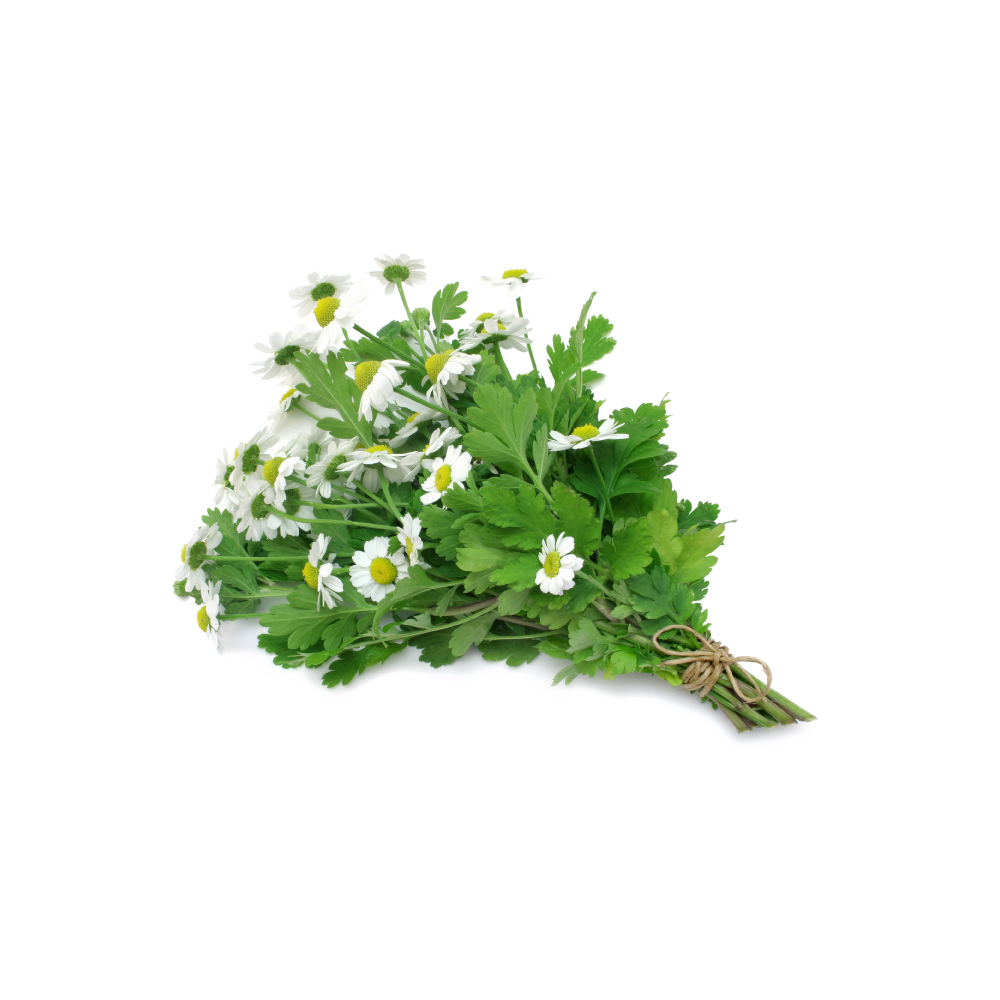
It takes its name from feverfew (Tanacetum parthenium), from which it was first described 5Reference 5Sesquiterpene lactones and other constituents from Tanacetum parthenium — [phytochemistry]View study →, and it is a recurring entry in that plant’s constituent lists 10,
Two things have to be got right. First, the anti-migraine claim attached to this molecule does not survive checking — it traces to a 1986 study in which secotanapartholide A was identified as one of five lactones present in an active feverfew fraction and was never separated and assayed 4Reference 4In vitroCompounds extracted from feverfew that have anti-secretory activity contain an alpha-methylene butyrolactone unit — [in vitro; plant-extract fractions]View study →. That story gets its own section below. Second, the name is a minefield: there is a B isomer, an iso- series, a C, several epimers, and a persistent misspelling that has propagated through the feverfew review literature. Almost every “secotanapartholide” result you will find belongs to one of the relatives, not to this molecule.
Secotanapartholide A & Its Near-Namesakes
The seco-tanapartholide cluster contains at least four distinct molecules that are routinely cited as though they were interchangeable. Sorting them out is the single most useful thing to do.
Secotanapartholide A and B are stereoisomers. Both are C₁₅H₁₈O₅, MW 278.30, and — the decisive point — they share the same InChIKey skeleton block, RTOGTHJTQOMSQZ, which encodes constitution and connectivity. Only the stereochemical block differs 21Reference 21Secotanapartholide A (CID 10356188), secotanapartholide B (CID 10265551) and isosecotanapartholide (CID 13918473) — [chemical database]View study →:
| Name | PubChem CID | InChIKey | Optical rotation |
|---|---|---|---|
| Secotanapartholide A | 10356188 | RTOGTHJTQOMSQZ-GZCFXPHUSA-N | (+) |
| Secotanapartholide B | 10265551 | RTOGTHJTQOMSQZ-NHULGOKLSA-N | (−) |
The difference sits on the hydroxyl-bearing ring carbon, which is why the literature also writes B as 5-epi-seco-tanapartholide A 8Reference 8In vitroSesquiterpenes from Artemisia princeps regulate inflammatory responses in RAW 264.7 macrophages — [in vitro]View study →. There is a loose end here: the 2019 study that determined both absolute configurations by vibrational circular dichroism reported descriptors differing at two centres rather than one 1Reference 1In vitroSesquiterpene lactones from Artemisia argyi: absolute configuration and immunosuppressant activity — [in vitro]View study →, which is not fully reconciled with the single-centre epimer picture in the chemical databases. Treat the two as closely related but separate compounds either way.
Isosecotanapartholide is a different molecule again — a structural isomer, not a stereoisomer. Same formula and same weight, but the hydroxyl and the ring double bond have moved: its InChIKey skeleton block is XXYRTFCLQHKIDU, and its ring hydroxyl is a secondary allylic alcohol where secotanapartholide A’s is tertiary 21Reference 21Secotanapartholide A (CID 10356188), secotanapartholide B (CID 10265551) and isosecotanapartholide (CID 13918473) — [chemical database]View study →. That molecule has a far larger literature than this one, including covalent Keap1 and p62 modification, and none of it transfers here 15Reference 15In vitroIso-seco-tanapartholide activates Nrf2 signaling pathway through Keap1 modification and oligomerization to exert anti-inflammatory effects — [in vitro]View study →. Seco-tanapartholide C is another distinct entity, generated when Artemisia princeps extract is fermented with Lactobacillus plantarum 17Reference 17In vitroInterleukin-8 release inhibitors generated by fermentation of Artemisia princeps Pampanini herb extract with Lactobacillus plantarum SN13T — [in vitro]View study →.
The “Secotanaparthenolide” Spelling Is A Ghost
A second, wrong spelling — secotanaparthenolide A/B, with an extra “en” borrowed from parthenolide — circulates widely in feverfew reviews. It is not a registered chemical name, and it has no independent literature:
| Query | Records | Where checked |
|---|---|---|
secotanapartholide | 6 | PubMed (E-utilities), title/abstract |
secotanaparthenolide | 0 | PubMed (E-utilities), title/abstract |
"secotanapartholide A" | 10 | Europe PMC, full text |
"secotanaparthenolide" | 4 | Europe PMC, full text — all feverfew reviews/reports |
secotanapartholide A → CID | 10356188 | PubChem name lookup |
secotanaparthenolide A → CID | none found | PubChem name lookup |
Counts run July 2026. The four Europe PMC hits for the wrong spelling are all downstream feverfew literature — the 2011 Pharmacognosy Reviews systematic review 10Reference 10Systematic reviewFeverfew (Tanacetum parthenium L.): a systematic reviewView study → and papers that inherit its constituent list. The 2024 comprehensive review of Tanacetum parthenium phytochemistry lists the same two compounds with the correct spelling, “secotanapartholide A” and “secotanapartholide B” 11Reference 11ReviewExploring the phytochemistry, signaling pathways, and mechanisms of action of Tanacetum parthenium (L.) Sch.Bip.: a comprehensive literature review — [review]View study →. So the two spellings denote one pair of molecules, and the “-parthenolide” form is a corruption to be read through, not a separate compound to be counted.
What The Feverfew Anti-Secretory Literature Actually Shows
This molecule is routinely introduced as a feverfew constituent “proposed for anti-migraine activity,” citing the 2011 Pharmacognosy Reviews systematic review of feverfew 10Reference 10Systematic reviewFeverfew (Tanacetum parthenium L.): a systematic reviewView study →. That citation is real and the review is genuine — but the review does not make that claim about this molecule.
Reading its full text: secotanapartholide A (there spelled secotanaparthenolide A) appears exactly once, inside a flat list of sesquiterpene lactones isolated from feverfew, with no activity attached to it. The review’s anti-secretory discussion is conducted entirely at the level of the plant and the chemical class — “Extracts of feverfew inhibit platelet 5-HT secretion” and “the sesquiterpenes in feverfew contain the alpha-methylenebutyrolactone unit capable of reacting with sulfhydryl groups” 10Reference 10Systematic reviewFeverfew (Tanacetum parthenium L.): a systematic reviewView study →. Those are statements about a whole extract and about a functional group shared by dozens of molecules.
Following the review to its own primary source gives the real, weaker finding. Groenewegen, Knight and Heptinstall fractionated a feverfew extract in 1986, recovered eleven fractions with anti-secretory activity against granule release from platelets and neutrophils, and showed by ¹H-NMR and infrared spectroscopy that every active fraction — and neither inactive one — contained an α-methylene butyrolactone unit. Five such compounds were identified in that material: parthenolide, 3β-hydroxyparthenolide, secotanapartholide A, canin and artecanin. The authors’ own conclusion is explicitly at class level 4Reference 4In vitroCompounds extracted from feverfew that have anti-secretory activity contain an alpha-methylene butyrolactone unit — [in vitro; plant-extract fractions]View study →.
So the chain is: the molecule was co-identified in an active fraction; it was never purified and assayed; the fraction’s activity was attributed to a class property; and “anti-migraine” is a further inference on top of that, since the 1986 paper only says the anti-secretory effect may be relevant to feverfew’s use in migraine. That reputation belongs to feverfew the herb — and even there, Cochrane rates the six placebo-controlled prophylaxis trials as low-quality evidence 13Reference 13Systematic reviewFeverfew for preventing migraine — systematic reviewView study →. It is not a finding about secotanapartholide A, and no anti-migraine or anti-secretory action is assigned here.
What It's Used For
There is a small but genuine isolate literature here, and it has nothing to do with migraine. It is about immune suppression, it comes almost entirely from one Swiss–German group working on Artemisia argyi, and it is all in vitro.
Support is an experimental score — weighted by study type (human > animal > in vitro) and volume. A beta, not a validated metric. Everything here is preclinical and the volume is very small, so the ceiling is low by construction; read the per-row basis rather than the number.
The best-evidenced thing this molecule does, and isolate work throughout. Screening a library of Chinese-medicine plant extracts for inhibition of T-lymphocyte proliferation, Reinhardt and colleagues found an ethyl acetate extract of Artemisia argyi active (extract IC₅₀ 16.2 µg/mL) and used HPLC-based activity profiling to track the responsible compounds. From the most active time window came three guaianolides and two seco-tanapartholides, B and A; compounds 1–5 of that set showed significant, non-cytotoxic inhibition of T-lymphocyte proliferation with IC₅₀ values between 1.0 and 3.7 µM 1Reference 1In vitroSesquiterpene lactones from Artemisia argyi: absolute configuration and immunosuppressant activity — [in vitro]View study →.
The same material was then characterised functionally: secotanapartholide A suppressed CD25 expression on CD4⁺ T cells at 3 and 10 µg/mL, significantly reduced the proportion of IL-2-, TNF-α- and IFN-γ-producing T cells, and inhibited NFAT reporter activity with an IC₅₀ below 10 µM, with NF-κB activity also significantly decreased 2Reference 2In vitroImmunosuppressive activity of Artemisia argyi extract and isolated compounds — [in vitro]View study →.
Gap: the headline IC₅₀ is a range across five compounds, not a value for this one, and the two papers share authors and plant material — this is a single-laboratory result. The 2020 paper also found that neither the individual compounds nor a mixture of all of them reproduced the whole extract’s effect on calcium signalling, which points at unidentified co-actors in A. argyi rather than at this molecule carrying the extract 2Reference 2In vitroImmunosuppressive activity of Artemisia argyi extract and isolated compounds — [in vitro]View study →.
A second, independent line, and again isolate work. Zhamilya and co-workers isolated thirteen sesquiterpene lactones from Artemisia heptapotamica collected in Kazakhstan — secotanapartholide A and 5-epi-secotanapartholide A among them — and assayed all of them against LPS-induced NF-κB activation in a THP1-Dual reporter cell model. Some of the isolates showed strong inhibition, with IC₅₀ values ranging from 2 to 25 µM; a later review of Central Asian Artemisia tabulates secotanapartholide A from this work as having anti-inflammatory effects 3,
Structurally the effect is unsurprising: the α-methylene-γ-lactone alkylates cysteine thiols, and thiol-dependent NF-κB signalling is the class’s most common readout.
Gap: the published abstract gives the IC₅₀ span for the panel, not per compound, so it is unknown whether secotanapartholide A sat at the 2 µM end, the 25 µM end, or outside the active set. Nothing downstream of the reporter assay was measured, and no animal model was run. Note also the trap: NF-κB inhibition is close to a default property of α-methylene sesquiterpene lactones and distinguishes this molecule from almost nothing in its class — the potent, well-mapped IKKβ pharmacology in this plant family belongs to parthenolide 14Reference 14In vitroThe anti-inflammatory natural product parthenolide from the medicinal herb feverfew directly binds to and inhibits IκB kinase — [in vitro]View study →.
Scored near zero, and the score is the point. The only paper connecting this molecule to feverfew’s pharmacology is Groenewegen, Knight and Heptinstall 1986, which fractionated a feverfew extract, obtained eleven anti-secretory fractions, and identified secotanapartholide A as one of five α-methylene-butyrolactone lactones present in that material — alongside parthenolide, 3β-hydroxyparthenolide, canin and artecanin. The activity was measured on fractions, not on this compound, and the conclusion drawn was about the functional group, not the molecule 4Reference 4In vitroCompounds extracted from feverfew that have anti-secretory activity contain an alpha-methylene butyrolactone unit — [in vitro; plant-extract fractions]View study →.
This is plant-extract work. The full provenance chain, including how the later review literature turned it into an “anti-migraine” attribution, is set out under What The Feverfew Anti-Secretory Literature Actually Shows.
Gap: secotanapartholide A has never been separated from that mixture and tested for anti-secretory activity, in 1986 or since. Its presence alongside parthenolide — the dominant lactone of feverfew, which alone can be ~85% of total lactone content and carries the characterised platelet and IKKβ pharmacology 10,
Mechanisms
| Target / pathway | Effect | Relevant to |
|---|---|---|
| NFAT (T-cell transcription factor) | concentration-dependent inhibition of reporter activity, IC₅₀ < 10 µM 2Reference 2In vitroImmunosuppressive activity of Artemisia argyi extract and isolated compounds — [in vitro]View study → | immunosuppressant |
| CD25 (IL-2 receptor α-chain) | reduced surface expression on activated CD4⁺ T cells at 3–10 µg/mL 2Reference 2In vitroImmunosuppressive activity of Artemisia argyi extract and isolated compounds — [in vitro]View study → | immunosuppressant |
| IL-2 / TNF-α / IFN-γ production | significant reduction in the fraction of cytokine-producing T cells 2Reference 2In vitroImmunosuppressive activity of Artemisia argyi extract and isolated compounds — [in vitro]View study → | immunosuppressant |
| NF-κB | activity significantly decreased in Jurkat reporter cells 2Reference 2In vitroImmunosuppressive activity of Artemisia argyi extract and isolated compounds — [in vitro]View study →; part of an A. heptapotamica panel inhibiting LPS-induced NF-κB at 2–25 µM 3Reference 3In vitroMonomeric and dimeric sesquiterpene lactones from Artemisia heptapotamica — [in vitro]View study → | anti-inflammatory |
| Cysteine thiols (α-methylene-γ-lactone Michael addition) | presumed covalent alkylation — the class mechanism; demonstrated for the B epimer, which binds Cys424 of PKM2 through this group 9Reference 9In vitroSeco-tanapartholide B ameliorates acute lung injury by covalently activating PKM2 and reprogramming glycolytic metabolism — [in vitro]View study → | all of the above (inferred) |
| Store-operated calcium entry | only a slight delay; markedly weaker than the whole A. argyi extract 2Reference 2In vitroImmunosuppressive activity of Artemisia argyi extract and isolated compounds — [in vitro]View study → | negative result worth keeping |
The load-bearing caution: the Michael-acceptor chemistry in row five is a class property. Nearly every α-methylene sesquiterpene lactone alkylates thiols and thereby perturbs NF-κB and other thiol-dependent targets, so it predicts reactivity, not selectivity or potency. The only covalent target ever mapped in this cluster belongs to the B epimer (PKM2 Cys424) 9Reference 9In vitroSeco-tanapartholide B ameliorates acute lung injury by covalently activating PKM2 and reprogramming glycolytic metabolism — [in vitro]View study →, not to secotanapartholide A.
Pharmacokinetics
Nothing has been measured. No absorption, oral bioavailability, distribution, metabolism, active metabolite, protein-binding or half-life data exist for secotanapartholide A in any species, and a PubMed search pairing the compound with pharmacokinetics returns no records. The molecule has never been administered to an animal.
The only pharmacokinetic-flavoured numbers anywhere are predictions: a 2025 in-silico ADMET screen of feverfew constituents classes secotanapartholide A as very soluble with high predicted gastrointestinal absorption and no Lipinski violations 20Reference 20Hispidulin: a potential alternative to vorinostat against HDAC1 for acute myeloid leukemia — [in silico ADMET screen of feverfew constituents]View study →. That is a computed descriptor set, not an experiment, and it says nothing about what a reactive bis-electrophile does on first pass. This matters for reading the in-vitro results above: a compound that alkylates cysteine thiols is a strong candidate for rapid glutathione conjugation, so micromolar activity in a dish is no evidence that oral feverfew or mugwort delivers a meaningful concentration anywhere.
Clinical Trials
There are none, in any indication, anywhere. No trial of isolated secotanapartholide A has been conducted, registered or proposed, and no clinical material has ever been characterised for its content.
| Completed | Planned | Terminated | Preclinical |
|---|---|---|---|
| 0 | 0 | 0 | 3(two isolate cell studies, one plant-fraction study) |
Last checked: July 2026.
Isolate vs. Plant Studies
The split here is unusually clean, and it runs opposite to the popular story.
The evidence that exists is isolate evidence. In both A. argyi papers the compound was purified, structurally characterised, and tested on its own in primary human T lymphocytes and reporter lines 1,
The evidence people cite is plant evidence, and it is not about this molecule. The feverfew anti-secretory work is fraction-level 4Reference 4In vitroCompounds extracted from feverfew that have anti-secretory activity contain an alpha-methylene butyrolactone unit — [in vitro; plant-extract fractions]View study →, and the feverfew clinical record — six placebo-controlled migraine trials, rated low quality by Cochrane 13Reference 13Systematic reviewFeverfew for preventing migraine — systematic reviewView study → — belongs to a standardised whole-herb extract in which this compound is an unquantified minor constituent. The vehicles across the whole literature are A. argyi (isolation source, ethyl acetate extract), A. heptapotamica (isolation source) and feverfew (extract). No commercial preparation is standardised to secotanapartholide A, and none carries a content figure for it.
The specific risk is inheritance: the compound sits inside feverfew, next to parthenolide, and shares a name-stem with isosecotanapartholide, which has a much larger and more mechanistically detailed literature 15Reference 15In vitroIso-seco-tanapartholide activates Nrf2 signaling pathway through Keap1 modification and oligomerization to exert anti-inflammatory effects — [in vitro]View study →. All three neighbours’ findings are frequently written as though they extended to this molecule. They do not.
Prevalence in Nature
Secotanapartholide A is a tribe-Anthemideae molecule, recorded from Tanacetum and Artemisia. It has never been quantified in any of them — every record below is a qualitative isolation or an LC-MS identification.
Feverfew (Tanacetum parthenium) is the source it is named after and the one that matters for herbal use. It was described from this plant by Bohlmann and Zdero in 1982 5Reference 5Sesquiterpene lactones and other constituents from Tanacetum parthenium — [phytochemistry]View study →, identified in anti-secretory fractions of a feverfew extract in 1986 4Reference 4In vitroCompounds extracted from feverfew that have anti-secretory activity contain an alpha-methylene butyrolactone unit — [in vitro; plant-extract fractions]View study →, and appears — with its B isomer — in the constituent lists of both the 2011 systematic review (under the misspelling) 10Reference 10Systematic reviewFeverfew (Tanacetum parthenium L.): a systematic reviewView study → and the 2024 comprehensive phytochemistry review 11Reference 11ReviewExploring the phytochemistry, signaling pathways, and mechanisms of action of Tanacetum parthenium (L.) Sch.Bip.: a comprehensive literature review — [review]View study →. In every one of these it is a minor lactone in a list, with parthenolide named as the dominant member at up to ~85% of total sesquiterpene lactone content 10,
Chinese mugwort (Artemisia argyi) is where the actual research material came from: it was isolated from the aerial parts by activity-guided fractionation of an ethyl acetate extract, and its absolute configuration determined there for the first time 1,
Artemisia princeps carries the near relatives rather than the parent: an ethyl-acetate fraction of that plant gave seco-tanapartholide B (5-epi-seco-tanapartholide A) and 4-epi-seco-tanapartholide A, both of which inhibited nitric oxide production in LPS-activated macrophages 8Reference 8In vitroSesquiterpenes from Artemisia princeps regulate inflammatory responses in RAW 264.7 macrophages — [in vitro]View study →; fermenting the same plant’s water extract with Lactobacillus plantarum generates seco-tanapartholide C 17Reference 17In vitroInterleukin-8 release inhibitors generated by fermentation of Artemisia princeps Pampanini herb extract with Lactobacillus plantarum SN13T — [in vitro]View study →. The wider seco-guaianolide family — including the isosecotanapartholide branch — is much more broadly distributed, turning up across Artemisia, Achillea and even the non-Asteraceae genus Patrinia 6,
Discovery & Synthesis
First described, 1982. Ferdinand Bohlmann and Christa Zdero reported the seco-tanapartholides from Tanacetum parthenium in Phytochemistry 5Reference 5Sesquiterpene lactones and other constituents from Tanacetum parthenium — [phytochemistry]View study → — the paper the name derives from (tana- for Tanacetum, parth- for parthenium) and the primary source that both later feverfew constituent lists 10Reference 10Systematic reviewFeverfew (Tanacetum parthenium L.): a systematic reviewView study → and the subsequent structural work trace back to. The same Berlin group extended the series four years later in a survey explicitly titled Seco-guaianolides and other constituents from Artemisia species, which is where the skeleton class name comes from 6Reference 6Seco-guaianolides and other constituents from Artemisia species — [phytochemistry]View study →. In 1992 Tan and Jia published a revised structure for seco-tanapartholide B, the sibling epimer, correcting the earlier assignment 7Reference 7Revised structure of seco-tanapartholide B — [phytochemistry; structure revision]View study → — a useful reminder that the pre-1992 identifications in this family, including the 1986 feverfew fraction work 4Reference 4In vitroCompounds extracted from feverfew that have anti-secretory activity contain an alpha-methylene butyrolactone unit — [in vitro; plant-extract fractions]View study →, are provisional.
Absolute configuration, 2019. The stereochemistry stayed unsettled for nearly four decades. Reinhardt and colleagues established the absolute configurations of most of their A. argyi isolates by comparing experimental and calculated electronic circular dichroism spectra — but for seco-tanapartholides A and B the ECD results were ambiguous, and the configurations had to be settled by vibrational circular dichroism instead 1Reference 1In vitroSesquiterpene lactones from Artemisia argyi: absolute configuration and immunosuppressant activity — [in vitro]View study →.
Total synthesis: none for this compound. No total or semi-synthesis of secotanapartholide A appears in PubMed or Crossref. The nearest achievement belongs to the iso- branch: Makiyi and co-workers in the Westwood group at St Andrews completed a short synthesis of two iso-seco-tanapartholides in 2009, using a late-stage oxidative ring cleavage performed without protecting groups to deliver the natural products directly 22Reference 22In vitroIso-seco-tanapartholides: isolation, synthesis and biological evaluation — [in vitro]View study →. All secotanapartholide A used in research to date has been obtained by extraction and chromatographic isolation from Artemisia or Tanacetum plant matter, and there is no commercial production of any kind.
Patents: not yet researched.
Toxicity & Safety
No toxicology exists for this isolate. There is no LD₅₀, no repeat-dose study, no genotoxicity assay, no reproductive or developmental work and no organ-toxicity study for secotanapartholide A, in any species. The moderate flag is a structural call — the molecule carries two electrophilic centres, the α-methylene-γ-lactone and the ring enone 21Reference 21Secotanapartholide A (CID 10356188), secotanapartholide B (CID 10265551) and isosecotanapartholide (CID 13918473) — [chemical database]View study → — not the record of a measured hazard. Absence of findings here is absence of study.
The one genuinely reassuring datum is narrow but real: in both A. argyi papers the T-cell inhibition was explicitly non-cytotoxic at the active concentrations 1,
- Non-cytotoxic in the one setting where it was checked. T-lymphocyte inhibition at 1.0–3.7 µM was measured as a functional effect, not cell death 1,
2Reference 1In vitroSesquiterpene lactones from Artemisia argyi: absolute configuration and immunosuppressant activity — [in vitro]View study →Reference 2In vitroImmunosuppressive activity of Artemisia argyi extract and isolated compounds — [in vitro]View study → . - No toxicology package whatsoever. No LD₅₀, no repeat-dose, genotoxicity, reproductive or organ-toxicity data. Nothing has been measured in any animal.
- It carries the reactive α-methylene-γ-lactone, plus a ring enone. Two Michael acceptors that alkylate cysteine thiols — the structural basis of sesquiterpene-lactone cytotoxicity and contact sensitisation 4,
21Reference 4In vitroCompounds extracted from feverfew that have anti-secretory activity contain an alpha-methylene butyrolactone unit — [in vitro; plant-extract fractions]View study →Reference 21Secotanapartholide A (CID 10356188), secotanapartholide B (CID 10265551) and isosecotanapartholide (CID 13918473) — [chemical database]View study → . - Asteraceae contact dermatitis. Feverfew and its relatives are recognised sensitisers and their guaianolides are named in the allergy literature 18Reference 18ReviewAsteraceae species as potential environmental factors of allergy — [review]View study →; this molecule has never been tested as an individual allergen, and the standard sesquiterpene-lactone patch-test mix does not contain it.
- Interactions are entirely unstudied. No CYP inhibition or induction screen, no P-glycoprotein work, no protein binding, no pharmacokinetic interaction data of any kind.
Full Safety & Interactions Detail
The class hazard, and why it is only a class hazard. Sesquiterpene-lactone toxicity and allergenicity are attributed principally to the α-methylene-γ-lactone Michael acceptor, which reacts with cysteine thiols on proteins — the chemistry behind parthenolide’s covalent inhibition of IKKβ 14Reference 14In vitroThe anti-inflammatory natural product parthenolide from the medicinal herb feverfew directly binds to and inhibits IκB kinase — [in vitro]View study → and behind the family’s reputation for allergic contact dermatitis. Secotanapartholide A possesses that group, and unlike its iso- relative it also presents an accessible ring enone as a second acceptor site 21Reference 21Secotanapartholide A (CID 10356188), secotanapartholide B (CID 10265551) and isosecotanapartholide (CID 13918473) — [chemical database]View study →. The class caution therefore applies to it by structure. This is an inference from chemistry, not an observation: no reactivity assay, sensitisation study or cytotoxicity panel has ever been run on this molecule. The one covalent target mapped anywhere in the cluster — Cys424 of PKM2 — was mapped for the B epimer 9Reference 9In vitroSeco-tanapartholide B ameliorates acute lung injury by covalently activating PKM2 and reprogramming glycolytic metabolism — [in vitro]View study →.
Asteraceae contact dermatitis. This is the one safety caution the page must carry, because it attaches to the plants that deliver the compound. Feverfew is an established sensitiser, and a review of Asteraceae species as environmental allergy factors names the plant’s guaianolides in that context 18Reference 18ReviewAsteraceae species as potential environmental factors of allergy — [review]View study →. Compositae sensitivity is routinely detected with a sesquiterpene-lactone patch-test mix, but that reagent contains only alantolactone, costunolide and dehydrocostus lactone — so a negative result excludes nothing about this molecule, which has never been evaluated as an individual allergen.
Interactions. Nothing is known at the molecule level. The interaction worth flagging is indirect and belongs to the herb: feverfew inhibits platelet serotonin release and granule secretion 4,
Reproductive note (prose only). No reproductive or developmental study of secotanapartholide A exists. Pregnancy and lactation decisions belong to the herb or product page where intake is decided, not to a molecule page.
Dosage
There is no dose. Secotanapartholide A has never been administered to a human or an animal, at any amount, by any route. The only figures published for it are in-vitro concentrations:
| Setting | Concentration |
|---|---|
| T-lymphocyte proliferation (pooled IC₅₀ for five A. argyi isolates, this compound among them) | 1.0–3.7 µM 1Reference 1In vitroSesquiterpene lactones from Artemisia argyi: absolute configuration and immunosuppressant activity — [in vitro]View study → |
| CD25 suppression on activated CD4⁺ T cells | 3 and 10 µg/mL 2Reference 2In vitroImmunosuppressive activity of Artemisia argyi extract and isolated compounds — [in vitro]View study → |
| NFAT reporter inhibition (sesquiterpene lactones tested) | IC₅₀ < 10 µM 2Reference 2In vitroImmunosuppressive activity of Artemisia argyi extract and isolated compounds — [in vitro]View study → |
| NF-κB inhibition, THP1-Dual (panel range, per-compound values not published) | IC₅₀ 2–25 µM 3Reference 3In vitroMonomeric and dimeric sesquiterpene lactones from Artemisia heptapotamica — [in vitro]View study → |
Human exposure is entirely indirect, through feverfew and Artemisia species. Feverfew products are standardised to parthenolide (commonly a ≥0.2% target), never to this molecule, and no preparation on the market carries a content figure for it 10,
References
- Reinhardt, J. K., Klemd, A. M., Danton, O., De Mieri, M., Smieško, M., Huber, R., Bürgi, T., Gründemann, C., & Hamburger, M. (2019). Sesquiterpene lactones from Artemisia argyi: absolute configuration and immunosuppressant activity — [in vitro]. Journal of Natural Products. https://pubmed.ncbi.nlm.nih.gov/31181920/
- Zimmermann-Klemd, A. M., Reinhardt, J. K., Morath, A., Schamel, W. W., Steinberger, P., Leitner, J., Huber, R., Hamburger, M., & Gründemann, C. (2020). Immunosuppressive activity of Artemisia argyi extract and isolated compounds — [in vitro]. Frontiers in Pharmacology. https://pubmed.ncbi.nlm.nih.gov/32322200/
- Zhamilya, A., Yuan, J., Janar, J., Tang, C. P., & Ye, Y. (2019). Monomeric and dimeric sesquiterpene lactones from Artemisia heptapotamica — [in vitro]. Chinese Journal of Natural Medicines. https://pubmed.ncbi.nlm.nih.gov/31703759/
- Groenewegen, W. A., Knight, D. W., & Heptinstall, S. (1986). Compounds extracted from feverfew that have anti-secretory activity contain an alpha-methylene butyrolactone unit — [in vitro; plant-extract fractions]. Journal of Pharmacy and Pharmacology. https://pubmed.ncbi.nlm.nih.gov/2877077/
- Bohlmann, F., & Zdero, C. (1982). Sesquiterpene lactones and other constituents from Tanacetum parthenium — [phytochemistry]. Phytochemistry, 21, 2543–2549. https://doi.org/10.1016/0031-9422(82)85253-9
- Huneck, S., Zdero, C., & Bohlmann, F. (1986). Seco-guaianolides and other constituents from Artemisia species — [phytochemistry]. Phytochemistry, 25, 883–889. https://doi.org/10.1016/0031-9422(86)80021-8
- Tan, R. X., & Jia, Z. J. (1992). Revised structure of seco-tanapartholide B — [phytochemistry; structure revision]. Phytochemistry, 31, 2158–2159. https://doi.org/10.1016/0031-9422(92)80388-U
- Kim, N. Y., Kim, S., Lee, H. J., & Ryu, J. H. (2023). Sesquiterpenes from Artemisia princeps regulate inflammatory responses in RAW 264.7 macrophages — [in vitro]. Natural Product Research. https://pubmed.ncbi.nlm.nih.gov/35724377/
- Zhu, D., Zhao, L., Li, Y., Du, L., Xu, D., Wang, P., Liu, S., & Liu, L. (2026). Seco-tanapartholide B ameliorates acute lung injury by covalently activating PKM2 and reprogramming glycolytic metabolism — [in vitro]. Bioorganic Chemistry. https://pubmed.ncbi.nlm.nih.gov/42208465/
- Pareek, A., Suthar, M., Rathore, G. S., & Bansal, V. (2011). Feverfew (Tanacetum parthenium L.): a systematic review. Pharmacognosy Reviews. https://pubmed.ncbi.nlm.nih.gov/22096324/
- Kashkooe, A., Jalali, A., Zarshenas, M. M., & Hamedi, A. (2024). Exploring the phytochemistry, signaling pathways, and mechanisms of action of Tanacetum parthenium (L.) Sch.Bip.: a comprehensive literature review — [review]. Biomedicines. https://pubmed.ncbi.nlm.nih.gov/39457613/
- Nurlybekova, A., Kudaibergen, A., Kazymbetova, A., Amangeldi, M., Baiseitova, A., Ospanov, M., Aisa, H. A., Ye, Y., Ibrahim, M. A., & Jenis, J. (2022). Traditional use, phytochemical profiles and pharmacological properties of Artemisia genus from Central Asia — [review]. Molecules. https://pubmed.ncbi.nlm.nih.gov/36014364/
- Wider, B., Pittler, M. H., & Ernst, E. (2015). Feverfew for preventing migraine — systematic review. Cochrane Database of Systematic Reviews. https://pubmed.ncbi.nlm.nih.gov/25892430/
- Kwok, B. H., Koh, B., Ndubuisi, M. I., Elofsson, M., & Crews, C. M. (2001). The anti-inflammatory natural product parthenolide from the medicinal herb feverfew directly binds to and inhibits IκB kinase — [in vitro]. Chemistry & Biology. https://pubmed.ncbi.nlm.nih.gov/11514225/
- Zhu, D., Xia, Y., Li, S., Kong, M., Chen, C., Xue, G., Kong, L., & Luo, J. (2022). Iso-seco-tanapartholide activates Nrf2 signaling pathway through Keap1 modification and oligomerization to exert anti-inflammatory effects — [in vitro]. Free Radical Biology and Medicine. https://pubmed.ncbi.nlm.nih.gov/34923099/
- Ahn, H., Kim, J. Y., Lee, H. J., Kim, Y. K., & Ryu, J. H. (2003). Inhibitors of inducible nitric oxide synthase expression from Artemisia iwayomogi — [in vitro]. Archives of Pharmacal Research. https://pubmed.ncbi.nlm.nih.gov/12735688/
- Okamoto, T., Sugimoto, S., Noda, M., Yokooji, T., Danshiitsoodol, N., Higashikawa, F., & Sugiyama, M. (2020). Interleukin-8 release inhibitors generated by fermentation of Artemisia princeps Pampanini herb extract with Lactobacillus plantarum SN13T — [in vitro]. Frontiers in Microbiology. https://pubmed.ncbi.nlm.nih.gov/32582099/
- Denisow-Pietrzyk, M., Pietrzyk, Ł., & Denisow, B. (2019). Asteraceae species as potential environmental factors of allergy — [review]. Environmental Science and Pollution Research International. https://pubmed.ncbi.nlm.nih.gov/30666578/
- Alenzi, K. A., Alharbi, F. H., Tawhari, F. M., & Fradees, G. S. (2021). Alteration of coagulation test results and vaginal bleeding associated with the use of feverfew (Tanacetum parthenium) — [case report]. Journal of Medical Cases. https://pubmed.ncbi.nlm.nih.gov/34434419/
- Balaji, S., Anbarasu, S., Ramaiah, S., & Anbarasu, A. (2025). Hispidulin: a potential alternative to vorinostat against HDAC1 for acute myeloid leukemia — [in silico ADMET screen of feverfew constituents]. Discover Oncology. https://pubmed.ncbi.nlm.nih.gov/40696057/
- PubChem. Secotanapartholide A (CID 10356188), secotanapartholide B (CID 10265551) and isosecotanapartholide (CID 13918473) — [chemical database]. National Library of Medicine. https://pubchem.ncbi.nlm.nih.gov/compound/10356188
- Makiyi, E. F., Frade, R. F., Lebl, T., Jaffray, E. G., Cobb, S. E., Harvey, A. L., Slawin, A. M., Hay, R. T., & Westwood, N. J. (2009). Iso-seco-tanapartholides: isolation, synthesis and biological evaluation — [in vitro]. European Journal of Organic Chemistry. https://pubmed.ncbi.nlm.nih.gov/23606807/
- Liu, L., Dai, W., Xiang, C., Chi, J., & Zhang, M. (2018). 1,10-Secoguaianolides from Artemisia austro-yunnanensis and their anti-inflammatory effects — [in vitro]. Molecules. https://pubmed.ncbi.nlm.nih.gov/29976846/



