
Compound Monograph
Skimmianine
Skimmianine is the furoquinoline alkaloid of the citrus family — the isolated principle that reproduces rue's anti-inflammatory effect at 5 mg/kg in a rat model, cutting TNF-alpha, IL-6, PGE2, COX-2 and 5-LOX at once. It is also a mild photosensitiser, though a far weaker one than the furanocoumarins it shares a plant with, because it forms only single-strand adducts with DNA.

Sources · 5
Where Does It Come From?
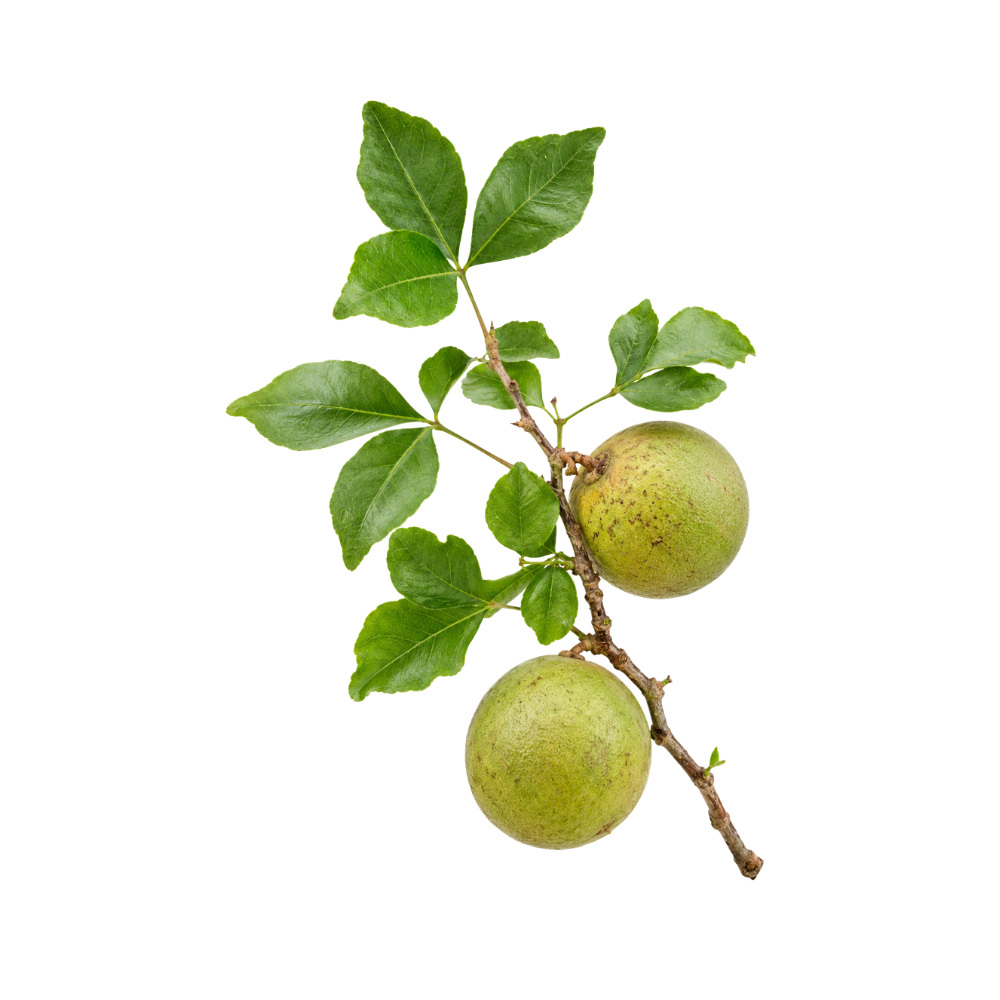
Skimmianine is a naturally occurring furoquinoline alkaloid (4,7,8-trimethoxyfuro[2,3-b]quinoline), found in Rue, Bael and 3 other sources. It is flagged as moderately toxic.
Concentration
Content by Source
Concentrations not reported. No percent-dry-weight or mg/g figures have been published for this compound in its source plants.
Skimmianine at a Glance
Skimmianine is a furoquinoline alkaloid — a quinoline ring fused to a furan, carrying three methoxy groups — and one of the signature molecules of the citrus family, the Rutaceae. It occurs across Zanthoxylum, Ruta, Aegle and Toddalia, and takes its name from Skimmia, the ornamental shrub it was first drawn from.
Its interest is that a single isolated alkaloid reproduces a whole herb’s headline effect. Given at 5 mg/kg to rats with carrageenan-induced paw inflammation, skimmianine cut TNF-α and IL-6 messenger RNA, prostaglandin E2, and the activity of both COX-2 and 5-lipoxygenase — the full eicosanoid axis rather than one arm of it 1Reference 1AnimalAnti-inflammatory effect of quinoline alkaloid skimmianine isolated from Ruta graveolens L. — animal modelView study →. The mechanism was later traced to NF-κB: in activated microglia it blocks p65 and IκBα phosphorylation and stops NF-κB binding its consensus sites on DNA 2Reference 2In vitroNeuroprotection by skimmianine in lipopolysaccharide-activated BV-2 microglia — in vitroView study →.
The same ring system that makes it interesting also makes it a photosensitiser, though a much milder one than the furanocoumarins it shares rue with 12Reference 12In vitroMutagenic compounds in an extract from Rutae Herba (Ruta graveolens L.)View study →. There are no human studies of any kind.
Why It Photosensitises Less Than Rue’s Furanocoumarins
Rue is the plant most people meet skimmianine in, and rue’s reputation is for blistering, sunlight-triggered burns. That reputation belongs mainly to the furanocoumarins — bergapten, xanthotoxin, psoralen — and the difference between them and the furoquinolines is worth stating precisely, because it is structural rather than a matter of degree.
Both classes are planar tricyclics that slide between DNA base pairs and react when UV-A hits them. But a psoralen has two photoreactive double bonds, one on the furan ring and one on the pyrone, so it can react twice — first forming a monoadduct, then, on absorbing a second photon, a crosslink between the two strands. A furoquinoline has only the furan double bond available, so it stops at the monoadduct 12Reference 12In vitroMutagenic compounds in an extract from Rutae Herba (Ruta graveolens L.)View study →.
That single-versus-double distinction shows up directly in the biology. Testing a commercial rue tincture against a Chlamydomonas mutagenicity strain, Schimmer and Kühne found every constituent photomutagenic, but the most active furoquinoline — dictamnine, not skimmianine — reached only about a tenth of bergapten’s potency, and the authors attributed the gap to exactly this monoadduct-versus-biadduct difference 12Reference 12In vitroMutagenic compounds in an extract from Rutae Herba (Ruta graveolens L.)View study →. A parallel assay using restriction enzymes as a readout put skimmianine last among the furoquinolines tested for photo-activated DNA binding, behind kokusaginine and haplopine, and its photo-activated antibacterial activity ranked in the same order 13Reference 13In vitroPhoto-activated DNA binding and antimicrobial activities of furoquinoline and pyranoquinolone alkaloids from Rutaceae — in vitroView study →.
So skimmianine is genuinely light-activated and genuinely DNA-binding, and neither fact should be waved away. It is simply not the molecule doing most of the damage in a rue burn.
What It's Used For
The evidence is entirely preclinical and heavily weighted toward inflammation, where the same NF-κB mechanism keeps reappearing in different tissues. Most of it has arrived since 2020.
The defining study. Skimmianine isolated from Ruta graveolens was titrated against carrageenan paw oedema in rats, with 5 mg/kg intraperitoneally the lowest dose giving maximal oedema inhibition — against a diclofenac comparator at 20 mg/kg. It reduced TNF-α and IL-6 mRNA, PGE2 and nitrite levels, COX-2 and 5-LOX activity, myeloperoxidase, and lipid peroxidation in the paw tissue 1Reference 1AnimalAnti-inflammatory effect of quinoline alkaloid skimmianine isolated from Ruta graveolens L. — animal modelView study →.
Suppressing both the cyclo-oxygenase and lipoxygenase arms at once is unusual, and it is what makes this a compound-level finding rather than a plant-extract one. The 2023 review of the molecule places anti-inflammatory activity, alongside cytotoxicity, as the best-characterised of its properties 3Reference 3ReviewSkimmianine: natural occurrence, biosynthesis, synthesis, pharmacology and pharmacokinetics — reviewView study →.
Gap: acute rodent inflammation by injection, from a single laboratory, with no dose–response into the oral route.
This is where the mechanism was worked out. In LPS-activated BV-2 microglia, skimmianine at 10–30 µM lowered TNF-α, IL-6, nitric oxide and PGE2, reduced iNOS and COX-2 protein, cut NF-κB reporter activity, reduced phosphorylation of p65 and IκBα, and interfered with NF-κB binding to consensus DNA sites; HT-22 neurons exposed to the conditioned medium survived better and expressed more MAP-2 2Reference 2In vitroNeuroprotection by skimmianine in lipopolysaccharide-activated BV-2 microglia — in vitroView study →.
In rats subjected to 60 minutes of middle-cerebral-artery occlusion, 40 mg/kg reduced malondialdehyde, restored SOD and catalase, and lowered IBA-1, IL-6 and NF-κB staining in brain tissue 4Reference 4AnimalSkimmianine showed neuroprotection against cerebral ischemia/reperfusion injury — animal modelView study →.
Gap: the microglial work is a cell line, the stroke work is a single group at one dose, and nothing establishes that skimmianine crosses the blood–brain barrier in the amounts those concentrations imply.
In a mouse liver ischaemia/reperfusion model, skimmianine lowered transaminases, necrotic area, oxidative stress and apoptosis, and did the same for hypoxia-reoxygenated AML12 hepatocytes. The effect ran through PI3K–AKT: the PI3K inhibitor LY294002 reversed it 7Reference 7AnimalSkimmianine attenuates liver ischemia/reperfusion injury by regulating PI3K-AKT signaling pathway-mediated inflammation, apoptosis and oxidative stress — animal modelView study →.
The pharmacological logic is the same as the brain work — the injury is inflammatory and the compound is anti-inflammatory — but the pathway identified is different, which is worth noting rather than smoothing over.
Gap: one study, one species, no chronic dosing, and no reconciliation of the PI3K–AKT and NF-κB accounts.
Two rodent models. In human oesophageal squamous carcinoma lines, skimmianine caused G0/G1 arrest, blocked migration and invasion by reversing the epithelial–mesenchymal transition, suppressed xenograft growth in nude mice, and worked by blocking ERK1/2 activation in the MAPK pathway 6Reference 6In vitroSkimmianine as a novel therapeutic agent suppresses proliferation and migration of human esophageal squamous cell carcinoma via blocking the activation of ERK1/2 — in vitro and miceView study →.
In DMBA-induced rat mammary tumours, 40 mg/kg intraperitoneally for four weeks lowered serum CA15-3 from 8.57 to 3.72 ng/mL and reduced PCNA and TNF-α staining, though the reduction in tumour burden itself did not reach significance against the untreated tumour group 5Reference 5AnimalSkimmianine modulates tumor proliferation and immune dynamics in breast cancer by targeting PCNA and TNF-α — animal modelView study →.
Gap: cell lines and induced rodent tumours only, one of the two headline endpoints non-significant, and the injected route removes any read-across to eating a Rutaceae plant.
Skimmianine — reported under its systematic name, 4,7,8-trimethoxyfuro[2,3-b]quinoline — was isolated from Zanthoxylum zanthoxyloides root and tested against Trypanosoma brucei, the agent of African sleeping sickness. It inhibited growth with an EC50 of 1.7 µM and a selectivity index of 74.9 against mammalian cells, arrested the parasite in G2–M, and distorted its slender morphology 10Reference 10In vitroIsolation and antitrypanosomal characterization of furoquinoline and oxylipin from Zanthoxylum zanthoxyloides — in vitroView study →.
The selectivity index is the useful part: a compound that kills the parasite at a concentration seventy-five times below the one that harms host cells is doing something specific.
Gap: in vitro only, with no animal infection model and no follow-up.
Screened by network pharmacology and then tested, skimmianine suppressed osteoclast formation from precursors without affecting cell viability, downregulated calcineurin and Nfatc1 through ERp57-driven calcium oscillations, and reduced bone loss on micro-CT in ovariectomised mice 8Reference 8AnimalSkimmianine attenuates osteoclast activity by suppressing ERp57-driven calcium oscillations/calcineurin/Nfatc1 signalling in postmenopausal osteoporosis — animal modelView study →.
Gap: a single 2025 study, and the “excellent oral bioavailability” it reports is a structure-based software prediction, not a measurement.
Skimmianine emerged from a 1,262-compound screen against a luminescent recombinant hepatitis B virus in primary human hepatocytes. Added at the same time as the virus it gave an EC50 of 0.36 pM against a CC50 of 1.67 µM — a selectivity index above five million. Added 72 hours after infection the EC50 was 0.19 µM and the selectivity index 8.79. Imaging suggested it blocks retrograde trafficking of the capsid after internalisation rather than attachment or entry 9Reference 9In vitroHigh-throughput screening of antiviral compounds using a recombinant hepatitis B virus and identification of a possible infection inhibitor, skimmianine — in vitroView study →.
Gap: the striking number is an entry-blocking artefact of pre-treatment, not a therapeutic one; the post-infection figure is the honest measure, and it is unremarkable. Screening hit only.
Mechanisms
| Target / pathway | Effect | Relevant to |
|---|---|---|
| NF-κB (p65 / IκBα phosphorylation, DNA binding) | ↓ transcription of TNF-α, IL-6, iNOS, COX-2 | anti-inflammatoryneuroinflammation |
| COX-2 and 5-lipoxygenase | ↓ enzyme activity — both eicosanoid arms | anti-inflammatory |
| PI3K–AKT | ↑ phosphorylation; reversed by LY294002 | ischaemia–reperfusion protection |
| ERK1/2 (MAPK) | ↓ activation → G0/G1 arrest, EMT reversal | anticancer |
| ERp57 → calcium oscillations → calcineurin/Nfatc1 | ↓ osteoclast differentiation | bone resorption |
| DNA, on UV-A activation | monoadduct formation only (no interstrand crosslink) | photosensitivityphotomutagenicity |
Pharmacokinetics
The load-bearing gap. No human pharmacokinetic data exist, and the one animal study is a metabolite map rather than an exposure measurement: after oral dosing in rats, UPLC/Q-TOF-MS found sixteen metabolites across plasma, urine and faeces, and the dominant routes were epoxidation of the 2,3-double bond on the furan ring followed by hydrolysis of that epoxide, plus O-demethylation and didemethylation, with glucuronide and sulfate conjugates downstream 11Reference 11AnimalMetabolic profile of skimmianine in rats determined by ultra-performance liquid chromatography coupled with quadrupole time-of-flight tandem mass spectrometry — animal modelView study →.
Two things follow. First, skimmianine is extensively metabolised, so the parent compound is unlikely to persist at the concentrations used in cell work. Second, the major transformation is epoxidation of the same furan double bond that carries its photochemistry and its DNA reactivity — a reactive intermediate, and the obvious thing to look at if a toxicology package is ever built. A 2025 paper reports “excellent oral bioavailability” for skimmianine 8Reference 8AnimalSkimmianine attenuates osteoclast activity by suppressing ERp57-driven calcium oscillations/calcineurin/Nfatc1 signalling in postmenopausal osteoporosis — animal modelView study →, but that is a prediction from structure-based software, not a measured figure, and should not be quoted as one.
Clinical Trials
None. There are no clinical trials of skimmianine for any indication, and no human exposure data beyond incidental dietary and medicinal contact with the plants that carry it.
| Completed | Planned | Terminated | Preclinical |
|---|---|---|---|
| None | — | — | Extensive since 2020 |
Last checked: September 2026.
Isolate vs. Plant Studies
Unusually for a plant constituent, almost all of the evidence is isolate work — purified skimmianine, dosed or applied on its own 1,
The weakness sits on the other side of the ledger. Because the isolate studies use intraperitoneal injection in rodents or micromolar concentrations in culture, none of them says anything about what a person taking a Rutaceae plant is exposed to. Rue itself is a low-dose, internally-discouraged herb; bael is used as a fruit and an astringent, with its alkaloids in the leaf and root rather than the pulp. The one place the isolate and the plant were compared directly cuts against the molecule: whole rue extract outperformed an equivalent concentration of its own rutin on iNOS and COX-2 suppression, which is the finding that established rue’s activity as additive across constituents rather than resident in any one of them.
A single study has tested skimmianine in combination — with betulinic acid and apigenin, in high-cholesterol-fed rabbits, acting on CD36–TLR2 signalling 15Reference 15AnimalSynergistic effect of betulinic acid, apigenin and skimmianine (BASk) in high cholesterol diet rabbit: involvement of CD36-TLR2 signaling pathway — animal modelView study → — and its results belong to the mixture, not to this molecule.
Prevalence in Nature
Skimmianine is a Rutaceae compound and, within that family, an unusually widespread one. The 2023 review places it as “a major component available in medicinal plants of the family Rutaceae,” with the genus Zanthoxylum — the prickly ashes and Sichuan peppers — as its most consistent home 3Reference 3ReviewSkimmianine: natural occurrence, biosynthesis, synthesis, pharmacology and pharmacokinetics — reviewView study →. It is also reported through Toddalia asiatica, Vepris, Glycosmis, Aegle marmelos (bael) and Ruta (rue); in bael the alkaloid fraction, skimmianine included, sits in the leaves and roots rather than the fruit.
Quantified figures for the molecule itself are scarce, so no per-source comparison can be drawn. The best available numbers are fraction-level and from tissue culture rather than field material: Ruta chalepensis grown in temporary-immersion bioreactors accumulated up to 449 mg per 100 g dry weight of total furoquinoline alkaloids — γ-fagarine, 7-isopentenyloxy-γ-fagarine and skimmianine together — against 1,170 mg/100 g of linear furanocoumarins in the same biomass 14Reference 14In vitroRuta chalepensis L. in vitro cultures as a source of bioactive furanocoumarins and furoquinoline alkaloids — in vitroView study →. Even in rue, in other words, the furanocoumarins outweigh the furoquinolines.
Within rue there is also a part split that matters for anyone reading a phytochemical list: the acridone alkaloids concentrate in the roots and the furanocoumarins in the aerial parts, and skimmianine’s own distribution follows the alkaloid pattern rather than the coumarin one.
Discovery & Synthesis
The name records the source: skimmianine was obtained from Skimmia, the Rutaceae shrub, and named for it. The original isolation report predates the indexed literature and could not be verified, so no date or discoverer is given here rather than a guessed one. It has also travelled under two other names in the older literature — β-fagarine and chloroxylonine — both of which turn out to be the same molecule, which is worth knowing when reading old phytochemistry.
Biosynthetically it starts from anthranilic acid, the standard entry point to the quinoline alkaloids, with the furan ring and the three methoxy groups added downstream 3Reference 3ReviewSkimmianine: natural occurrence, biosynthesis, synthesis, pharmacology and pharmacokinetics — reviewView study →. Laboratory synthesis is short and begins from 2,4,7,8-tetramethoxyquinoline 3Reference 3ReviewSkimmianine: natural occurrence, biosynthesis, synthesis, pharmacology and pharmacokinetics — reviewView study →. Nobody manufactures it at scale: supply is analytical-standard quantities isolated from Zanthoxylum or rue, or made to order.
Patents: not yet researched (future patent-loop pass).
Toxicity & Safety
Skimmianine carries a moderate flag, for two reasons that have nothing to do with acute poisoning: it is a photosensitiser and a DNA-binding photomutagen, and it has no toxicology package at all — no repeat-dose study, no genotoxicity panel in a standard system, no reproductive work, nothing in humans.
- Photosensitising. It binds DNA and becomes mutagenic on UV-A exposure 12,
13Reference 12In vitroMutagenic compounds in an extract from Rutae Herba (Ruta graveolens L.)View study →Reference 13In vitroPhoto-activated DNA binding and antimicrobial activities of furoquinoline and pyranoquinolone alkaloids from Rutaceae — in vitroView study → . Weaker than rue’s furanocoumarins, but the mechanism is the same one. - No toxicology and no human data. The absence of adverse findings reflects an absence of testing, not a clean record.
- Metabolised through a reactive epoxide. The dominant route in rats is epoxidation of the furan double bond 11Reference 11AnimalMetabolic profile of skimmianine in rats determined by ultra-performance liquid chromatography coupled with quadrupole time-of-flight tandem mass spectrometry — animal modelView study → — the standard signal to look at before calling a molecule benign.
- Injected doses, oral inference. Every efficacy figure here is intraperitoneal or in vitro; oral exposure has never been characterised.
Full Safety & Interactions Detail
Photochemistry. Furoquinolines intercalate into DNA and form covalent adducts when irradiated with UV-A. Skimmianine does this, demonstrably — in a restriction-enzyme protection assay it bound at several specific sites, and in the Chlamydomonas assay it was photomutagenic — but it is at the weak end of its own class, and its class is at the weak end relative to the furanocoumarins, because it can only form monoadducts and not interstrand crosslinks 12,
Metabolism as a flag. Sixteen rat metabolites have been characterised, and the principal pathway is epoxidation of the 2,3-olefinic bond, then epoxide hydrolysis, alongside O-demethylation and phase-II conjugation 11Reference 11AnimalMetabolic profile of skimmianine in rats determined by ultra-performance liquid chromatography coupled with quadrupole time-of-flight tandem mass spectrometry — animal modelView study →. Furan epoxides are the reactive intermediates that make several other furan-containing natural products genotoxic. Nothing here demonstrates that outcome for skimmianine — but it is why “no reported toxicity” should not be read as reassurance.
Interactions. Not assessed. No cytochrome-P450 inhibition or induction study of skimmianine was found, which is a real hole given that its co-occurring furanocoumarins in rue are established CYP3A4 inhibitors. Assume nothing in either direction.
Reproductive. No reproductive or developmental data exist for skimmianine. Note separately that rue is a documented abortifacient and that the isolated principle behind that reputation is chalepensin, a different molecule — the herb’s contraindication should not be transferred to this alkaloid, nor this alkaloid’s silence read as clearing the herb.
Dosage
There is no human dose. The figures below are the research doses behind the sections above, recorded so that the scale is visible, and they are not convertible into an amount a person could take.
| Setting | Route | Dose or concentration |
|---|---|---|
| Rat carrageenan paw oedema 1Reference 1AnimalAnti-inflammatory effect of quinoline alkaloid skimmianine isolated from Ruta graveolens L. — animal modelView study → | intraperitoneal | 5 mg/kg — the minimum for maximal effect |
| Rat cerebral ischaemia–reperfusion 4Reference 4AnimalSkimmianine showed neuroprotection against cerebral ischemia/reperfusion injury — animal modelView study → | intraperitoneal | 40 mg/kg |
| Rat DMBA mammary tumour 5Reference 5AnimalSkimmianine modulates tumor proliferation and immune dynamics in breast cancer by targeting PCNA and TNF-α — animal modelView study → | intraperitoneal | 40 mg/kg for 4 weeks |
| BV-2 microglia 2Reference 2In vitroNeuroprotection by skimmianine in lipopolysaccharide-activated BV-2 microglia — in vitroView study → | culture | 10–30 µM |
| Trypanosoma brucei 10Reference 10In vitroIsolation and antitrypanosomal characterization of furoquinoline and oxylipin from Zanthoxylum zanthoxyloides — in vitroView study → | culture | EC50 1.7 µM |
| Hepatitis B, post-infection 9Reference 9In vitroHigh-throughput screening of antiviral compounds using a recombinant hepatitis B virus and identification of a possible infection inhibitor, skimmianine — in vitroView study → | culture | EC50 0.19 µM |
Every efficacy dose in the table was given by injection, which bypasses the absorption and first-pass metabolism that would decide an oral figure — and the rat metabolite work shows that metabolism is extensive 11Reference 11AnimalMetabolic profile of skimmianine in rats determined by ultra-performance liquid chromatography coupled with quadrupole time-of-flight tandem mass spectrometry — animal modelView study →. These are doses studied in research and are not a personal recommendation.
References
- Ratheesh M, Sindhu G, Helen A (2013). Anti-inflammatory effect of quinoline alkaloid skimmianine isolated from Ruta graveolens L. — animal model. Inflammation Research. https://pubmed.ncbi.nlm.nih.gov/23344232/
- Ogunrinade FA, Iwuanyanwu VU, Sarker SD, et al. (2023). Neuroprotection by skimmianine in lipopolysaccharide-activated BV-2 microglia — in vitro. Molecules. https://pubmed.ncbi.nlm.nih.gov/36770987/
- Son NT (2023). Skimmianine: natural occurrence, biosynthesis, synthesis, pharmacology and pharmacokinetics — review. Medicinal Chemistry. https://pubmed.ncbi.nlm.nih.gov/36518041/
- Ayaz H, Aşır F, Korak T (2024). Skimmianine showed neuroprotection against cerebral ischemia/reperfusion injury — animal model. Current Issues in Molecular Biology. https://pubmed.ncbi.nlm.nih.gov/39057078/
- Korak T, Ayaz H, Aşır F (2025). Skimmianine modulates tumor proliferation and immune dynamics in breast cancer by targeting PCNA and TNF-α — animal model. Pharmaceuticals. https://pubmed.ncbi.nlm.nih.gov/40430573/
- Liu Y, Kang L, Shi SM, et al. (2022). Skimmianine as a novel therapeutic agent suppresses proliferation and migration of human esophageal squamous cell carcinoma via blocking the activation of ERK1/2 — in vitro and mice. Neoplasma. https://pubmed.ncbi.nlm.nih.gov/35144474/
- Huo CL, Wang B, Zhang X, et al. (2023). Skimmianine attenuates liver ischemia/reperfusion injury by regulating PI3K-AKT signaling pathway-mediated inflammation, apoptosis and oxidative stress — animal model. Scientific Reports. https://pubmed.ncbi.nlm.nih.gov/37880319/
- Lv Y, Zhang X, Lu Q, et al. (2025). Skimmianine attenuates osteoclast activity by suppressing ERp57-driven calcium oscillations/calcineurin/Nfatc1 signalling in postmenopausal osteoporosis — animal model. Journal of Cellular and Molecular Medicine. https://pubmed.ncbi.nlm.nih.gov/40797290/
- Yoshita M, Funaki M, Shimakami T, et al. (2024). High-throughput screening of antiviral compounds using a recombinant hepatitis B virus and identification of a possible infection inhibitor, skimmianine — in vitro. Viruses. https://pubmed.ncbi.nlm.nih.gov/39205320/
- Dofuor AK, Ayertey F, Bolah P, et al. (2020). Isolation and antitrypanosomal characterization of furoquinoline and oxylipin from Zanthoxylum zanthoxyloides — in vitro. Biomolecules. https://pubmed.ncbi.nlm.nih.gov/33322191/
- Huang A, Xu H, Zhan R, et al. (2017). Metabolic profile of skimmianine in rats determined by ultra-performance liquid chromatography coupled with quadrupole time-of-flight tandem mass spectrometry — animal model. Molecules. https://pubmed.ncbi.nlm.nih.gov/28333075/
- Schimmer O, Kühne I (1990). Mutagenic compounds in an extract from Rutae Herba (Ruta graveolens L.). II. UV-A mediated mutagenicity in the green alga Chlamydomonas reinhardtii by furoquinoline alkaloids and furocoumarins present in a commercial tincture from Rutae Herba — in vitro. Mutation Research. https://pubmed.ncbi.nlm.nih.gov/2300085/
- Hanawa F, Fokialakis N, Skaltsounis AL (2004). Photo-activated DNA binding and antimicrobial activities of furoquinoline and pyranoquinolone alkaloids from Rutaceae — in vitro. Planta Medica. https://pubmed.ncbi.nlm.nih.gov/15229804/
- Szewczyk A, Grabowski M, Zych D (2023). Ruta chalepensis L. in vitro cultures as a source of bioactive furanocoumarins and furoquinoline alkaloids — in vitro. Life. https://pubmed.ncbi.nlm.nih.gov/36836814/
- Sabu V, Krishnan S, Peter J, et al. (2021). Synergistic effect of betulinic acid, apigenin and skimmianine (BASk) in high cholesterol diet rabbit: involvement of CD36-TLR2 signaling pathway — animal model. Cytokine. https://pubmed.ncbi.nlm.nih.gov/33667961/



