
Compound Monograph
Valerenic Acid
Valerenic acid is the marker sesquiterpenoid of valerian root and one of the best-pinned-down mechanisms in herbal pharmacology — a positive allosteric modulator of GABA-A receptors selective for β2/β3 subunits, acting at a site distinct from the benzodiazepine site, whose anxiolytic effect disappears entirely in β3(N265M) point-mutant mice. That clean preclinical mechanism sits awkwardly beside valerian's inconsistent human sleep record.

Sources · 2
Where Does It Come From?
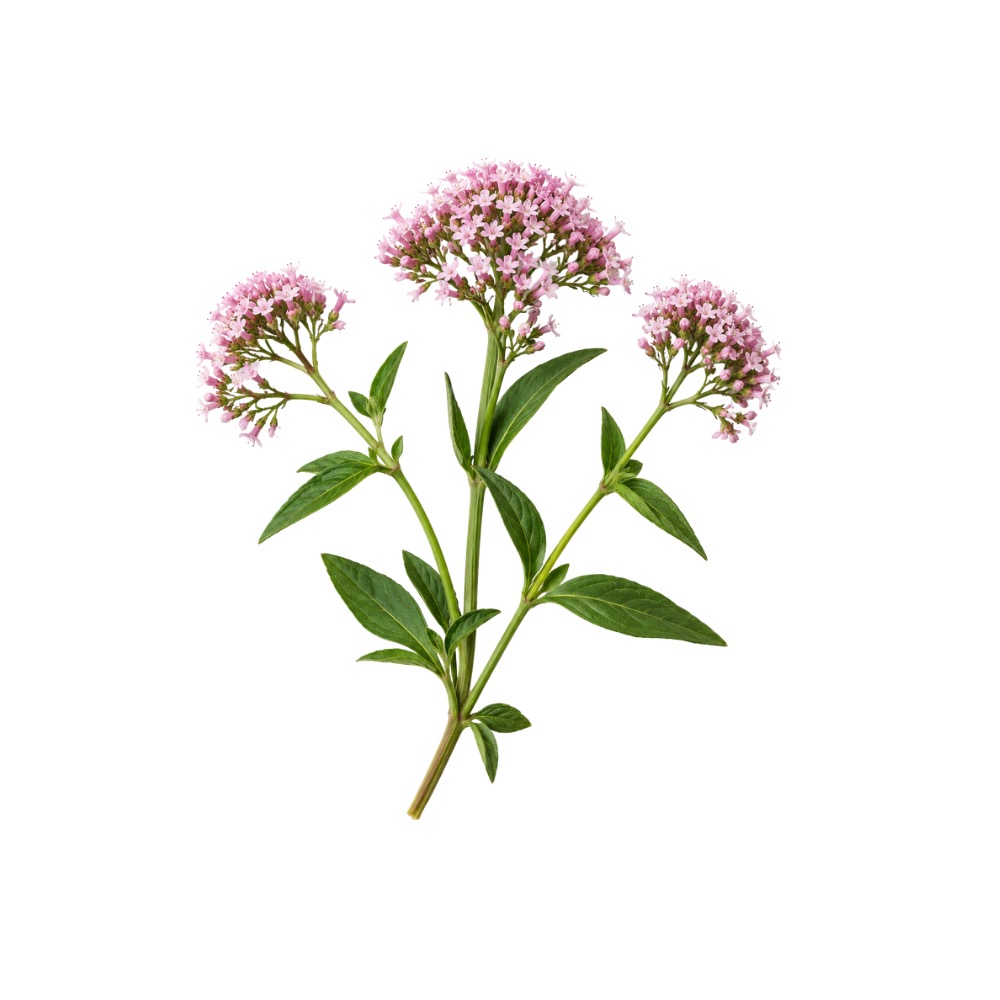
Valerenic Acid is a naturally occurring sesquiterpenoid (valerenane-type sesquiterpenic acid), found in Valerian and 1 other source. It is well tolerated orally (low toxicity).
Concentration
Content by Source
Reported concentrations across the plants that contain valerenic acid — the bar marks the typical level, the line shows the reported range.
Literature figures for varying plant parts and preparations. Read them as a comparative guide, not exact assays.
Valerenic Acid at a Glance
Valerenic acid is the marker sesquiterpenoid of valerian root (Valeriana officinalis) — the molecule commercial extracts are standardised to, and the one that carries most of the herb’s calming pharmacology 24Reference 24In vitroA review focused on molecular mechanisms of anxiolytic effect of Valeriana officinalis L. in connection with its phytochemistry through in vitro/in vivo studiesView study →.
Unusually for a plant constituent, its mechanism is pinned down to a specific receptor subunit. Valerenic acid binds a nanomolar site on GABA-A receptors and potentiates the response to GABA, but only at receptors built with β2 or β3 subunits — and its anxiolytic effect in mice vanishes completely in animals carrying a single point mutation (N265M) in the β3 subunit 1,
The awkward part is what happens next. Valerian’s human record in insomnia is inconsistent — meta-analyses split, and the most methodologically rigorous trials are negative 17,
Valerenic Acid vs. Acetoxyvalerenic Acid
This is the single most important fact on the page, and it is not widely known outside the pharmacology literature.
Valerian root contains a family of closely related sesquiterpenic acids: valerenic acid, acetoxyvalerenic acid, hydroxyvalerenic acid and the alcohol valerenol. They co-elute, they are quantified together in some older assays, and they are chemically near-twins. They do not behave alike.
- Valerenic acid potentiates GABA-A currents at β2/β3-containing receptors and is anxiolytic in vivo 1,
2Reference 1AnimalGABA A receptors as in vivo substrate for the anxiolytic action of valerenic acid, a major constituent of valerian root extractsView study →Reference 2Valerenic acid potentiates and inhibits GABA(A) receptors: molecular mechanism and subunit specificityView study → . - Valerenol binds the same nanomolar site, also enhances GABA responses, and is anxiolytic alongside valerenic acid 1Reference 1AnimalGABA A receptors as in vivo substrate for the anxiolytic action of valerenic acid, a major constituent of valerian root extractsView study →.
- Acetoxyvalerenic acid binds the same site but does not allosterically potentiate GABA-A — and when co-administered, it abolishes valerenic acid’s anxiolytic effect in the elevated plus maze 4,
5Reference 4The anxiolytic effects of a Valerian extract is based on valerenic acidView study →Reference 5Valerian extract characterized by high valerenic acid and low acetoxy valerenic acid contents demonstrates anxiolytic activityView study → .
The dose-shifting experiment is the clincher. Two valerian extracts standardised to the identical total amount of sesquiterpenic acids, differing only in the ratio of valerenic to acetoxyvalerenic acid (12:1 versus 1:1.5), were not equivalent: the 12:1 extract was anxiolytic at 0.5 mg/kg, while the 1:1.5 extract needed four times the dose to do the same job 5Reference 5Valerian extract characterized by high valerenic acid and low acetoxy valerenic acid contents demonstrates anxiolytic activityView study →.
So two valerian products can carry the same “total sesquiterpenic acid” number on the label and differ four-fold in effect. Because commercial preparations differ in cultivar, plant age, harvest time and drying — all of which shift that ratio 23Reference 23Valerenic acid derivatives and valepotriates among individuals, varieties and species of ValerianaView study → — this is a genuinely strong candidate explanation for why valerian trials disagree with each other.
What It's Used For
Valerenic acid’s evidence base is deep on mechanism and shallow on humans. There are no controlled trials of the isolated molecule; every human data point belongs to whole valerian root or a root extract, within which valerenic acid is the marker but not the only actor.
Support is an experimental score — weighted by study type (human > animal > in vitro) and volume. A beta, not a validated metric. The anxiolytic row scores high on mechanistic certainty despite being preclinical; the sleep row scores low despite having human trials, because those trials are the herb and they disagree.
The flagship, and it is isolate work throughout. Valerenic acid is anxiolytic in the elevated plus maze and light/dark choice test in wild-type mice at high potency — and the effect is absent in β3(N265M) point-mutated mice, identifying neurons expressing β3-containing GABA-A receptors as the cellular substrate 1Reference 1AnimalGABA A receptors as in vivo substrate for the anxiolytic action of valerenic acid, a major constituent of valerian root extractsView study →.
Independent groups replicate it: 3 mg/kg reduced anxious behaviour in rats 7Reference 7AnimalValeriana officinalis root extracts have potent anxiolytic effects in laboratory ratsView study →, and in female C57BL/6J mice 3–12 mg/kg reduced multiple anxiety measures with 12 mg/kg as robust as diazepam 1 mg/kg — while leaving locomotor activity (open field) and depression-like behaviour (tail suspension) untouched, i.e. anxiolytic without sedation at that dose 8Reference 8AnimalValerenic acid reduces anxiety-like behavior in young adult, female (C57BL/6J) miceView study →.
Synthetic valerenic acid amides built on the same scaffold are also β2/β3-selective and anxiolytic, confirming the structure–activity relationship 6Reference 6In vitroValerenic acid derivatives as novel subunit-selective GABAA receptor ligands — in vitro and in vivo characterizationView study →.
Gap: no controlled human trial has ever tested isolated valerenic acid for anxiety. The human anxiety data belong to whole valerian 22Reference 22Meta-analysisValerian root in treating sleep problems and associated disorders — a systematic review and meta-analysisView study →, and rodent anxiolysis at 3–12 mg/kg i.p. is not convertible to an oral human dose 7,
The application valerian is actually sold for — and the weakest link in the chain. Valerenic acid is the marker the sleep products are standardised to 24Reference 24In vitroA review focused on molecular mechanisms of anxiolytic effect of Valeriana officinalis L. in connection with its phytochemistry through in vitro/in vivo studiesView study →, and GABA-A potentiation is a plausible hypnotic mechanism, but the human trials are of the herb and they disagree. A polysomnography study found no acute effect but, after 14 days, reduced slow-wave-sleep latency (21.3 → 13.5 min) and increased slow-wave-sleep percentage versus placebo 17Reference 17Critical evaluation of the effect of valerian extract on sleep structure and sleep qualityView study →.
Against that: a meta-analysis of 16 trials found improved sleep quality on a yes/no outcome (RR 1.8, 95% CI 1.2–2.9) with evidence of publication bias 18Reference 18Meta-analysisValerian for sleep: a systematic review and meta-analysisView study →; an 18-RCT meta-analysis found no difference in sleep latency at all (mean difference 0.70 min, 95% CI −3.44 to 4.83) while the subjective dichotomous outcome stayed positive (RR 1.37) 19Reference 19Meta-analysisEffectiveness of Valerian on insomnia: a meta-analysis of randomized placebo-controlled trialsView study →; a systematic review titled “safe but not effective” found the most methodologically rigorous studies were the negative ones 20Reference 20Systematic reviewA systematic review of valerian as a sleep aid: safe but not effectiveView study →; a herbal-insomnia meta-analysis found no significant difference from placebo on any of thirteen efficacy measures 21Reference 21Meta-analysisHerbal medicine for insomnia: a systematic review and meta-analysisView study →; and a randomised crossover trial in older women found no benefit and increased wake-after-sleep-onset after two weeks 16Reference 16RCTA randomized clinical trial of valerian fails to improve self-reported, polysomnographic, and actigraphic sleep in older women with insomniaView study →.
The largest review (60 studies, n = 6,894) concludes the inconsistency is most likely variable extract quality rather than absence of an effect 22Reference 22Meta-analysisValerian root in treating sleep problems and associated disorders — a systematic review and meta-analysisView study →.
Gap: the isolate has never been trialled for sleep; every result here is a different valerian preparation with an unreported valerenic:acetoxyvalerenic ratio, so the trials are not testing the same chemistry 5,
A secondary but consistent rodent isolate signal. Oral valerenic acid (0.2–1.0 mg/kg daily for three weeks) reduced serum corticosterone in mice and altered serotonin and norepinephrine turnover in the hippocampus–amygdala region under physical and psychological stress 10Reference 10AnimalValerenic acid protects against physical and psychological stress by reducing the turnover of serotonin and norepinephrine in mouse hippocampus-amygdala regionView study →. In a D-galactose-induced ageing model, valerenic acid (340 µg/kg orally, 3 weeks) improved memory, hippocampal cell proliferation and neuroblast differentiation, again with lower corticosterone and reduced lipid peroxidation 11Reference 11Valeriana officinalis extract and its main component, valerenic acid, ameliorate D-galactose-induced reductions in memory, cell proliferation, and neuroblast differentiation by reducing corticosterone levels and lipid peroxidationView study → — pointing at a stress-hormone-mediated route rather than direct neuroprotection.
Gap: rodent isolate only, small dose ranges, no human corticosterone or cognition data; the anti-oxidative findings are downstream measures in a chemically induced ageing model, not a disease model 10,
The newest and thinnest thread. A 2026 mouse study reports that valerenic acid attenuates chronic-stress-exacerbated metabolic dysfunction-associated steatotic liver disease through an estrogen receptor α–GDF15 axis 31Reference 31Valerenic acid attenuates chronic stress-exacerbated metabolic dysfunction-associated steatotic liver disease via the estrogen receptor α-GDF15 axisView study → — a mechanistically specific claim, and a plausible extension of the compound’s stress-axis effects, but it stands alone.
Gap: a single preclinical paper, one species, no replication, no human data; treat as a research lead, not a use 31Reference 31Valerenic acid attenuates chronic stress-exacerbated metabolic dysfunction-associated steatotic liver disease via the estrogen receptor α-GDF15 axisView study →.
Mechanisms
| Target / pathway | Effect | Relevant to |
|---|---|---|
| GABA-A receptor, β2/β3 subunits | positive allosteric modulation — shifts the GABA concentration–response curve to lower GABA; β1-containing receptors are near-insensitive | the core anxiolytic/sedative mechanism |
| GABA-A loreclezole pocket (β2 N265 / β3 N265) | the β2(N265S) mutation abolishes potentiation; the reciprocal β1(S290N) mutation confers it — a single residue decides sensitivity | why β-subunit composition is decisive |
| Benzodiazepine site | not involved — modulation is flumazenil-insensitive and γ-subunit-independent; valerian extract shows no benzodiazepine-site affinity | separates valerenic acid from diazepam-type drugs |
| GABA-A at high concentration (≥100 µM) | valerenic acid and acetoxyvalerenic acid inhibit GABA currents — a possible open-channel block | the biphasic ceiling on the effect |
| Site competition by acetoxyvalerenic acid | same binding site, no potentiation; abolishes valerenic acid’s anxiolysis in vivo | preparation-dependent inconsistency |
| 5-HT5a receptor | valerian extract and valerenic acid behave as partial agonists in vitro — a receptor concentrated in the suprachiasmatic nucleus | a possible circadian/sleep-relevant second route |
| GABA transaminase (GABA catabolism) | early German work reported inhibition of GABA breakdown by valerenic acid derivatives | historical mechanismlargely superseded |
| HPA axis / corticosterone; hippocampal 5-HT & NE turnover | lowers stress corticosterone and normalises monoamine turnover in stressed mice | stress-response effects |
The load-bearing row is the second one: a single asparagine residue (N265) in the β2/β3 subunit determines whether valerenic acid works at all — which is why the β3(N265M) mouse experiment is such strong evidence 1,
Pharmacokinetics
Human pharmacokinetics exist, and they are modest and highly variable. After a single 600 mg oral dose of valerian in healthy adults, serum valerenic acid peaked at 0.9–2.3 ng/mL between 1 and 2 hours, remained measurable for at least 5 hours, and had an elimination half-life of 1.1 ± 0.6 h 14Reference 14Pharmacokinetics of valerenic acid after administration of valerian in healthy subjectsView study →. The timing is at least consistent with the traditional instruction to take valerian 30 minutes to 2 hours before bed.
The second study is the more consequential one. In older women dosed nightly for two weeks, valerenic acid showed no accumulation — no significant difference in Cmax, Tmax, AUC or half-life between single and multiple dosing — but considerable inter- and intra-subject variability, with Cmax and AUC falling and half-life rising as body weight increased. Capsule-to-capsule content variability was negligible (1.4–2.2%), so the variability was biological, not pharmaceutical; the authors conclude it may itself contribute to valerian’s inconsistent clinical effect 15Reference 15Pharmacokinetics of valerenic acid after single and multiple doses of valerian in older womenView study →.
Two consequences worth holding onto: (1) low nanogram-per-millilitre plasma levels sit far below the micromolar concentrations used in the oocyte electrophysiology, so the receptor work describes the mechanism rather than proving the achieved exposure; and (2) a ~1-hour half-life with no accumulation argues against a build-up effect from nightly dosing. No absolute oral bioavailability, tissue distribution or metabolite profile for the isolate has been established, and brain penetration in humans is uncharacterised.
Clinical Trials
There are no clinical trials of isolated valerenic acid — not for anxiety, not for sleep. Every human trial is of valerian root or a root extract standardised to valerenic acid content, and those results are covered above: positive on subjective dichotomous outcomes 18,
| Completed | Planned | Terminated | Preclinical |
|---|---|---|---|
| Whole-valerian RCTs and meta-analyses only 16, | — | — | GABA-A electrophysiology, β3(N265M) mutant mice, rodent anxiolysis, stress/neuroprotection, MASLD |
Last checked: July 2026.
Why Valerian Trials Disagree
Valerenic acid is the rare case where the mechanism is stronger than the clinical evidence, which raises an obvious question: if the receptor pharmacology is this clean, why do the human trials keep splitting?
Four explanations, all pharmaceutical rather than mechanistic:
- The acid ratio. Valerenic and acetoxyvalerenic acid work against each other; extracts matched on total sesquiterpenic acid but differing in ratio differ four-fold in potency 5Reference 5Valerian extract characterized by high valerenic acid and low acetoxy valerenic acid contents demonstrates anxiolytic activityView study →, and most trials never report the ratio.
- Content variation in the raw material. HPLC across Valeriana species, varieties and even individual plants of one commercial V. officinalis cultivar spans roughly 0.02% to 1.2% of dry weight in valerenic acid derivatives 23Reference 23Valerenic acid derivatives and valepotriates among individuals, varieties and species of ValerianaView study →. Cultivar, plant age, harvest time and drying all move the number.
- Extract polarity. Only apolar valerian extracts enhance GABA-A currents; polar extracts do nothing, and stripping the sesquiterpenic acids out of an active ethyl-acetate extract abolishes the activity entirely 3Reference 3Modulation of GABAA receptors by valerian extracts is related to the content of valerenic acidView study →. An aqueous tea and an ethanolic extract are not the same drug.
- Between-person pharmacokinetics. Even with near-identical capsules, plasma valerenic acid varies widely between and within subjects, tracking body weight 15Reference 15Pharmacokinetics of valerenic acid after single and multiple doses of valerian in older womenView study →.
The largest systematic review reaches the same conclusion from the clinical side — the inconsistency is most plausibly variable herbal-extract quality, not an absent effect 22Reference 22Meta-analysisValerian root in treating sleep problems and associated disorders — a systematic review and meta-analysisView study →. The practical reading: valerian is under-standardised, and “standardised to valerenic acid” may be the wrong specification if the antagonising sibling acid is not also controlled.
Valerenic Acid vs. The Valepotriates
Valerian carries two entirely separate constituent classes that are frequently confused, and keeping them apart matters for both efficacy and safety.
Valerenic acid is a sesquiterpenoid — chemically stable, present in root and rhizome, quantifiable by HPLC, and the basis of the herb’s GABA-A pharmacology 1,
The valepotriates — valtrate, isovaltrate, didrovaltrate — are iridoid triesters carrying a reactive epoxide. They are chemically unstable, degrading under heat, moisture and acid; they are antispasmodic rather than GABAergic; and they are the source of valerian’s in-vitro genotoxicity discussion. They are markedly more abundant in Indian valerian (V. jatamansi) and Mexican valerian (V. edulis) than in European V. officinalis.
The two classes also vary independently: across Valeriana material grown under identical conditions, valerenic acid derivatives and valepotriates were measured separately, with the ratio between them varying by group 23Reference 23Valerenic acid derivatives and valepotriates among individuals, varieties and species of ValerianaView study →. A product high in one is not necessarily high in the other. Valerian’s sedative and anxiolytic reputation belongs to valerenic acid; the instability and genotoxicity conversation belongs to the valepotriates.
Species Discipline
Almost everything here is Valeriana officinalis. That is deliberate.
Valerenic acid is used as the chemotaxonomic marker that distinguishes true V. officinalis from other Valeriana species 24Reference 24In vitroA review focused on molecular mechanisms of anxiolytic effect of Valeriana officinalis L. in connection with its phytochemistry through in vitro/in vivo studiesView study →, and the difference is not cosmetic: HPLC of species and varieties grown under identical conditions found valerenic acid derivatives ranging from 0.15 to 11.65 mg/g of root — a near eighty-fold spread — while valepotriates ranged from 0.03 to 1.81 mg/g 23Reference 23Valerenic acid derivatives and valepotriates among individuals, varieties and species of ValerianaView study →. Indian valerian (V. jatamansi) and Mexican valerian (V. edulis) sit at the valepotriate-rich, valerenic-acid-poor end of that range.
Practical consequence: clinical and mechanistic data for valerenic acid do not transfer to other Valeriana species sold as “valerian,” and a product’s species and provenance matter as much as its stated milligram dose.
Isolate vs. Plant Studies
This molecule sits at an unusually clean split. The mechanistic and behavioural evidence is almost entirely the isolate: the GABA-A electrophysiology in Xenopus oocytes 2,
The human evidence is entirely the plant: every insomnia and anxiety trial used valerian root or a root extract 16,
The honest framing: excellent isolate mechanism + a demonstrated content–activity link in extracts + inconsistent whole-herb clinical outcomes + zero isolate human trials. The gap is best explained by preparation chemistry, not by the mechanism being wrong.
Its Role in Plants
Valerenic acid is a sesquiterpenoid of the root and rhizome, built through the terpenoid pathway from farnesyl diphosphate. The committed step is catalysed by valerena-4,7(11)-diene synthase (VDS), which cyclises the precursor to valerenadiene; oxidation then yields valerenal and finally valerenic acid. Work in V. officinalis hairy-root cultures characterised this sesquiterpenoid metabolism and confirmed valerenic acid, valerenal and valerenadiene as a linked biosynthetic series responsive to elicitation 25Reference 25Regulation of sesquiterpenoid metabolism in recombinant and elicited Valeriana officinalis hairy rootsView study →.
Its ecological function is less well established than its pharmacology. Root-localised terpenoids of this kind are generally read as below-ground chemical defence against herbivores and soil pathogens, and valerian’s pungent root odour — largely bornyl acetate and related volatiles rather than valerenic acid itself — fits that picture. This is plant biology, not human pharmacology, and should not be read as evidence for either.
Prevalence in Nature
Valerenic acid is effectively restricted to the genus Valeriana, and within it is concentrated in the root and rhizome of Valeriana officinalis, where it is the defining sesquiterpenic acid 24Reference 24In vitroA review focused on molecular mechanisms of anxiolytic effect of Valeriana officinalis L. in connection with its phytochemistry through in vitro/in vivo studiesView study →. It is usually quoted at roughly 0.1–0.9% of the dried root, but measured values run wider: HPLC of Valeriana species and varieties grown under identical conditions found 0.15–11.65 mg/g of valerenic acid derivatives (≈0.02–1.2% dry weight), and individual plants of a single commercial V. officinalis cultivar varied from 3.01 to 12.34 mg/g (≈0.30–1.23%) — a four-fold spread within one cultivar 23Reference 23Valerenic acid derivatives and valepotriates among individuals, varieties and species of ValerianaView study →. Micropropagated plants varied much less than seed-propagated ones, which is a useful pointer for anyone trying to make a consistent product.
It never occurs alone. Its close relatives — acetoxyvalerenic acid, hydroxyvalerenic acid and the alcohol valerenol — co-occur in the same root, along with the unrelated valepotriates, the volatile-oil monoterpene bornyl acetate, free GABA, and flavonoids such as apigenin glycosides 24Reference 24In vitroA review focused on molecular mechanisms of anxiolytic effect of Valeriana officinalis L. in connection with its phytochemistry through in vitro/in vivo studiesView study →.
Major Natural Sources
| Source | Plant part | Reported content |
|---|---|---|
| Valerian (Valeriana officinalis) | dried root & rhizome | ~0.30–1.23% dry wt (valerenic acid derivatives, one cultivar) 23Reference 23Valerenic acid derivatives and valepotriates among individuals, varieties and species of ValerianaView study → |
| Other Valeriana species & varieties | dried root & rhizome | ~0.02–1.17% dry wt, highly species-dependent 23Reference 23Valerenic acid derivatives and valepotriates among individuals, varieties and species of ValerianaView study → |
| Indian valerian (V. jatamansi), Mexican valerian (V. edulis) | dried root & rhizome | low in valerenic acid, high in valepotriates 23Reference 23Valerenic acid derivatives and valepotriates among individuals, varieties and species of ValerianaView study → |
Figures are percentage of dried root, not of an extract, and “valerenic acid derivatives” is the summed HPLC figure for valerenic + acetoxyvalerenic + hydroxyvalerenic acid — which, given that those three do not share a pharmacology, is part of the standardisation problem rather than a solution to it 5,
Discovery & Synthesis
Valerenic acid was characterised as the marker sesquiterpenic acid of Valeriana officinalis in mid-twentieth-century phytochemical work on valerian root, and its name derives directly from the genus. Pharmacological interest began in the early 1980s: a 1982 German report described inhibition of GABA catabolism by valerenic acid derivatives 13Reference 13Riedel E, Hänsel R, Ehrke G (1982). [Inhibition of gamma-aminobutyric acid catabolism by valerenic acid derivatives]. Planta Medica. https://pubmed.ncbi.nlm.nih.gov/7163416/View study →, and in 1985 a Groningen group showed that isolated valerenic acid impaired rotarod and traction performance in mice and reduced locomotility in a manner comparable to pentobarbital — the first clear demonstration of central nervous depressant activity for the isolate 9Reference 9AnimalCentral nervous depressant activity of valerenic acid in the mouseView study →. The receptor-level mechanism took another two decades, arriving with the Vienna oocyte work identifying β2/β3-selective GABA-A modulation in 2007 2Reference 2Valerenic acid potentiates and inhibits GABA(A) receptors: molecular mechanism and subunit specificityView study → and the Zurich binding-site and β3(N265M) mouse study in 2009 1Reference 1AnimalGABA A receptors as in vivo substrate for the anxiolytic action of valerenic acid, a major constituent of valerian root extractsView study →.
No practical total synthesis is in commercial use. Synthetic effort has gone instead into analogues: replacing the carboxyl group with amides produced valerenic acid amide, a more efficacious β2/β3-selective GABA-A modulator that is anxiolytic in mice — establishing the structure–activity relationship and showing the scaffold is drug-like 6Reference 6In vitroValerenic acid derivatives as novel subunit-selective GABAA receptor ligands — in vitro and in vivo characterizationView study →.
Patents: not yet researched.
Commercial Production
All commercial valerenic acid exposure is extractive: it reaches people as a constituent of valerian root preparations, and the analytical standard used to certify those preparations is isolated from the same plant material. Because only apolar extracts carry meaningful sesquiterpenic acid content 3Reference 3Modulation of GABAA receptors by valerian extracts is related to the content of valerenic acidView study →, manufacturing choice — ethanolic or ethyl-acetate extraction versus an aqueous infusion — determines whether the active chemistry is present at all.
Two routes exist for making it outside the field. Elicited hairy-root cultures of V. officinalis accumulate valerenic acid and its biosynthetic precursors, and have been used to study and manipulate the pathway 25Reference 25Regulation of sesquiterpenoid metabolism in recombinant and elicited Valeriana officinalis hairy rootsView study →. More recently, the pathway was reconstructed in engineered Saccharomyces cerevisiae: expressing valerena-4,7(11)-diene synthase from V. officinalis with an upgraded mevalonate pathway gave 75 mg/L of the diene precursor, and adding a plant cytochrome P450 (LsGAO2) to oxidise it produced valerenic acid at 2.8 mg/L in flask fermentation 26Reference 26Biosynthesis of valerenic acid by engineered Saccharomyces cerevisiaeView study →. That is a proof of concept rather than an industrial process — yields remain far below what extraction delivers.
Toxicity & Safety
Valerenic acid carries a low flag. There is no dedicated toxicology package for the isolated molecule — no isolate LD50, genotoxicity battery or repeat-dose study — so the badge is inferred from the whole-herb record, which is genuinely reassuring rather than merely silent.
What the Whole-Herb Data Show
Pooled clinical reviews find valerian’s adverse-event profile close to placebo, with no severe adverse events across 60 studies in subjects aged 7 to 80 22Reference 22Meta-analysisValerian root in treating sleep problems and associated disorders — a systematic review and meta-analysisView study →, and a systematic review titled “safe but not effective” concluded that valerian is a safe herb associated with only rare adverse events 20Reference 20Systematic reviewA systematic review of valerian as a sleep aid: safe but not effectiveView study →. One dissent is worth flagging: a herbal-insomnia meta-analysis reported a greater number of adverse events per person with valerian than with placebo — mild ones, but the direction is not zero 21Reference 21Meta-analysisHerbal medicine for insomnia: a systematic review and meta-analysisView study →. In animals, an aqueous V. officinalis root extract showed no genotoxicity in bacterial reverse mutation, micronucleus and chromosome-aberration tests, an acute oral LD50 above 96 g/kg, and a subchronic and teratogenicity NOAEL of at least 14 g/kg 29Reference 29Safety evaluation of aqueous extract from Valeriana officinalis L. roots: genotoxicity, acute, subchronic and teratology toxicityView study →.
The Real Risk Is Additive Sedation
The practical concern is pharmacological, not toxicological. A GABA-A potentiator plausibly adds to alcohol, benzodiazepines, Z-drugs, barbiturates, sedating antihistamines and anaesthesia. This interaction is mechanistically expected rather than well quantified in humans, and it is the reason valerian products carry drowsiness and pre-surgical warnings.
Cytochrome P450
Two human studies looked and found little. In a four-herb phenotyping study, 28 days of valerian produced no significant change in CYP1A2, CYP2D6, CYP2E1 or CYP3A4/5 activity — the authors concluded valerian is unlikely to produce CYP-mediated herb–drug interactions 27Reference 27AnimalIn vivo effects of goldenseal, kava kava, black cohosh, and valerian on human cytochrome P450 1A2, 2D6, 2E1, and 3A4/5 phenotypesView study →. A second trial (1,000 mg nightly for 14 days, 5.51 mg valerenic acid per tablet) found no effect on CYP2D6 and only a small rise in alprazolam Cmax with no change in AUC or half-life, i.e. a minimal CYP3A4 effect 28Reference 28Multiple night-time doses of valerian (Valeriana officinalis) had minimal effects on CYP3A4 activity and no effect on CYP2D6 activity in healthy volunteersView study →. Neither study isolates valerenic acid’s own contribution, and transporter (P-gp) interactions have not been characterised.
Reproductive Note
A rat developmental-toxicity screen of a valerian extract found no adverse effect on fertility or fetal development in vivo, though the same study reported embryotoxicity in cultured whole embryos at higher concentrations 30Reference 30A developmental toxicity-screening test of valerianView study →; the aqueous-extract teratogenicity study was likewise clean 29Reference 29Safety evaluation of aqueous extract from Valeriana officinalis L. roots: genotoxicity, acute, subchronic and teratology toxicityView study →. No reproductive data exist for isolated valerenic acid. Pregnancy and lactation decisions belong to the valerian herb page or the product page, where intake is actually decided — not to this molecule page.
- Whole-herb safety record is good. No severe adverse events across 60 valerian studies in ages 7–80 22Reference 22Meta-analysisValerian root in treating sleep problems and associated disorders — a systematic review and meta-analysisView study →; a systematic review found it safe with only rare adverse events 20Reference 20Systematic reviewA systematic review of valerian as a sleep aid: safe but not effectiveView study →; an aqueous root extract was non-genotoxic with a high no-effect level in rodents 29Reference 29Safety evaluation of aqueous extract from Valeriana officinalis L. roots: genotoxicity, acute, subchronic and teratology toxicityView study →.
- Unlikely to drive CYP interactions. Valerian did not significantly alter CYP1A2, 2D6, 2E1 or 3A4/5 in human phenotyping, and affected alprazolam pharmacokinetics only marginally 27,
28Reference 27AnimalIn vivo effects of goldenseal, kava kava, black cohosh, and valerian on human cytochrome P450 1A2, 2D6, 2E1, and 3A4/5 phenotypesView study →Reference 28Multiple night-time doses of valerian (Valeriana officinalis) had minimal effects on CYP3A4 activity and no effect on CYP2D6 activity in healthy volunteersView study → . - Additive CNS depression is the real interaction. As a GABA-A potentiator it can compound alcohol, benzodiazepines, Z-drugs, sedating antihistamines and anaesthesia — mechanistically expected, poorly quantified, and the basis for the “don’t drive” and pre-surgery cautions.
- No isolate toxicology exists. There is no LD50, genotoxicity battery or repeat-dose study for purified valerenic acid; the low flag is inferred from whole-herb data, and silence is not evidence of safety.
- Mild adverse events are not zero. One meta-analysis found more adverse events per person with valerian than placebo (headache, grogginess, GI upset) 21Reference 21Meta-analysisHerbal medicine for insomnia: a systematic review and meta-analysisView study →; reproductive data for the isolate are absent 30Reference 30A developmental toxicity-screening test of valerianView study →.
Dosage
There is no established or recommended dose of isolated valerenic acid. It is not sold or studied as a stand-alone medicine, and no human trial has ever administered it. Real-world exposure is entirely indirect, through valerian root preparations — which are typically standardised to valerenic acid content (commonly around 0.8%), meaning the label figure refers to the marker, not to an administered dose.
| Context | Form | Amount studied |
|---|---|---|
| Human — insomnia RCT (older women) | concentrated root extract | 300 mg, 30 min before bed, 2 weeks 16Reference 16RCTA randomized clinical trial of valerian fails to improve self-reported, polysomnographic, and actigraphic sleep in older women with insomniaView study → |
| Human — CYP interaction study | root extract tablets (5.51 mg valerenic acid each) | 1,000 mg nightly for 14 days 28Reference 28Multiple night-time doses of valerian (Valeriana officinalis) had minimal effects on CYP3A4 activity and no effect on CYP2D6 activity in healthy volunteersView study → |
| Human — single-dose pharmacokinetics | valerian root | 600 mg once (peak 0.9–2.3 ng/mL) 14Reference 14Pharmacokinetics of valerenic acid after administration of valerian in healthy subjectsView study → |
| Rodent — anxiolysis (mouse, i.p.) | isolated valerenic acid | 3–12 mg/kg; 12 mg/kg ≈ diazepam 1 mg/kg 8Reference 8AnimalValerenic acid reduces anxiety-like behavior in young adult, female (C57BL/6J) miceView study → |
| Rodent — anxiolysis (rat, oral) | isolated valerenic acid | 3 mg/kg 7Reference 7AnimalValeriana officinalis root extracts have potent anxiolytic effects in laboratory ratsView study → |
| Rodent — stress axis (mouse, oral) | isolated valerenic acid | 0.2–1.0 mg/kg daily, 3 weeks 10Reference 10AnimalValerenic acid protects against physical and psychological stress by reducing the turnover of serotonin and norepinephrine in mouse hippocampus-amygdala regionView study → |
Two caveats specific to this molecule. First, a milligram figure for valerenic acid tells you less than it appears to, because the co-present acetoxyvalerenic acid can cancel its effect — the ratio matters as much as the amount 5Reference 5Valerian extract characterized by high valerenic acid and low acetoxy valerenic acid contents demonstrates anxiolytic activityView study →. Second, an aqueous preparation may carry very little of the active sesquiterpenic acid fraction regardless of how much root went in 3Reference 3Modulation of GABAA receptors by valerian extracts is related to the content of valerenic acidView study →. These are doses studied in research and are not a personal recommendation.
References
- Benke D, Barberis A, Kopp S, Altmann KH, Schubiger M, Vogt KE, Rudolph U, Möhler H (2009). GABA A receptors as in vivo substrate for the anxiolytic action of valerenic acid, a major constituent of valerian root extracts. Neuropharmacology. https://pubmed.ncbi.nlm.nih.gov/18602406/
- Khom S, Baburin I, Timin E, Hohaus A, Trauner G, Kopp B, Hering S (2007). Valerenic acid potentiates and inhibits GABA(A) receptors: molecular mechanism and subunit specificity. Neuropharmacology. https://pubmed.ncbi.nlm.nih.gov/17585957/
- Trauner G, Khom S, Baburin I, Benedek B, Hering S, Kopp B (2008). Modulation of GABAA receptors by valerian extracts is related to the content of valerenic acid. Planta Medica. https://pubmed.ncbi.nlm.nih.gov/18095218/
- Becker A, Felgentreff F, Schröder H, Meier B, Brattström A (2014). The anxiolytic effects of a Valerian extract is based on valerenic acid. BMC Complementary and Alternative Medicine. https://pubmed.ncbi.nlm.nih.gov/25066015/
- Felgentreff F, Becker A, Meier B, Brattström A (2012). Valerian extract characterized by high valerenic acid and low acetoxy valerenic acid contents demonstrates anxiolytic activity. Phytomedicine. https://pubmed.ncbi.nlm.nih.gov/22944521/
- Khom S, Strommer B, Ramharter J, Schwarz T, Schwarzer C, Erker T, Ecker GF, Mulzer J, Hering S (2010). Valerenic acid derivatives as novel subunit-selective GABAA receptor ligands — in vitro and in vivo characterization. British Journal of Pharmacology. https://pubmed.ncbi.nlm.nih.gov/20718740/
- Murphy K, Kubin ZJ, Shepherd JN, Ettinger RH (2010). Valeriana officinalis root extracts have potent anxiolytic effects in laboratory rats. Phytomedicine. https://pubmed.ncbi.nlm.nih.gov/20042323/
- Pinder NE, Ligocki IY, Horton BM, Hoover JE (2024). Valerenic acid reduces anxiety-like behavior in young adult, female (C57BL/6J) mice. Behavioural Brain Research. https://pubmed.ncbi.nlm.nih.gov/37852540/
- Hendriks H, Bos R, Woerdenbag HJ, Koster AS (1985). Central nervous depressant activity of valerenic acid in the mouse. Planta Medica. https://pubmed.ncbi.nlm.nih.gov/17340394/
- Jung HY, Yoo DY, Nam SM, Kim JW, Choi JH, Yoo M, Lee S, Yoon YS, Hwang IK (2015). Valerenic acid protects against physical and psychological stress by reducing the turnover of serotonin and norepinephrine in mouse hippocampus-amygdala region. Journal of Medicinal Food. https://pubmed.ncbi.nlm.nih.gov/26177123/
- Nam SM, Choi JH, Yoo DY, Kim W, Jung HY, Kim JW, Kang SY, Park J, Kim DW, Kim WJ, Yoon YS, Hwang IK (2013). Valeriana officinalis extract and its main component, valerenic acid, ameliorate D-galactose-induced reductions in memory, cell proliferation, and neuroblast differentiation by reducing corticosterone levels and lipid peroxidation. Experimental Gerontology. https://pubmed.ncbi.nlm.nih.gov/24055511/
- Dietz BM, Mahady GB, Pauli GF, Farnsworth NR (2005). Valerian extract and valerenic acid are partial agonists of the 5-HT5a receptor in vitro. Brain Research. Molecular Brain Research. https://pubmed.ncbi.nlm.nih.gov/15921820/
- Riedel E, Hänsel R, Ehrke G (1982). [Inhibition of gamma-aminobutyric acid catabolism by valerenic acid derivatives]. Planta Medica. https://pubmed.ncbi.nlm.nih.gov/7163416/
- Anderson GD, Elmer GW, Kantor ED, Templeton IE, Vitiello MV (2005). Pharmacokinetics of valerenic acid after administration of valerian in healthy subjects. Phytotherapy Research. https://pubmed.ncbi.nlm.nih.gov/16220575/
- Anderson GD, Elmer GW, Taibi DM, Vitiello MV, Kantor E, Kalhorn TF, Howald WN, Barsness S, Landis CA (2010). Pharmacokinetics of valerenic acid after single and multiple doses of valerian in older women. Phytotherapy Research. https://pubmed.ncbi.nlm.nih.gov/20878691/
- Taibi DM, Vitiello MV, Barsness S, Elmer GW, Anderson GD, Landis CA (2009). A randomized clinical trial of valerian fails to improve self-reported, polysomnographic, and actigraphic sleep in older women with insomnia. Sleep Medicine. https://pubmed.ncbi.nlm.nih.gov/18482867/
- Donath F, Quispe S, Diefenbach K, Maurer A, Fietze I, Roots I (2000). Critical evaluation of the effect of valerian extract on sleep structure and sleep quality. Pharmacopsychiatry. https://pubmed.ncbi.nlm.nih.gov/10761819/
- Bent S, Padula A, Moore D, Patterson M, Mehling W (2006). Valerian for sleep: a systematic review and meta-analysis. The American Journal of Medicine. https://pubmed.ncbi.nlm.nih.gov/17145239/
- Fernández-San-Martín MI, Masa-Font R, Palacios-Soler L, Sancho-Gómez P, Calbó-Caldentey C, Flores-Mateo G (2010). Effectiveness of Valerian on insomnia: a meta-analysis of randomized placebo-controlled trials. Sleep Medicine. https://pubmed.ncbi.nlm.nih.gov/20347389/
- Taibi DM, Landis CA, Petry H, Vitiello MV (2007). A systematic review of valerian as a sleep aid: safe but not effective. Sleep Medicine Reviews. https://pubmed.ncbi.nlm.nih.gov/17517355/
- Leach MJ, Page AT (2015). Herbal medicine for insomnia: a systematic review and meta-analysis. Sleep Medicine Reviews. https://pubmed.ncbi.nlm.nih.gov/25644982/
- Shinjyo N, Waddell G, Green J (2020). Valerian root in treating sleep problems and associated disorders — a systematic review and meta-analysis. Journal of Evidence-Based Integrative Medicine. https://pubmed.ncbi.nlm.nih.gov/33086877/
- Gao XQ, Björk L (2000). Valerenic acid derivatives and valepotriates among individuals, varieties and species of Valeriana. Fitoterapia. https://pubmed.ncbi.nlm.nih.gov/11449465/
- Orhan IE (2021). A review focused on molecular mechanisms of anxiolytic effect of Valeriana officinalis L. in connection with its phytochemistry through in vitro/in vivo studies. Current Pharmaceutical Design. https://pubmed.ncbi.nlm.nih.gov/33463459/
- Ricigliano V, Kumar S, Kinison S, Brooks C, Nybo SE, Chappell J, Howarth DG (2016). Regulation of sesquiterpenoid metabolism in recombinant and elicited Valeriana officinalis hairy roots. Phytochemistry. https://pubmed.ncbi.nlm.nih.gov/26920719/
- Zhao M, Zhang C, Wang H, He S, Lu W (2022). Biosynthesis of valerenic acid by engineered Saccharomyces cerevisiae. Biotechnology Letters. https://pubmed.ncbi.nlm.nih.gov/35643816/
- Gurley BJ, Gardner SF, Hubbard MA, Williams DK, Gentry WB, Khan IA, Shah A (2005). In vivo effects of goldenseal, kava kava, black cohosh, and valerian on human cytochrome P450 1A2, 2D6, 2E1, and 3A4/5 phenotypes. Clinical Pharmacology & Therapeutics. https://pubmed.ncbi.nlm.nih.gov/15900287/
- Donovan JL, DeVane CL, Chavin KD, Wang JS, Gibson BB, Gefroh HA, Markowitz JS (2004). Multiple night-time doses of valerian (Valeriana officinalis) had minimal effects on CYP3A4 activity and no effect on CYP2D6 activity in healthy volunteers. Drug Metabolism and Disposition. https://pubmed.ncbi.nlm.nih.gov/15328251/
- Bao H, Pan X, Tao Q, Zhang G, Ding W, Li G, Peng D, Du B, Li P (2024). Safety evaluation of aqueous extract from Valeriana officinalis L. roots: genotoxicity, acute, subchronic and teratology toxicity. Journal of Ethnopharmacology. https://pubmed.ncbi.nlm.nih.gov/39128798/
- Yao M, Ritchie HE, Brown-Woodman PD (2007). A developmental toxicity-screening test of valerian. Journal of Ethnopharmacology. https://pubmed.ncbi.nlm.nih.gov/17611059/
- Wu X, Jiang Y, Wang J, Gu S, Wang Y, Li N, Qian C, Nie H, Zheng Y, Li Y (2026). Valerenic acid attenuates chronic stress-exacerbated metabolic dysfunction-associated steatotic liver disease via the estrogen receptor α-GDF15 axis. European Journal of Pharmacology. https://pubmed.ncbi.nlm.nih.gov/42385973/



