
Condition
Allergic Rhinitis
Allergic rhinitis (hay fever) — the IgE and mast-cell mechanism behind it, and the herbal evidence, led by a meta-analysis of eight randomised trials of nigella.

Allergic rhinitis — hay fever — is inflammation of the nasal lining driven by an IgE-mediated immune response to an airborne allergen that poses no actual threat. It is one of the most common chronic conditions in the world, affecting perhaps a fifth to a quarter of people, and while it is rarely dangerous it is disabling: it disrupts sleep, impairs concentration and school and work performance, and reliably worsens asthma.
The herbal evidence for allergic rhinitis is better than average. Symptoms are scored on validated questionnaires, the condition is common enough to recruit for, and the placebo comparison is straightforward. Nigella has a meta-analysis of eight randomised trials behind it.
Presentation
Types & Variants
- Seasonal (intermittent) — the classic hay fever, driven by tree, grass and weed pollens and by outdoor mould spores. Predictable timing, which makes pre-emptive treatment possible.
- Perennial (persistent) — year-round, driven by house dust mite, animal dander, cockroach and indoor moulds. Nasal blockage tends to dominate over sneezing.
- Occupational — triggered by a workplace allergen (flour, latex, laboratory animals, wood dust), and improving away from work.
- Local allergic rhinitis — an allergic nasal response with negative skin-prick and blood tests, because the IgE is produced locally in the nasal mucosa. It is often misdiagnosed as non-allergic rhinitis.
Not everything that runs is allergic. Non-allergic (vasomotor) rhinitis, rhinitis medicamentosa from overused decongestant sprays, hormonal rhinitis in pregnancy, and drug-induced rhinitis all mimic it and do not respond to antihistamines.
Overview
General Pathology
The mechanism is a two-phase reaction, and knowing which phase a treatment targets explains most of the pharmacology.
Sensitisation comes first: on early exposures the immune system produces allergen-specific IgE, which coats mast cells in the nasal mucosa. Nothing is felt at this stage.
The early phase takes minutes. Re-exposure cross-links IgE on the mast-cell surface, triggering degranulation — the release of preformed histamine, tryptase, prostaglandins and leukotrienes. Histamine acting on H1 receptors produces the immediate sneezing, itch, watery discharge and vasodilation.
The late phase takes 4–12 hours. Eosinophils, basophils and T-cells are recruited into the mucosa, producing the sustained congestion, reduced smell, and the “priming” that makes each subsequent exposure worse through a season. This is why antihistamines help itch and sneezing far more than blockage, and why nasal corticosteroids — which suppress the late phase — outperform them for a truly blocked nose.
Allergic rhinitis and asthma are one airway. Most people with allergic asthma have rhinitis, and untreated rhinitis worsens asthma control. New wheeze, breathlessness or chest tightness deserves assessment rather than more antihistamine.
See a clinician for symptoms only on one side, blood-stained or one-sided discharge, facial pain or complete loss of smell, or for symptoms not responding to standard treatment — these suggest polyps, a structural problem, or something else.
Distinguish from: viral upper respiratory infection (the common cold — shorter, with sore throat and sometimes fever, and coloured discharge), influenza, bacterial sinusitis, non-allergic rhinitis and nasal polyps.
Treatment
Conventional Treatment
Intranasal corticosteroids are the most effective single treatment for moderate-to-severe allergic rhinitis, better than oral antihistamines for congestion. Second-generation oral antihistamines are effective for sneezing, itch and rhinorrhoea and are non-sedating. Allergen immunotherapy is the only treatment that modifies the underlying disease rather than suppressing symptoms.
Topical decongestant sprays must not be used beyond a few days — rebound congestion (rhinitis medicamentosa) is a common and self-perpetuating trap.
Materia Medica
Materia Medica
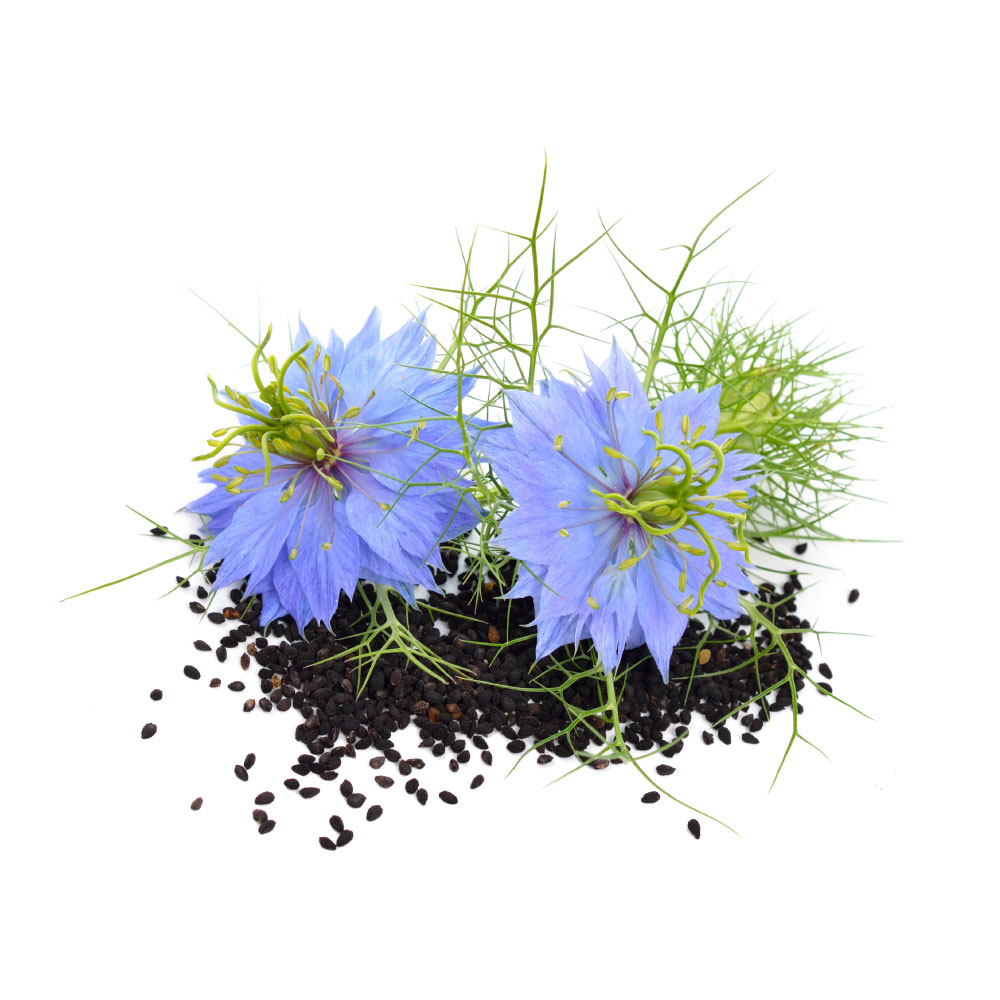 NigellaNigella sativaStrong
A 2024 meta-analysis of eight randomised controlled trials found Nigella increased the overall response rate in allergic rhinitis versus control 1Reference 1Meta-analysisMeta-analysis of randomized controlled trials assessing the efficacy of Nigella spp. in allergic rhinitisView study →. Underneath it sit individual trials of the right kind: a double-blind study of N. sativa oil reduced nasal congestion, runny nose, itch and sneezing over 30 days 2Reference 2Herbal treatment of allergic rhinitis — the use of Nigella sativaView study →, and a 2024 randomised, double-blind, placebo-controlled trial of a standardised oil containing 5% thymoquinone reduced seasonal allergy symptoms 3Reference 3RCTA randomized, double-blind, placebo-controlled study of a standardized Nigella sativa oil containing 5% thymoquinone in reducing symptoms of seasonal allergyView study →. Doses in the trials run around 250–500 mg of seed oil twice daily.
The constituent trials are small, outcomes are subjective symptom scores rather than objective nasal measures, and several use proprietary standardised oils that are not equivalent to kitchen black seed.
Full monograph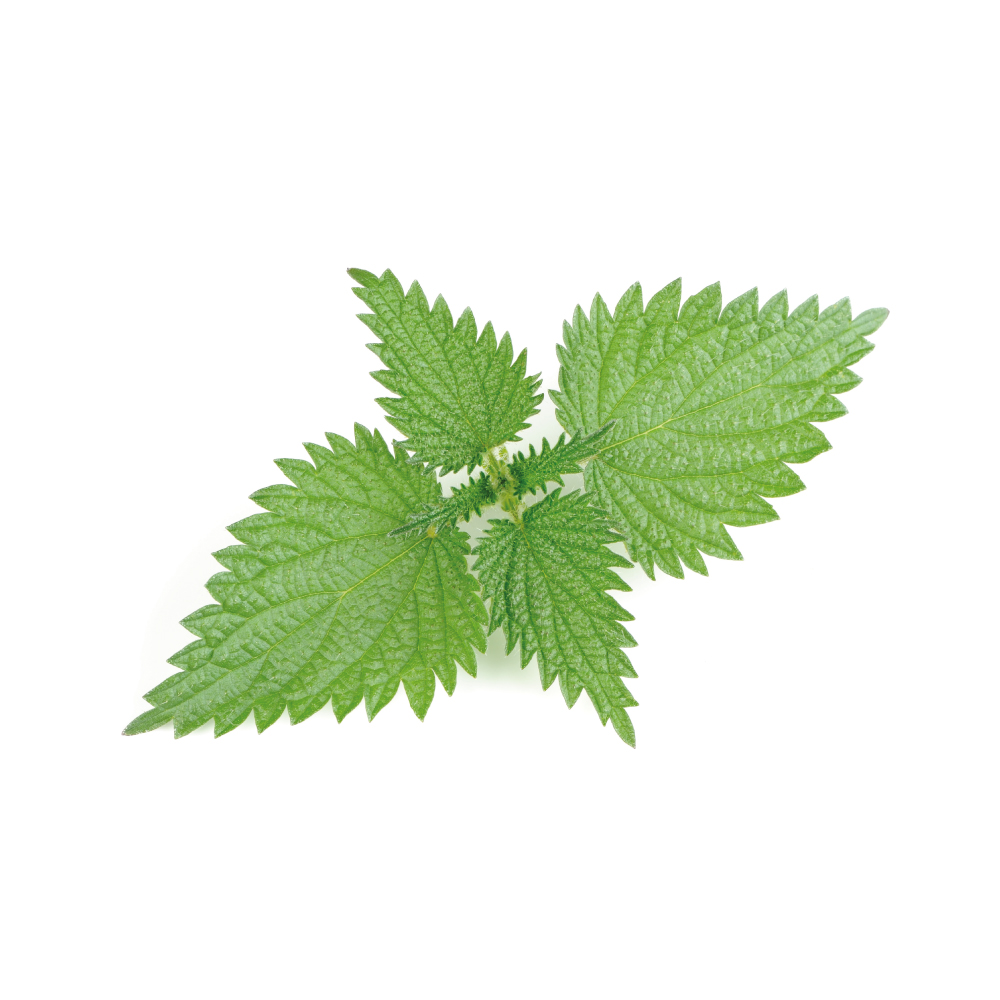 Stinging NettleUrtica dioicaModerate
Nettle’s mechanism is more convincing than its trials. Nettle leaf extract shows H1-receptor antagonism and inhibition of mast-cell tryptase in vitro, targeting the same receptor as a pharmaceutical antihistamine.
The human evidence is thinner: a 1990 randomised double-blind trial of freeze-dried nettle leaf (300 mg at symptom onset) 4Reference 4RCTRandomised, double-blind study of freeze-dried Urtica dioica in the treatment of allergic rhinitis — randomised controlled trialView study → and a 2017 randomised, double-blind, placebo-controlled trial of nettle root extract as supportive therapy 5Reference 5RCTEfficacy of supportive therapy of allergic rhinitis by stinging nettle (Urtica dioica) root extract — randomised, double-blind, placebo-controlled trialView study →. Both are small and both are equivocal against placebo. The two trials also used different plant parts, so their results do not add up to a single conclusion.
Traditional use is as a spring tonic taken before the season starts, which no trial has tested.
Full monograph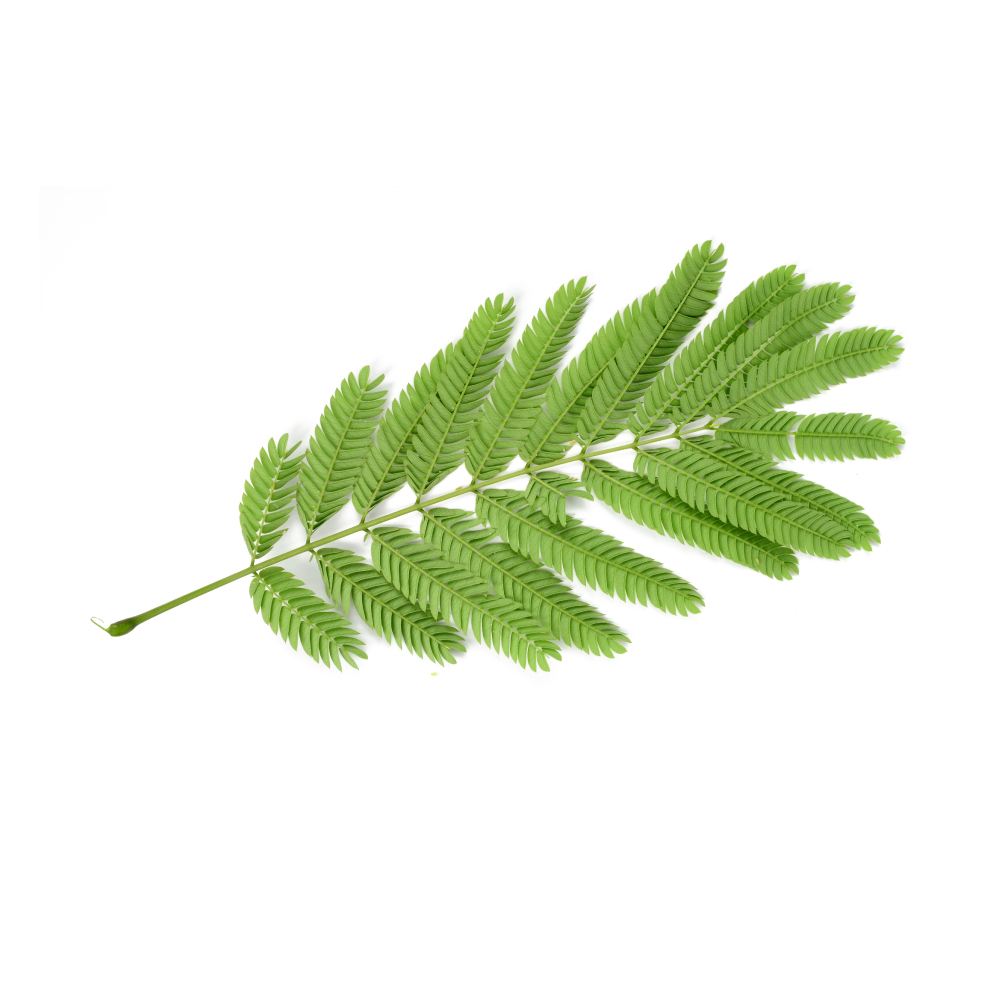 AlbizziaAlbizzia lebbeckPreclinical
The Western herbal antihistamine of choice, with over forty years of consistent laboratory work behind the reputation. A. lebbeck bark stabilises mast-cell membranes and reduces degranulation 6Reference 6Studies on the mechanism of action of Albizzia lebbeck, an Indian indigenous drug used in the treatment of atopic allergy — animal and in-vitro mast-cell studyView study →, and — more unusually — suppresses histamine signalling at the gene level, down-regulating transcription of both the histamine H1 receptor and histidine decarboxylase, the enzyme that makes histamine 7Reference 7In vitroAlbizia lebbeck suppresses histamine signaling by the inhibition of histamine H1 receptor and histidine decarboxylase gene transcriptions — animal model and in vitroView study →. A standardised extract with catechin as phytomarker confirmed antiallergic activity in animals 8Reference 8Anti-allergic activity of standardized extract of Albizia lebbeck with reference to catechin as a phytomarker — animal and in-vitro studyView study →. Acting on histamine synthesis as well as its receptor is a different mechanism from a pharmaceutical antihistamine.
All of it is in vitro and animal. Human data are single-blind or from polyherbal formulas, so no study isolates albizzia’s effect in a person.
Do not confuse with Albizia julibrissin (He Huan Pi), a different species used in Chinese medicine as a calming remedy; none of this evidence transfers to it.
Full monographSupplementation
Supplementation
Non-herbal measures carry real weight in allergic rhinitis. Allergen avoidance is effective where it is practical — dust-mite covers, keeping windows shut at peak pollen, showering after being outdoors — and saline nasal irrigation has reasonable evidence for washing allergen and mucus from the nasal cavity, is cheap, and is safe to combine with anything.
Among supplements, quercetin is the most commonly recommended on the basis of mast-cell stabilisation in vitro; human evidence in allergic rhinitis is limited and does not yet support a confident claim. Vitamin D deficiency is associated with more severe allergic disease, though correcting it has not been shown to treat rhinitis.
References
- He, Y., Hu, X., et al. (2024). Meta-analysis of randomized controlled trials assessing the efficacy of Nigella spp. in allergic rhinitis. Frontiers in Pharmacology. https://pubmed.ncbi.nlm.nih.gov/39372205/
- Nikakhlagh, S., Rahim, F., et al. (2011). Herbal treatment of allergic rhinitis — the use of Nigella sativa. American Journal of Otolaryngology. https://pubmed.ncbi.nlm.nih.gov/20947211/
- Majeed, A., Majeed, S., et al. (2024). A randomized, double-blind, placebo-controlled study of a standardized Nigella sativa oil containing 5% thymoquinone in reducing symptoms of seasonal allergy. Medicine (Baltimore). https://pubmed.ncbi.nlm.nih.gov/39121267/
- Mittman, P. (1990). Randomised, double-blind study of freeze-dried Urtica dioica in the treatment of allergic rhinitis — randomised controlled trial. Planta Medica. https://pubmed.ncbi.nlm.nih.gov/2192379/
- Bakhshaee, M., Mohammad Pour, A. H., Esmaeili, M., et al. (2017). Efficacy of supportive therapy of allergic rhinitis by stinging nettle (Urtica dioica) root extract — randomised, double-blind, placebo-controlled trial. Iranian Journal of Pharmaceutical Research. https://pubmed.ncbi.nlm.nih.gov/29844782/
- Tripathi, R. M., Sen, P. C., & Das, P. K. (1979). Studies on the mechanism of action of Albizzia lebbeck, an Indian indigenous drug used in the treatment of atopic allergy — animal and in-vitro mast-cell study. Journal of Ethnopharmacology. https://pubmed.ncbi.nlm.nih.gov/544953/
- Nurul, I. M., et al. (2011). Albizia lebbeck suppresses histamine signaling by the inhibition of histamine H1 receptor and histidine decarboxylase gene transcriptions — animal model and in vitro. International Immunopharmacology. https://pubmed.ncbi.nlm.nih.gov/21782040/
- Venkatesh, P., et al. (2010). Anti-allergic activity of standardized extract of Albizia lebbeck with reference to catechin as a phytomarker — animal and in-vitro study. Immunopharmacology and Immunotoxicology. https://pubmed.ncbi.nlm.nih.gov/20109037/