
Condition
Intestinal Hyperpermeability
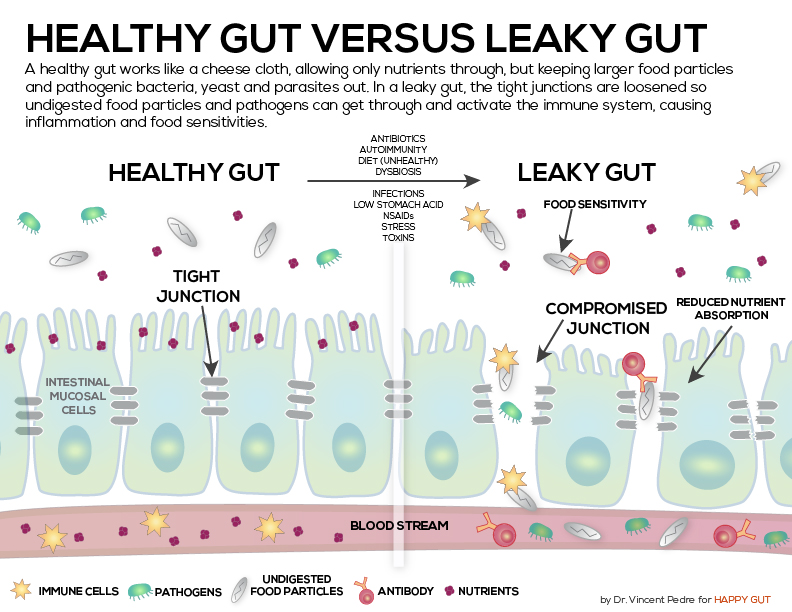
Intestinal hyperpermeability, or leaky gut, is a loss of integrity in the gut lining that allows undigested food particles and microbes to pass into the bloodstream.

Overview
Aetiology
Chronic inflammatory responses in the gut result in a gradual breakdown and loss of function in the epithelial cells and gap junctions. Over time these break down enough to allow particles of undigested food or microbiology to enter the bloodstream.
The initial inflammation may be the result of many factors, including food allergies, genetic predispositions, toxic exposure, or nutritional deficiencies.
Presentation
Symptoms
Intestinal hyperpermeability tends to produce diffuse, non-specific symptoms. Digestive complaints such as bloating, gas, cramping, and irregular bowel habits are common, often alongside food sensitivities, fatigue, and skin problems. Because the increased passage of antigens into the bloodstream can drive systemic immune activation, it is frequently linked with widespread inflammation and autoimmune presentations.
Assessment
Diagnostic Considerations
The most established functional test is the lactulose/mannitol test, which compares urinary recovery of two ingested sugars to gauge how readily the gut lining is being crossed. Assessment is usually supported by investigation of the underlying drivers, such as food allergy testing, stool analysis for dysbiosis, and screening for nutritional deficiencies.
Assessment
Differential Diagnosis
Celiac disease, inflammatory bowel disease, irritable bowel syndrome, and food intolerances can all produce overlapping symptoms and should be considered.
Supplementation
Supplementation (2)
Supplements, nutrients and compounds used for intestinal hyperpermeability.
L-Glutamine
Amino acid (conditionally essential)
The most abundant free amino acid in the body and a key fuel for gut and immune cells, taken for gut-lining support and exercise recovery.
Larazotide
Tight-junction regulator (zonulin-antagonist octapeptide)
An oral, gut-restricted zonulin-antagonist octapeptide trialled for celiac disease; its phase 3 trial was stopped for futility.