
Condition
Thyroid Nodules
Thyroid nodules — lumps in the thyroid that most adults eventually develop and that are almost always benign. What they are, why finding them is the main risk, and the narrow herbal evidence that actually exists.


Most thyroid nodules are harmless, most people have them, and the main risk they carry is being found.
A thyroid nodule is a discrete lump within the thyroid gland. High-resolution ultrasound finds nodules in more than half of all adults — more with age, more in women, more in iodine-deficient regions. The overwhelming majority are benign, cause no symptoms, do nothing to thyroid hormone levels, and will never matter 1Reference 1ReviewThyroid nodules: diagnosis and management — reviewView study →.
The central problem is not undertreatment but overdiagnosis: finding, biopsying, and sometimes removing large numbers of nodules and small cancers that would never have caused harm, while the death rate from thyroid cancer stays flat 6,
One herb, self-heal (Prunella vulgaris, TCM’s Xia Ku Cao), has meta-analysed human trial data as an adjuvant for thyroid nodules. Almost nothing else does. Two of the most popular supplements in the thyroid aisle can make nodular thyroid disease worse.
Presentation
Types & Variants
Nodules are sorted along several independent axes, and mixing them up is the source of most confusion — including most bad herbal advice.
By function — the distinction that matters most for supplements.
- Non-toxic (non-functioning) — the great majority. Thyroid hormone levels are normal; the nodule is a structural finding only.
- Toxic / autonomously functioning (“hot”) — the nodule produces thyroid hormone independently of TSH, and can cause hyperthyroidism. Autonomy is usually driven by activating mutations in the TSH receptor or its signalling pathway. This is the group in which iodine loading is dangerous.
By number. A solitary nodule versus a multinodular goitre — many nodules in an enlarged gland, classically associated with long-standing iodine deficiency. A large multinodular goitre can compress the trachea or oesophagus, which is a reason to treat.
By composition. Purely cystic (fluid-filled) nodules are essentially never malignant. Solid, hypoechoic, taller-than-wide nodules with microcalcifications or irregular margins carry higher suspicion — this is what ultrasound risk-stratification systems formalise 5Reference 5ACR Thyroid Imaging, Reporting and Data System (TI-RADS): white paper of the ACR TI-RADS committee — consensus statementView study →.
By cytology. When a nodule is biopsied, the result is reported on the Bethesda scale, from non-diagnostic through benign, the two “indeterminate” categories that cause most of the anxiety and most of the unnecessary surgery, through to suspicious and malignant 2Reference 2ReviewDiagnosis of thyroid nodules — reviewView study →.
Overview
General Pathology
The thyroid is a follicular gland, and nodules arise when discrete populations of follicular cells expand out of step with the rest of it. Most are benign follicular adenomas or hyperplastic (colloid) nodules; the rest of the differential runs through cysts, focal thyroiditis, and — in a minority — carcinoma, most commonly papillary.
Two drivers explain most nodule formation. The first is chronic TSH stimulation: when the gland struggles to make enough hormone, TSH rises and drives growth. Sustained over years — classically through iodine deficiency, still the world’s leading preventable cause of thyroid disorder 9Reference 9ReviewIodine deficiency and thyroid disorders — reviewView study → — this produces the multinodular goitre. The second is somatic mutation: individual cell clones acquire growth or signalling mutations and expand independently. Mutations activating the TSH receptor produce the autonomous “hot” nodule, which is why such nodules keep making hormone even when TSH is fully suppressed.
Both drivers run over decades, which is why nodule prevalence climbs steadily with age.
Get assessed rather than self-treating for: a lump in the neck, a rapidly growing neck mass, hoarseness or voice change, difficulty swallowing or breathing, a hard fixed nodule, enlarged neck lymph nodes, or nodules alongside a history of childhood head/neck irradiation or a family history of thyroid cancer. These are the features that shift a nodule out of the “watch it” category, and none of them is assessable at home.
How Nodules Are Actually Assessed
“Shrink the nodule” is usually the wrong goal, and the workup shows why.
TSH comes first — before any imaging. If TSH is low, the nodule may be autonomous, and a radionuclide uptake scan follows; a genuinely hot nodule is almost never cancerous and is managed as a hyperthyroidism problem. If TSH is normal or high, the pathway is ultrasound 1,
Ultrasound risk-stratifies; it does not diagnose. Systems such as ACR TI-RADS score composition, echogenicity, shape, margins and echogenic foci, and combine that score with size to decide who needs a biopsy 4,
Fine-needle aspiration is the only test that examines the cells. Most results come back benign, and those nodules go into surveillance.
Definitive treatment is for defined indications, not for the existence of a nodule: malignancy or high suspicion of it, compressive symptoms, cosmetic concern, or hyperthyroidism from an autonomous nodule 3Reference 3ReviewManagement of thyroid nodules — reviewView study →. For symptomatic benign nodules there are now well-studied minimally invasive options — radiofrequency and microwave ablation substantially reduce nodule volume without removing the gland 11Reference 11Meta-analysisComparative efficacy and safety of radiofrequency ablation and microwave ablation in the treatment of benign thyroid nodules — systematic review and meta-analysisView study →.
The Overdiagnosis Problem
Overdiagnosis is the largest harm associated with thyroid nodules.
When South Korea added thyroid ultrasound to a national screening programme, detected thyroid-cancer incidence rose roughly fifteen-fold. Mortality from thyroid cancer did not change at all 6Reference 6Korea’s thyroid-cancer “epidemic” — screening and overdiagnosisView study →. The additional cancers were real cancers under the microscope — and clinically inconsequential, destined never to cause symptoms. What did change was the number of people living with a cancer diagnosis, a scar, and in many cases lifelong thyroid hormone replacement. Analyses across dozens of countries now estimate a very large share of thyroid cancers diagnosed in recent decades to be overdiagnosis 7Reference 7ObservationalEvolving epidemiological patterns of thyroid cancer and estimates of overdiagnosis in 2013–17 in 63 countries worldwide — population-based analysisView study →.
The response has been active surveillance: for low-risk papillary microcarcinoma, long-term follow-up shows that watching with serial ultrasound rather than operating immediately produces excellent outcomes 8Reference 8ObservationalLong-term outcomes of active surveillance and immediate surgery for adult patients with low-risk papillary thyroid microcarcinoma — cohort studyView study →.
With a nodule, the temptation to do something is strong, and it is exactly the impulse that drives both unnecessary surgery and unnecessary supplementation. Structured watching is a real treatment.
Herbs & Supplements That Can Make This Worse
Two of the most commonly recommended thyroid supplements are hazardous in nodular thyroid disease.
Iodine and kelp. Iodine deficiency causes nodular goitre — but supplementing iodine into a gland that already contains autonomous nodules is a well-documented way to precipitate hyperthyroidism. The phenomenon has a name, iodine-induced hyperthyroidism (the Jod-Basedow effect), and it is best described in exactly this population: older people with long-standing multinodular goitre in previously iodine-deficient areas 10Reference 10ObservationalIodine-induced hyperthyroidism: occurrence and epidemiology — reviewView study →. Autonomous tissue is not under TSH control, so handing it more substrate simply lets it make more hormone.
Kelp, bladderwrack and “thyroid support” blends are frequently high-dose, poorly standardised iodine, and iodine content in seaweed products varies enormously batch to batch. Correcting a documented deficiency under supervision is reasonable; taking iodine because you have a nodule is not.
Ashwagandha. Its thyroid effect is real, and it runs in the wrong direction for nodular disease. A randomised placebo-controlled trial in subclinical hypothyroidism found 600 mg/day of root extract lowered TSH and raised T3 and T4 16Reference 16RCTEfficacy and safety of ashwagandha root extract in subclinical hypothyroid patients — double-blind, randomised placebo-controlled trialView study → — a consistently thyroid-stimulating signal. Against that, case reports describe ashwagandha precipitating thyrotoxicosis and painless thyroiditis 17Reference 17Case reportThyrotoxicosis following the use of ashwagandha — case reportView study →. In someone with an autonomous nodule already producing hormone independently, adding a thyroid stimulant is a poor idea. Ashwagandha is well supported for other uses, but not for thyroid nodules.
In nodular thyroid disease, stimulating the thyroid is not a neutral act.
Materia Medica
Materia Medica
The herbal evidence for thyroid nodules is narrow: one herb carries essentially all of it, and the rest is traditional.
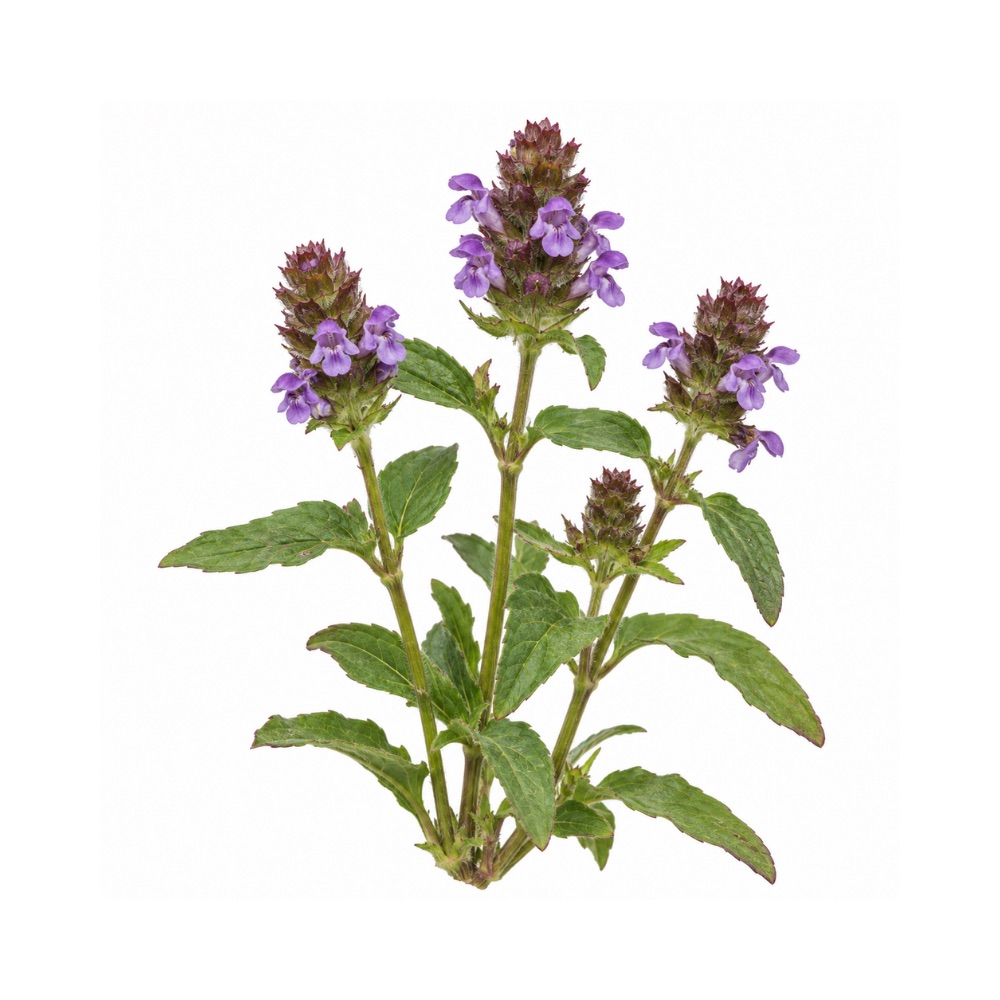 Self-HealPrunella vulgarisModerate
Self-heal is the one thyroid-nodule herb with meta-analysed human data. In Chinese medicine Xia Ku Cao is the archetypal “dispersing nodules” herb, and that classical indication is the one the trials tested. A 2021 meta-analysis pooled 13 RCTs (1,468 patients) of Prunella preparations added to levothyroxine for thyroid nodules: relative risk of clinical efficacy 1.22 (95% CI 1.11–1.33), mean nodule-diameter reduction 0.43 (95% CI −0.63 to −0.22), with no increase in adverse reactions 13Reference 13Meta-analysisSafety and efficacy of Prunella vulgaris preparation in adjuvant treatment of thyroid nodules — meta-analysis of randomised controlled trialsView study →. A separate systematic review with trial-sequential analysis pooled 11 RCTs (1,215 patients) in Hashimoto’s thyroiditis, finding improved overall efficacy (RR 1.15, 95% CI 1.09–1.21) and lower thyroid-peroxidase antibody levels (SMD −0.91) 14Reference 14Meta-analysisSystematic review and trial sequential analysis of preparation of Xiakucao for Hashimoto’s thyroiditis — systematic review and meta-analysisView study →.
Three qualifications apply. (1) Adjuvant only — every trial added self-heal to levothyroxine; none tested it alone, so there is no evidence for standalone use. (2) The trials are Chinese-registry studies using heterogeneous proprietary preparations at non-standardised doses — there is no way to translate the pooled result into a dose of dried herb. (3) They were rated low to very-low quality by GRADE, with high risk of bias. The pooled effect is real and the direction is consistent; the evidence quality does not support replacing anything.
Preparation: self-heal’s characterised actives are water-soluble, so a decoction or hot-water extract is the appropriate form — not an alcohol tincture.
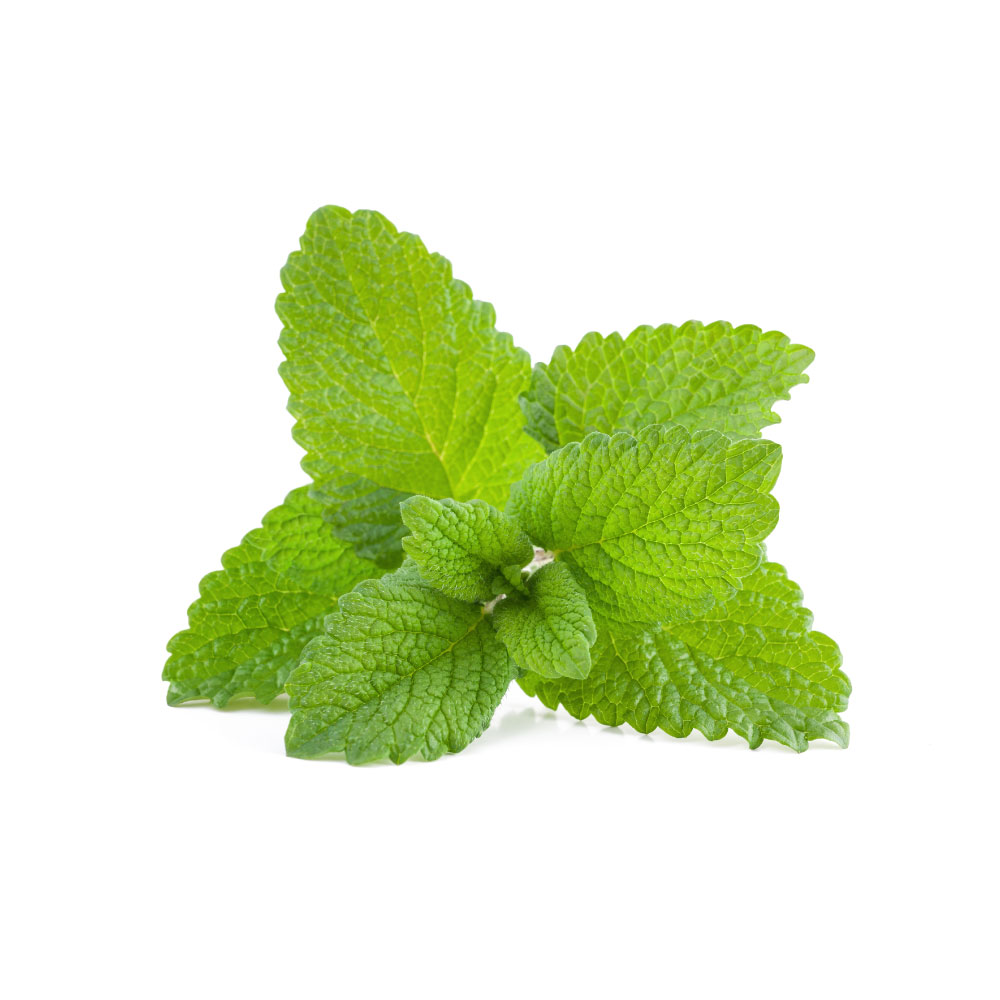 Lemon BalmMelissa officinalisPreclinical
Lemon balm has a real, specific, well-replicated antithyrotropic mechanism: a classic 1985 study showed freeze-dried extracts of Melissa officinalis (with Lycopus and Lithospermum) form adducts with TSH that bind poorly to the TSH receptor, and inhibit both the receptor-binding and the biological activity of Graves’ immunoglobulins 15Reference 15In vitroExtracts and auto-oxidized constituents of certain plants inhibit the receptor-binding and the biological activity of Graves’ immunoglobulins — in vitroView study →. That is why lemon balm and bugleweed appear in traditional Western protocols for hyperthyroidism.
But that mechanism does not apply to a toxic nodule. It works by interfering with TSH and TSH-receptor-stimulating antibodies — and an autonomously functioning nodule makes hormone precisely because it has escaped TSH control. Herbal sources routinely file “hyperthyroidism” as one condition; Graves’ disease and a hot nodule are different diseases with different mechanisms, and lemon balm’s evidence belongs to the first. In vitro throughout; no human trial for any thyroid indication.
Full monograph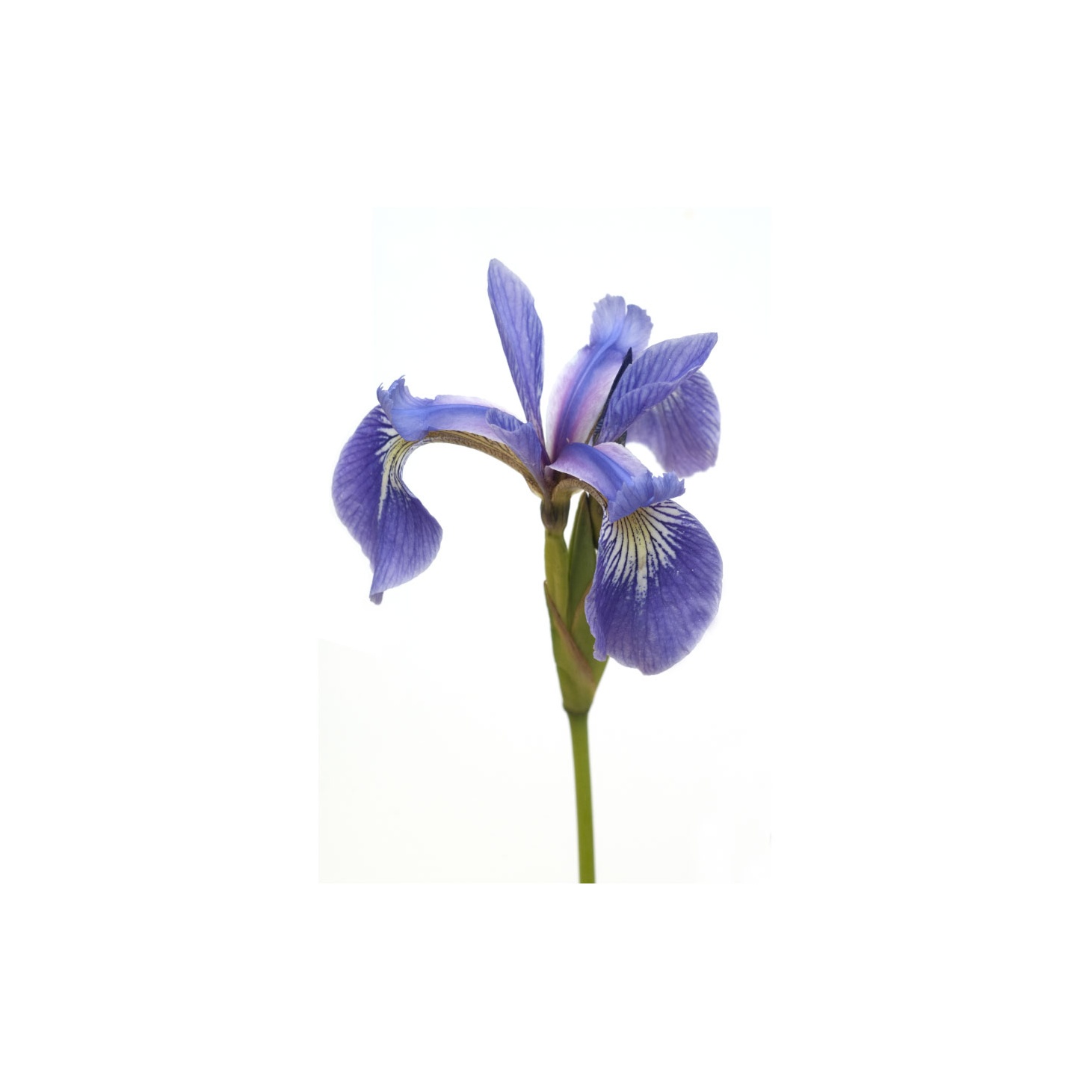 Blue FlagIris versicolorTraditional only
Blue flag was a standard nineteenth-century alterative for glandular and lymphatic swellings, and lymphadenopathy and thyroid complaints sit among its documented traditional uses. The evidence base is close to empty — a literature search returns barely a dozen records for the species, and the herb’s actual traditional roles have no experimental backing at all, not even in vitro. There is no antinodular data of any kind; the traditional use is real and consistently documented.
Fresh root is an irritant emetic and purgative.
Full monographSupplementation
Supplementation
Selenium is the nutrient with the most credible thyroid evidence, and it belongs to the autoimmune side of the picture rather than to nodules themselves. A 2024 systematic review and meta-analysis of selenium supplementation in Hashimoto’s thyroiditis found reductions in thyroid-peroxidase antibodies 12Reference 12Meta-analysisSelenium supplementation in patients with Hashimoto thyroiditis — systematic review and meta-analysis of randomized clinical trialsView study →. Antibody levels are a surrogate — reducing them has not been shown to change symptoms, progression to overt hypothyroidism, or levothyroxine requirement. Selenium also has a narrow therapeutic window; chronic excess causes selenosis.
Iodine is two-edged. Deficiency drives nodular goitre; repletion in someone with autonomous nodules can precipitate hyperthyroidism 9,
References
- Grani, G., Sponziello, M., Filetti, S., & Durante, C. (2024). Thyroid nodules: diagnosis and management — review. Nature Reviews Endocrinology. https://pubmed.ncbi.nlm.nih.gov/39152228/
- Alexander, E. K., & Cibas, E. S. (2022). Diagnosis of thyroid nodules — review. The Lancet Diabetes & Endocrinology. https://pubmed.ncbi.nlm.nih.gov/35752200/
- Alexander, E. K., Doherty, G. M., & Barletta, J. A. (2022). Management of thyroid nodules — review. The Lancet Diabetes & Endocrinology. https://pubmed.ncbi.nlm.nih.gov/35752201/
- Haugen, B. R., Alexander, E. K., Bible, K. C., et al. (2016). 2015 American Thyroid Association management guidelines for adult patients with thyroid nodules and differentiated thyroid cancer — clinical practice guideline. Thyroid. https://pubmed.ncbi.nlm.nih.gov/26462967/
- Tessler, F. N., Middleton, W. D., Grant, E. G., et al. (2017). ACR Thyroid Imaging, Reporting and Data System (TI-RADS): white paper of the ACR TI-RADS committee — consensus statement. Journal of the American College of Radiology. https://pubmed.ncbi.nlm.nih.gov/28372962/
- Ahn, H. S., Kim, H. J., & Welch, H. G. (2014). Korea’s thyroid-cancer “epidemic” — screening and overdiagnosis. New England Journal of Medicine. https://pubmed.ncbi.nlm.nih.gov/25372084/
- Li, M., Dal Maso, L., Pizzato, M., & Vaccarella, S. (2024). Evolving epidemiological patterns of thyroid cancer and estimates of overdiagnosis in 2013–17 in 63 countries worldwide — population-based analysis. The Lancet Diabetes & Endocrinology. https://pubmed.ncbi.nlm.nih.gov/39389067/
- Miyauchi, A., Ito, Y., Fujishima, M., et al. (2023). Long-term outcomes of active surveillance and immediate surgery for adult patients with low-risk papillary thyroid microcarcinoma — cohort study. Thyroid. https://pubmed.ncbi.nlm.nih.gov/37166389/
- Zimmermann, M. B., & Boelaert, K. (2015). Iodine deficiency and thyroid disorders — review. The Lancet Diabetes & Endocrinology. https://pubmed.ncbi.nlm.nih.gov/25591468/
- Stanbury, J. B., Ermans, A. E., Bourdoux, P., et al. (1998). Iodine-induced hyperthyroidism: occurrence and epidemiology — review. Thyroid. https://pubmed.ncbi.nlm.nih.gov/9492158/
- Zufry, H., & Hariyanto, T. I. (2024). Comparative efficacy and safety of radiofrequency ablation and microwave ablation in the treatment of benign thyroid nodules — systematic review and meta-analysis. Korean Journal of Radiology. https://pubmed.ncbi.nlm.nih.gov/38413114/
- Huwiler, V. V., Maissen-Abgottspon, S., Stanga, Z., et al. (2024). Selenium supplementation in patients with Hashimoto thyroiditis — systematic review and meta-analysis of randomized clinical trials. Thyroid. https://pubmed.ncbi.nlm.nih.gov/38243784/
- Han, Q., Xu, N., Chen, B., et al. (2021). Safety and efficacy of Prunella vulgaris preparation in adjuvant treatment of thyroid nodules — meta-analysis of randomised controlled trials. Medicine (Baltimore). https://pubmed.ncbi.nlm.nih.gov/34731129/
- Zhang, Y. L., Hu, R. X., Zhao, H., et al. (2020). Systematic review and trial sequential analysis of preparation of Xiakucao for Hashimoto’s thyroiditis — systematic review and meta-analysis. Zhongguo Zhong Yao Za Zhi. https://pubmed.ncbi.nlm.nih.gov/33496119/
- Auf’mkolk, M., Ingbar, J. C., Kubota, K., Amir, S. M., & Ingbar, S. H. (1985). Extracts and auto-oxidized constituents of certain plants inhibit the receptor-binding and the biological activity of Graves’ immunoglobulins — in vitro. Endocrinology. https://pubmed.ncbi.nlm.nih.gov/2985357/
- Sharma, A. K., Basu, I., & Singh, S. (2018). Efficacy and safety of ashwagandha root extract in subclinical hypothyroid patients — double-blind, randomised placebo-controlled trial. Journal of Alternative and Complementary Medicine. https://pubmed.ncbi.nlm.nih.gov/28829155/
- van der Hooft, C. S., Hoekstra, A., Winter, A., et al. (2005). Thyrotoxicosis following the use of ashwagandha — case report. Nederlands Tijdschrift voor Geneeskunde. https://pubmed.ncbi.nlm.nih.gov/16355578/