
Compound Monograph
Verbenalin
Verbenalin (cornin) is the signature iridoid glycoside of vervain (Verbena officinalis) — a bitter marker compound studied preclinically for sleep-promoting, neuroprotective, cardioprotective and anti-inflammatory effects, with no human trials yet.

Sources · 4
Where Does It Come From?
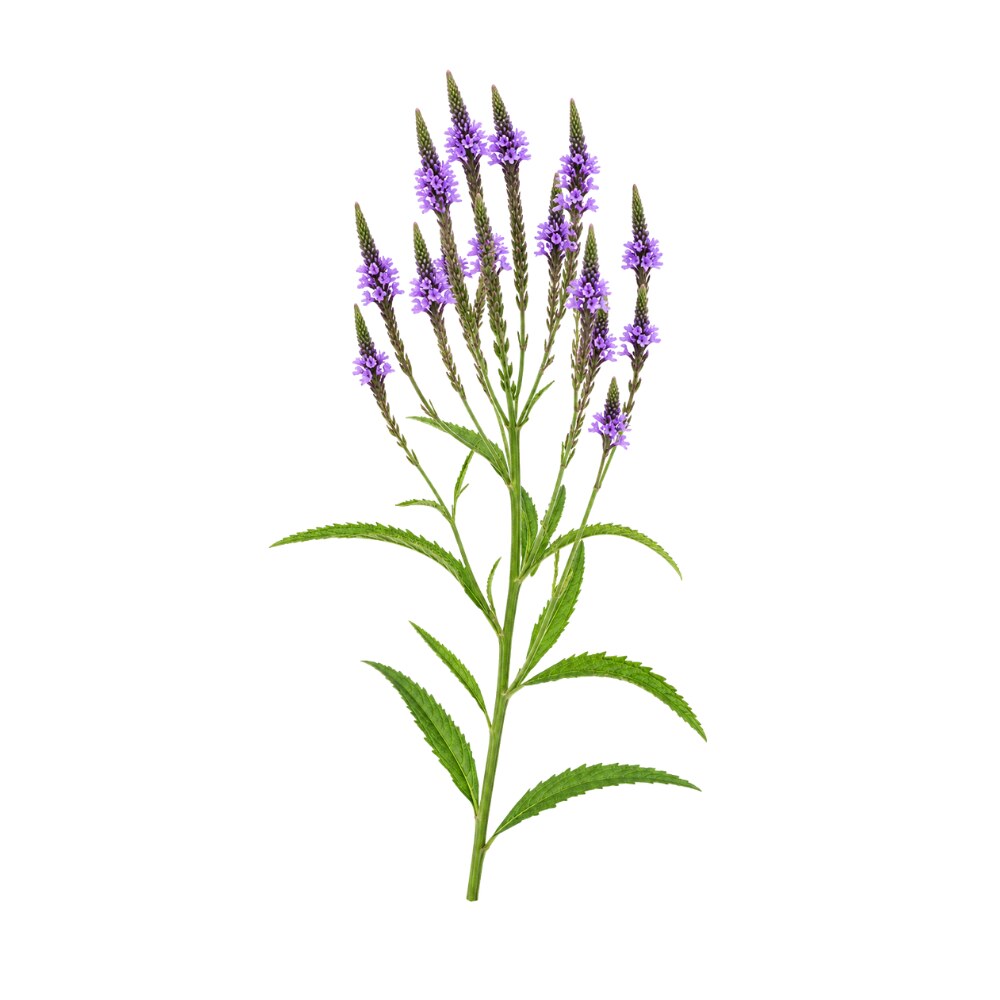
Verbenalin is a naturally occurring iridoid glycoside, found in Common vervain, Blue vervain, Dogwood and 1 other source. It is well tolerated orally (low toxicity).
Concentration
Content by Source
Concentrations not reported. No percent-dry-weight or mg/g figures have been published for this compound in its source plants.
Verbenalin at a Glance
Verbenalin, also called cornin, is an iridoid glycoside and the signature marker constituent of vervain (Verbena officinalis) — the bitter, glucose-bearing molecule most associated with the plant’s chemistry. It co-occurs with the closely related iridoid hastatoside, and the two are usually studied together 1Reference 1Hastatoside and verbenalin are sleep-promoting components in Verbena officinalisView study →.
Its most-cited signal is sleep-promoting / mildly sedative activity, which lines up with vervain’s long traditional use as a calming, sleep-supporting herb 1Reference 1Hastatoside and verbenalin are sleep-promoting components in Verbena officinalisView study →. A second, larger cluster of preclinical work reports neuroprotective, cardioprotective, anti-inflammatory and hepatoprotective effects across cell and rodent models 2,
The honest headline is that all of this evidence is preclinical — in vitro and animal work on the isolated molecule. There are no human trials of verbenalin, and in practice it is encountered not as an isolate but as one iridoid among many in whole vervain, so plant-level effects can never be attributed to it alone.
Sleep, Sedation & the Vervain Tradition
Vervain has a long folk reputation as a mild relaxant and sleep aid, and verbenalin is one of the two constituents most often invoked to explain it. A study of Verbena officinalis identified verbenalin and hastatoside as the plant’s sleep-promoting components, the pair together accounting for the sedative signal 1Reference 1Hastatoside and verbenalin are sleep-promoting components in Verbena officinalisView study →. This is the clearest link between the molecule and vervain’s traditional use — but it remains a preclinical finding, not a demonstrated human hypnotic effect. The two iridoids are studied as a co-occurring pair rather than as a single active principle, which is why the herb, not the isolate, is the honest unit of any sleep claim.
What It's Used For
Beyond the sleep signal, verbenalin’s pharmacology is a broad but shallow preclinical portfolio: several distinct organ-protective effects, each resting on one or two animal or cell studies, with no clinical confirmation and little pharmacokinetic grounding.
Support is an experimental score — weighted by study type (human > animal > in vitro) and volume. A beta, not a validated metric. Every row here rests on preclinical isolate data only, so scores are capped low; read the per-row basis.
Verbenalin’s best-known effect and the one that connects it to vervain’s traditional use. In a study of Verbena officinalis, verbenalin and hastatoside were identified as the plant’s sleep-promoting components 1Reference 1Hastatoside and verbenalin are sleep-promoting components in Verbena officinalisView study →. The two iridoids are treated as a co-acting pair rather than a single active molecule.
Gap: this is a preclinical identification, not a controlled sleep outcome; there is no human trial of verbenalin (or of the verbenalin–hastatoside pair) as a hypnotic, and effects cannot be cleanly separated from whole-plant vervain 1Reference 1Hastatoside and verbenalin are sleep-promoting components in Verbena officinalisView study →.
The largest cluster. Verbenalin reduced amyloid-beta peptide generation in cellular and animal models of Alzheimer’s disease 2Reference 2AnimalVerbenalin reduces amyloid-beta peptide generation in cellular and animal models of Alzheimer’s diseaseView study →.
Protected SH-SY5Y neuronal cells against 6-hydroxydopamine-induced oxidative/nitrosative stress, a Parkinson’s-relevant insult 3Reference 3Protective effects of verbenalin and (+)-eudesmin against 6-hydroxydopamine-induced oxidative/nitrosative stress in SH-SY5Y cellsView study →.
And, as cornin, increased angiogenesis and functional recovery after stroke via the Ang1/Tie2 axis and Wnt/β-catenin signalling 4Reference 4Cornin increases angiogenesis and improves functional recovery after stroke via the Ang1/Tie2 axis and the Wnt/β-catenin pathwayView study → and protected against cerebral ischaemia–reperfusion injury by restraining excess autophagy through the PI3K/Akt/mTOR pathway 5Reference 5Cornin protects against cerebral ischemia/reperfusion injury by preventing autophagy via the PI3K/Akt/mTOR pathwayView study →.
Gap: four different neurological models, four different mechanisms, each on a single isolate study — a broad but shallow signal with no clinical follow-up and no evidence it survives oral dosing in humans 2,
As cornin, verbenalin protected against experimental myocardial ischaemia–reperfusion injury in rats 6Reference 6Cardioprotection against experimental myocardial ischemic injury using corninView study →. A later study reported that cornin ameliorated preeclampsia progression in a model by activating nitric-oxide signalling and deactivating NF-κB 7Reference 7Cornin, a compound from Verbena officinalis L., ameliorates preeclampsia progression through activating NO signaling and deactivating NF-κBView study →.
Gap: rodent/model cardiovascular endpoints only; the preeclampsia finding is mechanistic and model-based, not a pregnancy safety or efficacy signal for people, and note vervain itself carries a traditional uterine-stimulant caution (see Toxicity & Safety) 6,
Verbenalin alleviated acute lung injury induced by sepsis and IgG immune complex in mice, an effect attributed to signalling through the GPR18 receptor 8Reference 8Verbenalin alleviates acute lung injury induced by sepsis and IgG immune complex through GPR18 receptorView study →. This is the most mechanistically specific of the anti-inflammatory reports.
Gap: a single mouse study on an isolated compound; the GPR18-dependent effect has not been replicated or tested in humans, and vervain’s broader anti-inflammatory activity is more often attributed to its phenolics such as verbascoside and rosmarinic acid than to the iridoids 8Reference 8Verbenalin alleviates acute lung injury induced by sepsis and IgG immune complex through GPR18 receptorView study →.
Verbenalin attenuated hepatic damage and mitochondrial dysfunction in a mouse model of alcohol-associated steatohepatitis, reported to act by regulating MDMX/PPARα-mediated ferroptosis 9Reference 9Verbenalin attenuates hepatic damage and mitochondrial dysfunction in alcohol-associated steatohepatitis by regulating MDMX/PPARα-mediated ferroptosisView study →.
Gap: one animal study on the isolate; no human liver-outcome data, and the ferroptosis mechanism is a proposed pathway from a single report 9Reference 9Verbenalin attenuates hepatic damage and mitochondrial dysfunction in alcohol-associated steatohepatitis by regulating MDMX/PPARα-mediated ferroptosisView study →.
Mechanisms
| Target / pathway | Effect | Relevant to |
|---|---|---|
| Amyloid-beta (Aβ) generation | reduces Aβ peptide production in AD cell/animal models | neuroprotective (Alzheimer’s) |
| Oxidative / nitrosative stress (SH-SY5Y) | protects neurons against 6-OHDA insult | neuroprotective (Parkinson’s) |
| Ang1/Tie2 axis + Wnt/β-catenin | promotes angiogenesis and post-stroke recovery | neuroprotective (stroke) |
| PI3K/Akt/mTOR | restrains excess autophagy in cerebral I/R | neuroprotective (ischaemia) |
| GPR18 receptor | anti-inflammatory signalling in acute lung injury | anti-inflammatory |
| MDMX/PPARα → ferroptosis | limits hepatocyte ferroptosis and mitochondrial damage | hepatoprotective |
| NO signalling ↑ / NF-κB ↓ | vasoprotective, anti-inflammatory in preeclampsia model | cardioprotective |
Every row is a preclinical mechanism from a single isolate study; the pattern is a versatile organ-protective molecule on paper, with no unifying human-tested pathway.
Pharmacokinetics
Verbenalin’s human pharmacokinetics are poorly characterised. Like other iridoid glycosides — the class that includes aucubin, catalpol and harpagoside — it is a polar, sugar-bearing molecule expected to be poorly absorbed intact from the gut and subject to hydrolysis by intestinal microbiota to its aglycone (verbenalol) before or during absorption. No reliable oral bioavailability figure for verbenalin is available here, which is a significant caveat for the in-vitro effects above: concentrations that act on cells in a dish may not be reached in tissue after oral dosing.
Gap: absorption, bioavailability, active-metabolite identity and half-life for verbenalin are essentially uncharacterised — the missing link between the preclinical portfolio and any plausible human effect.
Clinical Trials
There are no clinical trials of isolated verbenalin. All published work is preclinical (cell and rodent), and human exposure occurs only indirectly through whole vervain preparations, which have their own limited clinical literature not attributable to this molecule.
| Completed | Planned | Terminated | Preclinical |
|---|---|---|---|
| — | — | — | Sleep, neuroprotection, cardioprotection, anti-inflammatory, hepatoprotection (all cell/animal) |
Last checked: July 2026.
Isolate vs. Plant Studies
Verbenalin sits at an awkward point on the isolate-vs-plant axis. Almost all of its pharmacology is isolate data — purified verbenalin (or cornin) applied to cells or dosed in rodents 2,
Prevalence in Nature
Verbenalin is a characteristic iridoid of the genus Verbena, best known from the aerial parts of common vervain (Verbena officinalis), where it serves as a chemical marker 1Reference 1Hastatoside and verbenalin are sleep-promoting components in Verbena officinalisView study →. It is also present in blue vervain (Verbena hastata), confirmed by phytochemical analysis of the whole plant 10Reference 10Chemical constituents of the whole plant of Verbena hastata and their inhibitory activity against the production of AGEsView study →, and — under its synonym cornin — in the fruit of dogwood (Cornus officinalis).
Quantitative figures are uneven: published iridoid concentrations exist for V. officinalis, but the V. hastata analysis identified constituents without quantifying them, so no reliable content figure is available for blue vervain 10Reference 10Chemical constituents of the whole plant of Verbena hastata and their inhibitory activity against the production of AGEsView study →. As with most iridoid glycosides, the compound contributes to the plant’s characteristic bitterness.
Discovery & Synthesis
Verbenalin is a long-recognised marker iridoid of Verbena, from which its principal name derives; the synonym cornin reflects its early isolation from dogwood (Cornus officinalis). A precise first-isolation date and a first total synthesis are not well documented here — verbenalin is obtained for research by extraction and purification from vervain or dogwood rather than by synthesis, and it is best understood as a plant-derived marker compound rather than a manufactured molecule.
Patents: not yet researched.
Toxicity & Safety
Verbenalin carries a low toxicity flag. It occurs in vervain, a herb with a long history of traditional use, and a dedicated genotoxicity screen supports the flag: a bacterial reverse mutation (Ames) test of verbenalin returned negative, indicating no mutagenic signal under those conditions 11Reference 11Bacterial reverse mutation test of verbenalinView study →. Beyond that, the isolated molecule has not been subject to formal repeat-dose, reproductive or interaction toxicology, so the low rating rests on the herb’s traditional-use record plus the single negative mutagenicity screen rather than a comprehensive safety package.
The most important caveat is not the isolate but the plant: vervain (Verbena officinalis) has a traditional reputation as a uterine stimulant and is customarily avoided in pregnancy. That caution attaches to the whole herb and to intake decisions made at the herb level, and it should be observed even though verbenalin itself has not been shown to be the responsible agent.
- Low apparent toxicity. From a herb with a long traditional-use record; an Ames mutagenicity screen of verbenalin was negative 11Reference 11Bacterial reverse mutation test of verbenalinView study →.
- Vervain is traditionally avoided in pregnancy. The plant has a folk reputation as a uterine stimulant; this caution applies at the herb/product level regardless of the isolate’s own profile.
- Isolate safety is thin. No formal repeat-dose, reproductive or drug-interaction toxicology exists for purified verbenalin beyond the negative Ames test.
Dosage
There is no established human dose for verbenalin. It has never been administered to people as an isolated compound in a published trial; all dosing figures come from preclinical cell and rodent studies and do not translate into a recommendation. In practice, exposure is indirect — verbenalin is one bitter iridoid within whole vervain preparations, whose dosing is decided at the herb level and delivers many constituents at once.
These are research observations, not a personal recommendation.
References
- Makino Y, Kondo S, Nishimura Y, et al. (2009). Hastatoside and verbenalin are sleep-promoting components in Verbena officinalis. Sleep and Biological Rhythms. https://doi.org/10.1111/j.1479-8425.2009.00405.x
- Lim J, Kim S, Lee C, et al. (2022). Verbenalin reduces amyloid-beta peptide generation in cellular and animal models of Alzheimer’s disease. Molecules. https://pubmed.ncbi.nlm.nih.gov/36557811/
- Demiryürek AN, Göktürk Ö, Saracaloglu A, et al. (2023). Protective effects of verbenalin and (+)-eudesmin against 6-hydroxydopamine-induced oxidative/nitrosative stress in SH-SY5Y cells. Molecular Biology Reports. https://pubmed.ncbi.nlm.nih.gov/36331750/
- Xu Y, Zhang G, Kang Z, et al. (2016). Cornin increases angiogenesis and improves functional recovery after stroke via the Ang1/Tie2 axis and the Wnt/β-catenin pathway. Archives of Pharmacal Research. https://pubmed.ncbi.nlm.nih.gov/26276673/
- Lan T, Xu Y, Li S, et al. (2022). Cornin protects against cerebral ischemia/reperfusion injury by preventing autophagy via the PI3K/Akt/mTOR pathway. BMC Pharmacology and Toxicology. https://pubmed.ncbi.nlm.nih.gov/36280856/
- Xu Y, Xu Y, Luan H, et al. (2016). Cardioprotection against experimental myocardial ischemic injury using cornin. Brazilian Journal of Medical and Biological Research. https://pubmed.ncbi.nlm.nih.gov/26871971/
- Xu Q, Zhu C, Li J, et al. (2026). Cornin, a compound from Verbena officinalis L., ameliorates preeclampsia progression through activating NO signaling and deactivating NF-κB. Phytomedicine. https://pubmed.ncbi.nlm.nih.gov/41483576/
- Yang L, Liu T, Zhuo Y, et al. (2023). Verbenalin alleviates acute lung injury induced by sepsis and IgG immune complex through GPR18 receptor. Cellular Signalling. https://pubmed.ncbi.nlm.nih.gov/37315751/
- Dong J, Du C, Xu C, et al. (2023). Verbenalin attenuates hepatic damage and mitochondrial dysfunction in alcohol-associated steatohepatitis by regulating MDMX/PPARα-mediated ferroptosis. Journal of Ethnopharmacology. https://pubmed.ncbi.nlm.nih.gov/36739928/
- Yokosuka A, Honda M, Kondo M, et al. (2021). Chemical constituents of the whole plant of Verbena hastata and their inhibitory activity against the production of AGEs. Natural Product Communications. https://doi.org/10.1177/1934578X211009727
- Shin HJ, Lim YG, Ha JS, et al. (2022). Bacterial reverse mutation test of verbenalin. Journal of Pharmacopuncture. https://pubmed.ncbi.nlm.nih.gov/36628351/



