
Compound Monograph
Dehydrocorybulbine
Dehydrocorybulbine (DHCB) is a quaternary protoberberine alkaloid of Corydalis yanhusuo, identified in a 2014 Current Biology study as the plant's analgesic principle — a dopamine D2-receptor antagonist that relieved acute, inflammatory and neuropathic pain in mice without the tolerance opioids develop. Its evidence is entirely preclinical.

Sources · 2
Where Does It Come From?
Dehydrocorybulbine is a naturally occurring isoquinoline alkaloid (quaternary protoberberine group), found in Corydalis and 1 other source. It is well tolerated orally (low toxicity).
Concentration
Content by Source
Concentrations not reported. No percent-dry-weight or mg/g figures have been published for this compound in its source plants.
Dehydrocorybulbine at a Glance
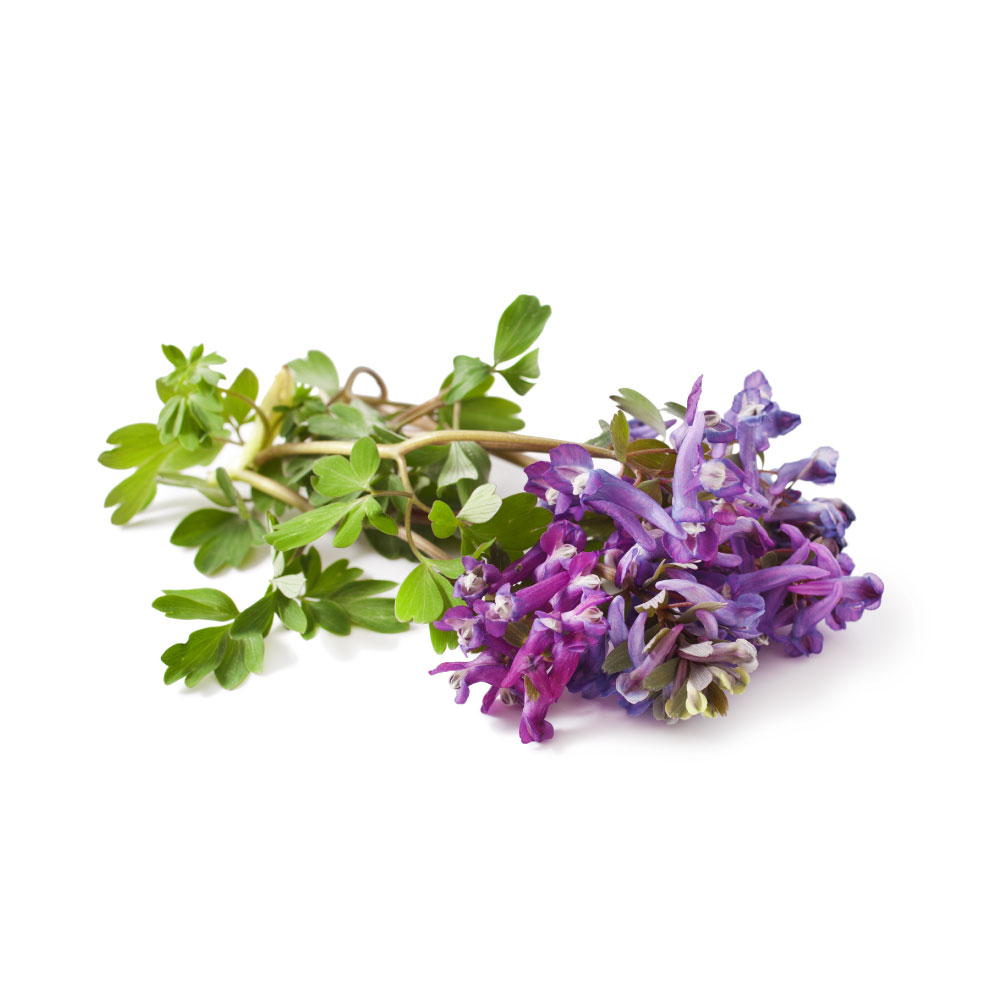
Dehydrocorybulbine (DHCB) is an isoquinoline alkaloid of the quaternary protoberberine group, found in the tuber of corydalis (Corydalis yanhusuo), the Chinese medicinal plant long used for pain. It is the oxidised (dehydro) relative of corybulbine and a close chemical sibling of dehydrocorydaline and palmatine.
DHCB is notable for one reason above all others: a 2014 study in Current Biology identified it as the analgesic principle of corydalis — the single molecule that best accounts for the plant’s traditional pain-relieving reputation. Unusually for an analgesic, it works not through opioid receptors but as a dopamine D2-receptor antagonist, and in mice it relieved acute, inflammatory and neuropathic pain without producing the tolerance that opioids develop 1Reference 1A novel analgesic isolated from a traditional Chinese medicineView study →.
The honest evidence posture is important. DHCB’s literature is thin and entirely preclinical — the flagship paper plus a small handful of rodent mechanism studies. There are no human trials, essentially no isolate pharmacokinetics, and no isolated-compound toxicology. What follows describes a promising animal-stage molecule, not an established medicine.
The Corydalis Analgesic Discovery
The load-bearing fact is a single, carefully done study, so it earns its own section.
Corydalis has been used in Chinese medicine for pain for centuries, but the plant contains dozens of alkaloids and it was never clear which — if any — carried the effect. In 2014, a team led by Olivier Civelli at the University of California, Irvine, working with the Chinese Academy of Sciences, screened the plant’s alkaloids across standardised pain models and converged on dehydrocorybulbine 1Reference 1A novel analgesic isolated from a traditional Chinese medicineView study →.
Three findings made the paper significant:
- It is a dopamine-receptor antagonist, not an opioid. DHCB acts principally as an antagonist at the dopamine D2 receptor at low doses (with weaker D1 activity at higher doses) — a mechanism outside the opioid system entirely 1Reference 1A novel analgesic isolated from a traditional Chinese medicineView study →.
- It worked across all three pain types. DHCB was antinociceptive in thermally induced acute pain, in inflammatory pain (the formalin assay), and — most notably — in injury-induced neuropathic pain (the spinal-nerve-ligation model), a category where opioids are characteristically weak 1Reference 1A novel analgesic isolated from a traditional Chinese medicineView study →.
- It did not cause tolerance. Repeated dosing over seven consecutive days did not blunt the effect, in contrast to the antinociceptive tolerance that develops rapidly with morphine 1Reference 1A novel analgesic isolated from a traditional Chinese medicineView study →.
The appeal of that combination — activity in neuropathic pain plus freedom from opioid-type tolerance — is what drew attention to DHCB and to corydalis more broadly. The essential caveat is equally clear: this was mouse work on the isolated molecule, and it has not advanced to human testing.
What It's Used For
Beyond the flagship analgesia work, the DHCB literature is a small set of rodent mechanism studies. The evidence divides cleanly into the dopamine/pain story and a newer thread of neuroinflammation/microglial work — all preclinical, almost all on the isolated molecule.
Support is an experimental score — weighted by study type (human > animal > in vitro) and volume, tempered for isolate-vs-plant match. A beta, not a validated metric. DHCB scores modestly across the board: the analgesia work is well-designed but rodent-only, and the rest is single studies.
The marquee application and the reason DHCB is known at all. In the 2014 study the isolated molecule was antinociceptive across thermal acute, formalin inflammatory and spinal-nerve-ligation neuropathic pain in mice, acting as a dopamine D2-receptor antagonist and — unlike morphine — producing no tolerance on repeated dosing 1Reference 1A novel analgesic isolated from a traditional Chinese medicineView study →.
A separate rat study reinforced the neuropathic signal: after spinal-cord contusion injury, tail-vein DHCB relieved pain behaviours without affecting motor function, by downregulating the spinal P2X4 receptor and lowering IL-1β, IL-18 and MMP-9 and ATP-evoked calcium responses; blocking either P2X or dopamine D2 receptors abolished the benefit, tying the two mechanisms together 2Reference 2AnimalRole of dehydrocorybulbine in neuropathic pain after spinal cord injury mediated by P2X4 receptor — in vivo rat studyView study →.
Gap: every result is rodent and (bar the whole-extract corroboration below) on the isolated molecule — there are no human analgesic trials of DHCB, and no isolate pharmacokinetics to judge whether an oral human dose could reach the concentrations used 1,
A newer and much thinner thread. In a 2026 mouse study of sevoflurane-induced postoperative cognitive dysfunction, DHCB dose-dependently shifted hippocampal microglia from the pro-inflammatory M1 to the anti-inflammatory M2 phenotype and eased cognitive impairment, by inhibiting Lyn tyrosine kinase and thereby suppressing p38 MAPK signalling; reactivating Lyn reversed the benefit 3Reference 3AnimalDehydrocorybulbine blocks the Lyn-mediated MAPK pathway to promote anti-inflammatory polarization of microglia in mice after sevoflurane anesthesiaView study →.
The dopamine link is consistent with DHCB’s core pharmacology, and microglial dopamine-receptor signalling is an active area, but this is a single study.
Gap: one mouse study, a specific surgical/anaesthesia model, and a mechanism (Lyn/MAPK) not yet independently replicated for DHCB — treat as an early lead, not an established effect 3Reference 3AnimalDehydrocorybulbine blocks the Lyn-mediated MAPK pathway to promote anti-inflammatory polarization of microglia in mice after sevoflurane anesthesiaView study →.
Mechanisms
| Target / pathway | Effect | Relevant to |
|---|---|---|
| Dopamine D2 receptor | antagonism (primary, at low doses) → central analgesia without opioid-type tolerance | analgesic (the flagship mechanism) |
| Dopamine D1 receptor | weaker antagonism at higher doses | broader dopaminergic profile |
| Spinal P2X4 receptor (microglial ATP-gated channel) | downregulation → ↓ IL-1β / IL-18 / MMP-9, ↓ ATP-evoked Ca²⁺ | neuropathic pain after spinal-cord injury |
| Lyn tyrosine kinase → p38 MAPK (microglia) | inhibition → microglial M1→M2 anti-inflammatory polarization | neuroinflammation / cognitive protection |
| Opioid receptors | not the mechanism — analgesia persists without opioid engagement and without cross-tolerance | why the effect is tolerance-free |
The load-bearing point is the first and last rows together: DHCB is a dopaminergic analgesic, and that is exactly why it avoids the opioid-type tolerance that limits conventional strong painkillers 1Reference 1A novel analgesic isolated from a traditional Chinese medicineView study →.
Pharmacokinetics
Essentially unstudied for DHCB as an isolate. No human oral bioavailability figure, plasma half-life or metabolite map has been established. Two structural inferences are worth stating and no more: as a quaternary protoberberine cation (like berberine and palmatine), DHCB would be expected to be poorly absorbed orally and largely gut-confined, which sits awkwardly with the central, D2-mediated analgesia reported after systemic rodent dosing — a tension the flagship work did not resolve at the level of measured brain exposure 1Reference 1A novel analgesic isolated from a traditional Chinese medicineView study →. Until isolate pharmacokinetics exist, the gap between in-vivo rodent efficacy and expected poor oral absorption is the single most important unknown for translating DHCB to people.
Clinical Trials
None. No registered or published human clinical trials of dehydrocorybulbine as an isolated agent were identified. The nearest human-relevant work is on the whole C. yanhusuo extract, not the isolate.
| Completed | Planned | Terminated | Preclinical |
|---|---|---|---|
| — | — | — | Limited(isolate rodent analgesia + mechanism) |
Last checked: July 2026.
Isolate vs. Plant Studies
DHCB’s evidence is overwhelmingly the isolated molecule in rodents — the 2014 pain-model screen 1Reference 1A novel analgesic isolated from a traditional Chinese medicineView study → and the spinal-cord-injury and microglial studies 2,
Prevalence in Nature
Dehydrocorybulbine is reported from the tuber (rhizome) of Corydalis yanhusuo, the pain-herb of Chinese medicine, where it occurs as one of many isoquinoline alkaloids 4,
Discovery & Synthesis
Dehydrocorybulbine was first reported as one of the constituent alkaloids isolated from Corydalis yanhusuo 5Reference 5Lu Z, Sun W, Duan X, Yang Z, Liu Y, Tu P. (2012). [Chemical constituents from Corydalis yanhusuo]. Zhongguo Zhong Yao Za Zhi (China Journal of Chinese Materia Medica), 37(2), 235–237. https://pubmed.ncbi.nlm.nih.gov/22737858/View study →, but it was an obscure minor alkaloid until the 2014 Current Biology study by Zhang, Wang, Civelli and colleagues put a name to the plant’s analgesic activity — the work that established DHCB’s significance 1Reference 1A novel analgesic isolated from a traditional Chinese medicineView study →. For that study the compound was isolated, purified and also chemically synthesised to confirm the activity belonged to DHCB itself rather than a co-purifying impurity 1Reference 1A novel analgesic isolated from a traditional Chinese medicineView study →. There is no commercial manufacture of isolated DHCB; it is prepared in small quantities for research, by extraction from the tuber or by synthesis. As a quaternary protoberberine it is structurally the oxidised (dehydro) form of corybulbine, and it sits in the same aromatic-cation family as dehydrocorydaline and palmatine.
Patents: not yet researched.
Toxicity & Safety
DHCB’s safety is essentially unstudied as an isolated compound, and that absence — not any evidence of safety — is the honest headline. Human dietary exposure is small and indirect (one minor alkaloid within a corydalis preparation), which is reassuring at the level of ordinary herbal use. But the molecule’s own pharmacology carries a plausible flag: it is a dopamine D2-receptor antagonist, and sustained D2 blockade is the mechanism behind the sedative, movement (extrapyramidal) and prolactin effects of dopamine-antagonist drugs — so pharmacological doses would not be expected to be inert 1Reference 1A novel analgesic isolated from a traditional Chinese medicineView study →. No isolated-compound toxicology, carcinogenicity or reproductive data were located. Note also that the whole corydalis herb carries a moderate flag driven mainly by tetrahydropalmatine (dose-related hepatotoxicity, sedation, hypotension/bradycardia) — those are other alkaloids’ liabilities and should not be attributed to DHCB, but they are the reason the tuber itself warrants caution.
- Minor, indirect dietary exposure. DHCB is consumed only as a trace corydalis alkaloid, not as a stand-alone supplement.
- Dopamine D2 antagonist. Sustained D2 blockade underlies the sedative/movement/prolactin effects of dopamine-antagonist drugs; pharmacological doses would not be expected to be inert 1Reference 1A novel analgesic isolated from a traditional Chinese medicineView study →.
- Safety essentially unstudied. No human data, no isolated-compound toxicology, and no interaction or pregnancy assessment for DHCB specifically — treat silence as unknown, not safe.
- Do not borrow the herb’s safety profile — or its promise. Corydalis’s hepatotoxicity belongs to other alkaloids; equally, DHCB’s tolerance-free analgesia is a mouse finding, not a human result.
Note on scope: drug-interaction and pregnancy/lactation risk were not assessed for DHCB here — those decisions belong to the whole-herb corydalis monograph, where intake is actually decided and where the plant’s better-characterised alkaloids drive the verdict.
Dosage
There is no established or studied human dose for dehydrocorybulbine. It has never been used as a stand-alone medicine. Every figure in the pharmacology sections above is a rodent research dose (injected or oral, on a mg/kg basis) used to demonstrate a mechanism, not a dose given to people 1,
References
- Zhang Y, Wang C, Wang L, Parks GS, Zhang X, Guo Z, et al. (2014). A novel analgesic isolated from a traditional Chinese medicine. Current Biology, 24(2), 117–123. https://pubmed.ncbi.nlm.nih.gov/24388848/
- Wang Z, Mei W, Wang Q, Guo R, Liu P, Wang Y, Zhang Z, Wang L. (2019). Role of dehydrocorybulbine in neuropathic pain after spinal cord injury mediated by P2X4 receptor — in vivo rat study. Molecules and Cells, 42(2), 143–150. https://pubmed.ncbi.nlm.nih.gov/30622226/
- Zhang B, Tian W. (2026). Dehydrocorybulbine blocks the Lyn-mediated MAPK pathway to promote anti-inflammatory polarization of microglia in mice after sevoflurane anesthesia. Brain Research, 1874, 150163. https://pubmed.ncbi.nlm.nih.gov/41529779/
- Li Q, Guan H, Wang X, He Y, Sun H, Tan W, Luo X, Su M, Shi Y. (2017). Fingerprint-efficacy study of the quaternary alkaloids in Corydalis yanhusuo. Journal of Ethnopharmacology, 207, 108–117. https://pubmed.ncbi.nlm.nih.gov/28647508/
- Lu Z, Sun W, Duan X, Yang Z, Liu Y, Tu P. (2012). [Chemical constituents from Corydalis yanhusuo]. Zhongguo Zhong Yao Za Zhi (China Journal of Chinese Materia Medica), 37(2), 235–237. https://pubmed.ncbi.nlm.nih.gov/22737858/
- Wang L, Zhang Y, Wang Z, Gong N, Kweon TD, Vo B, Wang C, et al. (2016). The antinociceptive properties of the Corydalis yanhusuo extract. PLoS One, 11(9), e0162875. https://pubmed.ncbi.nlm.nih.gov/27622550/



