
Compound Monograph
Dehydrocorydaline
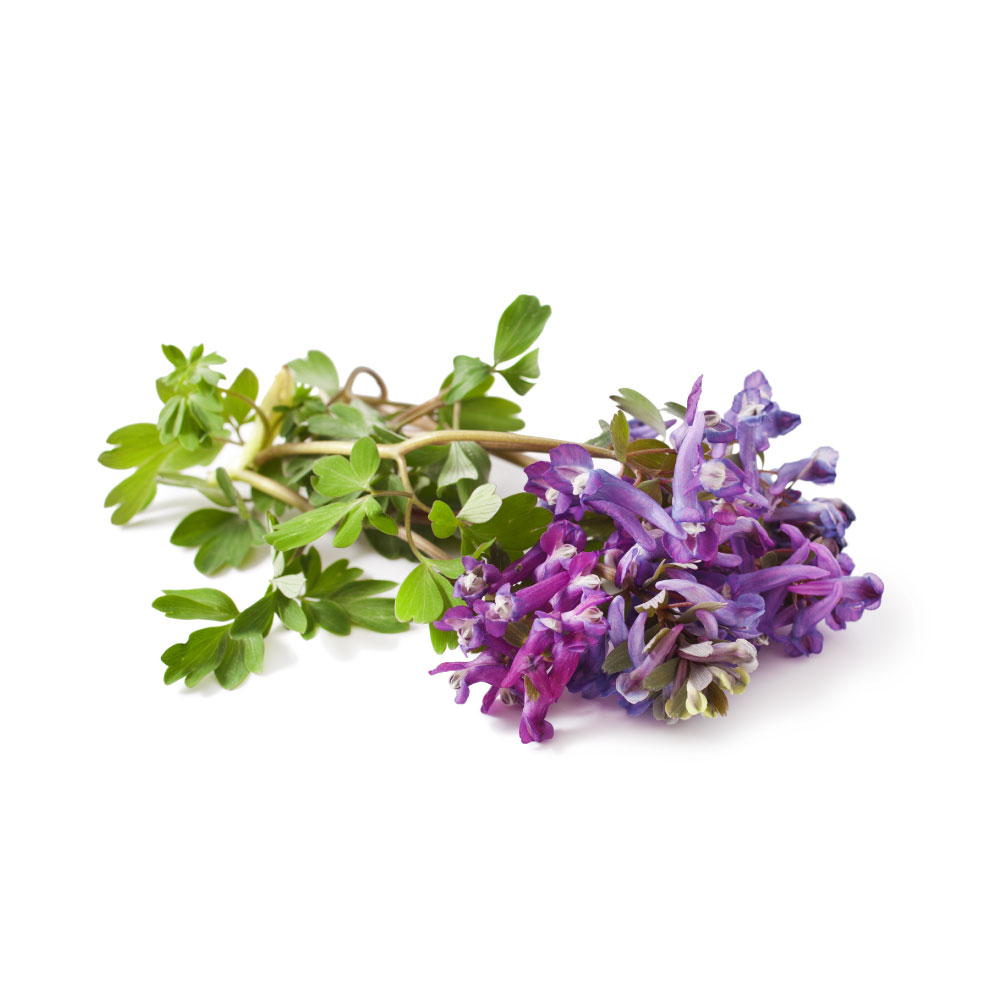
Dehydrocorydaline (DHC) is a quaternary protoberberine alkaloid from corydalis (Corydalis yanhusuo) — the fully aromatised, berberine-like counterpart of corydaline. It carries the deepest preclinical case among corydalis alkaloids for anti-inflammatory and antinociceptive activity, with additional cardioprotective and anti-cancer signals, but no human trials.

Sources · 2
Where Does It Come From?
Dehydrocorydaline is a naturally occurring isoquinoline alkaloid (quaternary protoberberine group), found in Corydalis and 1 other source. It is well tolerated orally (low toxicity).
Concentration
Content by Source
Concentrations not reported. No percent-dry-weight or mg/g figures have been published for this compound in its source plants.
Dehydrocorydaline at a Glance
Dehydrocorydaline (DHC) is a quaternary protoberberine alkaloid from the tuber of corydalis (Corydalis yanhusuo), the Chinese medicinal herb best known as a natural analgesic. Chemically it is the fully aromatised, permanently charged counterpart of corydaline — a flat, berberine-like cation rather than the folded, CNS-type amine of the saturated alkaloids.
Among corydalis’s many alkaloids, DHC has one of the deepest preclinical files. It is reported to account for the majority of the rhizome’s anti-inflammatory effect in cultured macrophages 1Reference 1Dehydrocorydaline accounts the majority of anti-inflammatory property of Corydalis Rhizoma in cultured macrophageView study →, and it is one of the alkaloids driving corydalis’s antinociceptive (pain-relieving) reputation, acting through opioid receptors, voltage-gated sodium channels and a shift in spinal microglia 2,
The load-bearing caveat is that all of this is preclinical — cell and rodent studies of the isolated molecule, with no human trials — and DHC shares the protoberberine family’s defining weakness: as a quaternary cation it is poorly absorbed by mouth 13Reference 13AnimalLC-MS/MS determination and pharmacokinetic study of dehydrocorydaline in rat plasma after oral administration of dehydrocorydaline and Corydalis yanhusuo extractView study →, which tempers how much the in-vitro potency should be read across to a person taking the herb.
Dehydrocorydaline vs. Corydaline
The single most useful thing to understand about this molecule is what separates it from its saturated namesake, corydaline — because the difference is the difference between two whole classes of corydalis alkaloid.
Corydaline is a tetrahydroprotoberberine (THPB). Its central ring system is saturated and non-planar, and it carries a basic, protonatable tertiary nitrogen — the same folded, lipophilic, CNS-penetrant shape as the herb’s flagship tetrahydropalmatine (l-THP). This tertiary-amine architecture is what lets the THPB alkaloids reach the brain and engage dopamine receptors.
Dehydrocorydaline is what corydaline becomes when that ring is oxidised and aromatised. Removing the extra hydrogens flattens the scaffold into a fully conjugated, planar ring system and converts the nitrogen into a permanently charged quaternary ammonium cation. The molecule is no longer a THPB at all — it is a protoberberine, in the same structural class as berberine, palmatine and coptisine. In fact DHC is essentially 13-methylpalmatine: palmatine’s 2,3,9,10-tetramethoxy protoberberine cation bearing one extra methyl group at C-13.
That oxidation flips the pharmacology’s centre of gravity:
- Corydaline (THPB) — a lipophilic, brain-penetrant, dopamine-active amine; a CNS-type alkaloid.
- Dehydrocorydaline (protoberberine) — a flat, water-loving, poorly-absorbed cation whose reported activities (macrophage anti-inflammation, opioid/ion-channel antinociception, NF-κB suppression, poor oral bioavailability) read like the berberine-family playbook, not the THPB one.
This is why DHC belongs on the compound map next to berberine and palmatine rather than next to l-THP, and why its standout roles in corydalis are as an anti-inflammatory and antinociceptive marker rather than a sedative — the very roles the sections below examine.
What It's Used For
DHC’s evidence base is entirely preclinical, but it is unusually multi-target for a single plant alkaloid, and it splits cleanly by application. The recurring discipline is the same one that applies to its cousins: nearly every result is the isolated molecule at a defined injected or oral dose, so it reports what DHC can do in a dish or a mouse, not what the tuber does in a person.
Support is an experimental score — weighted by study type (human > animal > in vitro) and volume. A beta, not a validated metric. Every row here is preclinical isolate data with no human trials, so scores stay modest by design; read the per-row basis.
DHC is one of the corydalis alkaloids behind the herb’s analgesic name, and its mechanism is unusually well mapped. In mouse inflammatory pain, its central antinociception was reversed by naloxone, implicating opioid receptors, and it lowered spinal TNF-α, IL-1β and IL-6 2Reference 2AnimalAntinociceptive effects of dehydrocorydaline in mouse models of inflammatory pain involve the opioid receptor and inflammatory cytokinesView study →.
Alongside corydaline, protopine and l-THP, DHC inhibits the Nav1.7 voltage-gated sodium channel, a validated analgesic target 3Reference 3Analgesic effect of the main components of Corydalis yanhusuo (yanhusuo) is caused by inhibition of voltage gated sodium channelsView study →.
In bone-cancer and chronic-constriction-injury neuropathic pain, intrathecal DHC eased pain by shifting spinal microglia from the pro-inflammatory M1 toward the anti-inflammatory M2 phenotype and quieting neuroinflammation 4,
A 2025 review compiles this as a coherent, if entirely preclinical, analgesic case 16Reference 16ReviewDehydrocorydaline can be a suitable candidate for analgesic purposes: a review on the current preclinical evidenceView study →.
Gap: all rodent, all the isolated alkaloid, across acute/inflammatory/neuropathic models — there are no human analgesic trials of DHC, and its poor oral absorption complicates translating injected-dose findings to the oral herb 13Reference 13AnimalLC-MS/MS determination and pharmacokinetic study of dehydrocorydaline in rat plasma after oral administration of dehydrocorydaline and Corydalis yanhusuo extractView study →.
The application with the strongest isolate-explains-plant evidence. In LPS-stimulated cultured macrophages, DHC accounted for the majority of the anti-inflammatory property of the whole corydalis rhizome, suppressing pro-inflammatory cytokine output and blocking NF-κB activation 1Reference 1Dehydrocorydaline accounts the majority of anti-inflammatory property of Corydalis Rhizoma in cultured macrophageView study →.
This anti-inflammatory action threads through the pain work above (the spinal-cytokine and microglial findings) 2,
Gap: the macrophage result is a whole-cell in-vitro assay; the in-vivo anti-inflammatory readouts come bundled inside pain and cardiac models rather than dedicated inflammation trials, and no human data exist 1Reference 1Dehydrocorydaline accounts the majority of anti-inflammatory property of Corydalis Rhizoma in cultured macrophageView study →.
DHC has long been described in the literature as a cardioprotective alkaloid, and two rodent models give the label preclinical substance. In myocardial ischaemia-reperfusion injury, DHC reduced infarct size and preserved left-ventricular function, attenuating apoptosis and oxidative stress via the FoxO signalling pathway (a network-pharmacology-guided, experimentally validated study) 11Reference 11Dehydrocorydaline attenuates myocardial ischemia-reperfusion injury via the FoxO signalling pathway: a multimodal study based on network pharmacology, molecular docking, and experimental studyView study →.
In sepsis-induced myocardial injury, DHC improved survival and reduced cardiomyocyte apoptosis by modulating the TRAF6/NF-κB pathway 12Reference 12Dehydrocorydaline protects against sepsis-induced myocardial injury through modulating the TRAF6/NF-κB pathwayView study →.
Gap: both are rodent/cell models (ischaemia-reperfusion, LPS/E. coli sepsis), one leaning heavily on network-pharmacology prediction; there is no human cardiovascular evidence for the isolate 11,
An early, narrow signal confined to cell culture. DHC inhibited proliferation of MCF-7 breast-cancer cells by inducing caspase-dependent apoptosis, shifting the Bax/Bcl-2 balance 8Reference 8Dehydrocorydaline inhibits breast cancer cells proliferation by inducing apoptosis in MCF-7 cellsView study →, and separately suppressed viability, proliferation and migration while promoting apoptosis in the more aggressive MDA-MB-231 line 9Reference 9Dehydrocorydaline inhibits the tumorigenesis of breast cancer MDA-MB-231 cellsView study →.
Gap: in-vitro cell lines only — no animal tumour models and no clinical data — and the active concentrations must be read against DHC’s poor absorption before any therapeutic inference 8,
In a chronic-unpredictable-mild-stress mouse model, DHC produced antidepressant-like behavioural effects, apparently by inhibiting uptake-2 monoamine transporters (the OCT/PMAT low-affinity, high-capacity system) and thereby raising cortical monoamine tone 6Reference 6AnimalDehydrocorydaline induced antidepressant-like effect in a chronic unpredictable mild stress mouse model via inhibiting uptake-2 monoamine transportersView study →. This is a distinct mechanism from the classical reuptake transporters targeted by conventional antidepressants.
Gap: a single rodent behavioural model plus a mechanistic assay; no replication and no human data 6Reference 6AnimalDehydrocorydaline induced antidepressant-like effect in a chronic unpredictable mild stress mouse model via inhibiting uptake-2 monoamine transportersView study →.
Corydalis extract showed gastroprotective activity in Helicobacter pylori infection, and DHC was identified as a bioactive component, with direct anti-H. pylori activity at an MIC of 12.5 μg/mL 10Reference 10Gastroprotective action of the extract of Corydalis yanhusuo in Helicobacter pylori infection and its bioactive component, dehydrocorydalineView study →. This links the herb’s traditional use for abdominal pain to a specific molecule.
Gap: in-vitro antibacterial potency plus a mouse gastroprotection model; the MIC is modest and there is no human confirmation 10Reference 10Gastroprotective action of the extract of Corydalis yanhusuo in Helicobacter pylori infection and its bioactive component, dehydrocorydalineView study →.
Mechanisms
| Target / pathway | Effect | Relevant to |
|---|---|---|
| Opioid receptors (naloxone-reversible) | central antinociception; ↓ spinal TNF-α/IL-1β/IL-6 | analgesic (inflammatory pain) |
| Nav1.7 voltage-gated Na⁺ channel | inhibits peak current; alters activation/inactivation | analgesic (shared corydalis mechanism) |
| Spinal microglia M1 → M2 polarisation | ↓ neuroinflammation | analgesic (bone-cancer / neuropathic) |
| NF-κB (macrophage) | ↓ pro-inflammatory cytokine release | anti-inflammatory (dominant rhizome effect) |
| TRAF6 / NF-κB (cardiomyocyte) | ↓ apoptosis & inflammation | cardioprotective (sepsis) |
| FoxO1 / MDM2 signalling | ↓ apoptosis & oxidative stress | cardioprotective (ischaemia-reperfusion) |
| Uptake-2 monoamine transporters (OCT/PMAT) | inhibition → ↑ cortical monoamines | antidepressant-like |
| Presynaptic Ca²⁺ channels / MAPK–ERK | ↓ glutamate release from cortical terminals | neuroprotection / excitotoxicity |
| Bax/Bcl-2, caspases | pro-apoptotic in breast-cancer cells | anticancer (in vitro) |
| H. pylori (MIC 12.5 μg/mL) | direct antibacterial | gastroprotective |
The unifying thread is suppression of inflammatory signalling (NF-κB in macrophages, spinal microglia and cardiomyocytes), layered on top of a separate ion-channel/opioid analgesic mechanism and a distinct presynaptic glutamate-release brake 7Reference 7AnimalInhibition of glutamate release from rat cortical nerve terminals by dehydrocorydaline, an alkaloid from Corydalis yanhusuoView study → — several downstream effects from a small number of upstream actions.
Pharmacokinetics
DHC’s pharmacokinetics are the crux of the reality check. As a permanently charged quaternary protoberberine cation, it behaves like berberine and palmatine: poorly absorbed by mouth and low in oral bioavailability. A validated LC-MS/MS study tracked DHC in rat plasma after oral dosing of pure DHC versus a corydalis extract, and found DHC from the extract was absorbed faster and eliminated more slowly than the pure compound — attributed to co-occurring P-glycoprotein (P-gp) inhibitors and other alkaloids competing for P-gp transport, CYP450 metabolism and plasma-protein binding 13Reference 13AnimalLC-MS/MS determination and pharmacokinetic study of dehydrocorydaline in rat plasma after oral administration of dehydrocorydaline and Corydalis yanhusuo extractView study →. Metabolite mapping in rat plasma and bile identified 18 metabolites via O-demethylation, hydroxylation, glucuronidation and sulfation, with biliary excretion dominant 14Reference 14AnimalIdentification of metabolites of the cardioprotective alkaloid dehydrocorydaline in rat plasma and bile by liquid chromatography coupled with triple quadrupole linear ion trap mass spectrometryView study →. Two consequences follow: (1) the herb matrix meaningfully changes DHC’s exposure, so isolate PK understates what the tuber delivers; and (2) in-vitro concentrations that kill cancer cells or bacteria are unlikely to be reached in plasma after oral herb, which is why the isolate potency must not be over-read.
Clinical Trials
There are no clinical trials of isolated dehydrocorydaline. The entire evidence base is in-vitro and rodent work on the pure alkaloid, with human exposure occurring only indirectly through corydalis preparations, which are studied (sparingly) as whole extracts standardised to total alkaloids rather than to DHC.
| Completed | Planned | Terminated | Preclinical |
|---|---|---|---|
| — | — | — | Analgesic, anti-inflammatory, cardioprotective, anticancer, antidepressant, anti-H. pylori (all cell/rodent) |
Last checked: July 2026.
Isolate vs. Plant Studies
DHC sits at an unusual point on the isolate-vs-plant axis. Almost all of its evidence is the purified molecule — injected or oral DHC at defined doses in cells and rodents 2,
Prevalence in Nature
Dehydrocorydaline is a characteristic quaternary protoberberine alkaloid of corydalis (Corydalis yanhusuo, Papaveraceae/Fumariaceae) tuber, where it is prominent enough to serve as an HPLC quality marker in pharmacopoeial-style fingerprinting of the herb 15Reference 15Optimization of the extraction and purification of Corydalis yanhusuo W.TView study →. It co-occurs with the herb’s other protoberberines — corydaline, palmatine, coptisine — and with the tetrahydroprotoberberine and aporphine alkaloids that make up the rest of the tuber’s complex alkaloid profile.
Reported DHC content varies widely with plant source, harvest, and especially processing and what is measured: an enriched/purified corydalis product ran about 13% DHC as one of eight quality markers 15Reference 15Optimization of the extraction and purification of Corydalis yanhusuo W.TView study →, whereas figures for raw rhizome are lower and inconsistent between analyses. The molecule is also reported from other Corydalis species. A precise, well-replicated raw-rhizome percentage is not established — that hole is logged in this compound’s gaps tracker rather than guessed at here.
Discovery & Synthesis
Dehydrocorydaline was isolated from the tubers of corydalis (Corydalis yanhusuo / Rhizoma corydalis) as one of the plant’s characteristic quaternary protoberberine alkaloids, and it takes its name from corydaline — DHC is the dehydrogenated (oxidised, aromatised) form of that saturated alkaloid, equivalent to 13-methylpalmatine. It is handled in the lab and commerce chiefly as a salt (for example the nitrate). A dedicated total synthesis is not well documented; the compound is obtained by extraction and chromatographic isolation from corydalis, and preparative supply for research is likewise extraction-based rather than synthetic. Its place in the protoberberine family — the same class as berberine, palmatine, canadine’s oxidised relatives and coptisine — reflects a shared biosynthetic origin in the benzylisoquinoline alkaloid pathway.
Patents: not yet researched.
Toxicity & Safety
DHC carries a low flag, consistent with its protoberberine relatives — but the flag rests on absence of evidence of harm and limited exposure, not on a characterised safety dataset. There is no human toxicology for the isolated molecule, and its risk in practice is blunted by the same poor oral absorption that limits its efficacy: as a quaternary cation, little is absorbed intact 13Reference 13AnimalLC-MS/MS determination and pharmacokinetic study of dehydrocorydaline in rat plasma after oral administration of dehydrocorydaline and Corydalis yanhusuo extractView study →.
Two caveats keep it from being dismissed as inert. First, DHC is pharmacologically active on cardiac-relevant ion channels — the same voltage-gated sodium-channel activity that underlies its analgesia was noted, in the head-to-head corydalis study, to give DHC a less favourable cardiac-risk profile than tetrahydropalmatine 3Reference 3Analgesic effect of the main components of Corydalis yanhusuo (yanhusuo) is caused by inhibition of voltage gated sodium channelsView study → — so its cardioprotective billing should not be read as a blanket cardiac-safety claim. Second, its pharmacokinetics implicate P-glycoprotein and CYP450 13,
- Poorly absorbed quaternary cation. Low oral bioavailability sharply limits systemic exposure from the herb, which also limits systemic toxicity 13Reference 13AnimalLC-MS/MS determination and pharmacokinetic study of dehydrocorydaline in rat plasma after oral administration of dehydrocorydaline and Corydalis yanhusuo extractView study →.
- No human safety data. All toxicity inference is extrapolated from cell/rodent work on the isolate; safety in people is simply uncharacterised.
- Cardiac ion-channel activity. DHC modulates voltage-gated sodium channels and was rated less cardiac-favourable than l-THP among corydalis alkaloids — cardioprotective preclinical data do not equal proven cardiac safety 3Reference 3Analgesic effect of the main components of Corydalis yanhusuo (yanhusuo) is caused by inhibition of voltage gated sodium channelsView study →.
- P-gp / CYP450 interaction potential. Its absorption and metabolism run through P-glycoprotein and cytochrome P450, a theoretical route to herb–drug interactions 13,
14Reference 13AnimalLC-MS/MS determination and pharmacokinetic study of dehydrocorydaline in rat plasma after oral administration of dehydrocorydaline and Corydalis yanhusuo extractView study →Reference 14AnimalIdentification of metabolites of the cardioprotective alkaloid dehydrocorydaline in rat plasma and bile by liquid chromatography coupled with triple quadrupole linear ion trap mass spectrometryView study → .
Pregnancy and lactation are a per-herb / per-supplement decision and are not adjudicated on this molecule page; no isolate-specific human reproductive data exist for dehydrocorydaline, and no verdict is issued here.
Dosage
There is no established or recommended human dose for isolated dehydrocorydaline — it has never been given as a stand-alone drug in a clinical trial. Cited efficacy figures are rodent research doses, typically in the single-digit-to-low-tens of mg/kg by injection or by mouth, and they do not convert to human self-dosing. Human exposure is indirect: DHC is one alkaloid among many in corydalis tuber preparations, which are standardised (when at all) to total alkaloids rather than to DHC, and batch alkaloid content varies widely 15Reference 15Optimization of the extraction and purification of Corydalis yanhusuo W.TView study →. Because DHC is poorly absorbed orally 13Reference 13AnimalLC-MS/MS determination and pharmacokinetic study of dehydrocorydaline in rat plasma after oral administration of dehydrocorydaline and Corydalis yanhusuo extractView study →, the fraction reaching the circulation from a herbal dose is small. These are doses studied in research and are not a personal recommendation.
References
- Kong Y, et al. (2020). Dehydrocorydaline accounts the majority of anti-inflammatory property of Corydalis Rhizoma in cultured macrophage. Evidence-Based Complementary and Alternative Medicine. https://pubmed.ncbi.nlm.nih.gov/33299450/
- Yin ZY, et al. (2016). Antinociceptive effects of dehydrocorydaline in mouse models of inflammatory pain involve the opioid receptor and inflammatory cytokines. Scientific Reports. https://pubmed.ncbi.nlm.nih.gov/27272194/
- Xu Y, et al. (2021). Analgesic effect of the main components of Corydalis yanhusuo (yanhusuo) is caused by inhibition of voltage gated sodium channels. Journal of Ethnopharmacology. https://pubmed.ncbi.nlm.nih.gov/34329712/
- Huo W, et al. (2018). Dehydrocorydaline attenuates bone cancer pain by shifting microglial M1/M2 polarization toward the M2 phenotype. Molecular Pain. https://pubmed.ncbi.nlm.nih.gov/29882480/
- Hou X, et al. (2025). Analgesic effect of dehydrocorydaline on chronic constriction injury-induced neuropathic pain via alleviating neuroinflammation. Chinese Journal of Integrated Traditional and Western Medicine. https://pubmed.ncbi.nlm.nih.gov/39762501/
- Jin GL, et al. (2019). Dehydrocorydaline induced antidepressant-like effect in a chronic unpredictable mild stress mouse model via inhibiting uptake-2 monoamine transporters. European Journal of Pharmacology. https://pubmed.ncbi.nlm.nih.gov/31604070/
- Lin TY, et al. (2022). Inhibition of glutamate release from rat cortical nerve terminals by dehydrocorydaline, an alkaloid from Corydalis yanhusuo. Molecules. https://pubmed.ncbi.nlm.nih.gov/35164225/
- Xu Z, et al. (2012). Dehydrocorydaline inhibits breast cancer cells proliferation by inducing apoptosis in MCF-7 cells. The American Journal of Chinese Medicine. https://pubmed.ncbi.nlm.nih.gov/22298457/
- Huang Y, et al. (2020). Dehydrocorydaline inhibits the tumorigenesis of breast cancer MDA-MB-231 cells. Molecular Medicine Reports. https://pubmed.ncbi.nlm.nih.gov/32377708/
- Wu H, et al. (2023). Gastroprotective action of the extract of Corydalis yanhusuo in Helicobacter pylori infection and its bioactive component, dehydrocorydaline. Journal of Ethnopharmacology. https://pubmed.ncbi.nlm.nih.gov/36681166/
- Li H, et al. (2025). Dehydrocorydaline attenuates myocardial ischemia-reperfusion injury via the FoxO signalling pathway: a multimodal study based on network pharmacology, molecular docking, and experimental study. Journal of Ethnopharmacology. https://pubmed.ncbi.nlm.nih.gov/39222757/
- Li Y, et al. (2021). Dehydrocorydaline protects against sepsis-induced myocardial injury through modulating the TRAF6/NF-κB pathway. Frontiers in Pharmacology. https://pubmed.ncbi.nlm.nih.gov/34489703/
- Li W, et al. (2014). LC-MS/MS determination and pharmacokinetic study of dehydrocorydaline in rat plasma after oral administration of dehydrocorydaline and Corydalis yanhusuo extract. Molecules. https://pubmed.ncbi.nlm.nih.gov/25314597/
- Guan H, et al. (2017). Identification of metabolites of the cardioprotective alkaloid dehydrocorydaline in rat plasma and bile by liquid chromatography coupled with triple quadrupole linear ion trap mass spectrometry. Molecules. https://pubmed.ncbi.nlm.nih.gov/28994724/
- Zhang Y, et al. (2020). Optimization of the extraction and purification of Corydalis yanhusuo W.T. Wang based on the Q-marker uniform design method. BMC Chemistry. https://pubmed.ncbi.nlm.nih.gov/32055800/
- Dehghani M, et al. (2025). Dehydrocorydaline can be a suitable candidate for analgesic purposes: a review on the current preclinical evidence. Molecular Pain. https://pubmed.ncbi.nlm.nih.gov/40913244/



