
Compound Monograph
Corydaline
Corydaline is a tetrahydroprotoberberine (THPB) alkaloid of the corydalis tuber (Corydalis yanhusuo) — a structural sibling of tetrahydropalmatine and canadine whose most distinctive, directly-tested activity is gastrointestinal: it accelerates gastric emptying and is a marker compound of the botanical prokinetic DA-9701.

Sources · 2
Where Does It Come From?
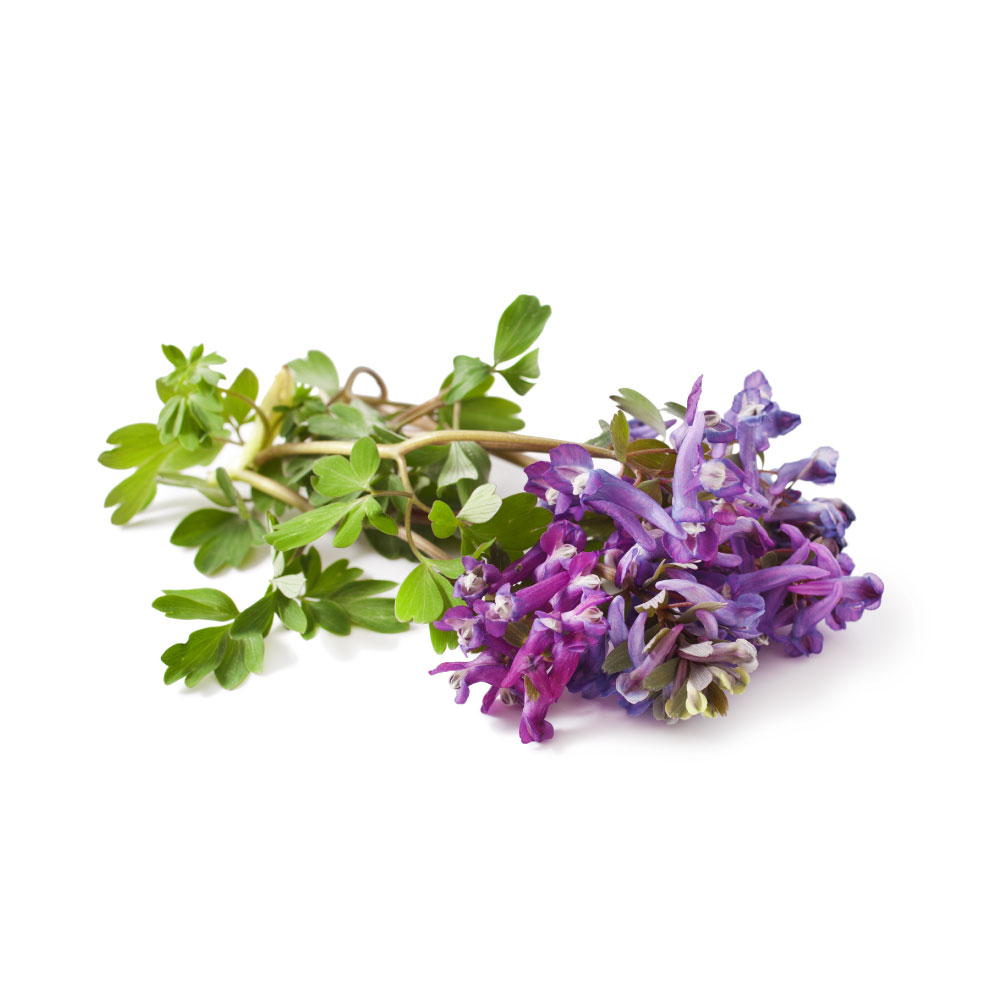
Corydaline is a naturally occurring isoquinoline alkaloid (tetrahydroprotoberberine group), found in Corydalis and Corydalis. It is well tolerated orally (low toxicity).
Concentration
Content by Source
Concentrations not reported. No percent-dry-weight or mg/g figures have been published for this compound in its source plants.
Corydaline at a Glance
Corydaline is an isoquinoline alkaloid of the tetrahydroprotoberberine (THPB) class — the same fully-reduced benzylisoquinoline scaffold as tetrahydropalmatine (l-THP) and canadine, and a saturated-ring relative of berberine (of which palmatine is the closely-related quaternary protoberberine). It is one of the characteristic alkaloids of the corydalis tuber (Corydalis yanhusuo, yan hu suo), the herb long used in Chinese medicine for pain and digestive complaints 2Reference 2Analgesic effect of the main components of Corydalis yanhusuo (yanhusuo) is caused by inhibition of voltage gated sodium channels — isolated-alkaloid electrophysiology + animal analgesiaView study →.
Within that alkaloid-rich tuber, corydaline occupies a distinctive niche. Its THPB cousins are defined by central nervous system / dopamine-receptor activity, but corydaline’s best-documented and most directly-tested effect is gastrointestinal — it accelerates gastric emptying and is the analytical marker compound of the botanical prokinetic drug DA-9701 (Motilitone) 1,
The honest evidence posture: corydaline itself is data-thin. There are no trials of the isolated molecule in people. What exists is a modest preclinical literature — animal gastric-motility work, cell/tissue mechanism studies, and rat pharmacokinetics — plus human trials of the formula it marks, not of corydaline as such 1,
Corydaline & Gastrointestinal Motility
This is the section that only corydaline needs. Among the corydalis tetrahydroprotoberberines, corydaline is the one whose signature activity points at the gut rather than the brain.
The prokinetic finding. In rats, oral corydaline significantly accelerated gastric emptying in normal animals and restored delayed gastric emptying toward normal, while also inducing gastric relaxation and improving gastric accommodation (the fundus’s ability to relax and hold a meal) — the profile of a candidate for functional dyspepsia 1Reference 1AnimalEffects of corydaline from Corydalis tuber on gastric motor function in an animal model — in vivo rat studyView study →. This is why corydaline is a marker constituent of DA-9701 (Motilitone), a prokinetic formulated from corydalis tuber plus Pharbitis (morning-glory) seed that reached human trials for functional dyspepsia in Korea 1,
Its place in the THPB set. Where tetrahydropalmatine and canadine are known chiefly as dopamine-active, CNS-penetrant alkaloids, corydaline is comparatively inactive at the dopamine D1 receptor (binding >10,000 nM — effectively negligible) 5Reference 5Isoquinoline alkaloids isolated from Corydalis yanhusuo and their binding affinities at the dopamine D1 receptor — corydaline negligible (>10,000 nM)View study →. Read the tuber as a division of labour: l-THP and dehydrocorybulbine carry the dopaminergic/analgesic-CNS story, dehydrocorydaline carries much of the anti-inflammatory and anti-Helicobacter pylori story 10Reference 10Gastroprotective action of the extract of Corydalis yanhusuo in Helicobacter pylori infection and its bioactive component, dehydrocorydalineView study →, and corydaline leans toward motility and smooth-muscle / mast-cell effects. It is a THPB sibling that turned its pharmacology toward the gut wall.
The anti-H. pylori caveat. Corydalis tuber extract is genuinely gastroprotective and anti-H. pylori in infection models — but that activity tracks the dehydrocorydaline fraction (MIC ~12.5 µg/mL), a different, dehydrogenated alkaloid, not corydaline itself 10Reference 10Gastroprotective action of the extract of Corydalis yanhusuo in Helicobacter pylori infection and its bioactive component, dehydrocorydalineView study →. Corydaline is present in the same protective extract; it is not the demonstrated antibacterial driver.
What It's Used For
The evidence is preclinical throughout, and it splits cleanly: a direct gastric-motility signal for the isolated molecule, a shared analgesic mechanism, and an anti-allergic / mast-cell action — with the human clinical record belonging to the formula, not the isolate.
Support is an experimental score — a composite weighted by study type (human > animal > in vitro) and volume, tempered for isolate-vs-plant match. It is a beta, not a validated metric. Each application links to its write-up. Corydaline scores low-to-moderate throughout: everything is preclinical, and the strongest human touchpoint is a formula trial, not the isolate.
Corydaline’s marquee, and the only application where the isolated molecule is itself the tested agent in a whole animal. Oral corydaline accelerated gastric emptying in normal rats and improved experimentally delayed emptying to near-normal, while also promoting gastric relaxation and accommodation 1Reference 1AnimalEffects of corydaline from Corydalis tuber on gastric motor function in an animal model — in vivo rat studyView study →.
This prokinetic profile is the basis for corydaline being the marker compound of DA-9701 (Motilitone), a botanical prokinetic combining corydalis tuber with Pharbitis seed, whose oral pharmacokinetics were characterised specifically by tracking corydaline in rats 1,
The mechanism proposed for the plant-drug class involves serotonergic (5-HT₄) and dopaminergic (D₂) motility pathways, though corydaline’s own receptor contribution is not fully isolated here.
Gap: the direct efficacy data are rat gastric-motility models, and the human evidence is for the two-herb DA-9701 formula, not for corydaline dosed alone — corydaline is the marker, not the demonstrated human active 1,
Corydalis tuber’s analgesic reputation is carried by several alkaloids acting on ion channels. When the main corydalis components were tested, corydaline (with tetrahydropalmatine, dehydrocorydaline and protopine) inhibited the peak currents of Nav1.7 — a voltage-gated sodium channel central to pain signalling — and shifted its activation/inactivation, producing analgesic activity 2Reference 2Analgesic effect of the main components of Corydalis yanhusuo (yanhusuo) is caused by inhibition of voltage gated sodium channels — isolated-alkaloid electrophysiology + animal analgesiaView study →.
This is a mechanism distinct from the dopamine-receptor route usually emphasised for l-THP, and it places corydaline among the tuber’s genuine pain-relevant constituents.
Gap: this is isolated-compound electrophysiology and animal analgesia; corydaline is one contributor within a multi-alkaloid extract, and no human analgesia study isolates a corydaline effect 2Reference 2Analgesic effect of the main components of Corydalis yanhusuo (yanhusuo) is caused by inhibition of voltage gated sodium channels — isolated-alkaloid electrophysiology + animal analgesiaView study →.
Corydaline has a recurring mast-cell-suppressing signal. In a food-allergy model, corydalis extract and its purified substances corydaline and tetrahydropalmatine directly inhibited compound-48/80-induced mast-cell activation via the PLC/PKC/STAT3 pathway, reducing degranulation in vitro and allergic responses in vivo 3Reference 3In vitroCorydalis yanhusuo extract and its pharmacological substances alleviate food allergy by inhibiting mast cells activation via PLC/PKC/STAT3 pathway — in vitro + in vivoView study →.
Consistently, corydalis-tuber extract standardised to include corydaline (quantified at 5.71 mg/g) alleviated house-dust-mite atopic dermatitis in mice, lowering plasma histamine and mast-cell infiltration into lesions 4Reference 4In vitroCorydalis tuber extract alleviates atopic dermatitis: transcriptomics-based mechanism prediction and in vitro/in vivo studies — corydaline quantified at 5.71 mg/gView study →.
The classic pharmacology of corydaline as a “mast-cell-dependent smooth-muscle-contraction suppressor” fits the same theme.
Gap: corydaline is directly tested in the food-allergy mechanism work 3Reference 3In vitroCorydalis yanhusuo extract and its pharmacological substances alleviate food allergy by inhibiting mast cells activation via PLC/PKC/STAT3 pathway — in vitro + in vivoView study →, but the atopic-dermatitis outcome is a whole-extract effect in which corydaline is one of ~13 constituents 4Reference 4In vitroCorydalis tuber extract alleviates atopic dermatitis: transcriptomics-based mechanism prediction and in vitro/in vivo studies — corydaline quantified at 5.71 mg/gView study →; no human allergy outcome rests on corydaline specifically.
Mechanisms
| Target / pathway | Effect | Relevant to |
|---|---|---|
| Gastric emptying & fundic accommodation | accelerates emptying, restores delayed emptying, promotes gastric relaxation | GI prokinetic |
| Nav1.7 voltage-gated sodium channels | inhibits peak current; shifts activation/inactivation → antinociception | analgesia |
| Mast-cell activation (PLC/PKC/STAT3) | inhibits degranulation and histamine release | anti-allergic / anti-inflammatory |
| Mast-cell-dependent smooth-muscle contraction | suppression (classic corydaline pharmacology) | GI / vascular smooth muscle |
| Dopamine D1 receptor | negligible binding (>10,000 nM) — unlike its THPB relatives | CNS (a notable absence) |
The load-bearing point is that corydaline’s activity is oriented toward the gut wall and mast cell, not the dopamine receptor that defines l-THP and canadine 5Reference 5Isoquinoline alkaloids isolated from Corydalis yanhusuo and their binding affinities at the dopamine D1 receptor — corydaline negligible (>10,000 nM)View study →. Its analgesia runs through sodium-channel block 2Reference 2Analgesic effect of the main components of Corydalis yanhusuo (yanhusuo) is caused by inhibition of voltage gated sodium channels — isolated-alkaloid electrophysiology + animal analgesiaView study → rather than central dopaminergic antagonism.
Pharmacokinetics
Corydaline’s pharmacokinetics are characterised in rats only. After oral dosing, bioavailability was dose-dependent, roughly 9–21% (rising with dose), and was greater when given within DA-9701 than as the pure compound — co-components appear to reduce hepatic/GI first-pass extraction of corydaline 6Reference 6AnimalPharmacokinetics of chlorogenic acid and corydaline in DA-9701, a new botanical gastroprokinetic agent, in ratsView study →. Its clearance is dominated by hepatic CYP metabolism, and rats show a marked sex difference: females reached far higher corydaline exposure (oral AUC and Cmax several-fold above males), traced to slower metabolism by male-dominant CYP isozymes (CYP3A2, CYP2C11, CYP3A1) 7Reference 7AnimalGender differences in corydaline pharmacokinetics in rats — CYP3A/CYP2C-mediated hepatic metabolismView study →. No human pharmacokinetic data for isolated corydaline were established here; the CYP-mediated metabolism flags a plausible (unquantified) interaction surface.
Clinical Trials
None for isolated corydaline. No registered or published human trial dosed corydaline as a stand-alone agent. The human clinical record belongs to the two-herb formula DA-9701 (Motilitone) — of which corydaline is only the analytical marker — which was non-inferior to itopride for functional dyspepsia in a 464-patient randomised trial 8Reference 8RCTRandomized, controlled, multi-center trial comparing the safety and efficacy of DA-9701 (corydalis tuber + Pharbitis seed) and itopride hydrochloride in patients with functional dyspepsia — corydaline is the formula’s markerView study →.
| Completed | Planned | Terminated | Preclinical |
|---|---|---|---|
| —(formula DA-9701 has FD RCTs; corydaline is a marker, not the tested isolate) 8Reference 8RCTRandomized, controlled, multi-center trial comparing the safety and efficacy of DA-9701 (corydalis tuber + Pharbitis seed) and itopride hydrochloride in patients with functional dyspepsia — corydaline is the formula’s markerView study → | — | — | Prokinetic + analgesic + mast-cell (isolate, animal/in-vitro) |
Last checked: July 2026.
Isolate vs. Plant Studies
Corydaline’s evidence sits in an unusual middle. Its prokinetic and Nav1.7 findings come from studies that purified the alkaloid and tested it directly 1,
Its Role in Plants
Corydaline is a benzylisoquinoline alkaloid built on the tetrahydroprotoberberine skeleton — the fully-reduced, tertiary-amine framework shared by canadine and tetrahydropalmatine, elaborated from the branch-point intermediate (S)-reticuline through the protoberberine pathway. Structurally it carries two extra methyl-bearing stereocentres (at C-13 and C-14, cis-oriented) that distinguish it from the simpler THPBs. In the plant it accumulates in the tuber/rhizome as one of a large family of co-occurring alkaloids (with l-THP, dehydrocorydaline, dehydrocorybulbine, protopine and others), the diversified chemical-defence arsenal typical of Corydalis and the wider Papaveraceae. Its specific ecological function has not been separately characterised here.
Prevalence in Nature
Corydaline occurs essentially only in corydalis, chiefly the tuber of Corydalis yanhusuo (yan hu suo) and related Corydalis species, where it is one of the characteristic tetrahydroprotoberberine alkaloids 2,
Its concentration is highly variable and often low. A survey of 14 commercial C. yanhusuo supplements found corydaline ranging from below quantifiable to ~404 ng/mg, with only about a third of products delivering alkaloid levels comparable to the natural rhizome 9Reference 9Large variability in the alkaloid content of Corydalis yanhusuo dietary supplements — corydaline below quantifiable to ~404 ng/mgView study →. Traditional vinegar-processing of the tuber (used for pain) further alters alkaloid solubility and the recovered profile. A defined corydalis-tuber extract has been standardised to corydaline at ~5.71 mg/g 4Reference 4In vitroCorydalis tuber extract alleviates atopic dermatitis: transcriptomics-based mechanism prediction and in vitro/in vivo studies — corydaline quantified at 5.71 mg/gView study →, but that is a concentrated extract, not raw herb — so raw-material figures should not be read across from it. The practical upshot: “how much corydaline” is a property of the specific batch and preparation, not a fixed number.
Discovery & Synthesis
Corydaline is one of the classic corydalis-tuber alkaloids, isolated from Corydalis in the nineteenth-century wave of isoquinoline-alkaloid chemistry that also yielded its protoberberine and tetrahydroprotoberberine relatives; the exact first-isolation date and chemist are not pinned here. The name derives directly from the genus Corydalis (Greek korydalís, the crested lark, for the flower’s spur). Its structure was later resolved as a tetrahydroprotoberberine bearing the additional C-13/C-14 methyl substitution and cis ring-junction stereochemistry that mark it out within the class. There is no commercial manufacture of isolated corydaline: it is obtained by extraction from corydalis tuber for research and as an analytical reference standard (notably as a marker for standardising the prokinetic formula DA-9701), rather than produced at scale by total synthesis.
Patents: not yet researched (future patent-loop pass).
Toxicity & Safety
Corydaline’s safety is essentially unstudied as an isolated compound, and that absence — not any positive evidence of safety — is the honest headline. Human dietary exposure is small, indirect and highly variable (a minor, batch-dependent alkaloid of corydalis tuber) 9Reference 9Large variability in the alkaloid content of Corydalis yanhusuo dietary supplements — corydaline below quantifiable to ~404 ng/mgView study →, which is reassuring at the level of ordinary herbal use. But no isolated-compound toxicology, genotoxicity, carcinogenicity or reproductive dataset was located, and the molecule is not pharmacologically inert: it engages sodium channels, mast cells and gastric motility 1,
- Small, indirect dietary exposure. Corydaline is consumed only as one alkaloid of corydalis tuber, not as a stand-alone supplement.
- Not inert. Isolated corydaline acts on gastric motility, Nav1.7 sodium channels and mast cells in preclinical models 1,
2, ; pharmacological doses would not be expected to be inactive.3Reference 1AnimalEffects of corydaline from Corydalis tuber on gastric motor function in an animal model — in vivo rat studyView study →Reference 2Analgesic effect of the main components of Corydalis yanhusuo (yanhusuo) is caused by inhibition of voltage gated sodium channels — isolated-alkaloid electrophysiology + animal analgesiaView study →Reference 3In vitroCorydalis yanhusuo extract and its pharmacological substances alleviate food allergy by inhibiting mast cells activation via PLC/PKC/STAT3 pathway — in vitro + in vivoView study → - CYP-metabolised. Hepatic CYP3A/CYP2C-type clearance with marked sex differences in rats flags a possible drug-interaction surface — unassessed in humans 7Reference 7AnimalGender differences in corydaline pharmacokinetics in rats — CYP3A/CYP2C-mediated hepatic metabolismView study →.
- Safety essentially unstudied. No human data and no isolated-compound toxicology, interaction or pregnancy assessment for corydaline specifically — treat silence as unknown, not safe.
Note on scope: drug-interaction and pregnancy/lactation risk were not assessed for corydaline here — those decisions belong to the whole-herb corydalis monograph, where intake is actually decided, and where the tuber’s better-characterised alkaloids (l-THP’s dopaminergic/hepatic cautions) drive the verdict.
Dosage
There is no established or studied human dose for isolated corydaline. It has never been used as a stand-alone medicine. The figures in the pharmacology sections above are research doses in rats and concentrations in cell/tissue assays, not doses given to people. Human exposure occurs only as a constituent of corydalis tuber, or as the marker compound within the DA-9701 (Motilitone) formula — dosed in trials at 30 mg of the formula three times daily (that is a dose of the two-herb product, not of corydaline) 8Reference 8RCTRandomized, controlled, multi-center trial comparing the safety and efficacy of DA-9701 (corydalis tuber + Pharbitis seed) and itopride hydrochloride in patients with functional dyspepsia — corydaline is the formula’s markerView study →. Because corydaline content varies enormously between batches and preparations 9Reference 9Large variability in the alkaloid content of Corydalis yanhusuo dietary supplements — corydaline below quantifiable to ~404 ng/mgView study →, the “dose of corydaline” in any product is whatever trace amount it happens to contain. Any figure here is a research value and is not a personal recommendation.
References
- Lee TH, Son M, Kim SY. (2010). Effects of corydaline from Corydalis tuber on gastric motor function in an animal model — in vivo rat study. Biological & Pharmaceutical Bulletin, 33(6), 958–962. https://pubmed.ncbi.nlm.nih.gov/20522959/
- Xu Y, Sun J, Li W, Zhang S, Yang L, Teng Y, et al. (2021). Analgesic effect of the main components of Corydalis yanhusuo (yanhusuo) is caused by inhibition of voltage gated sodium channels — isolated-alkaloid electrophysiology + animal analgesia. Journal of Ethnopharmacology, 280, 114457. https://pubmed.ncbi.nlm.nih.gov/34329712/
- Zhang et al. (2025). Corydalis yanhusuo extract and its pharmacological substances alleviate food allergy by inhibiting mast cells activation via PLC/PKC/STAT3 pathway — in vitro + in vivo. Journal of Ethnopharmacology. https://pubmed.ncbi.nlm.nih.gov/39251152/
- Jin SE, Seo CS, Jeon WY, Oh YJ, Shin HK, Ha H. (2025). Corydalis tuber extract alleviates atopic dermatitis: transcriptomics-based mechanism prediction and in vitro/in vivo studies — corydaline quantified at 5.71 mg/g. International Journal of Molecular Sciences, 26(3), 1291. https://pubmed.ncbi.nlm.nih.gov/39941059/
- Ma ZZ, Xu W, Jensen NH, Roth BL, Liu-Chen LY, Lee DYW. (2008). Isoquinoline alkaloids isolated from Corydalis yanhusuo and their binding affinities at the dopamine D1 receptor — corydaline negligible (>10,000 nM). Molecules, 13(9), 2303–2312. https://pubmed.ncbi.nlm.nih.gov/18830156/
- Jung JW, Kim JM, Jeong JS, Son M, Lee HS, Lee MG, Kang HE. (2014). Pharmacokinetics of chlorogenic acid and corydaline in DA-9701, a new botanical gastroprokinetic agent, in rats. Xenobiotica, 44(7), 635–643. https://pubmed.ncbi.nlm.nih.gov/24417753/
- Jung JW, Choi MR, Kwon YS, Jeong JS, Son M, Kang HE. (2015). Gender differences in corydaline pharmacokinetics in rats — CYP3A/CYP2C-mediated hepatic metabolism. Xenobiotica, 45(5), 456–463. https://pubmed.ncbi.nlm.nih.gov/25430796/
- Choi MG, et al. (2015). Randomized, controlled, multi-center trial comparing the safety and efficacy of DA-9701 (corydalis tuber + Pharbitis seed) and itopride hydrochloride in patients with functional dyspepsia — corydaline is the formula’s marker. Journal of Neurogastroenterology and Motility, 21(3), 414–422. https://pubmed.ncbi.nlm.nih.gov/26130637/
- Luis PB, Schneider C. (2024). Large variability in the alkaloid content of Corydalis yanhusuo dietary supplements — corydaline below quantifiable to ~404 ng/mg. Frontiers in Pharmacology, 15, 1518750. https://pubmed.ncbi.nlm.nih.gov/39881869/
- Wu H, Sun Q, Dong H, Qiao J, Lin Y, Yu C, Li Y. (2023). Gastroprotective action of the extract of Corydalis yanhusuo in Helicobacter pylori infection and its bioactive component, dehydrocorydaline. Journal of Ethnopharmacology, 307, 116200. https://pubmed.ncbi.nlm.nih.gov/36681166/



