
Compound Monograph
Tetrahydropalmatine
Tetrahydropalmatine (l-THP, rotundine) is the flagship tetrahydroprotoberberine alkaloid of corydalis and Stephania — a brain-penetrant mixed dopamine D1/D2/D3 antagonist with genuine sedative, analgesic and anxiolytic activity, an OTC sedative-analgesic in China, and the rare plant alkaloid with human anti-relapse trial data in heroin and cocaine users.

Sources · 4
Where Does It Come From?
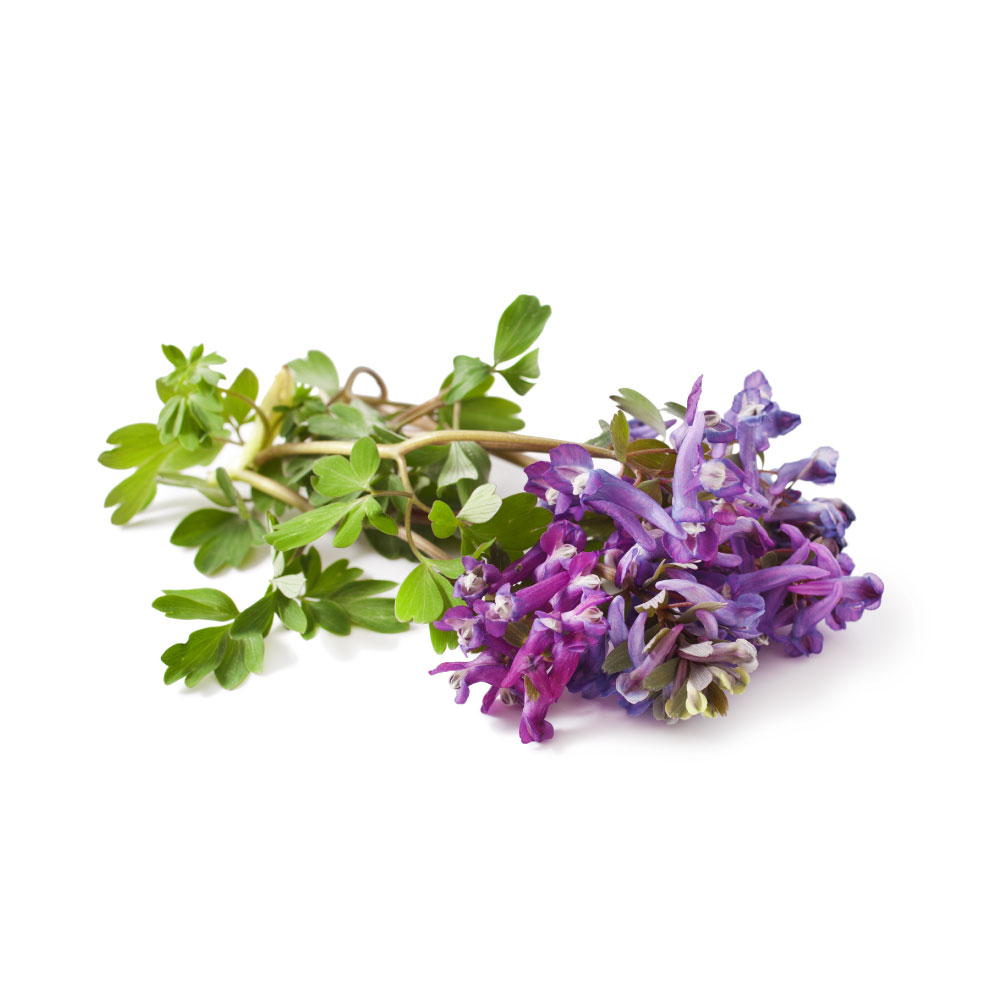
Tetrahydropalmatine is a naturally occurring isoquinoline alkaloid (tetrahydroprotoberberine group), found in Corydalis, Stephania and 2 other sources. It is flagged as moderately toxic.
Concentration
Content by Source
Concentrations not reported. No percent-dry-weight or mg/g figures have been published for this compound in its source plants.
Tetrahydropalmatine at a Glance
Tetrahydropalmatine (THP), best known as its active levo enantiomer l-THP (Chinese drug name rotundine, also gindarin), is an isoquinoline alkaloid of the tetrahydroprotoberberine (THPB) class — the same ring-reduced family as canadine and l-stepholidine. It is the signature alkaloid of corydalis (Corydalis yanhusuo) tuber and of several Stephania species, and the compound that carries most of corydalis’s traditional reputation as a pain- and sleep-herb 2,
What sets THP apart from the flat, quaternary protoberberines it is related to — berberine, palmatine, coptisine, jatrorrhizine — is a single structural fact with large consequences: its central ring is fully reduced, converting a permanently charged, gut-confined cation into a lipophilic tertiary amine that crosses the blood–brain barrier and blocks dopamine receptors 9,
The evidence posture is unusually strong for a plant alkaloid at the human end. l-THP has been a State-approved over-the-counter sedative and analgesic in China for decades, and — rare for a phytochemical — it has been carried into controlled human trials in heroin abstinence, cocaine-use safety and schizophrenia 3,
Tetrahydropalmatine as a Dopamine Antagonist
This is the defining property of the molecule and the reason it does not behave like the protoberberines it is chemically derived from.
The protoberberine alkaloids (berberine, palmatine, coptisine, jatrorrhizine) are quaternary — flat, aromatic, permanently positively charged, poorly absorbed, and dominated by gut and metabolic activity. Tetrahydropalmatine is that skeleton with the central ring reduced (hence tetrahydro): the permanent charge is gone, the molecule is a lipophilic tertiary amine, and it readily enters the brain. Ring reduction is what turns a metabolic gut compound into a central dopamine-receptor antagonist — the trait that unites the whole tetrahydroprotoberberine class and that the parent quaternary alkaloids essentially lack 9,
THP’s receptor profile is not a flat pan-antagonism but a mixed, differentiated one. In the definitive pharmacology, l-THP is a higher-affinity antagonist at D1 receptors, a low-affinity antagonist at D2 receptors, and additionally interacts with D3 receptors 1Reference 1AnimalLevo-tetrahydropalmatine attenuates cocaine self-administration and cocaine-induced reinstatement in rats — animal studyView study →. This D1-leaning, D3-touching profile is precisely what made it interesting for addiction — reward and relapse circuitry runs heavily through D1 and D3 signalling — and it distinguishes THP from classical D2-dominant neuroleptics like haloperidol 1Reference 1AnimalLevo-tetrahydropalmatine attenuates cocaine self-administration and cocaine-induced reinstatement in rats — animal studyView study →. The tetrahydroprotoberberine scaffold as a class also shows measurable sigma-receptor affinity in medicinal-chemistry SAR work 10Reference 10Tetrahydroprotoberberine alkaloids with dopamine and σ receptor affinity — medicinal chemistry / SARView study →.
The practical reading is the same caution that applies to canadine: do not transfer berberine’s metabolic clinical data to THP, and do not read THP’s CNS pharmacology onto berberine. They sit next to each other on a biosynthetic pathway but hit entirely different targets.
The l- vs dl- Enantiomer Distinction
THP is chiral, and the distinction is load-bearing — it decides both potency and which literature you are reading.
l-THP — the levo, (S)-, or levo-tetrahydropalmatine form — is the pharmacologically active dopamine antagonist. It is the enantiomer sold in China as rotundine and the one used in essentially all the modern addiction and psychiatric trials 1,
dl-THP — the racemate (an equal mix of the levo and dextro forms) — is what several older cardiovascular studies dosed, and it is a weaker preparation because half of it is the less-active dextro enantiomer 6,
Layered on top of the enantiomer story is an OTC-medicine history that few plant alkaloids have. In China, l-THP has long been a State Drug Administration–approved over-the-counter drug for its analgesic, sedative and hypnotic properties, sold both as rotundine tablets (on the order of 30–60 mg l-THP) and inside compound sleep formulas 12Reference 12ReviewComprehensive review of tetrahydropalmatine — plant sources, pharmacology, pharmacokinetics and toxicology — reviewView study →. That regulatory history is why the human “dose” of this molecule is far better defined than for most phytochemicals — and why its safety profile, including the overdose reports below, is comparatively well described.
Analgesic & Anti-Addiction Research
These are THP’s two standout applications and the ones with the most human-relevant data, so they carry their own section.
Analgesia. Corydalis’s traditional use is pain, and THP is the alkaloid most responsible. Modern mechanism work locates a large part of that analgesia not in opioid receptors but in voltage-gated sodium channels: of four Corydalis yanhusuo alkaloids tested, tetrahydropalmatine gave “the best analgesic effect and the lowest cardiac risk,” inhibiting peak Nav1.7 currents and promoting channel inactivation 2Reference 2In vitroAnalgesic effect of the main components of Corydalis yanhusuo is caused by inhibition of voltage-gated sodium channels — in vitro / isolated alkaloidsView study →. A sodium-channel, non-opioid analgesic mechanism is a meaningful point of difference from the poppy alkaloids and fits THP’s long OTC use for pain in China 2,
Anti-addiction — the human signal. This is where THP is genuinely unusual. Because it is a mixed D1/D3 dopamine antagonist, it blunts drug reward and relapse in animal models across several drug classes: l-THP shifts the cocaine self-administration dose–response curve down and attenuates cocaine-primed reinstatement in rats at doses that spare food responding 1Reference 1AnimalLevo-tetrahydropalmatine attenuates cocaine self-administration and cocaine-induced reinstatement in rats — animal studyView study →, and it inhibits methamphetamine self-administration and methamphetamine-induced reinstatement at doses that do not impair locomotion 5,
The honest counterweight sits in psychiatry: a 4-week randomised, double-blind, placebo-controlled trial of l-THP 60 mg/day added to antipsychotics in schizophrenia found no benefit on any psychiatric measure — though it did reduce extrapyramidal side-effects and, unexpectedly, raised inflammatory markers 13Reference 13RCTL-tetrahydropalmatine, a novel dopamine antagonist, fails to improve psychiatric symptoms as adjunctive treatment for schizophrenia — randomized, double-blind, placebo-controlled trialView study →.
What It's Used For
The through-line is the mixed dopamine antagonism above; the load-bearing caveat is that most of the mechanistic evidence is isolated l-THP in rodents, with the human data confined to the small addiction and psychiatry trials.
Support is an experimental score I’m building — a composite weighted by study type (human > animal > in vitro > review) and study volume, tempered for isolate-vs-plant match. It’s a beta: a fast way to rank strength of evidence at a glance, not a validated metric. Each application links down to its write-up. THP scores comparatively high because — unusually for a plant alkaloid — some applications reach small human trials.
THP’s marquee application, and the one that reaches humans. As a mixed D1/D3 dopamine antagonist, l-THP blunts drug reward and relapse across classes: in rats it produced a rightward/downward shift in the cocaine self-administration dose–response curve and attenuated cocaine-primed reinstatement at doses sparing food responding 1Reference 1AnimalLevo-tetrahydropalmatine attenuates cocaine self-administration and cocaine-induced reinstatement in rats — animal studyView study →, and it inhibited methamphetamine self-administration and reinstatement without impairing locomotion 14Reference 14Levo-tetrahydropalmatine, a natural mixed dopamine receptor antagonist, inhibits methamphetamine self-administration and methamphetamine-induced reinstatement — animal studyView study →.
In people, a pilot RCT reported l-THP raised the three-month heroin abstinence rate to 47.8% versus 15.2% on placebo while reducing craving 3Reference 3RCTMedication of l-tetrahydropalmatine significantly ameliorates opiate craving and increases the abstinence rate in heroin users — pilot randomized trialView study →, and a double-blind RCT in cocaine users showed oral l-THP (30 mg twice daily) was safe and did not alter cocaine’s pharmacokinetics or cardiovascular effects 4Reference 4RCTPharmacokinetics and safety assessment of l-tetrahydropalmatine in cocaine users — a randomized, double-blind, placebo-controlled studyView study →.
This is isolated l-THP throughout, not whole corydalis.
Gap: the human trials are small and early-phase (a pilot abstinence study and a short safety/PK study); there is no large efficacy RCT establishing THP as an addiction treatment, and none of this is whole-tuber evidence 3,
Corydalis’s traditional pain use runs largely through THP. Testing four C. yanhusuo alkaloids, THP delivered the best analgesia with the lowest cardiac risk, acting by inhibiting peak Nav1.7 sodium-channel currents and promoting channel inactivation — a non-opioid, sodium-channel mechanism 2Reference 2In vitroAnalgesic effect of the main components of Corydalis yanhusuo is caused by inhibition of voltage-gated sodium channels — in vitro / isolated alkaloidsView study →.
This aligns with THP’s status as a State-approved OTC analgesic in China 12Reference 12ReviewComprehensive review of tetrahydropalmatine — plant sources, pharmacology, pharmacokinetics and toxicology — reviewView study →.
The analgesia is a property of the isolated alkaloid, though it is consumed in practice as part of the whole (often vinegar-processed) tuber.
Gap: the strongest mechanistic study is in-vitro/isolated-alkaloid channel work 2Reference 2In vitroAnalgesic effect of the main components of Corydalis yanhusuo is caused by inhibition of voltage-gated sodium channels — in vitro / isolated alkaloidsView study →; there is no modern randomised analgesic-efficacy trial of purified THP against an active comparator, and the OTC use, while long, is not a controlled dataset.
THP’s oldest medicinal identity. l-THP (rotundine) is sold in China specifically as a sedative and hypnotic, including inside compound sleep formulas, and reduces sleep latency in that use 12Reference 12ReviewComprehensive review of tetrahydropalmatine — plant sources, pharmacology, pharmacokinetics and toxicology — reviewView study → — a profile fully consistent with a brain-penetrant dopamine antagonist producing calming/neuroleptic-like effects, the same class trait seen across the tetrahydroprotoberberines 9Reference 9Tetrahydroprotoberberine — a new chemical type of antagonist of dopamine receptors — animal studyView study →. Reported anxiolytic and sedative effects are described as dose-dependent.
Gap: despite the OTC track record, rigorous placebo-controlled human sleep or anxiety trials of purified l-THP are sparse; much of the sedation rationale is class pharmacology and clinical usage rather than modern RCT evidence 12Reference 12ReviewComprehensive review of tetrahydropalmatine — plant sources, pharmacology, pharmacokinetics and toxicology — reviewView study →.
A consistent, mechanistically explained animal finding — and the flip side of the dopamine antagonism. In rats, intravenous dl-THP (1–10 mg/kg) produced dose-dependent hypotension and bradycardia, an effect the authors attributed to central D2 (and 5-HT2) receptor antagonism in the hypothalamus, paralleling haloperidol 6,
Gap: these are anaesthetised-rat studies using the racemate (dl-THP) at injected doses 6,
A newer metabolic thread. In a rodent model of non-alcoholic fatty liver disease, THP ameliorated hepatic steatosis by switching lipid metabolism toward oxidation via the AMPK–SREBP-1c–Sirt1 signalling axis, with AMPKα identified as the direct molecular target 8Reference 8In vitroTetrahydropalmatine ameliorates hepatic steatosis in nonalcoholic fatty liver disease by switching lipid metabolism via the AMPK-SREBP-1c-Sirt1 signaling axis — animal / in vitroView study →. This is mechanistically distinct from THP’s CNS activity and closer to the metabolic effects of its protoberberine relatives.
Gap: a single-model animal/in-vitro study of the isolated compound 8Reference 8In vitroTetrahydropalmatine ameliorates hepatic steatosis in nonalcoholic fatty liver disease by switching lipid metabolism via the AMPK-SREBP-1c-Sirt1 signaling axis — animal / in vitroView study →; no human hepatic-outcome data, and the finding sits awkwardly beside THP’s hepatotoxic case reports (see Toxicity), so dose and context clearly matter.
A smaller preclinical signal. Pretreatment with dl-THP was neuroprotective in a rat heatstroke model, attenuating hyperthermia, hypotension, reduced cerebral blood flow, excess neurotransmitter release and neuronal injury 11Reference 11AnimalThe neuroprotective effect of DL-tetrahydropalmatine in rat heatstroke — animal studyView study →. It fits THP’s broader CNS-dampening, excitability-lowering profile.
Gap: an isolated-compound animal model of an acute insult (heatstroke) using the racemate 11Reference 11AnimalThe neuroprotective effect of DL-tetrahydropalmatine in rat heatstroke — animal studyView study →; no clinical neuroprotection data.
Mechanisms
| Target / pathway | Effect | Relevant to |
|---|---|---|
| Dopamine D1 receptors | higher-affinity antagonism | anti-addictionantipsychotic-type activity |
| Dopamine D2 receptors | low-affinity antagonism | sedationcardiovascular depressionreduced EPS |
| Dopamine D3 receptors | interaction/modulation | reward and relapse circuitry |
| Nav1.7 voltage-gated sodium channels | inhibits peak current, promotes inactivation | analgesia |
| Central 5-HT2 / hypothalamic monoamines | ↓ serotonin/noradrenaline, altered DA release | hypotensionbradycardia |
| AMPK–SREBP-1c–Sirt1 axis | switches hepatic lipid metabolism to oxidation | hepatic steatosis (NAFLD) |
| Sigma receptors (THPB scaffold) | binding affinity (class SAR) | CNS pharmacology |
Pharmacokinetics
The property that makes THP pharmacologically interesting is the one berberine lacks: as a lipophilic tertiary amine it crosses the blood–brain barrier, which is why it reaches central dopamine receptors at all 9,
Clinical Trials
Uncommonly for a plant alkaloid, THP has reached several small controlled human trials — chiefly in addiction and psychiatry, using the isolated l-THP.
| Completed | Planned | Terminated | Preclinical |
|---|---|---|---|
| Heroin-abstinence pilot RCT 3Reference 3RCTMedication of l-tetrahydropalmatine significantly ameliorates opiate craving and increases the abstinence rate in heroin users — pilot randomized trialView study →; cocaine safety/PK RCT 4Reference 4RCTPharmacokinetics and safety assessment of l-tetrahydropalmatine in cocaine users — a randomized, double-blind, placebo-controlled studyView study →; schizophrenia add-on RCT (negative) 13Reference 13RCTL-tetrahydropalmatine, a novel dopamine antagonist, fails to improve psychiatric symptoms as adjunctive treatment for schizophrenia — randomized, double-blind, placebo-controlled trialView study → | Further cocaine-use-disorder development proposed 4Reference 4RCTPharmacokinetics and safety assessment of l-tetrahydropalmatine in cocaine users — a randomized, double-blind, placebo-controlled studyView study → | — | Extensive(analgesia, cocaine/meth addiction, cardiovascular, hepatic, neuroprotection) |
Last checked: July 2026.
Isolate vs. Plant Studies
THP’s evidence base is overwhelmingly the isolated molecule — nearly every result above is purified l-THP (or, in the older cardiovascular work, dl-THP) given at a defined oral or injected dose, not a corydalis decoction 1,
The transferability caveat therefore runs the other direction from most compound pages: do not read an l-THP trial as evidence for whole corydalis tuber. Commercial C. yanhusuo preparations vary enormously in alkaloid content, and traditional vinegar-processing alters alkaloid solubility, so the amount of THP actually delivered by a given corydalis product is not fixed — and the tuber also contains dehydrocorydaline, dehydrocorybulbine, corydaline, protopine and other actives that a purified-THP study excludes.
Its Role in Plants
Tetrahydropalmatine is a benzylisoquinoline alkaloid built, like the rest of its family, from the branch-point intermediate (S)-reticuline and elaborated through the tetrahydroprotoberberine pathway shared with canadine and the protoberberines. Structurally it is the fully reduced (tetrahydro) counterpart of palmatine: where the plant oxidises the tetrahydroprotoberberine skeleton it yields the flat quaternary palmatine, and where reduction persists it accumulates the tertiary-amine THP. In the tuber these alkaloids co-occur as a defensive alkaloid complex; THP is one of the more abundant members in Corydalis yanhusuo and the Stephania species that make it a named drug source 2,
Prevalence in Nature
THP occurs chiefly in the tubers and rhizomes of two alkaloid-rich lineages: the Papaveraceae — above all corydalis (Corydalis yanhusuo), where it is a signature tuber alkaloid — and the Menispermaceae, especially Stephania species (S. rotunda, S. epigaea), the source of the drug name rotundine 2,
Quantified content is genuinely unreliable to state as a single figure: THP levels vary widely with species, plant part, growing conditions, traditional vinegar-processing, and — for commercial supplements — considerable batch-to-batch variation. Where a clean, comparable percentage-of-dry-weight figure per source is needed, it is a documented gap rather than a settled number.
Major Natural Sources
| Source | Botanical | Part | Notes |
|---|---|---|---|
| Corydalis | Corydalis yanhusuo | Tuber / rhizome | Signature alkaloid; the classic pain-herb source 2, |
| Stephania | Stephania rotunda, S. epigaea | Tuber / root | Source of the name rotundine; drug-grade l-THP 12Reference 12ReviewComprehensive review of tetrahydropalmatine — plant sources, pharmacology, pharmacokinetics and toxicology — reviewView study → |
| Phellodendron | Phellodendron chinense | Bark | Reported minor source 12Reference 12ReviewComprehensive review of tetrahydropalmatine — plant sources, pharmacology, pharmacokinetics and toxicology — reviewView study → |
Discovery & Synthesis
Tetrahydropalmatine was isolated from Corydalis and Stephania tubers, the two lineages that also gave it its common names: rotundine from Stephania rotunda, and gindarin as an older synonym for the same levo compound. Its systematic identity is straightforward — it is the tetrahydro (fully ring-reduced) form of the protoberberine palmatine, and a member of the tetrahydroprotoberberine class alongside canadine. Structure–activity work on the broader THPB scaffold, aimed at its dopamine and sigma receptor affinity, has produced synthetic analogues, confirming the skeleton is chemically tractable 10Reference 10Tetrahydroprotoberberine alkaloids with dopamine and σ receptor affinity — medicinal chemistry / SARView study →. Commercially, l-THP is obtained by extraction from corydalis/Stephania tubers (and can be prepared by resolution or reduction routes for research); its scale is driven by its status as an approved OTC drug substance in China rather than by Western supplement demand 12Reference 12ReviewComprehensive review of tetrahydropalmatine — plant sources, pharmacology, pharmacokinetics and toxicology — reviewView study →.
Patents: not yet researched.
Toxicity & Safety
THP earns a moderate rating, not a low one — the honest headline is that it is a pharmacologically active, brain-penetrant dopamine antagonist with documented overdose and hepatotoxicity reports, not a benign botanical.
Hepatotoxicity. l-THP is the neuroactive alkaloid in the notorious herbal product “Jin Bu Huan,” and long-term use of that product was associated with acute hepatitis in adults; the compound was described in that clinical spectrum as “a potent neuroactive substance” 7Reference 7Case reportThe clinical spectrum of Jin Bu Huan toxicity — case series (l-tetrahydropalmatine)View study →. This is the single most important safety signal, and it sits in tension with the experimental anti-steatosis finding 8Reference 8In vitroTetrahydropalmatine ameliorates hepatic steatosis in nonalcoholic fatty liver disease by switching lipid metabolism via the AMPK-SREBP-1c-Sirt1 signaling axis — animal / in vitroView study → — dose and chronic exposure evidently matter.
Pediatric overdose and CNS/cardiovascular depression. In the same clinical series, accidental ingestion by children produced life-threatening neurological and cardiovascular manifestations 7Reference 7Case reportThe clinical spectrum of Jin Bu Huan toxicity — case series (l-tetrahydropalmatine)View study →. This fits the pharmacology: as a central dopamine antagonist THP produces dose-dependent hypotension and bradycardia in animals 6,
Extrapyramidal and psychiatric effects. As a dopamine antagonist, THP can affect movement and dopaminergic signalling; the schizophrenia add-on trial actually recorded reduced extrapyramidal symptoms but also an unexpected rise in inflammatory markers (sICAM-1, CRP) 13Reference 13RCTL-tetrahydropalmatine, a novel dopamine antagonist, fails to improve psychiatric symptoms as adjunctive treatment for schizophrenia — randomized, double-blind, placebo-controlled trialView study →. The dopamine-blocking mechanism means interactions with antipsychotics, other dopaminergic drugs, and additive CNS depression with alcohol and sedatives are plausible and were not formally characterised here.
Reproductive and developmental safety of isolated THP is not established here, and given its brain penetration and dopamine activity it should be treated as unknown rather than assumed safe. Drug-interaction and pregnancy/lactation decisions belong to the whole-herb corydalis monograph, where intake is actually decided.
- A genuinely studied molecule with human safety data. A short oral course (30 mg twice daily) was safe and well tolerated in a controlled cocaine-user RCT, with no acute cardiovascular problem 4Reference 4RCTPharmacokinetics and safety assessment of l-tetrahydropalmatine in cocaine users — a randomized, double-blind, placebo-controlled studyView study →.
- Documented hepatotoxicity. l-THP is the active alkaloid behind the “Jin Bu Huan” hepatitis reports with prolonged use — not a benign botanical 7Reference 7Case reportThe clinical spectrum of Jin Bu Huan toxicity — case series (l-tetrahydropalmatine)View study →.
- Overdose is dangerous, including in children. Accidental pediatric ingestion caused life-threatening neurological and cardiovascular effects 7Reference 7Case reportThe clinical spectrum of Jin Bu Huan toxicity — case series (l-tetrahydropalmatine)View study →; the compound lowers blood pressure and heart rate 6Reference 6Antihypertensive effects of DL-tetrahydropalmatine — an active principle isolated from Corydalis — animal studyView study →.
- Active dopamine antagonist. Plausible additive sedation with alcohol/CNS depressants and interactions with dopaminergic/antipsychotic drugs; not formally characterised here.
- Reproductive safety unknown. No isolate-specific developmental data; treat silence as unknown, not safe — pregnancy/lactation is decided on the corydalis monograph.
Dosage
There is no universally established dietary-supplement dose for tetrahydropalmatine, and the figures below are research and regulated-drug references, not a recommendation.
| Context | Form | Dose used |
|---|---|---|
| OTC analgesic/sedative (China) | Rotundine tablet (l-THP) | ~30–60 mg per tablet 12Reference 12ReviewComprehensive review of tetrahydropalmatine — plant sources, pharmacology, pharmacokinetics and toxicology — reviewView study → |
| Cocaine-use safety RCT | Oral l-THP | 30 mg twice daily 4Reference 4RCTPharmacokinetics and safety assessment of l-tetrahydropalmatine in cocaine users — a randomized, double-blind, placebo-controlled studyView study → |
| Schizophrenia add-on RCT | Oral l-THP | 30 mg twice daily (60 mg/day) 13Reference 13RCTL-tetrahydropalmatine, a novel dopamine antagonist, fails to improve psychiatric symptoms as adjunctive treatment for schizophrenia — randomized, double-blind, placebo-controlled trialView study → |
| Heroin-abstinence pilot | Oral l-THP | study medication dose 3Reference 3RCTMedication of l-tetrahydropalmatine significantly ameliorates opiate craving and increases the abstinence rate in heroin users — pilot randomized trialView study → |
Two practical caveats. First, l- and dl- are not interchangeable — a racemic (dl-THP) figure delivers roughly half the active levo compound of an equal l-THP dose. Second, whole corydalis products are not standardised to a THP amount and vary enormously by batch and processing, so a tuber preparation does not deliver a predictable THP dose. These are doses studied in research or used as a regulated drug and are not a personal recommendation.
References
- Mantsch JR, Li SJ, Risinger R, Awad S, Katz E, Baker DA, Yang Z. (2007). Levo-tetrahydropalmatine attenuates cocaine self-administration and cocaine-induced reinstatement in rats — animal study. Psychopharmacology (Berl), 192(4), 581–591. https://pubmed.ncbi.nlm.nih.gov/17361394/
- Xu Y, Sun J, Li W, Zhang S, Yang L, Teng Y, et al. (2021). Analgesic effect of the main components of Corydalis yanhusuo is caused by inhibition of voltage-gated sodium channels — in vitro / isolated alkaloids. Journal of Ethnopharmacology, 280, 114457. https://pubmed.ncbi.nlm.nih.gov/34329712/
- Yang Z, Shao YC, Li SJ, Qi JL, Zhang MJ, Hao W, Jin GZ. (2008). Medication of l-tetrahydropalmatine significantly ameliorates opiate craving and increases the abstinence rate in heroin users — pilot randomized trial. Acta Pharmacologica Sinica, 29(7), 781–788. https://pubmed.ncbi.nlm.nih.gov/18565275/
- Hassan HE, Kelly D, Honick M, Shukla S, Ibrahim A, Gorelick DA, et al. (2017). Pharmacokinetics and safety assessment of l-tetrahydropalmatine in cocaine users — a randomized, double-blind, placebo-controlled study. Journal of Clinical Pharmacology, 57(2), 151–160. https://pubmed.ncbi.nlm.nih.gov/27363313/
- Liu L, Liu M, Zhao W, Zhao YL, Wang Y. (2021). Levo-tetrahydropalmatine — a new potential medication for methamphetamine addiction and neurotoxicity — review. Experimental Neurology, 344, 113809. https://pubmed.ncbi.nlm.nih.gov/34256045/
- Lin MT, Chueh FY, Hsieh MT, Chen CF. (1996). Antihypertensive effects of DL-tetrahydropalmatine — an active principle isolated from Corydalis — animal study. Clinical and Experimental Pharmacology & Physiology, 23(8), 738–742. https://pubmed.ncbi.nlm.nih.gov/8886500/
- Horowitz RS, Feldhaus K, Dart RC, Stermitz FR, Beck JJ. (1996). The clinical spectrum of Jin Bu Huan toxicity — case series (l-tetrahydropalmatine). Archives of Internal Medicine, 156(8), 899–903. https://pubmed.ncbi.nlm.nih.gov/8774209/
- Yin X, Liu Z, Wang J. (2023). Tetrahydropalmatine ameliorates hepatic steatosis in nonalcoholic fatty liver disease by switching lipid metabolism via the AMPK-SREBP-1c-Sirt1 signaling axis — animal / in vitro. Phytomedicine, 119, 155005. https://pubmed.ncbi.nlm.nih.gov/37562090/
- Jin GZ, Wang XL, Shi WX. (1986). Tetrahydroprotoberberine — a new chemical type of antagonist of dopamine receptors — animal study. Scientia Sinica (Series B), 29(5), 527–534. https://pubmed.ncbi.nlm.nih.gov/2880397/
- Gadhiya S, Madapa S, Kurtzman T, Alberts IL, Ramsey S, Pillarsetty NK, et al. (2016). Tetrahydroprotoberberine alkaloids with dopamine and σ receptor affinity — medicinal chemistry / SAR. Bioorganic & Medicinal Chemistry, 24(9), 2060–2071. https://pubmed.ncbi.nlm.nih.gov/27032890/
- Chang CK, Chueh FY, Hsieh MT, Lin MT. (1999). The neuroprotective effect of DL-tetrahydropalmatine in rat heatstroke — animal study. Neuroscience Letters, 267(2), 109–112. https://pubmed.ncbi.nlm.nih.gov/10400224/
- Du Q, Meng X, Wang S. (2022). Comprehensive review of tetrahydropalmatine — plant sources, pharmacology, pharmacokinetics and toxicology — review. Frontiers in Pharmacology, 13, 890078. https://pubmed.ncbi.nlm.nih.gov/35559252/
- Ponomareva OY, Redman B, Sayer MA, Wehring HJ, et al. (2020). L-tetrahydropalmatine, a novel dopamine antagonist, fails to improve psychiatric symptoms as adjunctive treatment for schizophrenia — randomized, double-blind, placebo-controlled trial. Schizophrenia Bulletin Open, 1(1), sgaa026. https://doi.org/10.1093/schizbullopen/sgaa026
- Gong X, Yue K, Ma B, Xing J, Gan Y, Wang D, Jin G, Li C. (2016). Levo-tetrahydropalmatine, a natural mixed dopamine receptor antagonist, inhibits methamphetamine self-administration and methamphetamine-induced reinstatement — animal study. Pharmacology Biochemistry and Behavior, 144, 67–72. https://pubmed.ncbi.nlm.nih.gov/26806555/



