
Compound Monograph
Gallocatechin
Gallocatechin (GC) is the trihydroxy flavan-3-ol — (+)-catechin with a third hydroxyl on its B-ring (a pyrogallol instead of a catechol). It is the 2,3-trans building block of prodelphinidin-type condensed tannins and a minor catechin of green tea and witch-hazel bark. Almost all of its human data are whole-extract, not isolate.

Sources · 6
Where Does It Come From?
Gallocatechin is a naturally occurring flavan-3-ol (flavonoid), found in Witch hazel, Green tea, Pomegranate and 3 other sources. It is well tolerated orally (low toxicity).
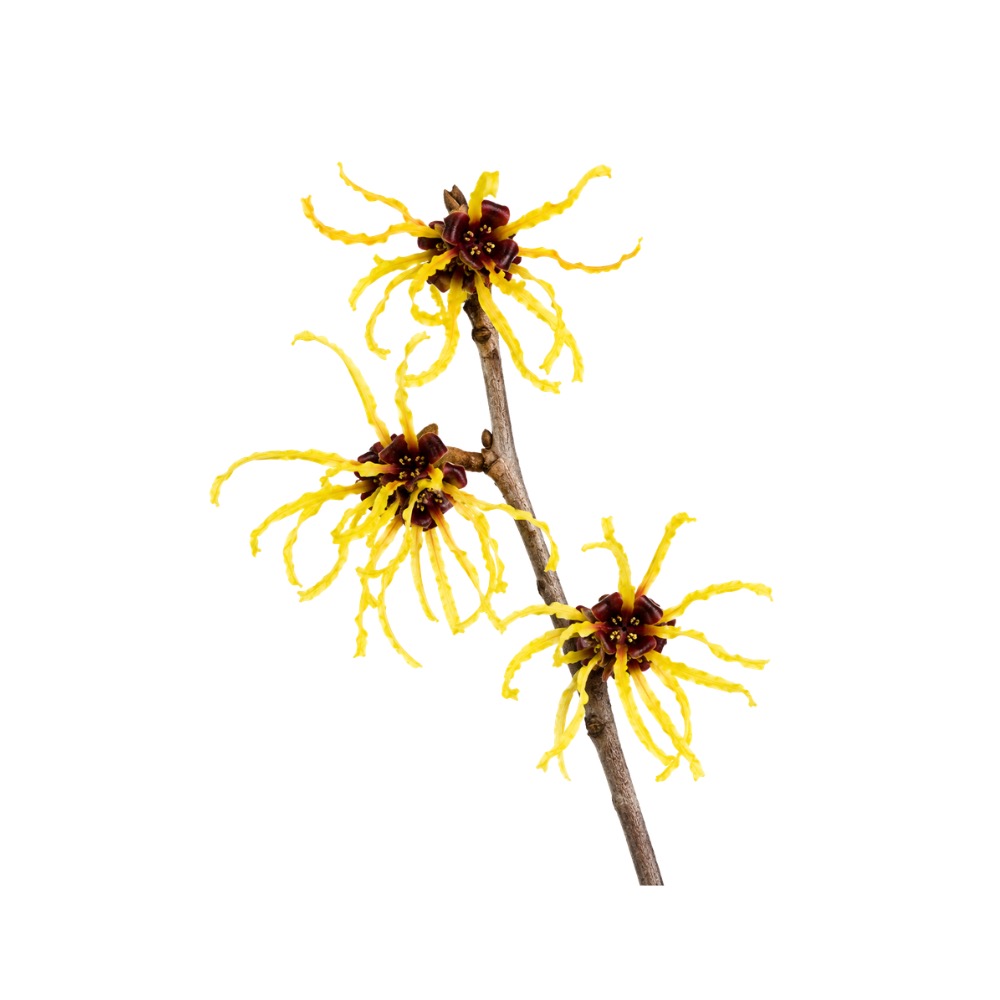 Principal source Witch Hazel Hamamelis virginiana Herb monograph →
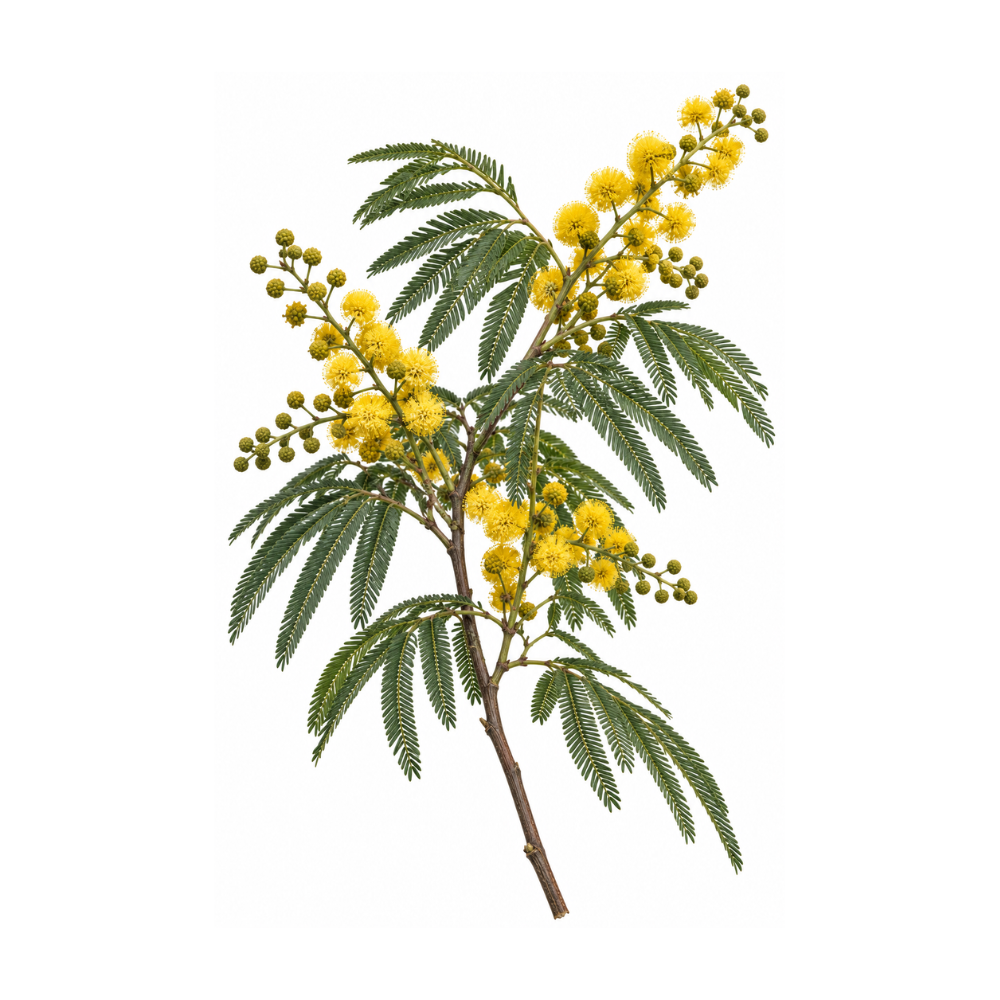 Source Black Wattle Acacia mearnsii Herb monograph →
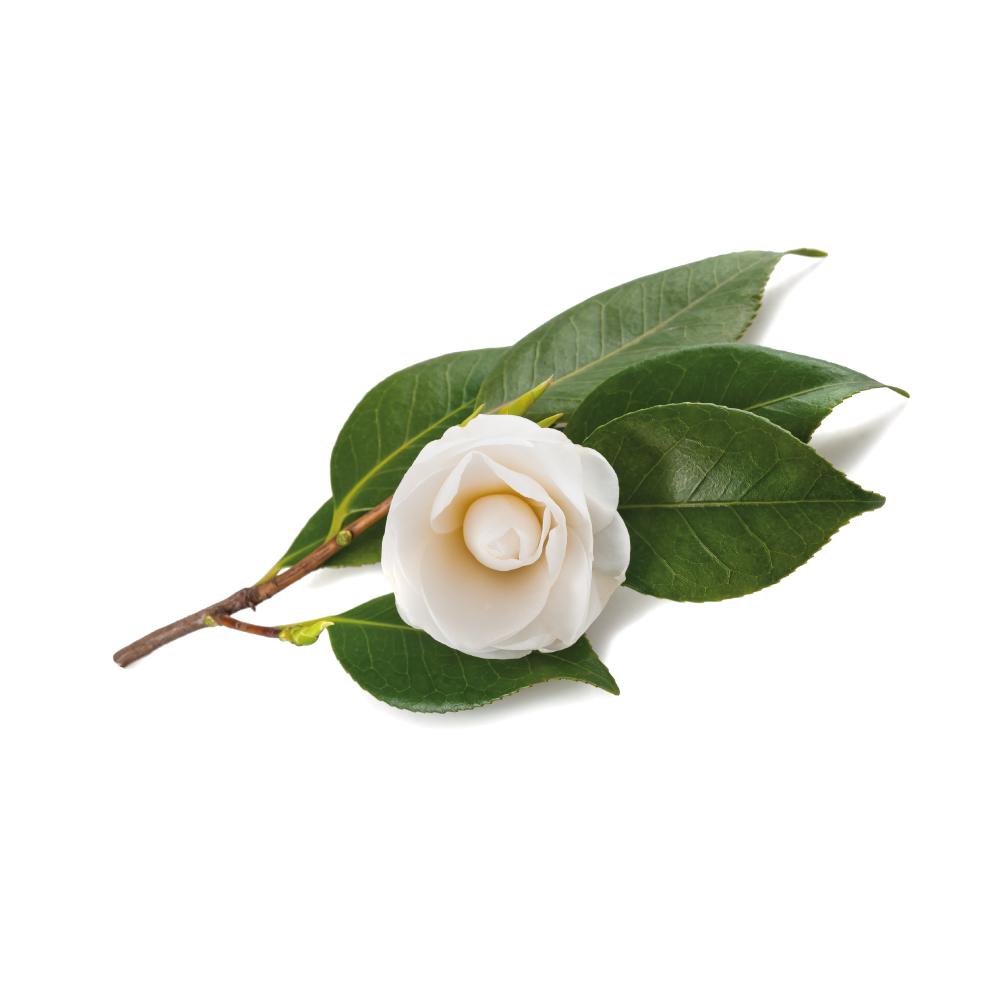 Source Tea Camellia sinensis Herb monograph →
Concentration
Content by Source
Concentrations not reported. No percent-dry-weight or mg/g figures have been published for this compound in its source plants.
Gallocatechin at a Glance
Gallocatechin (GC) is a flavan-3-ol — the same flavonoid sub-class as catechin and epicatechin. Structurally it is simply (+)-catechin carrying one extra hydroxyl on its B-ring: where catechin has a two-hydroxyl (catechol) B-ring, gallocatechin has a three-hydroxyl pyrogallol ring. That single change makes it the 2,3-trans building block of prodelphinidin-type condensed tannins, the trihydroxy counterpart to the tea polyphenol epigallocatechin.
It occurs across the plant kingdom — in green tea (as a minor catechin), witch-hazel bark, pomegranate peel and many other tannin-rich plants — but is nearly always a minor, largely polymerised component rather than a headline molecule.
The honest posture: almost none of the human evidence is about isolated gallocatechin. The data that get attached to it belong to whole green-tea or witch-hazel extracts, to the far more abundant gallated tea catechins (EGCG), or to the prodelphinidin polymers GC helps build. Its own isolate record is a handful of in-vitro antioxidant assays.
Gallocatechin Among the Flavan-3-ols
Gallocatechin only makes sense as one corner of a four-molecule quartet. All four are flavan-3-ols; they differ on just two structural axes.
Axis 1 — the B-ring (catechol vs pyrogallol). Catechin and epicatechin carry a catechol B-ring (two adjacent hydroxyls). Gallocatechin and epigallocatechin carry a pyrogallol B-ring — a third hydroxyl at the 5′ position. That extra OH is the whole story of this molecule: it raises hydrogen-donating (antioxidant) capacity in vitro and changes which polymers the monomer builds 4Reference 4The relationships between biological activities and structure of flavan-3-olsView study →.
Axis 2 — ring stereochemistry (trans vs cis). At carbons 2 and 3, gallocatechin is the 2,3-trans diastereomer; epigallocatechin (EGC) is the 2,3-cis epimer. They are the same connectivity, mirror-related at the C-ring — exactly as catechin (trans) relates to epicatechin (cis).
| Catechol B-ring | Pyrogallol B-ring (extra 5′-OH) | |
|---|---|---|
| 2,3-trans | (+)-Catechin | (+)-Gallocatechin (this one) |
| 2,3-cis | (−)-Epicatechin | (−)-Epigallocatechin (EGC) |
Why it matters — the prodelphinidin connection. When flavan-3-ols polymerise into condensed tannins (proanthocyanidins), the catechol monomers (catechin/epicatechin) build procyanidins, while the pyrogallol monomers (gallocatechin/epigallocatechin) build prodelphinidins 2Reference 2Flavan-3-ols — nature, occurrence and biological activityView study →. Gallocatechin is therefore not mainly interesting as a free molecule — it is a structural unit of a whole tannin class, and most of a plant’s GC is bound up in those proanthocyanidin polymers rather than free 1,
What It's Used For
Gallocatechin’s evidence is thin and almost entirely in-vitro or whole-extract. The recurring theme is that the interesting activity belongs to something adjacent — the prodelphinidin polymers, the gallated catechins, or the flavan-3-ol dietary class — with the free GC monomer as a minor contributor.
Support is an experimental score — weighted by study type (human > animal > in vitro) and volume, and capped for isolate-vs-mixture match and bioavailability. A beta, not a validated metric. Every row here rests on in-vitro or whole-extract data, so read the per-row basis.
The one property genuinely measured for the isolated molecule. Gallocatechin’s pyrogallol B-ring (three adjacent hydroxyls) makes it a strong hydrogen-atom donor in chemical assays, and structure–activity reviews rank the trihydroxy B-ring above the catechol for radical scavenging and ROS suppression 4Reference 4The relationships between biological activities and structure of flavan-3-olsView study →.
But the load-bearing finding is comparative: when GC from pomegranate peel was tested against the prodelphinidin dimers it builds, the dimers were far more effective antioxidants in the aqueous phase than the GC monomer 3Reference 3Antioxidant properties of gallocatechin and prodelphinidins from pomegranate peelView study →.
So even where GC “works,” the polymer it forms works better.
Gap: these are chemical/cell-free antioxidant assays of the isolate or its dimers — no human antioxidant outcome rests on gallocatechin specifically, and its poor plasma exposure (see Pharmacokinetics) undercuts direct extrapolation 3,
Gallocatechin’s real biological importance is structural. As a 2,3-trans, pyrogallol monomer it is one of the units (with epigallocatechin) that polymerise into prodelphinidin-type condensed tannins 2Reference 2Flavan-3-ols — nature, occurrence and biological activityView study →.
In witch-hazel (Hamamelis virginiana) bark it appears as a terminal unit of the polymeric proanthocyanidins (~5% of terminal units, the rest catechin) 1Reference 1Polymeric proanthocyanidins from the bark of Hamamelis virginianaView study →.
Those tannins bind and precipitate salivary proline-rich proteins — the molecular basis of astringency — and drive much of the antioxidant and mild anti-inflammatory character of tannin-rich barks and teas 2Reference 2Flavan-3-ols — nature, occurrence and biological activityView study →.
Gap: this is a whole-extract / structural role — GC is one unit in a large, variable polymer, and the astringent/antioxidant effect belongs to the tannin fraction, not to a defined dose of free gallocatechin 1,
Gallocatechin is swept into the broad “flavan-3-ols are cardiometabolically beneficial” literature. A dietary-bioactive guideline rates the class evidence “moderate” at ~400–600 mg/day of flavan-3-ols from foods for endothelial function and blood pressure 6Reference 6Flavan-3-ols and cardiometabolic health — first ever dietary bioactive guidelineView study →. Digestive-enzyme (α-glucosidase/amylase) inhibition is also reported for tea catechins, but the potent congeners there are the gallated catechins (EGCG, GCG), not ungalloylated GC.
Gap: the class trials use food mixtures dominated by other flavan-3-ols; gallocatechin is a minor, ungalloylated passenger and has never been the tested agent in a cardiometabolic study 6Reference 6Flavan-3-ols and cardiometabolic health — first ever dietary bioactive guidelineView study →.
Mechanisms
| Target / pathway | Effect | Relevant to |
|---|---|---|
| Radical scavenging (pyrogallol B-ring, three OH) | hydrogen-atom donation / metal chelation → ↓ ROS in vitro | antioxidant |
| Flavan-3-ol polymerisation (leucoanthocyanidin reductase product) | supplies the 2,3-trans, pyrogallol unit of prodelphinidin condensed tannins | tannin / astringency |
| Salivary proline-rich-protein binding (as tannin) | precipitates salivary proteins → astringency; protein/enzyme complexation | oral & topical astringency |
| Digestive enzymes (α-glucosidase / α-amylase) | class-level inhibition; GC weaker than its gallated congeners | cardiometabolic (class) |
| Non-heme iron chelation (polyphenol) | binds dietary iron in the gut → ↓ absorption | interactions / toxicity |
The pyrogallol B-ring is the through-line: it raises antioxidant capacity and defines GC as a prodelphinidin (not procyanidin) precursor — but it also makes the free monomer more prone to autoxidation and does not translate into a demonstrated human benefit.
Pharmacokinetics
No dedicated human pharmacokinetic study isolates gallocatechin; its behaviour is read off the flavan-3-ol class, which is well characterised. Monomeric flavan-3-ols are absorbed in the small intestine but reach only low (nanomolar–low-micromolar) plasma concentrations, are rapidly conjugated (glucuronidation, sulfation, methylation), and are poorly retained; mean flavan-3-ol bioavailability across human studies is only ~31% 5Reference 5Systematic reviewRevisiting the bioavailability of flavan-3-ols in humans — a systematic review and comprehensive data analysisView study →. The majority of any dose reaches the colon, where microbiota cleave the C-ring to phenyl-γ-valerolactones and phenolic acids that dominate the circulating metabolite pool 5Reference 5Systematic reviewRevisiting the bioavailability of flavan-3-ols in humans — a systematic review and comprehensive data analysisView study →. Two GC-specific caveats: the pyrogallol B-ring is more prone to autoxidation at neutral pH than a catechol, and — decisively — most dietary GC is polymerised into prodelphinidins, which are essentially not absorbed intact 1,
Clinical Trials
There are no clinical trials of isolated gallocatechin. Human data sit one level up — whole green-tea catechin and witch-hazel extracts, and the flavan-3-ol dietary class — none of which isolates GC as the intervention.
| Completed | Planned | Terminated | Preclinical |
|---|---|---|---|
| None on isolated GC (green-tea / witch-hazel extract & flavan-3-ol-class trials only) | — | — | In-vitro antioxidant; prodelphinidin structural chemistry |
Last checked: July 2026.
Isolate vs. Plant Studies
Gallocatechin is a near-pure example of the isolate-vs-plant problem. No human study uses the isolated molecule. The clinical footprints that get attached to it belong to different things: whole green-tea catechin extract (whose active fraction is EGCG-dominated, not GC), whole witch-hazel bark extract (an astringent tannin preparation in which GC is a minor terminal unit) 1Reference 1Polymeric proanthocyanidins from the bark of Hamamelis virginianaView study →, and the flavan-3-ol dietary class as a food pattern 6Reference 6Flavan-3-ols and cardiometabolic health — first ever dietary bioactive guidelineView study →. Even the cleanest isolate work — the pomegranate-peel antioxidant study — tested purified GC only in cell-free chemical assays, and found the prodelphinidin dimers out-performed the monomer 3Reference 3Antioxidant properties of gallocatechin and prodelphinidins from pomegranate peelView study →. Within this database, gallocatechin appears wherever prodelphinidin tannins do (notably witch-hazel bark), almost always alongside epigallocatechin and without a GC-specific assay. Treat “gallocatechin is antioxidant/beneficial” as a class or structural inference, not a demonstrated property of the free molecule.
Its Role in Plants
Gallocatechin is a product of the flavonoid/proanthocyanidin biosynthetic pathway. The route runs from dihydroflavonols to leucoanthocyanidins, and leucoanthocyanidin reductase (LAR) reduces leucodelphinidin (the trihydroxy-B-ring branch) to (+)-gallocatechin, the 2,3-trans monomer — the same enzyme that makes (+)-catechin from leucocyanidin 8Reference 8Proanthocyanidin biosynthesis in plants — purification of legume leucoanthocyanidin reductase (LAR → 2,3-trans flavan-3-ols)View study →. Its 2,3-cis epimer, epigallocatechin, is made by a parallel route through anthocyanidin reductase (ANR, the BANYULS gene) acting on delphinidin 9Reference 9Role of anthocyanidin reductase, encoded by BANYULS, in plant flavonoid biosynthesis (ANR → 2,3-cis flavan-3-ols)View study →. Both trihydroxy monomers are then the building blocks of prodelphinidin condensed tannins.
Ecologically, these tannins are a chemical defence: their protein-binding astringency deters herbivores and inhibits microbial enzymes, and the pyrogallol groups contribute antioxidant protection in the plant tissue. This is plant biology and should not be read as human pharmacology.
Prevalence in Nature
Gallocatechin occurs widely but usually at low free concentrations, most of it polymerised into prodelphinidin tannins rather than circulating as the free monomer 1,
- Witch-hazel bark (Hamamelis virginiana) — GC is a terminal unit of the bark’s polymeric proanthocyanidins (~5% of terminal units, the remainder catechin), which are isolated at roughly 5% yield from the bark 1Reference 1Polymeric proanthocyanidins from the bark of Hamamelis virginianaView study →.
- Green tea (Camellia sinensis) — GC is one of the eight tea catechins, but a minor one: the abundant tea catechins are the gallated forms (EGCG foremost), and gallocatechin sits well below them in leaf composition 7Reference 7Catechin composition, phenolic content, and antioxidant properties of commercially-available bagged, gunpowder, and matcha green teasView study →.
- Pomegranate peel (Punica granatum) — a documented source of free gallocatechin and its prodelphinidin dimers (GC-(4→8)-catechin, GC-(4→8)-GC) 3Reference 3Antioxidant properties of gallocatechin and prodelphinidins from pomegranate peelView study →.
- Many other tannin-rich plants — fruits, seeds and barks carry GC as a prodelphinidin unit, co-occurring with epigallocatechin 2Reference 2Flavan-3-ols — nature, occurrence and biological activityView study →.
Where GC is quantified it is almost always reported as a compositional share of a tannin fraction rather than an absolute concentration, so clean mg-per-serving figures are scarce — the holes are logged in this compound’s gaps tracker.
Discovery & Synthesis
Gallocatechin was characterised as the pyrogallol (“gallo-”) analogue of catechin — catechin bearing an additional B-ring hydroxyl — within the broad nineteenth-and-twentieth-century chemistry of catechu, tea and tannin flavan-3-ols; no single first-isolator or precise year is firmly documented for the individual molecule. Its name follows the same logic as the wider catechin family, in which the “gallo-” prefix marks the trihydroxy (pyrogallol) B-ring.
Structurally it is (2R,3S)-2-(3,4,5-trihydroxyphenyl)-3,4-dihydro-2H-chromene-3,5,7-triol — a flavan-3-ol with a saturated, non-planar C-ring (no 4-oxo group, no 2,3-double bond) and two stereocentres, of which the 2,3-trans configuration defines “gallocatechin” versus the 2,3-cis “epigallocatechin.” Today it is obtained by extraction and chromatographic purification from plant material (tea and other flavan-3-ol-rich botanicals); enantioselective total syntheses of flavan-3-ols exist for research but are not a bulk source, and there is no commercial isolated-gallocatechin product.
Patents: not yet researched.
Toxicity & Safety
Gallocatechin carries a low flag. It is a dietary flavan-3-ol consumed routinely in tea and fruit, with no isolate toxicity signal and no history of stand-alone use at pharmacological doses. The practical caveats are the general polyphenol/tannin ones rather than anything specific to GC.
- Ordinary dietary intake is unremarkable. GC is a normal constituent of tea, witch-hazel and many fruits, consumed safely as part of whole foods and extracts.
- Reduces non-heme iron absorption. Like other flavan-3-ols and tannins, gallocatechin chelates dietary iron in the gut — relevant when tannin-rich teas/extracts are taken with meals by iron-deficient people.
- Tannin/astringent context. GC’s importance is as a condensed-tannin unit; concentrated tannin extracts are astringent and can irritate the gut in quantity — a property of the tannin fraction, not of the isolated monomer.
- Isolate safety is uncharacterised. No repeat-dose, genotoxicity or reproductive dataset exists for pure gallocatechin; absence of data is not evidence of safety at supraphysiological doses. Pregnancy/lactation decisions belong to the herb or product page, not to this molecule page.
Dosage
There is no isolated-gallocatechin dose in use — it is not sold or studied as a stand-alone supplement, and no benefit is established for the free molecule. Where a figure is quoted, it is for flavan-3-ols as a dietary class: roughly 400–600 mg/day from foods (tea, cocoa, fruit) in the dietary-bioactive guideline, a food-pattern target rather than a dose of the GC monomer 6Reference 6Flavan-3-ols and cardiometabolic health — first ever dietary bioactive guidelineView study →. Herbal exposure is indirect — as a minor catechin of green tea 7Reference 7Catechin composition, phenolic content, and antioxidant properties of commercially-available bagged, gunpowder, and matcha green teasView study → or a terminal unit of witch-hazel bark tannins 1Reference 1Polymeric proanthocyanidins from the bark of Hamamelis virginianaView study →.
These are descriptive research/class figures, not a personal recommendation.
References
- Dauer A, Rimpler H, Hensel A. (2003). Polymeric proanthocyanidins from the bark of Hamamelis virginiana. Planta Medica, 69(1), 89–91. https://pubmed.ncbi.nlm.nih.gov/12567291/
- Aron PM, Kennedy JA. (2008). Flavan-3-ols — nature, occurrence and biological activity. Molecular Nutrition & Food Research, 52(1), 79–104. https://pubmed.ncbi.nlm.nih.gov/18081206/
- Plumb GW, de Pascual-Teresa S, Santos-Buelga C, Rivas-Gonzalo JC, Williamson G. (2002). Antioxidant properties of gallocatechin and prodelphinidins from pomegranate peel. Redox Report, 7(1), 41–46. https://pubmed.ncbi.nlm.nih.gov/11981454/
- Braicu C, Pilecki V, Balacescu O, Irimie A, Berindan-Neagoe I. (2011). The relationships between biological activities and structure of flavan-3-ols. International Journal of Molecular Sciences, 12(12), 9342–9353. https://pubmed.ncbi.nlm.nih.gov/22272136/
- Di Pede G, Mena P, Bresciani L, et al. (2023). Revisiting the bioavailability of flavan-3-ols in humans — a systematic review and comprehensive data analysis. Molecular Aspects of Medicine, 89, 101146. https://pubmed.ncbi.nlm.nih.gov/36207170/
- Crowe-White KM, Evans LW, Kuhnle GGC, et al. (2022). Flavan-3-ols and cardiometabolic health — first ever dietary bioactive guideline. Advances in Nutrition, 13(6), 2070–2083. https://pubmed.ncbi.nlm.nih.gov/36190328/
- Meyer BR, White HM, McCormack JD, Niemeyer ED. (2023). Catechin composition, phenolic content, and antioxidant properties of commercially-available bagged, gunpowder, and matcha green teas. Plant Foods for Human Nutrition, 78(4), 662–669. https://pubmed.ncbi.nlm.nih.gov/37923855/
- Tanner GJ, Francki KT, Abrahams S, et al. (2003). Proanthocyanidin biosynthesis in plants — purification of legume leucoanthocyanidin reductase (LAR → 2,3-trans flavan-3-ols). The Journal of Biological Chemistry, 278(34), 31647–31656. https://pubmed.ncbi.nlm.nih.gov/12788945/
- Xie DY, Sharma SB, Paiva NL, Ferreira D, Dixon RA. (2003). Role of anthocyanidin reductase, encoded by BANYULS, in plant flavonoid biosynthesis (ANR → 2,3-cis flavan-3-ols). Science, 299(5605), 396–399. https://pubmed.ncbi.nlm.nih.gov/12532018/



