
Compound Monograph
Ginsenoside Rf
Ginsenoside Rf is a protopanaxatriol-type saponin found in Asian ginseng (Panax ginseng) and essentially absent from American ginseng (Panax quinquefolius) — which makes it the standard chemical marker, paired with pseudoginsenoside F11, for telling the two species apart. Its distinctive pharmacology is analgesic: in rodents it inhibits neuronal calcium channels through a G protein by an opioid-independent route. That evidence is entirely preclinical, and the isolate is a trace, poorly absorbed component of the root.

Sources · 1
Where Does It Come From?
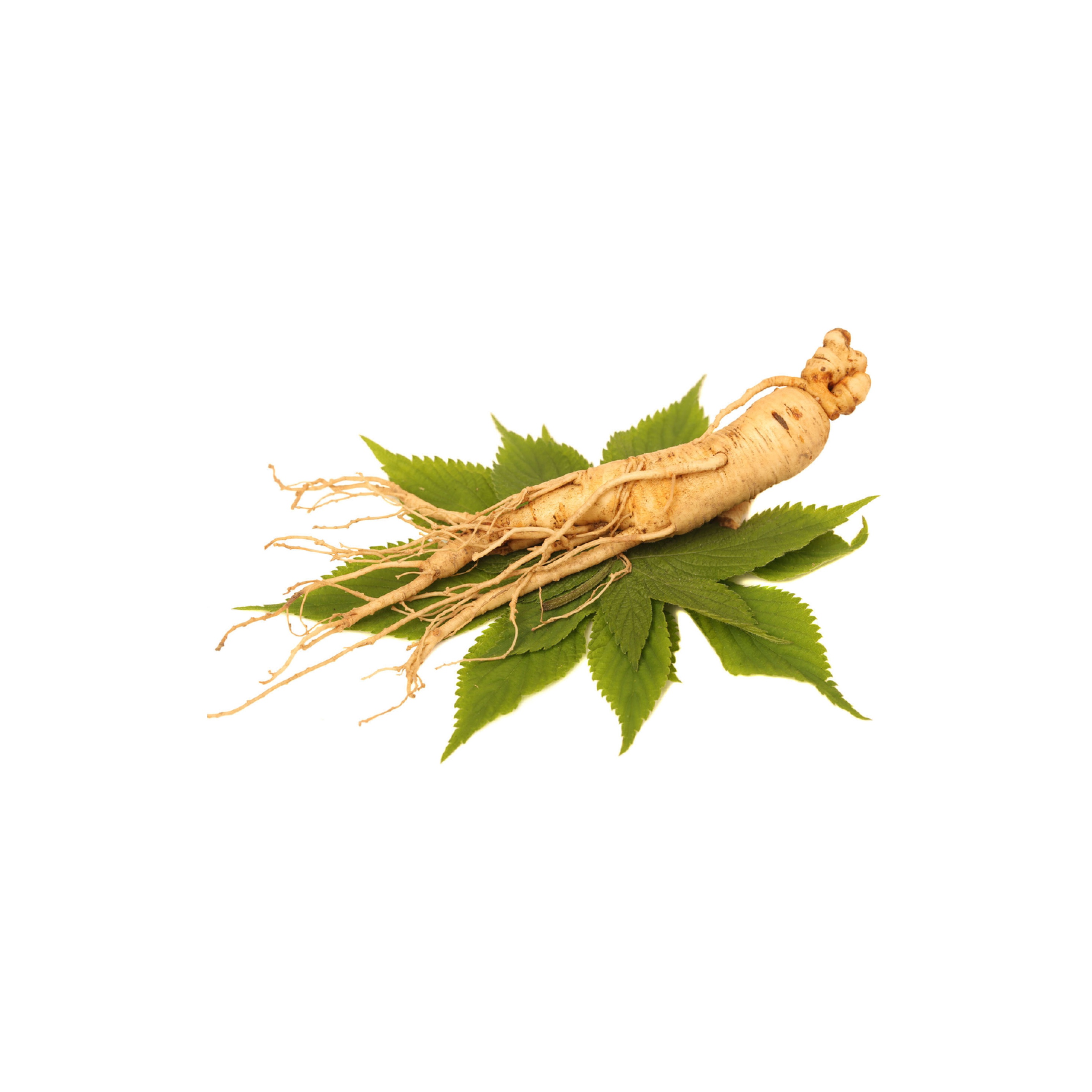
Ginsenoside Rf is a naturally occurring dammarane triterpenoid saponin (protopanaxatriol group), found in Asian ginseng. It is well tolerated orally (low toxicity).
Concentration
Content by Source
Concentrations not reported. No percent-dry-weight or mg/g figures have been published for this compound in its source plants.
Ginsenoside Rf at a Glance
Ginsenoside Rf is a triterpenoid saponin of Asian ginseng (Panax ginseng). It belongs to the protopanaxatriol (PPT) family of dammarane ginsenosides — the same structural branch as ginsenoside Rg1 — and it is present in the root at only trace levels 3,
Its single most useful property has nothing to do with the body: Rf is found in Asian ginseng and essentially absent in American ginseng, so it is a standard chemical marker used to tell the two species apart and to detect adulteration. It is the mirror image of pseudoginsenoside F11, which is abundant in American ginseng and absent in Asian — and the two markers are read together as a species-authentication pair 1,
Its pharmacology, where it exists, is analgesic and centred on sensory neurons: Rf inhibits high-threshold calcium channels through a pertussis-toxin-sensitive G protein, produces antinociception in mice, and eases inflammatory and neuropathic pain in rats — all without acting through opioid receptors 3,
A Protopanaxatriol Saponin
Ginsenosides are usually sorted into two dammarane families by the shape of their sugar-bearing skeleton: protopanaxadiol (PPD) saponins such as ginsenoside Rb1 and protopanaxadiol itself, and protopanaxatriol (PPT) saponins such as ginsenoside Rg1 and Rf. The two branches differ by an extra hydroxyl group and carry their sugars at different positions — a distinction that matters for both metabolism and species chemistry 9Reference 9ReviewProof of the mysterious efficacy of ginseng: metabolic activation of ginsenoside — deglycosylation by intestinal bacteria and esterification with fatty acid — reviewView study →.
Rf sits firmly in the PPT branch, and this dictates what it becomes in the gut. When ginsenosides are taken orally, intestinal bacteria progressively strip their sugars (deglycosylation). PPT saponins like Rf are converted stepwise toward ginsenoside Rh1, then F1, then the protopanaxatriol aglycone — a different endpoint from the PPD branch, whose deglycosylation yields compound K 9Reference 9ReviewProof of the mysterious efficacy of ginseng: metabolic activation of ginsenoside — deglycosylation by intestinal bacteria and esterification with fatty acid — reviewView study →. In other words, Rf does not produce compound K; its metabolic fate runs through the PPT-type metabolites instead. This is worth stating because much ginsenoside pharmacology is really the pharmacology of these secondary metabolites, which are more absorbable than the parent saponins.
The Asian Ginseng Marker
The defining fact about Rf is a presence/absence contrast between two species. Ginsenoside Rf is present in Asian ginseng (Panax ginseng) and is not detected in American ginseng (Panax quinquefolius) 1,
Species identity is a real commercial problem. Asian and American ginseng command different prices and are used for different traditional purposes, and the dried, powdered or extracted root cannot be told apart by eye — so substitution and adulteration are common. Analytical chemists resolved this by watching a small panel of diagnostic saponins: ginsenoside Rf flags Asian ginseng, while 24(R)-pseudoginsenoside F11 flags American ginseng (present in P. quinquefolius, absent in P. ginseng) 1,
Two foundational studies around 2000 established the approach: one used HPLC–tandem mass spectrometry to separate P. ginseng from P. quinquefolius 1Reference 1Use of high-performance liquid chromatography-tandem mass spectrometry to distinguish Panax ginseng CView study →, and the other built an LC/MS authentication method applied to raw roots and commercial ginseng products 2Reference 2Differentiation and authentication of Panax ginseng, Panax quinquefolius, and ginseng products by using HPLC/MSView study →. The strategy has since become routine and has been extended with newer analytical platforms, but the logic is unchanged: Rf present means Asian ginseng; Rf absent (with F11 present) means American. In practical terms this analytical role — not any medicinal effect — is Rf’s most established and human-relevant use.
What It's Used For
The evidence base is modest, animal-only, and unusually coherent around a single theme: pain. Every application below rests on isolated Rf in rodents or cells, and the load-bearing caveat is that the isolate is a poorly absorbed trace saponin, so the doses that work in animals may not be reachable by an oral human dose 9,
Support is an experimental score — weighted by study type (human > animal > in vitro) and volume, tempered for isolate-vs-plant match and bioavailability. A beta, not a validated metric. Every row rests on isolated Rf in animals or cells (no human data), so scores are capped accordingly. Each application links to its write-up.
Rf’s signature line, and the reason it stands apart from other ginsenosides. In rat sensory neurons, isolated Rf rapidly and reversibly inhibits N-type and other high-threshold calcium channels to a degree comparable with a maximal dose of opioids, but through a different receptor — the effect is abolished by pertussis toxin (implicating Gi/Go proteins) and is not blocked by naloxone, so it is opioid-independent 3Reference 3In vitroA trace component of ginseng that inhibits Ca2+ channels through a pertussis toxin-sensitive G protein — in vitro (sensory neurons)View study →.
Systemically, Rf produced dose-dependent antinociception in mice in two tonic-pain assays (ED₅₀ ≈ 56 mg/kg in the acetic-acid writhing test) 4Reference 4AnimalGinsenoside Rf, a trace component of ginseng root, produces antinociception in mice — animal modelView study →.
It also potentiated the analgesia of the kappa-opioid agonist U-50,488H and blunted tolerance to it, again via non-opioid, calcium- and GABA-linked routes rather than direct opioid action 5Reference 5AnimalGinsenoside Rf potentiates U-50,488H-induced analgesia and inhibits tolerance to its analgesia in mice — animal modelView study →.
Gap: all sensory-neuron and mouse work on the isolate; no human data, and no controlled test of Rf as an analgesic in people. The high ED₅₀ and poor oral absorption make the translational leap uncertain 4,
A second, more disease-oriented pain thread — still entirely in rats, on the isolate. In a post-surgical incisional-pain model, Rf reduced mechanical pain sensitivity and lowered inflammatory cytokine levels, an antinociceptive-plus-anti-inflammatory effect 6Reference 6AnimalAntinociceptive and anti-inflammatory effects of ginsenoside Rf in a rat model of incisional pain — animal modelView study →.
In a chronic-constriction-injury (neuropathic) model, chronic Rf diminished mechanical allodynia and depression-like behaviour while partly reversing the rise in spinal-cord/dorsal-root-ganglion pro-inflammatory cytokines and raising the anti-inflammatory cytokine IL-10 7Reference 7AnimalGinsenoside Rf relieves mechanical hypersensitivity, depression-like behavior, and inflammatory reactions in chronic constriction injury rats — animal modelView study →.
The throughline with the analgesia work above is a broadly pain-suppressing molecule that also tempers neuroinflammation.
Gap: two independent rat models are a strength, but both are rodent, isolate-only, with no human confirmation and the same bioavailability caveat 7,
A distinct, non-pain property worth naming. In 3T3-L1 adipocytes, isolated Rf downregulated PPARγ and perilipin — master regulators of fat-cell differentiation — and reduced lipid accumulation, with molecular-docking work supporting a direct Rf–PPARγ interaction; the authors framed it as a possible anti-obesity lead 8Reference 8In vitroStructural investigation of ginsenoside Rf with PPARγ major transcriptional factor of adipogenesis and its impact on adipocyte — in vitroView study →. This links Rf, loosely, to the metabolic-modulator reputation of ginseng generally.
Gap: in-vitro adipocyte data plus computational docking only, with no in-vivo metabolic endpoint for the isolate and no human confirmation 8Reference 8In vitroStructural investigation of ginsenoside Rf with PPARγ major transcriptional factor of adipogenesis and its impact on adipocyte — in vitroView study →.
Mechanisms
| Target / pathway | Effect | Relevant to |
|---|---|---|
| N-type (and other high-threshold) voltage-gated Ca²⁺ channels via pertussis-toxin-sensitive Gi/Go protein | inhibits Ca²⁺ influx in sensory neurons — opioid-magnitude but naloxone-insensitive | analgesia |
| Non-opioid, non-dihydropyridine Ca²⁺ / non-benzodiazepine GABAₐ pathways | potentiates kappa-opioid (U-50,488H) analgesia; blunts tolerance | analgesia |
| Pro-/anti-inflammatory cytokine balance (↓ IL-1β/TNF-α, ↑ IL-10) in spinal cord/DRG | eases mechanical allodynia and depression-like behaviour | inflammatory / neuropathic pain |
| PPARγ + perilipin (adipocyte) | downregulates adipogenic transcription; reduces lipid accumulation | metabolic / anti-adipogenic |
| Gut-microbial deglycosylation (Rf → Rh1 → F1 → protopanaxatriol) | converts the parent saponin to more absorbable PPT-type metabolites (not compound K) | pharmacokinetics |
The unifying read is a G-protein-coupled, opioid-independent analgesic that also damps neuroinflammation — a pain-focused profile distinct from the neurotrophic/vascular Rg1 and the sedating Rb1 3,
Pharmacokinetics
Poor oral absorption is the load-bearing fact, as for all ginsenoside saponins. Rf is a large, glycosylated triterpenoid that crosses the gut wall badly, so systemic exposure after an oral dose is small; robust isolate-specific human ADME (Cmax, half-life, oral bioavailability) is not established 10Reference 10Systematic reviewSystematic review and pharmacological insights of ginsenoside Rf: current status and future perspectives — systematic reviewView study →. What is well characterised is its metabolic route: intestinal bacteria deglycosylate Rf down the protopanaxatriol branch — Rf → Rh1 → F1 → the protopanaxatriol aglycone — so much of the “active” exposure after an oral dose is to these secondary metabolites rather than to intact Rf, and, critically, none of it is compound K (the compound-K endpoint belongs to the protopanaxadiol saponins) 9Reference 9ReviewProof of the mysterious efficacy of ginseng: metabolic activation of ginsenoside — deglycosylation by intestinal bacteria and esterification with fatty acid — reviewView study →. Rf can also be converted cleanly to Rh1 by β-glucosidase enzymatically, which is used to produce the metabolite for study 9Reference 9ReviewProof of the mysterious efficacy of ginseng: metabolic activation of ginsenoside — deglycosylation by intestinal bacteria and esterification with fatty acid — reviewView study →. The practical consequence mirrors the rest of the ginsenoside class: dosing intact Rf orally delivers little parent molecule to tissue, and the mechanisms seen in isolated sensory neurons are not what an oral dose achieves in a person.
Clinical Trials
There are no clinical trials of isolated ginsenoside Rf. All human ginseng data are at the whole-extract level (standardised Panax ginseng products), where Rf is one of many saponins — and a trace one at that — so its individual contribution cannot be isolated. The isolated-molecule literature is entirely preclinical.
| Completed | Planned | Terminated | Preclinical |
|---|---|---|---|
| None(isolated Rf) | None identified | None | Moderate |
Last checked: July 2026.
Isolate vs. Plant Studies
The two evidence bases point in different directions. All of Rf’s pharmacology is the isolated molecule in rodents or cells — the calcium-channel/G-protein analgesia 3Reference 3In vitroA trace component of ginseng that inhibits Ca2+ channels through a pertussis toxin-sensitive G protein — in vitro (sensory neurons)View study →, the mouse antinociception 4Reference 4AnimalGinsenoside Rf, a trace component of ginseng root, produces antinociception in mice — animal modelView study →, the kappa-opioid potentiation 5Reference 5AnimalGinsenoside Rf potentiates U-50,488H-induced analgesia and inhibits tolerance to its analgesia in mice — animal modelView study →, the inflammatory and neuropathic-pain work 6,
The human evidence, by contrast, does not exist for the isolate. People who take Asian ginseng consume it as whole standardised root or extract, where Rf sits alongside the far more abundant ginsenoside Rg1 and ginsenoside Rb1, processed saponins such as ginsenoside Rg3, and the immunoactive polysaccharide fraction — and the herb’s clinical reputation rests on those whole-extract trials, not on isolated Rf. Because Rf is only a trace component of the root, its individual share of any whole-ginseng effect is small and unquantified. So the correct framing is: a distinctive isolate mechanism in animals, no human isolate data, and a real bioavailability gap between the two 9,
Prevalence in Nature
Rf is characteristically a constituent of Asian ginseng (Panax ginseng), where it occurs in the root as a trace, protopanaxatriol-type saponin — routinely detected in root profiles but present at much lower levels than the headline saponins Rg1 and Rb1 3,
Reported Rf content varies with plant part, cultivation age, provenance and processing (red versus white ginseng), and — because Rf is a low-abundance saponin — clean, comparable % dry-weight figures across sources are not well pinned down in the material reviewed here; that quantitative hole is tracked in this compound’s gaps note rather than papered over with an invented number.
Discovery & Synthesis
A firm first-isolation report for Rf specifically is not well documented in the indexed literature. The “Rf” designation itself is the historical clue: the major ginsenosides were named Ra through Rg by Shibata and co-workers in the 1960s according to their mobility (Rf value) on thin-layer chromatography — so Rf’s name records its analytical position in that early series rather than a single dated isolation paper, and the origin is left deliberately soft here.
What is well documented is Rf’s arrival as an analytical marker around 2000, when HPLC–MS methods established it as the diagnostic saponin for Asian ginseng in species-authentication work 1,
Patents: not yet researched.
Toxicity & Safety
Ginsenoside Rf carries a low toxicity flag, but this rests more on the long dietary history of Asian ginseng than on dedicated study of the isolate. Asian ginseng root has been consumed for centuries with a generally good safety record, Rf is present only in trace amounts, and its preclinical work reports therapeutic (analgesic, anti-inflammatory) effects rather than toxicity at the doses used 4,
The honest caveat is that formal safety characterisation of the isolate is largely missing. Comprehensive acute/chronic toxicity, genotoxicity and reproductive-toxicity studies of purified Rf have not been reported, and no dedicated drug-interaction studies of isolated Rf (CYP isoforms, P-glycoprotein) exist. The practical reference point is the general Asian-ginseng cautions — possible effects on blood glucose, and theoretical additive effects with anticoagulant/antiplatelet or stimulant drugs — applied to the whole herb rather than to this molecule. Reproductive and developmental safety of the isolate is uncharacterised; because ginsenosides as a class have shown developmental effects in some in-vitro embryo models, this is a gap rather than a clean bill of health. Pregnancy and lactation decisions belong to the herb or product page where intake is decided, not to this molecule page.
- Long dietary history of the source plant. Asian ginseng, in which Rf occurs as a trace saponin, has centuries of traditional food/medicinal use with a generally good safety record.
- No toxicity signal in the preclinical record. Rf’s animal studies report analgesic and anti-inflammatory effects, not harm, at the doses tested.
- The isolate is essentially uncharacterised for safety. No formal acute/chronic, genotoxicity or reproductive-toxicity studies of purified Rf exist.
- Interactions unstudied for the molecule. No CYP/P-gp or clinical interaction data for isolated Rf; apply the whole-herb ginseng cautions (blood glucose, anticoagulant/stimulant additivity) instead.
- Poorly absorbed by mouth, like other ginsenoside saponins, which makes both efficacy and systemic exposure hard to predict in people.
Dosage
There is no established human dose of isolated ginsenoside Rf — it is a trace research compound, not a standardized supplement. For orientation only, the analgesic effects above were produced in rodents at tens of milligrams per kilogram (for example, an antinociceptive ED₅₀ of about 56 mg/kg in the mouse writhing test), doses chosen for the experiment rather than validated for people 4,
In practice, human intake of Rf happens only through whole Asian-ginseng root or standardized extract, where it is one of many saponins — and a trace one — so its individual dose is neither controlled nor known. These are doses studied in research and are not a personal recommendation.
References
- Li W, Gu C, Zhang H, et al. (2000). Use of high-performance liquid chromatography-tandem mass spectrometry to distinguish Panax ginseng C. A. Meyer (Asian ginseng) and Panax quinquefolius L. (North American ginseng). Analytical Chemistry. https://pubmed.ncbi.nlm.nih.gov/11080895/
- Chan TW, But PP, Cheng SW, et al. (2000). Differentiation and authentication of Panax ginseng, Panax quinquefolius, and ginseng products by using HPLC/MS. Analytical Chemistry. https://pubmed.ncbi.nlm.nih.gov/10740871/
- Nah SY, Park HJ, McCleskey EW. (1995). A trace component of ginseng that inhibits Ca2+ channels through a pertussis toxin-sensitive G protein — in vitro (sensory neurons). Proceedings of the National Academy of Sciences USA, 92(19), 8739–8743. https://pubmed.ncbi.nlm.nih.gov/7568008/
- Mogil JS, Shin YH, McCleskey EW, et al. (1998). Ginsenoside Rf, a trace component of ginseng root, produces antinociception in mice — animal model. Brain Research, 792(2), 218–228. https://pubmed.ncbi.nlm.nih.gov/9593902/
- Nemmani KVS, Ramarao P. (2003). Ginsenoside Rf potentiates U-50,488H-induced analgesia and inhibits tolerance to its analgesia in mice — animal model. Life Sciences, 72(7), 759–768. https://pubmed.ncbi.nlm.nih.gov/12479975/
- Kim MK, Kang H, Baek CW, et al. (2018). Antinociceptive and anti-inflammatory effects of ginsenoside Rf in a rat model of incisional pain — animal model. Journal of Ginseng Research, 42(2), 183–191. https://pubmed.ncbi.nlm.nih.gov/29719465/
- Li Y, Chen C, Li S, Jiang C. (2019). Ginsenoside Rf relieves mechanical hypersensitivity, depression-like behavior, and inflammatory reactions in chronic constriction injury rats — animal model. Phytotherapy Research, 33(4), 1095–1103. https://pubmed.ncbi.nlm.nih.gov/30740801/
- Siraj FM, Natarajan S, Huq MA, et al. (2015). Structural investigation of ginsenoside Rf with PPARγ major transcriptional factor of adipogenesis and its impact on adipocyte — in vitro. Journal of Ginseng Research, 39(2), 141–147. https://pubmed.ncbi.nlm.nih.gov/26045687/
- Hasegawa H. (2004). Proof of the mysterious efficacy of ginseng: metabolic activation of ginsenoside — deglycosylation by intestinal bacteria and esterification with fatty acid — review. Journal of Pharmacological Sciences, 95(2), 153–157. https://pubmed.ncbi.nlm.nih.gov/15215638/
- Li P, Zhao LC, Sun YS, Li W. (2025). Systematic review and pharmacological insights of ginsenoside Rf: current status and future perspectives — systematic review. Phytomedicine, 148, 157403. https://pubmed.ncbi.nlm.nih.gov/41109042/



