
Compound Monograph
Hayatinine
Hayatinine is a bisbenzylisoquinoline alkaloid of abuta (Cissampelos pareira) root — chemically the O-methyl ether of curine/bebeerine, and the most potent single antiplasmodial compound isolated from the plant (IC50 ~0.4–0.5 µM in vitro). Its name sits at the centre of a genuinely tangled Indian/Western alkaloid nomenclature, and the curare-like activity often attached to it belongs to a semi-synthetic quaternary derivative, not to the natural alkaloid.

Sources · 1
Where Does It Come From?
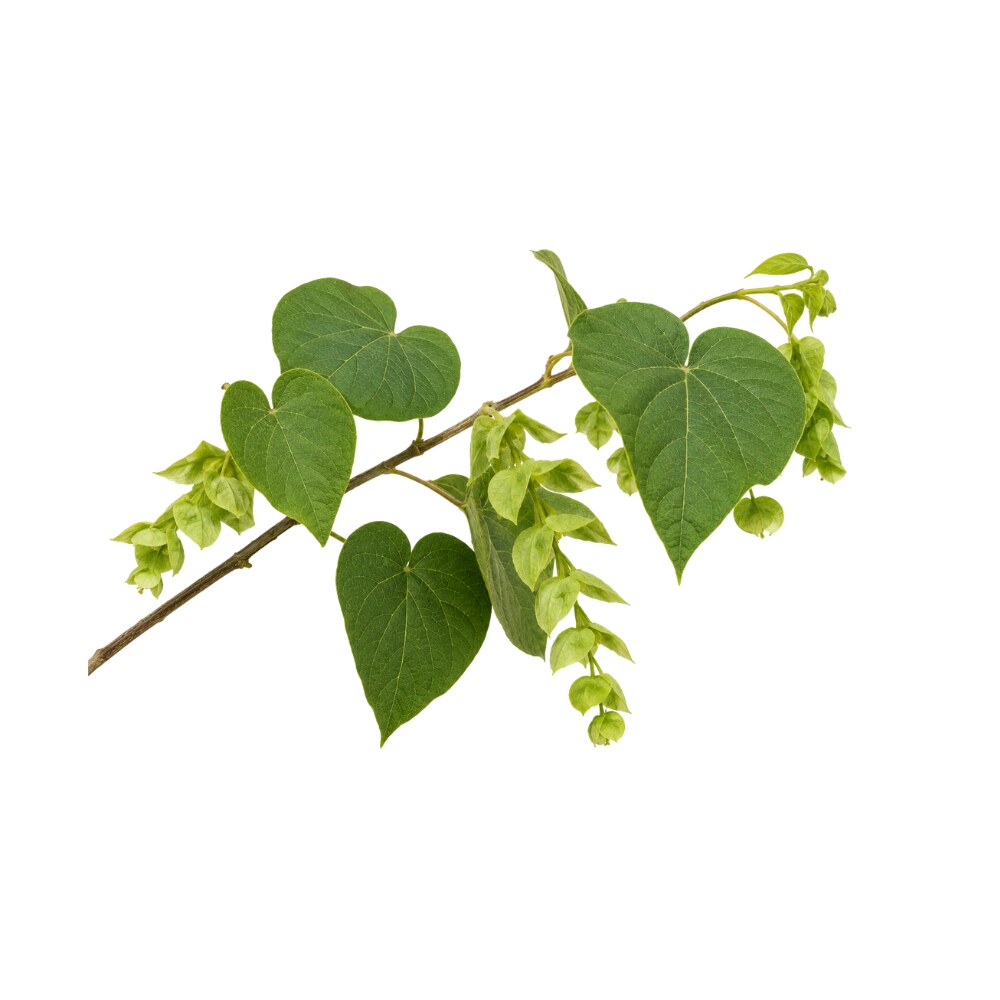
Hayatinine is a naturally occurring bisbenzylisoquinoline alkaloid (curine/bebeerine group — 4''-o-methylcurine), found in Abuta. It is flagged as moderately toxic.
Concentration
Content by Source
Concentrations not reported. No percent-dry-weight or mg/g figures have been published for this compound in its source plants.
Hayatinine at a Glance
Hayatinine is a bisbenzylisoquinoline (bisBIQ) alkaloid of abuta root — Cissampelos pareira, Menispermaceae. Structurally it is the O-methyl ether of curine/bebeerine: one extra methyl group on the same dimeric benzylisoquinoline skeleton (C37H40N2O6, MW 608.7, versus C36H38N2O6, MW 594.7 for the parent) 1,
Its one substantial modern finding is genuine and molecule-specific: hayatinine is the most potent single antiplasmodial compound isolated from C. pareira, killing both chloroquine-sensitive and chloroquine-resistant Plasmodium falciparum at sub-micromolar concentrations in vitro 2Reference 2In vitroChemical profiling and quantification of potential active constituents responsible for the antiplasmodial activity of Cissampelos pareira — in vitroView study →, with an independent group later showing direct binding to a named parasite protein target 13Reference 13In vitroIdentification of novel, potent, and selective compounds against malaria using glideosomal-associated protein 50 as a drug target — in vitro target binding and parasite growth assaysView study →. It also came out as the most cytotoxic of the plant’s isolated alkaloids against two human cancer cell lines 15Reference 15In vitroBioactive isoquinoline alkaloids from Cissampelos pareira — in vitroView study →.
Everything else about hayatinine is either in silico, class-level inference, or — most often — a finding that actually belongs to a differently-named relative. There is no pharmacokinetic data, no animal efficacy study, no human trial, and no toxicology on the isolated molecule. Sorting out which claims are really hayatinine’s is the main work, so it comes first.
The Cissampelos Alkaloid Name Tangle
Cissampelos pareira has one of the messiest alkaloid nomenclatures in the herbal literature. Mid-century Indian phytochemists named the root alkaloids independently of the Western/South-American curare literature, and the two naming systems then had to be reconciled retroactively. The result is a cluster of names — hayatine, hayatinine, hayatidine, bebeerine, curine, pelosine, cissampeline, pareirine, tubocurarine — several of which turn out to be the same thing, and several of which do not.
What resolves cleanly:
| Name | What it actually is | Same molecule as hayatinine? |
|---|---|---|
| Hayatinine (hayatinin) | The O-methyl ether of the curine/bebeerine skeleton: l-4’-O-methylbebeerine = l-4’-O-methylcurine = O-methylchondrodendrine. C37H40N2O6 1, | — |
| Hayatine (hayatin) | The unmethylated parent. Equated in the reference literature with d,l-bebeerine = d,l-curine 3Reference 3ReviewCissampelos pareira — Plant Resources of South-East Asia monograph; alkaloid synonymy and methochloride pharmacologyView study →; other sources give it as l-curine / l-bebeerine 5Reference 5ReviewFrom arrow poison to herbal medicine — the ethnobotanical, phytochemical and pharmacological significance of Cissampelos (Menispermaceae) — reviewView study →. PubChem files hayatine, bebeerine and curine as synonyms of a single stereochemically-unspecified structure, C36H38N2O6, CAS 26057-51-2 4Reference 4Hayatine, CID 626931 — compound record; synonyms bebeerine and curine, CAS 26057-51-2, C36H38N2O6, MW 594.7View study → | No — one methyl group lighter |
| Hayatidine (hayatidin) | The other stereochemical form of the same methyl ether: d,l-4’-O-methylbebeerine = d,l-4’-O-methylcurine 3, | Same constitution, different stereochemistry |
| Bebeerine / curine / pelosine | Three historic names for the unmethylated parent skeleton, differing (where they differ at all) in stereochemical designation rather than constitution 4Reference 4Hayatine, CID 626931 — compound record; synonyms bebeerine and curine, CAS 26057-51-2, C36H38N2O6, MW 594.7View study → | No |
| d-Tubocurarine | A quaternary bisBIQ from Chondrodendron tomentosum, the classical curare alkaloid — a different plant, a different molecule, and permanently charged where hayatinine is not | No |
What does not resolve. Cissampeline and pareirine remain loose ends. Cissampeline is described in the review literature as a C. pareira skeletal-muscle relaxant marketed in parts of South America 5Reference 5ReviewFrom arrow poison to herbal medicine — the ethnobotanical, phytochemical and pharmacological significance of Cissampelos (Menispermaceae) — reviewView study →, but the primary characterisation is old and the name has also been applied to unrelated new isolates in recent papers; it cannot be equated with hayatinine on the available record. Pareirine is a separate isoquinoline-type alkaloid of the plant with no published relationship to the hayatine series. Both are left unresolved here rather than forced into the table.
Why the tangle is dangerous, not just untidy. The curariform pharmacology that gets loosely attached to “the hayatin alkaloids” was mostly done on hayatine’s quaternary derivatives — hayatin methiodide and hayatin methochloride — not on hayatinine. Those studies are real and substantial: hayatin methiodide was described as a new curariform drug in 1953 9Reference 9AnimalHayatin methiodide: a new curariform drug — animal pharmacology (in vivo)View study →, its derivatives were compared for potency 9Reference 9AnimalHayatin methiodide: a new curariform drug — animal pharmacology (in vivo)View study →, its actions on autonomic ganglia were compared against (+)-tubocurarine in cats 12Reference 12AnimalEffects of hayatin methochloride and (+)-tubocurarine chloride on autonomic ganglia of cats — animal pharmacology (in vivo)View study →, and it was trialled as a surgical relaxant in 100 patients in 1964 10Reference 10Clinical trialA clinical trial of hayatin methiodide as a relaxant in 100 cases — clinical trialView study →. None of that is a hayatinine finding. Hayatinine has exactly one paper of its own in that vein — a 1970 study of the curariform activity of hayatinin methochloride 11Reference 11AnimalStudies on curariform activity of hayatinin methochloride, an alkaloid of Cissampelos pareira — animal pharmacology (in vivo)View study → — and that too is the semi-synthetic quaternary derivative, not the natural tertiary alkaloid.
The structural chemistry was settled by high-resolution mass spectrometry and the Lucknow “Chemical examination of the roots of Cissampelos pareira” series: hayatin’s structure and stereochemistry in 1966–67 6,
Verdict: hayatinine is a distinct molecule — not a synonym of curine, bebeerine or hayatine — and it keeps its own page. Hayatidine is its stereochemical twin; hayatine/bebeerine/curine/pelosine are all the demethylated parent and belong together on the curine entry.
What It's Used For
Hayatinine’s evidence base is small, recent, and almost entirely in vitro. Two applications have real molecule-specific data; the third — the neuromuscular story — is the plant family’s calling card and is included here only so it can be correctly bounded.
Support is an experimental score — weighted by study type (human > animal > in vitro) and volume. A beta, not a validated metric. Everything here is preclinical and mostly in vitro, so the ceiling is low by design.
This is hayatinine’s strongest and cleanest claim, and it is for the isolated molecule. In a chemical-profiling study of C. pareira, hayatinine was purified from the root ethyl-acetate fraction and was the most promising of the compounds tested, with IC50 0.41 µM against the chloroquine-resistant Pf INDO strain and 0.509 µM against chloroquine-sensitive Pf 3D7 — comfortably sub-micromolar, and active against the resistant strain 2Reference 2In vitroChemical profiling and quantification of potential active constituents responsible for the antiplasmodial activity of Cissampelos pareira — in vitroView study →.
The whole hydroethanolic root extract, by comparison, needed 1.15–1.42 µg/mL 2Reference 2In vitroChemical profiling and quantification of potential active constituents responsible for the antiplasmodial activity of Cissampelos pareira — in vitroView study →.
An independent group screening 951 compounds against the parasite’s glideosome-associated protein 50 (GAP50) — the anchor of the motor complex the parasite uses to invade cells — identified hayatinine as one of eight hits combining measurable target binding (KD < 75 µM) with sub-micromolar antiparasitic potency and a selectivity index above 100-fold 13Reference 13In vitroIdentification of novel, potent, and selective compounds against malaria using glideosomal-associated protein 50 as a drug target — in vitro target binding and parasite growth assaysView study →.
Separate docking and molecular-dynamics work predicts hayatinine also engages Plasmodium dihydrofolate reductase, cGMP-dependent protein kinase and prolyl-tRNA synthetase, pointing at parasite translation 14Reference 14Bisbenzylisoquinolines from Cissampelos pareira L. as antimalarial agents: molecular docking, pharmacokinetics analysis, and molecular dynamic simulation studies — computational (in silico)View study →.
Gap: entirely in vitro and in silico. No rodent malaria model has been run on hayatinine, no pharmacokinetics exist to say whether a sub-micromolar plasma concentration is even reachable orally, and the compound has never been advanced beyond hit-identification. The traditional antimalarial use of abuta is not evidence for the isolated alkaloid.
Included here to bound it, not to claim it. Cissampelos is an arrow-poison genus and its bisBIQ alkaloids are structural neighbours of d-tubocurarine, so curare-like activity is the inference everyone reaches for — and it is usually attached to the wrong molecule. What actually exists for hayatinine is one 1970 study of the curariform activity of hayatinin methochloride 11Reference 11AnimalStudies on curariform activity of hayatinin methochloride, an alkaloid of Cissampelos pareira — animal pharmacology (in vivo)View study →: the quaternary methylated derivative, a semi-synthetic salt, not the tertiary alkaloid the plant makes. A standard reference monograph describes this methochloride as showing neuromuscular blocking activity comparable to d-tubocurarine with a non-depolarising mode of action at the postsynaptic nicotinic receptor 3Reference 3ReviewCissampelos pareira — Plant Resources of South-East Asia monograph; alkaloid synonymy and methochloride pharmacologyView study →.
The much larger curariform literature — potency comparisons, autonomic-ganglion effects versus (+)-tubocurarine in cats, and a 100-case surgical relaxant trial — is all hayatin (hayatine) methiodide/methochloride, a different molecule 9,
Gap: no study has demonstrated neuromuscular block by native, non-quaternised hayatinine, and quaternisation is exactly the modification that turns a tertiary bisBIQ into a curariform agent. Treat the block as a property of the derivative. The practical caution for abuta preparations rests on the plant’s overall alkaloid complement, not on this molecule specifically.
In a study isolating seven isoquinoline alkaloids from C. pareira (and reporting magnoflorine and magnocurarine from the species for the first time), hayatinine was the most active of the pure compounds against KB oral-carcinoma and A549 lung cells, with cycleanine most active against KB alone 15Reference 15In vitroBioactive isoquinoline alkaloids from Cissampelos pareira — in vitroView study →. Note that an earlier paper from the same group on the plant’s n-hexane fraction — sometimes cited as evidence for hayatinine cytotoxicity — actually identified oleanolic acid and oleic acid as the cytotoxic isolates (IC50 47.24–80.2 µg/mL), not the bisBIQ alkaloids 18Reference 18In vitroCytotoxic agents for KB and SiHa cells from n-hexane fraction of Cissampelos pareira and its chemical composition — in vitroView study →.
Gap: a single in-vitro screen with no published IC50 for hayatinine, no molecular target, no selectivity comparison against non-malignant cells, and no in-vivo follow-up. This is a preliminary signal, not an anticancer finding.
Mechanisms
| Target / pathway | Effect | Relevant to |
|---|---|---|
| Plasmodium glideosome-associated protein 50 (GAP50) | direct binding (KD < 75 µM) with sub-µM parasite growth inhibition and >100-fold selectivity | antiplasmodial — measured |
| Plasmodium DHFR, cGMP-dependent protein kinase, prolyl-tRNA synthetase | favourable docking + stable molecular-dynamics complexes; predicted interference with parasite translation | antiplasmodial — in silico only |
| KB (oral carcinoma) and A549 (lung) cell viability | cytotoxicity; most active of the plant’s isolated alkaloids tested | cytotoxicity — no named target |
| Nicotinic acetylcholine receptor, motor endplate | non-depolarising curariform block | neuromuscular — quaternary derivative only |
| SARS-CoV-2 main protease / spike glycoprotein | computational shortlist hit among 12 plant alkaloids | antiviral — in silico onlyno wet-lab follow-up |
Only the GAP50 binding and the cell-line cytotoxicity were measured on hayatinine itself. The endplate action belongs to the quaternary derivative; the Plasmodium enzyme panel and the SARS-CoV-2 targets are predictions.
Pharmacokinetics
None published. There is no absorption, distribution, metabolism, half-life or oral-bioavailability figure for hayatinine in any species. The only pharmacokinetic statements in the literature are the in silico ADMET predictions bundled into the docking paper 14Reference 14Bisbenzylisoquinolines from Cissampelos pareira L. as antimalarial agents: molecular docking, pharmacokinetics analysis, and molecular dynamic simulation studies — computational (in silico)View study →, which are modelling output rather than measurement.
Class-level, this matters more than usual. Bisbenzylisoquinoline alkaloids as a group show poor oral absorption and strong plasma-protein binding, and interact with P-glycoprotein as both substrates and inhibitors 17Reference 17ReviewThirteen bisbenzylisoquinoline alkaloids in five Chinese medicinal plants: botany, traditional uses, phytochemistry, pharmacokinetic and toxicity studies — reviewView study →. A sub-micromolar in-vitro IC50 is only meaningful if plasma concentrations can reach it, and for this class that is exactly the step nobody has demonstrated for hayatinine. Read the antiplasmodial potency as a chemistry result, not a therapeutic one.
Clinical Trials
None. Hayatinine has never been given to humans in any published study, in any form. The single human trial anywhere in this alkaloid series — an intravenous surgical muscle-relaxant trial in 100 patients — used hayatin methiodide, the quaternary derivative of a different molecule 10Reference 10Clinical trialA clinical trial of hayatin methiodide as a relaxant in 100 cases — clinical trialView study →.
| Completed | Planned | Terminated | Preclinical |
|---|---|---|---|
| —(the 1964 100-case trial was hayatin methiodide, not hayatinine) 10Reference 10Clinical trialA clinical trial of hayatin methiodide as a relaxant in 100 cases — clinical trialView study → | — | — | In vitro: antiplasmodial 2, |
Last checked: July 2026.
Isolate vs. Plant Studies
Unusually for a thin molecule, the good data here is isolate data. Hayatinine was purified from the root ethyl-acetate fraction and tested as a single compound in both the antiplasmodial 2Reference 2In vitroChemical profiling and quantification of potential active constituents responsible for the antiplasmodial activity of Cissampelos pareira — in vitroView study → and cytotoxicity 15Reference 15In vitroBioactive isoquinoline alkaloids from Cissampelos pareira — in vitroView study → studies, and the GAP50 work screened it as a defined compound against a purified protein target 13Reference 13In vitroIdentification of novel, potent, and selective compounds against malaria using glideosomal-associated protein 50 as a drug target — in vitro target binding and parasite growth assaysView study →. That is a strength: the sub-micromolar antiplasmodial figure is not an extract artefact.
The transferability runs the other way, and badly. The whole hydroethanolic root extract needed 1.15–1.42 µg/mL to inhibit the same parasites 2Reference 2In vitroChemical profiling and quantification of potential active constituents responsible for the antiplasmodial activity of Cissampelos pareira — in vitroView study → — a whole-plant preparation contains hayatinine as a minor alkaloid among dozens, alongside tetrandrine, curine, cycleanine, cissampareine, berberine and magnoflorine. Nothing in the abuta literature establishes that drinking a root decoction produces hayatinine exposure anywhere near the concentrations that killed parasites in a well. The plant-level antimalarial claim for abuta remains traditional-plus-inference; hayatinine is the best current candidate for a mechanism, not the demonstration of one.
The reverse error is also common and worth naming: the plant’s documented skeletal-muscle-relaxant effect in rodent leaf-extract studies, and its curare-family reputation generally, are properties of the whole alkaloid complement and of quaternary derivatives — they should not be read back onto hayatinine.
Prevalence in Nature
Hayatinine is a root alkaloid of Cissampelos pareira (Menispermaceae) and, on the published record, is essentially confined to it. It has been isolated from the root ethyl-acetate fraction 2Reference 2In vitroChemical profiling and quantification of potential active constituents responsible for the antiplasmodial activity of Cissampelos pareira — in vitroView study → and appears in the UPLC alkaloid profile of the species alongside hayatine, cycleanine, magnoflorine and magnocurarine 15Reference 15In vitroBioactive isoquinoline alkaloids from Cissampelos pareira — in vitroView study →. Its synonym O-methylchondrodendrine hints at a wider Menispermaceae distribution — chondrodendrine being the Chondrodendron name for the same parent skeleton 1Reference 1Hayatinine, CID 628520 — compound record; synonyms O12’-methylbebeerine, O-methylchondrodendrine, (+)-O4”-methylcurine; C37H40N2O6, MW 608.7View study → — but no isolation of hayatinine from another genus is documented in the sources checked here.
Abundance is not quantified. A UPLC-DAD method for the plant’s isoquinoline alkaloids reports seasonal variation, with higher content in the rainy season 15,
The genus’s ecological context is the arrow-poison one — Cissampelos and the neighbouring Chondrodendron are the botanical sources of South American curare — and the bisBIQ alkaloids are the plant’s chemical defence chemistry 5Reference 5ReviewFrom arrow poison to herbal medicine — the ethnobotanical, phytochemical and pharmacological significance of Cissampelos (Menispermaceae) — reviewView study →.
Discovery & Synthesis
First isolation. Hayatinine was one of three bisbenzylisoquinoline alkaloids — hayatine, hayatinine and hayatidine — reported from the roots of Indian Cissampelos pareira by Indian chemists in the 1950s, and characterised through the 1960s in the “Chemical examination of the roots of Cissampelos pareira Linn.” series from the Lucknow group 7,
Structure determination. The parent hayatin’s structure was pinned down by high-resolution mass spectrometry of bisbenzyltetrahydroisoquinoline alkaloids in 1966 6Reference 6The high-resolution mass spectra of bisbenzyltetrahydroisoquinoline alkaloidsView study →, with its full structure and stereochemistry published in 1967 7Reference 7Chemical examination of the roots of Cissampelos pareira LinnView study →; hayatidin’s stereochemistry followed the same year 8Reference 8Chemical examination of the roots of Cissampelos pareira LinnView study →. Hayatinine’s identity as the l-4’-O-methyl ether of that skeleton dates from this reconciliation work 3Reference 3ReviewCissampelos pareira — Plant Resources of South-East Asia monograph; alkaloid synonymy and methochloride pharmacologyView study →.
Total synthesis. Not documented. No total synthesis of hayatinine appears in the sources checked. The only synthetic chemistry on record for the series is derivatisation — quaternisation of the tertiary nitrogens to give the methiodide and methochloride salts studied as curariform agents 9,
Manufacture today. There is none. Hayatinine is not a commercial article; it exists as a research isolate obtained by column chromatography of C. pareira root extract 2,
Patents: not yet researched.
Toxicity & Safety
No toxicology exists for hayatinine. No acute, subacute, chronic, genotoxicity, reproductive or organ-toxicity study has been performed on the isolated molecule, in any species. Everything below is either class-level or derived from a related molecule, and is labelled as such — silence here is absence of data, not evidence of safety.
Three things justify a moderate flag rather than low. First, hayatinine is cytotoxic to human cell lines in vitro, with no selectivity data against non-malignant cells 15Reference 15In vitroBioactive isoquinoline alkaloids from Cissampelos pareira — in vitroView study →. Second, its own quaternary derivative is a documented curariform neuromuscular blocker 11,
What it is not: hayatinine has not been shown to block the neuromuscular junction in its natural, non-quaternised form, and it should not be described as a muscle relaxant or a curare alkaloid. Interactions and pregnancy/lactation exposure have not been assessed for this molecule at all.
- No toxicology of any kind on the isolated molecule. Nothing here is a safety clearance.
- Curare-family scaffold. The quaternary derivative is a non-depolarising neuromuscular blocker; the native alkaloid has not been tested for this.
- Cytotoxic to human cell lines in vitro, with no selectivity data against normal cells.
- Class-level P-glycoprotein interaction could alter levels of co-administered drugs — plausible, unmeasured for this molecule.
- Class-level renal and hepatic risk is reported for uncontrolled bisbenzylisoquinoline use.
- Not a commercial supplement ingredient — real-world isolated exposure is essentially nil.
Dosage
There is no dose. Hayatinine has never been administered to a human being in any published study, is not sold as an isolated compound, and appears in no supplement product. No animal dose has been established either — the antiplasmodial and cytotoxicity findings are concentrations in a dish (IC50 0.41–0.509 µM against P. falciparum), not doses 2Reference 2In vitroChemical profiling and quantification of potential active constituents responsible for the antiplasmodial activity of Cissampelos pareira — in vitroView study →.
The single human dosing precedent anywhere in this alkaloid family — the 1964 intravenous surgical relaxant trial in 100 cases — used hayatin methiodide, a quaternary derivative of a different molecule, under anaesthesia 10Reference 10Clinical trialA clinical trial of hayatin methiodide as a relaxant in 100 cases — clinical trialView study →. It carries no read-across whatsoever to hayatinine, to oral use, or to abuta root preparations.
Dietary/herbal exposure is indirect and unquantified: hayatinine is a minor root alkaloid of abuta, and no measurement of how much of it a traditional decoction delivers has been published.
These are research concentrations, not a personal recommendation.
References
- PubChem (accessed 2026). Hayatinine, CID 628520 — compound record; synonyms O12’-methylbebeerine, O-methylchondrodendrine, (+)-O4”-methylcurine; C37H40N2O6, MW 608.7. National Library of Medicine. https://pubchem.ncbi.nlm.nih.gov/compound/628520
- Bhatt V, Kumari S, Upadhyay P, Agrawal P, Anmol, Sahal D, Sharma U (2020). Chemical profiling and quantification of potential active constituents responsible for the antiplasmodial activity of Cissampelos pareira — in vitro. Journal of Ethnopharmacology. https://pubmed.ncbi.nlm.nih.gov/32726676/
- PROSEA / Pl@ntUse (accessed 2026). Cissampelos pareira — Plant Resources of South-East Asia monograph; alkaloid synonymy and methochloride pharmacology. https://uses.plantnet-project.org/en/Cissampelos_pareira_(PROSEA)
- PubChem (accessed 2026). Hayatine, CID 626931 — compound record; synonyms bebeerine and curine, CAS 26057-51-2, C36H38N2O6, MW 594.7. National Library of Medicine. https://pubchem.ncbi.nlm.nih.gov/compound/626931
- Semwal DK, Semwal RB, Vermaak I, Viljoen A (2014). From arrow poison to herbal medicine — the ethnobotanical, phytochemical and pharmacological significance of Cissampelos (Menispermaceae) — review. Journal of Ethnopharmacology. https://pubmed.ncbi.nlm.nih.gov/24997389/
- Milne GW, Plimmer JR (1966). The high-resolution mass spectra of bisbenzyltetrahydroisoquinoline alkaloids. The structure of hayatin. Journal of the Chemical Society, Perkin Transactions 1. https://pubmed.ncbi.nlm.nih.gov/5950804/
- Bhatnagar AK, Bhattacharji S, Roy AC, Popli SP, Dhar ML (1967). Chemical examination of the roots of Cissampelos pareira Linn. IV. Structure and stereochemistry of hayatin. Journal of Organic Chemistry. https://pubmed.ncbi.nlm.nih.gov/6042128/
- Bhatnagar AK, Popli SP (1967). Chemical examination of the roots of Cissampelos pareira Linn. V. Structure and stereochemistry of hayatidin. Experientia. https://pubmed.ncbi.nlm.nih.gov/6055915/
- Pradhan SN, De NN (1953). Hayatin methiodide: a new curariform drug — animal pharmacology (in vivo). British Journal of Pharmacology and Chemotherapy. https://pubmed.ncbi.nlm.nih.gov/13115628/
- Pradhan SN, Pandey K, Badola RP (1964). A clinical trial of hayatin methiodide as a relaxant in 100 cases — clinical trial. British Journal of Anaesthesia. https://pubmed.ncbi.nlm.nih.gov/14221765/
- Basu DK (1970). Studies on curariform activity of hayatinin methochloride, an alkaloid of Cissampelos pareira — animal pharmacology (in vivo). Japanese Journal of Pharmacology. https://pubmed.ncbi.nlm.nih.gov/4247912/
- Patnaik GK, Pradhan SN, Vohra MM (1973). Effects of hayatin methochloride and (+)-tubocurarine chloride on autonomic ganglia of cats — animal pharmacology (in vivo). Indian Journal of Experimental Biology. https://pubmed.ncbi.nlm.nih.gov/4782383/
- Agrawal P, Kumari S, Mohmmed A, Malhotra P, Sharma U, Sahal D (2023). Identification of novel, potent, and selective compounds against malaria using glideosomal-associated protein 50 as a drug target — in vitro target binding and parasite growth assays. ACS Omega. https://pubmed.ncbi.nlm.nih.gov/37867646/
- Suresh PS, Kesarwani V, Kumari S, Shankar R, Sharma U (2023). Bisbenzylisoquinolines from Cissampelos pareira L. as antimalarial agents: molecular docking, pharmacokinetics analysis, and molecular dynamic simulation studies — computational (in silico). Computational Biology and Chemistry. https://pubmed.ncbi.nlm.nih.gov/36848855/
- Bala M, Kumar S, Pratap K, Verma PK, Padwad Y, Singh B (2019). Bioactive isoquinoline alkaloids from Cissampelos pareira — in vitro. Natural Product Research. https://pubmed.ncbi.nlm.nih.gov/29126362/
- Yamin R, Ahmad I, Khalid H, et al. (2024). Identifying plant-derived antiviral alkaloids as dual inhibitors of SARS-CoV-2 main protease and spike glycoprotein through computational screening — in silico. Frontiers in Pharmacology. https://pubmed.ncbi.nlm.nih.gov/39086396/
- Zhang H, Wang X, Guo Y, et al. (2021). Thirteen bisbenzylisoquinoline alkaloids in five Chinese medicinal plants: botany, traditional uses, phytochemistry, pharmacokinetic and toxicity studies — review. Journal of Ethnopharmacology. https://pubmed.ncbi.nlm.nih.gov/33166629/
- Bala M, Pratap K, Verma PK, Padwad Y, Singh B (2015). Cytotoxic agents for KB and SiHa cells from n-hexane fraction of Cissampelos pareira and its chemical composition — in vitro. Natural Product Research. https://pubmed.ncbi.nlm.nih.gov/25430075/



