Racetams
The first class of nootropics ever discovered — a family of synthetic 2-pyrrolidinone compounds that share one chemical scaffold but differ in potency, solubility and evidence. Piracetam is the well-studied prototype; most of the rest are research chemicals.

Racetams at a Glance
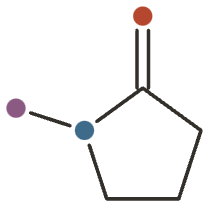
The racetams are a family of synthetic compounds sharing one chemical feature: a 2-pyrrolidinone ring. The first, piracetam, was made at UCB in Belgium in 1964 — and it is where the word “nootropic” comes from. The class named the category.
They work largely through glutamate and acetylcholine, and members range from the well-studied prototype to newer research compounds, differing widely in potency, solubility and duration.
What It’s Used For
Because this is a family page, the useful ranking is by member rather than by use:
- Piracetam — the prototype, used for myoclonus and age-related cognitive decline.
- Oxiracetam — vascular cognitive impairment and recovery after brain injury.
- Nefiracetam — post-stroke apathy and depression.
- Aniracetam — the strongest AMPA pharmacology of the family; mood and memory.
- Pramiracetam — the most potent by weight; memory and TBI.
- Phenylpiracetam — stimulant-leaning, and banned in sport by WADA.
- Fasoracetam — an mGluR/GABA-B mechanism, explored in ADHD.
- Coluracetam — a choline-uptake enhancer.
How It Works
What most members share is positive modulation of AMPA receptors, enhancing glutamatergic transmission and facilitating long-term potentiation. A second recurring theme is cholinergic — several increase high-affinity choline uptake and acetylcholine turnover, which is where the advice to pair a racetam with choline comes from.
Solubility sets the dosing pattern: water-soluble members (piracetam, oxiracetam) are short-acting and split through the day, while fat-soluble ones (aniracetam, pramiracetam, phenylpiracetam) are taken with fat. Potency varies by orders of magnitude across the family — piracetam in grams, phenylpiracetam in low hundreds of milligrams.
Per-compound doses and half-lives are in Pharmacology & Research and the family table below.
Pharmacology & Research
Racetams are a family of synthetic compounds built around a single chemical core — a 2-pyrrolidinone (2-oxo-pyrrolidine) ring — first created in 1964 when Belgian chemists at UCB synthesized piracetam. The Romanian scientist Corneliu Giurgea, who led that work, coined the word nootropic in 1972 (from the Greek noos, “mind,” and trepein, “to bend”) to name this new class of cognition-modifying drugs. Every racetam since is a variation on piracetam’s scaffold: the same ring, different side (“R”) groups that change potency, fat-solubility and half-life.
The honest summary is that “racetam” is a structural label, not a promise of effect. The evidence is deeply lopsided: piracetam has decades of human trials (mostly in impaired brains — age-related cognitive decline, myoclonus, dyslexia — not healthy enhancement), while several popular analogues are research chemicals with animal data and almost no controlled human efficacy. They are generally thought to work by modulating AMPA-type glutamate receptors, supporting cholinergic signalling, and restoring neuronal membrane fluidity — which is also why they are routinely paired with a choline source to blunt the characteristic racetam headache.
Support is an experimental score — a composite weighted by study type (human > animal > in vitro) and study volume. It’s a beta: a fast way to rank strength of evidence at a glance, not a validated metric. Each compound links to its full monograph.
Piracetam was first synthesized in 1964 at UCB, initially explored as an anti–motion-sickness agent. Clinical interest turned to cognition after reports that people taking it noticed improved mental clarity as a side effect. Giurgea’s 1972 coinage of nootropic set out criteria a “true” nootropic should meet — enhance learning and memory, protect the brain, be remarkably non-toxic and free of classical stimulant/sedative effects. Piracetam became the archetype, and every later racetam was engineered by decorating its 2-pyrrolidinone ring to change how it is absorbed, how potent it is, and how long it lasts. Sources commonly count a few dozen close structural analogues, but only a handful ever saw regular use 1Reference 1Nootropics as cognitive enhancers: types, dosage and side effects of smart drugs.
To qualify as a racetam, a compound must contain a 2-pyrrolidinone nucleus — a five-membered ring of carbon and nitrogen with a ketone (C=O) oxygen, made up of oxygen, nitrogen, hydrogen and carbon. That shared ring is the “racetam” part. What differs between members is the R-group hung off the ring:
- Piracetam — the bare acetamide scaffold; water-soluble, low potency.
- Aniracetam — an anisoyl (methoxyphenyl) group makes it fat-soluble and shorter-acting.
- Oxiracetam — a hydroxyl group (“hydroxypiracetam”); water-soluble.
- Pramiracetam — a bulky dipropan-amine group; fat-soluble and the most potent by weight.
- Phenylpiracetam — a phenyl ring added to piracetam; gives it stimulant-like, dopaminergic character.
These substitutions are the whole story of why the family members differ in dose, absorption and duration despite “doing the same thing.”
No single mechanism is fully settled, but the recurring themes across the family are:
- Glutamatergic (AMPA) modulation — several racetams, aniracetam most notably, act as positive modulators of AMPA-type glutamate receptors, enhancing excitatory signalling and long-term potentiation (the cellular basis of learning).
- Cholinergic support — racetams increase activity in acetylcholine systems (pramiracetam and coluracetam by enhancing high-affinity choline uptake), which is central to memory and also explains the choline-depletion headache.
- Membrane fluidity & mitochondrial function — piracetam restores fluidity of neuronal membranes (an effect more pronounced in aged or damaged tissue) and improves mitochondrial efficiency, consistent with its benefits skewing toward impaired rather than healthy brains.
Downstream, secondary effects on dopamine, serotonin and glutamine turnover are reported, but the AMPA + cholinergic axes are the best-characterized.
The clinical literature — overwhelmingly piracetam — describes a mild side-effect profile: the most common complaints are headache, agitation/irritability, and gastrointestinal upset. The headache is widely attributed to choline depletion, which is why racetams are routinely stacked with a choline source such as alpha-GPC, citicoline or plain choline 2Reference 2ReviewPiracetam: a review of pharmacological properties and clinical uses.
Piracetam itself has a genuinely high safety margin (doses up to 24 g/day are used in myoclonus under medical supervision). The caution is that the newer analogues — phenylpiracetam, nefiracetam, coluracetam, fasoracetam — have thin human safety data, unestablished long-term profiles, and unassessed drug interactions. Fat-soluble members (aniracetam, pramiracetam) should be taken with dietary fat. Much of the online negativity about racetams comes from anecdote rather than controlled data — valuable, but not a substitute for trials.
“Safe” needs a regulatory caveat. In the United States, none of the racetams — including piracetam — are FDA-approved as drugs or lawfully marketable as dietary supplements: piracetam does not meet the legal definition of a dietary ingredient, and the FDA has issued warning letters to companies selling it as a supplement 3,
They remain widely available online, occupying a legal gray area rather than a sanctioned one. In several European and Asian countries piracetam (and a few analogues) are sold as prescription drugs for conditions like myoclonus and cognitive decline — but that approval does not extend to informal nootropic use, and does not apply in the US.
The Racetam Family
All eight share the 2-pyrrolidinone core; they diverge in solubility, potency, half-life and — crucially — how much human evidence backs them. Doses below are the ranges reported in research or self-directed use, not personal recommendations.
| Compound | Solubility | Typical dose | Half-life | Best-known use |
|---|---|---|---|---|
| Piracetam | Water | 1.6–4.8 g/day (split) | ~4–5 h | The studied prototype; myoclonus, age-related decline |
| Aniracetam | Fat | 750–1,500 mg/day | ~1–2.5 h | AMPA modulation; mood/anxiety + memory (thin data) |
| Oxiracetam | Water | 750–1,600 mg/day | ~3–6 h | ”Stimulating” racetam; vascular cognitive impairment |
| Pramiracetam | Fat | 300–1,200 mg/day | ~4–6 h | Most potent by weight; choline-uptake, memory |
| Phenylpiracetam | Fat | 100–200 mg/dose | — | Stimulant-leaning; WADA-banned in sport |
| Nefiracetam | — | Research use | — | Post-stroke apathy & depression (mixed) |
| Coluracetam | — | Research use | — | Choline-uptake enhancer; no human efficacy data |
| Fasoracetam | — | Research use | — | mGluR/GABA-B; ADHD research program |
A note on what is not a racetam. Noopept is frequently sold alongside racetams and is a piracetam-inspired dipeptide, but it lacks the 2-pyrrolidinone ring and is properly a racetam analogue, not a member. Ampakines such as sunifiram and unifiram are also often grouped in — they are structurally unrelated. The label matters because “it’s a racetam” is sometimes used to borrow piracetam’s safety record for compounds that have not earned it.
Practical Notes
- Start low, build up. For any racetam, begin at the low end of the range, watch for side effects, and increase gradually.
- Pair with choline. A choline source (alpha-GPC, citicoline) is the standard way to head off the racetam headache.
- Potency ≠ dose. Milligram doses differ enormously across the family — a phenylpiracetam or pramiracetam dose is a fraction of a piracetam dose. Never assume one racetam’s dosing transfers to another.
- Evidence ≠ availability. The compounds easiest to buy online (coluracetam, fasoracetam) are often the least studied in humans. Availability is not endorsement.
These figures describe general reference and studied ranges, not a personal recommendation. Racetams are unapproved compounds; consult a clinician before use, especially alongside other medications.
References
- Malík, M., & Tlustoš, P. (2022). Nootropics as cognitive enhancers: types, dosage and side effects of smart drugs. Nutrients, 14(16), 3367. Link
- Winblad, B. (2005). Piracetam: a review of pharmacological properties and clinical uses. CNS Drug Reviews, 11(2), 169-182. Link
- U.S. Food and Drug Administration (2019). Warning Letter — Pure Nootropics, LLC (565425). Link
- Cohen, P. A., Zakharevich, I., & Gerona, R. (2019). Presence of piracetam in cognitive enhancement dietary supplements. JAMA Internal Medicine, 180(3), 458-459. Link
For half-lives, timing and stacking across the nootropics on this site, see the Nootropic Dosage Guide.