
Compound Monograph
Reserpinine
Reserpinine is a minor monoterpene indole alkaloid of greater periwinkle (Vinca major) and Rauvolfia serpentina — an 11-methoxy heteroyohimbine. It is not reserpine, not rescinnamine and not raubasine, and its own literature runs to seven indexed papers, almost all of them phytochemistry.

Sources · 2
Where Does It Come From?
Reserpinine is a naturally occurring monoterpene indole alkaloid — heteroyohimbine type (11-methoxy-delta-yohimbine), c22h26n2o4, mw 382.5, found in Greater periwinkle and 1 other source. Its toxicity is not yet characterized.
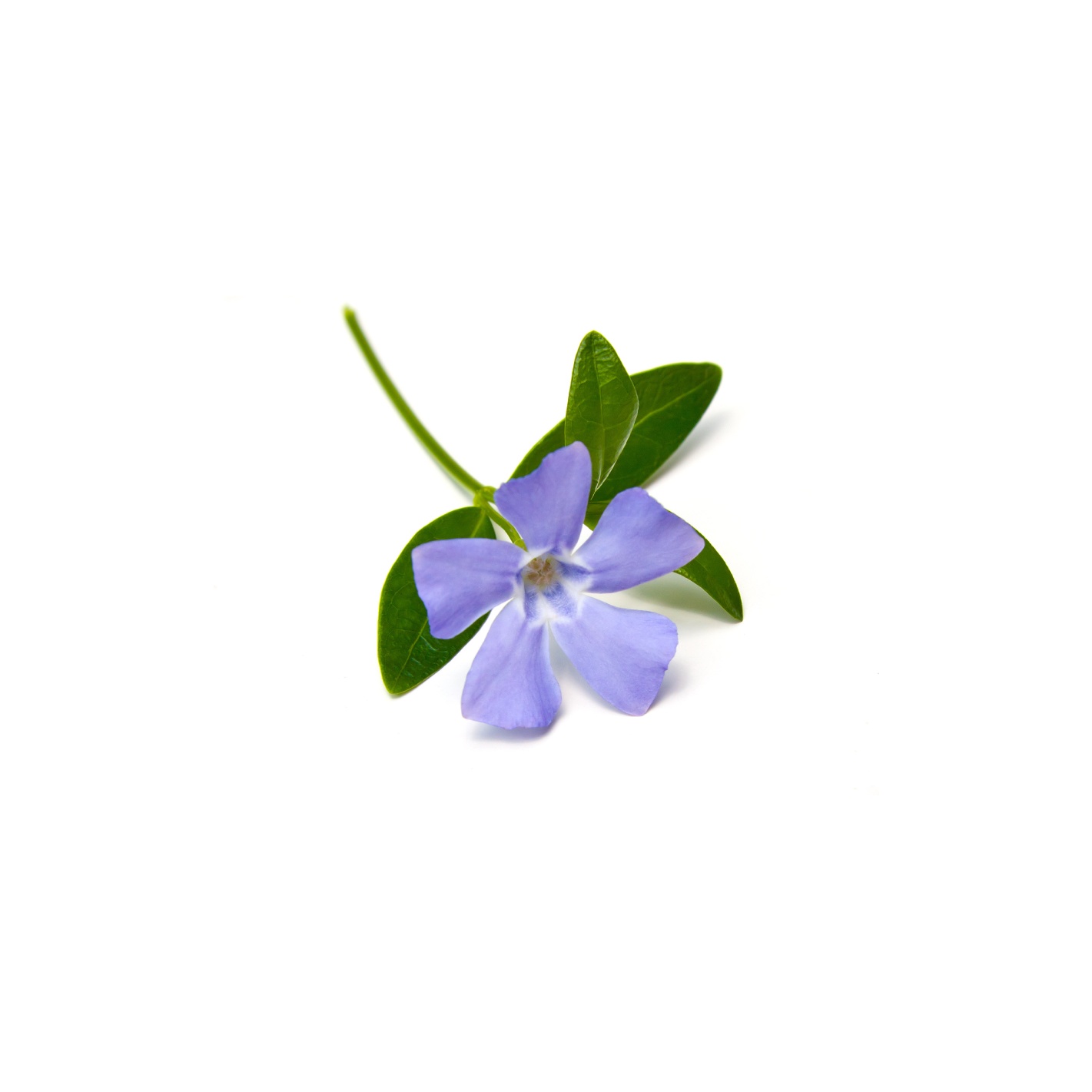
Concentration
Content by Source
Concentrations not reported. No percent-dry-weight or mg/g figures have been published for this compound in its source plants.
Reserpinine at a Glance
Reserpinine is a minor monoterpene indole alkaloid of the heteroyohimbine type, first reported from the leaves of greater periwinkle (Vinca major) in 1954 and later from the roots of Indian snakeroot (Rauvolfia serpentina) 1,
The most important fact about this molecule is a negative one. Reserpinine is not reserpine. The two names differ by three letters and nothing else; the molecules differ by an entire ester side chain, 226 daltons, and the whole of reserpine’s twentieth-century pharmacology. None of reserpine’s VMAT inhibition, none of its antihypertensive drug history, and none of the depression controversy attached to it belongs here. Neither does the chemotherapy pharmacology of vincristine and vinblastine, which are bisindole alkaloids from a different genus.
What is left, once those borrowings are stripped out, is very little. A PubMed search for “reserpinine” returns seven records in total (checked 31 July 2026), of which one is not about this compound at all. Four are phytochemistry or biosynthesis. Exactly one paper has ever reported a biological effect of the isolated molecule 4Reference 4Vogel G (1975). [Predictability of the activity of drug combinations — yes or no]. Arzneimittel-Forschung 25(9):1356–1365. [German]. https://pubmed.ncbi.nlm.nih.gov/1242658/View study →. This page is short because the literature is, and it is written to keep three much better-studied alkaloids from leaking into the gap.
Reserpinine Is Not Reserpine
This is the error the page exists to prevent, and it has three distinct forms.
Reserpine. Reserpine is C33H40N2O9, MW 608.7 — a yohimban skeleton carrying a methyl ester and a 3,4,5-trimethoxybenzoyl ester at C-18 13Reference 13National Center for Biotechnology InformationView study →. It is the Rauvolfia alkaloid that inhibits the vesicular monoamine transporter, depletes noradrenaline, dopamine and serotonin, and was one of the first drugs used clinically for hypertension. Reserpinine has no trimethoxybenzoyl group, no ester side chain, and no reported activity at VMAT or any other transporter. The two co-occur in Rauvolfia serpentina root and have been isolated side by side from the same extract, as separate compounds, in the same paper 3Reference 3A new ajmaline-type alkaloid from the roots of Rauvolfia serpentinaView study →. Nothing in reserpine’s file transfers.
Rescinnamine — the subtler trap. “Reserpinine” is also a legacy synonym for rescinnamine (C35H42N2O9), another Rauvolfia ester alkaloid and a marketed antihypertensive. PubChem still lists Reserpinine (C35 alkaloid), Reserpinin and Reserpinene among rescinnamine’s synonyms, and disambiguates the heteroyohimbine only by tagging it Reserpinine (C22 alkaloid) 10,
Vincristine and vinblastine. Periwinkle’s cytotoxic reputation belongs to Catharanthus roseus (Madagascar periwinkle) — a different genus producing bisindole alkaloids that bind tubulin and are used as chemotherapy. Vinca major is a different plant with a different alkaloid class. Reserpinine has never been reported to bind tubulin, and it was not among the compounds showing activity in the one Rauvolfia screen that included it 3Reference 3A new ajmaline-type alkaloid from the roots of Rauvolfia serpentinaView study →.
The practical rule: if a source attaches blood-pressure lowering, monoamine depletion, or antimitotic cytotoxicity to “reserpinine”, check the molecular formula before believing it. Three different molecules answer to names within one or two letters of this one.
What Reserpinine Actually Is
Reserpinine belongs to the heteroyohimbine (alstonine/ajmalicine) subclass of monoterpene indole alkaloids — the pentacyclic indolo-quinolizidines carrying a fused dihydropyran E-ring, which are widespread in the Apocynaceae and Rubiaceae.
The skeleton. The original 1954 report from Vinca major did not treat the name as opaque: Janot and Le Men titled their communication “présence de réserpinine ou méthoxy-11 δ-yohimbine” — 11-methoxy-δ-yohimbine 1Reference 1Janot MM, Le Men J (1954). [Vinca major L. alkaloids; presence of reserpinine or 11-methoxy-δ-yohimbine]. Comptes Rendus Hebdomadaires des Séances de l’Académie des Sciences 238(26):2550–2552. [French]. https://pubmed.ncbi.nlm.nih.gov/13199943/View study →. δ-Yohimbine is the classical name for ajmalicine, also called raubasine. So the primary literature defines reserpinine, from its first appearance, as the 11-methoxy analogue of ajmalicine — one methoxy group added (Δ = CH2O), not ajmalicine itself.
Raubasine versus raubasinine. This one letter pair is almost certainly the source of the claim that reserpinine and raubasine are the same thing:
| Name | Molecule | Formula | MW |
|---|---|---|---|
| Raubasine | Ajmalicine (δ-yohimbine) | C21H24N2O3 | 352.4 |
| Raubasinine | Reserpinine | C22H26N2O4 | 382.5 |
Raubasinine is a genuine registered synonym of reserpinine; raubasine is a genuine registered synonym of ajmalicine 10,
What is genuinely unresolved. Reserpinine sits inside a cluster of C22H26N2O4 methoxy-heteroyohimbines — aricine, pubescine, heterophylline, raubasinine — whose relationships the databases have not cleanly settled. PubChem files all of those names, plus Reserpinine (C22 alkaloid), under a single record (CID 72313) that it also calls 11-methoxytetrahydroalstonine, while simultaneously carrying both 10-methoxy and 11-methoxy systematic names in the same synonym list, and maintaining a second, differently-substituted record under the name aricine 10Reference 10National Center for Biotechnology InformationView study →. Two things about that cannot be reconciled from the accessible literature:
- Ring position. Whether the methoxy sits at C-10 or C-11 is reported both ways within one database record.
- Stereochemical series. The 1954 primary source places reserpinine in the ajmalicine (δ-yohimbine) series; the modern database entry names it 11-methoxytetrahydroalstonine, which is the C-19/C-20 epimeric “allo” series. Those are different stereochemistry on the same skeleton.
I could not resolve either from primary sources available here, and I am not picking one. What is firm, and sufficient here: reserpinine is a methoxylated heteroyohimbine of formula C22H26N2O4, distinct from ajmalicine, from reserpine and from rescinnamine.
One practical consequence of the database merge: the literature published under “aricine” must not be silently transferred here. Aricine has, for example, been isolated as the major alkaloid of Aspidosperma nitidum wood and reported as larvicidal against Aedes aegypti 14Reference 14Bioprospection for new larvicides against Aedes aegypti based on ethnoknowledge from the Amazonian São Sebastião de Marinaú riverside communityView study →. Whether that finding belongs to reserpinine depends entirely on the unresolved question above, so it is recorded as a neighbour’s result, not as this molecule’s.
What It's Used For
There is almost nothing here, and the emptiness is the finding rather than a shortfall of searching.
The search record. On 31 July 2026 I ran PubMed for reserpinine (all fields) — 7 records; for reserpinine AND alkaloid — 6 records; and for aricine OR raubasinine OR "11-methoxytetrahydroalstonine" — 7 records, none of which name reserpinine. Of the seven “reserpinine” records: three are isolation/phytochemistry 1,
Support is an experimental score — weighted by study type (human > animal > in vitro) and volume. A beta, not a validated metric. With a single animal observation behind the only row, the number here should be read as “barely above nothing”, and no second row was withheld: there is no second application to rank.
Isolate, animal. In a 1975 Arzneimittelforschung investigation of whether the effects of drug combinations are predictable, Vogel administered valepotriate, morphine, scopolamine, ajmalicine, rescinnamine, reserpinine and reserpine to mice as central nervous system depressants. Each lengthened hexobarbital-induced sleeping time in a dose-dependent way, and — unlike every other class the paper tested — the combinations behaved unpredictably, with two individually ineffective doses together producing more than a 100% increase in sleeping time 4Reference 4Vogel G (1975). [Predictability of the activity of drug combinations — yes or no]. Arzneimittel-Forschung 25(9):1356–1365. [German]. https://pubmed.ncbi.nlm.nih.gov/1242658/View study →. Reserpinine is named as a separate substance from both rescinnamine and reserpine in the same list, which is itself useful evidence that the author treated the three as distinct compounds.
Three caveats limit what this can carry. The paper’s subject is combination pharmacology, not reserpinine; the abstract gives no dose, no route and no potency comparison for the individual agents; and hexobarbital sleeping-time prolongation is a non-specific readout that can reflect CNS depression, hepatic enzyme inhibition slowing hexobarbital metabolism, or both.
Gap: this is a single, fifty-year-old, non-replicated animal observation with no dose reported and no mechanism proposed. Nothing else in the literature tests reserpinine for any biological activity at all.
Mechanisms
None characterised. No receptor, enzyme, transporter, ion channel or signalling pathway has been assayed against reserpinine in the indexed literature. No mechanisms table is given because there is nothing to put in it.
It is worth being explicit about what cannot be assumed in place of data. Reserpinine’s structural neighbours have well-mapped and mutually unrelated pharmacology — ajmalicine is an α2-adrenoceptor-active cerebral vasodilator, reserpine a vesicular monoamine transporter inhibitor, rescinnamine an antihypertensive ester alkaloid. Heteroyohimbine structure–activity relationships turn sharply on stereochemistry and ring substitution, and reserpinine’s own stereochemical assignment is unsettled (see above). Reasoning from the neighbours would be guessing.
Pharmacokinetics
No data. Absorption, oral bioavailability, distribution, metabolism, active metabolites, half-life and clearance are all unreported for reserpinine in any species. Because the only in-vivo observation used an intraperitoneal/oral rodent model whose dosing detail is not in the accessible abstract, not even an exposure estimate can be inferred 4Reference 4Vogel G (1975). [Predictability of the activity of drug combinations — yes or no]. Arzneimittel-Forschung 25(9):1356–1365. [German]. https://pubmed.ncbi.nlm.nih.gov/1242658/View study →.
Clinical Trials
None — completed, ongoing or planned. Reserpinine has never been administered to a human subject in any published study, and no trial registry entry names it.
| Completed | Planned | Terminated | Preclinical |
|---|---|---|---|
| 0 | 0 | 0 | 1(a single 1975 mouse observation) |
Last checked: July 2026.
Isolate vs. Plant Studies
The split is unusually clean, and unusually unhelpful.
The isolate work is chemistry, not pharmacology. Reserpinine has been isolated in pure form more than once — from Vinca major leaf 1,
The plant work does not transfer. Vinca major’s own pharmacodynamic literature begins with a 1955 study of the plant’s total alkaloid fraction, not of any single component 9Reference 9Quevauviller A, Le Men J, Janot MM (1955). [Various pharmacodynamic properties of total alkaloids from the periwinkle Vinca major L. (Apocynaceae)]. Annales Pharmaceutiques Françaises 13(5):328–333. [French]. https://pubmed.ncbi.nlm.nih.gov/13259261/View study →, and modern V. major research reports antioxidant, anticholinesterase and tyrosinase-inhibiting activity of crude alkaloid extracts in which reserpinine is one unquantified minor constituent among many. Attributing any of that to reserpinine would be an unsupported leap — the same leap that has already been made in reverse by sources that hand it reserpine’s blood-pressure effects.
Net position: the isolated molecule has one animal datum; the plants that contain it have extract-level data that cannot be apportioned to it. There is no bridge between the two.
Its Role in Plants
Reserpinine’s densest literature is, oddly, its biosynthesis — the two studies that dosed labelled precursors into living plants are the most substantial work the compound has attracted.
As a monoterpene indole alkaloid, reserpinine is built the standard way: tryptamine condensed with the iridoid monoterpene secologanin to give strictosidine, which is elaborated through the heteroyohimbine branch. Goeggel and Arigoni established the biosynthetic origin of reserpinine and vincamedine in 1965 5Reference 5Goeggel H, Arigoni D (1965). [On the biosynthesis of reserpinine and vincamedine]. Experientia 21(7):369–370. [German]. https://doi.org/10.1007/BF02139738View study →, and Inouye, Ueda and Takeda showed in 1969 that sweroside is incorporated into reserpinine in Vinca — the same experiment demonstrating incorporation into quinine in Cinchona, tying the two genera to a shared secoiridoid route 6Reference 6Inouye H, Ueda S, Takeda Y (1969). [On the biosynthesis of Vinca as well as Cinchona alkaloids: incorporation of sweroside into reserpinine and quinine]. Tetrahedron Letters (6):407–408. [German]. https://pubmed.ncbi.nlm.nih.gov/4389472/View study →. The parallel is the point: reserpinine was useful to those authors as a tractable end-product of a pathway, which is why it was labelled at all.
No ecological function has been reported. Whether reserpinine contributes to Vinca major’s herbivore defence, or is simply a minor branch product of the pathway that makes the plant’s more abundant alkaloids, has not been studied. Nor is there any evidence on whether its concentration responds to stress, season or cultivar — one study did find that the yellowish and green laminar sections of variegated V. major leaves do not differ in alkaloid profile, which argues against a light- or chlorophyll-linked pattern for the group as a whole 2Reference 2Alkaloids of Vinca major cvView study →.
Prevalence in Nature
Reserpinine is a minor alkaloid with a narrow reported distribution and no quantitative data anywhere.
Greater periwinkle (Vinca major, Apocynaceae) is the type source. Janot and Le Men reported it from the plant in 1954 1Reference 1Janot MM, Le Men J (1954). [Vinca major L. alkaloids; presence of reserpinine or 11-methoxy-δ-yohimbine]. Comptes Rendus Hebdomadaires des Séances de l’Académie des Sciences 238(26):2550–2552. [French]. https://pubmed.ncbi.nlm.nih.gov/13199943/View study →, and Balsevich, Constabel and Kurz confirmed it in 1982 in the leaves of V. major cv. Variegata, where it was one of seven alkaloids isolated alongside majdine, akuammicine, strictosidine lactam, pseudoakuammigine, akuammine and a tentatively assigned 10-hydroxycathofoline 2Reference 2Alkaloids of Vinca major cvView study →. It sits in the same minor-alkaloid family as vincamajine, majdine, eburnamenine and 11-hydroxypolyneuridine, against the plant’s more abundant vincamine and tannins.
Indian snakeroot (Rauvolfia serpentina, Apocynaceae) is the second confirmed source: reserpinine was isolated from the roots in 2017 as one of twenty-two known compounds recovered alongside a new ajmaline-type alkaloid — sharing the extract with tetrahydroalstonine, reserpine, yohimbine and ajmaline 3Reference 3A new ajmaline-type alkaloid from the roots of Rauvolfia serpentinaView study →. That co-occurrence with reserpine in a single root extract is worth holding onto, since it is the physical basis for how easily the two names get swapped.
No concentration figure exists. No study reports a % dry weight, a mg/g value, or even an isolation yield for reserpinine from any plant. The classical phytochemical survey of Vinca major records the general problem — the plant’s alkaloid content is unstandardised and varies strongly with material and chemotype 8Reference 8Studies on Vinca major (Apocynaceae)View study → — and nothing since has produced a quantitative assay for this constituent.
Reports under the merged database names (aricine, pubescine, heterophylline) extend nominally to Aspidosperma, Hamelia and other Apocynaceae/Rubiaceae genera, but as set out above those attributions cannot be assigned to reserpinine until the identity question is settled 10,
Discovery & Synthesis
First report (1954). M. M. Janot and J. Le Men, working in Paris on the alkaloids of Vinca major, published “Alcaloïdes de la grande pervenche (Vinca major L.); présence de réserpinine ou méthoxy-11 δ-yohimbine” in Comptes Rendus Hebdomadaires des Séances de l’Académie des Sciences 1Reference 1Janot MM, Le Men J (1954). [Vinca major L. alkaloids; presence of reserpinine or 11-methoxy-δ-yohimbine]. Comptes Rendus Hebdomadaires des Séances de l’Académie des Sciences 238(26):2550–2552. [French]. https://pubmed.ncbi.nlm.nih.gov/13199943/View study →. The name is a diminutive coined against reserpine, then at the height of its fame as the first Rauvolfia antihypertensive — the very association that takes a section to undo. The same group continued the series, describing further V. major alkaloids through 1955 and beyond 9Reference 9Quevauviller A, Le Men J, Janot MM (1955). [Various pharmacodynamic properties of total alkaloids from the periwinkle Vinca major L. (Apocynaceae)]. Annales Pharmaceutiques Françaises 13(5):328–333. [French]. https://pubmed.ncbi.nlm.nih.gov/13259261/View study →.
Structural work. No single definitive structure-elucidation paper is attributable to the name in the indexed record, and the residual disagreement about the methoxy position and stereochemical series (above) is a direct consequence: the compound was named in an era before NMR and never revisited with modern methods under this name.
Total synthesis. None reported for reserpinine. Synthetic work in this area has targeted its better-known relatives — a 1978 Japanese programme on indole-alkaloid ring closure, for example, delivered heteroyohimbines including aricine and reserpine, not reserpinine. If the reserpinine/aricine equation ever holds, that assignment changes; until then it cannot be claimed.
Manufacture today. None. Reserpinine is not produced commercially, is not sold as a supplement or pharmaceutical, and is not routinely stocked as an analytical reference standard. Its only practical existence is as a research isolate.
Patents: not yet researched.
Toxicity & Safety
Reserpinine carries the unknown grading, and it means exactly that: there is no toxicology for this compound at all. No acute or repeat-dose study, no genotoxicity assay, no reproductive or developmental data, no organ-toxicity work, no human exposure report. The badge is a statement about the evidence, not a verdict on the molecule.
Two cautions follow, pulling in opposite directions.
Do not read safety from silence. Nothing here says reserpinine is harmless. The one in-vivo observation that exists is that it depresses the central nervous system in mice and potentiates a barbiturate, and that the potentiation was supra-additive in combination with other depressants — two doses that did nothing alone more than doubled sleeping time together 4Reference 4Vogel G (1975). [Predictability of the activity of drug combinations — yes or no]. Arzneimittel-Forschung 25(9):1356–1365. [German]. https://pubmed.ncbi.nlm.nih.gov/1242658/View study →. For an unstudied compound, that is the opposite of reassuring, and it is the closest thing to a mechanism-flavoured hazard signal on record.
Do not read reserpine’s safety file onto it either. Reserpine’s dose-dependent sedation, depression risk, nasal congestion, bradycardia, extrapyramidal effects and pregnancy cautions are documented for reserpine, a molecule 226 daltons heavier with a different mechanism. Importing them here would be the same category error the rest is written to prevent, and would falsely imply that reserpinine has been studied.
Where the real-world caution lives. Vinca major itself is flagged moderately toxic and is not recommended as a self-administered herb; those cautions belong on the periwinkle herb page, where intake is actually decided, and they reflect the whole alkaloid fraction rather than this constituent.
- Toxicity genuinely unknown. No toxicology, genotoxicity, reproductive or human-exposure data exist for isolated reserpinine. Absence of reported harm is not evidence of safety.
- The one in-vivo finding is CNS depression. Reserpinine prolonged hexobarbital sleeping time in mice, and did so supra-additively when combined with other CNS depressants 4Reference 4Vogel G (1975). [Predictability of the activity of drug combinations — yes or no]. Arzneimittel-Forschung 25(9):1356–1365. [German]. https://pubmed.ncbi.nlm.nih.gov/1242658/View study →.
- Do not inherit reserpine’s profile. Reserpine’s sedation, depression and cardiovascular cautions belong to a different, much larger molecule that happens to share a root name and a plant.
- No isolate standard, no product. Reserpinine is not sold, not standardised and not quantified in any plant — any claim attached to it in a commercial context is unverifiable.
Dosage
There is no dose, and no basis for one. Reserpinine has never been administered to a human being in a published study. The single animal study that used it reports no dose, route or dosing schedule in its accessible abstract 4Reference 4Vogel G (1975). [Predictability of the activity of drug combinations — yes or no]. Arzneimittel-Forschung 25(9):1356–1365. [German]. https://pubmed.ncbi.nlm.nih.gov/1242658/View study →. It is not available as a supplement, a drug or a standardised extract, and no plant material has ever been standardised to its content.
The dosing figures that circulate near this name belong elsewhere and are deliberately not reproduced: reserpine has an established antihypertensive dose range, vincamine has a studied dose in dementia research, and Vinca major itself has no established whole-herb dose at all. None of those numbers describe this molecule.
References
- Janot MM, Le Men J (1954). [Vinca major L. alkaloids; presence of reserpinine or 11-methoxy-δ-yohimbine]. Comptes Rendus Hebdomadaires des Séances de l’Académie des Sciences 238(26):2550–2552. [French]. https://pubmed.ncbi.nlm.nih.gov/13199943/
- Balsevich J, Constabel F, Kurz WG (1982). Alkaloids of Vinca major cv. Variegata. Planta Medica 44(2):91–93. https://pubmed.ncbi.nlm.nih.gov/17402086/
- Rukachaisirikul T, Chokchaisiri S, Suebsakwong P, Suksamrarn A, Tocharus C (2017). A new ajmaline-type alkaloid from the roots of Rauvolfia serpentina. Natural Product Communications 12(4):495–498. https://pubmed.ncbi.nlm.nih.gov/30520580/
- Vogel G (1975). [Predictability of the activity of drug combinations — yes or no]. Arzneimittel-Forschung 25(9):1356–1365. [German]. https://pubmed.ncbi.nlm.nih.gov/1242658/
- Goeggel H, Arigoni D (1965). [On the biosynthesis of reserpinine and vincamedine]. Experientia 21(7):369–370. [German]. https://doi.org/10.1007/BF02139738
- Inouye H, Ueda S, Takeda Y (1969). [On the biosynthesis of Vinca as well as Cinchona alkaloids: incorporation of sweroside into reserpinine and quinine]. Tetrahedron Letters (6):407–408. [German]. https://pubmed.ncbi.nlm.nih.gov/4389472/
- Schmitt H, Nechtschein S, Gonnard P (1958). [Study of the action of rescinnamine (reserpinine) on the central nervous system]. Journal de Physiologie (Paris) 50(1):75–89. [French]. — cited here as documentation of the naming collision; this paper concerns rescinnamine, not reserpinine. https://pubmed.ncbi.nlm.nih.gov/13539813/
- Farnsworth NR, Fong HH, Blomster RN, Draus FJ (1962). Studies on Vinca major (Apocynaceae). II. Phytochemical investigation. Journal of Pharmaceutical Sciences 51:217–224. https://pubmed.ncbi.nlm.nih.gov/13891669/
- Quevauviller A, Le Men J, Janot MM (1955). [Various pharmacodynamic properties of total alkaloids from the periwinkle Vinca major L. (Apocynaceae)]. Annales Pharmaceutiques Françaises 13(5):328–333. [French]. https://pubmed.ncbi.nlm.nih.gov/13259261/
- PubChem CID 72313 — Reserpinine (C22 alkaloid) / (−)-aricine / pubescine / raubasinine / heterophylline, C22H26N2O4, MW 382.5. National Center for Biotechnology Information. Retrieved 31 July 2026. https://pubchem.ncbi.nlm.nih.gov/compound/72313
- PubChem CID 5280954 — Rescinnamine, C35H42N2O9, MW 634.7; synonym list includes “Reserpinine (C35 alkaloid)” and “Reserpinin”. National Center for Biotechnology Information. Retrieved 31 July 2026. https://pubchem.ncbi.nlm.nih.gov/compound/5280954
- PubChem CID 441975 — Ajmalicine (raubasine, δ-yohimbine), C21H24N2O3, MW 352.4. National Center for Biotechnology Information. Retrieved 31 July 2026. https://pubchem.ncbi.nlm.nih.gov/compound/441975
- PubChem CID 5770 — Reserpine, C33H40N2O9, MW 608.7. National Center for Biotechnology Information. Retrieved 31 July 2026. https://pubchem.ncbi.nlm.nih.gov/compound/5770
- Correa de Oliveira PM, Barreto Sousa JP, Albernaz LC, Coelho-Ferreira M, Salmen Espindola L (2022). Bioprospection for new larvicides against Aedes aegypti based on ethnoknowledge from the Amazonian São Sebastião de Marinaú riverside community. Journal of Ethnopharmacology 293:115284. — reports aricine, a name PubChem merges with reserpinine; the attribution is unresolved. https://pubmed.ncbi.nlm.nih.gov/35447199/



