
Compound Monograph
Sweroside
Sweroside is a widely distributed bitter secoiridoid glycoside of gentian, Swertia, honeysuckle and cornelian cherry — a secologanin-derived molecule with a genuine but entirely preclinical profile spanning hepatoprotection, bone formation (osteogenesis) and wound healing. There are no human trials of the isolate, the human evidence belongs to the whole bitter herbs, and its oral bioavailability is very low.

Sources · 7
Where Does It Come From?
Sweroside is a naturally occurring secoiridoid glycoside (secologanin-derived iridoid), found in Gentian root, Swertia, Cornelian cherry fruit and 4 other sources. It is well tolerated orally (low toxicity).
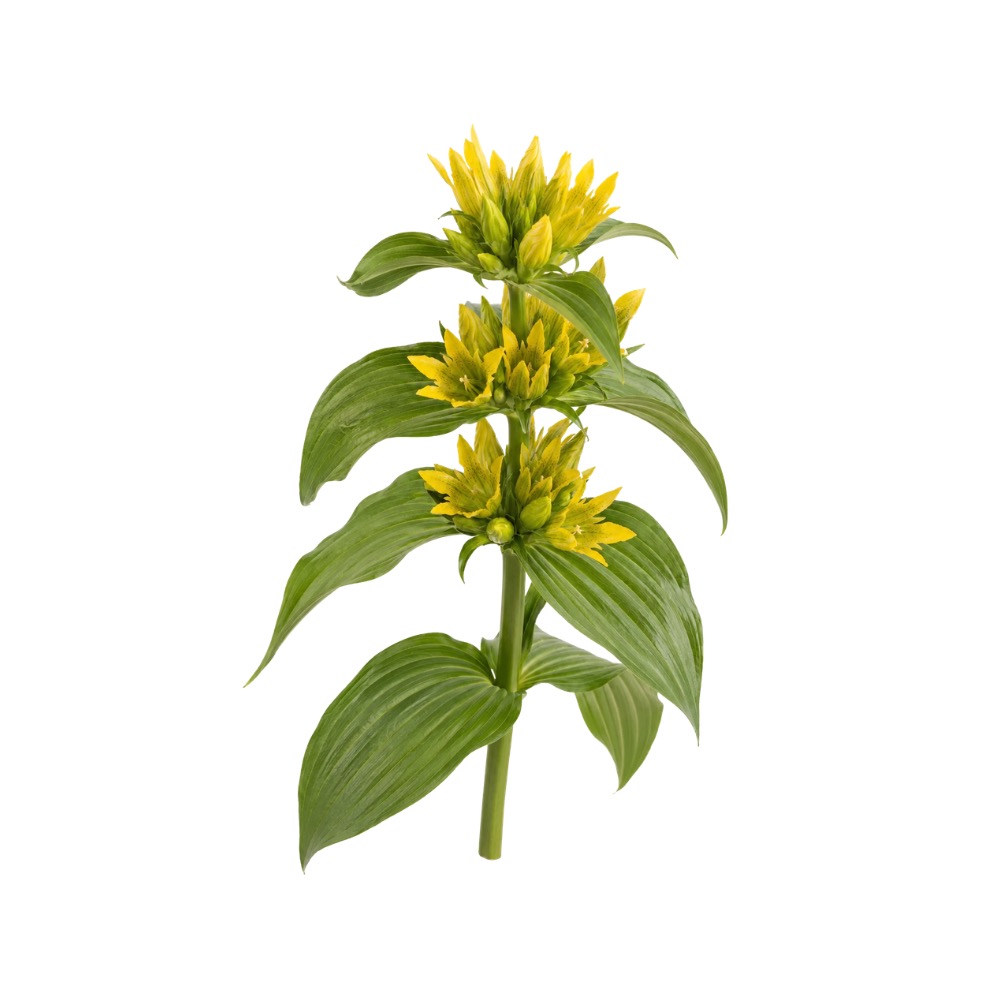 Source Gentian Gentiana lutea Herb monograph →
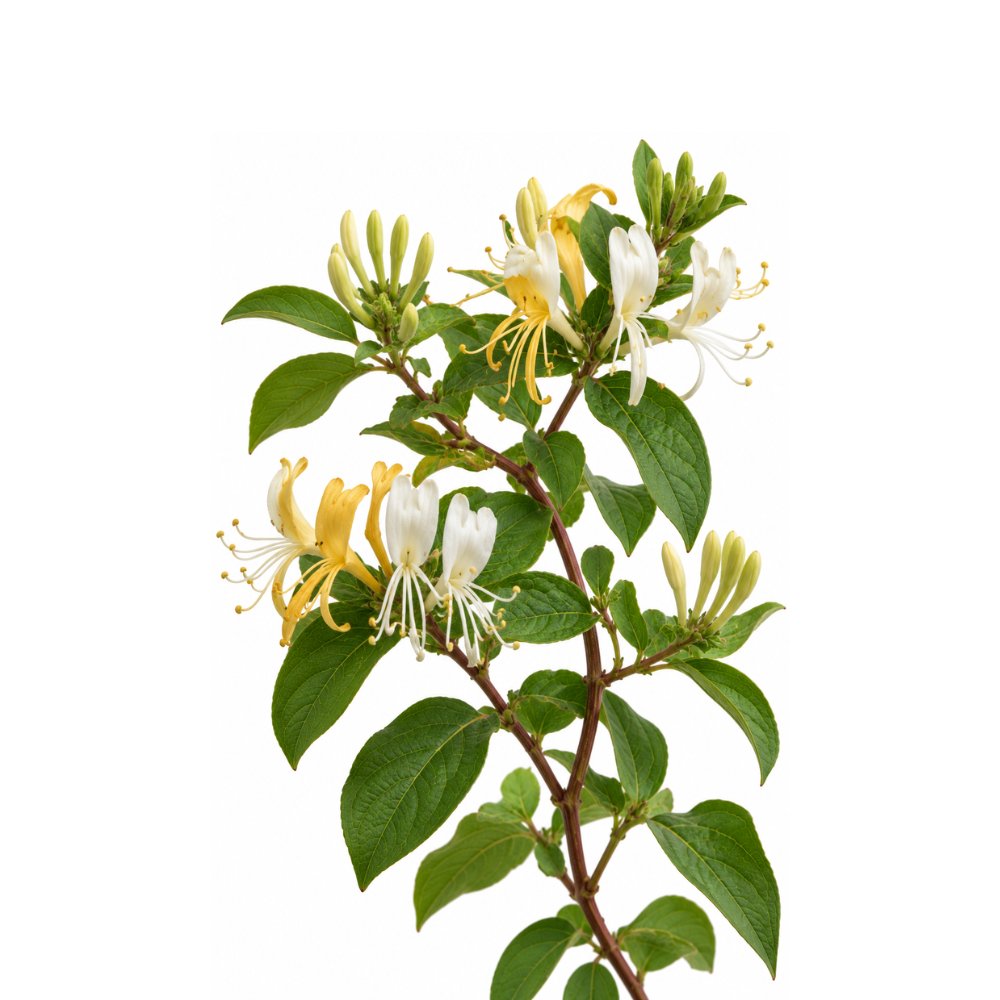 Source Honeysuckle Lonicera japonica Herb monograph →
Concentration
Content by Source
Concentrations not reported. No percent-dry-weight or mg/g figures have been published for this compound in its source plants.
Sweroside at a Glance
Sweroside is a secoiridoid glycoside — a bitter, water-soluble molecule built on a ring-opened iridoid skeleton — and one of the most widely distributed secoiridoids in the Gentianales. It is a shared constituent of the classic bitter herbs: gentian and Swertia, cornelian cherry (Cornus officinalis) fruit, honeysuckle (Lonicera) and teasel root, where it co-occurs with siblings such as gentiopicroside, swertiamarin and amarogentin and contributes to their characteristic bitterness 1,
As a molecule in its own right, sweroside has a broad but entirely preclinical pharmacology. Three signals stand out from the cell and rodent literature: hepatoprotection (across cholestatic, steatohepatitis and fatty-liver models), bone formation (osteogenic differentiation of osteoblasts and marrow stem cells), and wound healing (stimulating fibroblast collagen production) 1,
Two honesty caveats run through the whole page. There are no clinical trials of isolated sweroside: the human evidence for its sources is for the whole bitter herbs and their formulas, not the purified compound. And sweroside has very low oral bioavailability — around 0.31% in one rat study — so much of its in-vitro and high-dose potency overstates what an oral dose could deliver 11,
Sweroside Across the Bitter Herbs
The reason to treat sweroside as a single molecule rather than “a gentian compound” is that it appears across a whole cluster of unrelated bitter medicinal plants, and its research signals track that spread rather than any one herb.
Where it occurs. Sweroside is a defining secoiridoid of the Gentianaceae — it is one of the bitter principles of gentian root and Swertia chirayita (the “chirata” bitter tonic), alongside gentiopicroside, swertiamarin and the intensely bitter amarogentin 1,
What its isolate signals are. Three distinct threads recur, and they map loosely onto the traditional uses of its source herbs:
- Osteogenic / bone — sweroside promotes osteoblast and marrow-stem-cell differentiation, the thread behind teasel- and cornelian-cherry-based “bone-knitting” and “kidney-tonic” traditions 3,
4, .5Reference 3AnimalProtective effects of sweroside on human MG-63 cells and rat osteoblastsView study →Reference 4Sweroside-mediated mTORC1 hyperactivation in bone marrow mesenchymal stem cells promotes osteogenic differentiationView study →Reference 5Sweroside promotes osteoblastic differentiation and mineralization via interaction of membrane estrogen receptor-α and GPR30 mediated p38 signalling pathway on MC3T3-E1 cellsView study → - Hepatoprotective — it protects hepatocytes across several liver-injury models, mirroring the bitter-tonic, “liver-clearing” role of gentian and Swertia 6,
7, .8, 9Reference 6AnimalSweroside ameliorates α-naphthylisothiocyanate-induced cholestatic liver injury in mice by regulating bile acids and suppressing pro-inflammatory responsesView study →Reference 7Sweroside prevents non-alcoholic steatohepatitis by suppressing activation of the NLRP3 inflammasomeView study →Reference 8AnimalSweroside alleviates hepatic steatosis in part by activating AMPK/mTOR-mediated autophagy in miceView study →Reference 9The hepatoprotective properties of gentiopicroside, sweroside, and swertiamarin against metabolic dysfunction-associated steatotic liver disease (MASLD)View study → - Wound healing — it stimulates fibroblast collagen production and proliferation, consistent with gentian’s traditional topical wound use 10Reference 10Effects of gentiopicroside, sweroside and swertiamarine, secoiridoids from gentian (Gentiana lutea ssp. symphyandra), on cultured chicken embryonic fibroblastsView study →.
The honest frame is that all of this is isolate work in cells and rodents. No human has been given purified sweroside in a trial; the plants themselves have the clinical and traditional footprint, and sweroside is one active among many bitter secoiridoids in each of them 1Reference 1Sweroside: unveiling broad therapeutic potential — from mechanistic insights to clinical potentialView study →.
What It's Used For
Sweroside’s evidence base is broad, internally consistent and entirely preclinical. The load-bearing caveat is the compound-page discipline: no human trials of the isolate, and very low oral bioavailability means in-vitro and high-dose rodent potency overreads what an oral dose delivers 1,
Support is an experimental score — weighted by study type (human > animal > in vitro) and volume. A beta, not a validated metric. There are no human isolate data, so scores stay modest by design.
Sweroside’s largest strand, and squarely isolate work across several distinct liver injuries — all in mice/hepatocytes. In α-naphthylisothiocyanate (ANIT) cholestasis, sweroside (120 mg/kg) lowered serum liver markers and hepatic bile acids and suppressed pro-inflammatory genes (TNF-α, IL-6, ICAM-1) 6Reference 6AnimalSweroside ameliorates α-naphthylisothiocyanate-induced cholestatic liver injury in mice by regulating bile acids and suppressing pro-inflammatory responsesView study →.
In non-alcoholic steatohepatitis (methionine-choline-deficient diet), it cut ALT/AST, hepatic immune infiltration, triglyceride accumulation and fibrosis by suppressing NLRP3-inflammasome activation 7Reference 7Sweroside prevents non-alcoholic steatohepatitis by suppressing activation of the NLRP3 inflammasomeView study →.
In non-alcoholic fatty liver, it reduced hepatic steatosis in part by activating AMPK/mTOR-mediated autophagy 8Reference 8AnimalSweroside alleviates hepatic steatosis in part by activating AMPK/mTOR-mediated autophagy in miceView study →.
And in an isolated-hepatocyte comparison of gentian secoiridoids, sweroside (with gentiopicroside and swertiamarin) improved mitochondrial ATP production and lowered ROS under a lipotoxic (arachidonic-acid) challenge 9Reference 9The hepatoprotective properties of gentiopicroside, sweroside, and swertiamarin against metabolic dysfunction-associated steatotic liver disease (MASLD)View study →.
Gap: all rodent/cell, no human isolate trials; the human evidence for its source plants is the whole herb / formula, and poor oral bioavailability limits achievable exposure 6,
A mechanistically tight isolate signal, and the one with a whole-animal readout. Sweroside from cornelian cherry enhanced proliferation and differentiation of human MG-63 cells and rat osteoblasts — raising alkaline phosphatase and osteocalcin and attenuating apoptosis, without cytotoxicity 3Reference 3AnimalProtective effects of sweroside on human MG-63 cells and rat osteoblastsView study →.
In bone-marrow mesenchymal stem cells it hyperactivated mTORC1 (raising P-mTOR, PS6, RUNX2, OSX, OCN) to drive osteogenic differentiation, and alleviated bone loss in ovariectomised mice — an effect reversed by the mTOR inhibitor rapamycin 4Reference 4Sweroside-mediated mTORC1 hyperactivation in bone marrow mesenchymal stem cells promotes osteogenic differentiationView study →.
In MC3T3-E1 pre-osteoblasts, sweroside (from teasel root) promoted ALP activity and mineralisation through membrane estrogen-receptor-α and GPR30, signalling via p38 — blocking any of ER-α, GPR30 or p38 abolished the effect 5Reference 5Sweroside promotes osteoblastic differentiation and mineralization via interaction of membrane estrogen receptor-α and GPR30 mediated p38 signalling pathway on MC3T3-E1 cellsView study →.
Gap: rodent/cell only; no human isolate data, and the very low oral bioavailability of a glycoside makes achievable bone exposure uncertain 4,
The shared engine beneath the organ-protective effects rather than a standalone use. In imiquimod-induced psoriasiform skin inflammation, sweroside reduced erythema, scaling and serum TNF-α/IL-1β by inhibiting the NLRP3/Caspase-1 pathway and NF-κB signalling 13Reference 13Sweroside ameliorates IMQ-induced psoriasiform inflammation by inhibiting NLRP3/Caspase-1 mediated IL-1β elevationView study →; the same NLRP3-inflammasome suppression carries its steatohepatitis effect 7Reference 7Sweroside prevents non-alcoholic steatohepatitis by suppressing activation of the NLRP3 inflammasomeView study →, and NF-κB/NLRP3 recurs in its reported cardiac and vascular models 1Reference 1Sweroside: unveiling broad therapeutic potential — from mechanistic insights to clinical potentialView study →.
Gap: in-vitro/rodent signalling readouts, not a validated human anti-inflammatory effect; effect sizes depend on concentrations above what oral sweroside achieves 1,
A small but functionally specific thread that fits gentian’s traditional topical use. In a study of the three gentian secoiridoids on cultured chicken-embryo fibroblasts, the compounds increased collagen production and mitotic activity, and the authors attributed gentian’s wound-healing activity mainly to this stimulation — with sweroside among the effective compounds 10Reference 10Effects of gentiopicroside, sweroside and swertiamarine, secoiridoids from gentian (Gentiana lutea ssp. symphyandra), on cultured chicken embryonic fibroblastsView study →.
Gap: a single in-vitro fibroblast study of the isolated secoiridoids, no in-vivo wound model and no human data; the effect belongs to the mixture as much as to sweroside alone 10Reference 10Effects of gentiopicroside, sweroside and swertiamarine, secoiridoids from gentian (Gentiana lutea ssp. symphyandra), on cultured chicken embryonic fibroblastsView study →.
Mechanisms
| Target / pathway | Effect | Relevant to |
|---|---|---|
| NLRP3 inflammasome / Caspase-1 | suppressed → less IL-1β, less pyroptosis | steatohepatitis; psoriasis; cardiac |
| NF-κB; pro-inflammatory cytokines (TNF-α, IL-6, ICAM-1) | suppressed | cholestasis; anti-inflammatory |
| AMPK / mTOR-mediated autophagy | activated → cleared hepatic lipid | fatty-liver / steatosis |
| Bile-acid synthesis genes (CYP7A1, CYP8B1); hepatic bile acids | lowered | cholestatic liver injury |
| mTORC1 → RUNX2 / OSX / OCN | activated → osteoblast differentiation | osteogenic / bone |
| Membrane ER-α + GPR30 → p38 MAPK | activated → mineralisation | osteogenic / bone |
| Fibroblast collagen synthesis + mitotic activity | increased | wound healing |
| Hepatic mitochondrial ATP / ROS | ATP ↑, ROS ↓ under lipotoxic stress | hepatoprotection |
| Secologanin-derived iridoid biosynthesis | in planta glycoside — defence/bitterness | plant biology / prevalence |
The reproduced core is an anti-inflammatory program (NLRP3, NF-κB) layered over two tissue-specific actions — an mTOR-linked osteogenic route and a mitochondrial/autophagic hepatoprotective route. The biosynthetic row is plant biochemistry, off the human-pharmacology axis.
Pharmacokinetics
Sweroside is a hydrophilic secoiridoid glucoside with very low oral bioavailability. A dedicated rat study estimated an absolute oral bioavailability of only ~0.31%, with the majority of the dose recovered unabsorbed in faeces 11Reference 11AnimalDetermination of sweroside in rat plasma and bile for oral bioavailability and hepatobiliary excretionView study →; a later LC-MS/MS study reported a somewhat higher figure (~11.9%) and a short plasma half-life of roughly 68–79 minutes across a 5–15 mg/kg range with linear kinetics 12Reference 12AnimalApplication of a liquid chromatography-tandem mass spectrometry method to the pharmacokinetics, tissue distribution and excretion studies of sweroside in ratsView study →. Both agree the defining feature is poor and variable oral absorption, and the comprehensive reviews add rapid biotransformation (deglycosylation, reduction, glucuronidation) and restriction by efflux transporters (P-gp, MRP, BCRP) 1,
Clinical Trials
There are no controlled trials of isolated sweroside. Its human footprint is entirely indirect, through the whole bitter herbs — gentian, Swertia (chirata), cornelian cherry (shan zhu yu) and teasel root — and their multi-herb formulas, where sweroside is one of several actives and often serves as a quality-control marker rather than the tested agent 1,
| Completed | Planned | Terminated | Preclinical |
|---|---|---|---|
| —(none, isolate; human data belong to whole gentian / Swertia / Cornus and formulas) | — | — | Broad(hepatoprotective-led; osteogenic, anti-inflammatory, wound-healing) |
Last checked: July 2026.
Isolate vs. Plant Studies
The split is clean and, on the mechanism side, favourable. Sweroside’s pharmacology is overwhelmingly the isolated molecule — the ANIT-cholestasis, NASH and fatty-liver liver studies 6,
The human evidence inverts this: it belongs to the whole bitter herbs. Gentian, Swertia (chirata) and cornelian cherry are used as roots, fruits and inside formulas, where sweroside is one secoiridoid among several — co-occurring with gentiopicroside, swertiamarin and amarogentin — and is quantified for batch consistency rather than demonstrated as the active 1,
Its Role in Plants
In the plant, sweroside is a secoiridoid glycoside — a bitter, water-soluble defence compound stored inert as the glucoside and belonging to the same chemical class as the deterrent iridoids of many families. Its distinctive feature is biosynthetic: sweroside sits on the secologanin-derived branch of monoterpenoid metabolism. The route runs geraniol → … → loganin → secologanin, the hinge from which the secoiridoids — sweroside, gentiopicroside, swertiamarin and, further on, oleuropein — diverge from the monoterpene indole alkaloids 1Reference 1Sweroside: unveiling broad therapeutic potential — from mechanistic insights to clinical potentialView study →. The “seco” in secoiridoid marks the oxidative ring-opening of the cyclopentane ring of the parent iridoid, the step that distinguishes sweroside and its relatives from closed-ring iridoids such as harpagide.
Ecologically, this bitterness is the point: intensely bitter secoiridoids deter herbivores and are the chemical basis of the “bitter tonic” reputation of gentian and Swertia. As always, a molecule’s role in plant metabolism is plant biology, not human pharmacology, and does not predict what it does as a medicine.
Prevalence in Nature
Sweroside is a widespread secoiridoid across the Gentianales and neighbouring lineages. Its headline sources are the Gentianaceae — gentian (Gentiana spp.) root and Swertia (notably Swertia chirayita, the chirata bitter) — where it is one of the family’s characteristic bitter secoiridoids alongside gentiopicroside, swertiamarin and amarogentin 1,
Absolute content is rarely reported as a clean % dry weight and varies widely with species, plant part, ripeness and processing, so a reliable cross-source concentration ranking does not yet exist here and is tracked as a gap rather than asserted 1Reference 1Sweroside: unveiling broad therapeutic potential — from mechanistic insights to clinical potentialView study →.
Discovery & Synthesis
Sweroside is a Gentianaceae secoiridoid long isolated from the bitter tonics of the family — Swertia (from which several of the “swer-” secoiridoids take their name, including swertiamarin) and gentian — and its structure was settled through twentieth-century natural-product chemistry as part of the broader elucidation of the iridoid and secoiridoid classes and their place on the secologanin-derived biosynthetic pathway 1Reference 1Sweroside: unveiling broad therapeutic potential — from mechanistic insights to clinical potentialView study →. Total synthesis of the sweroside/secoiridoid skeleton has been reported in the natural-product literature, but synthesis is not the supply route: research-grade sweroside is obtained by extraction from sweroside-rich plants — Swertia, gentian, cornelian cherry and teasel root — because the glucoside is relatively accessible there and its polar glycoside chemistry makes isolation far more practical than total synthesis 1,
Patents: not yet researched.
Toxicity & Safety
Sweroside reads as a low-toxicity secoiridoid glycoside — it is a constituent of bitter herbs (gentian, Swertia/chirata, cornelian cherry) with long dietary and medicinal histories, and preclinical studies report no acute toxicity signal at the doses used, including hepatoprotective studies noting no observable toxicity in cells or animals and no cytotoxicity to osteoblasts at effective concentrations 1,
- A long-used bitter-herb secoiridoid. A constituent of gentian, Swertia (chirata) and cornelian cherry — herbs with long dietary/medicinal histories — with no acute toxicity signal in rodent studies 1,
3Reference 1Sweroside: unveiling broad therapeutic potential — from mechanistic insights to clinical potentialView study →Reference 3AnimalProtective effects of sweroside on human MG-63 cells and rat osteoblastsView study → . - Real-world exposure is whole-herb and low. People meet sweroside as a bitter-herb constituent, not as a concentrated isolate, and its oral absorption is very poor (~0.31% in rats) 11Reference 11AnimalDetermination of sweroside in rat plasma and bile for oral bioavailability and hepatobiliary excretionView study →.
- No comprehensive isolate toxicology. No definitive LD50, genotoxicity or repeat-dose package for the pure compound; safety is inferred from the whole herbs, not established for the molecule 1Reference 1Sweroside: unveiling broad therapeutic potential — from mechanistic insights to clinical potentialView study →.
- In-vitro potency overreads oral exposure. Very low bioavailability and rapid metabolism limit how far cell/high-dose findings translate 11,
12Reference 11AnimalDetermination of sweroside in rat plasma and bile for oral bioavailability and hepatobiliary excretionView study →Reference 12AnimalApplication of a liquid chromatography-tandem mass spectrometry method to the pharmacokinetics, tissue distribution and excretion studies of sweroside in ratsView study → .
Full Safety & Interactions Detail
Sweroside carries a low flag. It is a bitter secoiridoid of gentian, Swertia (chirata) and cornelian cherry (shan zhu yu) — plants with long dietary and medicinal use — and rodent efficacy studies report no acute toxicity signal at the doses used, with hepatoprotective work explicitly noting no observable cell or animal toxicity and bone studies noting no osteoblast cytotoxicity at effective concentrations 1,
The caveats are evidentiary rather than observed harms. First, there is no comprehensive isolate toxicology — no definitive LD50, genotoxicity or repeat-dose organ-toxicity dataset for pure sweroside — so its safety is inferred from the whole herbs, not demonstrated for the molecule 1Reference 1Sweroside: unveiling broad therapeutic potential — from mechanistic insights to clinical potentialView study →.
Second, formal drug-interaction data are sparse: no specific CYP-inhibition profile is established, though its handling by efflux transporters (P-gp, MRP, BCRP) is documented, so interaction potential is largely uncharacterised rather than absent, and a scope note is warranted 1,
Third, very low oral bioavailability (~0.31% in rats, with extensive faecal excretion and biliary concentration) both limits real-world isolate exposure and means high-dose or parenteral preclinical findings do not transfer cleanly to oral use 11Reference 11AnimalDetermination of sweroside in rat plasma and bile for oral bioavailability and hepatobiliary excretionView study →.
Reproductive note (prose only). No dedicated reproductive- or developmental-toxicity dataset exists for isolated sweroside. Any pregnancy or lactation caution around sweroside-containing herbs — gentian, Swertia, cornelian cherry, honeysuckle and teasel — belongs to the source herb and its actives, and is a decision made on the herb or product page where intake is decided, not on this molecule page.
Dosage
There is no established or recommended human dose for isolated sweroside — it has never been given to people as an isolate for therapy. Cited figures are preclinical research doses: micromolar concentrations in vitro, and roughly 30–250 mg/kg in rodents (for example 120 mg/kg in the cholestasis and ovariectomy models), often above achievable oral exposure given ~0.31% oral bioavailability 4,
References
- Peng L, Zuo M, Qiu T, Lan W, Wen Y, Ye XQ (2025). Sweroside: unveiling broad therapeutic potential — from mechanistic insights to clinical potential. Frontiers in Pharmacology. https://pubmed.ncbi.nlm.nih.gov/40799828/
- Gan Z, Shi J, Liu W, Song Y, Xu X, Meng M, Meng X, Liu Y, Tang C, Zhang Y (2025). Sweroside: a comprehensive review of its biosynthesis, pharmacokinetics, pharmacology, and safety. Pharmacological Research. https://pubmed.ncbi.nlm.nih.gov/41151693/
- Sun H, Li L, Zhang A, Zhang N, Lv H, Sun W, Wang X (2013). Protective effects of sweroside on human MG-63 cells and rat osteoblasts. Fitoterapia. https://pubmed.ncbi.nlm.nih.gov/23201331/
- Ding Y, Jiang H, Meng B, Zhu B, Yu X, Xiang G (2019). Sweroside-mediated mTORC1 hyperactivation in bone marrow mesenchymal stem cells promotes osteogenic differentiation. Journal of Cellular Biochemistry. https://pubmed.ncbi.nlm.nih.gov/31074104/
- Wu QC, Tang XY, Dai ZQ, Dai Y, Xiao HH, Yao XS (2020). Sweroside promotes osteoblastic differentiation and mineralization via interaction of membrane estrogen receptor-α and GPR30 mediated p38 signalling pathway on MC3T3-E1 cells. Phytomedicine. https://pubmed.ncbi.nlm.nih.gov/32028183/
- Yang QL, Yang F, Gong JT, Tang XW, Wang GY, Wang ZT, Yang L (2016). Sweroside ameliorates α-naphthylisothiocyanate-induced cholestatic liver injury in mice by regulating bile acids and suppressing pro-inflammatory responses. Acta Pharmacologica Sinica. https://pubmed.ncbi.nlm.nih.gov/27498779/
- Yang G, Jang JH, Kim SW, Han SH, Ma KH, Jang JK, Kang HC, Cho YY, Lee HS, Lee JY (2020). Sweroside prevents non-alcoholic steatohepatitis by suppressing activation of the NLRP3 inflammasome. International Journal of Molecular Sciences. https://pubmed.ncbi.nlm.nih.gov/32316419/
- Ding Y, Chen Y, Hu K, Yang Q, Li Y, Huang M (2023). Sweroside alleviates hepatic steatosis in part by activating AMPK/mTOR-mediated autophagy in mice. Journal of Cellular Biochemistry. https://pubmed.ncbi.nlm.nih.gov/37269482/
- Boateng AO, Patel VB, Bligh SWA (2025). The hepatoprotective properties of gentiopicroside, sweroside, and swertiamarin against metabolic dysfunction-associated steatotic liver disease (MASLD). Biomolecules. https://pubmed.ncbi.nlm.nih.gov/40427619/
- Öztürk N, Korkmaz S, Öztürk Y, Başer KHC (2006). Effects of gentiopicroside, sweroside and swertiamarine, secoiridoids from gentian (Gentiana lutea ssp. symphyandra), on cultured chicken embryonic fibroblasts. Planta Medica. https://pubmed.ncbi.nlm.nih.gov/16557467/
- Luo YD, Chen J, Cao J, Wen XD, Li P (2009). Determination of sweroside in rat plasma and bile for oral bioavailability and hepatobiliary excretion. Chemical & Pharmaceutical Bulletin (Tokyo). https://pubmed.ncbi.nlm.nih.gov/19122321/
- Sheng N, Yuan L, Zhi X, Cui C, Zhang Z, Jia P, Zhang X, Zhang L, Wang X (2014). Application of a liquid chromatography-tandem mass spectrometry method to the pharmacokinetics, tissue distribution and excretion studies of sweroside in rats. Journal of Chromatography B. https://pubmed.ncbi.nlm.nih.gov/25128643/
- Su H, Yue H, Liu F, Sun Y, Liang S, Zheng X, Zhang Y, Zhang J, Wu J, Han L (2025). Sweroside ameliorates IMQ-induced psoriasiform inflammation by inhibiting NLRP3/Caspase-1 mediated IL-1β elevation. International Immunopharmacology. https://pubmed.ncbi.nlm.nih.gov/40010158/



