
Compound Monograph
Swertiamarin
Swertiamarin is a secoiridoid glycoside — the principal bitter of chirata (Swertia chirayita) and a major constituent of Enicostemma and other Gentianaceae. Its most distinctive research thread is metabolic: an isolated-molecule anti-diabetic and hypolipidemic signal (PPAR-γ, HMG-CoA reductase) built almost entirely from rodent studies. There are no human trials of the isolate, oral bioavailability is poor (~5–10% in rats), and it is partly metabolised to gentianine-type products in the gut.

Sources · 6
Where Does It Come From?
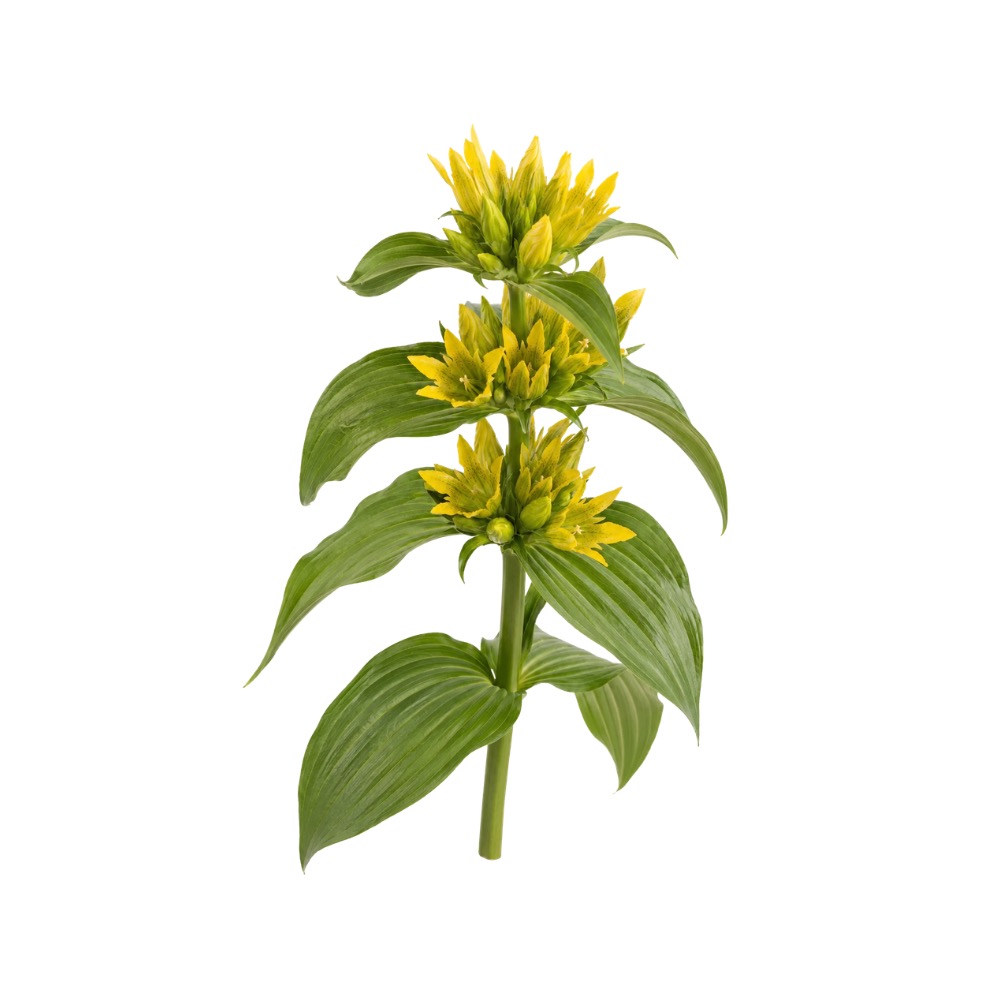
Swertiamarin is a naturally occurring secoiridoid glycoside (iridoid-derived monoterpene glucoside), found in Chirata, Enicostemma, Gentian and 3 other sources. It is well tolerated orally (low toxicity).
Concentration
Content by Source
Concentrations not reported. No percent-dry-weight or mg/g figures have been published for this compound in its source plants.
Swertiamarin at a Glance
Swertiamarin is a secoiridoid glycoside — a ring-opened iridoid built on the same biosynthetic route as loganin and oleuropein, and one of the defining bitter principles of the Gentianaceae. It is the marquee constituent of chirata (Swertia chirayita), a classic Ayurvedic bitter tonic, and a major active of Enicostemma and of gentian and its relatives 2,
As a molecule in its own right, swertiamarin’s most distinctive research thread is metabolic. Isolated swertiamarin lowers blood glucose and blood lipids in diabetic and hyperlipidaemic rodents, acting through recognisable targets — the nuclear receptor PPAR-γ, the cholesterol-synthesis enzyme HMG-CoA reductase, and a spread of glucose- and lipid-handling genes 1,
Two honesty caveats run through the whole page. There are no clinical trials of isolated swertiamarin: the human evidence for its source plants is for the whole bitter herb, not the purified compound. And swertiamarin has poor oral bioavailability — around 5–10% in rats — and is partly hydrolysed and metabolised in the gut to gentianine-type products, which limits how much of the in-vitro and high-dose rodent potency can translate to an oral dose 12,
A Chirata Bitter Secoiridoid
Swertiamarin’s oldest and best-attested role is as a bitter. In Swertia chirayita (chirata) — a Himalayan gentian relative used for centuries as a bitter digestive and febrifuge tonic — swertiamarin is one of the principal secoiridoid glycosides that give the herb its intense bitterness, alongside amarogentin, amaroswerin and sweroside 3Reference 3Liquid chromatography/tandem mass spectrometric study and analysis of xanthone and secoiridoid glycoside composition of Swertia chirata, a potent antidiabeticView study →. Bitter secoiridoids of this kind are the chemical basis of the bitter-tonic tradition shared across the Gentianaceae: chirata, gentian and centaury are all classic bitters, and swertiamarin is a recurring marker used to standardise and authenticate chirata material by LC-MS/MS 3Reference 3Liquid chromatography/tandem mass spectrometric study and analysis of xanthone and secoiridoid glycoside composition of Swertia chirata, a potent antidiabeticView study →.
This matters for reading the rest of the page. The human use of chirata is whole-herb use — a decoction or tincture of the bitter plant, in which swertiamarin is one of several co-acting secoiridoids and xanthones (mangiferin among them). The isolated-molecule pharmacology below is a research activity extracted from that context, not the traditional application. As a bitter, swertiamarin’s function is closer to gentian’s harpagide-and-secoiridoid bitterness than to a targeted drug — the tonic effect belongs to the whole herb.
Swertiamarin & Metabolic Health
The metabolic thread is what makes swertiamarin distinctive among the bitter secoiridoids, and it is the largest and most coherent body of isolate research — largely from Enicostemma and Swertia groups working on diabetes models 1,
The headline finding is that isolated swertiamarin behaves like an insulin-sensitising, lipid-lowering lead in rodents. In an experimental non-insulin-dependent (type 2) diabetes model, swertiamarin (50 mg/kg orally, 40 days) regulated serum glucose, insulin and the lipid profile, and — mechanistically — targeted PPAR-γ and normalised the transcription of a suite of hepatic and adipose genes governing gluconeogenesis and lipid handling (PEPCK, glucokinase, GLUT2/GLUT4, SREBP-1c, LPL, leptin and adiponectin), while restoring G6Pase and HMG-CoA reductase activity toward normal 4Reference 4AnimalSwertiamarin: an active lead from Enicostemma littorale regulates hepatic and adipose tissue gene expression by targeting PPAR-γ and improves insulin sensitivity in experimental NIDDM rat modelView study →. The hypolipidemic side is reproduced independently: swertiamarin lowered triglycerides, cholesterol and LDL in streptozotocin-induced type 2 diabetic rats 5Reference 5AnimalBeneficial effects of swertiamarin on dyslipidaemia in streptozotocin-induced type 2 diabetic ratsView study → and in a poloxamer-407 hyperlipidaemia model, with HMG-CoA reductase inhibition proposed as a main mechanism 6Reference 6AnimalAntihyperlipidaemic activity of swertiamarin, a secoiridoid glycoside in poloxamer-407-induced hyperlipidaemic ratsView study →. In obese Zucker fa/fa rats it also reduced serum glucose and lipids and lowered the cardiovascular-risk markers MMP-9 and MMP-3 1Reference 1AnimalDecrease in serum matrix metalloproteinase-9 and matrix metalloproteinase-3 levels in Zucker fa/fa obese rats after treatment with swertiamarinView study →.
The honest frame: this is a consistent, multi-model preclinical dossier on the isolated molecule — a genuine attributional strength — but it is entirely animal/cell work, and its translation is capped by poor oral bioavailability and by the fact that no human has taken purified swertiamarin for glycaemic or lipid control 4,
What It's Used For
Swertiamarin’s evidence base is broad, internally consistent and entirely preclinical. The load-bearing caveat is the compound-page discipline: no human trials of the isolate, and poor oral bioavailability plus gut metabolism to gentianine mean in-vitro and high-dose rodent potency overreads what an oral dose delivers 2,
Support is an experimental score — weighted by study type (human > animal > in vitro) and volume. A beta, not a validated metric. There are no human isolate data, so scores stay modest by design.
Swertiamarin’s largest strand, and squarely isolate work. In an experimental non-insulin-dependent diabetes rat model, purified swertiamarin targeted PPAR-γ and restored the transcription of hepatic and adipose glucose-handling genes (PEPCK, glucokinase, GLUT2, GLUT4) while improving insulin sensitivity 4Reference 4AnimalSwertiamarin: an active lead from Enicostemma littorale regulates hepatic and adipose tissue gene expression by targeting PPAR-γ and improves insulin sensitivity in experimental NIDDM rat modelView study →; it lowered serum glucose in streptozotocin-induced type 2 diabetic rats 5Reference 5AnimalBeneficial effects of swertiamarin on dyslipidaemia in streptozotocin-induced type 2 diabetic ratsView study → and in obese Zucker fa/fa rats 1Reference 1AnimalDecrease in serum matrix metalloproteinase-9 and matrix metalloproteinase-3 levels in Zucker fa/fa obese rats after treatment with swertiamarinView study →.
In-silico work adds a candidate direct target — inhibition of glycogen phosphorylase — though that is a docking prediction, not a measured cellular effect 2Reference 2Chemistry, pharmacology and therapeutic potential of swertiamarin — a promising natural lead for new drug discovery and developmentView study →.
Gap: all rodent/in-silico, no human isolate trials; the human anti-diabetic evidence for its source is the whole bitter herb (chirata, Enicostemma), and poor oral bioavailability limits achievable exposure 2,
A well-reproduced isolate effect, tightly linked to the anti-diabetic work. Swertiamarin lowered serum triglycerides, total cholesterol and LDL in streptozotocin-induced type 2 diabetic rats 5Reference 5AnimalBeneficial effects of swertiamarin on dyslipidaemia in streptozotocin-induced type 2 diabetic ratsView study → and in poloxamer-407-induced hyperlipidaemia, where inhibition of HMG-CoA reductase — the rate-limiting enzyme of cholesterol synthesis — was proposed as a principal mechanism 6Reference 6AnimalAntihyperlipidaemic activity of swertiamarin, a secoiridoid glycoside in poloxamer-407-induced hyperlipidaemic ratsView study →.
The same HMG-CoA-reductase normalisation appears in the PPAR-γ diabetes study 4Reference 4AnimalSwertiamarin: an active lead from Enicostemma littorale regulates hepatic and adipose tissue gene expression by targeting PPAR-γ and improves insulin sensitivity in experimental NIDDM rat modelView study →, and the Zucker fa/fa model showed parallel reductions in lipids and free fatty acids 1Reference 1AnimalDecrease in serum matrix metalloproteinase-9 and matrix metalloproteinase-3 levels in Zucker fa/fa obese rats after treatment with swertiamarinView study →.
Gap: rodent only; the HMG-CoA-reductase mechanism is inferred from activity assays rather than a validated human lipid outcome, and no human isolate data exist 5,
A discrete, coherent isolate signal. Swertiamarin isolated from Enicostemma axillare (100–200 mg/kg orally, 8 days) protected rat liver against D-galactosamine-induced injury, restoring serum transaminases, bilirubin and antioxidant-enzyme levels toward normal 7Reference 7AnimalAntioxidant and hepatoprotective effect of swertiamarin from Enicostemma axillare against D-galactosamine induced acute liver damage in ratsView study →. This fits both the traditional hepatobiliary use of chirata/gentian bitters and the molecule’s recurring antioxidant profile across models 2Reference 2Chemistry, pharmacology and therapeutic potential of swertiamarin — a promising natural lead for new drug discovery and developmentView study →.
Gap: rodent, single acute-injury paradigm; hepatoprotection of the isolate has not been tested in humans, where the evidence belongs to the whole herb 7Reference 7AnimalAntioxidant and hepatoprotective effect of swertiamarin from Enicostemma axillare against D-galactosamine induced acute liver damage in ratsView study →.
Two complementary isolate readouts. In IL-1β-stimulated rat fibroblast-like synoviocytes (an arthritis model), swertiamarin dose-dependently curbed proliferation, nitric-oxide production and inflammatory/osteoclastogenic mediators 8Reference 8AnimalSwertiamarin ameliorates inflammation and osteoclastogenesis intermediates in IL-1β induced rat fibroblast-like synoviocytesView study →.
And isolated swertiamarin produced antinociception across hot-plate, acetic-acid-writhing and formalin tests in mice, reported as comparable to or stronger than standard analgesics in that study 9Reference 9Antinociceptive activity of swertiamarin isolated from Enicostemma axillareView study →, consistent with antiedematogenic and free-radical-scavenging activity of the isolate 2Reference 2Chemistry, pharmacology and therapeutic potential of swertiamarin — a promising natural lead for new drug discovery and developmentView study →.
Gap: all rodent/cell isolate models of acute inflammation and pain; no human confirmation, and the effective concentrations exceed achievable oral exposure 8,
The thinnest strand — a single program. Molecular-docking plus in-vivo work reported that isolated swertiamarin has anticonvulsant activity, delaying onset and shortening duration of pentylenetetrazole-induced seizures in rodents (alongside an antiproliferative readout in that same paper) 10Reference 10Molecular docking, antiproliferative and anticonvulsant activities of swertiamarin isolated from Enicostemma axillareView study →. Broader neuroprotective claims (antioxidant, Nrf2-type) recur in review coverage but rest on scattered models 2Reference 2Chemistry, pharmacology and therapeutic potential of swertiamarin — a promising natural lead for new drug discovery and developmentView study →.
Gap: one study for the seizure effect, no replication and no human data; central exposure of a poorly-absorbed glucoside is unquantified 10,
Mechanisms
| Target / pathway | Effect | Relevant to |
|---|---|---|
| PPAR-γ (nuclear receptor) | activated → improved insulin sensitivity, adipogenic/lipid gene normalisation | anti-diabetic / metabolic |
| HMG-CoA reductase | inhibited (cholesterol-synthesis rate-limiting enzyme) | hypolipidemic |
| Gluconeogenic / glucose-transport genes (PEPCK, G6Pase, glucokinase, GLUT2/GLUT4) | transcription restored toward normal | anti-diabetic |
| SREBP-1c, LPL, leptin, adiponectin | normalised | dyslipidemia / insulin sensitivity |
| MMP-9 / MMP-3 (serum) | lowered | diabetic cardiovascular risk |
| Glycogen phosphorylase | predicted inhibition (in-silico only) | anti-diabetic (candidate direct target) |
| NF-κB / inflammatory mediators; nitric oxide | suppressed | anti-inflammatory; hepatoprotective |
| Antioxidant enzymes / radical scavenging | restored / direct scavenging | hepatoprotective; neuroprotective |
| Loganic acid → secologanin → swertiamarin (secoiridoid branch) | biosynthetic route (in planta) | the precursor lineage — not human pharmacology |
The reproduced core is a metabolic program — PPAR-γ activation plus HMG-CoA-reductase inhibition and gluconeogenic-gene normalisation — layered over a general antioxidant/NF-κB-suppressing action that carries the hepatoprotective and anti-inflammatory strands. The biosynthetic row is plant biochemistry, off the human-pharmacology axis.
Pharmacokinetics
Swertiamarin is a hydrophilic secoiridoid glucoside with poor oral bioavailability. Absolute oral bioavailability in rats is reported at only around 5–10% and falls further as the dose rises (roughly 10% at 25 mg/kg down to ~6% at 150 mg/kg), pointing to saturable, absorption-limited kinetics 2Reference 2Chemistry, pharmacology and therapeutic potential of swertiamarin — a promising natural lead for new drug discovery and developmentView study →. It is rapidly absorbed and rapidly cleared — a validated plasma assay put the terminal half-life at about 1.1 h, with a peak (~1920 ng/mL) reached near 0.95 h after oral dosing 12Reference 12AnimalDevelopment and validation of an LC-ESI-MS/MS method for the determination of swertiamarin in rat plasma and its application in pharmacokineticsView study →. Its defining metabolic feature is gut biotransformation: intestinal bacterial β-glucosidase hydrolyses swertiamarin to its aglycone, which is readily converted onward to gentianine (and to erythrocentaurin / dihydroisocoumarin-type products), so a body that swallows swertiamarin largely sees these downstream products rather than the intact glycoside 2Reference 2Chemistry, pharmacology and therapeutic potential of swertiamarin — a promising natural lead for new drug discovery and developmentView study →. The practical consequence is the standard iridoid-glucoside caveat — micromolar in-vitro potency and high rodent doses substantially overstate what an oral human exposure would deliver, and swertiamarin is better understood as the water-soluble, poorly-absorbed marker of a whole-herb bitter than as a stand-alone oral drug 2,
Clinical Trials
There are no controlled trials of isolated swertiamarin. Its human footprint is entirely indirect, through the whole bitter herbs it marks — chirata (Swertia chirayita), Enicostemma and gentian — used traditionally as bitter tonics, where swertiamarin is one of several actives and serves as a standardisation marker, not the tested agent 3Reference 3Liquid chromatography/tandem mass spectrometric study and analysis of xanthone and secoiridoid glycoside composition of Swertia chirata, a potent antidiabeticView study →.
| Completed | Planned | Terminated | Preclinical |
|---|---|---|---|
| —(none, isolate; human data belong to whole chirata / Enicostemma / gentian bitters) | — | — | Broad(metabolic-led; hepatoprotective, anti-inflammatory, neuro) |
Last checked: July 2026.
Isolate vs. Plant Studies
The split is clean and, on the mechanism side, favourable. Swertiamarin’s pharmacology is overwhelmingly the isolated molecule — the PPAR-γ diabetes study 4Reference 4AnimalSwertiamarin: an active lead from Enicostemma littorale regulates hepatic and adipose tissue gene expression by targeting PPAR-γ and improves insulin sensitivity in experimental NIDDM rat modelView study →, the dyslipidemia and poloxamer hyperlipidaemia models 5,
The human evidence inverts this: it belongs to the whole herb. Chirata, Enicostemma and gentian are used as bitter tonics and decoctions, in which swertiamarin is a quality marker quantified for batch consistency rather than the demonstrated active 3Reference 3Liquid chromatography/tandem mass spectrometric study and analysis of xanthone and secoiridoid glycoside composition of Swertia chirata, a potent antidiabeticView study →. Even the anticancer question — sometimes attached to swertiamarin on the strength of an antiproliferative cell readout 10Reference 10Molecular docking, antiproliferative and anticonvulsant activities of swertiamarin isolated from Enicostemma axillareView study → — is contested: a controlled study across three colorectal-cancer lines (and three suppliers) found no cytotoxic effect of pure swertiamarin, arguing against a direct anticancer action for the isolate 13Reference 13Swertiamarin fails to induce cytotoxicity in colon cancer cell lines: evidence against a direct anticancer effectView study →. So the correct reading is: strong isolate mechanism base (metabolic especially) + meaningful whole-herb bitter tradition + no direct human isolate efficacy — the two are not interchangeable.
Its Role in Plants
In the plant, swertiamarin is a secoiridoid — a class of ring-opened iridoid glucosides whose ecological function is chemical defence and deterrence. Stored as a bitter, water-soluble glucoside, secoiridoids like swertiamarin make tissue unpalatable to herbivores; the same intense bitterness is what humans repurposed into the bitter-tonic tradition. Biosynthetically, swertiamarin sits on the secoiridoid branch downstream of secologanin: the route runs geraniol → … → loganic acid → secologanin → the secoiridoid glycosides (swertiamarin, sweroside, gentiopicroside and, further afield, oleuropein) — the same loganin/secologanin hinge that also feeds the great monoterpene-indole-alkaloid lineage 2Reference 2Chemistry, pharmacology and therapeutic potential of swertiamarin — a promising natural lead for new drug discovery and developmentView study →. Within the Gentianaceae, swertiamarin frequently co-occurs with sweroside and gentiopicroside, its close secoiridoid siblings.
As always, a molecule’s role in plant metabolism is plant biology, not human pharmacology, and does not predict what it does as a medicine.
Prevalence in Nature
Swertiamarin is a characteristic secoiridoid of the Gentianaceae, and its headline sources are the bitter tonic genera: chirata (Swertia chirayita / S. chirata), in which it is a principal secoiridoid glycoside used as a standardisation marker 3Reference 3Liquid chromatography/tandem mass spectrometric study and analysis of xanthone and secoiridoid glycoside composition of Swertia chirata, a potent antidiabeticView study →; other Swertia species such as Japanese green gentian (Swertia japonica); and Enicostemma (E. littorale / E. axillare), the source plant for much of the isolate’s anti-diabetic and hepatoprotective research 4,
Absolute content is rarely reported as a clean % dry weight and varies widely with species, plant part, growth conditions and processing, so a reliable cross-source concentration ranking does not yet exist here and is tracked as a gap rather than asserted.
Discovery & Synthesis
Swertiamarin is a twentieth-century secoiridoid whose name traces directly to the genus Swertia (itself named for the sixteenth-century Dutch botanist Emanuel Sweert), reflecting its early characterisation from Swertia species; it is registered under CAS 17388-39-5 with molecular formula C₁₆H₂₂O₁₀ (MW ≈ 374.3). The precise first-isolation date is not cleanly documented in the reviewed literature, and total synthesis is likewise not the practical supply route: research-grade swertiamarin is obtained by extraction from swertiamarin-rich Gentianaceae — chiefly Swertia and Enicostemma — because the molecule is relatively abundant there and its glucoside chemistry makes isolation far more practical than total synthesis 2,
Patents: not yet researched.
Toxicity & Safety
Swertiamarin reads as a low-toxicity secoiridoid glycoside — it is the bitter marker of chirata, Enicostemma and gentian, herbs decocted and taken as bitter tonics for centuries, and preclinical studies report no acute-toxicity signal at the doses used 2,
- A long-used bitter-tonic secoiridoid. The quality marker of chirata, Enicostemma and gentian bitters, taken in decoctions and tinctures for centuries with no acute-toxicity signal in rodent studies 2,
3Reference 2Chemistry, pharmacology and therapeutic potential of swertiamarin — a promising natural lead for new drug discovery and developmentView study →Reference 3Liquid chromatography/tandem mass spectrometric study and analysis of xanthone and secoiridoid glycoside composition of Swertia chirata, a potent antidiabeticView study → . - Real-world exposure is whole-herb and low. People meet swertiamarin as a bitter-herb constituent, not a concentrated isolate, and its oral absorption is poor (~5–10% in rats), with gut conversion to gentianine 2,
12Reference 2Chemistry, pharmacology and therapeutic potential of swertiamarin — a promising natural lead for new drug discovery and developmentView study →Reference 12AnimalDevelopment and validation of an LC-ESI-MS/MS method for the determination of swertiamarin in rat plasma and its application in pharmacokineticsView study → . - No comprehensive isolate toxicology. No definitive LD50, genotoxicity or repeat-dose package for the pure compound; safety is inferred from the whole herb, not established for the molecule 2Reference 2Chemistry, pharmacology and therapeutic potential of swertiamarin — a promising natural lead for new drug discovery and developmentView study →.
- In-vitro potency overreads oral exposure. Poor bioavailability and extensive gut metabolism cap how far cell and high-dose rodent findings translate to an oral dose 12Reference 12AnimalDevelopment and validation of an LC-ESI-MS/MS method for the determination of swertiamarin in rat plasma and its application in pharmacokineticsView study →.
Full Safety & Interactions Detail
Swertiamarin carries a low flag. It is a principal bitter secoiridoid of chirata (Swertia chirayita), Enicostemma and gentian — bitter herbs with a long dietary and medicinal history as digestive and febrifuge tonics — and rodent efficacy studies report no acute-toxicity signal at the doses used 2,
The caveats are evidentiary rather than observed harms. First, there is no comprehensive isolate toxicology — no definitive LD50, genotoxicity or repeat-dose organ-toxicity dataset for pure swertiamarin — so its safety is inferred from the whole herb, not demonstrated for the molecule 2Reference 2Chemistry, pharmacology and therapeutic potential of swertiamarin — a promising natural lead for new drug discovery and developmentView study →.
Second, formal drug-interaction data are sparse: no specific CYP-inhibition or transporter-interaction profile is established for swertiamarin here, so interaction potential is uncharacterised rather than absent, and a scope note is warranted — the theoretical caution most worth naming is additive blood-glucose lowering with antidiabetic drugs, given the molecule’s reproduced hypoglycaemic effect in rodents 4,
Third, poor oral bioavailability (~5–10% in rats) and extensive gut metabolism to gentianine both limit real-world isolate exposure and mean high-dose preclinical findings do not transfer cleanly to oral use 2,
Reproductive note (prose only). No dedicated reproductive- or developmental-toxicity dataset exists for isolated swertiamarin. Any pregnancy/lactation caution around swertiamarin-containing herbs (chirata, Enicostemma, gentian, centaury) belongs to the source herb and is a decision made on the herb or product page where intake is decided — not on this molecule page.
Dosage
There is no established or recommended human dose for isolated swertiamarin — it has never been given to people as an isolate for therapy. Cited figures are preclinical research doses: roughly 25–200 mg/kg in rodents (e.g. 50 mg/kg in the PPAR-γ and dyslipidemia diabetes studies; 100–200 mg/kg in the hepatoprotection and analgesia work), often above achievable oral exposure given ~5–10% oral bioavailability 4,
References
- Vaidya H, Giri S, Jain M, Goyal R (2012). Decrease in serum matrix metalloproteinase-9 and matrix metalloproteinase-3 levels in Zucker fa/fa obese rats after treatment with swertiamarin. Experimental & Clinical Cardiology. https://pubmed.ncbi.nlm.nih.gov/23204894/
- Muhamad Fadzil NS, Sekar M, Gan SH, et al. (2021). Chemistry, pharmacology and therapeutic potential of swertiamarin — a promising natural lead for new drug discovery and development. Drug Design, Development and Therapy. https://pubmed.ncbi.nlm.nih.gov/34188450/
- Suryawanshi S, Mehrotra N, Asthana RK, Gupta RC (2006). Liquid chromatography/tandem mass spectrometric study and analysis of xanthone and secoiridoid glycoside composition of Swertia chirata, a potent antidiabetic. Rapid Communications in Mass Spectrometry. https://pubmed.ncbi.nlm.nih.gov/17120271/
- Patel TP, Soni S, Parikh P, Gosai J, Chruvattil R, Gupta S (2013). Swertiamarin: an active lead from Enicostemma littorale regulates hepatic and adipose tissue gene expression by targeting PPAR-γ and improves insulin sensitivity in experimental NIDDM rat model. Evidence-Based Complementary and Alternative Medicine. https://pubmed.ncbi.nlm.nih.gov/23840254/
- Vaidya H, Rajani M, Sudarsanam V, Padh H, Goyal RK (2012). Beneficial effects of swertiamarin on dyslipidaemia in streptozotocin-induced type 2 diabetic rats. Phytotherapy Research. https://pubmed.ncbi.nlm.nih.gov/22228612/
- Vaidya H, Rajani M, Sudarsanam V, Padh H, Goyal RK (2009). Antihyperlipidaemic activity of swertiamarin, a secoiridoid glycoside in poloxamer-407-induced hyperlipidaemic rats. Journal of Natural Medicines. https://pubmed.ncbi.nlm.nih.gov/19633811/
- Jaishree V, Badami S (2010). Antioxidant and hepatoprotective effect of swertiamarin from Enicostemma axillare against D-galactosamine induced acute liver damage in rats. Journal of Ethnopharmacology. https://pubmed.ncbi.nlm.nih.gov/20420896/
- Saravanan S, Islam VIH, Thirugnanasambantham K, et al. (2014). Swertiamarin ameliorates inflammation and osteoclastogenesis intermediates in IL-1β induced rat fibroblast-like synoviocytes. Inflammation Research. https://pubmed.ncbi.nlm.nih.gov/24492951/
- Jaishree V, Badami S, Rupesh Kumar M, et al. (2009). Antinociceptive activity of swertiamarin isolated from Enicostemma axillare. Phytomedicine. https://pubmed.ncbi.nlm.nih.gov/19019644/
- Vaijanathappa J, Puttaswamygowda J, Bevanhalli R, Dixit SR, Prabhakaran P (2020). Molecular docking, antiproliferative and anticonvulsant activities of swertiamarin isolated from Enicostemma axillare. Bioorganic Chemistry. https://pubmed.ncbi.nlm.nih.gov/31740047/
- Yang HX, et al. (2025). Progress in pharmacokinetics, pharmacological effects, and molecular mechanisms of swertiamarin: a comprehensive review. Cells. https://pubmed.ncbi.nlm.nih.gov/40801607/
- Li HL, Peng XJ, He JC, Feng EF, Xu GL, Rao GX (2011). Development and validation of an LC-ESI-MS/MS method for the determination of swertiamarin in rat plasma and its application in pharmacokinetics. Journal of Chromatography B. https://pubmed.ncbi.nlm.nih.gov/21531636/
- Khawaja G, Shoujaa A, El-Orfali Y, Abou Najem S, Massaad MJ (2026). Swertiamarin fails to induce cytotoxicity in colon cancer cell lines: evidence against a direct anticancer effect. PLoS One. https://pubmed.ncbi.nlm.nih.gov/41838704/



