
Compound Monograph
Taspine
Taspine is an aporphine-derived alkaloid best known as the wound-healing (cicatrizant) principle of dragon's blood (Sangre de Grado, Croton lechleri) sap, with a substantial preclinical antitumour and anti-angiogenic record — and, in a very different tradition, a minor blue-cohosh alkaloid that was highly embryotoxic but not teratogenic in rat embryo culture.

Sources · 3
Where Does It Come From?
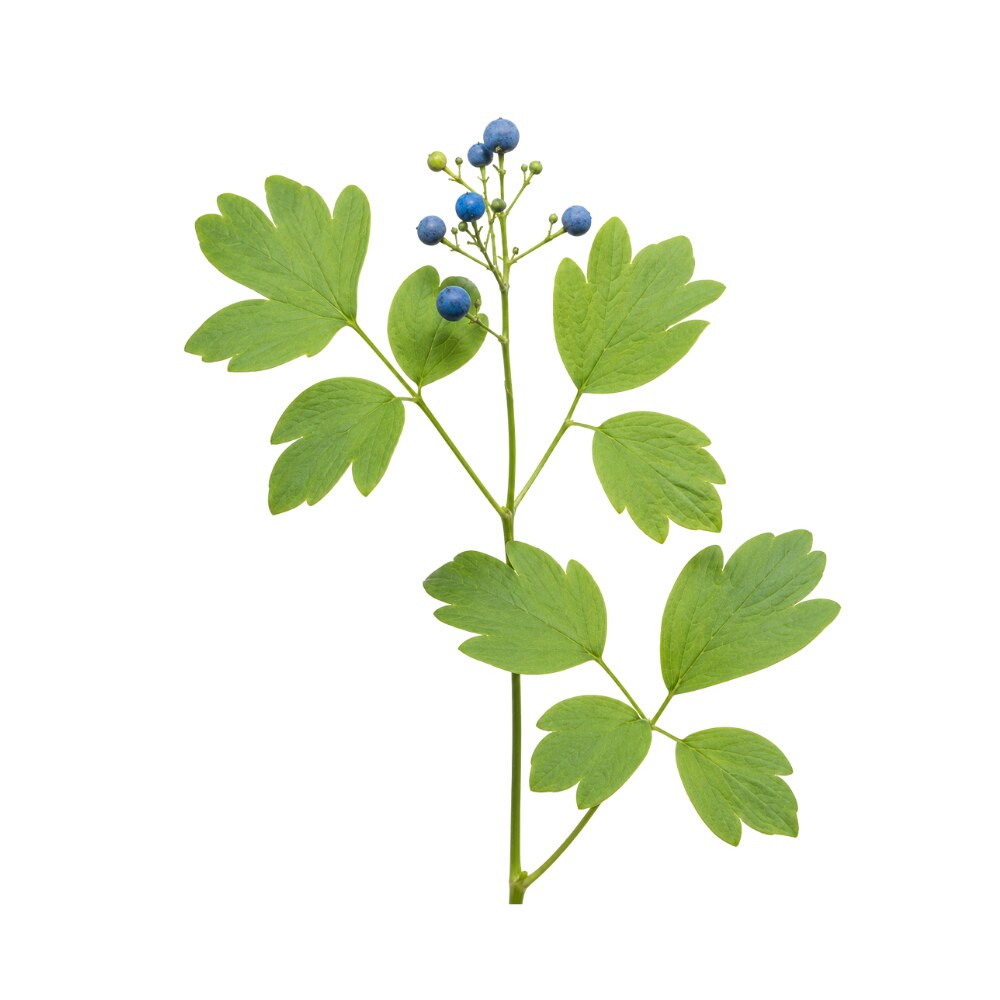
Taspine is a naturally occurring aporphine-derived alkaloid (aza-fluoranthene / phenanthrene type), found in Dragon's blood / Sangre de Grado, Blue cohosh and 1 other source. It is flagged as moderately toxic.
Concentration
Content by Source
Concentrations not reported. No percent-dry-weight or mg/g figures have been published for this compound in its source plants.
Taspine at a Glance
Taspine is an aporphine-derived alkaloid with two almost unrelated reputations. In South American ethnomedicine it is the best-characterised active of dragon’s blood — the red latex of Croton lechleri, sold as Sangre de Grado or Sangre de Drago — where it was identified as the cicatrizant (wound-healing) principle and drives the sap’s traditional use on wounds and ulcers 2,
In a completely separate context it turns up as a minor alkaloid of blue cohosh (Caulophyllum thalictroides). In the standard rat-embryo-culture screen of blue-cohosh alkaloids, taspine was highly embryotoxic but not teratogenic — a deliberate contrast with N-methylcytisine, the one alkaloid in that screen that was teratogenic 10Reference 10In vitroDetecting potential teratogenic alkaloids from blue cohosh rhizomes using an in vitro rat embryo cultureView study →. That distinction (toxic to the embryo, but not a cause of malformation) is the safety headline for this molecule.
Almost all of taspine’s therapeutic evidence is isolate work in animals and cell culture, or whole-sap studies in which taspine is only one of many constituents. There are no controlled human trials of the purified alkaloid.
Taspine: Dragon’s Blood Healer & Blue-Cohosh Embryotoxin
The point is that a single molecule sits at the centre of two traditions that never meet — and that its “activity” is genuinely context- and cell-type-dependent, not a contradiction to be smoothed over.
As the dragon’s-blood cicatrizant, taspine promotes tissue repair. It accelerates wound closure in animals with a cicatrizant ED50 of about 0.375 mg/kg in a mouse model, and the proposed mechanism is that it stimulates the migration of human fibroblasts into the wound — the cell movement that re-epithelialises damaged skin 2Reference 2Taspine is the cicatrizant principle in Sangre de Grado extracted from Croton lechleriView study →. Follow-up work attributed the effect to enhanced chemotaxis of the repair cells (fibroblasts, and immune/epithelial cells) 3Reference 3Enhancement of wound healing by the alkaloid taspine defining mechanism of actionView study →. This is a pro-repair, pro-migration action.
As an antitumour agent, taspine does something that looks opposite: it inhibits the proliferation and migration of vascular endothelial cells and reduces neovascularisation on the chick chorioallantoic membrane 8Reference 8Taspine isolated from Radix et Rhizoma Leonticis inhibits proliferation and migration of endothelial cells as well as chicken chorioallantoic membrane neovascularisationView study →, and it is directly cytotoxic to tumour cells through dual topoisomerase I/II inhibition and intrinsic (Bak/Bax, cytochrome-c) apoptosis 9Reference 9Identification of a novel topoisomerase inhibitor effective in cells overexpressing drug efflux transportersView study →. Here the same molecule blocks the cell proliferation and vessel growth that a tumour depends on.
The two are reconciled by which cells, at what concentration: taspine can favour the directed migration of dermal repair cells at a healing dose while, at cytotoxic concentrations, it shuts down endothelial proliferation and tumour-cell survival. It is a useful reminder that “stimulates wound healing” and “anti-angiogenic anticancer lead” are not incompatible claims for one alkaloid.
The blue-cohosh strand is separate again. There, taspine is a trace rhizome alkaloid whose only well-documented biology is the teratology screen — embryotoxic without being teratogenic 10Reference 10In vitroDetecting potential teratogenic alkaloids from blue cohosh rhizomes using an in vitro rat embryo cultureView study → — and it contributes to the herb’s overall alkaloid toxicity rather than to any intended effect. In that same screen it sits between two useful reference points: N-methylcytisine, the alkaloid that was frankly teratogenic, and thalictroidine, which was neither teratogenic nor embryotoxic at the tested concentrations; anagyrine — the classic “crooked-calf” lupine teratogen — was likewise not teratogenic in this particular rat-embryo assay 10Reference 10In vitroDetecting potential teratogenic alkaloids from blue cohosh rhizomes using an in vitro rat embryo cultureView study →.
What It's Used For
Taspine’s evidence base is broad in type but shallow in tier: decades-old anti-inflammatory pharmacology, an animal-plus-mechanism wound-healing story, and a modern but almost entirely in-vitro/in-vivo-rodent oncology programme. The load-bearing caveat is uniform — no controlled human trials of the isolate.
Support is an experimental score — weighted by study type (human > animal > in vitro) and volume. A beta, not a validated metric. Scores mix an animal-plus-mechanism wound use (where the human data are the whole extract) with an otherwise preclinical oncology profile, so read the per-row basis.
The oldest and most convincing use, and the one that matches the plant’s traditional reputation. Isolated taspine is the cicatrizant principle of Croton lechleri sap: in a mouse wound model it produced a dose-related healing effect with an ED50 of ~0.375 mg/kg, and in culture it increased the migration of human foreskin fibroblasts — the likely mechanism for faster closure 2Reference 2Taspine is the cicatrizant principle in Sangre de Grado extracted from Croton lechleriView study →.
A mechanistic follow-up framed the action as enhanced chemotaxis of repair cells 3Reference 3Enhancement of wound healing by the alkaloid taspine defining mechanism of actionView study →, and Chinese work on taspine hydrochloride reported accelerated skin-wound healing in rats 12Reference 12AnimalDong YL, He LC, Wang HH, et al. (2005). [Effect of taspine hydrochloride on skin wound healing in rats and its mechanism]. Journal of Chinese Integrative Medicine (Zhong Xi Yi Jie He Xue Bao). https://pubmed.ncbi.nlm.nih.gov/16159575/View study →.
In people, a randomised controlled trial of a dragon’s-blood cream found faster wound healing — but that is the whole latex, in which taspine is one active among proanthocyanidins and other constituents 11Reference 11RCTEfficacy of Dragon’s blood cream on wound healing: a randomized, double-blind, placebo-controlled clinical trialView study →.
Gap: the isolate data are animal + in-vitro, and the only human trial used the whole extract, not purified taspine — so the human wound-healing evidence cannot be assigned to this molecule alone 2,
The largest modern strand, and entirely preclinical. Taspine was identified in a natural-product screen as a dual topoisomerase I and II inhibitor that induces conformational activation of Bak/Bax, mitochondrial cytochrome-c release and intrinsic apoptosis in colon-cancer cells — and, importantly, it stays cytotoxic in cell lines overexpressing the P-glycoprotein and MRP drug-efflux transporters that render doxorubicin, etoposide and mitoxantrone ineffective 9Reference 9Identification of a novel topoisomerase inhibitor effective in cells overexpressing drug efflux transportersView study →.
Separate work showed antitumour activity by modulating EGFR→Erk1/2 and Akt signalling in vitro and in vivo 7Reference 7In vitroAntitumor activity of taspine by modulating the EGFR signaling pathway of Erk1/2 and Akt in vitro and in vivoView study →, and Croton lechleri sap and isolated taspine both inhibited human melanoma (SK23) and colon-cancer (HT29) cell lines 6Reference 6Croton lechleri sap and isolated alkaloid taspine exhibit inhibition against human melanoma SK23 and colon cancer HT29 cell linesView study →.
These findings have driven a programme of semi-synthetic taspine derivatives aimed at improving potency and selectivity 5Reference 5Synthesis and cytotoxic evaluation of novel symmetrical taspine derivatives as anticancer agentsView study →.
Gap: no whole-animal tumour-regression or human oncology data for native taspine beyond the mechanistic in-vivo signalling study; the cell-line cytotoxicity is the isolate, but clinical relevance is unestablished 6,
The vascular arm of the anticancer story, and the flip side of the wound-healing migration effect. Taspine isolated from Radix et Rhizoma Leonticis (Leontice) inhibited the proliferation and migration of vascular endothelial cells and reduced neovascularisation on the chick chorioallantoic membrane (CAM) 8Reference 8Taspine isolated from Radix et Rhizoma Leonticis inhibits proliferation and migration of endothelial cells as well as chicken chorioallantoic membrane neovascularisationView study → — an anti-angiogenic profile that, in tumour terms, would starve a growing mass of blood supply. Downstream synthetic taspine analogues were explicitly developed as anti-angiogenic agents targeting VEGF/VEGFR-type signalling 13Reference 13Discovery of novel taspine derivatives as antiangiogenic agentsView study →.
Gap: in-vitro endothelial assays plus the CAM model only; the anti-angiogenic action is demonstrated for the isolate but has not been tested as a systemic therapy, and it sits in tension with the pro-migration wound effect (see the signature section) 8Reference 8Taspine isolated from Radix et Rhizoma Leonticis inhibits proliferation and migration of endothelial cells as well as chicken chorioallantoic membrane neovascularisationView study →.
The earliest reported pharmacology. In the 1979 isolation paper, taspine from Croton lechleri was evaluated for anti-inflammatory activity across the carrageenan-induced paw-oedema, cotton-pellet granuloma and adjuvant-polyarthritis models 1Reference 1South American plants II: taspine isolation and anti-inflammatory activityView study →. This underpins the traditional anti-inflammatory use of the sap and overlaps the wound-healing role.
Gap: classic rodent-model pharmacology of the isolate with limited mechanistic detail and no human confirmation; largely superseded here by the better-characterised wound-healing and oncology work 1Reference 1South American plants II: taspine isolation and anti-inflammatory activityView study →.
Mechanisms
| Target / pathway | Effect | Relevant to |
|---|---|---|
| Fibroblast / repair-cell chemotaxis | stimulates directed migration of fibroblasts (and immune/epithelial cells) into the wound → faster re-epithelialisation | wound healing (cicatrizant) |
| Topoisomerase I and II | dual catalytic inhibition → DNA damage, Bak/Bax activation, cytochrome-c release, intrinsic apoptosis | antitumour / cytotoxic |
| EGFR → Erk1/2 and Akt signalling | suppression of proliferative/survival signalling in tumour cells (in vitro and in vivo) | antitumour |
| Vascular endothelial cells / neovascularisation | inhibits endothelial proliferation and migration; reduces CAM neovascularisation | anti-angiogenic (antitumour) |
| P-glycoprotein / MRP-overexpressing cells | remains cytotoxic where conventional topoisomerase inhibitors are effluxed and fail | antitumour (drug-resistant cells) |
| Inflammatory/oedema mediators (carrageenan, granuloma, adjuvant models) | anti-oedema / anti-inflammatory | anti-inflammatory |
The pro-migration wound effect and the anti-proliferative/anti-angiogenic tumour effect are the same molecule acting on different cell types at different concentrations — the interpretive crux of the page, not a contradiction.
Pharmacokinetics
Taspine’s human pharmacokinetics are not characterised. It is a basic, relatively polar alkaloid (used experimentally as the water-soluble taspine hydrochloride salt 12Reference 12AnimalDong YL, He LC, Wang HH, et al. (2005). [Effect of taspine hydrochloride on skin wound healing in rats and its mechanism]. Journal of Chinese Integrative Medicine (Zhong Xi Yi Jie He Xue Bao). https://pubmed.ncbi.nlm.nih.gov/16159575/View study →), and its documented efficacy is topical/local — the dragon’s-blood cicatrizant use is on the skin, and the cell-culture and CAM work applies it directly to cells 2,
Clinical Trials
Human evidence exists only for the whole plant, not the isolate. A randomised controlled trial of a dragon’s-blood (Croton lechleri) cream reported improved wound healing 11Reference 11RCTEfficacy of Dragon’s blood cream on wound healing: a randomized, double-blind, placebo-controlled clinical trialView study →, but that tests the full latex, in which taspine is one constituent. There are no registered clinical trials of purified taspine; the oncology and anti-angiogenic work is preclinical.
| Completed | Planned | Terminated | Preclinical |
|---|---|---|---|
| Whole dragon’s-blood cream (wound healing) 11Reference 11RCTEfficacy of Dragon’s blood cream on wound healing: a randomized, double-blind, placebo-controlled clinical trialView study → | — | — | Antitumour(topo I/II, EGFR), anti-angiogenic, wound-healing mechanism, anti-inflammatory |
Last checked: July 2026.
Isolate vs. Plant Studies
The evidence divides cleanly. The mechanistic and animal work is the isolated alkaloid: the cicatrizant ED50 and fibroblast-migration assay 2Reference 2Taspine is the cicatrizant principle in Sangre de Grado extracted from Croton lechleriView study →, the dual-topoisomerase apoptosis screen 9Reference 9Identification of a novel topoisomerase inhibitor effective in cells overexpressing drug efflux transportersView study →, the EGFR/Erk/Akt antitumour study 7Reference 7In vitroAntitumor activity of taspine by modulating the EGFR signaling pathway of Erk1/2 and Akt in vitro and in vivoView study →, the endothelial/CAM anti-angiogenesis work 8Reference 8Taspine isolated from Radix et Rhizoma Leonticis inhibits proliferation and migration of endothelial cells as well as chicken chorioallantoic membrane neovascularisationView study → and the 1979 anti-inflammatory models 1Reference 1South American plants II: taspine isolation and anti-inflammatory activityView study → all used taspine (or taspine hydrochloride) directly. As a preclinical mechanism base for the molecule, that is a genuine strength.
The human evidence, by contrast, is the whole extract. The dragon’s-blood wound-cream trial is a Croton lechleri latex preparation 11Reference 11RCTEfficacy of Dragon’s blood cream on wound healing: a randomized, double-blind, placebo-controlled clinical trialView study →, and the sap’s chemistry is complex — proanthocyanidins, the lignan dimethylcedrusin, other alkaloids and immunomodulatory constituents all co-occur [8-note not-applicable], so its clinical effect cannot be reduced to taspine 4Reference 4ReviewReview of sangre de drago (Croton lechleri) — a South American tree sap in the treatment of diarrhea, inflammation, insect bites, viral infections, and wounds: traditional uses to clinical researchView study →. The correct framing is: strong isolate mechanism + whole-sap human wound data + no human isolate trials. On the blue-cohosh side there is no therapeutic evidence at all — only the teratology characterisation of the isolate 10Reference 10In vitroDetecting potential teratogenic alkaloids from blue cohosh rhizomes using an in vitro rat embryo cultureView study →.
Prevalence in Nature
Taspine is an aporphine-derived alkaloid reported from a small number of unrelated plants. Its richest and best-known source is the red latex of dragon’s blood (Croton lechleri, Euphorbiaceae), the Sangre de Grado of the upper Amazon, from which it was isolated as an anti-inflammatory and then wound-healing principle 1,
It also occurs as a minor rhizome alkaloid of blue cohosh (Caulophyllum thalictroides, Berberidaceae), alongside the aporphine magnoflorine and the quinolizidine alkaloids that define that herb’s toxicity 10Reference 10In vitroDetecting potential teratogenic alkaloids from blue cohosh rhizomes using an in vitro rat embryo cultureView study →, and it is known from Leontice (Radix et Rhizoma Leonticis, also Berberidaceae) 8Reference 8Taspine isolated from Radix et Rhizoma Leonticis inhibits proliferation and migration of endothelial cells as well as chicken chorioallantoic membrane neovascularisationView study →. Its absolute abundance in these sources has not been systematically quantified, which is why no comparative content chart is given here (the missing figures are tracked in the compound’s gaps file).
Discovery & Synthesis
Taspine was brought to pharmacological attention through South American ethnobotany: it was isolated from Croton lechleri and reported with anti-inflammatory activity in 1979 (“South American Plants II”) 1Reference 1South American plants II: taspine isolation and anti-inflammatory activityView study →, then identified as the cicatrizant principle of Sangre de Grado in 1989 by Vaisberg and colleagues, who tied it to fibroblast migration 2Reference 2Taspine is the cicatrizant principle in Sangre de Grado extracted from Croton lechleriView study →. The alkaloid was already known from Leontice (Berberidaceae) before that, and the name reflects its botanical origins; a well-documented first total synthesis is not on record, and modern chemistry has instead pursued semi-synthetic taspine derivatives as anticancer and anti-angiogenic leads 5,
Manufacture today is by extraction from Croton lechleri latex (or from Leontice material), with the water-soluble hydrochloride salt used in experimental work 12Reference 12AnimalDong YL, He LC, Wang HH, et al. (2005). [Effect of taspine hydrochloride on skin wound healing in rats and its mechanism]. Journal of Chinese Integrative Medicine (Zhong Xi Yi Jie He Xue Bao). https://pubmed.ncbi.nlm.nih.gov/16159575/View study →; there is no commercial total-synthesis route.
Patents: not yet researched.
Toxicity & Safety
Taspine carries a moderate flag. Two facts drive it: it was highly embryotoxic (though not teratogenic) in the standard blue-cohosh rat-embryo-culture screen 10Reference 10In vitroDetecting potential teratogenic alkaloids from blue cohosh rhizomes using an in vitro rat embryo cultureView study →, and it is a cytotoxic, DNA-topoisomerase-poisoning alkaloid by design of its anticancer activity 9Reference 9Identification of a novel topoisomerase inhibitor effective in cells overexpressing drug efflux transportersView study → — properties that make it unsuitable for casual internal use even though its established human exposure is topical (via dragon’s-blood sap) or trace (via blue cohosh).
- Traditional topical use of the whole sap is long-standing. Dragon’s-blood latex has a long ethnomedical record for wounds, and a controlled trial of a dragon’s-blood cream supports topical wound healing 11Reference 11RCTEfficacy of Dragon’s blood cream on wound healing: a randomized, double-blind, placebo-controlled clinical trialView study →.
- Embryotoxic alkaloid. In rat embryo culture, isolated taspine showed high embryotoxicity (toxic to the developing embryo) — not teratogenic, but a clear developmental hazard for the isolate 10Reference 10In vitroDetecting potential teratogenic alkaloids from blue cohosh rhizomes using an in vitro rat embryo cultureView study →.
- Cytotoxic / topoisomerase-poisoning by nature. Taspine’s anticancer activity comes from dual topoisomerase inhibition and induction of apoptosis, so it is inherently cytotoxic, not a benign nutrient 9Reference 9Identification of a novel topoisomerase inhibitor effective in cells overexpressing drug efflux transportersView study →.
- Blue-cohosh context. In blue cohosh, taspine adds to a toxic alkaloid mixture (nicotinic quinolizidine alkaloids, teratogenic constituents); developmental and general safety are decided on the herb page, where intake is decided, not here.
- Human PK and interaction data are absent. No absorption, bioavailability, metabolism or drug-interaction data exist for the isolate; in-vitro cytotoxic concentrations should not be assumed safe or reachable.
Dosage
There is no established or recommended human dose for isolated taspine. The cited efficacy figures are research values, not self-dosing guidance:
| Application | Form | Dose / concentration |
|---|---|---|
| Wound healing (animal) | isolated taspine | cicatrizant ED50 ≈ 0.375 mg/kg in a mouse model 2Reference 2Taspine is the cicatrizant principle in Sangre de Grado extracted from Croton lechleriView study → |
| Wound healing (human) | whole dragon’s-blood cream | topical, as formulated in the RCT — the extract, not the isolate 11Reference 11RCTEfficacy of Dragon’s blood cream on wound healing: a randomized, double-blind, placebo-controlled clinical trialView study → |
| Antitumour / anti-angiogenic | isolated taspine (in vitro / CAM) | micromolar cell-culture concentrations; no systemic human dose 8, |
| Blue-cohosh exposure | herbal (rhizome) | trace, unquantified alkaloid intake 10Reference 10In vitroDetecting potential teratogenic alkaloids from blue cohosh rhizomes using an in vitro rat embryo cultureView study → |
The realistic human exposure is either topical, as one active of dragon’s-blood sap, or trace dietary/herbal, via blue cohosh — not purified taspine. These are doses studied in research and are not a personal recommendation.
References
- Perdue GP, Blomster RN, Blake DA, Farnsworth NR (1979). South American plants II: taspine isolation and anti-inflammatory activity. Journal of Pharmaceutical Sciences. https://pubmed.ncbi.nlm.nih.gov/758452/
- Vaisberg AJ, Milla M, Planas MC, et al. (1989). Taspine is the cicatrizant principle in Sangre de Grado extracted from Croton lechleri. Planta Medica. https://pubmed.ncbi.nlm.nih.gov/2748730/
- Porras-Reyes BH, Lewis WH, Roman J, Simchowitz L, Mustoe TA (1993). Enhancement of wound healing by the alkaloid taspine defining mechanism of action. Proceedings of the Society for Experimental Biology and Medicine. https://pubmed.ncbi.nlm.nih.gov/8386382/
- Jones K (2003). Review of sangre de drago (Croton lechleri) — a South American tree sap in the treatment of diarrhea, inflammation, insect bites, viral infections, and wounds: traditional uses to clinical research. The Journal of Alternative and Complementary Medicine. https://pubmed.ncbi.nlm.nih.gov/14736360/
- Zhang J, Zhang Y, Pan X, et al. (2011). Synthesis and cytotoxic evaluation of novel symmetrical taspine derivatives as anticancer agents. Medicinal Chemistry. https://pubmed.ncbi.nlm.nih.gov/21568882/
- Montopoli M, Bertin R, Chen Z, et al. (2012). Croton lechleri sap and isolated alkaloid taspine exhibit inhibition against human melanoma SK23 and colon cancer HT29 cell lines. Journal of Ethnopharmacology. https://pubmed.ncbi.nlm.nih.gov/23123266/
- Zhang Y, Zheng L, Zhang J, et al. (2011). Antitumor activity of taspine by modulating the EGFR signaling pathway of Erk1/2 and Akt in vitro and in vivo. Planta Medica. https://pubmed.ncbi.nlm.nih.gov/21614750/
- Zhang Y, He L, Meng L, et al. (2008). Taspine isolated from Radix et Rhizoma Leonticis inhibits proliferation and migration of endothelial cells as well as chicken chorioallantoic membrane neovascularisation. Vascular Pharmacology. https://pubmed.ncbi.nlm.nih.gov/18304881/
- Fayad W, Fryknäs M, Brnjic S, et al. (2009). Identification of a novel topoisomerase inhibitor effective in cells overexpressing drug efflux transporters. PLoS One. https://pubmed.ncbi.nlm.nih.gov/19798419/
- Kennelly EJ, Flynn TJ, Mazzola EP, et al. (1999). Detecting potential teratogenic alkaloids from blue cohosh rhizomes using an in vitro rat embryo culture. Journal of Natural Products. https://pubmed.ncbi.nlm.nih.gov/10543898/
- Namjoyan F, Kiashi F, Moosavi ZB, et al. (2016). Efficacy of Dragon’s blood cream on wound healing: a randomized, double-blind, placebo-controlled clinical trial. Journal of Traditional and Complementary Medicine. https://pubmed.ncbi.nlm.nih.gov/26870678/
- Dong YL, He LC, Wang HH, et al. (2005). [Effect of taspine hydrochloride on skin wound healing in rats and its mechanism]. Journal of Chinese Integrative Medicine (Zhong Xi Yi Jie He Xue Bao). https://pubmed.ncbi.nlm.nih.gov/16159575/
- Zhang J, Zhang Y, Zhang S, et al. (2010). Discovery of novel taspine derivatives as antiangiogenic agents. Bioorganic & Medicinal Chemistry Letters. https://pubmed.ncbi.nlm.nih.gov/20006929/
- Milanowski DJ, Winter RE, Elvin-Lewis MP, Lewis WH (2002). Geographic distribution of three alkaloid chemotypes of Croton lechleri. Journal of Natural Products. https://pubmed.ncbi.nlm.nih.gov/12088421/



