
Compound Monograph
Thalictroidine
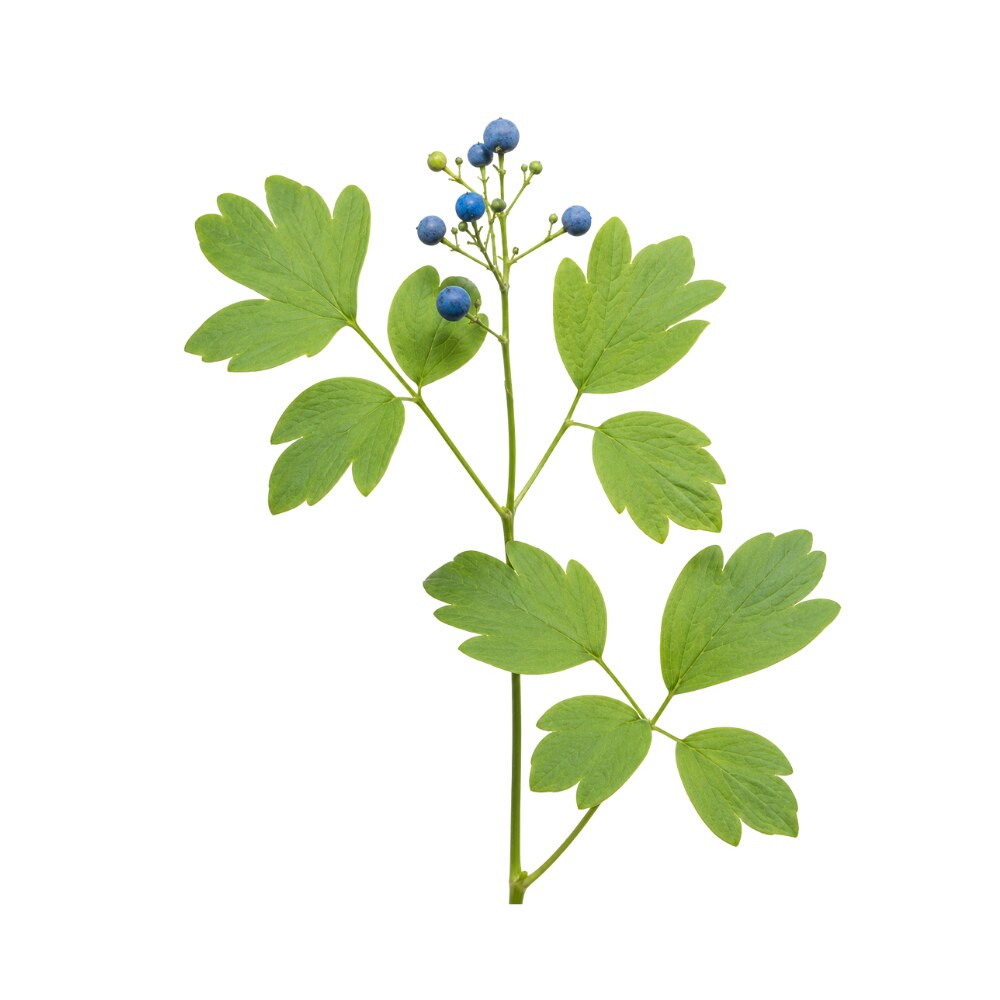
Thalictroidine is a minor quinolizidine alkaloid of blue cohosh (Caulophyllum thalictroides), named for the species. In the study that first characterised it, it was one of the blue-cohosh alkaloids that did NOT cause malformations in rat-embryo culture — a notable contrast to the co-occurring teratogen anagyrine and the embryotoxin taspine.

Sources · 1
Where Does It Come From?
Thalictroidine is a naturally occurring quinolizidine alkaloid, found in Blue cohosh. It is well tolerated orally (low toxicity).
Concentration
Content by Source
Concentrations not reported. No percent-dry-weight or mg/g figures have been published for this compound in its source plants.
Thalictroidine at a Glance
Thalictroidine is a quinolizidine alkaloid isolated from the rhizome of blue cohosh (Caulophyllum thalictroides), the North American herb whose species name it borrows. It is a genuinely obscure molecule: essentially all of what is known about it comes from a single 1999 study that set out to find which of blue cohosh’s alkaloids might be responsible for the plant’s reputation as a reproductive toxin 1Reference 1In vitroDetecting potential teratogenic alkaloids from blue cohosh rhizomes using an in vitro rat embryo cultureView study →.
That study is also the reason thalictroidine is worth a page at all. Blue cohosh contains at least one confirmed teratogen (anagyrine), an embryotoxin (taspine) and a broadly toxic nicotinic alkaloid (N-methylcytisine). When the blue-cohosh alkaloids were screened one by one in cultured rat embryos, thalictroidine was among the ones that did not produce malformations at the concentrations tested 1Reference 1In vitroDetecting potential teratogenic alkaloids from blue cohosh rhizomes using an in vitro rat embryo cultureView study →. It is, in other words, defined by a negative finding — a member of a worrying chemical family that, on the one test it has been through, behaved benignly.
Beyond that screen there is almost no pharmacology, no pharmacokinetics and no human data on the isolated molecule. This page is deliberately short and says so plainly.
A Blue-Cohosh Quinolizidine That Tested Negative for Teratogenicity
The single most useful thing about thalictroidine is the contrast it draws inside its own plant.
Blue cohosh has a long folk reputation as a labour-inducing and abortifacient herb, and modern toxicology has taken that reputation seriously. To find the responsible chemistry, Kennelly and colleagues fractionated the rhizome and tested individual alkaloids in an in-vitro rat whole-embryo culture — a system where a compound is applied directly to a developing embryo and scored for malformations and growth retardation 1Reference 1In vitroDetecting potential teratogenic alkaloids from blue cohosh rhizomes using an in vitro rat embryo cultureView study →. Their results split the blue-cohosh alkaloids into three camps:
- Anagyrine — teratogenic. It produced the structural malformations that fit blue cohosh’s “crooked-calf”-type teratogenic profile; anagyrine is the alkaloid most consistently blamed for the herb’s developmental toxicity 1Reference 1In vitroDetecting potential teratogenic alkaloids from blue cohosh rhizomes using an in vitro rat embryo cultureView study →.
- Taspine — embryotoxic but not teratogenic. It harmed and killed embryos (an embryotoxic effect) without producing the characteristic malformation pattern of a teratogen 1Reference 1In vitroDetecting potential teratogenic alkaloids from blue cohosh rhizomes using an in vitro rat embryo cultureView study →.
- Thalictroidine (with several lupine-type alkaloids) — negative. At the concentrations tested it was not teratogenic: no malformation signal in the same assay that flagged anagyrine 1Reference 1In vitroDetecting potential teratogenic alkaloids from blue cohosh rhizomes using an in vitro rat embryo cultureView study →.
The point is narrow but real. Sharing a plant — and even a chemical class — with a teratogen does not make a molecule a teratogen. Thalictroidine is the in-plant counter-example: a quinolizidine alkaloid from a genuinely hazardous herb that, on direct testing, did not cause malformations. That is a statement about this molecule in one assay, not a clean bill of health for blue cohosh, which still contains anagyrine and taspine and should be treated as a reproductive hazard (see Toxicity & Safety).
What It's Used For
There is very little to weigh. Thalictroidine has essentially one dedicated experiment behind it — the rat-embryo teratogen screen — and that experiment returned a null result for the endpoint it measured 1Reference 1In vitroDetecting potential teratogenic alkaloids from blue cohosh rhizomes using an in vitro rat embryo cultureView study →. It has no demonstrated therapeutic activity, and no study has proposed it as a bioactive or medicinal constituent.
Support is an experimental score — weighted by study type (human > animal > in vitro) and volume. A beta, not a validated metric. There is only one studied endpoint here, and it is a safety screen with a negative result, not an efficacy signal — so the row below scores what was tested, not a therapeutic use.
The only application in the sense of a study endpoint — and it is a safety endpoint, not a use. The isolated alkaloid was applied to cultured rat embryos and scored for malformations; unlike co-tested anagyrine (teratogenic) and taspine (embryotoxic), thalictroidine produced no teratogenic effect at the concentrations used 1Reference 1In vitroDetecting potential teratogenic alkaloids from blue cohosh rhizomes using an in vitro rat embryo cultureView study →.
This is a single-assay, single-species, in-vitro result on the pure compound — a strength in that it is genuinely the isolate, but a very thin basis on its own.
Gap: one study, one endpoint, one species, in vitro. There is no dose-response characterisation, no whole-animal (in-vivo) developmental study, no reproductive/genotoxicity package, and no evidence at all on any non-teratogenic activity. “Not teratogenic in this assay” must not be over-read as “safe.”
Mechanisms
No molecular target, receptor interaction, or mechanism of action has been described for thalictroidine. It is grouped structurally with the quinolizidine (lupine-type) alkaloids of blue cohosh, some of which — lupanine and α-isolupanine — contribute to the herb’s in-vitro CYP450 inhibition 3Reference 3In vitroAlkaloids and saponins as cytochrome P450 inhibitors from blue cohosh (Caulophyllum thalictroides) in an in vitro assayView study →; thalictroidine itself has not been reported as a characterised CYP inhibitor, and its inclusion here is chemotaxonomic, not mechanistic.
| Target / pathway | Effect | Relevant to |
|---|---|---|
| Rat embryo (whole-embryo culture) | No teratogenic effect at tested concentrations (a null result) | developmental-toxicity screen |
| (No characterised molecular target) | — | — |
The only “mechanism” on record is the absence of a teratogenic outcome in one assay. Nothing is known about how — or whether — thalictroidine acts on any receptor, enzyme, or pathway.
Pharmacokinetics
No data. Absorption, distribution, metabolism, half-life and oral bioavailability of thalictroidine have not been studied. As a minor alkaloid consumed only within whole blue-cohosh rhizome or its extracts, no isolated-compound pharmacokinetics exist.
Clinical Trials
None, and none expected. Thalictroidine is not a drug or a supplement ingredient in its own right; there are no completed, planned or terminated trials of the isolated molecule.
| Completed | Planned | Terminated | Preclinical |
|---|---|---|---|
| — | — | — | One in-vitro rat-embryo teratogen screen (negative) 1Reference 1In vitroDetecting potential teratogenic alkaloids from blue cohosh rhizomes using an in vitro rat embryo cultureView study → |
Last checked: July 2026.
Isolate vs. Plant Studies
Unusually, the only evidence on thalictroidine is isolate evidence — and that is its main virtue. Kennelly and colleagues deliberately separated the individual blue-cohosh alkaloids and tested them one at a time, so the “not teratogenic” result is a statement about the pure compound, not about a whole extract in which effects could be attributed to anything 1Reference 1In vitroDetecting potential teratogenic alkaloids from blue cohosh rhizomes using an in vitro rat embryo cultureView study →. There is, correspondingly, no whole-plant study that isolates thalictroidine’s contribution — because the molecule has no known contribution to isolate. Everything else known about blue cohosh’s reproductive toxicity is driven by other constituents of the same plant (anagyrine, taspine, N-methylcytisine and the triterpene saponins) 1,
Prevalence in Nature
Thalictroidine is reported from the rhizome and root of blue cohosh (Caulophyllum thalictroides), a woodland perennial of eastern North America, where it sits among a complex mixture of quinolizidine alkaloids (N-methylcytisine, baptifoline, anagyrine, lupanine, sparteine and others), aporphine alkaloids (magnoflorine, taspine) and triterpene saponins 1,
Discovery & Synthesis
Thalictroidine was characterised from Caulophyllum thalictroides rhizome by Edward J. Kennelly and colleagues in 1999, in the Journal of Natural Products study that fractionated blue cohosh’s alkaloids and screened them for teratogenicity in rat-embryo culture — the work in which it was found not to be teratogenic, in contrast to anagyrine and taspine 1Reference 1In vitroDetecting potential teratogenic alkaloids from blue cohosh rhizomes using an in vitro rat embryo cultureView study →. Its name is taken directly from the species epithet thalictroides (“resembling Thalictrum,” meadow-rue), the same source as the plant’s common association.
No total synthesis of thalictroidine is documented, and there is no commercial production: the molecule has no application that would create demand, so it exists only as a research isolate obtained from the plant. Any future interest would most plausibly come from further phytochemical work on the Caulophyllum alkaloids rather than from synthesis.
Patents: not yet researched.
Toxicity & Safety
Thalictroidine carries a low flag on the strength of its single finding: in the one assay it has faced — direct application to cultured rat embryos — it was not teratogenic 1Reference 1In vitroDetecting potential teratogenic alkaloids from blue cohosh rhizomes using an in vitro rat embryo cultureView study →. That badge reflects the absence of a demonstrated hazard for the isolated molecule, not a body of safety data. There is no repeat-dose, in-vivo developmental, genotoxicity or human safety information on the pure compound; “low” here means “nothing worrying was found in the one test done,” which is a much weaker statement than “shown to be safe.”
The essential context is the plant, not the molecule. Blue cohosh has a serious reproductive-toxicity reputation and demonstrably contains an alkaloid teratogen (anagyrine), an embryotoxin (taspine) and a broadly toxic nicotinic alkaloid (N-methylcytisine) 1,
- Not teratogenic in the one test on record. The isolated alkaloid produced no malformations in rat-embryo culture at the tested concentrations — the reassuring, if narrow, data point 1Reference 1In vitroDetecting potential teratogenic alkaloids from blue cohosh rhizomes using an in vitro rat embryo cultureView study →.
- The plant it comes from is a reproductive hazard. Blue cohosh contains the teratogen anagyrine and the embryotoxin taspine; a negative result for thalictroidine says nothing about the herb’s overall safety 1,
2Reference 1In vitroDetecting potential teratogenic alkaloids from blue cohosh rhizomes using an in vitro rat embryo cultureView study →Reference 2Primary constituents of blue cohosh: quantification in dietary supplements and potential for toxicityView study → . - Almost no data on the isolate. No in-vivo, repeat-dose, genotoxicity, pharmacokinetic or human information exists — “low toxicity” reflects thin evidence, not thorough testing.
- Not an intake decision. Thalictroidine is a trace constituent, never taken on its own; pregnancy and dosing decisions belong to the blue-cohosh herb page, not to this molecule.
References
- Kennelly EJ, Flynn TJ, Mazzola EP, et al. (1999). Detecting potential teratogenic alkaloids from blue cohosh rhizomes using an in vitro rat embryo culture. Journal of Natural Products. https://pubmed.ncbi.nlm.nih.gov/10543898/
- Rader JI, Pawar RS (2013). Primary constituents of blue cohosh: quantification in dietary supplements and potential for toxicity. Analytical and Bioanalytical Chemistry. https://pubmed.ncbi.nlm.nih.gov/23420136/
- Madgula VL, Ali Z, Smillie T, et al. (2009). Alkaloids and saponins as cytochrome P450 inhibitors from blue cohosh (Caulophyllum thalictroides) in an in vitro assay. Planta Medica. https://pubmed.ncbi.nlm.nih.gov/19137500/
- Avula B, Wang YH, Smillie TJ, Khan IA (2011). Analytical methods for determination of magnoflorine and saponins from roots of Caulophyllum thalictroides (L.) Michx. using UPLC, HPLC and HPTLC. Journal of Pharmaceutical and Biomedical Analysis. https://pubmed.ncbi.nlm.nih.gov/21872415/



