
Condition
Androgenetic Alopecia
Male- and female-pattern hair loss — why DHT miniaturizes follicles, what minoxidil and finasteride really do, and how rosemary oil measured up against them.

Androgenetic alopecia — male- and female-pattern hair loss — is the most common cause of hair loss in both sexes, affecting roughly half of men by age 50 and a substantial minority of women, particularly after menopause. It is a genetically determined sensitivity of scalp follicles to androgens, and it is progressive: hair is not lost all at once but miniaturized over successive growth cycles until the follicle produces only fine, short, unpigmented vellus hair, and eventually nothing.
Treatment, botanical or pharmaceutical, maintains far more reliably than it restores. Follicles that have miniaturized can often be revived; follicles that have been dormant for years generally cannot. Starting earlier does more than any choice between agents.
Presentation
Types & Variants
- Male-pattern hair loss — recession at the temples and thinning at the vertex, progressing in the stereotyped stages of the Norwood-Hamilton scale, often converging into a horseshoe of retained occipital and temporal hair. Those retained areas are androgen-insensitive, which is the basis of hair transplantation.
- Female-pattern hair loss — diffuse thinning over the crown with preservation of the frontal hairline, widening of the central part (the “Christmas tree” pattern on the Ludwig scale). Complete baldness is unusual.
It must be distinguished from the other common causes of hair loss, because the treatments differ completely:
- Telogen effluvium — diffuse shedding 2–3 months after a trigger (illness, surgery, childbirth, crash dieting, severe stress, iron deficiency, thyroid disease). It is usually reversible once the trigger resolves, and it is the most frequently mistaken diagnosis.
- Alopecia areata — an autoimmune condition producing discrete, smooth, round patches of complete hair loss, sometimes with nail pitting.
- Scarring (cicatricial) alopecias — including frontal fibrosing alopecia and lichen planopilaris, where follicles are destroyed and replaced by fibrous tissue. These are irreversible and time-critical, so scalp redness, scaling, burning, itching or loss of visible follicular openings warrants dermatological assessment rather than a supplement.
- Traction alopecia — from sustained tension on the hair, reversible early and permanent late.
Overview
General Pathology
The androgen driving pattern hair loss is dihydrotestosterone (DHT), produced from testosterone by the enzyme 5α-reductase, chiefly the type 2 isoenzyme in the hair follicle’s dermal papilla. In genetically susceptible follicles, DHT binding to the androgen receptor shortens the anagen (growth) phase with each successive cycle, so hairs grow for less time, emerge shorter and finer, and the follicle progressively miniaturizes. The follicular unit does not die early on — it makes a smaller and smaller hair — which is exactly why intervention works better before miniaturization is complete.
The paradox that explains the pattern is regional: the same DHT that miniaturizes frontal and vertex follicles has no such effect on occipital follicles, and in fact promotes body and facial hair growth. Susceptibility is programmed into the follicle itself, not the circulating hormone level, which is why most men with pattern hair loss have entirely normal testosterone. It is receptor sensitivity and local enzyme activity, inherited polygenically with a well-established contribution from the androgen receptor gene on the X chromosome.
Two clinical consequences follow. First, hormone testing in a typical male pattern is usually unhelpful. Second, in women the picture is different — sudden or severe female-pattern loss, especially with acne, hirsutism or irregular periods, warrants investigation for androgen excess including PCOS, along with checks of thyroid function, ferritin and vitamin D, because those causes are treatable and commonly missed.
Treatment
Conventional Treatment
Minoxidil, topical or low-dose oral, is first-line for both sexes. Its mechanism is vascular and follicular rather than hormonal — it prolongs anagen and enlarges miniaturized follicles. An initial shedding phase in the first weeks is expected and reflects synchronized follicles entering a new growth cycle. Benefit stops when treatment stops, with gains lost over the following months.
Finasteride, a 5α-reductase type 2 inhibitor, is the established oral treatment in men. Its pivotal trials enrolled 1,553 men and found that 1 mg daily increased hair count in a one-inch scalp circle by 107 hairs at year 1 and 138 at year 2, against continued loss on placebo, with improvement confirmed by patient, investigator and blinded photographic assessment 6Reference 6RCTFinasteride in the treatment of men with androgenetic alopecia — randomised, double-blind, placebo-controlled trials (n=1,553)View study →. Dutasteride inhibits both isoenzymes and is more potent. Both carry a reported incidence of sexual side effects, generally low and usually reversible, with persistent symptoms after discontinuation remaining debated rather than settled.
Finasteride and dutasteride are contraindicated in pregnancy and cause genital malformation in a male fetus. Women who are or may become pregnant should not take them, and should not handle crushed or broken tablets.
Other established options include microneedling, low-level laser therapy, platelet-rich plasma, topical antiandrogens, oral spironolactone in women, and hair transplantation, which relocates androgen-insensitive occipital follicles.
Treatment
What Actually Helps
Rosemary oil has the strongest signal — and specifically the topical essential oil, not the ingested herb. The pivotal trial randomized 100 men with androgenetic alopecia to scalp-applied rosemary oil or 2% minoxidil for six months; both groups had a significant increase in hair count at six months with no meaningful difference between them, and scalp itching was more frequent in the minoxidil group 1Reference 1RCTRosemary oil vs minoxidil 2% for the treatment of androgenetic alopecia: a randomized comparative trialView study →. The trial has limits: 2% minoxidil is the weaker concentration, there was no vehicle-only arm, so expectancy and the effect of scalp massage itself are uncontrolled, and durability beyond six months is untested.
Saw palmetto is the oral option, working on the same 5α-reductase mechanism as finasteride. A systematic review across seven trials found supplements containing it may be an option in androgenetic alopecia, reporting improvement in hair quality in around 60% of subjects and hair count in 27%, while noting that robust high-quality data are lacking 7Reference 7Systematic reviewNatural hair supplement: friend or foe? Saw palmetto, a systematic review in alopecia — systematic review (7 trials)View study →. In a two-year head-to-head study, 38% improved on saw palmetto against 68% on finasteride 4Reference 4RCTComparative effectiveness of finasteride vs Serenoa repens in male androgenetic alopecia: a two-year study — randomized comparative studyView study →. It is real but distinctly weaker, and it is an alternative for people who decline finasteride rather than an equivalent.
Stinging nettle rests on a single in-vitro 5α-reductase assay. Mechanistically coherent, clinically untested.
What is worth doing regardless: correcting documented iron, vitamin D or thyroid abnormalities; avoiding traction; and being realistic about timelines — any treatment needs 6–12 months before it can be judged, because that is simply how long a hair cycle takes. Anything promising visible regrowth in weeks is selling shedding-phase noise.
Hair loss supplements are an enormous market with a strong emotional pull and very little regulation. Biotin in particular is near-useless for pattern hair loss in people who are not deficient, and high-dose biotin interferes with thyroid and other immunoassays, producing falsely abnormal results that can trigger a misdiagnosis. If you take it, stop it several days before blood tests and tell whoever ordered them.
Materia Medica
Materia Medica
None of the herbs used for androgenetic alopecia is a substitute for professional care.
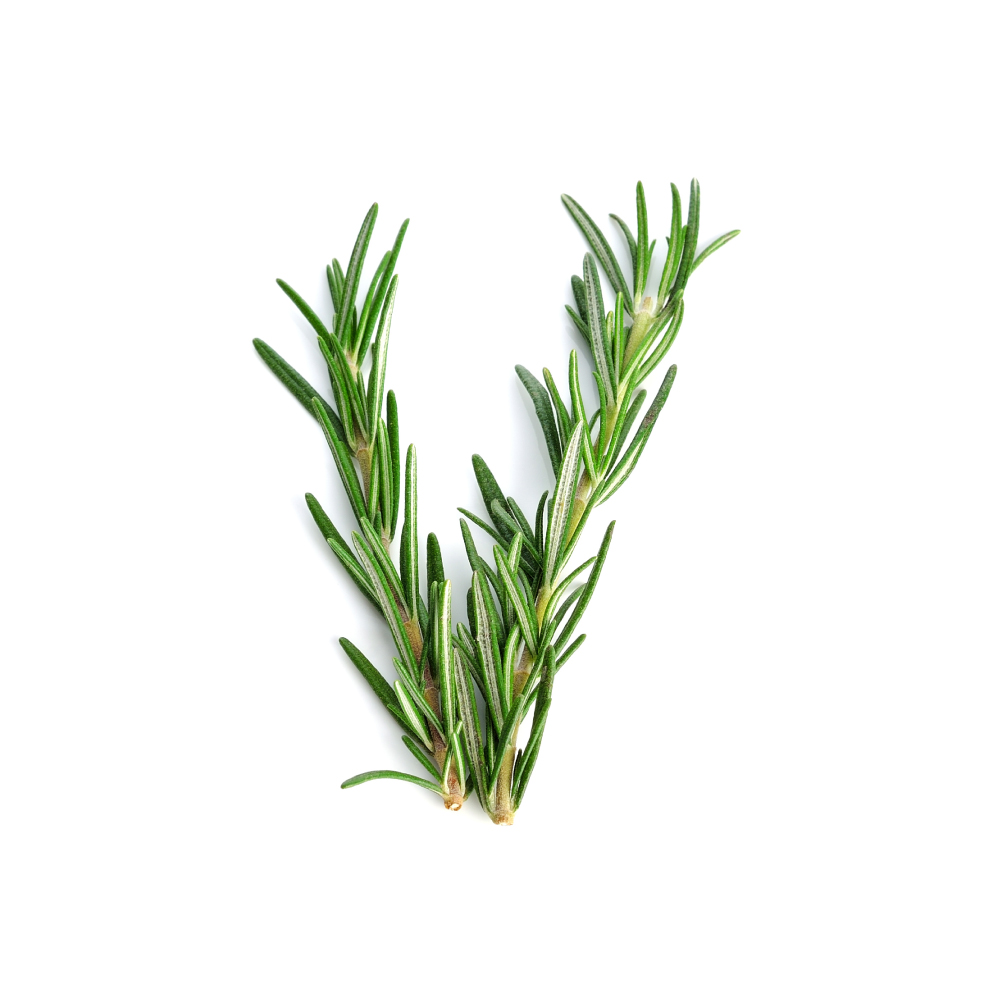 RosemaryRosmarinus officinalisModerate
Rosemary’s strongest human indication, and it is specifically the topical essential oil, not the ingested herb. A 6-month RCT (n=100) in men with androgenetic alopecia found scalp-applied rosemary oil produced a significant increase in hair count at 6 months (not at 3), statistically indistinguishable from 2% minoxidil, with less scalp itching 1Reference 1RCTRosemary oil vs minoxidil 2% for the treatment of androgenetic alopecia: a randomized comparative trialView study →; a 2025 double-blind three-arm RCT of a rosemary-containing oil blend reported improved hair-growth and scalp-health measures versus a coconut-oil control 2Reference 2RCTRosmagain™ as a Natural Therapeutic for Hair Regrowth and Scalp Health: A Double-Blind, Randomized, Three-Armed, Placebo-Controlled Clinical Trial — RCTView study →.
Proposed mechanism is enhanced microcapillary scalp perfusion plus anti-inflammatory and possibly anti-androgenic activity of carnosic acid.
The pivotal trial had no vehicle-only arm (open to placebo/expectancy effects), samples are small, ‘rosemary oil’ formulations differ between studies, and durability beyond 6 months is untested.
Full monograph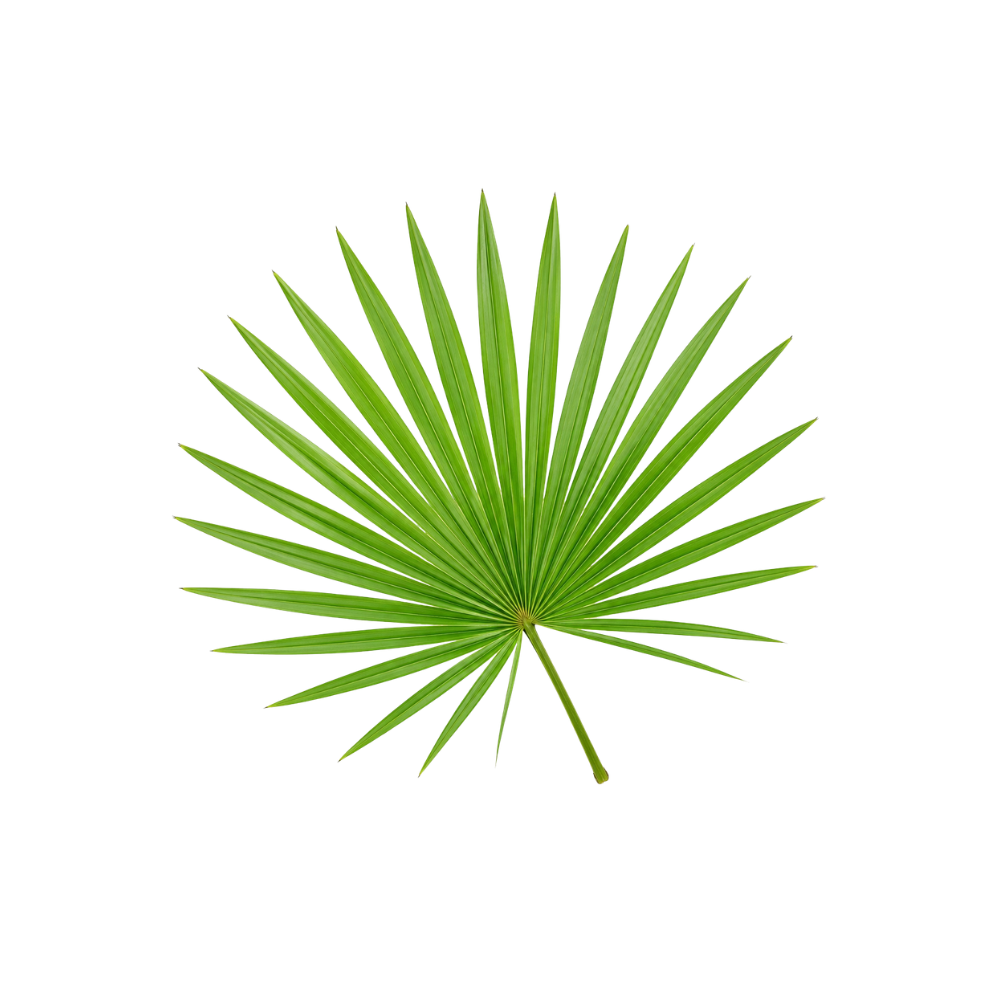 Saw PalmettoSerenoa repensModerate
The oral counterpart: male-pattern hair loss shares BPH’s core mechanism — 5α-reductase converting testosterone to DHT — the rationale for testing this botanical 5α-reductase inhibitor. The first placebo-controlled, double-blind trial of botanically-derived 5α-reductase inhibitors (a beta-sitosterol/saw-palmetto formulation) reported improvement in ~60% of treated men versus far fewer on placebo, though the sample was small 3Reference 3RCTA randomized, double-blind, placebo-controlled trial of botanically derived inhibitors of 5α-reductase in androgenetic alopecia — RCTView study →; a 2-year open-label study (n=100) found oral saw palmetto 320 mg/day improved hair growth in 38% of men versus 68% on finasteride 1 mg 4Reference 4RCTComparative effectiveness of finasteride vs Serenoa repens in male androgenetic alopecia: a two-year study — randomized comparative studyView study →.
Only one small placebo-controlled RCT exists, the larger comparison was open-label, and every head-to-head shows saw palmetto distinctly weaker than finasteride; no long-term or standardized-dose efficacy data.
Full monograph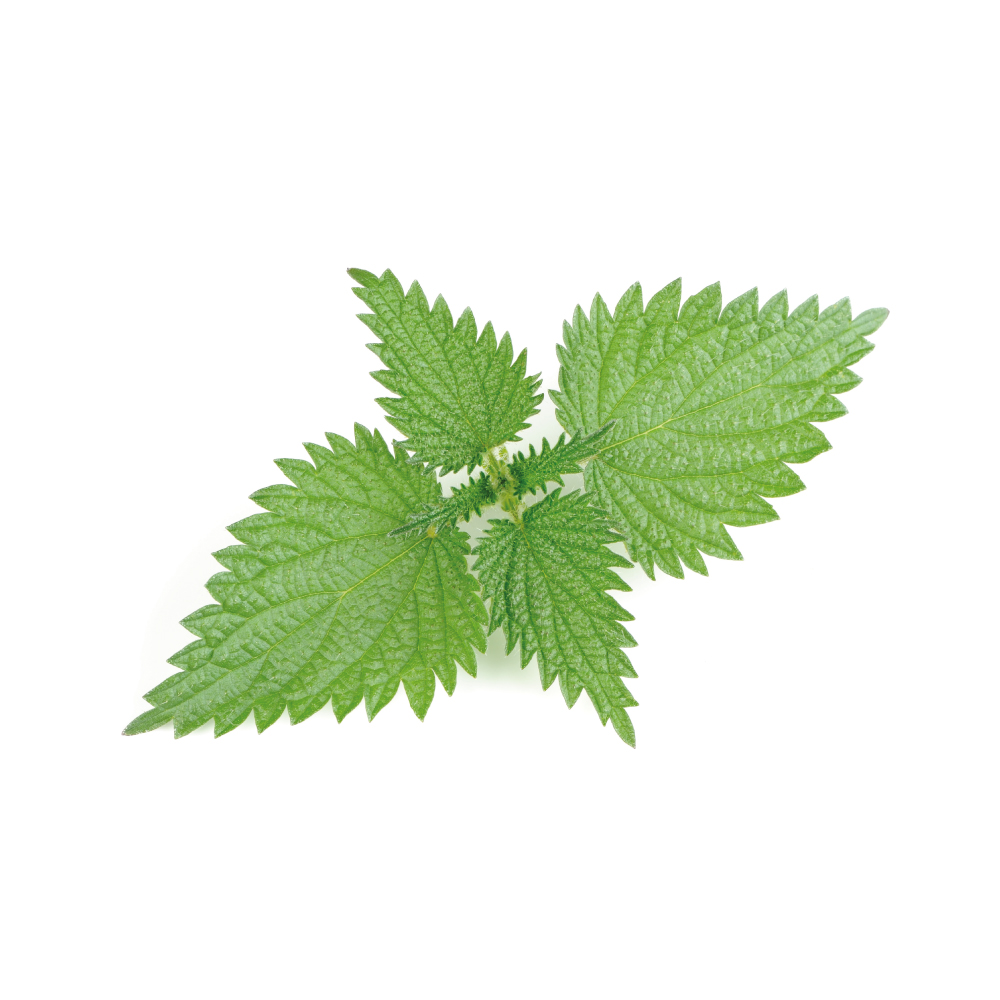 Stinging NettleUrtica dioicaPreclinical
Nettle root is traditionally used for male-pattern baldness on the same antiandrogen rationale as its prostate use, but the support is mechanism-only. In a comparative in-vitro screen against finasteride, Urtica dioica emerged as a promising 5α-reductase inhibitor (the enzyme converting testosterone to DHT that drives androgenetic alopecia) 5Reference 5In vitroEvaluation of 5α-reductase inhibitory activity of certain herbs useful as antiandrogens — in vitroView study →, consistent with the SHBG-binding/antiandrogen mechanisms invoked for its BPH use.
Support rests entirely on a single in-vitro enzyme assay plus traditional use — there are no clinical or even animal hair-growth data. This is in-vitro 5α-reductase inhibition, not demonstrated regrowth.
Full monographReferences
- Panahi, Y., Taghizadeh, M., Marzony, E. T., Sahebkar, A. (2015). Rosemary oil vs minoxidil 2% for the treatment of androgenetic alopecia: a randomized comparative trial. Skinmed. https://pubmed.ncbi.nlm.nih.gov/25842469/
- Patel, M. N., et al. (2025). Rosmagain™ as a Natural Therapeutic for Hair Regrowth and Scalp Health: A Double-Blind, Randomized, Three-Armed, Placebo-Controlled Clinical Trial — RCT. Cureus. https://pubmed.ncbi.nlm.nih.gov/40656290/
- Prager, N., Bickett, K., French, N., & Marcovici, G. (2002). A randomized, double-blind, placebo-controlled trial of botanically derived inhibitors of 5α-reductase in androgenetic alopecia — RCT. Journal of Alternative and Complementary Medicine. https://pubmed.ncbi.nlm.nih.gov/12006122/
- Rossi, A., Mari, E., Scarno, M., et al. (2012). Comparative effectiveness of finasteride vs Serenoa repens in male androgenetic alopecia: a two-year study — randomized comparative study. International Journal of Immunopathology and Pharmacology. https://pubmed.ncbi.nlm.nih.gov/23298508/
- Nahata A, Dixit VK (2014). Evaluation of 5α-reductase inhibitory activity of certain herbs useful as antiandrogens — in vitro. Andrologia. https://pubmed.ncbi.nlm.nih.gov/23710567/
- Kaufman, K. D., Olsen, E. A., Whiting, D., et al. (1998). Finasteride in the treatment of men with androgenetic alopecia — randomised, double-blind, placebo-controlled trials (n=1,553). Journal of the American Academy of Dermatology, 39(4 Pt 1), 578–589. https://pubmed.ncbi.nlm.nih.gov/9777765/
- Evron, E., Juhasz, M., Babadjouni, A., & Mesinkovska, N. A. (2020). Natural hair supplement: friend or foe? Saw palmetto, a systematic review in alopecia — systematic review (7 trials). Skin Appendage Disorders, 6(6), 329–337. https://pubmed.ncbi.nlm.nih.gov/33313047/