
Condition
Nausea & Vomiting
Nausea and vomiting are a symptom of many causes — the receptor map that decides which treatment works, ginger and B6 in pregnancy, and the cannabis paradox.

Nausea and vomiting are symptoms, not a disease — the body’s shared final pathway for an enormous range of causes, from a passing stomach bug to pregnancy, motion, migraine, chemotherapy, surgery, medication and, occasionally, something serious. The useful question is almost never “what settles nausea” in the abstract, but “what is causing this nausea”, because the answer determines which treatment works and whether treating it at all is the right move.
Presentation
Types & Variants
Nausea and vomiting are best grouped by cause, because cause drives treatment:
- Nausea and vomiting of pregnancy (NVP) — affects up to 80% of pregnancies, typically in the first trimester. Hyperemesis gravidarum is its severe form, with dehydration, electrolyte disturbance and weight loss, and it is a medical problem rather than a self-care one.
- Chemotherapy-induced (CINV) — anticipatory, acute and delayed phases, each responding differently; the best-managed category, and the only one where cannabinoids hold a licensed role.
- Post-operative (PONV) — driven by anaesthetic agents and opioids.
- Motion sickness and vestibular — a sensory-conflict problem, mediated through histaminergic and cholinergic pathways, which is why the drugs that help here differ from every other category.
- Gastrointestinal — gastroenteritis, obstruction, gastroparesis, GERD, gastric ulcer, gall-bladder and pancreatic disease.
- Central — migraine (where nausea is a diagnostic feature, not a side issue), raised intracranial pressure, and CNS infection.
- Drug- and toxin-induced — opioids, antibiotics, chemotherapy, alcohol, and the frequently-missed cannabinoid hyperemesis syndrome.
- Cyclic vomiting syndrome — stereotyped recurrent bouts with well periods between, closely related to migraine biology.
Overview
General Pathology
Vomiting is a reflex coordinated by the brainstem, and understanding its inputs explains why one antiemetic works where another does nothing. Four routes converge on the medullary vomiting centre:
- The chemoreceptor trigger zone in the area postrema — which sits outside the blood-brain barrier, so it samples the bloodstream directly. This is the sensor for circulating drugs, toxins and metabolic disturbance, and it is rich in dopamine D2 and 5-HT3 receptors.
- The vagus and enteric nervous system — gut distension, irritation and mucosal injury release serotonin from enterochromaffin cells onto vagal 5-HT3 receptors. This is the dominant route in chemotherapy and gastroenteritis.
- The vestibular system — motion and inner-ear disturbance signalling through histamine H1 and muscarinic receptors.
- Higher cortical centres — anticipation, anxiety, smell, pain and memory, which is why anticipatory nausea before a chemotherapy cycle is real and why it responds to different measures.
An antihistamine helps motion sickness and does little for chemotherapy; a 5-HT3 blocker is transformative in chemotherapy and useless for motion sickness. Any claim that a single herb “treats nausea” generally is making a category error.
Prolonged vomiting causes dehydration, hypokalaemia and a hypochloraemic metabolic alkalosis; repeated forceful vomiting can tear the oesophageal mucosa (Mallory-Weiss). In pregnancy, prolonged vomiting risks thiamine depletion, and thiamine must be replaced before glucose-containing fluids to avoid precipitating Wernicke’s encephalopathy.
Assessment
When to Get It Checked
Most nausea is benign and self-limiting. Prompt medical assessment is warranted for:
- Vomiting blood, or material that looks like coffee grounds; black tarry stools
- Signs of dehydration, or inability to keep any fluid down for more than a day
- Severe or localized abdominal pain, a rigid abdomen, or no passage of stool or wind
- Headache with neck stiffness, fever, confusion, or vomiting that is worse on waking — possible raised intracranial pressure
- Vomiting after a head injury
- Projectile vomiting in a young infant, or any dehydration in a baby or older adult
- Unintended weight loss, or vomiting that persists beyond a few days
- Suspected pregnancy with severe vomiting
Nausea is the presenting symptom of bowel obstruction, myocardial infarction (especially in women and people with diabetes), diabetic ketoacidosis, raised intracranial pressure and drug toxicity. A soothing herb will take the edge off all of them without touching the cause.
Treatment
Conventional Treatment
Treatment follows the receptor map. 5-HT3 antagonists (ondansetron) are first-line for chemotherapy, post-operative and gastroenteritis-related vomiting. Dopamine antagonists (metoclopramide, domperidone, prochlorperazine) act at the trigger zone and add prokinetic effect, useful in gastroparesis and migraine. NK-1 antagonists (aprepitant) target the delayed phase of CINV. Antihistamines and anticholinergics (cyclizine, promethazine, hyoscine) are the motion-sickness and vestibular agents. Corticosteroids are used adjunctively in CINV.
For pregnancy, pyridoxine (vitamin B6), alone or combined with doxylamine, is the guideline-endorsed first-line pharmacological treatment — an unusual case of a vitamin holding first-line status. Rehydration and electrolyte correction matter more than any antiemetic when vomiting has been prolonged.
Treatment
What Actually Helps
Ginger has its best evidence in pregnancy. A meta-analysis of 12 randomized trials in 1,278 pregnant women found ginger significantly improved nausea versus placebo, though the reduction in vomiting episodes did not reach statistical significance — and it found no increased risk of spontaneous abortion, heartburn or drowsiness 3Reference 3Meta-analysisA systematic review and meta-analysis of the effect and safety of ginger in the treatment of pregnancy-associated nausea and vomiting — meta-analysisView study →. The authors summarised it as a harmless and possibly effective option. Ginger helps the sensation more reliably than the act.
Vitamin B6 holds a stronger position than ginger: first-line and guideline-endorsed for nausea and vomiting of pregnancy, at doses well above nutritional intake. Its caveat is safety rather than efficacy. Chronic high-dose pyridoxine causes a reversible peripheral sensory neuropathy, and the US and European upper limits differ substantially (100 mg/day versus 12 mg/day), so this is a short-course, supervised use rather than an open-ended one.
P6 (Neiguan) acupressure wristbands are widely used and low-risk; trial evidence is mixed but the intervention is essentially harmless, which is a reasonable basis for trying it.
The practical measures do most of the work: small frequent dry carbohydrate snacks, sipping fluids rather than drinking volumes, avoiding strong smells, and eating something before getting up in pregnancy-related nausea.
The Cannabis Paradox
Cannabis sits on both sides of nausea: it relieves one kind and causes another, and the second is routinely missed.
Cannabinoids have a licensed antiemetic role confined to chemotherapy-induced nausea, on evidence from synthetic THC analogues that predates modern 5-HT3 and NK-1 antagonists.
But chronic heavy cannabis use also causes a severe vomiting syndrome. A systematic review of cannabinoid hyperemesis syndrome found a strikingly consistent picture: regular cannabis use in 100% of cases, cyclic nausea and vomiting in 100%, abdominal pain in 85%, a male predominance, at least weekly use in 97%, and — the diagnostic giveaway — compulsive hot bathing or showering that relieves the symptoms in 92% 13Reference 13Systematic reviewCannabinoid hyperemesis syndrome: diagnosis, pathophysiology, and treatment — systematic reviewView study →. Symptoms resolved after stopping cannabis in 97% of cases, and the review concluded that cannabis cessation is the best treatment; supportive care includes intravenous fluids, dopamine antagonists and topical capsaicin, while avoiding opioids.
Someone with cannabinoid hyperemesis is experiencing severe nausea, believes cannabis relieves nausea, and increases their use. Cyclic vomiting with compulsive hot showers in a regular cannabis user is that syndrome until proven otherwise, and no amount of ginger will touch it.
Materia Medica
Materia Medica
None of the herbs used for nausea and vomiting is a substitute for professional care.
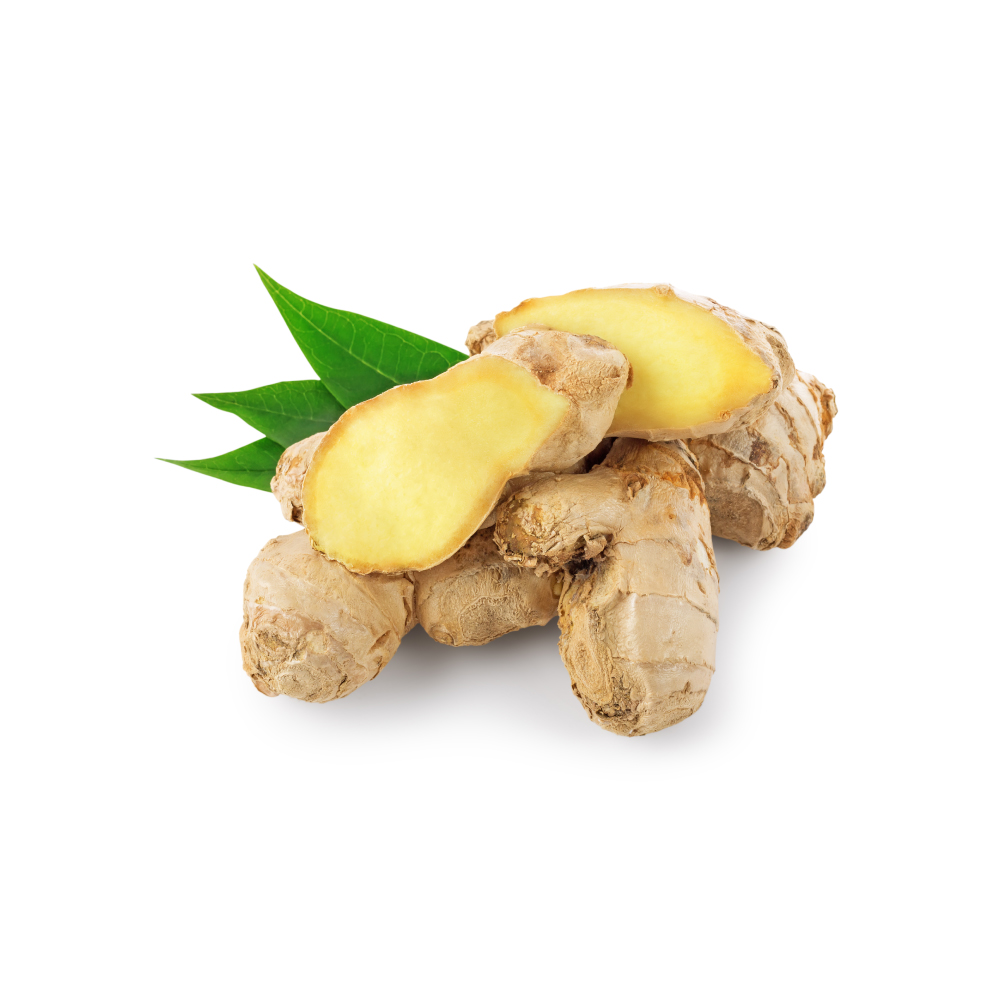 GingerZingiber officinaleStrong
Ginger is the best-evidenced botanical antiemetic, but its strength is context-specific. A meta-analysis of 12 RCTs (n≈1278) found ginger significantly improved the nausea of early pregnancy versus placebo, with a weaker non-significant trend for vomiting; a second meta-analysis agreed and found it comparable to vitamin B6 with no increase in adverse fetal outcomes 3,
A meta-analysis of perioperative RCTs found ginger cut early postoperative nausea (RR 0.68) and rescue-antiemetic use (RR 0.71) 6Reference 6Meta-analysisEfficacy of ginger in preventing postoperative nausea and vomiting: a systematic review and meta-analysis — meta-analysisView study →. Its gingerols/shogaols act as 5-HT3 negative allosteric modulators and NK-1 antagonists 7Reference 7ReviewGinger — mechanism of action in chemotherapy-induced nausea and vomiting: a review — reviewView study →.
Caveats: evidence is for dried powdered rhizome/capsules (~0.5–1.5 g/day), not fresh root; and it does NOT generalise across contexts — pooled data are null for chemotherapy-induced nausea 8,
 CannabisCannabis sativaModerate
Cannabinoids have a licensed antiemetic role confined to chemotherapy-induced nausea and vomiting (CINV). A Cochrane review found cannabinoids more effective than placebo and broadly comparable to older antiemetics, often the treatment patients preferred 1Reference 1Systematic reviewCannabinoids for nausea and vomiting in adults with cancer receiving chemotherapy — Cochrane systematic reviewView study →; the 2024 ASCO guideline endorses them for nausea resistant to standard drugs 2Reference 2Cannabis and Cannabinoids in Adults With Cancer: ASCO Guideline — practice guidelineView study →.
Caveats are substantial: the evidence rests on synthetic/isolated THC analogues (dronabinol, nabilone), not whole-plant cannabis, and the trials predate modern 5-HT3 and NK-1 antagonists now first-line — so benefit over current standard-of-care is unproven, the trade-offs are psychoactivity/sedation, and high-THC material can itself provoke nausea. CINV-only — not for pregnancy (contraindicated), motion or postoperative nausea.
Full monograph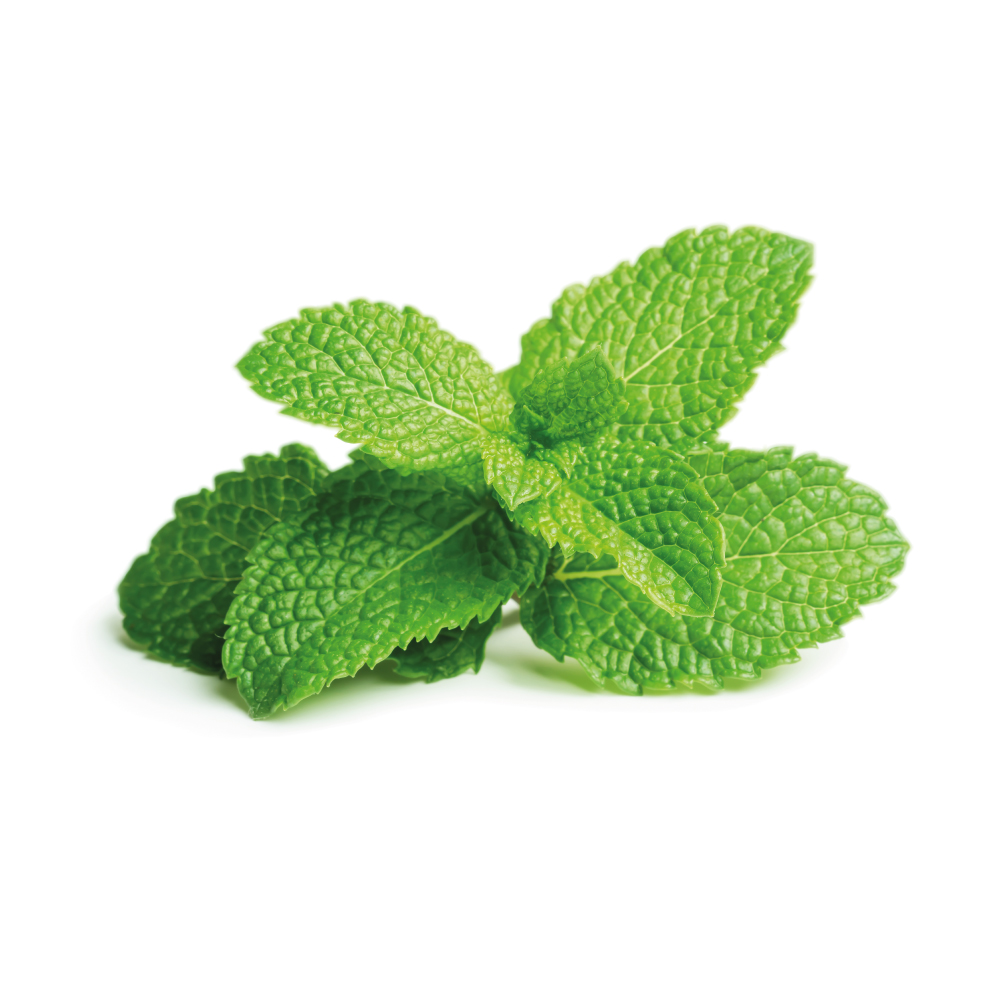 PeppermintMentha × piperitaModerate
Peppermint (usually as inhaled aromatherapy) is widely used for nausea with modest human support. A 2024 systematic review and meta-analysis of aromatherapy for cancer-related nausea found a small pooled benefit 11Reference 11Meta-analysisEffects of aromatherapy on nausea and vomiting in patients with cancer: a systematic review and meta-analysis of randomized controlled trials — systematic review, meta-analysisView study →, and a paediatric randomized trial reported reduced chemotherapy nausea from a peppermint–lemon blend 12Reference 12RCTEffect of peppermint-lemon aromatherapy on nausea-vomiting and quality of life in pediatric patients with leukemia: a randomized controlled trial — randomised controlled trialView study →.
Trials are small and heterogeneous, frequently combine peppermint with other oils, and blinding of an aromatic intervention is weak — the signal is suggestive rather than established. The context is chiefly chemotherapy/procedural nausea via inhaled oil; distinct from peppermint’s stronger antispasmodic GI evidence, and menthol can aggravate reflux.
Full monograph Black HorehoundBallota nigraTraditional only
Black horehound (Ballota nigra) is a defining traditional European antiemetic — its enduring use is specifically for motion sickness and for nausea or vomiting of neurological (rather than digestive) origin. The rationale is its nervine/antispasmodic character: phenylpropanoid glycosides (verbascoside and relatives) bind benzodiazepine, dopaminergic and morphinic receptors in animal studies, a plausible mechanism at the vestibular/CTZ side of the vomiting pathway.
Traditional only — there is no clinical antiemetic trial; the shared dopaminergic/sedative activity underlies interaction cautions with antipsychotics, anti-Parkinson’s drugs and sedatives, and it is traditionally avoided in pregnancy.
Full monographSupplementation
Supplementation
Supplements, nutrients and compounds used for nausea and vomiting.
References
- Smith, L. A., Azariah, F., Lavender, V. T., et al. (2015). Cannabinoids for nausea and vomiting in adults with cancer receiving chemotherapy — Cochrane systematic review. Cochrane Database of Systematic Reviews. https://pubmed.ncbi.nlm.nih.gov/26561338/
- Braun, I. M., Bohlke, K., Abrams, D. I., et al. (2024). Cannabis and Cannabinoids in Adults With Cancer: ASCO Guideline — practice guideline. Journal of Clinical Oncology. https://pubmed.ncbi.nlm.nih.gov/38478773/
- Viljoen E et al. (2014). A systematic review and meta-analysis of the effect and safety of ginger in the treatment of pregnancy-associated nausea and vomiting — meta-analysis. Nutrition Journal. https://pubmed.ncbi.nlm.nih.gov/24642205/
- Thomson M et al. (2014). Effects of ginger for nausea and vomiting in early pregnancy: a meta-analysis — meta-analysis. Journal of the American Board of Family Medicine. https://pubmed.ncbi.nlm.nih.gov/24390893/
- Matthews A et al. (2015). Interventions for nausea and vomiting in early pregnancy — systematic review (Cochrane). Cochrane Database of Systematic Reviews. https://pubmed.ncbi.nlm.nih.gov/26348534/
- Zhu W et al. (2021). Efficacy of ginger in preventing postoperative nausea and vomiting: a systematic review and meta-analysis — meta-analysis. Journal of Nursing Scholarship. https://pubmed.ncbi.nlm.nih.gov/34312974/
- Marx W et al. (2017). Ginger — mechanism of action in chemotherapy-induced nausea and vomiting: a review — review. Critical Reviews in Food Science and Nutrition. https://pubmed.ncbi.nlm.nih.gov/25848702/
- Choi J et al. (2022). Effects of ginger intake on chemotherapy-induced nausea and vomiting: a systematic review of randomized clinical trials — meta-analysis. Nutrients. https://pubmed.ncbi.nlm.nih.gov/36501010/
- Crichton M et al. (2024). Effect of a standardized ginger root powder regimen on chemotherapy-induced nausea and vomiting: a multicenter, double-blind, placebo-controlled randomized trial — randomized controlled trial. Journal of the Academy of Nutrition and Dietetics. https://pubmed.ncbi.nlm.nih.gov/37699474/
- Stewart JJ et al. (1991). Effects of ginger on motion sickness susceptibility and gastric function — randomized controlled trial. Pharmacology. https://pubmed.ncbi.nlm.nih.gov/2062873/
- Ahn, J. H., Kim, M., & Kim, H. (2024). Effects of aromatherapy on nausea and vomiting in patients with cancer: a systematic review and meta-analysis of randomized controlled trials — systematic review, meta-analysis. Complementary Therapies in Clinical Practice. https://pubmed.ncbi.nlm.nih.gov/38330531/
- Şancı, Y., & Bektaş, M. (2023). Effect of peppermint-lemon aromatherapy on nausea-vomiting and quality of life in pediatric patients with leukemia: a randomized controlled trial — randomised controlled trial. Journal of Pediatric Nursing. https://pubmed.ncbi.nlm.nih.gov/37453895/
- Sorensen, C. J., DeSanto, K., Borgelt, L., Phillips, K. T., & Monte, A. A. (2017). Cannabinoid hyperemesis syndrome: diagnosis, pathophysiology, and treatment — systematic review. Journal of Medical Toxicology, 13(1), 71–87. https://pubmed.ncbi.nlm.nih.gov/28000146/