
Materia Medica
Cramp Bark
Viburnum opulus
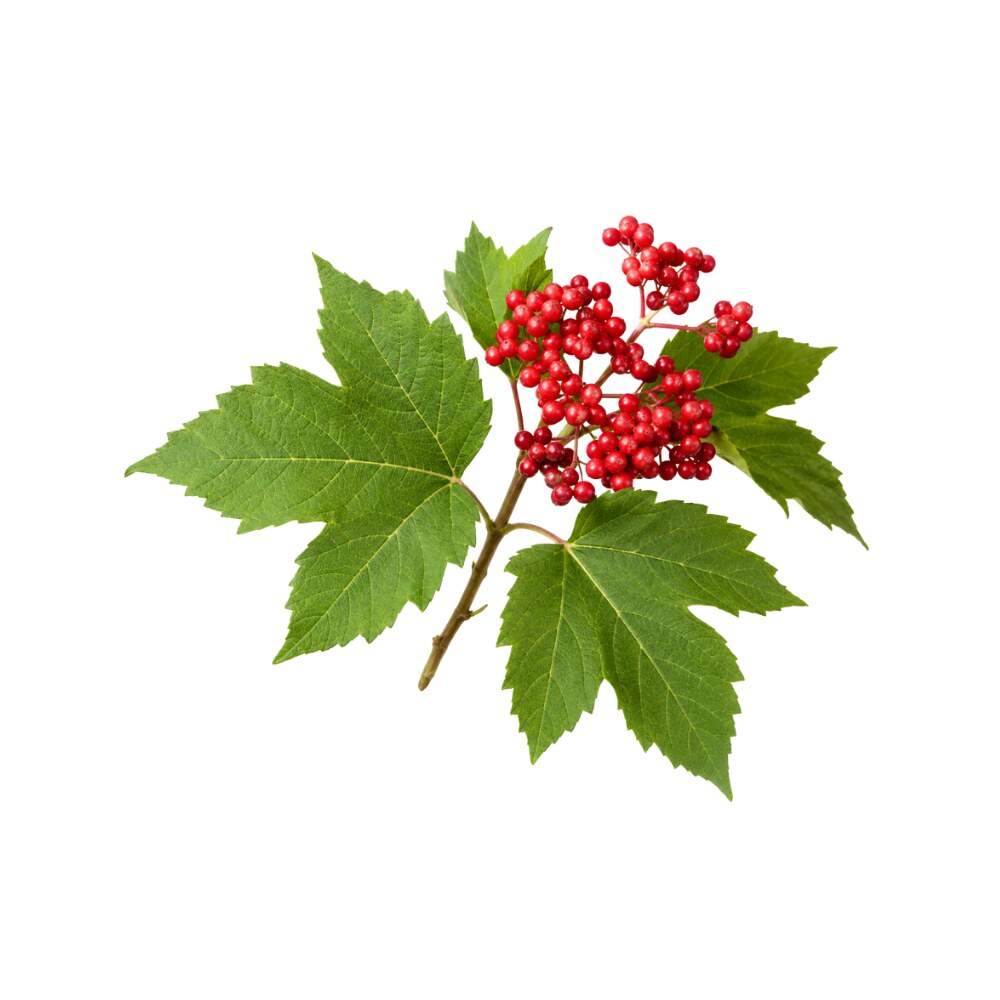
Cramp bark is the dried bark of the guelder rose, Viburnum opulus, a deciduous shrub of Europe and northern Asia. It is a classic antispasmodic of Western herbal medicine, used above all for period pain and muscle cramps.
What Is Cramp Bark?
Cramp bark is the dried stem and branch bark of the guelder rose, Viburnum opulus, and it is one of the classic antispasmodics of Western herbal medicine. It is used above all to ease period pain and muscle cramps.
The guelder rose is a deciduous shrub of Europe, North Africa and northern Asia, growing in forests, scrub and thickets 28,
The bark’s antispasmodic action has been linked to two constituents, the coumarin scopoletin and the bitter principle viopudial 14,
A related North American shrub, black haw (Viburnum prunifolium), is used for the same purposes 1Reference 1ReviewBotanicals and their bioactive phytochemicals for women’s health — reviewView study →.
How Is Cramp Bark Used?
Cramp bark is used as the dried bark of the stems and branches, taken as a decoction or a tincture.
- Period pain and premenstrual symptoms: the main use, often in a formula alongside other antispasmodic herbs.
- Muscle cramps and spasm: taken for cramping of skeletal or smooth muscle, including colicky abdominal pain.
- Heavy menstrual bleeding: the bark is also used to reduce menstrual flow 28Reference 28ReviewViburnum opulus L. — a review of phytochemistry and biological effects — reviewView study →.
The bark is harvested in spring and summer, while the shrub is in flower. It has a strong smell and a somewhat bitter taste 28Reference 28ReviewViburnum opulus L. — a review of phytochemistry and biological effects — reviewView study →.
Traditional Uses
Western Herbal Medicine
The drug is the dried stem and branch bark, taken as a decoction or a tincture.
Cramp bark is used as a relaxant of uterine and other muscle 1Reference 1ReviewBotanicals and their bioactive phytochemicals for women’s health — reviewView study →. Its signature use is period pain, and it is taken for premenstrual symptoms, to reduce menstrual flow and to ease pain from uterine contractions 1,
The same action is applied to ordinary muscle spasm and to colicky, griping abdominal pain. It also has a secondary reputation as a mild relaxant for raised blood pressure.
It is usually blended with other antispasmodics in a formula for period pain.
European Folk Medicine
The bark, known in pharmacy as Cortex Viburni, is used for bleeding from the stomach or uterus and for haemorrhoids 28Reference 28ReviewViburnum opulus L. — a review of phytochemistry and biological effects — reviewView study →.
Turkish Folk Medicine: Gilaburu Fruit
In Turkey the fruit, not the bark, is the medicine. Gilaburu juice is used to pass kidney stones and for stomach, heart and liver disease, bleeding, high blood pressure, ulcers, colds, tuberculosis, rheumatic and menstrual pain, and diabetes 10Reference 10AnimalGilaburu (Viburnum opulus) fruit extract in a rat model of acetic-acid-induced oxidant colonic damage — animal modelView study →.
Indications
- Period pain [bark; Western herbal medicine] Caution: No trial has tested the bark at herbal strength. The one registered trial for period pain used a homeopathic 3X dilution and has posted no results.
- Premenstrual symptoms [bark; Western herbal medicine]
- Heavy menstrual bleeding [bark; Western herbal medicine, European folk use]
- Muscle cramps and spasm [bark; Western herbal medicine]
- Colicky abdominal pain [bark; Western herbal medicine]
- Mild high blood pressure [bark; Western herbal medicine]
- Haemorrhoids [bark; European folk use]
- Kidney stones [fruit; Turkish folk use]
Botany
Cramp bark comes from the guelder rose, a deciduous shrub in the Viburnaceae that grows to about 4–6 m 28,
The leaves grow in opposite pairs. They are usually three-lobed, like a maple leaf, 6–12 cm long, with irregularly toothed margins 29Reference 29Hong, D., Yang, Q., Malécot, V., & Boufford, D. E. Viburnum opulus Linnaeus. In: Flora of China Editorial Committee (eds.), Flora of China, Vol. 19 (Viburnaceae) — flora. eFloras. http://www.efloras.org/florataxon.aspx?flora_id=2&taxon_id=200022493View study →. A few round glands sit on the leaf stalk just below the blade 29Reference 29Hong, D., Yang, Q., Malécot, V., & Boufford, D. E. Viburnum opulus Linnaeus. In: Flora of China Editorial Committee (eds.), Flora of China, Vol. 19 (Viburnaceae) — flora. eFloras. http://www.efloras.org/florataxon.aspx?flora_id=2&taxon_id=200022493View study →.
The flowers open in late spring in flat clusters 5–12 cm across 29Reference 29Hong, D., Yang, Q., Malécot, V., & Boufford, D. E. Viburnum opulus Linnaeus. In: Flora of China Editorial Committee (eds.), Flora of China, Vol. 19 (Viburnaceae) — flora. eFloras. http://www.efloras.org/florataxon.aspx?flora_id=2&taxon_id=200022493View study →. Each cluster has an outer ring of 5–10 large, white, sterile flowers around many tiny fertile ones 29Reference 29Hong, D., Yang, Q., Malécot, V., & Boufford, D. E. Viburnum opulus Linnaeus. In: Flora of China Editorial Committee (eds.), Flora of China, Vol. 19 (Viburnaceae) — flora. eFloras. http://www.efloras.org/florataxon.aspx?flora_id=2&taxon_id=200022493View study →.
The fruit is a round berry 8–10 mm across that turns yellow and then red, with a single flattened stone 29Reference 29Hong, D., Yang, Q., Malécot, V., & Boufford, D. E. Viburnum opulus Linnaeus. In: Flora of China Editorial Committee (eds.), Flora of China, Vol. 19 (Viburnaceae) — flora. eFloras. http://www.efloras.org/florataxon.aspx?flora_id=2&taxon_id=200022493View study →. The berries are bitter and astringent, with a strong, unpleasant smell 28Reference 28ReviewViburnum opulus L. — a review of phytochemistry and biological effects — reviewView study →.
The North American form, V. opulus var. americanum (American cranberrybush), is the same species 28Reference 28ReviewViburnum opulus L. — a review of phytochemistry and biological effects — reviewView study →. It looks very like the European plant and is told apart by the glands on the leaf stalk 30Reference 30Viburnum opulus (European cranberrybush, guelder-rose) — botanical/horticultural referenceView study →.
Black haw (Viburnum prunifolium) is a separate North American species 18Reference 18In vitroIn vitro relaxant and spasmolytic effects of constituents from Viburnum prunifolium — in vitroView study →. It is used as a uterine relaxant and antispasmodic in the same way, and older literature often treats the two as interchangeable 1Reference 1ReviewBotanicals and their bioactive phytochemicals for women’s health — reviewView study →.
Distribution
The guelder rose is native to Europe, North Africa and northern Asia 28,
It grows in forests, scrub and thickets, and does best in moist soil 29,
It is widely planted as an ornamental. In North America the European form has spread into the wild from Newfoundland south to Virginia and west to Washington state 30Reference 30Viburnum opulus (European cranberrybush, guelder-rose) — botanical/horticultural referenceView study →.
Growing Conditions
Cultivation snapshot for Cramp Bark
- Thrives in average, medium-to-moist, well-drained soil; it especially likes consistent moisture and tolerates a wide range of soil types.
- Best in full sun to partial shade.
- Very cold-hardy (roughly USDA zones 3–8), so it suits cool-temperate gardens.
- A large shrub — allow room for a rounded form up to about 15 ft tall and wide.
Grow it yourself
Farm Wiki is our cultivation-focused sister site, also run by Justin Cooke.
Pharmacology & Research
Research on Viburnum opulus is growing quickly, but most of it is on the fruit, known in Turkey as gilaburu, rather than the bark. The fruit has different chemistry, and the two human studies of kidney-stone passage both used a fruit extract 6,
The bark’s antispasmodic action rests on two constituents isolated in the 1960s and 1970s: the coumarin scopoletin and the bitter principle viopudial 14,
One registered trial for period pain used a homeopathic 3X dilution of V. opulus. No trial has tested the bark at herbal strength.
-
Best-supported: antioxidant capacity, with the bark the strongest plant part in direct comparison 2Reference 2In vitroComparison of chemical composition and antioxidant capacity of fruit, flower and bark of Viburnum opulus — in vitroView study →; fruit-extract kidney-stone expulsion, from one prospective comparison and one retrospective series 6,
7Reference 6Gilaburu extract (Viburnum opulus) is as effective as tamsulosin in medical expulsive therapy of distal ureteral calculi — prospective comparative studyView study →Reference 7ObservationalEffectiveness of gilaburu (Viburnum opulus) extract in medical expulsive treatment of distal ureteral stones — retrospective/observationalView study → — a fruit preparation, not bark. -
Emerging, worth watching: anti-inflammatory activity in rodent colitis, gastric and endometriosis models 10,
11, ; a calcium-channel mechanism for the antispasmodic action of scopoletin 15,12Reference 10AnimalGilaburu (Viburnum opulus) fruit extract in a rat model of acetic-acid-induced oxidant colonic damage — animal modelView study →Reference 11AnimalInfluence of Viburnum opulus proanthocyanidins on stress-induced gastrointestinal mucosal damage — ratView study →Reference 12AnimalViburnum opulus: a remedy for endometriosis demonstrated by a rat model of surgically induced endometriosis — animal modelView study → 16, .17Reference 15In vitroScopoletin, an antispasmodic component of Viburnum opulus and prunifolium — in vitroView study →Reference 16In vitroIntracellular calcium mobilisation as a target for the spasmolytic action of scopoletin — in vitro (rat aorta)View study →Reference 17In vitroStudy on the mechanism of the bronchodilatory effects of Cynodon dactylon (Linn.) and identification of the active ingredient (scopoletin) — in vivo/in vitroView study → -
Mechanistically thin: anticancer and antidiabetic signals rest on fruit-juice and plant-extract work in vitro and in rodents 20,
21, .22, 23, 24, 25Reference 20AnimalInfluence of gilaburu (Viburnum opulus) juice on 1,2-dimethylhydrazine-induced colon cancer — mouseView study →Reference 21In vitroComparison of anticarcinogenic properties of Viburnum opulus and its active compound p-coumaric acid on human colorectal carcinoma — in vitroView study →Reference 22AnimalAnticancer effect of gilaburu (Viburnum opulus) on Ehrlich ascites carcinoma-bearing mice — in vivoView study →Reference 23In vitroDifferent fractions of Viburnum opulus juice induce apoptosis and inhibit cancer growth in Ehrlich ascites tumour models — in vitro/in vivoView study →Reference 24In vitroComparative study of antidiabetic and antioxidant properties of Viburnum opulus and Viburnum lantana: LC-MS/MS profiling — in vitroView study →Reference 25In vitroAntidiabetic effect of polyphenolic extracts from selected edible plants as α-amylase, α-glucosidase and PTP1B inhibitors — in vitro comparative studyView study →
Cramp bark is the bark, but most modern evidence is on the fruit. No bark extract is standardised, and no modern human trial has tested the bark for cramping.
1. Antioxidant
Antioxidant activity is the most often reproduced property of Viburnum opulus, measured across DPPH, ABTS, FRAP and ORAC assays in fruit juices and extracts 3,
A direct comparison of fruit, flower and bark found the bark highest in antioxidant capacity and total phenolics (3.98 g/100 g dry weight) 2Reference 2In vitroComparison of chemical composition and antioxidant capacity of fruit, flower and bark of Viburnum opulus — in vitroView study →. Catechin was the main phenolic in the bark, at more than 1 g/100 g 2Reference 2In vitroComparison of chemical composition and antioxidant capacity of fruit, flower and bark of Viburnum opulus — in vitroView study →.
Water extracts of the branches scavenged superoxide, and gave the strongest DPPH activity of all the extracts tested (IC50 0.014 mg/mL) 5Reference 5In vitroAntioxidant properties of Viburnum opulus and Viburnum lantana growing in Turkey — in vitroView study →.
In fruit juice, activity tracks the polyphenols, chiefly chlorogenic acid, procyanidins and catechins 3,
These are chemical assays only, with no antioxidant effect shown in people.
2. Urolithiasis
This is the strongest human signal for the species, and it belongs to the fruit. In a prospective study of 86 patients with lower ureteral stones of 10 mm or less, gilaburu fruit extract (1000 mg) was compared with tamsulosin, each alongside diclofenac as needed 6Reference 6Gilaburu extract (Viburnum opulus) is as effective as tamsulosin in medical expulsive therapy of distal ureteral calculi — prospective comparative studyView study →.
Stone passage rates did not differ between the groups 6Reference 6Gilaburu extract (Viburnum opulus) is as effective as tamsulosin in medical expulsive therapy of distal ureteral calculi — prospective comparative studyView study →. The fruit-extract group needed extra painkillers less often (37% against 65%) and went to the emergency department less often (12% against 35%) 6Reference 6Gilaburu extract (Viburnum opulus) is as effective as tamsulosin in medical expulsive therapy of distal ureteral calculi — prospective comparative studyView study →.
A retrospective series of 103 patients found more stones passed (82% against 66%) and faster passage (9 against 14 days) with the fruit extract plus diclofenac than with diclofenac alone 7Reference 7ObservationalEffectiveness of gilaburu (Viburnum opulus) extract in medical expulsive treatment of distal ureteral stones — retrospective/observationalView study →.
Fruit juice is richer in potassium than lemon juice and has as much citrate 8Reference 8Viburnum opulus: could it be a new alternative, such as lemon juice, in hypocitraturic stone patients — comparative studyView study →. In rats with sodium-oxalate stones, lyophilised fruit juice had antiurolithiatic and diuretic effects 9Reference 9AnimalPreclinical evaluation of antiurolithiatic activity of Viburnum opulus on sodium-oxalate-induced urolithiasis — rat modelView study →.
Gap: all of this is the fruit, not the bark, and neither human study is described as randomised. Symptomatic stones need a medical assessment.
3. Anti-Inflammatory
Rodent studies give a consistent anti-inflammatory picture, again mostly for the fruit. Gilaburu fruit extract (100 mg/kg) reduced tissue damage and inflammatory markers in rats with acetic-acid colitis, given either after or before the injury 10Reference 10AnimalGilaburu (Viburnum opulus) fruit extract in a rat model of acetic-acid-induced oxidant colonic damage — animal modelView study →.
V. opulus proanthocyanidins (25–75 mg/kg) protected the stomach and duodenum of rats against stress damage, raising nitric oxide and antioxidant enzymes 11Reference 11AnimalInfluence of Viburnum opulus proanthocyanidins on stress-induced gastrointestinal mucosal damage — ratView study →.
In rats with surgically induced endometriosis, fruit extracts shrank the lesions, reduced adhesions and lowered TNF-α, IL-6 and VEGF 12Reference 12AnimalViburnum opulus: a remedy for endometriosis demonstrated by a rat model of surgically induced endometriosis — animal modelView study →.
Scopoletin inhibits NF-κB signalling in airway smooth-muscle cells 13Reference 13In vitroScopoletin inhibits PDGF-BB-induced proliferation and migration of airway smooth-muscle cells via NF-κB — in vitroView study →.
There is no human data, and no dose tied to a bark preparation.
4. Antispasmodic
This is the herb’s defining traditional use, and the one indication where the research relates to the bark.
Two antispasmodic constituents were isolated from Viburnum: scopoletin, reported in 1967 as an antispasmodic component of both V. opulus and V. prunifolium 15Reference 15In vitroScopoletin, an antispasmodic component of Viburnum opulus and prunifolium — in vitroView study →, and viopudial, reported in 1972 as a hypotensive and smooth-muscle antispasmodic from V. opulus 14Reference 14Viopudial, a hypotensive and smooth-muscle antispasmodic from Viburnum opulus — animal/isolated tissueView study →. Viburnum extracts also relaxed human uterine tissue in the laboratory 1Reference 1ReviewBotanicals and their bioactive phytochemicals for women’s health — reviewView study →.
Scopoletin taken from other plants relaxes smooth muscle in rat aorta by blocking the release of calcium inside the cell 16Reference 16In vitroIntracellular calcium mobilisation as a target for the spasmolytic action of scopoletin — in vitro (rat aorta)View study →, and in rat trachea by blocking calcium channels 17Reference 17In vitroStudy on the mechanism of the bronchodilatory effects of Cynodon dactylon (Linn.) and identification of the active ingredient (scopoletin) — in vivo/in vitroView study →.
Black haw’s own antispasmodic effect has been traced to iridoid glucosides, active on isolated rabbit jejunum and guinea-pig trachea 18Reference 18In vitroIn vitro relaxant and spasmolytic effects of constituents from Viburnum prunifolium — in vitroView study →.
Gap: the direct evidence is constituent-level work from the 1960s and 1970s in isolated tissue. The one registered trial for period pain randomised 30 women to a homeopathic 3X dilution or its alcohol base, and has posted no results (NCT02467543).
5. Vasorelaxant
The 1972 report on viopudial described it as hypotensive as well as antispasmodic 14Reference 14Viopudial, a hypotensive and smooth-muscle antispasmodic from Viburnum opulus — animal/isolated tissueView study →.
In rat aortic rings, V. opulus fruit extract gave the strongest relaxation of three fruits tested, and also inhibited arginase, an enzyme that limits nitric oxide 19Reference 19In vitroMetabolite profiling, arginase inhibition and vasorelaxant activity of Cornus mas, Sorbus aucuparia and Viburnum opulus fruit extracts — in vitro (rat aorta)View study →. The relaxation depended on the vessel lining (endothelium) 19Reference 19In vitroMetabolite profiling, arginase inhibition and vasorelaxant activity of Cornus mas, Sorbus aucuparia and Viburnum opulus fruit extracts — in vitro (rat aorta)View study →.
There is no blood-pressure data for the bark in animals or people.
6. Anticancer
The signals are preclinical and mostly from the fruit. Gilaburu juice reduced the number of tumours and the rate of invasive cancer in a chemically induced mouse colon-cancer model 20Reference 20AnimalInfluence of gilaburu (Viburnum opulus) juice on 1,2-dimethylhydrazine-induced colon cancer — mouseView study →. A methanol extract of V. opulus and its main compound, p-coumaric acid, slowed the growth of human colon cancer cells 21Reference 21In vitroComparison of anticarcinogenic properties of Viburnum opulus and its active compound p-coumaric acid on human colorectal carcinoma — in vitroView study →. Fruit-juice extracts and fractions slowed Ehrlich ascites tumours in mice and triggered cell death in the tumour cells 22,
There is no clinical evidence, and none of this work used the bark.
7. Antidiabetic
Methanol extracts of the leaves, fine branches and fruits of V. opulus inhibited the starch-digesting enzyme α-glucosidase more strongly than the drug acarbose in vitro 24Reference 24In vitroComparative study of antidiabetic and antioxidant properties of Viburnum opulus and Viburnum lantana: LC-MS/MS profiling — in vitroView study →. V. opulus also appears in comparative screens of polyphenol-rich plants as an enzyme inhibitor and a protector of insulin-producing cells 25Reference 25In vitroAntidiabetic effect of polyphenolic extracts from selected edible plants as α-amylase, α-glucosidase and PTP1B inhibitors — in vitro comparative studyView study →. Chlorogenic acid is the main polyphenol in these extracts 24Reference 24In vitroComparative study of antidiabetic and antioxidant properties of Viburnum opulus and Viburnum lantana: LC-MS/MS profiling — in vitroView study →.
These are test-tube enzyme assays, with no blood-sugar lowering shown in any animal or person.
Mechanisms
Scopoletin is a coumarin that has been studied for relaxing smooth muscle by limiting calcium inside the cell and blocking calcium channels. Viopudial is a bitter principle isolated from V. opulus and described as a smooth-muscle antispasmodic.
The fruit’s polyphenols, chiefly chlorogenic acid, have been studied separately for antioxidant, anti-inflammatory, vasorelaxant and enzyme-inhibiting activity.
| Mechanism | Drives | Key compounds |
|---|---|---|
| Ca²⁺-channel antagonism, intracellular Ca²⁺ mobilisation ↓ | antispasmodicvasorelaxant | scopoletin, viopudial |
| NF-κB ↓, TNF-α / IL-6 / VEGF ↓ | anti-inflammatory | scopoletin, chlorogenic acid |
| Free-radical scavenging (DPPH / ABTS / ORAC) | antioxidant | chlorogenic acid, catechin, procyanidins |
| Arginase inhibition, nitric-oxide ↑ | vasorelaxant | fruit polyphenols |
| α-amylase / α-glucosidase inhibition | antidiabetic | chlorogenic acid, p-coumaric acid |
| Pro-apoptotic (mitochondrial), antiproliferative | anticancer | p-coumaric acid |
Clinical Trials
Human evidence is minimal and does not address the bark. One prospective study compared a fruit extract with tamsulosin for stone passage 6Reference 6Gilaburu extract (Viburnum opulus) is as effective as tamsulosin in medical expulsive therapy of distal ureteral calculi — prospective comparative studyView study →. A registered randomised trial of a homeopathic V. opulus 3X dilution for period pain, in 30 women, is complete with no posted results (NCT02467543). A randomised trial of a four-herb product that includes V. opulus, for clearing stone fragments, is recruiting (NCT06651294). No registered trial tests a cramp-bark preparation for cramping.
| Completed | Planned | Terminated | Preclinical |
|---|---|---|---|
| 2 | 1 | 0 | ~30 |
Last checked: July 2025.
Phytochemistry
The bark is the most phenolic-rich part of the plant, at 3.98 g/100 g dry weight against lower levels in the fruit and flower 2Reference 2In vitroComparison of chemical composition and antioxidant capacity of fruit, flower and bark of Viburnum opulus — in vitroView study →. Catechin is its main phenolic, at more than 1 g/100 g 2Reference 2In vitroComparison of chemical composition and antioxidant capacity of fruit, flower and bark of Viburnum opulus — in vitroView study →. The bark is also high in fibre, at about 59 g/100 g dry weight 28Reference 28ReviewViburnum opulus L. — a review of phytochemistry and biological effects — reviewView study →.
The antispasmodic action has been linked to the coumarin scopoletin and the bitter principle viopudial 14,
A bark-specific analysis found free and bound phenolic acids: chlorogenic, caffeic, ferulic, p-coumaric, gallic, protocatechuic and syringic acid, along with ellagic acid and homogentisic acid 26Reference 26Free and chemically bonded phenolic acids in barks of Viburnum opulus L. and Sambucus nigra L. — phytochemical analysisView study →.
The dried branches contain salicin (1.25%) and chlorogenic acid (0.36%) 28Reference 28ReviewViburnum opulus L. — a review of phytochemistry and biological effects — reviewView study →.
Other reported bark constituents include the coumarin esculetin, the hydroquinone glycosides arbutin and methylarbutin, free hydroquinone, epicatechin, tannins, beta-sitosterol and valeric acid.
The fruit is chemically different. Chlorogenic acid is the main phenolic in its juice, and the juice is rich in potassium 4,
Constituent Summary
Amounts are for the dried bark unless noted.
Other1 compoundno data
Phenolic Acid7 compounds1 with data
Phenolic3 compoundsno data
Sterol1 compoundno data
Organic Acid1 compoundno data
Dosage
The human research doses are all for the fruit extract (gilaburu), not the bark, so they do not give a cramp-bark dose. The traditional doses below are for the dried bark.
| Indication | Preparation | Dose | Source |
|---|---|---|---|
| Ureteral stones (prospective) | Gilaburu fruit extract | 1000 mg, “3 × 2” as written in the report | 6Reference 6Gilaburu extract (Viburnum opulus) is as effective as tamsulosin in medical expulsive therapy of distal ureteral calculi — prospective comparative studyView study → |
| Ureteral stones (retrospective) | Gilaburu fruit extract | 1000 mg, “3 × 2” as written in the report | 7Reference 7ObservationalEffectiveness of gilaburu (Viburnum opulus) extract in medical expulsive treatment of distal ureteral stones — retrospective/observationalView study → |
| Period pain | V. opulus 3X homeopathic dilution | per trial protocol | NCT02467543 |
Traditional Dosage
Western herbal practice uses the dried stem and branch bark as a decoction or tincture.
| System | Preparation | Dose |
|---|---|---|
| Western herbal | Liquid extract 1:2 | 5–30 mL/week |
| Western herbal | Tincture 1:5, 40% ethanol | 4–8 mL, three times daily |
| Western herbal | Decoction of dried bark | ~2 g dried bark simmered in water, up to three times daily |
Safety & Pregnancy
The dried bark is generally well tolerated. The cautions are pregnancy and use alongside anticoagulant drugs, and the raw berries and leaves are regarded as toxic if eaten.
- Raw berries and leaves. Only the dried bark is the medicine; the raw fruit and leaves are regarded as toxic if eaten. The ‘moderate’ toxicity grade reflects these, not the bark.
- Avoid in pregnancy. Cramp bark acts on uterine muscle, and there is no safety data in pregnancy.
- Anticoagulants. Use with care alongside blood-thinning medicines, because the bark contains coumarins.
- Otherwise well tolerated. No serious adverse effects are reported for the dried bark.
Full Safety & Interactions Detail
The bark. The dried bark is regarded as a gentle, well-tolerated antispasmodic, and no serious adverse effects have been reported for it. No formal toxicology, drug-interaction or reproductive-toxicity studies have been done on it.
Raw fruit and leaves. The raw berries and leaves are regarded as toxic if eaten. The fruit is eaten cooked, fermented or as juice 28Reference 28ReviewViburnum opulus L. — a review of phytochemistry and biological effects — reviewView study →.
The fruit juice. The only oral toxicity study is of the fruit juice. A single dose of 2000 mg/kg caused no deaths or signs of toxicity in rats 27Reference 27AnimalSafety assessment of European cranberrybush (Viburnum opulus) fruit juice: acute and subacute oral toxicity — animal (rat/mouse)View study →. Given to mice for 28 days, 2000 mg/kg a day damaged the kidney, liver and fat tissue, while 500 mg/kg a day caused no harm 27Reference 27AnimalSafety assessment of European cranberrybush (Viburnum opulus) fruit juice: acute and subacute oral toxicity — animal (rat/mouse)View study →.
Anticoagulants. Care is advised alongside blood-thinning medicines because of the bark’s coumarin content.
Avoid. Cramp bark acts on uterine muscle, and it was historically used in threatened miscarriage. No studies have looked at its safety in pregnancy or breastfeeding, so it is avoided in both as a precaution.
References
- Dietz, B. M., Hajirahimkhan, A., Dunlap, T. L., & Bolton, J. L. (2016). Botanicals and their bioactive phytochemicals for women’s health — review. Pharmacological Reviews. https://pubmed.ncbi.nlm.nih.gov/27677719/
- Polka, D., Podsędek, A., & Koziołkiewicz, M. (2019). Comparison of chemical composition and antioxidant capacity of fruit, flower and bark of Viburnum opulus — in vitro. Plant Foods for Human Nutrition. https://pubmed.ncbi.nlm.nih.gov/31321622/
- Karaçelik, A. A., Küçük, M., İskefiyeli, Z., et al. (2015). Antioxidant components of Viburnum opulus determined by on-line HPLC-UV-ABTS radical scavenging — in vitro. Food Chemistry. https://pubmed.ncbi.nlm.nih.gov/25577058/
- Kraujalytė, V., Venskutonis, P. R., Pukalskas, A., Česonienė, L., & Daubaras, R. (2013). Antioxidant properties and polyphenolic compositions of fruits from different European cranberrybush (Viburnum opulus) genotypes — in vitro. Food Chemistry. https://pubmed.ncbi.nlm.nih.gov/23993538/
- Altun, M. L., et al. (2008). Antioxidant properties of Viburnum opulus and Viburnum lantana growing in Turkey — in vitro. International Journal of Food Sciences and Nutrition. https://pubmed.ncbi.nlm.nih.gov/17852468/
- Gok, B., Tarik Atik, Y., Uysal, B., et al. (2021). Gilaburu extract (Viburnum opulus) is as effective as tamsulosin in medical expulsive therapy of distal ureteral calculi — prospective comparative study. International Journal of Clinical Practice. https://pubmed.ncbi.nlm.nih.gov/34610178/
- Kızılay, F., Ülker, V., Çelik, O., et al. (2019). Effectiveness of gilaburu (Viburnum opulus) extract in medical expulsive treatment of distal ureteral stones — retrospective/observational. Turkish Journal of Urology. https://pubmed.ncbi.nlm.nih.gov/30978165/
- Tuglu, D., Yılmaz, E., Yuvanc, E., et al. (2014). Viburnum opulus: could it be a new alternative, such as lemon juice, in hypocitraturic stone patients — comparative study. Archivio Italiano di Urologia e Andrologia. https://pubmed.ncbi.nlm.nih.gov/25641457/
- Ilhan, M., et al. (2014). Preclinical evaluation of antiurolithiatic activity of Viburnum opulus on sodium-oxalate-induced urolithiasis — rat model. Evidence-Based Complementary and Alternative Medicine. https://pubmed.ncbi.nlm.nih.gov/25165481/
- Gülada, B. Ö., Cam, M. E., Yüksel, M., et al. (2024). Gilaburu (Viburnum opulus) fruit extract in a rat model of acetic-acid-induced oxidant colonic damage — animal model. Journal of Ethnopharmacology. https://pubmed.ncbi.nlm.nih.gov/38128893/
- Zayachkivska, O. S., et al. (2006). Influence of Viburnum opulus proanthocyanidins on stress-induced gastrointestinal mucosal damage — rat. Journal of Physiology and Pharmacology. https://pubmed.ncbi.nlm.nih.gov/17218766/
- Saltan, G., Süntar, I., Ozbilgin, S., et al. (2016). Viburnum opulus: a remedy for endometriosis demonstrated by a rat model of surgically induced endometriosis — animal model. Journal of Ethnopharmacology. https://pubmed.ncbi.nlm.nih.gov/27647013/
- Fan, Z., Tang, D., Wu, Q., et al. (2022). Scopoletin inhibits PDGF-BB-induced proliferation and migration of airway smooth-muscle cells via NF-κB — in vitro. Allergologia et Immunopathologia. https://pubmed.ncbi.nlm.nih.gov/34965643/
- Nicholson, J. A., et al. (1972). Viopudial, a hypotensive and smooth-muscle antispasmodic from Viburnum opulus — animal/isolated tissue. Proceedings of the Society for Experimental Biology and Medicine. https://pubmed.ncbi.nlm.nih.gov/5037580/
- Jarboe, C. H., Zirvi, K. A., Nicholson, J. A., & Schmidt, C. M. (1967). Scopoletin, an antispasmodic component of Viburnum opulus and prunifolium — in vitro. Journal of Medicinal Chemistry. https://pubmed.ncbi.nlm.nih.gov/22185161/
- Oliveira, E. J., et al. (2001). Intracellular calcium mobilisation as a target for the spasmolytic action of scopoletin — in vitro (rat aorta). Planta Medica. https://pubmed.ncbi.nlm.nih.gov/11582535/
- Patel, M. R., Bhalodia, Y. S., Pathak, N. L., et al. (2013). Study on the mechanism of the bronchodilatory effects of Cynodon dactylon (Linn.) and identification of the active ingredient (scopoletin) — in vivo/in vitro. Journal of Ethnopharmacology. https://pubmed.ncbi.nlm.nih.gov/24432367/
- Cometa, M. F., Parisi, L., Palmery, M., Meneguz, A., & Tomassini, L. (2009). In vitro relaxant and spasmolytic effects of constituents from Viburnum prunifolium — in vitro. Journal of Ethnopharmacology. https://pubmed.ncbi.nlm.nih.gov/19429363/
- Bujor, A., Miron, A., Luca, S. V., et al. (2019). Metabolite profiling, arginase inhibition and vasorelaxant activity of Cornus mas, Sorbus aucuparia and Viburnum opulus fruit extracts — in vitro (rat aorta). Food and Chemical Toxicology. https://pubmed.ncbi.nlm.nih.gov/31437471/
- Ulger, H., Ertekin, T., Karaca, O., et al. (2013). Influence of gilaburu (Viburnum opulus) juice on 1,2-dimethylhydrazine-induced colon cancer — mouse. Toxicology and Industrial Health. https://pubmed.ncbi.nlm.nih.gov/22546843/
- Karakurt, S., AbuŞoĞlu, G., Arituluk, Z. C., et al. (2020). Comparison of anticarcinogenic properties of Viburnum opulus and its active compound p-coumaric acid on human colorectal carcinoma — in vitro. Turkish Journal of Biology. https://pubmed.ncbi.nlm.nih.gov/33110363/
- Ceylan, D., Aksoy, A., Ertekin, T., et al. (2018). Anticancer effect of gilaburu (Viburnum opulus) on Ehrlich ascites carcinoma-bearing mice — in vivo. Journal of Cancer Research and Therapeutics. https://pubmed.ncbi.nlm.nih.gov/29516912/
- Al, O., Nisari, M., Ertekin, T., et al. (2026). Different fractions of Viburnum opulus juice induce apoptosis and inhibit cancer growth in Ehrlich ascites tumour models — in vitro/in vivo. Tissue & Cell. https://pubmed.ncbi.nlm.nih.gov/42119473/
- Effatparvar, Z., Aydın, B., Yuca, H., et al. (2025). Comparative study of antidiabetic and antioxidant properties of Viburnum opulus and Viburnum lantana: LC-MS/MS profiling — in vitro. Chemistry & Biodiversity. https://pubmed.ncbi.nlm.nih.gov/41026623/
- Zakłos-Szyda, M., Majewska, I., Redzynia, M., et al. (2015). Antidiabetic effect of polyphenolic extracts from selected edible plants as α-amylase, α-glucosidase and PTP1B inhibitors — in vitro comparative study. Current Topics in Medicinal Chemistry. https://pubmed.ncbi.nlm.nih.gov/26088348/
- Turek, S., Cisowski, W., et al. (2007). Free and chemically bonded phenolic acids in barks of Viburnum opulus L. and Sambucus nigra L. — phytochemical analysis. Acta Poloniae Pharmaceutica. https://pubmed.ncbi.nlm.nih.gov/18536165/
- Ozan, G., Cumbul, A., Sumer, E., et al. (2023). Safety assessment of European cranberrybush (Viburnum opulus) fruit juice: acute and subacute oral toxicity — animal (rat/mouse). Food and Chemical Toxicology. https://pubmed.ncbi.nlm.nih.gov/37783419/
- Kajszczak, D., Zakłos-Szyda, M., & Podsędek, A. (2020). Viburnum opulus L. — a review of phytochemistry and biological effects — review. Nutrients. https://pubmed.ncbi.nlm.nih.gov/33167421/
- Hong, D., Yang, Q., Malécot, V., & Boufford, D. E. Viburnum opulus Linnaeus. In: Flora of China Editorial Committee (eds.), Flora of China, Vol. 19 (Viburnaceae) — flora. eFloras. http://www.efloras.org/florataxon.aspx?flora_id=2&taxon_id=200022493
- NC State Extension Gardener Plant Toolbox. Viburnum opulus (European cranberrybush, guelder-rose) — botanical/horticultural reference. North Carolina State University. https://plants.ces.ncsu.edu/plants/viburnum-opulus/



