Materia Medica
Red Yeast Rice
Monascus purpureus
Red yeast rice is rice fermented with the red mould Monascus purpureus, used in China for centuries as a food colouring and a remedy for digestion and circulation. The mould produces monacolin K, which is chemically identical to the cholesterol-lowering drug lovastatin.
What Is Red Yeast Rice?
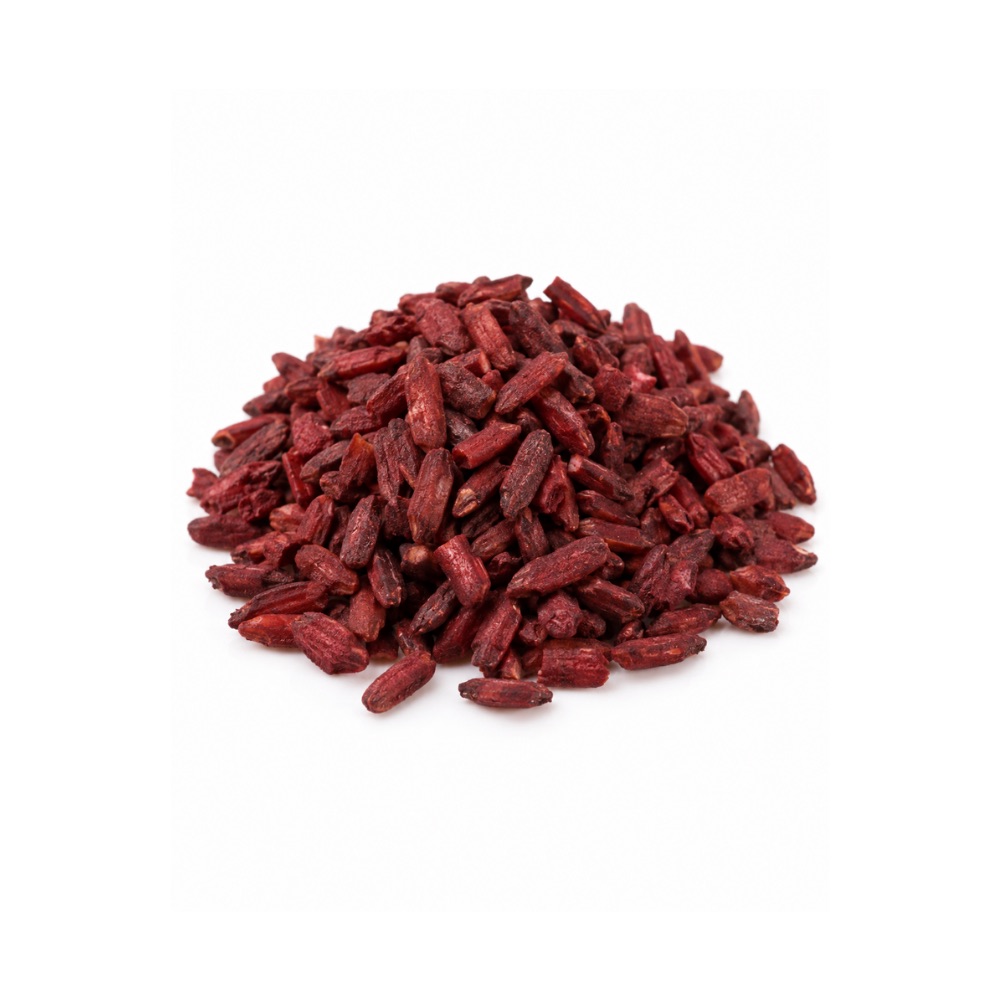
Red yeast rice is cooked rice fermented with the red mould Monascus purpureus, which turns the grains a deep reddish purple. In China it has been used for more than a thousand years as a food colouring, a preservative and a medicine, known as hong qu 26Reference 26Systematic reviewRed yeast rice: a systematic review of the traditional uses, chemistry, pharmacology and quality control of an important Chinese folk medicineView study →.
The fermented rice colours and flavours fish sauces, rice wines, red bean curd, pickled vegetables and salted meats. In traditional Chinese medicine it is taken for indigestion, diarrhoea, poor circulation and weak limbs 26Reference 26Systematic reviewRed yeast rice: a systematic review of the traditional uses, chemistry, pharmacology and quality control of an important Chinese folk medicineView study →.
During fermentation the mould produces monacolin K. In its lactone form this molecule is chemically identical to lovastatin, a prescription statin drug 5Reference 5Scientific opinion on the safety of monacolins in red yeast riceView study →. Dozens of trials have tested red yeast rice for high cholesterol, and one large trial in China measured heart attacks and deaths 1,
A partly purified extract, sold in China as Xuezhikang, is standardised to its monacolin content. Over-the-counter red yeast rice powders are not, and their monacolin content varies widely 5,
How Is Red Yeast Rice Used?
As a traditional food and medicine, red yeast rice is used as the whole fermented rice, dried and powdered. Modern cholesterol supplements contain either that powder in capsules or a concentrated extract.
- Red yeast rice powder in capsules — commonly 1,200–2,400 mg a day.
- Xuezhikang — a partly purified extract, taken as 600 mg twice daily in the main outcome trial 28Reference 28Systematic reviewA systematic review of xuezhikang, an extract from red yeast rice, for coronary heart disease complicated by dyslipidemia — systematic reviewView study →.
- Culinary use — as a colouring and flavouring for wine, bean curd, fish sauce and cured meats 26Reference 26Systematic reviewRed yeast rice: a systematic review of the traditional uses, chemistry, pharmacology and quality control of an important Chinese folk medicineView study →.
The active dose is the amount of monacolin K, not the weight of the rice.
Traditional Uses
Traditional Chinese Medicine
Hong qu was first recorded in the local chronicles of Gutian, in Fujian, during the Tang dynasty (618–907). It appears in later texts including the Tian Gong Kai Wu of the Ming dynasty 26Reference 26Systematic reviewRed yeast rice: a systematic review of the traditional uses, chemistry, pharmacology and quality control of an important Chinese folk medicineView study →.
The Materia Medica in Daily Use (Yuan dynasty) and the Compendium of Materia Medica (Ben Cao Gang Mu, 1552–1578) describe it as sweet and mild, without significant toxicity, and entering the liver, spleen and large intestine 26Reference 26Systematic reviewRed yeast rice: a systematic review of the traditional uses, chemistry, pharmacology and quality control of an important Chinese folk medicineView study →.
It has been used for more than 700 years to treat indigestion, diarrhoea, blood stasis (poor circulation) and weakness of the limbs 26Reference 26Systematic reviewRed yeast rice: a systematic review of the traditional uses, chemistry, pharmacology and quality control of an important Chinese folk medicineView study →.
Indications
- High total and LDL cholesterol [fermented rice; extract]
- Prevention of further heart attacks after a first one [Xuezhikang extract] Caution: The evidence comes from one large trial programme in China, using one standardised extract. It has not been repeated independently 7,
8, .9 - Carotid artery plaque [fermented rice; extract]
- Metabolic syndrome and mixed dyslipidaemia [fermented rice; extract]
- High cholesterol in people who cannot tolerate statins [fermented rice] Caution: Two small, short trials found it was tolerated about as well as pravastatin. Because the active compound is itself a statin, people who react to statins may react to it too 13,
14 . - Mild high blood pressure [fermented rice] Caution: A review of 21 trials, mostly of low quality, found limited and inconsistent effects on blood pressure 12.
- Indigestion and diarrhoea [fermented rice; TCM]
- Poor circulation (blood stasis) [fermented rice; TCM]
Mycology
Monascus purpureus is a filamentous mould, an ascomycete fungus, first described by Went in 1895 29Reference 29Phylogenetic analysis of Monascus and new species from honey, pollen and nests of stingless bees — mycological taxonomyView study →. It is not a yeast, despite the product’s name.
Like other Monascus species, it forms small, closed fruiting bodies (cleistothecia) that hold its sexual spores. Its asexual spores form one after another in chains from undifferentiated cells, and they resemble thick-walled resting spores 29Reference 29Phylogenetic analysis of Monascus and new species from honey, pollen and nests of stingless bees — mycological taxonomyView study →. In culture it reproduces mostly asexually, with many conidia, and grows fastest at 25–30 °C and 65–85% humidity 26Reference 26Systematic reviewRed yeast rice: a systematic review of the traditional uses, chemistry, pharmacology and quality control of an important Chinese folk medicineView study →.
The genus has traditionally been placed in its own family, Monascaceae 26Reference 26Systematic reviewRed yeast rice: a systematic review of the traditional uses, chemistry, pharmacology and quality control of an important Chinese folk medicineView study →. DNA studies now place it in the family Aspergillaceae, alongside Aspergillus and Penicillium 29Reference 29Phylogenetic analysis of Monascus and new species from honey, pollen and nests of stingless bees — mycological taxonomyView study →. M. purpureus belongs to the section Rubri, whose species produce monacolins, the mycotoxin citrinin and the red and yellow pigments that colour red yeast rice 29Reference 29Phylogenetic analysis of Monascus and new species from honey, pollen and nests of stingless bees — mycological taxonomyView study →.
Other Monascus species, such as M. ruber and M. pilosus, are also used to make red rice in Japan, Korea, India and Thailand. Traditional Chinese medicine accepts only M. purpureus 26Reference 26Systematic reviewRed yeast rice: a systematic review of the traditional uses, chemistry, pharmacology and quality control of an important Chinese folk medicineView study →.
Distribution
Red yeast rice originated in China. Rice from Gutian and nearby Fujian cities has been found to contain more monacolin K than rice from other Chinese regions 26Reference 26Systematic reviewRed yeast rice: a systematic review of the traditional uses, chemistry, pharmacology and quality control of an important Chinese folk medicineView study →.
It is now made in more than 120 cities in 15 countries across Asia, Europe and North America, including Japan, the United States, Germany, Italy, Thailand, India and Korea 26Reference 26Systematic reviewRed yeast rice: a systematic review of the traditional uses, chemistry, pharmacology and quality control of an important Chinese folk medicineView study →.
Monascus moulds also occur outside fermentation. Some species spoil silage, bakery products and dried fruit, and others live in the nests of stingless bees 29Reference 29Phylogenetic analysis of Monascus and new species from honey, pollen and nests of stingless bees — mycological taxonomyView study →.
Pharmacology & Research
Red yeast rice has been studied mainly for cholesterol lowering. Its active compound, monacolin K, is chemically identical to lovastatin, and the human evidence includes several meta-analyses of randomised trials and one large trial that measured heart attacks and deaths 1,
The findings on carotid plaque, blood pressure and blood sugar are smaller and less consistent. The work on the yellow pigments monascin and ankaflavin comes from mice and cell cultures.
-
Best-supported: lower LDL and total cholesterol across many randomised trials. LDL falls by roughly 28–36 mg/dL (about 0.7–0.9 mmol/L), similar to a low-dose statin 1,
2, . One large trial in people who had already had a heart attack found fewer coronary events and deaths 7,3, 6Reference 1Meta-analysisChinese red yeast rice (Monascus purpureus) for primary hyperlipidemia: a meta-analysis of randomized controlled trialsView study →Reference 2Meta-analysisSafety and efficacy of the consumption of the nutraceutical “red yeast rice extract” for the reduction of hypercholesterolemia in humans: a systematic review and meta-analysisView study →Reference 3Meta-analysisImpact of red yeast rice supplementation on lipid profile: a systematic review and meta-analysis of randomized-controlled trialsView study →Reference 6Meta-analysisA meta-analysis of red yeast rice: an effective and relatively safe alternative approach for dyslipidemiaView study → 8, .9Reference 7RCTEffect of Xuezhikang, an extract from red yeast Chinese rice, on coronary events in a Chinese population with previous myocardial infarction — randomized controlled trialView study →Reference 8RCTEffect of xuezhikang on cardiovascular events and mortality in elderly patients with a history of myocardial infarction: a subgroup analysis of the China Coronary Secondary Prevention Study — randomized controlled trialView study →Reference 9RCTBeneficial impact of Xuezhikang on cardiovascular events and mortality in elderly hypertensive patients with previous myocardial infarction from the CCSPS — randomized controlled trialView study → -
Emerging, worth watching: improvement in carotid plaque and artery-wall thickness 10Reference 10Meta-analysisEffectiveness of red yeast rice on carotid atherosclerosis: a systematic review and meta-analysisView study →; lower fasting glucose and HbA1c in pooled trials 15Reference 15Meta-analysisRed yeast rice preparations reduce mortality, major cardiovascular adverse events, and risk factors for metabolic syndrome: a systematic review and meta-analysisView study →; fatty-liver mechanisms in mice for the yellow pigments monascin and ankaflavin 16,
17Reference 16AnimalRed yeast rice ameliorates non-alcoholic fatty liver disease through inhibiting lipid synthesis and NF-κB/NLRP3 inflammasome-mediated hepatic inflammation in mice — animal modelView study →Reference 17AnimalMonascin and ankaflavin act as natural AMPK activators with PPARα agonist activity to down-regulate nonalcoholic steatohepatitis in high-fat diet-fed mice — animal modelView study → . -
Mechanistically thin: antioxidant and anti-inflammatory pigment activity, shown in cells and mice but not tested as a benefit in people 20,
21Reference 20AnimalMonascin and ankaflavin of Monascus purpureus prevent alcoholic liver disease through regulating AMPK-mediated lipid metabolism and enhancing anti-inflammatory and anti-oxidative systems — animal modelView study →Reference 21In vitroRed yeast rice protects circulating bone marrow-derived proangiogenic cells against high-glucose-induced senescence and oxidative stress: the role of heme oxygenase-1 — in vitroView study → . -
The caveat: monacolin content varies widely between products and is often not stated on the label, so the dose in a given capsule is often unknown 5,
25Reference 5Scientific opinion on the safety of monacolins in red yeast riceView study →Reference 25Quality control and safety assessment of online-purchased food supplements containing red yeast rice (RYR)View study → .
Results apply to the product tested. The trials used particular preparations, often the standardised extract Xuezhikang. A red yeast rice supplement bought elsewhere may contain much more or much less monacolin K, or none at all 5,
1. Cholesterol & LDL Lowering
An early meta-analysis of 93 randomised trials (9,625 participants) found that red yeast rice lowered total cholesterol by about 0.91 mmol/L and LDL by about 0.73 mmol/L (about 28 mg/dL) compared with placebo. The effect was similar to that of pravastatin, simvastatin, lovastatin, atorvastatin and fluvastatin. The authors rated the trials’ methods as generally low in quality 1Reference 1Meta-analysisChinese red yeast rice (Monascus purpureus) for primary hyperlipidemia: a meta-analysis of randomized controlled trialsView study →.
Later meta-analyses agree on the direction and size of the effect. A 2023 analysis of 24 treatment arms reported LDL −28.9 mg/dL and total cholesterol −33.2 mg/dL 3Reference 3Meta-analysisImpact of red yeast rice supplementation on lipid profile: a systematic review and meta-analysis of randomized-controlled trialsView study →. A 2024 analysis of 14 double-blind trials reported LDL −35.8 mg/dL and total cholesterol −37.4 mg/dL 2Reference 2Meta-analysisSafety and efficacy of the consumption of the nutraceutical “red yeast rice extract” for the reduction of hypercholesterolemia in humans: a systematic review and meta-analysisView study →. A 2014 analysis of 13 placebo-controlled trials (804 participants), which left out Xuezhikang and Zhibituo, found LDL −0.87 mmol/L 6Reference 6Meta-analysisA meta-analysis of red yeast rice: an effective and relatively safe alternative approach for dyslipidemiaView study →.
A review of ten trials in 905 Chinese participants found no significant difference between red yeast rice and simvastatin on any lipid measure 19Reference 19Systematic reviewSystematic review of red yeast rice compared with simvastatin in dyslipidaemiaView study →.
The effect comes from inhibition of HMG-CoA reductase by monacolin K, so its size depends on how much monacolin the product delivers.
Gap: the pooled effect is consistent, but commercial monacolin content is unstandardised and often unlabelled, so the average result does not predict what a particular capsule will do.
2. Cardiovascular Event Reduction
The China Coronary Secondary Prevention Study (CCSPS) randomised 4,870 people who had already had a heart attack to Xuezhikang or placebo, at 66 hospitals, for an average of 4.5 years 7,
Pre-specified subgroups showed the same pattern in 1,445 patients aged 65–75 8Reference 8RCTEffect of xuezhikang on cardiovascular events and mortality in elderly patients with a history of myocardial infarction: a subgroup analysis of the China Coronary Secondary Prevention Study — randomized controlled trialView study → and in 1,530 older patients with high blood pressure 9Reference 9RCTBeneficial impact of Xuezhikang on cardiovascular events and mortality in elderly hypertensive patients with previous myocardial infarction from the CCSPS — randomized controlled trialView study →.
A meta-analysis of red yeast rice preparations also reported fewer deaths and major cardiovascular events (relative risk 0.62 and 0.54) 15Reference 15Meta-analysisRed yeast rice preparations reduce mortality, major cardiovascular adverse events, and risk factors for metabolic syndrome: a systematic review and meta-analysisView study →.
Gap: one outcome trial programme, one extract, one population. The result has not been repeated independently, and it should not be assumed to apply to over-the-counter red yeast rice powders.
3. Statin-Intolerant Dyslipidemia
Red yeast rice is sometimes used by people who stopped statins because of muscle pain. In a 24-week trial of 62 such patients, red yeast rice 1,800 mg twice daily lowered LDL by 43 mg/dL from baseline at week 12 and 35 mg/dL at week 24, against 11 and 15 mg/dL with placebo. Muscle enzyme (CK) levels and pain scores did not differ between groups 13Reference 13RCTRed yeast rice for dyslipidemia in statin-intolerant patients: a randomized trialView study →.
A 12-week trial of 43 statin-intolerant patients compared red yeast rice 2,400 mg twice daily with pravastatin 20 mg twice daily. Withdrawal because of muscle pain was 5% with red yeast rice and 9% with pravastatin, and LDL fell by 30% and 27% 14Reference 14RCTTolerability of red yeast rice (2,400 mg twice daily) versus pravastatin (20 mg twice daily) in patients with previous statin intolerance — randomized controlled trialView study →.
⚠ Because the active molecule is a statin, better tolerance may reflect a lower statin dose rather than a different effect.
Gap: two small, short trials from one research group.
4. Carotid Atherosclerosis
A meta-analysis of 20 randomised trials (2,217 patients, all in China) found that red yeast rice reduced carotid plaque area, plaque score and intima-media thickness, alongside lower LDL, triglycerides and total cholesterol. Safety measures did not differ from control 10Reference 10Meta-analysisEffectiveness of red yeast rice on carotid atherosclerosis: a systematic review and meta-analysisView study →.
The trials differed mainly in treatment length and in what the control group received 10Reference 10Meta-analysisEffectiveness of red yeast rice on carotid atherosclerosis: a systematic review and meta-analysisView study →. The plaque changes are consistent with sustained LDL lowering.
5. Blood Pressure
A small Japanese trial (18 patients) of low-dose red yeast rice, 200 mg a day containing 2 mg monacolin K, for 8 weeks lowered LDL, total cholesterol, apolipoprotein B and blood pressure compared with diet alone 11Reference 11RCTLow dose red yeast rice with monacolin K lowers LDL cholesterol and blood pressure in Japanese with mild dyslipidemia: a multicenter, randomized trialView study →.
A systematic review of 21 trials (4,558 patients), most of low methodological quality, found some supportive but limited evidence for an effect on blood pressure in hypertension 12Reference 12Systematic reviewThe effects of red yeast rice dietary supplement on blood pressure, lipid profile, and C-reactive protein in hypertension: a systematic reviewView study →. A later meta-analysis reported a fall in mean arterial pressure of about 3.8 mmHg 15Reference 15Meta-analysisRed yeast rice preparations reduce mortality, major cardiovascular adverse events, and risk factors for metabolic syndrome: a systematic review and meta-analysisView study →.
6. Metabolic Syndrome & Fatty Liver
A meta-analysis of 30 trials reported lower fasting glucose, HbA1c, insulin resistance, triglycerides and mean arterial pressure with red yeast rice preparations 15Reference 15Meta-analysisRed yeast rice preparations reduce mortality, major cardiovascular adverse events, and risk factors for metabolic syndrome: a systematic review and meta-analysisView study →.
In high-fat-diet mice, red yeast rice reduced fatty liver by suppressing mTORC1–SREBP lipid synthesis and NF-κB/NLRP3 inflammation 16Reference 16AnimalRed yeast rice ameliorates non-alcoholic fatty liver disease through inhibiting lipid synthesis and NF-κB/NLRP3 inflammasome-mediated hepatic inflammation in mice — animal modelView study →. The yellow pigments monascin and ankaflavin acted as AMPK activators with PPARα agonist activity and reduced fatty liver in high-fat-fed mice 17Reference 17AnimalMonascin and ankaflavin act as natural AMPK activators with PPARα agonist activity to down-regulate nonalcoholic steatohepatitis in high-fat diet-fed mice — animal modelView study →. Xuezhikang protected insulin-producing islet cells in diabetic mice 18Reference 18AnimalXuezhikang attenuated the functional and morphological impairment of pancreatic islets in diabetic mice via the inhibition of oxidative stress — animal modelView study →.
Gap: no human trial has targeted fatty liver.
7. Antioxidant
Red yeast rice extract protected blood-vessel precursor cells from high-glucose damage in vitro by inducing the antioxidant enzyme heme oxygenase-1 21Reference 21In vitroRed yeast rice protects circulating bone marrow-derived proangiogenic cells against high-glucose-induced senescence and oxidative stress: the role of heme oxygenase-1 — in vitroView study →. Monascin and ankaflavin raised antioxidant enzyme activity and lowered inflammatory signals in a mouse model of alcoholic liver disease 20Reference 20AnimalMonascin and ankaflavin of Monascus purpureus prevent alcoholic liver disease through regulating AMPK-mediated lipid metabolism and enhancing anti-inflammatory and anti-oxidative systems — animal modelView study →.
This activity belongs to the pigments rather than the monacolins, and it has not been measured in people.
Mechanisms
Monacolin K in its lactone form is identical to lovastatin. In the body it converts to a hydroxy acid form, which inhibits HMG-CoA reductase, the enzyme that controls cholesterol production. Red yeast rice also contains the hydroxy acid form directly 5Reference 5Scientific opinion on the safety of monacolins in red yeast riceView study →.
The yellow pigments monascin and ankaflavin have separate activity. In mice they activate AMPK and PPARα and reduce fat build-up in the liver 17Reference 17AnimalMonascin and ankaflavin act as natural AMPK activators with PPARα agonist activity to down-regulate nonalcoholic steatohepatitis in high-fat diet-fed mice — animal modelView study →.
| Mechanism | Drives | Key compounds |
|---|---|---|
| HMG-CoA reductase inhibition (identical to lovastatin) | LDL & total cholesterol loweringcardiovascular event reduction | monacolin K |
| mTORC1–SREBP suppression; NF-κB / NLRP3 inflammasome inhibition | fatty liver (preclinical) | red yeast rice extract |
| AMPK activation + PPARα agonism | fatty liver (preclinical) | monascin, ankaflavin |
| Heme oxygenase-1 induction, antioxidant enzymes | antioxidant (preclinical) | red yeast rice extract, monascin, ankaflavin |
Clinical Trials
Red yeast rice, much of it as the standardised extract Xuezhikang, has been tested in many randomised trials in China and the West. One large outcome trial (CCSPS) measured heart attacks and deaths 7Reference 7RCTEffect of Xuezhikang, an extract from red yeast Chinese rice, on coronary events in a Chinese population with previous myocardial infarction — randomized controlled trialView study →. Western trials are smaller and focus on LDL and on statin-intolerant patients.
| Completed | Planned | Terminated | Preclinical |
|---|---|---|---|
| Many RCTs + 1 large outcome trial (CCSPS) | Ongoing(e.g. Xuezhikang vs pravastatin in T2DM) | — | Extensive |
Last checked: August 2026.
Phytochemistry
More than 100 compounds have been isolated from red yeast rice, mainly monacolins, pigments, organic acids, sterols and polysaccharides 26Reference 26Systematic reviewRed yeast rice: a systematic review of the traditional uses, chemistry, pharmacology and quality control of an important Chinese folk medicineView study →.
The key constituent is monacolin K, the most abundant of the monacolins. It occurs both as a lactone, identical to lovastatin, and as the open hydroxy acid form; the balance between them depends mainly on pH 5Reference 5Scientific opinion on the safety of monacolins in red yeast riceView study →. Xuezhikang contains 13 monacolins, including monacolins K, L, J, M and X, and 2.5 mg of lovastatin per 300 mg capsule 27Reference 27ReviewA systematic, updated review of Xuezhikang, a domestically developed lipid-lowering drug, in the application of cardiovascular diseases — reviewView study →. The Chinese Pharmacopoeia requires red yeast rice to contain more than 0.22% monacolin K 26Reference 26Systematic reviewRed yeast rice: a systematic review of the traditional uses, chemistry, pharmacology and quality control of an important Chinese folk medicineView study →.
The colour comes from azaphilone pigments: the yellow monascin and ankaflavin, orange rubropunctatin and monascorubrin, and red rubropunctamine and monascorubramine. Together they make up about 0.3% of the rice 5Reference 5Scientific opinion on the safety of monacolins in red yeast riceView study →.
Some Monascus strains also produce citrinin, a mycotoxin that damages the kidney and liver in animals 5Reference 5Scientific opinion on the safety of monacolins in red yeast riceView study →. Its level depends on the strain and on how the fermentation is controlled 5Reference 5Scientific opinion on the safety of monacolins in red yeast riceView study →.
Constituent Summary
Amounts vary with the strain and the fermentation.
Polyketide Statin1 compound1 with data
Azaphilone Pigment2 compounds2 with data
Mycotoxin1 compound1 with data
Dosage
The dose that matters is the amount of monacolin K. Its content varies widely between brands: one survey of 28 US products found daily monacolin K doses from 0.09 to 10.94 mg, and two contained none 5Reference 5Scientific opinion on the safety of monacolins in red yeast riceView study →.
| Indication | Preparation | Dose | Monacolin K delivered | Source |
|---|---|---|---|---|
| Dyslipidaemia (pooled) | Red yeast rice preparations, various | Varies | Often not stated | 1, |
| Cardiovascular events (secondary prevention) | Xuezhikang standardised extract | 600 mg twice daily, average 4.5 years | About 10 mg/day lovastatin | 7, |
| Statin-intolerant dyslipidaemia | Red yeast rice capsules | 1,800 mg twice daily, 24 weeks | About 6 mg/day | 5, |
| Statin-intolerant dyslipidaemia | Red yeast rice capsules | 2,400 mg twice daily, 12 weeks | Not stated | 14Reference 14RCTTolerability of red yeast rice (2,400 mg twice daily) versus pravastatin (20 mg twice daily) in patients with previous statin intolerance — randomized controlled trialView study → |
| Mild dyslipidaemia + blood pressure | Low-dose red yeast rice | 200 mg/day, 8 weeks | 2 mg/day | 11Reference 11RCTLow dose red yeast rice with monacolin K lowers LDL cholesterol and blood pressure in Japanese with mild dyslipidemia: a multicenter, randomized trialView study → |
Since 2022, EU law has required a daily portion of a red yeast rice supplement to provide less than 3 mg of monacolins 22Reference 22Scientific opinion on additional scientific data related to the safety of monacolins from red yeast rice submitted pursuant to Article 8(4) of Regulation (EC) No 1925/2006View study →. The CCSPS outcome trial used about 10 mg a day 27,
Red yeast rice is best used under medical supervision, with the same monitoring as statin therapy, and never on top of a prescription statin.
Traditional Dosage
| System | Preparation | Dose |
|---|---|---|
| TCM (hong qu) | Fermented rice, as a food and a digestive and circulatory remedy | Culinary and small medicinal amounts |
| Modern supplement | Whole red yeast rice powder in capsules | 1,200–2,400 mg/day |
Safety & Pregnancy
Red yeast rice acts as a statin, because monacolin K is lovastatin 5Reference 5Scientific opinion on the safety of monacolins in red yeast riceView study →. In randomised trials it has been well tolerated. A pooled analysis of 53 trials (8,535 people) found no increase in muscle problems and fewer other side effects than with the comparison treatments 4Reference 4Meta-analysisSafety of red yeast rice supplementation: a systematic review and meta-analysis of randomized controlled trialsView study →.
- It contains a statin. Monacolin K is lovastatin. Rare serious muscle damage (rhabdomyolysis) and acute hepatitis have been reported with red yeast rice 5,
23Reference 5Scientific opinion on the safety of monacolins in red yeast riceView study →Reference 23ReviewRhabdomyolysis or severe acute hepatitis associated with the use of red yeast rice extracts: an update from the adverse event reporting systems — pharmacovigilance reviewView study → . - Never combine with a prescription statin, or with strong CYP3A4 inhibitors such as itraconazole, ketoconazole, erythromycin, clarithromycin or HIV protease inhibitors. These raise lovastatin levels and the risk of muscle damage 5Reference 5Scientific opinion on the safety of monacolins in red yeast riceView study →.
- Avoid in pregnancy and breastfeeding. Lovastatin is contraindicated in both 5Reference 5Scientific opinion on the safety of monacolins in red yeast riceView study →.
- No safe intake level has been set in the EU. EFSA found serious reactions reported at intakes as low as 3 mg of monacolin K a day 5,
22Reference 5Scientific opinion on the safety of monacolins in red yeast riceView study →Reference 22Scientific opinion on additional scientific data related to the safety of monacolins from red yeast rice submitted pursuant to Article 8(4) of Regulation (EC) No 1925/2006View study → . - Strength varies between products. Monacolin content differs widely and is often not labelled 5,
25Reference 5Scientific opinion on the safety of monacolins in red yeast riceView study →Reference 25Quality control and safety assessment of online-purchased food supplements containing red yeast rice (RYR)View study → . - Citrinin. Poorly controlled fermentation can produce this kidney toxin. Recent European surveys found it absent or below the legal limit 24,
25Reference 24Dietary supplements based on red yeast rice — a source of citrinin? Toxins, 13(7), 497. https://pubmed.ncbi.nlm.nih.gov/34357969/View study →Reference 25Quality control and safety assessment of online-purchased food supplements containing red yeast rice (RYR)View study → .
Full Safety & Interactions Detail
Statin side effects. Monacolin K is identical to lovastatin, so the side effects of lovastatin apply: muscle pain, and rarely muscle breakdown (rhabdomyolysis) and liver injury 5Reference 5Scientific opinion on the safety of monacolins in red yeast riceView study →. EFSA concluded that monacolins from red yeast rice raise significant safety concerns at 10 mg a day. It noted serious reactions, including rhabdomyolysis and hepatitis, at intakes as low as 3 mg a day, and could not identify a safe intake 5Reference 5Scientific opinion on the safety of monacolins in red yeast riceView study →. Its 2025 review reached the same conclusion 22Reference 22Scientific opinion on additional scientific data related to the safety of monacolins from red yeast rice submitted pursuant to Article 8(4) of Regulation (EC) No 1925/2006View study →.
How often this happens. In randomised trials, red yeast rice has not increased muscle problems 4Reference 4Meta-analysisSafety of red yeast rice supplementation: a systematic review and meta-analysis of randomized controlled trialsView study →. An analysis of US adverse-event reports found very few cases of rhabdomyolysis or severe hepatitis linked to red yeast rice. The authors judged them extremely rare compared with statins 23Reference 23ReviewRhabdomyolysis or severe acute hepatitis associated with the use of red yeast rice extracts: an update from the adverse event reporting systems — pharmacovigilance reviewView study →.
Drug interactions. Lovastatin is broken down by CYP3A4. Strong inhibitors of this enzyme (itraconazole, ketoconazole, HIV protease inhibitors, erythromycin, clarithromycin, telithromycin and nefazodone) raise its levels and are contraindicated with it 5Reference 5Scientific opinion on the safety of monacolins in red yeast riceView study →. Grapefruit juice also inhibits CYP3A4 5Reference 5Scientific opinion on the safety of monacolins in red yeast riceView study →. In a small study, gemfibrozil taken with a red yeast rice extract raised blood levels of lovastatin acid 5Reference 5Scientific opinion on the safety of monacolins in red yeast riceView study →. Red yeast rice should not be taken with a prescription statin or other cholesterol-lowering medicine 25Reference 25Quality control and safety assessment of online-purchased food supplements containing red yeast rice (RYR)View study →.
Who should not take it. EU labelling requires red yeast rice supplements to warn against use by pregnant or breastfeeding women, children under 18 and adults over 70, and by anyone already taking cholesterol-lowering medicine or another red yeast rice product 25Reference 25Quality control and safety assessment of online-purchased food supplements containing red yeast rice (RYR)View study →.
Product quality. Monacolin content is often unlabelled and ranges widely 5Reference 5Scientific opinion on the safety of monacolins in red yeast riceView study →. In a 2024 survey of 35 supplements sold online in Europe, three contained more than the 3 mg limit, three were probably adulterated with lovastatin, and one was heavily contaminated with bacteria 25Reference 25Quality control and safety assessment of online-purchased food supplements containing red yeast rice (RYR)View study →.
Citrinin. Some Monascus strains produce citrinin, which damages the kidney and liver in animals 5Reference 5Scientific opinion on the safety of monacolins in red yeast riceView study →. It has been measured in red yeast rice products sold in the US 5Reference 5Scientific opinion on the safety of monacolins in red yeast riceView study →. The EU limits citrinin in red yeast rice supplements to 100 µg/kg 22Reference 22Scientific opinion on additional scientific data related to the safety of monacolins from red yeast rice submitted pursuant to Article 8(4) of Regulation (EC) No 1925/2006View study →. A 2021 survey of 15 Polish supplements found none above detection 24Reference 24Dietary supplements based on red yeast rice — a source of citrinin? Toxins, 13(7), 497. https://pubmed.ncbi.nlm.nih.gov/34357969/View study →, and a 2024 survey of 35 products found all within the limit 25Reference 25Quality control and safety assessment of online-purchased food supplements containing red yeast rice (RYR)View study →.
Avoid. Red yeast rice contains lovastatin, which is contraindicated in pregnancy and crosses the placenta in animal studies 5Reference 5Scientific opinion on the safety of monacolins in red yeast riceView study →.
It should also be avoided while breastfeeding. Women taking lovastatin are advised not to breastfeed, because it is not known whether it passes into milk 5Reference 5Scientific opinion on the safety of monacolins in red yeast riceView study →.
References
- Liu, J., et al. (2006). Chinese red yeast rice (Monascus purpureus) for primary hyperlipidemia: a meta-analysis of randomized controlled trials. Chinese Medicine, 1, 4. https://pubmed.ncbi.nlm.nih.gov/17302963/
- Trogkanis, E., et al. (2024). Safety and efficacy of the consumption of the nutraceutical “red yeast rice extract” for the reduction of hypercholesterolemia in humans: a systematic review and meta-analysis. Nutrients, 16(10), 1453. https://pubmed.ncbi.nlm.nih.gov/38794691/
- Rahmani, P., et al. (2023). Impact of red yeast rice supplementation on lipid profile: a systematic review and meta-analysis of randomized-controlled trials. Expert Review of Clinical Pharmacology. https://pubmed.ncbi.nlm.nih.gov/36259545/
- Fogacci, F., et al. (2019). Safety of red yeast rice supplementation: a systematic review and meta-analysis of randomized controlled trials. Pharmacological Research, 143, 1–16. https://pubmed.ncbi.nlm.nih.gov/30844537/
- EFSA ANS Panel. (2018). Scientific opinion on the safety of monacolins in red yeast rice. EFSA Journal, 16(8), 5368. https://pubmed.ncbi.nlm.nih.gov/32626016/
- Li, Y., et al. (2014). A meta-analysis of red yeast rice: an effective and relatively safe alternative approach for dyslipidemia. PLoS One, 9(6), e98611. https://pubmed.ncbi.nlm.nih.gov/24897342/
- Lu, Z., et al. (2008). Effect of Xuezhikang, an extract from red yeast Chinese rice, on coronary events in a Chinese population with previous myocardial infarction — randomized controlled trial. American Journal of Cardiology, 101(12), 1689–1693. https://pubmed.ncbi.nlm.nih.gov/18549841/
- Ye, P., et al. (2007). Effect of xuezhikang on cardiovascular events and mortality in elderly patients with a history of myocardial infarction: a subgroup analysis of the China Coronary Secondary Prevention Study — randomized controlled trial. Journal of the American Geriatrics Society, 55(7), 1015–1022. https://pubmed.ncbi.nlm.nih.gov/17608873/
- Li, J. J., et al. (2009). Beneficial impact of Xuezhikang on cardiovascular events and mortality in elderly hypertensive patients with previous myocardial infarction from the CCSPS — randomized controlled trial. Journal of Clinical Pharmacology, 49(8), 947–956. https://pubmed.ncbi.nlm.nih.gov/19602720/
- Wang, S., et al. (2022). Effectiveness of red yeast rice on carotid atherosclerosis: a systematic review and meta-analysis. Frontiers in Pharmacology, 13, 937809. https://pubmed.ncbi.nlm.nih.gov/36120360/
- Minamizuka, T., Koshizaka, M., Shoji, M., et al. (2021). Low dose red yeast rice with monacolin K lowers LDL cholesterol and blood pressure in Japanese with mild dyslipidemia: a multicenter, randomized trial. Asia Pacific Journal of Clinical Nutrition, 30(3), 424–435. https://pubmed.ncbi.nlm.nih.gov/34587702/
- Xiong, X., et al. (2017). The effects of red yeast rice dietary supplement on blood pressure, lipid profile, and C-reactive protein in hypertension: a systematic review. Critical Reviews in Food Science and Nutrition. https://pubmed.ncbi.nlm.nih.gov/26167669/
- Becker, D. J., et al. (2009). Red yeast rice for dyslipidemia in statin-intolerant patients: a randomized trial. Annals of Internal Medicine, 150(12), 830–839. https://pubmed.ncbi.nlm.nih.gov/19528562/
- Halbert, S. C., et al. (2010). Tolerability of red yeast rice (2,400 mg twice daily) versus pravastatin (20 mg twice daily) in patients with previous statin intolerance — randomized controlled trial. American Journal of Cardiology, 105(2), 198–204. https://pubmed.ncbi.nlm.nih.gov/20102918/
- Yuan, R., et al. (2022). Red yeast rice preparations reduce mortality, major cardiovascular adverse events, and risk factors for metabolic syndrome: a systematic review and meta-analysis. Frontiers in Pharmacology, 13. https://pubmed.ncbi.nlm.nih.gov/35264949/
- Zou, J., et al. (2022). Red yeast rice ameliorates non-alcoholic fatty liver disease through inhibiting lipid synthesis and NF-κB/NLRP3 inflammasome-mediated hepatic inflammation in mice — animal model. Chinese Medicine, 17, 17. https://pubmed.ncbi.nlm.nih.gov/35078487/
- Hsu, W. H., et al. (2014). Monascin and ankaflavin act as natural AMPK activators with PPARα agonist activity to down-regulate nonalcoholic steatohepatitis in high-fat diet-fed mice — animal model. Food and Chemical Toxicology, 64, 94–103. https://pubmed.ncbi.nlm.nih.gov/24275089/
- Wang, J., Jiang, W., Zhong, Y., et al. (2014). Xuezhikang attenuated the functional and morphological impairment of pancreatic islets in diabetic mice via the inhibition of oxidative stress — animal model. Journal of Cardiovascular Pharmacology, 63(3), 282–289. https://pubmed.ncbi.nlm.nih.gov/24609055/
- Ong, Y. C., Aziz, Z., et al. (2016). Systematic review of red yeast rice compared with simvastatin in dyslipidaemia. Journal of Clinical Pharmacy and Therapeutics, 41(2), 170–179. https://pubmed.ncbi.nlm.nih.gov/26956355/
- Lai, J. R., et al. (2021). Monascin and ankaflavin of Monascus purpureus prevent alcoholic liver disease through regulating AMPK-mediated lipid metabolism and enhancing anti-inflammatory and anti-oxidative systems — animal model. Molecules, 26(20), 6301. https://pubmed.ncbi.nlm.nih.gov/34684882/
- Liu, J. T., et al. (2017). Red yeast rice protects circulating bone marrow-derived proangiogenic cells against high-glucose-induced senescence and oxidative stress: the role of heme oxygenase-1 — in vitro. Oxidative Medicine and Cellular Longevity, 2017, 3831750. https://pubmed.ncbi.nlm.nih.gov/28555162/
- EFSA NDA Panel. (2025). Scientific opinion on additional scientific data related to the safety of monacolins from red yeast rice submitted pursuant to Article 8(4) of Regulation (EC) No 1925/2006. EFSA Journal, 23(2), e9276. https://pubmed.ncbi.nlm.nih.gov/40027377/
- Banach, M., & Norata, G. D. (2023). Rhabdomyolysis or severe acute hepatitis associated with the use of red yeast rice extracts: an update from the adverse event reporting systems — pharmacovigilance review. Current Atherosclerosis Reports, 25(11), 879–888. https://pubmed.ncbi.nlm.nih.gov/37831308/
- Twarużek, M., Ałtyn, I., & Kosicki, R. (2021). Dietary supplements based on red yeast rice — a source of citrinin? Toxins, 13(7), 497. https://pubmed.ncbi.nlm.nih.gov/34357969/
- Vanhee, C., Jacobs, B., Canfyn, M., et al. (2024). Quality control and safety assessment of online-purchased food supplements containing red yeast rice (RYR). Foods, 13(12), 1919. https://pubmed.ncbi.nlm.nih.gov/38928859/
- Zhu, B., Qi, F., Wu, J., et al. (2019). Red yeast rice: a systematic review of the traditional uses, chemistry, pharmacology and quality control of an important Chinese folk medicine. Frontiers in Pharmacology. https://pubmed.ncbi.nlm.nih.gov/31849687/
- Yang, C., Wu, Y., Qian, J., & Li, J. J. (2024). A systematic, updated review of Xuezhikang, a domestically developed lipid-lowering drug, in the application of cardiovascular diseases — review. Acta Pharmaceutica Sinica B, 14(10), 4228–4242. https://pubmed.ncbi.nlm.nih.gov/39525586/
- Shang, Q., Liu, Z., Chen, K., Xu, H., & Liu, J. (2012). A systematic review of xuezhikang, an extract from red yeast rice, for coronary heart disease complicated by dyslipidemia — systematic review. Evidence-Based Complementary and Alternative Medicine, 2012, 636547. https://pubmed.ncbi.nlm.nih.gov/22567033/
- Barbosa, R. N., Leong, S. L., Vinnere-Pettersson, O., Chen, A. J., Souza-Motta, C. M., Frisvad, J. C., Samson, R. A., Oliveira, N. T., & Houbraken, J. (2017). Phylogenetic analysis of Monascus and new species from honey, pollen and nests of stingless bees — mycological taxonomy. Studies in Mycology, 86, 29–51. https://pubmed.ncbi.nlm.nih.gov/28539687/