
Compound Monograph
β-Phellandrene
β-Phellandrene is the monoterpene that separates one conifer chemotype from another — 23.8% of lodgepole pine needle oil, up to 19% of western hemlock, and over a third of coastal subalpine fir. It has almost no pharmacology of its own, and is better known as a moth attractant and a target for photosynthetic manufacture.

Sources · 12
Where Does It Come From?
β-Phellandrene is a naturally occurring monoterpene (cyclohexadiene; p-menthadiene, exocyclic isomer), found in Lodgepole pine, Western hemlock, Grand fir and 9 other sources. It is well tolerated orally (low toxicity).
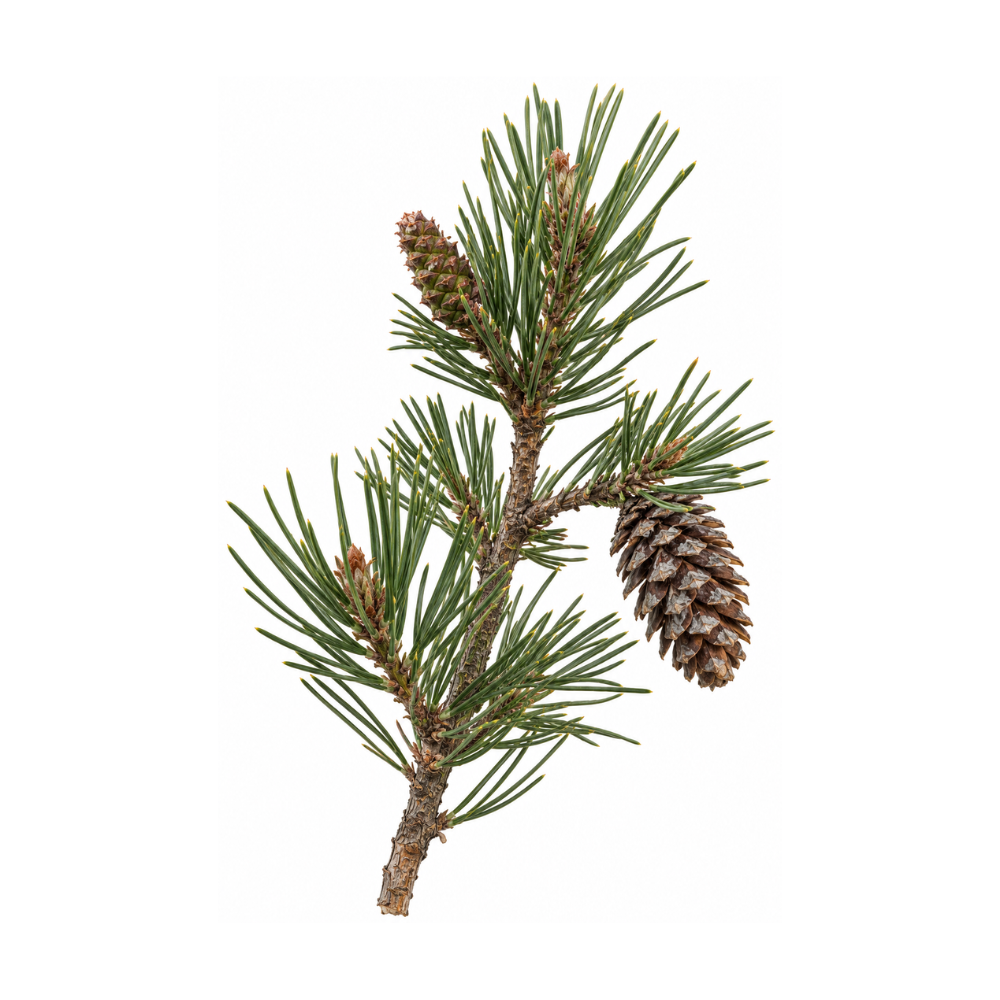 Principal source Lodgepole Pine Pinus contorta Herb monograph →
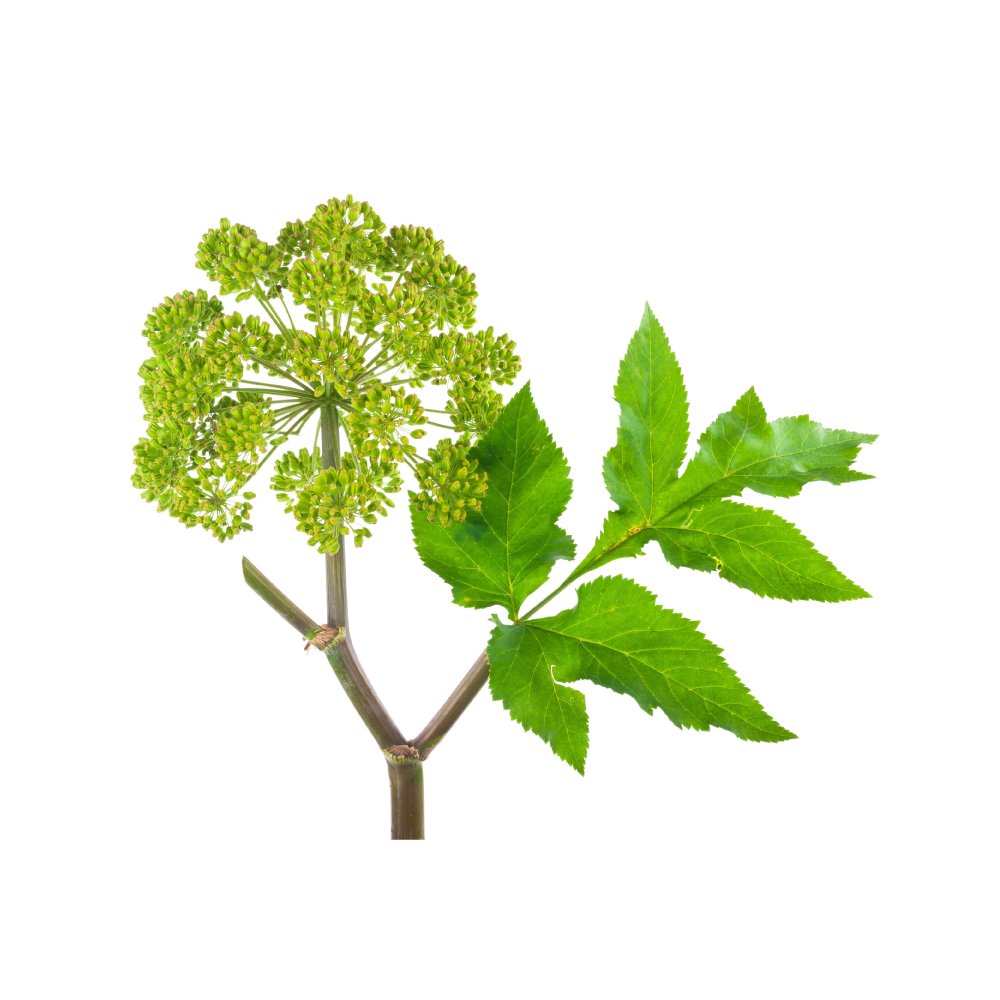 Source Angelica Angelica archangelica Herb monograph →
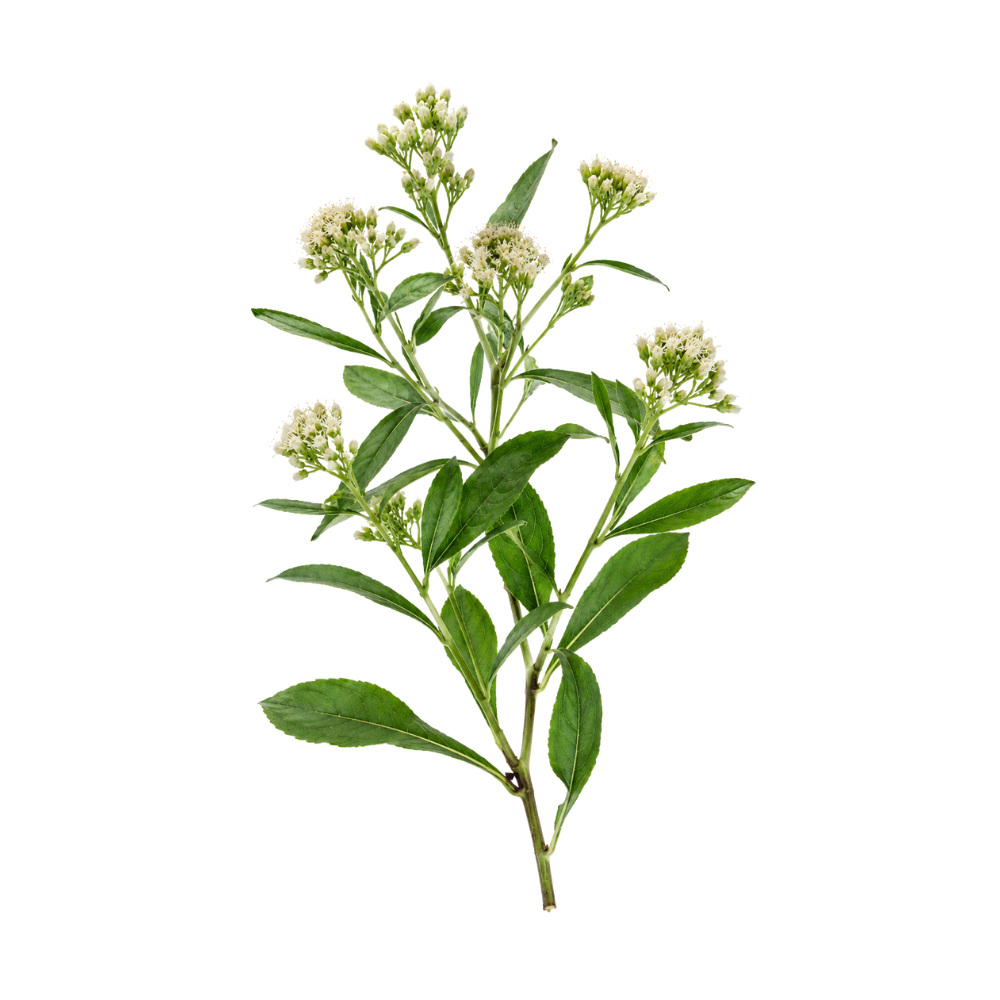 Source Chilca Baccharis latifolia Herb monograph →
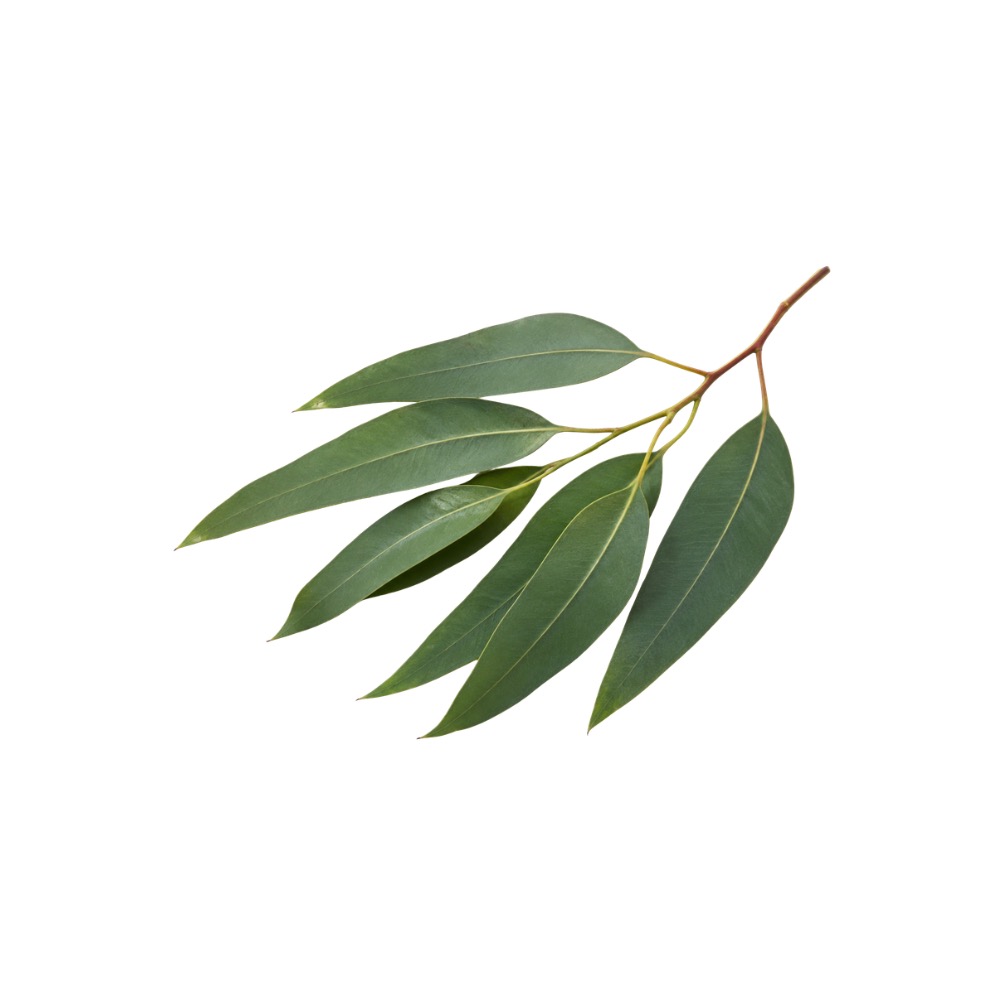 Source Eucalyptus Eucalyptus globulus Herb monograph →
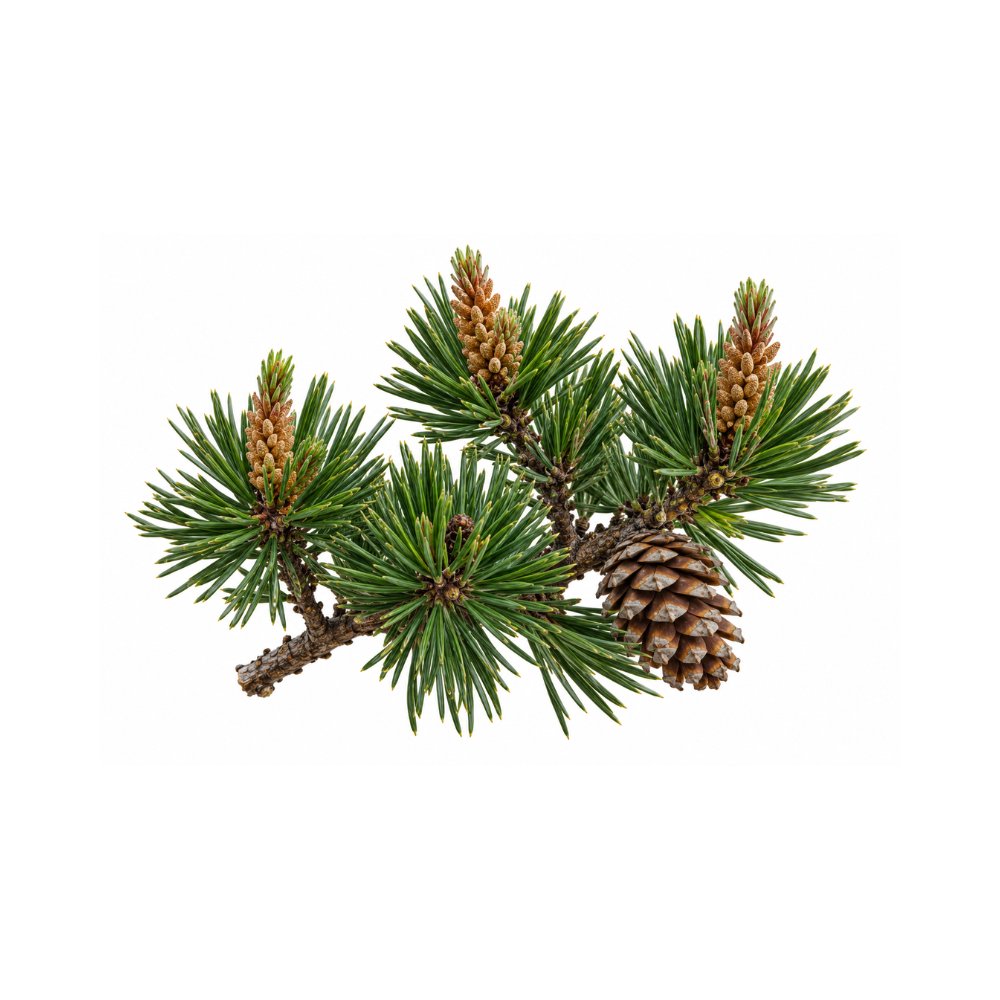 Source Mugo Pine Pinus mugo Herb monograph →
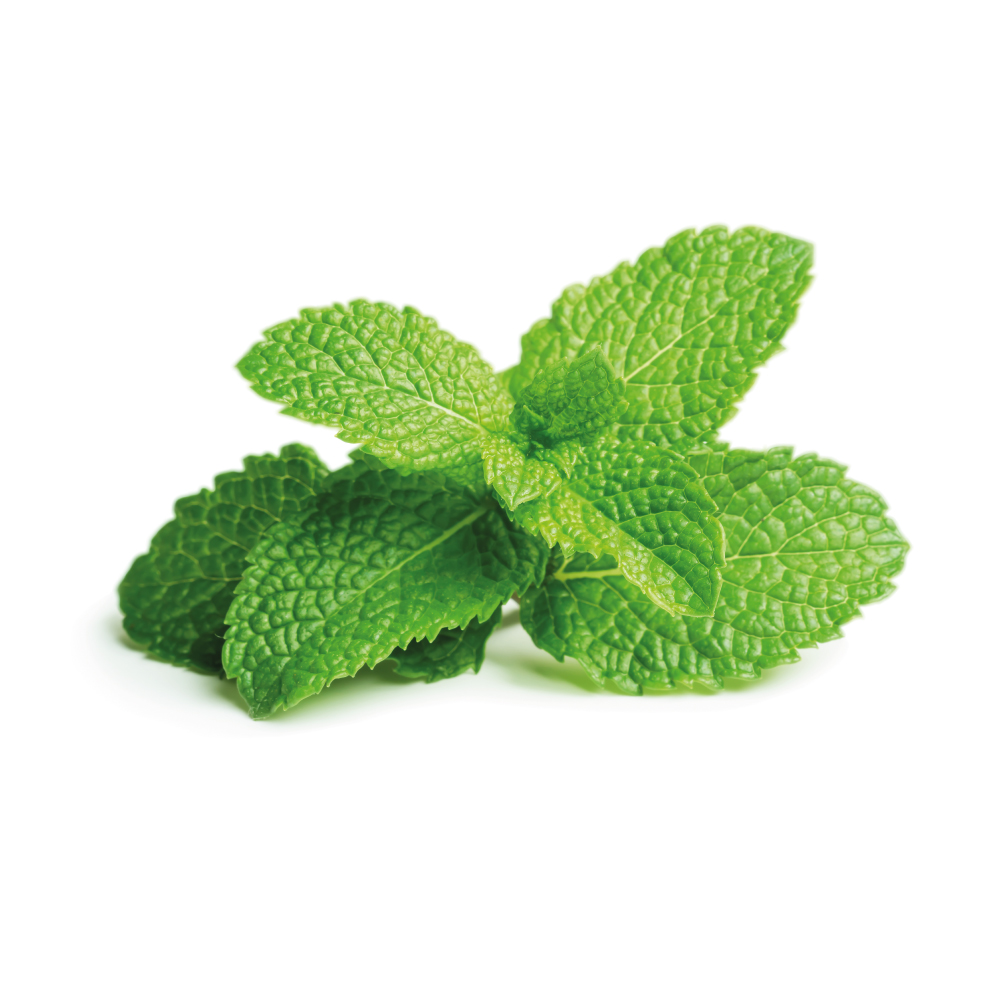 Source Peppermint Mentha × piperita Herb monograph →
 Source Pine Pinus sylvestris Herb monograph →
Concentration
Content by Source
Reported concentrations across the plants that contain β-phellandrene — the bar marks the typical level, the line shows the reported range.
Literature figures for varying plant parts and preparations. Read them as a comparative guide, not exact assays.
β-Phellandrene at a Glance
β-Phellandrene is a monoterpene hydrocarbon and one half of a confusing pair. It and α-phellandrene share a name, a formula and a skeleton, and differ only in where the second double bond sits — β-phellandrene carries an exocyclic methylene group, α-phellandrene has both double bonds inside the ring. They smell different, occur in different plants, and have entirely separate literatures. Very little that is true of one is true of the other.
Its practical importance is as a chemotype marker in conifers. Lodgepole pine needle oil from Oregon is 23.8% β-phellandrene, its single largest component 1Reference 1Essential oil compositions of Pinus species (P. contorta subsp. contorta, P. ponderosa var. ponderosa, and P. flexilis); enantiomeric distribution of terpenoids in Pinus speciesView study →; western hemlock foliar oil runs 6.6–19.3% 2Reference 2Chemical compositions and enantiomeric distributions of foliar essential oils of Chamaecyparis lawsoniana (AView study →; and coastal subalpine fir has been reported at 36.8–58.8%, against Rocky Mountain material of the same species that is camphene- and camphor-dominated instead 3Reference 3Gymnosperms of Idaho: chemical compositions and enantiomeric distributions of essential oils of Abies lasiocarpa, Picea engelmannii, Pinus contorta, Pseudotsuga menziesii, and Thuja plicataView study →. Where a Pinaceae oil is β-phellandrene-rich, that is a statement about population and provenance, not about species.
It has essentially no pharmacology of its own. No isolate-level study of β-phellandrene in a person, an animal or a cell has established a therapeutic effect. What it does have is an ecological role — it attracts a pest moth well enough that synthetic analogues are being designed around it 6Reference 6Design and synthesis of structural analogues of β-phellandrene to attract the yellow peach moth (Conogethes punctiferalis)View study → — and an industrial one, as a target molecule for photosynthetic manufacture in engineered cyanobacteria 4,
α- and β-Phellandrene Are Not Interchangeable
This is the most useful thing to know about the molecule, because the literature conflates them constantly and so do ingredient lists.
- β-Phellandrene is the conifer one. It dominates lodgepole pine and coastal subalpine fir oils, is a leading component of western hemlock and grand fir, and appears in Angelica and in chilca 1,
2, .3Reference 1Essential oil compositions of Pinus species (P. contorta subsp. contorta, P. ponderosa var. ponderosa, and P. flexilis); enantiomeric distribution of terpenoids in Pinus speciesView study →Reference 2Chemical compositions and enantiomeric distributions of foliar essential oils of Chamaecyparis lawsoniana (AView study →Reference 3Gymnosperms of Idaho: chemical compositions and enantiomeric distributions of essential oils of Abies lasiocarpa, Picea engelmannii, Pinus contorta, Pseudotsuga menziesii, and Thuja plicataView study → - α-Phellandrene is the one with pharmacology. It has documented antinociceptive activity in rodents with a proposed mechanism 7Reference 7AnimalAntinociceptive activity of the monoterpene α-phellandrene in rodents: possible mechanisms of action — animalView study →, and in bog myrtle it is specifically linked to spatial mosquito repellence.
They are not the same molecule and their activities do not transfer. A source that reports “phellandrene” without specifying the isomer has not reported enough to be used, and an oil analysis that lists both should be read as listing two separate constituents.
A Conifer Chemotype Marker
β-Phellandrene is the clearest single number for telling Pinaceae oils apart, because it varies so widely between and within species.
Lodgepole pine (Pinus contorta subsp. contorta) — the needle oil from Oregon material was dominated by β-phellandrene at 23.8%, with terpinen-4-ol at 11.0%. In the same study, Pinus ponderosa needle oil was a β-pinene and methyl chavicol oil and Pinus flexilis an α-pinene oil — three pines, three unrelated profiles 1Reference 1Essential oil compositions of Pinus species (P. contorta subsp. contorta, P. ponderosa var. ponderosa, and P. flexilis); enantiomeric distribution of terpenoids in Pinus speciesView study →.
Western hemlock (Tsuga heterophylla) — six Oregon samples gave β-phellandrene at 6.6–19.3%, behind myrcene (7.0–27.6%) and α-pinene (14.4–27.2%), with significant differences between locations 2Reference 2Chemical compositions and enantiomeric distributions of foliar essential oils of Chamaecyparis lawsoniana (AView study →.
Subalpine fir (Abies lasiocarpa) — the sharpest split. Coastal material has been reported at 36.8–58.8% β-phellandrene; the Idaho and Rocky Mountain material analysed in the Idaho gymnosperm survey is a camphene-and-camphor oil instead, and β-phellandrene was not measured in it at all 3Reference 3Gymnosperms of Idaho: chemical compositions and enantiomeric distributions of essential oils of Abies lasiocarpa, Picea engelmannii, Pinus contorta, Pseudotsuga menziesii, and Thuja plicataView study →. Two oils, one species name.
Grand fir and silver fir carry it among their needle-oil monoterpenes 8Reference 8ReviewPhytochemistry, biological, and pharmacological properties of Abies alba Mill — reviewView study →, and outside the conifers it turns up in Angelica archangelica and in the South American shrub chilca, where it is roughly 10% of a limonene-dominated leaf oil.
The consequence for anyone buying or studying a conifer oil is the same as for camphene: the species name does not determine the chemistry. Provenance does, and an analysis certificate is the only way to know what is in the bottle.
What It's Used For
There is no therapeutic literature for isolated β-phellandrene.
The one place β-phellandrene is the agent rather than the ingredient. It is an established attractant for the yellow peach moth (Conogethes punctiferalis), a pest of fruit and nut crops, and a 2025 programme designed and synthesised structural analogues to improve on it — the best of them, an ester, reached a 76.6% attraction rate at 10 mg/mL, with better stability than the natural molecule 6Reference 6Design and synthesis of structural analogues of β-phellandrene to attract the yellow peach moth (Conogethes punctiferalis)View study →.
Plant-volatile attractants of this kind are used for monitoring and mass trapping rather than as insecticides.
Gap: this is pest management, not pharmacology, and the analogue work is explicitly aiming to replace β-phellandrene with something more stable. It tells us the molecule is biologically recognised, not that it does anything in a mammal.
β-Phellandrene appears in the composition tables of studies reporting anti-inflammatory and cytotoxic activity for Pinus and Abies essential oils 8,
Gap: no fractionation, no isolate testing, no dose-response for β-phellandrene. Being present in an active mixture is not evidence, and this row is scored to say so.
Mechanisms
| Target / pathway | Effect | Relevant to |
|---|---|---|
| Insect olfactory recognition (Conogethes punctiferalis) | attraction; the basis of a synthetic-analogue design programme | semiochemistry |
| β-Phellandrene synthase | cyclises geranyl diphosphate to β-phellandrene — the committed plant step, and the enzyme transplanted into cyanobacteria | biosynthesisbiomanufacture |
| Mammalian targets | none identified | — |
Pharmacokinetics
Nothing is established. There is no absorption, distribution, metabolism or excretion data for β-phellandrene in any species. As a volatile lipophilic hydrocarbon it would be expected to behave like the other monoterpenes of its class, but no measurement exists.
Clinical Trials
| Completed | Planned | Terminated | Preclinical |
|---|---|---|---|
| None | — | — | Insect attraction assays; cyanobacterial biosynthesis; essential-oil composition surveys |
Last checked: September 2026.
Isolate vs. Plant Studies
β-Phellandrene is a case where the isolate has been studied thoroughly — by chemical engineers rather than pharmacologists. Its synthase has been expressed heterologously and its production optimised to milligram-per-gram yields 4Reference 4In vitroA phycocyanin·phellandrene synthase fusion enhances recombinant protein expression and β-phellandrene (monoterpene) hydrocarbons production in Synechocystis (cyanobacteria) — in vitroView study →, and pure material has been used in insect attraction assays and as the template for analogue design 6Reference 6Design and synthesis of structural analogues of β-phellandrene to attract the yellow peach moth (Conogethes punctiferalis)View study →.
None of that is health research. The plant-level literature is composition survey after composition survey 1,
Its Role in Plants
β-Phellandrene is made in one step from geranyl diphosphate by β-phellandrene synthase, and in conifers it is part of the resin and needle-oil defence chemistry alongside the pinenes, limonene and myrcene. Its documented ecological function is as a volatile signal: it is recognised by, and attracts, at least one specialist moth 6Reference 6Design and synthesis of structural analogues of β-phellandrene to attract the yellow peach moth (Conogethes punctiferalis)View study →, which is the ordinary double edge of plant volatiles — the same compound that deters one insect guides another to the plant.
Commercial Production
β-Phellandrene is unusual among minor monoterpenes in being a deliberate biomanufacturing target. Because it is a volatile hydrocarbon that separates spontaneously from an aqueous culture, it has been used as a model product for photosynthetic terpene production in cyanobacteria: heterologous expression of a plant β-phellandrene synthase in Synechocystis converts photosynthetically fixed carbon directly into the monoterpene 4,
The engineering problem was enzyme abundance. Fusing the synthase to phycocyanin, one of the most abundant proteins in the cell, raised expression to about 20% of total cellular protein and lifted yield from 0.03 to 3.2 mg per gram dry cell weight — a hundredfold improvement 4Reference 4In vitroA phycocyanin·phellandrene synthase fusion enhances recombinant protein expression and β-phellandrene (monoterpene) hydrocarbons production in Synechocystis (cyanobacteria) — in vitroView study →. That work is part of a broader effort to make plant essential oils photosynthetically rather than by farming and distillation 5Reference 5ReviewCyanobacterial production of plant essential oils — reviewView study →.
Conventionally, β-phellandrene reaches the market only as a component of the conifer and Apiaceae oils that contain it; it is not isolated at scale.
Discovery & Synthesis
The phellandrenes take their name from Eucalyptus phellandra, the source in which they were first characterised, and the α/β distinction was drawn once the position of the second double bond could be established. β-Phellandrene has never been a target of industrial synthesis — it is obtained, when it is needed pure, from natural oils or now from engineered microbial culture 4Reference 4In vitroA phycocyanin·phellandrene synthase fusion enhances recombinant protein expression and β-phellandrene (monoterpene) hydrocarbons production in Synechocystis (cyanobacteria) — in vitroView study →.
Patents: not yet researched.
Toxicity & Safety
β-Phellandrene carries a low flag on the same basis as the other common monoterpene hydrocarbons: widespread aromatic and dietary exposure with no documented pattern of harm. The honest qualifier is that this reflects absence of study as much as absence of hazard — there is no dedicated toxicology package for the isolate.
- A common constituent of conifer and Apiaceae oils encountered aromatically and in small dietary amounts, with no documented pattern of harm.
- The safety record is thin rather than clean. No repeat-dose, genotoxicity or sensitisation study of isolated β-phellandrene is characterised here.
- Concentrated conifer oils are irritant and flammable, and terpene hydrocarbons form sensitising oxidation products on air exposure. Store oils cold, dark and closed.
- Do not import α-phellandrene’s data. The two isomers are separate molecules with separate literatures.
Full Safety & Interactions Detail
What is established. β-Phellandrene is a normal constituent of pine, fir, hemlock and Apiaceae oils, and human exposure to it through those oils and through food is long-standing and unremarkable.
What is not. No isolate toxicology has been located — no LD50, no repeat-dose study, no genotoxicity assessment, no sensitisation testing. That absence is not a clearance.
Oxidation. As with the whole class, terpene hydrocarbons autoxidise on air exposure and their oxidation products, rather than the parent molecules, are the usual cause of contact allergy from old essential oils. β-Phellandrene has not been studied for this specifically.
Reproductive note. No reproductive-toxicity dataset for isolated β-phellandrene is characterised here. Pregnancy and lactation decisions belong to the herb or product page.
Interactions. None documented, and no pharmacokinetic study exists against which one could be assessed.
Dosage
No dose has been established for β-phellandrene, and no study has administered it to a person. The figures below are composition and research reference points.
| Context | Figure |
|---|---|
| Lodgepole pine needle oil | 23.8% of the oil 1Reference 1Essential oil compositions of Pinus species (P. contorta subsp. contorta, P. ponderosa var. ponderosa, and P. flexilis); enantiomeric distribution of terpenoids in Pinus speciesView study → |
| Western hemlock foliar oil | 6.6–19.3% of the oil 2Reference 2Chemical compositions and enantiomeric distributions of foliar essential oils of Chamaecyparis lawsoniana (AView study → |
| Subalpine fir, coastal chemotypes | reported at 36.8–58.8% of the oil 3Reference 3Gymnosperms of Idaho: chemical compositions and enantiomeric distributions of essential oils of Abies lasiocarpa, Picea engelmannii, Pinus contorta, Pseudotsuga menziesii, and Thuja plicataView study → |
| Yellow peach moth attraction assay | 10 mg/mL, for the natural compound and its analogues 6Reference 6Design and synthesis of structural analogues of β-phellandrene to attract the yellow peach moth (Conogethes punctiferalis)View study → |
| Cyanobacterial production yield | 3.2 mg per gram dry cell weight 4Reference 4In vitroA phycocyanin·phellandrene synthase fusion enhances recombinant protein expression and β-phellandrene (monoterpene) hydrocarbons production in Synechocystis (cyanobacteria) — in vitroView study → |
These are composition and research figures and are not a personal recommendation.
References
- Ankney E, Swor K, Satyal P, et al. (2022). Essential oil compositions of Pinus species (P. contorta subsp. contorta, P. ponderosa var. ponderosa, and P. flexilis); enantiomeric distribution of terpenoids in Pinus species. Molecules. https://pubmed.ncbi.nlm.nih.gov/36080426/
- Ankney E, Swor K, Poudel A, et al. (2024). Chemical compositions and enantiomeric distributions of foliar essential oils of Chamaecyparis lawsoniana (A. Murray bis) Parl, Thuja plicata Donn ex D. Don, and Tsuga heterophylla Sarg. Plants (Basel). https://pubmed.ncbi.nlm.nih.gov/38794396/
- Swor K, Satyal P, Poudel A, et al. (2023). Gymnosperms of Idaho: chemical compositions and enantiomeric distributions of essential oils of Abies lasiocarpa, Picea engelmannii, Pinus contorta, Pseudotsuga menziesii, and Thuja plicata. Molecules. https://pubmed.ncbi.nlm.nih.gov/36985451/
- Formighieri C, Melis A (2015). A phycocyanin·phellandrene synthase fusion enhances recombinant protein expression and β-phellandrene (monoterpene) hydrocarbons production in Synechocystis (cyanobacteria) — in vitro. Metab Eng. https://pubmed.ncbi.nlm.nih.gov/26410450/
- Formighieri C, Melis A (2018). Cyanobacterial production of plant essential oils — review. Planta. https://pubmed.ncbi.nlm.nih.gov/29974209/
- Xu Q, Zhou JX, Liu J, et al. (2025). Design and synthesis of structural analogues of β-phellandrene to attract the yellow peach moth (Conogethes punctiferalis). J Agric Food Chem. https://pubmed.ncbi.nlm.nih.gov/41100739/
- Lima DF, Brandão MS, Moura JB, et al. (2012). Antinociceptive activity of the monoterpene α-phellandrene in rodents: possible mechanisms of action — animal. J Pharm Pharmacol. https://pubmed.ncbi.nlm.nih.gov/22221105/
- Ancuceanu R, Hovaneț MV, Miron A, et al. (2023). Phytochemistry, biological, and pharmacological properties of Abies alba Mill — review. Plants (Basel). https://pubmed.ncbi.nlm.nih.gov/37571016/
- Basholli-Salihu M, Schuster R, Hajdari A, et al. (2017). Phytochemical composition, anti-inflammatory activity and cytotoxic effects of essential oils from three Pinus spp. — in vitro. Pharm Biol. https://pubmed.ncbi.nlm.nih.gov/28385055/



