Materia Medica
Eucalyptus
Eucalyptus globulus
Eucalyptus, or Tasmanian blue gum, is a tall Australian tree whose aromatic leaves are the main source of eucalyptus oil. The oil is rich in 1,8-cineole, which is inhaled or rubbed on the chest for congestion and has been tested as a capsule in bronchitis, sinusitis, asthma and COPD.
What Is Eucalyptus?
Eucalyptus is the leaf of the Tasmanian blue gum, Eucalyptus globulus, a tall evergreen tree from south-eastern Australia. Its leaves are steam-distilled for eucalyptus oil, which is inhaled, rubbed on the chest and gargled for coughs, colds and blocked noses 35Reference 35Eucalyptus globulus — habit, range, habitat, cultivation, medicinal and other uses — species databaseView study →.
The tree is the most widely planted eucalypt in the world, grown in dozens of countries for timber, paper pulp and oil 35Reference 35Eucalyptus globulus — habit, range, habitat, cultivation, medicinal and other uses — species databaseView study →. It is the single most important species for eucalyptus oil 35Reference 35Eucalyptus globulus — habit, range, habitat, cultivation, medicinal and other uses — species databaseView study →.
The oil is mostly 1,8-cineole, also called eucalyptol 11,
The undiluted oil is toxic if swallowed, particularly for young children 25Reference 25Clinical effects and management of eucalyptus oil ingestion in infants and young childrenView study →.
How Is Eucalyptus Used?
Eucalyptus is used in four main forms:
- Standardised 1,8-cineole capsules — the form used in the controlled trials of eucalyptus for the airways 1,
2, .3, 4, 7Reference 1RCTConcomitant therapy with cineole (eucalyptole) reduces exacerbations in COPD: a placebo-controlled, double-blind, randomised, multicentre study — RCTView study →Reference 2RCTAnti-inflammatory activity of 1.8-cineol (eucalyptol) in bronchial asthma: a double-blind placebo-controlled trial — randomisedView study →Reference 3RCTPatients with asthma benefit from concomitant therapy with cineole: a placebo-controlled, double-blind trial — RCTView study →Reference 4RCTTherapy for acute nonpurulent rhinosinusitis with cineole: results of a double-blind, randomised, placebo-controlled trial — RCTView study →Reference 7RCTEfficacy of cineole in patients suffering from acute bronchitis: a placebo-controlled double-blind trial — RCTView study → - Steam inhalation of the essential oil for a blocked nose and chest 35Reference 35Eucalyptus globulus — habit, range, habitat, cultivation, medicinal and other uses — species databaseView study →.
- Chest rubs and liniments, in which the diluted oil is applied to the skin 8,
18, .35Reference 8RCTEffect of aromatics on lung mucociliary clearance in patients with chronic airways obstruction — randomised clinical trialView study →Reference 18RCTEfficacy and onset of Bonipar, a topical analgesic, for the management of musculoskeletal pain — randomised controlled trialView study →Reference 35Eucalyptus globulus — habit, range, habitat, cultivation, medicinal and other uses — species databaseView study → - Dried-leaf infusion, the traditional whole-leaf preparation. It carries the leaf’s water-soluble phenolics, such as ellagic acid and tannins 22Reference 22Marker constituents of the natural antioxidant eucalyptus leaf extract for the evaluation of food additivesView study →.
Traditional Uses
Western Herbal Medicine
Eucalyptus leaf and its oil are used as an expectorant, antiseptic, febrifuge and stimulant 35Reference 35Eucalyptus globulus — habit, range, habitat, cultivation, medicinal and other uses — species databaseView study →. The oil is inhaled for blocked nasal passages, gargled for sore throats and applied to cuts and skin infections 35Reference 35Eucalyptus globulus — habit, range, habitat, cultivation, medicinal and other uses — species databaseView study →. It is a common ingredient of over-the-counter remedies for coughs and colds 35Reference 35Eucalyptus globulus — habit, range, habitat, cultivation, medicinal and other uses — species databaseView study →.
The leaf and oil are also used as insect repellents 35Reference 35Eucalyptus globulus — habit, range, habitat, cultivation, medicinal and other uses — species databaseView study →.
Australian Aboriginal Medicine
Eucalyptus leaves are a traditional Aboriginal herbal remedy 35Reference 35Eucalyptus globulus — habit, range, habitat, cultivation, medicinal and other uses — species databaseView study →.
Eucalyptus Kino
The trunk exudes a tannin-rich oleo-resin, or kino, which can also be collected by cutting the bark. It is strongly astringent, and it is taken for diarrhoea and bladder inflammation and applied to cuts 35Reference 35Eucalyptus globulus — habit, range, habitat, cultivation, medicinal and other uses — species databaseView study →.
Indications
- Cough and chest congestion [leaf oil, inhaled or as a chest rub; 1,8-cineole capsules]
- Acute bronchitis [1,8-cineole capsules]
- Acute sinusitis [1,8-cineole capsules]
- Asthma, alongside standard treatment [1,8-cineole capsules]
- COPD, alongside standard treatment [1,8-cineole capsules]
- Colds and sore throat [leaf oil, inhaled or gargled; folk use]
- Muscular aches and stiffness [diluted oil in liniments]
- Minor cuts and skin infections [diluted oil; folk use]
- Diarrhoea [kino; folk use]
Botany
Eucalyptus is a large evergreen tree in the myrtle family (Myrtaceae). It reaches 60 m, and it is the tallest flowering tree in North America, where it has been introduced 33Reference 33Eucalyptus globulus Labillardière — species description, habitat and North American distribution — floraView study →. Its straight, bluish-grey trunk is smooth, and the bark peels away in irregular strips 33,
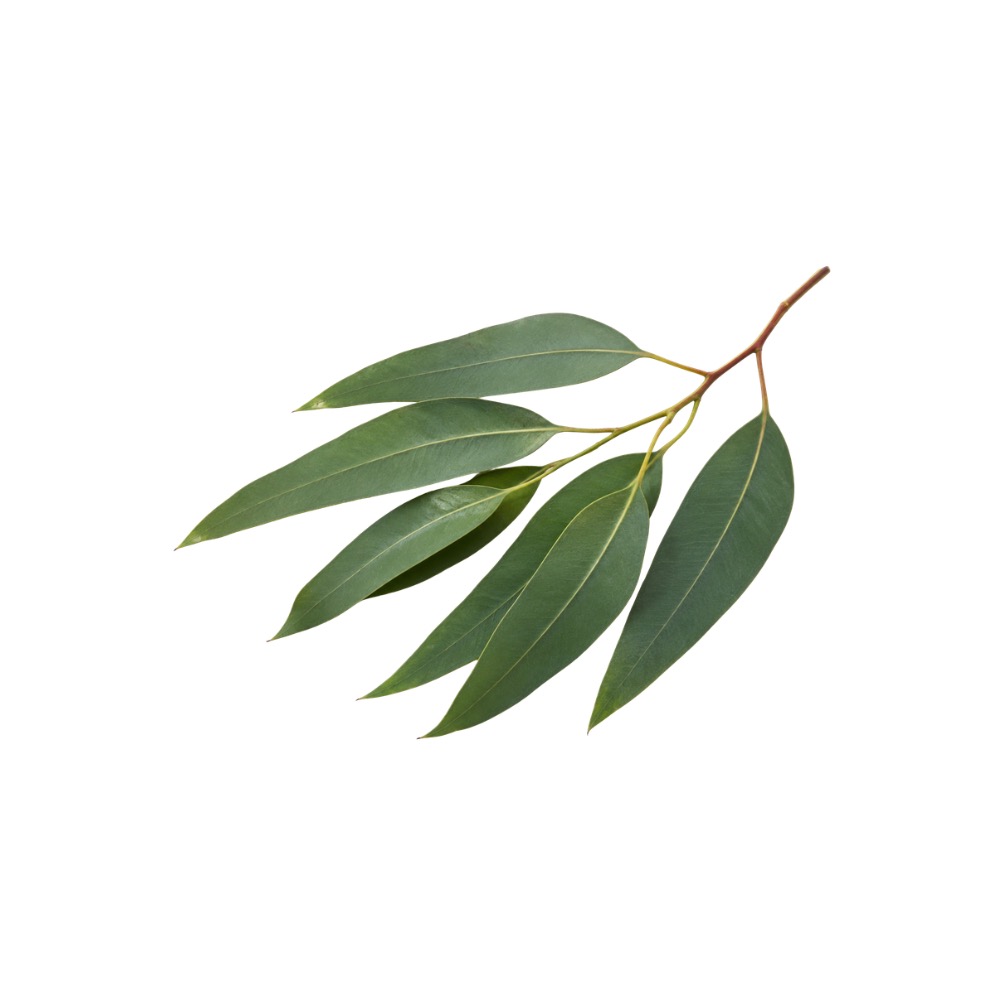
The tree bears two kinds of leaf. The young leaves grow in opposite pairs; they are stalkless, oval and heart-shaped at the base, and covered in a bluish-white bloom 34Reference 34Eucalyptus globulus Labillardière — species description and distribution — floraView study →. The adult leaves are narrow, sickle-shaped and leathery, 10–30 cm long, and dotted with oil glands on both surfaces 33,
The flowers are large and usually borne singly, with creamy-white stamens. Each bud is covered by a warty, bluish cap that falls away as the flower opens 33,
The genus Eucalyptus holds about 900 species. More than 300 have volatile oil in their leaves, and about 20 of these contain more than 70% 1,8-cineole 30Reference 30ReviewBiological, medicinal and toxicological significance of eucalyptus leaf essential oil: a reviewView study →.
Distribution
Eucalyptus is native to south-eastern Australia, in Tasmania and Victoria 34,
It is now the most widely planted eucalypt in the world, covering about 800,000 hectares in dozens of countries 35Reference 35Eucalyptus globulus — habit, range, habitat, cultivation, medicinal and other uses — species databaseView study →. In southern Europe, including Italy, Spain and Portugal, it is planted for windbreaks and to stabilise soil 35Reference 35Eucalyptus globulus — habit, range, habitat, cultivation, medicinal and other uses — species databaseView study →. In China it is grown in several southern provinces 34Reference 34Eucalyptus globulus Labillardière — species description and distribution — floraView study →, and in California it has been introduced into disturbed ground from sea level to 300 m 33Reference 33Eucalyptus globulus Labillardière — species description, habitat and North American distribution — floraView study →.
The tree needs full sun and does not spread into established forest, so outside its native range it rarely forms lasting wild populations without human help 35Reference 35Eucalyptus globulus — habit, range, habitat, cultivation, medicinal and other uses — species databaseView study →. Large plantations outside Australia use a lot of water and can suppress the native plants around them 35Reference 35Eucalyptus globulus — habit, range, habitat, cultivation, medicinal and other uses — species databaseView study →.
Growing Conditions
Cultivation snapshot for Eucalyptus
HabitEvergreen tree, usually up to 55 m at maturity 35Reference 35Eucalyptus globulus — habit, range, habitat, cultivation, medicinal and other uses — species databaseView study →.
Grow it yourself
Farm Wiki is our cultivation-focused sister site, also run by Justin Cooke.
Pharmacology & Research
Eucalyptus has a larger clinical literature than most medicinal plants. Placebo-controlled trials have tested purified oral 1,8-cineole as an add-on in asthma and COPD, and on its own in acute bronchitis and acute sinusitis 1,
The anti-inflammatory action of cineole has been studied in human cells and in rodents 2,
-
Best-supported: oral 1,8-cineole as an anti-inflammatory adjunct in asthma and COPD, cutting exacerbations and improving lung function 1,
2, ; symptom relief in acute rhinosinusitis and acute bronchitis 4,3Reference 1RCTConcomitant therapy with cineole (eucalyptole) reduces exacerbations in COPD: a placebo-controlled, double-blind, randomised, multicentre study — RCTView study →Reference 2RCTAnti-inflammatory activity of 1.8-cineol (eucalyptol) in bronchial asthma: a double-blind placebo-controlled trial — randomisedView study →Reference 3RCTPatients with asthma benefit from concomitant therapy with cineole: a placebo-controlled, double-blind trial — RCTView study → 7Reference 4RCTTherapy for acute nonpurulent rhinosinusitis with cineole: results of a double-blind, randomised, placebo-controlled trial — RCTView study →Reference 7RCTEfficacy of cineole in patients suffering from acute bronchitis: a placebo-controlled double-blind trial — RCTView study → . - Emerging, worth watching: a specific antiviral mechanism (IRF3 potentiation) shown in human nasal cells and tissue 12Reference 12Müller, J., Greiner, J. F., Zeuner, M., et al. (2016). 1,8-Cineole potentiates IRF3-mediated antiviral response in human stem cells and in an ex vivo model of rhinosinusitis. Clinical Science. https://pubmed.ncbi.nlm.nih.gov/27129189/View study →, with protection in a mouse influenza model 13Reference 13AnimalLi, Y., Lai, Y., Wang, Y., et al. (2016). 1,8-Cineol protect against influenza-virus-induced pneumonia in mice — animal model. Inflammation. https://pubmed.ncbi.nlm.nih.gov/27351430/View study →; inhaled use for post-operative pain 17Reference 17RCTEffect of eucalyptus oil inhalation on pain and inflammatory responses after total knee replacement — randomised controlled trialView study →.
-
Mechanistically thin: antimicrobial, antioxidant and anticancer effects — real signals in vitro but no human data, and dependent on species and preparation 10,
11, .19, 21Reference 10Systematic reviewAntibacterial properties of Eucalyptus globulus essential oil against MRSA: a systematic review — in vitroView study →Reference 11In vitroChemical composition and biological activities of Eucalyptus globulus essential oil — in vitroView study →Reference 19In vitroAntitumor effect of 1,8-cineole against colon cancer — in vitro / animal modelView study →Reference 21In vitroIn vitro and in vivo antioxidant activity of eucalyptus leaf polyphenols extract — animal modelView study → - The caveat: almost all clinical data are for purified oral 1,8-cineole, not the leaf, tea, or inhaled crude oil; the oil is also toxic if swallowed.
The trials tested purified cineole, not the leaf or the oil. Nearly every controlled trial gave 1,8-cineole in 200 mg gut-soluble capsules. The results do not carry over to steam inhalation, chest rubs or leaf tea, and oils from different Eucalyptus species differ in composition 30Reference 30ReviewBiological, medicinal and toxicological significance of eucalyptus leaf essential oil: a reviewView study →.
1. Airway Anti-Inflammatory
In a 6-month double-blind trial in stable COPD (n=242), 200 mg of cineole three times daily, added to usual treatment through the winter, reduced the frequency, severity and duration of exacerbations compared with placebo. Lung function, breathlessness and quality of life also improved, and adverse events were similar in both groups 1Reference 1RCTConcomitant therapy with cineole (eucalyptole) reduces exacerbations in COPD: a placebo-controlled, double-blind, randomised, multicentre study — RCTView study →.
In steroid-dependent asthma (n=32), 200 mg three times daily for 12 weeks allowed a 36% reduction in daily prednisolone, against 7% on placebo. Twelve of 16 patients on cineole reduced their steroid dose, against four of 16 on placebo 2Reference 2RCTAnti-inflammatory activity of 1.8-cineol (eucalyptol) in bronchial asthma: a double-blind placebo-controlled trial — randomisedView study →.
A later 6-month multicentre trial in asthma (n=247) found improved lung function, symptoms and quality of life when cineole was added to standard therapy 3Reference 3RCTPatients with asthma benefit from concomitant therapy with cineole: a placebo-controlled, double-blind trial — RCTView study →.
A 2010 systematic review of herbal treatments for asthma noted the cineole steroid-sparing trial among single positive studies. It concluded that most trials were small, short and methodologically poor, and that no herbal treatment for asthma could yet be recommended 9Reference 9Meta-analysisHerbal interventions for chronic asthma in adults and children: a systematic review and meta-analysisView study →.
Cineole suppressed arachidonic-acid metabolism and cytokine production in human monocytes 2Reference 2RCTAnti-inflammatory activity of 1.8-cineol (eucalyptol) in bronchial asthma: a double-blind placebo-controlled trial — randomisedView study →. In mice with lung injury it lowered TNF-α and IL-1β, raised IL-10 and reduced NF-κB and TLR4 14Reference 14AnimalZhao, C., Sun, J., Fang, C., & Tang, F. (2014). 1,8-cineol attenuates LPS-induced acute pulmonary inflammation in mice — animal model. Inflammation. https://pubmed.ncbi.nlm.nih.gov/24197825/View study →, and in mouse lung macrophages it reduced inflammatory mediators 15Reference 15In vitroSuppression of inflammatory and infection responses in lung macrophages by eucalyptus oil and its constituent 1,8-cineole — in vitroView study →. In rodent models of inflammation, pain and fever, E. globulus oil at 500 mg/kg was less effective than flurbiprofen against inflammation and pain. The two combined worked better than the oil alone, and better than flurbiprofen alone against inflammation and fever 16Reference 16In vitroAnti-inflammatory mechanisms of eucalyptol-rich Eucalyptus globulus essential oil — in vitro / animal modelView study →.
Gap: every trial used purified oral cineole capsules. There is no controlled evidence that eucalyptus leaf, tea or inhaled oil produces the same effect, and the trials are modest in size.
2. Rhinosinusitis
In a double-blind, placebo-controlled trial in acute non-purulent rhinosinusitis (n=152), 200 mg of cineole three times daily for 7 days reduced a symptom score from 15.6 to 6.9 after 4 days and 3.0 after 7 days, against 12.2 and 9.2 on placebo 4Reference 4RCTTherapy for acute nonpurulent rhinosinusitis with cineole: results of a double-blind, randomised, placebo-controlled trial — RCTView study →.
A second double-blind trial (n=150) in acute viral rhinosinusitis compared cineole with a five-component herbal combination, without a placebo arm. Cineole gave the larger symptom reduction after 4 and 7 days 5Reference 5RCTThe value of herbal medicines in the treatment of acute non-purulent rhinosinusitis — randomised controlled trialView study →.
A 2023 network meta-analysis of herbal medicines for rhinosinusitis ranked cineole and Pelargonium sidoides the most effective for symptoms of acute post-viral rhinosinusitis, with moderate certainty 6Reference 6Meta-analysisHerbal medicines for rhinosinusitis: a systematic review and network meta-analysisView study →.
The trials are in acute sinusitis only. None tested chronic rhinosinusitis or steam inhalation of the oil.
3. Acute Bronchitis
In a placebo-controlled, double-blind trial in acute bronchitis (n=242), 200 mg of 1,8-cineole three times daily for 10 days improved a bronchitis symptom score more than placebo after 4 days. The largest difference was in the frequency of coughing fits 7Reference 7RCTEfficacy of cineole in patients suffering from acute bronchitis: a placebo-controlled double-blind trial — RCTView study →.
It is a single trial of isolated cineole.
4. Expectorant / Secretolytic
In 12 patients with chronic bronchitis, a chest rub of aromatics (7.5 g) improved the clearance of mucus from the lungs over the first hour, compared with a petroleum-jelly placebo, in a single-blind crossover trial. The improvement tracked the level of aromatics, but further applications gave no added effect over the next 5 hours 8Reference 8RCTEffect of aromatics on lung mucociliary clearance in patients with chronic airways obstruction — randomised clinical trialView study →.
Cineole is traditionally used for its secretolytic, mucus-thinning properties 14Reference 14AnimalZhao, C., Sun, J., Fang, C., & Tang, F. (2014). 1,8-cineol attenuates LPS-induced acute pulmonary inflammation in mice — animal model. Inflammation. https://pubmed.ncbi.nlm.nih.gov/24197825/View study →.
Gap: the direct mucus-clearance evidence is one small, old study of a mixed aromatic rub, and steam inhalation has no controlled efficacy data.
5. Antimicrobial
Eucalyptus oil inhibits a range of bacteria and fungi in vitro. A systematic review of 20 studies of E. globulus oil against methicillin-resistant Staphylococcus aureus (MRSA) found consistent antibacterial activity, which was stronger in combination with other oils and antibiotics 10Reference 10Systematic reviewAntibacterial properties of Eucalyptus globulus essential oil against MRSA: a systematic review — in vitroView study →.
In one analysis the oil was most active against Candida albicans, Candida tropicalis and moulds, inhibited Pseudomonas fluorescens biofilm, and worked better as a vapour than on contact 11Reference 11In vitroChemical composition and biological activities of Eucalyptus globulus essential oil — in vitroView study →.
Gap: all of this is in vitro. No clinical infection endpoint has been tested, and results do not transfer between Eucalyptus species.
7. Analgesic (Topical/Inhaled)
After total knee replacement, patients who inhaled eucalyptus oil for 30 minutes on three days reported less pain than those who inhaled almond oil, and had lower blood pressure on the second day. C-reactive protein and white-cell counts did not differ 17Reference 17RCTEffect of eucalyptus oil inhalation on pain and inflammatory responses after total knee replacement — randomised controlled trialView study →.
A topical analgesic containing eucalyptus oil with camphor, methyl salicylate, nutmeg, rosemary and coconut oils (Bonipar) was non-inferior to 1.5% diclofenac solution for musculoskeletal pain over one week (n=164) 18Reference 18RCTEfficacy and onset of Bonipar, a topical analgesic, for the management of musculoskeletal pain — randomised controlled trialView study →.
Gap: neither trial isolates eucalyptus. The inhalation study could not separate the effect of the scent, and the topical product is a multi-ingredient blend.
8. Antioxidant
A eucalyptus leaf polyphenol extract scavenged free radicals in chemical assays and protected macrophages from oxidative damage. Fed to chickens, it raised antioxidant levels in the meat and changed the gut bacteria 21Reference 21In vitroIn vitro and in vivo antioxidant activity of eucalyptus leaf polyphenols extract — animal modelView study →.
The main antioxidant constituents of E. globulus leaf extract are hydrolysable tannins and phenolics, including oenothein B, gallic acid, ellagic acid and glucuronides of quercetin and kaempferol 22Reference 22Marker constituents of the natural antioxidant eucalyptus leaf extract for the evaluation of food additivesView study →.
Gap: no human antioxidant data. The active fraction is the water-soluble leaf polyphenols, not the essential oil.
9. Anticancer
Purified 1,8-cineole induced apoptosis in the human colon-cancer cell lines HCT116 and RKO, and slowed tumour growth in mice carrying RKO tumours 19Reference 19In vitroAntitumor effect of 1,8-cineole against colon cancer — in vitro / animal modelView study →.
A 2026 review describes the proposed molecular targets and pharmacokinetics of cineole as an anticancer candidate, and notes that the evidence is largely limited to in vitro and early preclinical models 32Reference 32ReviewLu, D., et al. (2026). 1,8-cineole as a multi-target anticancer candidate integrating molecular mechanisms and pharmacokinetics — review. Biomedicine & Pharmacotherapy. https://pubmed.ncbi.nlm.nih.gov/42070456/View study →.
Gap: preclinical only.
Mechanisms
1,8-Cineole has been studied for its effects on inflammatory signalling in the airways, including arachidonic-acid metabolism, cytokines and NF-κB, and for strengthening the antiviral factor IRF3. The oil’s monoterpenes carry its antibacterial and antifungal activity in vitro.
The leaf’s water-soluble tannins and flavonoids carry its antioxidant activity.
| Mechanism | Drives | Key compounds |
|---|---|---|
| Arachidonic-acid metabolism ↓, cytokines (IL-1β, TNF-α) ↓ | airway anti-inflammatoryasthma & COPD adjunct | 1,8-cineole |
| NF-κB ↓, TLR4 ↓ | anti-inflammatoryantiviral | 1,8-cineole |
| Mucus clearance ↑ | expectorantbronchitisrhinosinusitis | 1,8-cineole, aromatic oils |
| IRF3 potentiation | antiviral | 1,8-cineole |
| Antibacterial and antifungal activity | antimicrobial | 1,8-cineole, p-cymene, α-pinene, limonene |
| Radical scavenging | antioxidant | oenothein B, ellagic acid, gallic acid, quercetin glucuronide |
Clinical Trials
Most of the controlled trials test isolated oral 1,8-cineole rather than the leaf or the oil.
| Completed | Planned | Terminated | Preclinical |
|---|---|---|---|
| ~9(published RCTs of cineole) | 0 | 1 | ~40 |
Last checked: July 2026.
Phytochemistry
The leaf essential oil of E. globulus is mostly 1,8-cineole. In one analysis the oil was 63.1% cineole, with p-cymene (7.7%), α-pinene (7.3%) and limonene (6.9%), and monoterpenes made up 99.2% of it 11Reference 11In vitroChemical composition and biological activities of Eucalyptus globulus essential oil — in vitroView study →. Commercial eucalyptus oil contains 60–80% cineole 35Reference 35Eucalyptus globulus — habit, range, habitat, cultivation, medicinal and other uses — species databaseView study →.
Cineole content varies across the genus. About 20 Eucalyptus species contain more than 70% cineole in their leaf oil 30Reference 30ReviewBiological, medicinal and toxicological significance of eucalyptus leaf essential oil: a reviewView study →.
The leaf also carries water-soluble tannins and phenolics. An analysis of E. globulus leaf extract identified gallic acid, ellagic acid, the 3-O-glucuronides of quercetin and kaempferol, the hydrolysable tannin oenothein B, and a new gallotannin 22Reference 22Marker constituents of the natural antioxidant eucalyptus leaf extract for the evaluation of food additivesView study →.
The kino, a resin exuded from the trunk, contains tannin 35Reference 35Eucalyptus globulus — habit, range, habitat, cultivation, medicinal and other uses — species databaseView study →.
Constituent Summary
Oil figures are percentages of the leaf essential oil and vary with source.
Monoterpene4 compounds4 with data
Tannin1 compound1 with data
Phenolic Acid1 compound1 with data
Flavonol1 compound1 with data
Dosage
The research doses below are for purified 1,8-cineole, not for the leaf.
Research Doses
| Indication | Preparation | Dose | Source |
|---|---|---|---|
| COPD (exacerbation reduction) | Standardised 1,8-cineole capsule | 200 mg three times daily, 6 months | 1Reference 1RCTConcomitant therapy with cineole (eucalyptole) reduces exacerbations in COPD: a placebo-controlled, double-blind, randomised, multicentre study — RCTView study → |
| Asthma (steroid-sparing adjunct) | Standardised 1,8-cineole capsule | 200 mg three times daily, 12 weeks to 6 months | 2, |
| Acute rhinosinusitis | Standardised 1,8-cineole capsule | 200 mg three times daily, 7 days | 4Reference 4RCTTherapy for acute nonpurulent rhinosinusitis with cineole: results of a double-blind, randomised, placebo-controlled trial — RCTView study → |
| Acute bronchitis | Standardised 1,8-cineole capsule | 200 mg three times daily, 10 days | 7Reference 7RCTEfficacy of cineole in patients suffering from acute bronchitis: a placebo-controlled double-blind trial — RCTView study → |
| Post-operative pain | Essential-oil inhalation | 30 minutes daily for 3 days | 17Reference 17RCTEffect of eucalyptus oil inhalation on pain and inflammatory responses after total knee replacement — randomised controlled trialView study → |
Traditional Dosage
Traditional practice uses the whole leaf internally and the diluted oil externally.
| System | Preparation | Dose |
|---|---|---|
| Western herbal medicine | Dried leaf infusion | 2–4 g dried leaf as tea, up to 3× daily |
| Western herbal medicine | Liquid extract 1:2 | 2–4 mL, up to 3× daily |
| Western herbal medicine | Tincture 1:5 | 5–10 mL, up to 3× daily |
| Western herbal medicine (topical) | Essential oil, diluted | 5–20% oil in a chest rub or liniment; a few drops for steam inhalation |
Safety & Pregnancy
Standardised oral 1,8-cineole was well tolerated in the trials. The undiluted essential oil is toxic if swallowed, and most poisonings are in young children.
- Do not swallow the essential oil. In young children, 5 mL or more can cause marked drowsiness or unconsciousness 25Reference 25Clinical effects and management of eucalyptus oil ingestion in infants and young childrenView study →.
- Not for children under 2. Eucalyptus oil preparations can bring on a spasm of the vocal cords (laryngospasm) in children under 24 months, and should not be used in children with a history of seizures 36Reference 36ReviewEuropean Union herbal monograph on Eucalyptus globulus Labill.; Eucalyptus polybractea R.TView study →.
- Keep vaporiser oil out of reach. Most children who swallowed eucalyptus oil reached it in a home vaporiser at floor level 27Reference 27ObservationalEucalyptus oil poisoning among young children: mechanisms of access and the potential for prevention — observationalView study →.
- Possible drug interactions. Cineole is broken down by the liver enzyme CYP3A4 and helps other substances pass through the skin 23,
29Reference 23In vitroMetabolism of 1,8-cineole by human cytochrome P450 enzymes: identification of a new hydroxylated metabolite — in vitroView study →Reference 29Enhanced chlorhexidine skin penetration with 1,8-cineoleView study → . - Well tolerated in trials. Adverse events on oral cineole were similar to placebo; heartburn and a rash were each reported once 1,
4Reference 1RCTConcomitant therapy with cineole (eucalyptole) reduces exacerbations in COPD: a placebo-controlled, double-blind, randomised, multicentre study — RCTView study →Reference 4RCTTherapy for acute nonpurulent rhinosinusitis with cineole: results of a double-blind, randomised, placebo-controlled trial — RCTView study → .
Full Safety & Interactions Detail
Cineole capsules. In the COPD trial, adverse events were similar on cineole and placebo 1Reference 1RCTConcomitant therapy with cineole (eucalyptole) reduces exacerbations in COPD: a placebo-controlled, double-blind, randomised, multicentre study — RCTView study →. In the sinusitis trial, two patients had mild side effects, heartburn and a skin rash 4Reference 4RCTTherapy for acute nonpurulent rhinosinusitis with cineole: results of a double-blind, randomised, placebo-controlled trial — RCTView study →.
Swallowed oil in children. Among 109 children admitted to a Melbourne hospital after swallowing eucalyptus oil, 28% had a depressed level of consciousness. Unconsciousness followed 5–10 mL, and minor drowsiness could follow 2–3 mL. All the children recovered 25Reference 25Clinical effects and management of eucalyptus oil ingestion in infants and young childrenView study →.
A Queensland series of 41 children found a milder picture: 80% had no symptoms, including four who were said to have swallowed more than 30 mL, and symptoms did not track the amount taken 26Reference 26Eucalyptus oil poisoning in childhood: 41 cases in south-east QueenslandView study →.
In Victoria, eucalyptus oil was a leading cause of poisoning admissions in children under five, and most had reached it in a home vaporiser 27Reference 27ObservationalEucalyptus oil poisoning among young children: mechanisms of access and the potential for prevention — observationalView study →.
Young children and inhaled or rubbed-on oil. The European Medicines Agency lists eucalyptus oil as unsuitable for children under 24 months, because 1,8-cineole preparations, like other essential oils, can bring on laryngospasm. It is also unsuitable for children who have had seizures. Use in children aged 2–3 is not recommended 36Reference 36ReviewEuropean Union herbal monograph on Eucalyptus globulus Labill.; Eucalyptus polybractea R.TView study →.
Swallowed oil in adults. Two adults who drank eucalyptus oil by mistake had seizures and severe metabolic acidosis, and recovered with intensive care 28Reference 28Case reportEucalyptus oil poisoning: two case reportsView study →.
Drug interactions. Cineole is metabolised mainly by CYP3A4 in human liver 23Reference 23In vitroMetabolism of 1,8-cineole by human cytochrome P450 enzymes: identification of a new hydroxylated metabolite — in vitroView study →. In human skin, adding 2% cineole to chlorhexidine increased its penetration by about a third 29Reference 29Enhanced chlorhexidine skin penetration with 1,8-cineoleView study →. Cineole and its metabolites reach the blood even after a cup of sage tea 24Reference 24Quantification of 1,8-cineole and of its metabolites in humans using stable isotope dilution assaysView study →. No clinical drug-interaction study has been done.
Use with caution. Eucalyptus oil and 1,8-cineole have not been studied in pregnancy or while breastfeeding. Avoid taking the oil or cineole capsules internally.
References
- Worth, H., Schacher, C., & Dethlefsen, U. (2009). Concomitant therapy with cineole (eucalyptole) reduces exacerbations in COPD: a placebo-controlled, double-blind, randomised, multicentre study — RCT. Respiratory Research. https://pubmed.ncbi.nlm.nih.gov/19624838/
- Juergens, U. R., Dethlefsen, U., Steinkamp, G., et al. (2003). Anti-inflammatory activity of 1.8-cineol (eucalyptol) in bronchial asthma: a double-blind placebo-controlled trial — randomised. Respiratory Medicine. https://pubmed.ncbi.nlm.nih.gov/12645832/
- Worth, H., & Dethlefsen, U. (2012). Patients with asthma benefit from concomitant therapy with cineole: a placebo-controlled, double-blind trial — RCT. Journal of Asthma. https://pubmed.ncbi.nlm.nih.gov/22978309/
- Kehrl, W., Sonnemann, U., & Dethlefsen, U. (2004). Therapy for acute nonpurulent rhinosinusitis with cineole: results of a double-blind, randomised, placebo-controlled trial — RCT. The Laryngoscope. https://pubmed.ncbi.nlm.nih.gov/15064633/
- Tesche, S., Metternich, F., Sonnemann, U., et al. (2008). The value of herbal medicines in the treatment of acute non-purulent rhinosinusitis — randomised controlled trial. European Archives of Oto-Rhino-Laryngology. https://pubmed.ncbi.nlm.nih.gov/18437408/
- Hoang, M. P., Seresirikachorn, K., Chitsuthipakorn, W., et al. (2023). Herbal medicines for rhinosinusitis: a systematic review and network meta-analysis. Current Allergy and Asthma Reports. https://pubmed.ncbi.nlm.nih.gov/36609950/
- Fischer, J., & Dethlefsen, U. (2013). Efficacy of cineole in patients suffering from acute bronchitis: a placebo-controlled double-blind trial — RCT. Cough. https://pubmed.ncbi.nlm.nih.gov/24261680/
- Hasani, A., Pavia, D., Toms, N., et al. (2003). Effect of aromatics on lung mucociliary clearance in patients with chronic airways obstruction — randomised clinical trial. Journal of Alternative and Complementary Medicine. https://pubmed.ncbi.nlm.nih.gov/12804077/
- Clark, C. E., Arnold, E., Lasserson, T. J., & Wu, T. (2010). Herbal interventions for chronic asthma in adults and children: a systematic review and meta-analysis. Primary Care Respiratory Journal. https://pubmed.ncbi.nlm.nih.gov/20640388/
- Elangovan, S., & Mudgil, P. (2023). Antibacterial properties of Eucalyptus globulus essential oil against MRSA: a systematic review — in vitro. Antibiotics. https://pubmed.ncbi.nlm.nih.gov/36978341/
- Čmiková, N., Galovičová, L., Schwarzová, M., et al. (2023). Chemical composition and biological activities of Eucalyptus globulus essential oil — in vitro. Plants. https://pubmed.ncbi.nlm.nih.gov/36903935/
- Müller, J., Greiner, J. F., Zeuner, M., et al. (2016). 1,8-Cineole potentiates IRF3-mediated antiviral response in human stem cells and in an ex vivo model of rhinosinusitis. Clinical Science. https://pubmed.ncbi.nlm.nih.gov/27129189/
- Li, Y., Lai, Y., Wang, Y., et al. (2016). 1,8-Cineol protect against influenza-virus-induced pneumonia in mice — animal model. Inflammation. https://pubmed.ncbi.nlm.nih.gov/27351430/
- Zhao, C., Sun, J., Fang, C., & Tang, F. (2014). 1,8-cineol attenuates LPS-induced acute pulmonary inflammation in mice — animal model. Inflammation. https://pubmed.ncbi.nlm.nih.gov/24197825/
- Yadav, N., & Chandra, H. (2017). Suppression of inflammatory and infection responses in lung macrophages by eucalyptus oil and its constituent 1,8-cineole — in vitro. PLoS ONE. https://pubmed.ncbi.nlm.nih.gov/29141025/
- Arooj, B., Asghar, S., Saleem, M., et al. (2023). Anti-inflammatory mechanisms of eucalyptol-rich Eucalyptus globulus essential oil — in vitro / animal model. Inflammopharmacology. https://pubmed.ncbi.nlm.nih.gov/37179510/
- Jun, Y. S., Kang, P., Min, S. S., et al. (2013). Effect of eucalyptus oil inhalation on pain and inflammatory responses after total knee replacement — randomised controlled trial. Evidence-Based Complementary and Alternative Medicine. https://pubmed.ncbi.nlm.nih.gov/23853660/
- Roy, L. A., et al. (2024). Efficacy and onset of Bonipar, a topical analgesic, for the management of musculoskeletal pain — randomised controlled trial. Complementary Therapies in Clinical Practice. https://pubmed.ncbi.nlm.nih.gov/39293126/
- Murata, S., Shiragami, R., Kosugi, C., et al. (2013). Antitumor effect of 1,8-cineole against colon cancer — in vitro / animal model. Oncology Reports. https://pubmed.ncbi.nlm.nih.gov/24085263/
- Kumar, D., Sukapaka, M., Babu, G. D. K., & Padwad, Y. (2015). Chemical composition and in vitro cytotoxicity of essential oils from leaves and flowers of Callistemon citrinus and Eucalyptus — in vitro. PLoS ONE. https://pubmed.ncbi.nlm.nih.gov/26308916/
- Li, W., Zhou, X., Xu, S., et al. (2020). In vitro and in vivo antioxidant activity of eucalyptus leaf polyphenols extract — animal model. Food Research International. https://pubmed.ncbi.nlm.nih.gov/32846514/
- Amakura, Y., Yoshimura, M., Sugimoto, N., et al. (2009). Marker constituents of the natural antioxidant eucalyptus leaf extract for the evaluation of food additives. Bioscience, Biotechnology, and Biochemistry. https://pubmed.ncbi.nlm.nih.gov/19420705/
- Duisken, M., Sandner, F., Blömeke, B., & Hollender, J. (2005). Metabolism of 1,8-cineole by human cytochrome P450 enzymes: identification of a new hydroxylated metabolite — in vitro. Biochimica et Biophysica Acta. https://pubmed.ncbi.nlm.nih.gov/15715982/
- Horst, K., & Rychlik, M. (2010). Quantification of 1,8-cineole and of its metabolites in humans using stable isotope dilution assays. Molecular Nutrition & Food Research. https://pubmed.ncbi.nlm.nih.gov/20425757/
- Tibballs, J. (1995). Clinical effects and management of eucalyptus oil ingestion in infants and young children. The Medical Journal of Australia. https://pubmed.ncbi.nlm.nih.gov/7651249/
- Webb, N. J., & Pitt, W. R. (1993). Eucalyptus oil poisoning in childhood: 41 cases in south-east Queensland. Journal of Paediatrics and Child Health. https://pubmed.ncbi.nlm.nih.gov/8240865/
- Day, L. M., Ozanne-Smith, J., Parsons, B. J., et al. (1997). Eucalyptus oil poisoning among young children: mechanisms of access and the potential for prevention — observational. Australian and New Zealand Journal of Public Health. https://pubmed.ncbi.nlm.nih.gov/9270157/
- Ittyachen, A. M., George, G. R., Radhakrishnan, M., & Joy, Y. (2019). Eucalyptus oil poisoning: two case reports. Journal of Medical Case Reports. https://pubmed.ncbi.nlm.nih.gov/31685016/
- Casey, A. L., Karpanen, T. J., Nightingale, P., et al. (2017). Enhanced chlorhexidine skin penetration with 1,8-cineole. BMC Infectious Diseases. https://pubmed.ncbi.nlm.nih.gov/28514947/
- Dhakad, A. K., Pandey, V. V., Beg, S., et al. (2018). Biological, medicinal and toxicological significance of eucalyptus leaf essential oil: a review. Journal of the Science of Food and Agriculture. https://pubmed.ncbi.nlm.nih.gov/28758221/
- Shiekh, R. A. E., Atwa, A. M., Elgindy, A. M., et al. (2025). Therapeutic applications of eucalyptus essential oils — review. Inflammopharmacology. https://pubmed.ncbi.nlm.nih.gov/39499358/
- Lu, D., et al. (2026). 1,8-cineole as a multi-target anticancer candidate integrating molecular mechanisms and pharmacokinetics — review. Biomedicine & Pharmacotherapy. https://pubmed.ncbi.nlm.nih.gov/42070456/
- Landrum, L. R. (2022). Eucalyptus globulus Labillardière — species description, habitat and North American distribution — flora. In Flora of North America Editorial Committee (eds.), Flora of North America North of Mexico, Vol. 10. http://www.efloras.org/florataxon.aspx?flora_id=1&taxon_id=200014782
- Chen, J., & Craven, L. A. (2007). Eucalyptus globulus Labillardière — species description and distribution — flora. In Wu, Z. Y., & Raven, P. H. (eds.), Flora of China, Vol. 13. http://www.efloras.org/florataxon.aspx?flora_id=2&taxon_id=200014782
- Fern, K. (2026). Eucalyptus globulus — habit, range, habitat, cultivation, medicinal and other uses — species database. Useful Tropical Plants Database. https://tropical.theferns.info/viewtropical.php?id=Eucalyptus+globulus
- Committee on Herbal Medicinal Products (HMPC) (2024). European Union herbal monograph on Eucalyptus globulus Labill.; Eucalyptus polybractea R.T. Baker; Eucalyptus smithii R.T. Baker, aetheroleum (EMA/HMPC/320292/2023) — regulatory monograph. European Medicines Agency. https://www.ema.europa.eu/en/documents/herbal-monograph/final-european-union-herbal-monograph-eucalyptus-globulus-labill-eucalyptus-polybractea-rt-baker-eucalyptus-smithii-rt-baker-aetheroleum-revision-1_en.pdf