
Compound Monograph
Chelidonine
Chelidonine is the principal benzophenanthridine alkaloid of greater celandine (Chelidonium majus) — a genuine tubulin-binding mitotic inhibitor that arrests cells in G2/M, a papaverine-like smooth-muscle relaxant, and the molecule at the centre of two unresolved arguments: whether the herb's well-documented liver injury belongs to it, and whether the Ukrain anticancer story ever had a real trial behind it.

Sources · 1
Where Does It Come From?
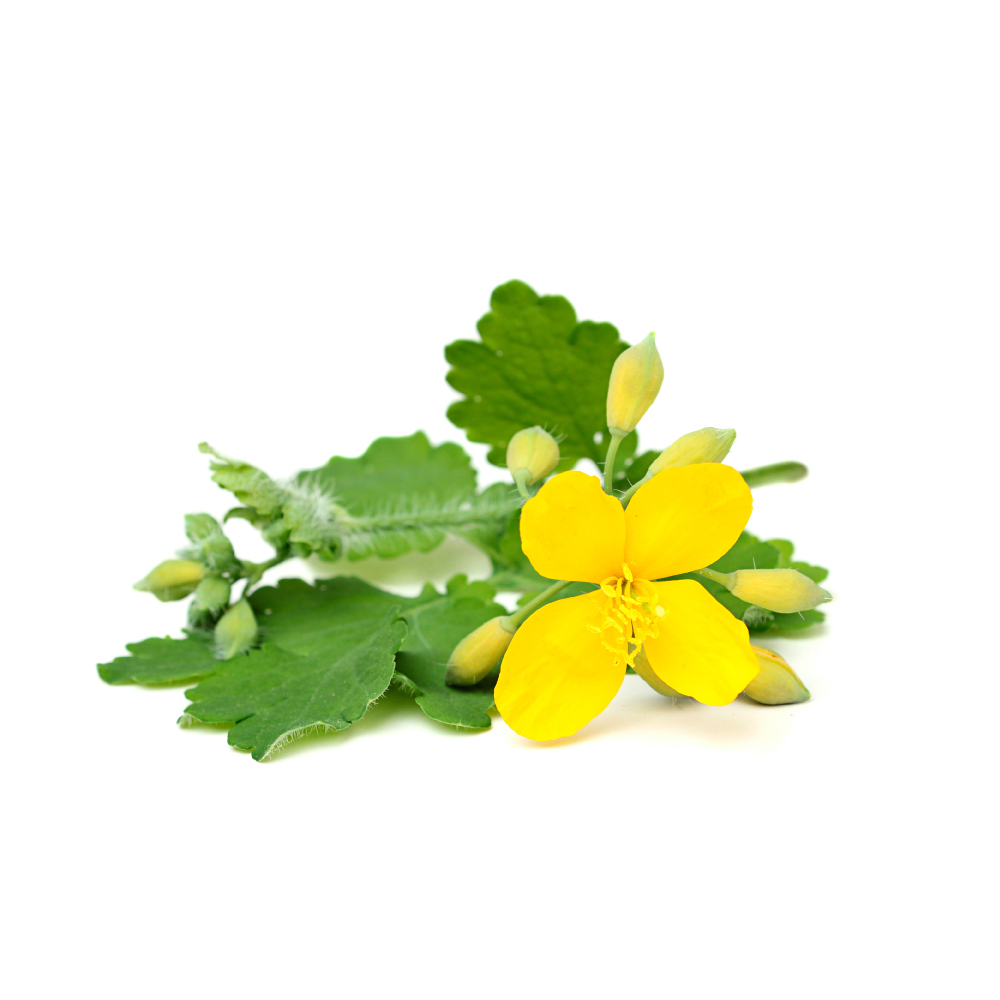
Chelidonine is a naturally occurring benzophenanthridine alkaloid (tertiary, non-quaternary isoquinoline), found in Greater celandine. It is flagged as moderately toxic.
Concentration
Content by Source
Reported concentrations across the plants that contain chelidonine — the bar marks the typical level, the line shows the reported range.
Literature figures for varying plant parts and preparations. Read them as a comparative guide, not exact assays.
Chelidonine at a Glance
Chelidonine is the principal alkaloid of greater celandine (Chelidonium majus) and the molecule the plant is named for. Structurally it is a benzophenanthridine, like sanguinarine and chelerythrine — but unlike those two it is a tertiary, uncharged alkaloid rather than a quaternary iminium salt, and that single difference drives most of what makes its pharmacology and its toxicology different from theirs.
Its clearest, best-replicated activity is antimitotic. Chelidonine binds tubulin, inhibits its polymerisation, collapses the microtubule network in living cells and arrests them in G2/M — a spindle-poison mechanism confirmed independently in purified-tubulin assays, in cancer cell lines and in whole animals 1,
The two things most often said about chelidonine, however, are the two that need the most care. It is repeatedly described as hepatoprotective on the strength of rodent studies 7,
Chelidonine as a Mitotic Inhibitor
This is the section only chelidonine needs, and it is the one mechanism where the evidence is unambiguous. Chelidonine is a genuine spindle poison — not a vague “anticancer natural product,” but a tubulin-binding antimitotic with a defined binding behaviour and a reproducible cellular endpoint.
It binds tubulin at (or near) the colchicine site. In purified rat-brain tubulin, chelidonine, sanguinarine and chelerythrine all inhibit taxol-mediated polymerisation in the micromolar range, but they do it differently: chelidonine is a weak, competitive inhibitor of colchicine binding and does not inhibit podophyllotoxin binding, whereas sanguinarine and chelerythrine inhibit both, by mixed-type kinetics 2Reference 2In vitroAntimicrotubule properties of benzophenanthridine alkaloids — in vitroView study →. The authors made the mechanistic point explicitly — sanguinarine forms an acid-reversible pseudobase adduct with tubulin through its iminium ion, and chelidonine cannot form that adduct at all, so it must act by a different mechanism 2Reference 2In vitroAntimicrotubule properties of benzophenanthridine alkaloids — in vitroView study →. That is the molecular reason chelidonine is not simply “a weaker sanguinarine.”
The potency figures, from two independent labs:
| Assay | Finding |
|---|---|
| Tubulin polymerisation (cell-free) | IC50 24 µM 1Reference 1In vitroThe effects of chelidonine on tubulin polymerisation, cell cycle progression and selected signal transmission pathways — in vitroView study → |
| Tubulin polymerisation (cell-free, +MAPs) | IC50 34.5 ± 9.5 µM 3Reference 3In vitroThe interference of selected cytotoxic alkaloids with the cytoskeleton: an insight into their modes of action — in vitroView study → |
| G2/M arrest in HeLa cells | 88.3% of cells in G2/M at just 2.5 µM 3Reference 3In vitroThe interference of selected cytotoxic alkaloids with the cytoskeleton: an insight into their modes of action — in vitroView study → |
| Microtubule network in living cells | Depolymerised (HeLa, U2OS); actin-filament mass also reduced 3Reference 3In vitroThe interference of selected cytotoxic alkaloids with the cytoskeleton: an insight into their modes of action — in vitroView study → |
The gap between those two numbers is the interesting part. Chelidonine needs tens of micromolar to visibly slow tubulin in a test tube but arrests almost a whole cell population at 2.5 µM — a far stronger cellular effect than sanguinarine or chelerythrine achieved, neither of which arrested the cell cycle at all in the same experiment despite inhibiting tubulin polymerisation more potently 3Reference 3In vitroThe interference of selected cytotoxic alkaloids with the cytoskeleton: an insight into their modes of action — in vitroView study →. Whatever the reason (intracellular accumulation, a different tubulin isotype preference), chelidonine is the cell-cycle-arresting member of the trio, and its relatives are the generally cytotoxic ones.
The arrest is real and it happens in whole organisms. In leukemic T-cell lines and A549 lung carcinoma, chelidonine produced G2/M arrest, Chk1/Chk2 activation, loss of mitochondrial membrane potential and caspase-3/7/8/9 activation, with fluorescence microscopy confirming inhibited tubulin polymerisation inside the cells 5Reference 5In vitroComparative cytotoxicity of chelidonine and homochelidonine, the dimethoxy analogues isolated from Chelidonium majus L., against human leukemic and lung carcinoma cells — in vitroView study →. In planarian flatworms — chosen because they are a live readout of pluripotent stem-cell dynamics — chelidonine dose-dependently suppressed stem-cell proliferation, produced mitotic abnormalities, and significantly reduced the number of cells able to progress from metaphase to anaphase/telophase 4Reference 4AnimalThe in vivo effect of chelidonine on the stem cell system of planarians — in vivoView study →. That is a textbook antimitotic phenotype, observed in vivo.
What it is not. Panzer and colleagues, testing chelidonine across two normal, two transformed and two malignant cell lines, found it a weak growth inhibitor with no evidence of selective toxicity for malignant cells 1Reference 1In vitroThe effects of chelidonine on tubulin polymerisation, cell cycle progression and selected signal transmission pathways — in vitroView study →. A spindle poison that does not discriminate between normal and cancerous dividing cells is a toxicology finding as much as a therapeutic one — and it is the honest frame for the “chelidonine kills cancer cells” literature. Its G2/M arrest also runs with activation of the SAPK/JNK stress pathway in every line tested 1Reference 1In vitroThe effects of chelidonine on tubulin polymerisation, cell cycle progression and selected signal transmission pathways — in vitroView study →.
The Hepatoprotective–Hepatotoxic Paradox
This is the safety-critical part of the page, and it cannot be resolved by picking the flattering half. Two bodies of evidence point in opposite directions, and both are real.
What the rodent studies show. Chelidonine, especially as a PLGA nanoformulation, protected mouse liver against cadmium-induced injury: it lowered lipid peroxidation, restored glutathione, SOD, catalase and glutathione reductase, normalised ALT/AST/ALP and improved liver histology 7Reference 7AnimalPoly(lactide-co-glycolide) nano-encapsulation of chelidonine, an active bioingredient of greater celandine, enhances its ameliorative potential against cadmium-induced oxidative stress and hepatic injury in mice — animalView study →. A whole-plant C. majus ethanolic extract reduced chemically induced hepatocarcinogenesis in mice across cytogenetic, biochemical and histological endpoints 8Reference 8AnimalEfficacy of a plant extract (Chelidonium majus L.) in combating induced hepatocarcinogenesis in mice — animalView study →. Read alone, this is a coherent antioxidant/hepatoprotective story.
What the human record shows. Greater celandine is a documented cause of idiosyncratic, hepatocellular herb-induced liver injury — causality-assessed case series and reviews describe jaundice with transaminases often above 1,000 IU/L, female predominance, latency of roughly 4–8 weeks and recovery on withdrawal 27,
These are not the same statement about the same substance, and here is why that matters.
- The clinical injury is reported for the herb, not the isolate. There is no case series of chelidonine-induced hepatitis. Every published case involves a Chelidonium preparation — capsules, extracts, tea — of unstated and highly variable alkaloid composition 27,
28, .29Reference 27Case reportHerbal hepatotoxicity by greater celandine (Chelidonium majus): causality assessment of 22 spontaneous reports — case seriesView study →Reference 28ReviewHepatotoxicity induced by greater celandine (Chelidonium majus L.): a review of the literature — reviewView study →Reference 29Case reportA hidden cause of hypertransaminasemia: liver toxicity caused by Chelidonium majus L. — report of two cases of herb-induced liver injury and literature review; case seriesView study → - When the alkaloids are ranked head-to-head, chelidonine is near the bottom. In cultured rat hepatocytes the cationic congeners were the toxic ones: rank order coptisine > chelerythrine > sanguinarine > chelidonine > protopine > dihydrosanguinarine, with the cationic three at EC20 values ≤2 µM and the neutral ones — chelidonine among them — markedly less toxic 9Reference 9In vitroCharacterization of the cytotoxicity of selected Chelidonium alkaloids in rat hepatocytes — in vitroView study →. Lipophilicity analysis pinned the difference on the charged, polar congeners.
- A second, independent method reached the same verdict. Screening which C. majus alkaloids actually accumulate inside human HL-7702 liver cells, and pairing that with viability, identified sanguinarine, coptisine and chelerythrine — not chelidonine — as the main hepatotoxic constituents 10Reference 10In vitroIntracellular accumulation as an indicator of cytotoxicity to screen hepatotoxic components of Chelidonium majus L. by LC-MS/MS — in vitroView study →.
- Chelidonine is also the non-genotoxic one. In a direct comparison, sanguinarine and chelerythrine produced dose-dependent DNA damage in primary mouse spleen cells and leukemic cells, while chelidonine did not damage DNA 11Reference 11In vitroDifferential effect of sanguinarine, chelerythrine and chelidonine on DNA damage and cell viability in primary mouse spleen cells and mouse leukemic cells — in vitroView study →.
- But “less toxic than sanguinarine” is not “safe.” Chelidonine is cytotoxic to hepatocytes at higher exposures 9Reference 9In vitroCharacterization of the cytotoxicity of selected Chelidonium alkaloids in rat hepatocytes — in vitroView study →, it is directly cytotoxic to HepG2 liver cells 6Reference 6In vitroCytotoxicity and apoptotic signalling cascade induced by chelidonine-loaded PLGA nanoparticles in HepG2 cells in vitro and bioavailability of nano-chelidonine in mice in vivo — in vitro/animalView study →, and it is metabolically activated in the liver — human liver microsomes and rat bile both yield catechol and dicatechol metabolites that go on to form five glutathione conjugates, evidence of bioactivation to reactive ortho-quinones, via CYP3A4, 1A2, 2C19 and 2D6 12Reference 12In vitroIn vitro and in vivo studies of the metabolic activation of chelidonine — in vitro/animalView study →. Reactive-metabolite formation is exactly the kind of mechanism that underlies idiosyncratic, non-dose-dependent liver injury.
Where that leaves the tension. The most defensible reading is that hepatoprotective and hepatotoxic describe different exposures rather than contradicting each other: at low exposures in a toxin-challenged rodent, chelidonine’s antioxidant and anti-inflammatory effects dominate 7Reference 7AnimalPoly(lactide-co-glycolide) nano-encapsulation of chelidonine, an active bioingredient of greater celandine, enhances its ameliorative potential against cadmium-induced oxidative stress and hepatic injury in mice — animalView study →; at higher exposures the same molecule kills hepatocytes 9Reference 9In vitroCharacterization of the cytotoxicity of selected Chelidonium alkaloids in rat hepatocytes — in vitroView study → and generates reactive metabolites in human liver enzymes 12Reference 12In vitroIn vitro and in vivo studies of the metabolic activation of chelidonine — in vitro/animalView study →. Meanwhile the human injury signal is a herb-level phenomenon that the isolate-level data assign mainly to chelidonine’s cationic co-alkaloids 9,
Two further facts belong here. Whole C. majus was not hepatotoxic in a 4-week Wistar-rat feeding study 31Reference 31AnimalChelidonium majus is not hepatotoxic in Wistar rats, in a 4-week feeding experiment — animalView study → — which is precisely why the human injury is read as idiosyncratic rather than as simple dose-dependent toxicity, and why animal safety data give no reassurance. And the toxicological comparison itself found that reported liver alkaloid levels in experimental animals were too low to reach the cytotoxic concentrations, probably because of very poor oral availability 9Reference 9In vitroCharacterization of the cytotoxicity of selected Chelidonium alkaloids in rat hepatocytes — in vitroView study → — an important caveat that cuts against reading any in-vitro EC20 as a human risk threshold. The EU has nonetheless set a safe oral limit of no more than 2.5 mg total C. majus alkaloids per day 9Reference 9In vitroCharacterization of the cytotoxicity of selected Chelidonium alkaloids in rat hepatocytes — in vitroView study →.
⚠️ Practical bottom line: “chelidonine is hepatoprotective in mice” is a true sentence that must never be used to imply greater celandine is liver-safe. The herb’s documented risk stands regardless of what its principal alkaloid does in a cadmium model.
The Ukrain Story
Ukrain (NSC-631570) is the reason many people have heard of chelidonine at all. It was marketed from the 1970s onward as a semi-synthetic thiophosphoric-acid derivative of chelidonine — specifically, a tris-aziridide conjugate claimed to be selectively toxic to malignant cells while sparing normal ones. It is worth stating its evidential position plainly, because the promotional literature around it is large.
The composition claim does not survive analysis. When Ukrain was subjected to TLC and LC-MS/MS and compared against a plain C. majus root alkaloid extract, what was found was a mixture of the plant’s own alkaloids — chelidonine, sanguinarine, chelerythrine, protopine, allocryptopine, homochelidonine, berberine and coptisine, plus stylopine, norchelidonine, dihydrochelidonine and hydroberberine reported for the first time 23Reference 23In vitroInvestigation of the composition and antibacterial activity of Ukrain™ drug using liquid chromatography techniques — in vitroView study →. Two decades earlier, researchers working on chelidonine had already noted that they came to the molecule because chelidonine is a major contaminant of Ukrain 1Reference 1In vitroThe effects of chelidonine on tubulin polymerisation, cell cycle progression and selected signal transmission pathways — in vitroView study →. The honest description is: a Chelidonium alkaloid preparation whose claimed single-entity thiophosphoric structure is not what the analytical chemistry shows.
The clinical evidence. A systematic review of the randomised trials found seven RCTs, all reporting curative effects across a range of cancers — and judged the methodological quality of most of them poor, with the interpretation of several further impeded by other problems; the conclusion was that “numerous caveats prevent a positive conclusion, and independent rigorous studies are urgently needed” 24Reference 24Systematic reviewUkrain — a new cancer cure? A systematic review of randomised clinical trialsView study →. The most-cited individual result, a phase II randomised trial in unresectable pancreatic cancer, reported a survival advantage for Ukrain with or without gemcitabine 25Reference 25RCTNSC-631570 (Ukrain) in the palliative treatment of pancreatic cancer: results of a phase II randomised clinical trialView study →. No independent replication followed, and the product has never been approved as a medicine in any major regulator’s market 32,
A note on retractions. As of July 2026 no Ukrain trial indexed in PubMed carries a retraction notice or an expression of concern. The problem with this literature is not formal retraction — it is that the trials are small, methodologically weak, overwhelmingly from a narrow group of investigators, and never independently reproduced 24Reference 24Systematic reviewUkrain — a new cancer cure? A systematic review of randomised clinical trialsView study →.
The one head-to-head result is not flattering. In a highly metastatic murine pancreatic model, a defatted C. majus extract at 1.2 mg/kg significantly reduced metastasis counts, while Ukrain at 3.6 mg/kg did not 26Reference 26In vitroIn vitro and in vivo investigations on the antitumour activity of Chelidonium majus — in vitro/animalView study →. Whatever activity the preparation has, it did not outperform the plain plant extract in that experiment.
What this means for the compound page. Ukrain data are not chelidonine data and are not greater celandine data. They belong to a proprietary preparation of uncertain composition and should not be imported into either — a point the herb-side extraction notes for this plant make explicitly.
What It's Used For
Chelidonine’s evidence base is entirely preclinical: purified-enzyme, cell-line, ex-vivo tissue and rodent work on the isolated alkaloid, plus a large body of whole-plant research where its specific contribution is inferred rather than measured. There are no human efficacy trials of chelidonine.
Support is an experimental score — weighted by study type (human > animal > in vitro) and volume. A beta, not a validated metric. Chelidonine has no human efficacy trials, so every score is capped low and reflects preclinical mechanism only. Each application links down to its write-up.
The isolated alkaloid. Chelidonine inhibits tubulin polymerisation (IC50 24 µM 1Reference 1In vitroThe effects of chelidonine on tubulin polymerisation, cell cycle progression and selected signal transmission pathways — in vitroView study →; 34.5 µM with MAPs 3Reference 3In vitroThe interference of selected cytotoxic alkaloids with the cytoskeleton: an insight into their modes of action — in vitroView study →) as a weak competitive inhibitor of colchicine binding that does not touch the podophyllotoxin site 2Reference 2In vitroAntimicrotubule properties of benzophenanthridine alkaloids — in vitroView study →, depolymerises the microtubule network of living HeLa and U2OS cells, and arrests 88.3% of HeLa cells in G2/M at 2.5 µM 3Reference 3In vitroThe interference of selected cytotoxic alkaloids with the cytoskeleton: an insight into their modes of action — in vitroView study →.
In MOLT-4, Jurkat and A549 lines it produced G2/M arrest, Chk1/Chk2 activation, phosphatidylserine exposure, loss of mitochondrial membrane potential and caspase-3/7/8/9 activation 5Reference 5In vitroComparative cytotoxicity of chelidonine and homochelidonine, the dimethoxy analogues isolated from Chelidonium majus L., against human leukemic and lung carcinoma cells — in vitroView study →; in HepG2 cells it blocked the cycle at G2/M with p53, Bax/Bcl-2, cytochrome c, Apaf-1 and caspase changes to match 6Reference 6In vitroCytotoxicity and apoptotic signalling cascade induced by chelidonine-loaded PLGA nanoparticles in HepG2 cells in vitro and bioavailability of nano-chelidonine in mice in vivo — in vitro/animalView study →.
In vivo, in planarians, it suppressed stem-cell proliferation dose-dependently and produced mitotic abnormalities with fewer cells reaching anaphase/telophase 4Reference 4AnimalThe in vivo effect of chelidonine on the stem cell system of planarians — in vivoView study →.
Testing across normal, transformed and malignant lines, however, found it a weak growth inhibitor with no selective toxicity for malignant cells 1Reference 1In vitroThe effects of chelidonine on tubulin polymerisation, cell cycle progression and selected signal transmission pathways — in vitroView study →.
Gap: no tumour-bearing animal efficacy study of isolated chelidonine and no human data; the mechanism is a general antimitotic one that hits normal dividing tissue equally 1Reference 1In vitroThe effects of chelidonine on tubulin polymerisation, cell cycle progression and selected signal transmission pathways — in vitroView study →, and the “human” anticancer literature for this chemistry belongs to Ukrain, not to chelidonine 23,
The isolated alkaloid, with unusually good in-vivo coverage for this molecule. In RAW264.7 macrophages chelidonine suppressed LPS-induced NO and PGE2, iNOS and COX-2 expression, and TNF-α and IL-6; it blocked IκBα degradation and p65 nuclear translocation and reduced LPS-induced TLR4 expression — and in LPS-stimulated mice it lowered serum TNF-α, IL-6 and PGE2 17Reference 17In vitroChelidonine suppresses LPS-induced production of inflammatory mediators through inhibition of the TLR4/NF-κB signaling pathway in RAW264.7 macrophages — in vitro/animalView study →.
In ovalbumin-sensitised asthmatic mice it suppressed airway eosinophilia, eotaxin-2, IL-4, IL-13 and IL-17 with STAT6/Foxp3 modulation 18Reference 18AnimalChelidonine, a principal isoquinoline alkaloid of Chelidonium majus, attenuates eosinophilic airway inflammation by suppressing IL-4 and eotaxin-2 expression in asthmatic mice — animalView study →.
In IL-1β-stimulated chondrocytes and a rat osteoarthritis model it suppressed catabolic and inflammatory mediators via NF-κB and partially attenuated cartilage degradation 19Reference 19AnimalChelidonine reduces IL-1β-induced inflammation and matrix catabolism in chondrocytes and attenuates cartilage degeneration and synovial inflammation in rats — animalView study →.
Importantly it does not share its relatives’ lipoxygenase mechanism: in the head-to-head assay sanguinarine and chelerythrine were potent non-redox 5-/12-LOX inhibitors while chelidonine was inactive 16Reference 16In vitroBenzophenanthridine alkaloids of Chelidonium majus; IView study →.
Gap: rodent and cell-line only, with no human inflammatory endpoint, no dose-ranging against a standard anti-inflammatory, and no evidence that oral greater celandine delivers enough chelidonine to reach the concentrations used 9,
The isolated alkaloid alongside its parent extracts — one of the few places both were tested side by side. On isolated guinea-pig ileum, chelidonine and protopine showed the classic papaverine-like musculotropic relaxant action against BaCl2-stimulated contraction, where coptisine was inactive; against carbachol- and electric-field-stimulated contractions all three alkaloids were antagonists, chelidonine and protopine behaving as partial non-competitive antagonists, with field-stimulation potency ranking protopine > coptisine > chelidonine. Two defined-content ethanolic C. majus extracts produced 53.5% and 49.0% relaxation at 5 × 10⁻⁴ g/mL 15Reference 15Antispasmodic and relaxant activity of chelidonine, protopine, coptisine, and Chelidonium majus extracts on isolated guinea-pig ileum — ex vivo/animalView study →.
Gap: ex-vivo tissue only, at concentrations far above any plausible plasma level; no human spasmolytic or choleretic trial of the isolate, and in the whole herb chelidonine is only one of several alkaloids sharing the effect 15Reference 15Antispasmodic and relaxant activity of chelidonine, protopine, coptisine, and Chelidonium majus extracts on isolated guinea-pig ileum — ex vivo/animalView study →.
Isolate and plant, in the same direction. Chelidonine — markedly more so as a PLGA nanoformulation — reduced cadmium-induced oxidative stress and hepatic injury in mice, restoring GSH, SOD, catalase and glutathione reductase, normalising ALT/AST/ALP and improving liver histology 7Reference 7AnimalPoly(lactide-co-glycolide) nano-encapsulation of chelidonine, an active bioingredient of greater celandine, enhances its ameliorative potential against cadmium-induced oxidative stress and hepatic injury in mice — animalView study →. A whole-plant C. majus ethanolic extract reduced chemically induced hepatocarcinogenesis in mice across cytogenetic, biochemical and histological endpoints 8Reference 8AnimalEfficacy of a plant extract (Chelidonium majus L.) in combating induced hepatocarcinogenesis in mice — animalView study →. This is the finding most often quoted about chelidonine, and it is the one that most needs its context: greater celandine is a documented human cause of acute hepatitis 27,
Gap: two rodent models, one relying on a nanoformulation that deliberately overcomes chelidonine’s poor oral bioavailability 6Reference 6In vitroCytotoxicity and apoptotic signalling cascade induced by chelidonine-loaded PLGA nanoparticles in HepG2 cells in vitro and bioavailability of nano-chelidonine in mice in vivo — in vitro/animalView study →; no human data, and a clinical record for the source herb that points the opposite way. See The Hepatoprotective–Hepatotoxic Paradox — this score must not be read as evidence of liver safety.
The isolated/enriched alkaloid. A chelidonine-enriched C. majus fraction and a chelidonine standard inhibited the plant-pathogenic fungus Botryosphaeria dothidea with EC50 values of 0.43 mg/mL (enriched product) and 0.77 mg/mL (standard), against 3.24 mg/mL for the crude extract 21Reference 21In vitroEnrichment of chelidonine from Chelidonium majus L. using macroporous resin and its antifungal activity — in vitroView study →.
In direct bioautography against Bacillus subtilis, chelidonine was one of four C. majus alkaloids with antibacterial activity, alongside sanguinarine, α-homochelidonine and chelerythrine 23Reference 23In vitroInvestigation of the composition and antibacterial activity of Ukrain™ drug using liquid chromatography techniques — in vitroView study →.
Across the wider greater-celandine antimicrobial literature, the potent actors are consistently the quaternary benzophenanthridines, not chelidonine.
Gap: milligram-per-millilitre potencies against a plant pathogen are agricultural, not therapeutic, figures; no MIC against a human pathogen for isolated chelidonine, no in-vivo infection model, and no clinical data 21,
Chelidonine is routinely described in the pharmacology literature as an analgesic constituent of greater celandine — one paper simply asserts it “has widely been used as an analgesic in clinical settings” 13Reference 13In vitroMechanism-based inactivation of cytochrome P450 2D6 by chelidonine — in vitroView study → — but that reputation is traditional attribution, not measured effect. The one dedicated study of chelidonine’s CNS activity synthesised eleven O-acyl and O-alkyl derivatives and tested them in mice: three derivatives produced antinociceptive and antiserotoninergic effects that were explicitly “not recorded for the parent alkaloid” 20Reference 20Synthesis and biological activity of O-acyl and O-alkyl chelidonine derivatives — animalView study →.
The herb-level analgesic rationale rests on ex-vivo modulation of glycine, glutamate and GABA currents by Chelidonii herba extracts, which are not isolate data.
Gap: no positive antinociception result for chelidonine itself in any model identified here, and no human analgesic data at all. Treat the analgesic label as an unverified inheritance from the whole herb 20Reference 20Synthesis and biological activity of O-acyl and O-alkyl chelidonine derivatives — animalView study →.
Mechanisms
| Target / pathway | Effect | Relevant to |
|---|---|---|
| Tubulin (colchicine site, competitive) | inhibits polymerisation (IC50 24–34.5 µM cell-free); cannot form the iminium pseudobase adduct its quaternary relatives do | antimitotic; cytoskeletal disruption |
| Microtubule network / mitotic spindle | depolymerisation in living cells; abnormal metaphase; block of metaphase→anaphase transition | G2/M arrestantiproliferative |
| Cell-cycle machinery (cyclin B1, cdc2, Chk1/Chk2) | G2/M accumulation with raised cyclin B1 and enhanced cdc2 kinase activity | antimitotic; apoptosis induction |
| SAPK/JNK stress pathway | activated in every cell line tested | stress response accompanying arrest |
| TLR4 → IκBα/NF-κB p65 | suppressed; ↓iNOS, COX-2, NO, PGE2, TNF-α, IL-6 | anti-inflammatory |
| STAT6 / Foxp3, eotaxin-2, IL-4/IL-13/IL-17 | suppressed Th2 airway inflammation | allergic-airway model |
| Intrinsic apoptosis (Bax/Bcl-2, cytochrome c, Apaf-1, caspase-9/3) | activated downstream of arrest | cytotoxicity |
| Smooth-muscle contractile machinery | papaverine-like musculotropic relaxation; partial non-competitive antagonism of carbachol/field-stimulated contraction | spasmolytic |
| CYP2D6 | mechanism-based (irreversible) inactivation — KI 20.49 µM, kinact 11.05 min⁻¹ | drug interactions |
| CYP3A4 / 1A2 / 2C19 / 2D6 (as activators) | bioactivate chelidonine to catechol → ortho-quinone reactive metabolites, trapped as GSH conjugates | hepatic reactive-metabolite risk |
| 5-/12-Lipoxygenase | not inhibited — a negative result that separates chelidonine from sanguinarine and chelerythrine | mechanism boundary |
| DNA | no dose-dependent damage, unlike sanguinarine and chelerythrine | genotoxicity boundary |
The load-bearing point: chelidonine’s mechanism set is a tubulin/NF-κB one. The DNA-intercalating, iminium-driven reactivity that defines sanguinarine and chelerythrine is absent here — chelidonine is uncharged and cannot form the pseudobase adduct at all 2,
Pharmacokinetics
There is no human pharmacokinetic dataset for chelidonine, and the animal picture is dominated by one finding: oral bioavailability is poor. Investigators developing a nanoformulation stated the problem plainly — “poor oral bioavailability of chelidonine … makes its optimal use rather limited” — and demonstrated that PLGA encapsulation produced higher systemic availability, better tissue distribution and, unlike free chelidonine, penetration into brain tissue; free chelidonine did not 6Reference 6In vitroCytotoxicity and apoptotic signalling cascade induced by chelidonine-loaded PLGA nanoparticles in HepG2 cells in vitro and bioavailability of nano-chelidonine in mice in vivo — in vitro/animalView study →. A validated LC-MS/MS method quantifying chelidonine alongside protopine, coptisine, sanguinarine and chelerythrine in rat plasma after intragastric C. majus extract confirms that the alkaloid is absorbed and measurable, but at nanogram-per-millilitre sensitivity (LLOQ 0.197–1.27 ng/mL) 14Reference 14AnimalA sensitive and selective LC-MS/MS method for simultaneous determination of five isoquinoline alkaloids from Chelidonium majus L. in rat plasma and its application to a pharmacokinetic study — animalView study →.
The toxicological consequence is important and works in the reader’s favour: comparing cytotoxic concentrations against reported liver alkaloid levels in dosed animals, one group concluded the achieved liver levels were too low to cause hepatotoxicity, probably because of extremely low oral availability of certain C. majus alkaloids 9Reference 9In vitroCharacterization of the cytotoxicity of selected Chelidonium alkaloids in rat hepatocytes — in vitroView study →. Practical reading: the micromolar potencies quoted throughout are in-vitro concentrations that oral greater celandine is unlikely to reach systemically — which cuts against both the therapeutic claims and the direct-toxicity claims made for the isolate.
Metabolically, chelidonine is oxidised by CYP3A4, 1A2, 2C19 and 2D6 to two catechol isomers and a dicatechol, all three of which form glutathione conjugates — the signature of bioactivation to electrophilic ortho-quinones, confirmed in both human liver microsomes and rat bile 12Reference 12In vitroIn vitro and in vivo studies of the metabolic activation of chelidonine — in vitro/animalView study →. No half-life, Cmax or absolute bioavailability figure for isolated chelidonine in humans was identified.
Clinical Trials
There are no clinical trials of chelidonine as an isolated compound. The human trial literature adjacent to this molecule belongs to Ukrain (NSC-631570), a Chelidonium alkaloid preparation of disputed composition whose randomised trials were judged methodologically poor and never independently replicated 23,
| Completed | Planned | Terminated | Preclinical |
|---|---|---|---|
| 0(isolate) | 0 | Ukrain programme never independently replicated | Extensive(tubulin, NF-κB, spasmolytic, hepatic) |
Last checked: July 2026.
Isolate vs. Plant Studies
Chelidonine sits at an unusual point on this axis: the mechanistic literature is almost all isolate work, while the human record is entirely plant-level — and the two do not meet.
Isolate side. Every tubulin, cell-cycle, CYP and reactive-metabolite result above used purified chelidonine 1,
Plant side. The hepatocarcinogenesis protection 8Reference 8AnimalEfficacy of a plant extract (Chelidonium majus L.) in combating induced hepatocarcinogenesis in mice — animalView study →, the choleretic and antimicrobial traditions, and — critically — all of the human liver-injury cases 27,
The transfer caveat that matters most here is compositional. Greater celandine’s alkaloid profile is not stable. Total alkaloids run roughly 0.27–2.25% in aerial parts and 3–4% in root 33Reference 33ReviewAlkaloids in Chelidonium majus L: a review of its phytochemistry, pharmacology and toxicology — reviewView study →, root and latex are far richer than the herb, and the benzophenanthridines together make up on the order of a fifth of fresh latex 36Reference 36ReviewChelidonium majus — an integrative review: traditional knowledge versus modern findings; reviewView study →. Cultivation itself shifts the profile: in one controlled comparison, wild-grown plants were coptisine-dominant while cultivated plants of the same population became chelidonine-dominant, with higher total alkaloid content and higher cytotoxicity 35Reference 35In vitroThe cultivation of Chelidonium majus L. increased the total alkaloid content and cytotoxic activity compared with those of wild-grown plants — in vitroView study →. A “greater celandine” product can therefore deliver very different chelidonine exposures depending on part, provenance and growing conditions — which is one reason herb-level findings and molecule-level findings should not be swapped for each other.
Prevalence in Nature
Chelidonine is best understood as a marker alkaloid of greater celandine (Chelidonium majus, Papaveraceae). Unlike sanguinarine and chelerythrine — which are widespread across the poppy and rue families and are commercially extracted from bloodroot and Macleaya — chelidonine is not a broadly distributed phytochemical, and no confirmed occurrence in another genus was established.
Within the plant it follows the family’s laticifer pattern: root and latex are far richer than aerial parts, and total alkaloid content runs roughly 0.27–2.25% of aerial parts and 3–4% of root 33Reference 33ReviewAlkaloids in Chelidonium majus L: a review of its phytochemistry, pharmacology and toxicology — reviewView study →. In the one quantified measurement available here, chelidonine was ~1.75 mg/g of a 25% ethanol aerial-part extract — the second most abundant alkaloid measured, behind coptisine (~6.42 mg/g) and well ahead of sanguinarine (~0.22), berberine (~0.11) and chelerythrine (~0.06) 22Reference 22In vitroEffects of Chelidonium majus extracts and major alkaloids on hERG potassium channels and on dog cardiac action potential — a safety approach; in vitro/animalView study →. The bright yellow latex is the alkaloid-densest tissue, with the benzophenanthridines plus coptisine reaching around a fifth of fresh latex 36Reference 36ReviewChelidonium majus — an integrative review: traditional knowledge versus modern findings; reviewView study →.
It travels with a small family of close congeners in the same plant — homochelidonine (its dimethoxy analogue, which shares its tubulin-inhibiting and G2/M-arresting behaviour but is generally weaker) 5Reference 5In vitroComparative cytotoxicity of chelidonine and homochelidonine, the dimethoxy analogues isolated from Chelidonium majus L., against human leukemic and lung carcinoma cells — in vitroView study →, norchelidonine and dihydrochelidonine 23Reference 23In vitroInvestigation of the composition and antibacterial activity of Ukrain™ drug using liquid chromatography techniques — in vitroView study → — plus the co-occurring sanguinarine, chelerythrine, coptisine, berberine, protopine, allocryptopine and stylopine.
Absolute content is genuinely variable: it shifts several-fold with plant part, ecotype and season, and — as noted above — cultivation can flip which alkaloid dominates the extract entirely 35Reference 35In vitroThe cultivation of Chelidonium majus L. increased the total alkaloid content and cytotoxic activity compared with those of wild-grown plants — in vitroView study →.
Discovery & Synthesis
Chelidonine is one of the earliest plant alkaloids to be described, isolated from Chelidonium majus and named “chélidonine” in the 1820s, in the first generation of alkaloid chemistry that followed morphine — though sources differ on whether that first preparation was pure chelidonine or an alkaloid fraction, with pure material often credited to work in 1839. Reviews of the plant note simply that its major pharmacologically relevant alkaloids “were first isolated over a century ago” 34Reference 34ReviewGreater celandine’s ups and downs — 21 centuries of medicinal uses of Chelidonium majus from the viewpoint of today’s pharmacology; reviewView study →. The name traces the plant’s own: Greek chelidṓn, the swallow, from the ancient association between the plant’s flowering and the birds’ return 34Reference 34ReviewGreater celandine’s ups and downs — 21 centuries of medicinal uses of Chelidonium majus from the viewpoint of today’s pharmacology; reviewView study →.
First total synthesis. Oppolzer and Keller published the total synthesis of dl-chelidonine in 1971 37Reference 37Total synthesis of dl-chelidonineView study →, later refining it into a highly stereoselective intramolecular o-quinodimethane/nitrostyrene cycloaddition route. Chelidonine has remained an attractive synthetic target for its fused hexahydrobenzo[c]phenanthridine core: a concise enantioselective route to (+)-chelidonine alongside (+)-homochelidonine, (+)-chelamidine, (+)-chelamine and (+)-norchelidonine was reported in 2008 via a Pd(II)-catalysed ring-forming step 39Reference 39Concise enantioselective total syntheses of (+)-homochelidonine, (+)-chelamidine, (+)-chelidonine, (+)-chelamine and (+)-norchelidonine by a Pd(II)-catalysed ring-forming reactionView study →, and a further total synthesis of chelidonine and norchelidonine using an enamide–benzyne [2+2] cycloaddition cascade in 2012 38Reference 38Total syntheses of chelidonine and norchelidonine via an enamide-benzyne-[2+2] cycloaddition cascadeView study →.
Manufacture today is extraction from Chelidonium majus, not synthesis — the syntheses are academic demonstrations rather than production routes. Practical enrichment uses macroporous adsorption resin: D101 resin raised chelidonine content from 2.67% to 37.81% of the extract, a 14-fold enrichment at ~81% recovery, which is the kind of low-cost process actually used to obtain gram quantities 21Reference 21In vitroEnrichment of chelidonine from Chelidonium majus L. using macroporous resin and its antifungal activity — in vitroView study →. Reagent- and reference-grade chelidonine is sold as the free base or hydrochloride.
Patents: not yet researched.
Toxicity & Safety
Chelidonine carries a [moderate] flag. That is a deliberate middle call and it deserves its reasoning stated openly.
Why not “low”: it is a genuine spindle poison with no selectivity for malignant over normal dividing cells 1Reference 1In vitroThe effects of chelidonine on tubulin polymerisation, cell cycle progression and selected signal transmission pathways — in vitroView study →, demonstrated in vivo to suppress proliferating stem cells and produce mitotic abnormalities 4Reference 4AnimalThe in vivo effect of chelidonine on the stem cell system of planarians — in vivoView study →; it is bioactivated by human liver enzymes to reactive ortho-quinones 12Reference 12In vitroIn vitro and in vivo studies of the metabolic activation of chelidonine — in vitro/animalView study →; and it is a mechanism-based (irreversible) inactivator of CYP2D6 13Reference 13In vitroMechanism-based inactivation of cytochrome P450 2D6 by chelidonine — in vitroView study →, a real drug-interaction liability. It is also cytotoxic to hepatocytes at higher exposures 9Reference 9In vitroCharacterization of the cytotoxicity of selected Chelidonium alkaloids in rat hepatocytes — in vitroView study →.
Why not “toxic” or higher: in every head-to-head comparison it is the less dangerous member of its own family. It ranks below coptisine, chelerythrine and sanguinarine for hepatocyte cytotoxicity 9Reference 9In vitroCharacterization of the cytotoxicity of selected Chelidonium alkaloids in rat hepatocytes — in vitroView study →; it was not among the constituents identified as the main hepatotoxic components of C. majus 10Reference 10In vitroIntracellular accumulation as an indicator of cytotoxicity to screen hepatotoxic components of Chelidonium majus L. by LC-MS/MS — in vitroView study →; it does not damage DNA where its quaternary relatives do 11Reference 11In vitroDifferential effect of sanguinarine, chelerythrine and chelidonine on DNA damage and cell viability in primary mouse spleen cells and mouse leukemic cells — in vitroView study →; and it is chemically incapable of the iminium/pseudobase reactivity that drives their cytotoxicity 2Reference 2In vitroAntimicrotubule properties of benzophenanthridine alkaloids — in vitroView study →. There is no case series of chelidonine-induced liver injury — the human cases are for the herb.
- The source herb is a documented cause of acute liver injury. Greater celandine causes idiosyncratic hepatocellular hepatitis — jaundice, transaminases often >1,000 IU/L, latency ~4–8 weeks, recovery on withdrawal — and the EMA/HMPC declined a traditional-use registration on those grounds 27,
28, . This is the single most important fact on the page, and it applies to anything containing chelidonine.29, 30, 32Reference 27Case reportHerbal hepatotoxicity by greater celandine (Chelidonium majus): causality assessment of 22 spontaneous reports — case seriesView study →Reference 28ReviewHepatotoxicity induced by greater celandine (Chelidonium majus L.): a review of the literature — reviewView study →Reference 29Case reportA hidden cause of hypertransaminasemia: liver toxicity caused by Chelidonium majus L. — report of two cases of herb-induced liver injury and literature review; case seriesView study →Reference 30Case reportAcute hepatitis induced by greater celandine (Chelidonium majus) — case reportView study →Reference 32ReviewAssessment report on Chelidonium majus L., herba (EMA/HMPC/369801/2009) — monograph. https://www.ema.europa.eu/en/documents/herbal-report/final-assessment-report-chelidonium-majus-l-herba_en.pdfView study → - Whose toxicity is it? Not clearly chelidonine’s. Two independent isolate-level methods assign the main hepatotoxicity of C. majus to sanguinarine, coptisine and chelerythrine — the cationic alkaloids — with chelidonine ranking lower and causing no DNA damage 9,
10, . That is an argument about attribution, not an all-clear: chelidonine is still cytotoxic to hepatocytes at higher exposures 9Reference 9In vitroCharacterization of the cytotoxicity of selected Chelidonium alkaloids in rat hepatocytes — in vitroView study →.11Reference 9In vitroCharacterization of the cytotoxicity of selected Chelidonium alkaloids in rat hepatocytes — in vitroView study →Reference 10In vitroIntracellular accumulation as an indicator of cytotoxicity to screen hepatotoxic components of Chelidonium majus L. by LC-MS/MS — in vitroView study →Reference 11In vitroDifferential effect of sanguinarine, chelerythrine and chelidonine on DNA damage and cell viability in primary mouse spleen cells and mouse leukemic cells — in vitroView study → - Bioactivated to reactive metabolites in the liver. CYP3A4/1A2/2C19/2D6 convert chelidonine to catechols and ortho-quinones that form glutathione conjugates in human microsomes and rat bile 12Reference 12In vitroIn vitro and in vivo studies of the metabolic activation of chelidonine — in vitro/animalView study → — the classic mechanistic setup for idiosyncratic injury.
- An antimitotic, with everything that implies. Tubulin binding, G2/M arrest and in-vivo suppression of proliferating stem cells 1,
3, , with no selectivity for cancer cells 1Reference 1In vitroThe effects of chelidonine on tubulin polymerisation, cell cycle progression and selected signal transmission pathways — in vitroView study →. Rapidly dividing tissues are the exposed ones.4Reference 1In vitroThe effects of chelidonine on tubulin polymerisation, cell cycle progression and selected signal transmission pathways — in vitroView study →Reference 3In vitroThe interference of selected cytotoxic alkaloids with the cytoskeleton: an insight into their modes of action — in vitroView study →Reference 4AnimalThe in vivo effect of chelidonine on the stem cell system of planarians — in vivoView study → - Irreversible CYP2D6 inactivation — a real interaction signal. Mechanism-based inactivation (KI 20.49 µM, kinact 11.05 min⁻¹; activity not restored by dialysis) means co-administered CYP2D6 substrates could accumulate 13Reference 13In vitroMechanism-based inactivation of cytochrome P450 2D6 by chelidonine — in vitroView study →; CYP3A4, 1A2 and 2C19 are also involved in its metabolism 12Reference 12In vitroIn vitro and in vivo studies of the metabolic activation of chelidonine — in vitro/animalView study →.
- Alkaloid content varies enormously between preparations. Root and latex far exceed aerial parts, total alkaloids run ~0.27–2.25% (aerial) to 3–4% (root), and cultivation can flip a coptisine-dominant extract into a chelidonine-dominant one 33,
35Reference 33ReviewAlkaloids in Chelidonium majus L: a review of its phytochemistry, pharmacology and toxicology — reviewView study →Reference 35In vitroThe cultivation of Chelidonium majus L. increased the total alkaloid content and cytotoxic activity compared with those of wild-grown plants — in vitroView study → . “Greater celandine” is not one exposure. - Cardiac signal for the alkaloid mixture. C. majus extracts and their major alkaloids block hERG potassium channels and prolong the dog cardiac action potential — a QT/arrhythmia caution for concentrated alkaloid exposure 22Reference 22In vitroEffects of Chelidonium majus extracts and major alkaloids on hERG potassium channels and on dog cardiac action potential — a safety approach; in vitro/animalView study →.
- Poor oral bioavailability limits real-world exposure. Free chelidonine is poorly absorbed 6Reference 6In vitroCytotoxicity and apoptotic signalling cascade induced by chelidonine-loaded PLGA nanoparticles in HepG2 cells in vitro and bioavailability of nano-chelidonine in mice in vivo — in vitro/animalView study →, and liver levels achieved in dosed animals were judged too low to reach cytotoxic concentrations 9Reference 9In vitroCharacterization of the cytotoxicity of selected Chelidonium alkaloids in rat hepatocytes — in vitroView study →. This is the main reason the in-vitro numbers should not be read as human risk thresholds — and it undercuts the therapeutic claims equally.
- Not genotoxic in direct comparison. Where sanguinarine and chelerythrine produced dose-dependent DNA damage in primary mouse spleen and leukemic cells, chelidonine did not 11Reference 11In vitroDifferential effect of sanguinarine, chelerythrine and chelidonine on DNA damage and cell viability in primary mouse spleen cells and mouse leukemic cells — in vitroView study →.
Full Safety & Interactions Detail
Hepatic. The full argument is in The Hepatoprotective–Hepatotoxic Paradox above; the short version is that greater celandine’s human liver-injury signal is real, well-documented and reason enough to avoid internal use of the herb 27,
Drug interactions — named enzymes. Chelidonine is a mechanism-based inactivator of CYP2D6: time-, concentration- and NADPH-dependent inhibition with KI 20.49 µM and kinact 11.05 min⁻¹, ~76% of activity lost after 9 minutes at 50 µM, not restored by dialysis, partially restored by ferricyanide oxidation, and attenuated by the competitive inhibitor quinidine 13Reference 13In vitroMechanism-based inactivation of cytochrome P450 2D6 by chelidonine — in vitroView study →. Because CYP2D6 handles a large share of commonly used psychiatric, cardiovascular and analgesic drugs, this is the most concrete interaction signal on the page — though whether oral greater celandine achieves the necessary hepatic concentrations is unestablished 9Reference 9In vitroCharacterization of the cytotoxicity of selected Chelidonium alkaloids in rat hepatocytes — in vitroView study →. CYP3A4, CYP1A2 and CYP2C19 also metabolise (and are inhibited by the reactive metabolites of) chelidonine 12Reference 12In vitroIn vitro and in vivo studies of the metabolic activation of chelidonine — in vitro/animalView study →. No human drug-interaction study exists.
Cardiac. Hydroalcoholic C. majus extracts and their major alkaloids block the hERG (IKr) potassium channel and prolong the cardiac action potential in canine tissue — framed by the authors explicitly as a safety concern rather than a therapeutic mechanism 22Reference 22In vitroEffects of Chelidonium majus extracts and major alkaloids on hERG potassium channels and on dog cardiac action potential — a safety approach; in vitro/animalView study →. This is an alkaloid-mixture finding; caution is warranted with other QT-prolonging agents for any concentrated-alkaloid exposure.
Antimitotic hazard. A tubulin-binding G2/M blocker with no tumour selectivity 1Reference 1In vitroThe effects of chelidonine on tubulin polymerisation, cell cycle progression and selected signal transmission pathways — in vitroView study → and demonstrated in-vivo suppression of proliferating stem cells 4Reference 4AnimalThe in vivo effect of chelidonine on the stem cell system of planarians — in vivoView study → is, by mechanism class, a hazard to rapidly dividing tissue. That mechanism class also underlies developmental toxicity for other spindle poisons.
Reproductive and developmental findings (prose only). No dedicated reproductive- or developmental-toxicity study of isolated chelidonine was identified. What can be stated is mechanistic rather than empirical: chelidonine is a non-selective antimitotic that arrests dividing cells in G2/M and suppresses proliferating stem-cell populations in vivo 1,
Populations and scope note. Pre-existing liver disease is a contraindication for the source herb, not merely a caution, given the injury pattern 27,
Dosage
There is no established or recommended human dose for chelidonine, and none should be inferred. It has never been sold as a stand-alone medicine. Real-world human exposure is indirect — as the principal alkaloid within a greater celandine preparation whose alkaloid content varies several-fold with plant part, provenance and processing 33,
Every figure in the literature is a research concentration or an animal dose:
| Context | Form | Figure studied |
|---|---|---|
| Tubulin polymerisation (cell-free) | Isolated chelidonine | IC50 24 µM 1Reference 1In vitroThe effects of chelidonine on tubulin polymerisation, cell cycle progression and selected signal transmission pathways — in vitroView study →; 34.5 µM with MAPs 3Reference 3In vitroThe interference of selected cytotoxic alkaloids with the cytoskeleton: an insight into their modes of action — in vitroView study → |
| G2/M cell-cycle arrest (HeLa) | Isolated chelidonine | 2.5 µM → 88.3% of cells arrested 3Reference 3In vitroThe interference of selected cytotoxic alkaloids with the cytoskeleton: an insight into their modes of action — in vitroView study → |
| Hepatocyte cytotoxicity (rat, primary) | Isolated chelidonine | Less toxic than the cationic alkaloids (which were EC20 ≤2 µM) 9Reference 9In vitroCharacterization of the cytotoxicity of selected Chelidonium alkaloids in rat hepatocytes — in vitroView study → |
| CYP2D6 inactivation (human microsomes) | Isolated chelidonine | KI 20.49 µM; ~76% activity lost at 50 µM in 9 min 13Reference 13In vitroMechanism-based inactivation of cytochrome P450 2D6 by chelidonine — in vitroView study → |
| Antifungal (Botryosphaeria dothidea) | Chelidonine standard / enriched fraction | EC50 0.77 / 0.43 mg/mL 21Reference 21In vitroEnrichment of chelidonine from Chelidonium majus L. using macroporous resin and its antifungal activity — in vitroView study → |
| Smooth-muscle relaxation (guinea-pig ileum) | Isolated alkaloid + defined extracts | Extracts 50% spasm inhibition at 2.5–5 × 10⁻⁴ g/mL 15Reference 15Antispasmodic and relaxant activity of chelidonine, protopine, coptisine, and Chelidonium majus extracts on isolated guinea-pig ileum — ex vivo/animalView study → |
| Hepatoprotection (mouse, cadmium model) | Nano-encapsulated chelidonine | Animal dosing only; nano-form used specifically to overcome poor oral bioavailability 6, |
| Regulatory ceiling (source herb) | Total C. majus alkaloids, oral | EU safe daily limit ≤ 2.5 mg/day 9Reference 9In vitroCharacterization of the cytotoxicity of selected Chelidonium alkaloids in rat hepatocytes — in vitroView study → |
The single most useful number for a reader is the last one: the EU’s limit applies to total greater celandine alkaloids, not to chelidonine, and exists because of the herb’s liver-injury record 9,
References
- Panzer A, Joubert AM, Bianchi PC, Hamel E, Seegers JC (2001). The effects of chelidonine on tubulin polymerisation, cell cycle progression and selected signal transmission pathways — in vitro. European Journal of Cell Biology. https://pubmed.ncbi.nlm.nih.gov/11211931/
- Wolff J, Knipling L (1993). Antimicrotubule properties of benzophenanthridine alkaloids — in vitro. Biochemistry. https://pubmed.ncbi.nlm.nih.gov/7902132/
- Wang X, Tanaka M, Krstin S, Peixoto HS, Wink M (2016). The interference of selected cytotoxic alkaloids with the cytoskeleton: an insight into their modes of action — in vitro. Molecules. https://pubmed.ncbi.nlm.nih.gov/27420038/
- Isolani ME, Pietra D, Balestrini L, et al. (2012). The in vivo effect of chelidonine on the stem cell system of planarians — in vivo. European Journal of Pharmacology. https://pubmed.ncbi.nlm.nih.gov/22503932/
- Havelek R, Seifrtova M, Kralovec K, et al. (2016). Comparative cytotoxicity of chelidonine and homochelidonine, the dimethoxy analogues isolated from Chelidonium majus L., against human leukemic and lung carcinoma cells — in vitro. Phytomedicine. https://pubmed.ncbi.nlm.nih.gov/26969379/
- Paul A, Das S, Das J, Samadder A, Khuda-Bukhsh AR (2013). Cytotoxicity and apoptotic signalling cascade induced by chelidonine-loaded PLGA nanoparticles in HepG2 cells in vitro and bioavailability of nano-chelidonine in mice in vivo — in vitro/animal. Toxicology Letters. https://pubmed.ncbi.nlm.nih.gov/23850776/
- Paul A, Das J, Das S, Samadder A, Khuda-Bukhsh AR (2013). Poly(lactide-co-glycolide) nano-encapsulation of chelidonine, an active bioingredient of greater celandine, enhances its ameliorative potential against cadmium-induced oxidative stress and hepatic injury in mice — animal. Environmental Toxicology and Pharmacology. https://pubmed.ncbi.nlm.nih.gov/24035924/
- Biswas SJ, Bhattacharjee N, Khuda-Bukhsh AR (2008). Efficacy of a plant extract (Chelidonium majus L.) in combating induced hepatocarcinogenesis in mice — animal. Food and Chemical Toxicology. https://pubmed.ncbi.nlm.nih.gov/18215450/
- Gao L, Schmitz HJ, Merz KH, Schrenk D (2019). Characterization of the cytotoxicity of selected Chelidonium alkaloids in rat hepatocytes — in vitro. Toxicology Letters. https://pubmed.ncbi.nlm.nih.gov/31054355/
- Wu C, Wang X, Xu M, Liu Y, Di X (2019). Intracellular accumulation as an indicator of cytotoxicity to screen hepatotoxic components of Chelidonium majus L. by LC-MS/MS — in vitro. Molecules. https://pubmed.ncbi.nlm.nih.gov/31261913/
- Kaminskyy V, Lin KW, Filyak Y, Stoika R (2008). Differential effect of sanguinarine, chelerythrine and chelidonine on DNA damage and cell viability in primary mouse spleen cells and mouse leukemic cells — in vitro. Cell Biology International. https://pubmed.ncbi.nlm.nih.gov/18029203/
- Liu Y, Peng Y, Zhang Z, Guo X, Ji M, Zheng J (2019). In vitro and in vivo studies of the metabolic activation of chelidonine — in vitro/animal. Chemico-Biological Interactions. https://pubmed.ncbi.nlm.nih.gov/31102647/
- Liu Y, Cui T, Peng Y, Ji M, Zheng J (2019). Mechanism-based inactivation of cytochrome P450 2D6 by chelidonine — in vitro. Journal of Biochemical and Molecular Toxicology. https://pubmed.ncbi.nlm.nih.gov/30368994/
- Zhou Q, Liu Y, Wang X, Di X (2013). A sensitive and selective LC-MS/MS method for simultaneous determination of five isoquinoline alkaloids from Chelidonium majus L. in rat plasma and its application to a pharmacokinetic study — animal. Journal of Mass Spectrometry. https://pubmed.ncbi.nlm.nih.gov/23303754/
- Hiller KO, Ghorbani M, Schilcher H (1998). Antispasmodic and relaxant activity of chelidonine, protopine, coptisine, and Chelidonium majus extracts on isolated guinea-pig ileum — ex vivo/animal. Planta Medica. https://pubmed.ncbi.nlm.nih.gov/9933996/
- Vavrečková C, Gawlik I, Müller K (1996). Benzophenanthridine alkaloids of Chelidonium majus; I. Inhibition of 5- and 12-lipoxygenase by a non-redox mechanism — in vitro. Planta Medica. https://pubmed.ncbi.nlm.nih.gov/9005450/
- Liao W, He X, Yi Z, Xiang W, Ding Y (2018). Chelidonine suppresses LPS-induced production of inflammatory mediators through inhibition of the TLR4/NF-κB signaling pathway in RAW264.7 macrophages — in vitro/animal. Biomedicine & Pharmacotherapy. https://pubmed.ncbi.nlm.nih.gov/30257328/
- Kim SH, Hong JH, Lee YC (2015). Chelidonine, a principal isoquinoline alkaloid of Chelidonium majus, attenuates eosinophilic airway inflammation by suppressing IL-4 and eotaxin-2 expression in asthmatic mice — animal. Pharmacological Reports. https://pubmed.ncbi.nlm.nih.gov/26481537/
- Li M, Zhu Y, Shao J, et al. (2023). Chelidonine reduces IL-1β-induced inflammation and matrix catabolism in chondrocytes and attenuates cartilage degeneration and synovial inflammation in rats — animal. Brazilian Journal of Medical and Biological Research. https://pubmed.ncbi.nlm.nih.gov/37585914/
- Grynkiewicz G, Chojecka-Koryn E, Gadzikowska M, Chodkowska A, Jagiełło-Wójtowicz E (2001). Synthesis and biological activity of O-acyl and O-alkyl chelidonine derivatives — animal. European Journal of Medicinal Chemistry. https://pubmed.ncbi.nlm.nih.gov/11755237/
- Pan J, Yang Y, Zhang R, et al. (2017). Enrichment of chelidonine from Chelidonium majus L. using macroporous resin and its antifungal activity — in vitro. Journal of Chromatography B. https://pubmed.ncbi.nlm.nih.gov/29102247/
- Orvos P, Virág L, Tálosi L, et al. (2015). Effects of Chelidonium majus extracts and major alkaloids on hERG potassium channels and on dog cardiac action potential — a safety approach; in vitro/animal. Fitoterapia. https://pubmed.ncbi.nlm.nih.gov/25481375/
- Jesionek W, Fornal E, Majer-Dziedzic B, Móricz ÁM, Nowicky W, Choma IM (2016). Investigation of the composition and antibacterial activity of Ukrain™ drug using liquid chromatography techniques — in vitro. Journal of Chromatography A. https://pubmed.ncbi.nlm.nih.gov/26718183/
- Ernst E, Schmidt K (2005). Ukrain — a new cancer cure? A systematic review of randomised clinical trials. BMC Cancer. https://pubmed.ncbi.nlm.nih.gov/15992405/
- Gansauge F, Ramadani M, Pressmar J, et al. (2002). NSC-631570 (Ukrain) in the palliative treatment of pancreatic cancer: results of a phase II randomised clinical trial. Langenbeck’s Archives of Surgery. https://pubmed.ncbi.nlm.nih.gov/11914932/
- Capistrano I R, Wouters A, Lardon F, Gravekamp C, Apers S, Pieters L (2015). In vitro and in vivo investigations on the antitumour activity of Chelidonium majus — in vitro/animal. Phytomedicine. https://pubmed.ncbi.nlm.nih.gov/26626193/
- Teschke R, Glass X, Schulze J (2011). Herbal hepatotoxicity by greater celandine (Chelidonium majus): causality assessment of 22 spontaneous reports — case series. Regulatory Toxicology and Pharmacology. https://pubmed.ncbi.nlm.nih.gov/21893153/
- Pantano F, Mannocchi G, Marinelli E, et al. (2017). Hepatotoxicity induced by greater celandine (Chelidonium majus L.): a review of the literature — review. European Review for Medical and Pharmacological Sciences. https://pubmed.ncbi.nlm.nih.gov/28379595/
- Ciornolutchii V, Ismaiel A, Sabo CM, et al. (2024). A hidden cause of hypertransaminasemia: liver toxicity caused by Chelidonium majus L. — report of two cases of herb-induced liver injury and literature review; case series. American Journal of Therapeutics. https://pubmed.ncbi.nlm.nih.gov/38820341/
- Benninger J, Schneider HT, Schuppan D, Kirchner T, Hahn EG (1999). Acute hepatitis induced by greater celandine (Chelidonium majus) — case report. Gastroenterology. https://pubmed.ncbi.nlm.nih.gov/10535888/
- Mazzanti G, Di Sotto A, Franchitto A, et al. (2009). Chelidonium majus is not hepatotoxic in Wistar rats, in a 4-week feeding experiment — animal. Journal of Ethnopharmacology. https://pubmed.ncbi.nlm.nih.gov/19761826/
- European Medicines Agency, Committee on Herbal Medicinal Products (HMPC) (2011). Assessment report on Chelidonium majus L., herba (EMA/HMPC/369801/2009) — monograph. https://www.ema.europa.eu/en/documents/herbal-report/final-assessment-report-chelidonium-majus-l-herba_en.pdf
- Li XL, Sun YP, Wang M, et al. (2024). Alkaloids in Chelidonium majus L: a review of its phytochemistry, pharmacology and toxicology — review. Frontiers in Pharmacology. https://pubmed.ncbi.nlm.nih.gov/39239653/
- Zielińska S, Jezierska-Domaradzka A, Wójciak-Kosior M, Sowa I, Junka A, Matkowski AM (2018). Greater celandine’s ups and downs — 21 centuries of medicinal uses of Chelidonium majus from the viewpoint of today’s pharmacology; review. Frontiers in Pharmacology. https://pubmed.ncbi.nlm.nih.gov/29713277/
- Krizhanovska V, Sile I, Kronberga A, et al. (2021). The cultivation of Chelidonium majus L. increased the total alkaloid content and cytotoxic activity compared with those of wild-grown plants — in vitro. Plants. https://pubmed.ncbi.nlm.nih.gov/34579502/
- Gilca M, Gaman L, Panait E, Stoian I, Atanasiu V (2010). Chelidonium majus — an integrative review: traditional knowledge versus modern findings; review. Forschende Komplementärmedizin. https://pubmed.ncbi.nlm.nih.gov/20980763/
- Oppolzer W, Keller K (1971). Total synthesis of dl-chelidonine. Journal of the American Chemical Society. https://doi.org/10.1021/ja00744a085
- Ma ZX, Feltenberger JB, Hsung RP (2012). Total syntheses of chelidonine and norchelidonine via an enamide-benzyne-[2+2] cycloaddition cascade. Organic Letters. https://pubmed.ncbi.nlm.nih.gov/22575071/
- Fleming MJ, McManus HA, Rudolph A, et al. (2008). Concise enantioselective total syntheses of (+)-homochelidonine, (+)-chelamidine, (+)-chelidonine, (+)-chelamine and (+)-norchelidonine by a Pd(II)-catalysed ring-forming reaction. Chemistry — A European Journal. https://pubmed.ncbi.nlm.nih.gov/18200643/



