
Condition
Low Back Pain
Most low back pain has no structural cause. Scans mislead, cauda equina symptoms are an emergency, and guidelines now put movement ahead of medication.

Low back pain is the single leading cause of years lived with disability worldwide, and most of it has no identifiable structural cause. In roughly 90% of cases the diagnosis is non-specific low back pain — real pain, with no specific pathology that scanning or examination can pin it to.
Presentation
Types & Variants
By duration:
- Acute — under 6 weeks. Most improves substantially within a few weeks regardless of treatment.
- Subacute — 6 to 12 weeks, the window where the risk of chronicity is most modifiable.
- Chronic — beyond 12 weeks. A different problem from acute pain, with central sensitization, deconditioning and psychosocial factors carrying increasing weight.
By cause:
- Non-specific low back pain — around 90%. Pain arising from muscles, ligaments, joints and discs without a clear structural culprit.
- Radicular pain / sciatica — nerve-root compression producing leg-dominant pain in a dermatomal pattern, often with numbness or weakness.
- Spinal stenosis — narrowing of the canal, classically causing leg pain on walking that eases on sitting or leaning forward.
- Specific serious pathology — under 1–2% combined: fracture, malignancy, infection, inflammatory spondyloarthritis, cauda equina syndrome. Rare, and what the red flags screen for.
Overview
General Pathology
The lumbar spine is a stack of vertebrae, intervertebral discs, facet joints, ligaments and deep stabilizing muscles, richly innervated in the outer annulus, facet capsules and ligaments. Pain can arise from any of them, and in most people it is not possible to say which — the structures share innervation, and pain from deep spinal tissue refers poorly.
Imaging misleads more than it helps. A systematic review of 33 studies covering 3,110 asymptomatic people found disc degeneration in 37% of 20-year-olds rising to 96% of 80-year-olds, and disc bulges in 30% at age 20 rising to 84% at 80 9Reference 9Systematic reviewSystematic literature review of imaging features of spinal degeneration in asymptomatic populations — systematic review (33 studies, 3,110 subjects)View study →. The authors concluded that these features are largely part of normal ageing and unassociated with pain.
Someone with back pain who is scanned will almost certainly be told something was found — and that finding is, statistically, as likely to be present in a pain-free person of the same age. Early imaging in the absence of red flags does not improve outcomes and reliably increases anxiety, further investigation and intervention.
In chronic low back pain, the driver shifts. Ongoing pain is maintained less by tissue damage than by central sensitization, fear-avoidance behaviour, deconditioning and sleep disruption — which is why psychological and exercise-based treatments outperform anything aimed at the disc, and why depression, anxiety and fibromyalgia travel with it so often.
Red Flags — When to Get It Checked
Cauda equina syndrome is a surgical emergency, and its signs cannot wait:
- New urinary retention or incontinence, or faecal incontinence
- Numbness in the saddle area — inner thighs, buttocks, genitals
- Weakness or numbness in both legs, or rapidly progressive weakness
Any of these needs emergency assessment the same day; delayed decompression risks permanent bladder, bowel and sexual dysfunction.
Other features warranting prompt (non-emergency) assessment: a history of cancer, unexplained weight loss, fever or recent infection, injection drug use, significant trauma or osteoporosis with minor trauma, long-term corticosteroid use, age of onset under 20 or over 50, pain that is worse at night or unrelieved by rest, and morning stiffness lasting over an hour with gradual onset in a young adult (inflammatory back pain).
Treatment
Conventional Treatment
The guidance changed substantially, and much popular advice has not caught up. The American College of Physicians guideline recommends non-pharmacological treatment first-line for both acute and chronic low back pain: superficial heat, massage, acupuncture or spinal manipulation for acute pain; exercise, multidisciplinary rehabilitation, acupuncture, yoga, tai chi and cognitive behavioural therapy for chronic pain — all strong recommendations. Medication is for when those are insufficient, with NSAIDs first, then tramadol or duloxetine, and opioids as a last resort 10Reference 10Noninvasive treatments for acute, subacute, and chronic low back pain — American College of Physicians clinical practice guidelineView study →.
Paracetamol does not work for low back pain — a meta-analysis of placebo-controlled trials found high-quality evidence that it fails to reduce pain intensity or disability, while nearly quadrupling abnormal liver function tests 11Reference 11Meta-analysisEfficacy and safety of paracetamol for spinal pain and osteoarthritis — systematic review and meta-analysis of randomised placebo-controlled trialsView study →. Bed rest is counterproductive: staying active within the limits of pain produces better outcomes than resting.
Effect sizes across the board are modest. There is no treatment for non-specific low back pain that reliably abolishes it, and setting expectations — that most acute episodes settle, that recurrence is common, that chronic pain is manageable rather than curable — is itself part of good care.
Treatment
What Actually Helps
Movement, above everything. Exercise is the best-supported intervention for chronic low back pain and for preventing recurrence. The specific type matters far less than doing it consistently; the best programme is the one someone will keep doing.
Heat has reasonable evidence for acute pain and is cheap and safe. Manual therapy and acupuncture are guideline-endorsed options with modest effects. Cognitive behavioural therapy and mindfulness-based approaches have real evidence in chronic pain, aimed at function and fear-avoidance rather than at implying the pain is imagined.
Devil’s claw and willow both carry low back pain as their leading researched indication, with randomized trial evidence rather than tradition alone. Comfrey has dedicated acute-back-pain trial data as a topical. Cayenne works through capsaicin-mediated defunctionalization of pain fibres, studied as a plaster in chronic low back pain.
Willow bark is pharmacologically aspirin-adjacent (salicin is metabolized to salicylic acid), so it shares aspirin’s bleeding, gastric and Reye’s-syndrome considerations and should not be stacked with NSAIDs casually. Comfrey is for topical use on intact skin only — the plant contains hepatotoxic pyrrolizidine alkaloids, oral use is not appropriate, and application should be time-limited.
Materia Medica
Materia Medica
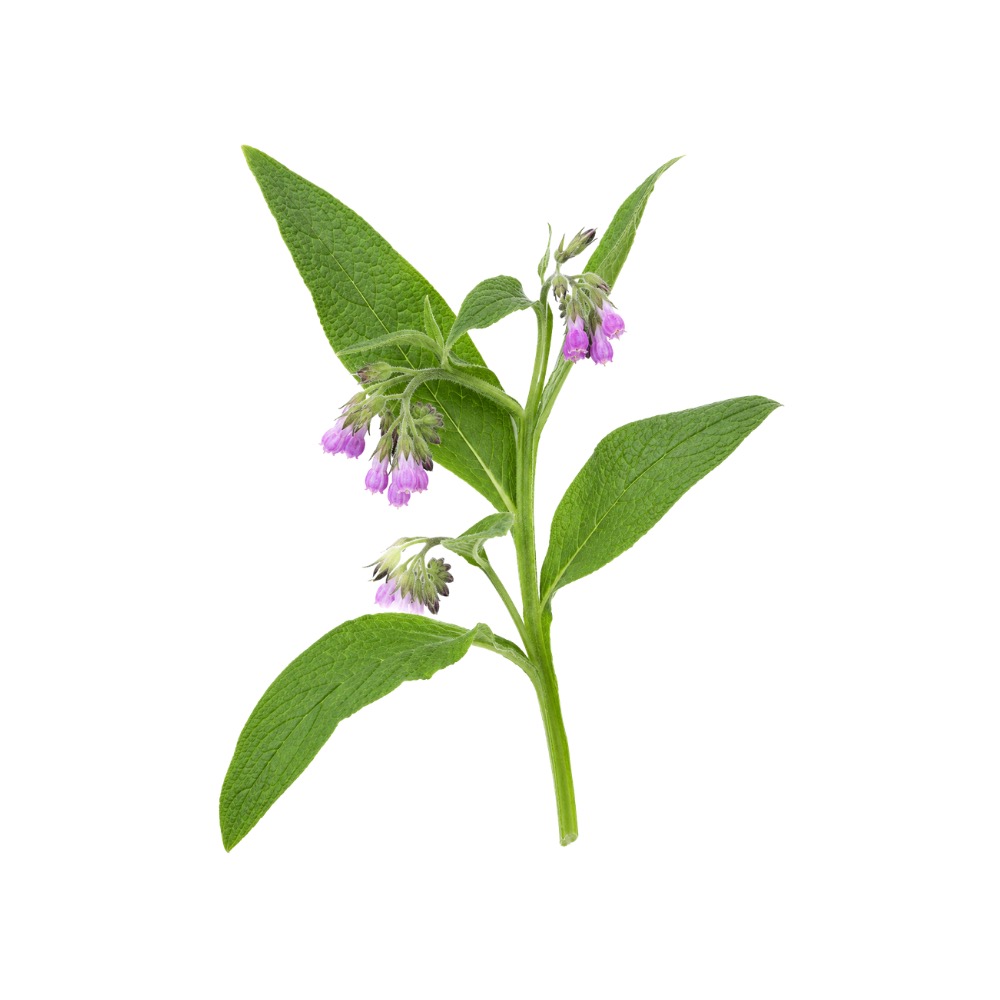 ComfreySymphytum officinaleStrong
Two randomized trials support topical comfrey root extract for acute back pain. A double-blind, placebo-controlled, multicentre trial (n=120, 35% comfrey root ointment) reported pain on standardised active movement falling by a median ~95% with comfrey versus ~38% with placebo over 5 days, including on the Oswestry index 2Reference 2RCTComfrey root extract ointment for acute upper or lower back pain — double-blind, randomised, placebo-controlled, multicentreView study →. A three-arm RCT (n=379) found comfrey plus the rubefacient methyl nicotinate superior to both methyl nicotinate alone and placebo 3Reference 3RCTComfrey root extract plus methyl nicotinate in acute back pain — randomised, placebo-controlled, three-armView study →.
Comfrey is used topically only: its pyrrolizidine alkaloids are hepatotoxic, and it is not taken internally. The evidence is for specific standardized root ointments on intact skin, is limited to acute (not chronic) back pain, and the three-arm trial confounds comfrey with a co-formulated counter-irritant.
Full monograph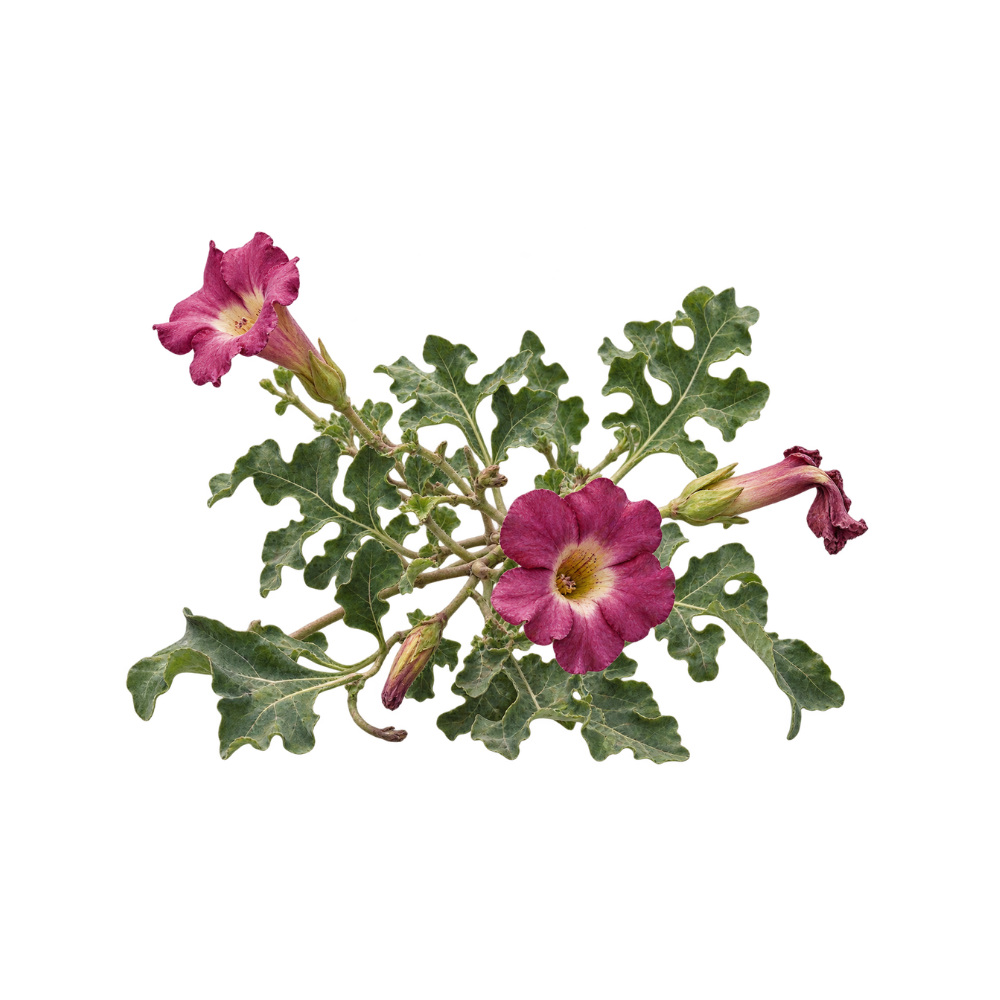 Devil’s ClawHarpagophytum procumbensStrong
Low back pain is devil’s claw’s cleanest evidence. A randomized, double-blind, placebo-controlled trial of the aqueous extract WS 1531 (n=197, 4 weeks) found dose-dependent relief of acute exacerbations of chronic low back pain, with more patients pain-free without rescue tramadol on 100 mg harpagoside/day than on placebo 4Reference 4RCTEffectiveness of Harpagophytum extract WS 1531 in exacerbation of low back pain — a randomised, placebo-controlled, double-blind studyView study →; a double-blind pilot found the Doloteffin extract (60 mg harpagoside/day) comparable to rofecoxib 12.5 mg/day 5Reference 5RCTA randomised double-blind pilot study comparing Doloteffin and Vioxx (rofecoxib) in low back painView study →. The 2014 Cochrane review concluded that devil’s claw, like willow and cayenne, “seem[s] to reduce pain more than placebo,” rated low-to-moderate certainty 6Reference 6Meta-analysisHerbal medicine for low-back pain — a Cochrane systematic review and meta-analysisView study →.
Devil’s claw is taken orally. The benefit is tied to specific standardized extracts (≥50 mg harpagoside/day), trials are small and short (≤6 weeks), and it is a gastric bitter, avoided in peptic ulcer disease and pregnancy.
Full monograph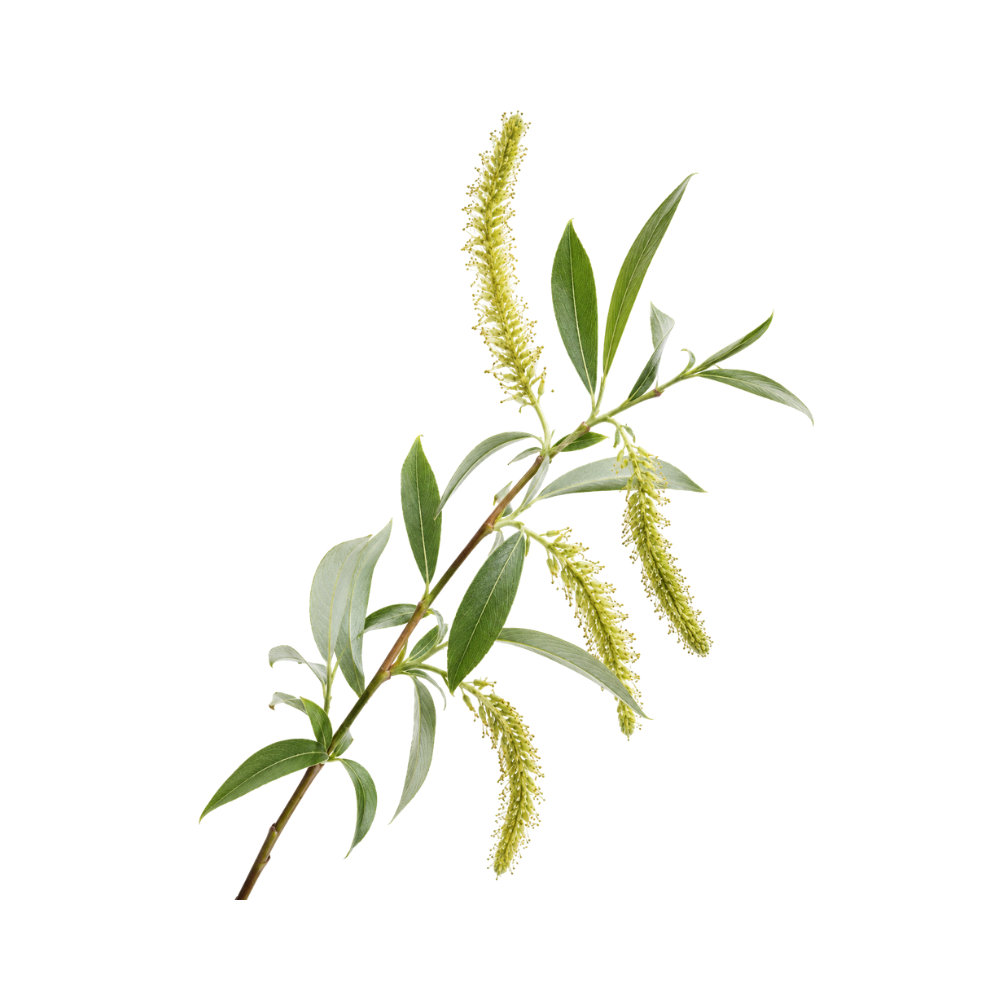 WillowSalix albaStrong
Willow bark is one of the few herbal analgesics with RCT evidence for low back pain. A 4-week dose-ranging, placebo-controlled trial (n=210) found 39% of patients on the higher salicin dose (240 mg/day) pain-free in the final week versus 6% on placebo, with a clear dose-response within one week 7Reference 7RCTTreatment of low back pain exacerbations with willow bark extract: a randomized double-blind study — RCTView study →; an open randomized comparison found the 240 mg dose broadly equivalent to rofecoxib 12.5 mg/day 8Reference 8RCTTreatment of low back pain with a herbal or synthetic anti-rheumatic: a randomized controlled study — RCTView study →. The 2014 Cochrane review graded the low-back-pain evidence “moderate quality” 6Reference 6Meta-analysisHerbal medicine for low-back pain — a Cochrane systematic review and meta-analysisView study →.
Willow is taken orally. Every trial used a standardized ethanolic extract dosed to 120–240 mg salicin/day (not a tea or whole-bark powder), all were short (≤6 weeks), and willow shares aspirin’s salicylate cautions.
Full monograph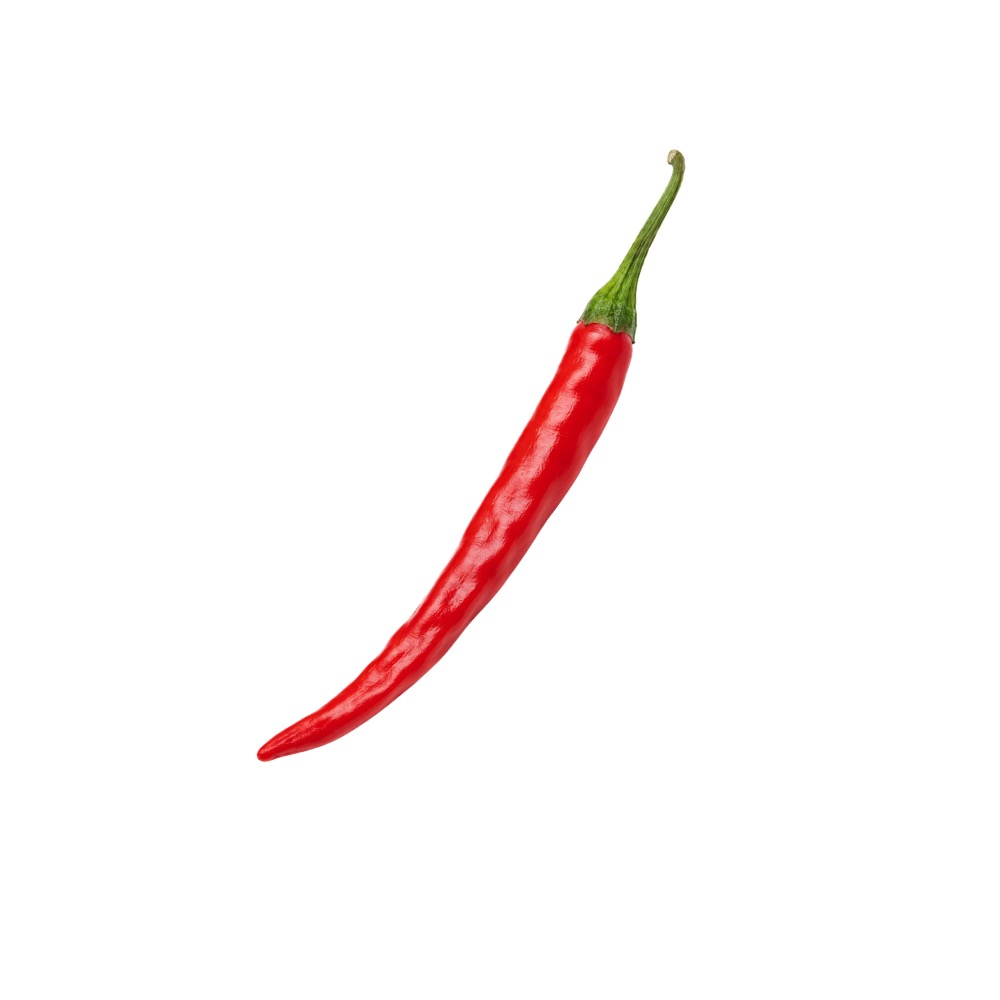 CayenneCapsicum annuumModerate
For non-specific low back pain, a randomized controlled trial of a standardized capsicum (capsaicin) pain plaster reported meaningful pain reduction over about three weeks 1Reference 1RCTCapsicum pain plaster in chronic non-specific low back pain — randomised controlled trialView study →. The active principle is capsaicin, a TRPV1 agonist that acts by desensitising local nociceptors rather than by simple counter-irritation.
The evidence rests on a single plaster RCT, and the burning sensation makes blinding imperfect (likely inflating the apparent effect). Capsaicin’s strongest evidence base is for neuropathic pain and osteoarthritis, not back pain, and it applies to standardized plasters/creams — not to cayenne fruit as eaten or tinctured.
Full monographReferences
- Keitel, W., et al. (2001). Capsicum pain plaster in chronic non-specific low back pain — randomised controlled trial. Arzneimittelforschung. https://pubmed.ncbi.nlm.nih.gov/11765591/
- Giannetti, B. M., et al. (2010). Comfrey root extract ointment for acute upper or lower back pain — double-blind, randomised, placebo-controlled, multicentre. British Journal of Sports Medicine. https://pubmed.ncbi.nlm.nih.gov/19460762/
- Pabst, H., et al. (2013). Comfrey root extract plus methyl nicotinate in acute back pain — randomised, placebo-controlled, three-arm. Phytotherapy Research. https://pubmed.ncbi.nlm.nih.gov/22887778/
- Chrubasik, S., Junck, H., Breitschwerdt, H., et al. (1999). Effectiveness of Harpagophytum extract WS 1531 in exacerbation of low back pain — a randomised, placebo-controlled, double-blind study. European Journal of Anaesthesiology. https://pubmed.ncbi.nlm.nih.gov/10101629/
- Chrubasik, S., Model, A., Black, A., & Pollak, S. (2003). A randomised double-blind pilot study comparing Doloteffin and Vioxx (rofecoxib) in low back pain. Rheumatology (Oxford). https://pubmed.ncbi.nlm.nih.gov/12509627/
- Oltean, H., Robbins, C., van Tulder, M. W., et al. (2014). Herbal medicine for low-back pain — a Cochrane systematic review and meta-analysis. Cochrane Database of Systematic Reviews. https://pubmed.ncbi.nlm.nih.gov/25536022/
- Chrubasik, S., et al. (2000). Treatment of low back pain exacerbations with willow bark extract: a randomized double-blind study — RCT. The American Journal of Medicine. https://pubmed.ncbi.nlm.nih.gov/10936472/
- Chrubasik, S., et al. (2001). Treatment of low back pain with a herbal or synthetic anti-rheumatic: a randomized controlled study — RCT. Rheumatology (Oxford). https://pubmed.ncbi.nlm.nih.gov/11752510/
- Brinjikji, W., Luetmer, P. H., Comstock, B., et al. (2015). Systematic literature review of imaging features of spinal degeneration in asymptomatic populations — systematic review (33 studies, 3,110 subjects). American Journal of Neuroradiology, 36(4), 811–816. https://pubmed.ncbi.nlm.nih.gov/25430861/
- Qaseem, A., Wilt, T. J., McLean, R. M., & Forciea, M. A. (2017). Noninvasive treatments for acute, subacute, and chronic low back pain — American College of Physicians clinical practice guideline. Annals of Internal Medicine, 166(7), 514–530. https://pubmed.ncbi.nlm.nih.gov/28192789/
- Machado, G. C., Maher, C. G., Ferreira, P. H., et al. (2015). Efficacy and safety of paracetamol for spinal pain and osteoarthritis — systematic review and meta-analysis of randomised placebo-controlled trials. BMJ, 350, h1225. https://pubmed.ncbi.nlm.nih.gov/25828856/