
Condition
Fibromyalgia
Fibromyalgia is a disorder of pain processing, not tissue damage — the modern criteria, why exercise outranks every drug, and the serotonergic interaction to avoid.

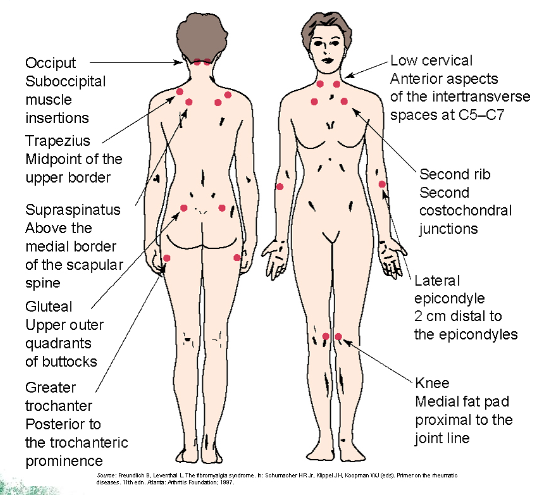
Fibromyalgia is a chronic disorder defined by widespread musculoskeletal pain, persistent fatigue, unrefreshing sleep and cognitive difficulty. It is a disorder of pain processing rather than of damage to the joints or muscles themselves — the tissues that hurt are, on every test available, normal. That single fact explains most of what is confusing about it: why no scan or blood test confirms it, why anti-inflammatories do little, and why the treatments with the best evidence are not the ones people expect.
Presentation
Types & Variants
Fibromyalgia is not formally subtyped, and attempts to split it into variants have not produced categories that change management.
- Primary versus secondary (concomitant) fibromyalgia — it occurs on its own, and it also occurs alongside rheumatoid arthritis, systemic lupus erythematosus, Sjögren’s syndrome, osteoarthritis and hypothyroidism. Having an inflammatory disease does not exclude fibromyalgia; a substantial minority of people with those conditions have both, and mistaking centralised pain for a flare of the underlying disease leads to needless escalation of immunosuppression.
- The wider “nociplastic pain” family — fibromyalgia is now understood as the prototype of a third category of pain, distinct from nociceptive (tissue damage) and neuropathic (nerve damage) pain, arising from altered central processing. Irritable bowel syndrome, chronic pelvic pain, temporomandibular disorder and chronic fatigue syndrome share the same mechanism and cluster in the same people.
Overview
General Pathology
The central abnormality is in how the nervous system handles pain, and it has been measured at several levels rather than localized to one lesion: peripheral sensitization at the primary sensory neuron, central sensitization at the dorsal horn of the spinal cord, altered processing in the thalamus and changes in brain gray matter, and impairment of the descending pathways from the brainstem that normally dampen incoming pain (diffuse noxious inhibitory control). The net effect is an amplified, poorly inhibited pain signal — the volume control is set too high and the brake is weak.
Neurochemically, the pattern is elevated excitatory transmission (substance P and glutamate are raised in cerebrospinal fluid) alongside reduced descending inhibition from serotonin and noradrenaline. That is the direct rationale for the drugs that work best in fibromyalgia — they are serotonin-noradrenaline reuptake inhibitors and calcium-channel modulators, not painkillers — and the rationale for serotonergic herbs such as griffonia.
The defining symptom is chronic, widespread pain affecting both sides of the body, above and below the waist. This is typically accompanied by persistent fatigue, non-restorative sleep, morning stiffness, and the cognitive difficulties described as “fibro fog.” Sleep is not simply a casualty: sleep studies show intrusion of waking-type alpha activity into deep sleep, and experimentally disrupting deep sleep in healthy volunteers reproduces fibromyalgia-like pain and fatigue. Poor sleep and pain amplify each other, which is why sleep is a treatment target rather than a side issue. Headaches, migraine, anxiety, depression and heightened sensitivity to touch, light, sound and cold are frequently reported.
Fibromyalgia is real, common — around 2% of the population, with a marked female predominance — and it is not a psychiatric diagnosis, a deconditioning problem or a diagnosis of last resort. Depression and anxiety are common with it, as they are with any chronic pain condition, and are not its cause.
Assessment
Diagnosis
The older account of fibromyalgia as a “diagnosis of exclusion” reached by pressing on eighteen tender points is out of date.
The 1990 American College of Rheumatology criteria required widespread pain plus tenderness at 11 of 18 specified points. That approach was abandoned because tender-point counts were performed inconsistently, fluctuated with distress, and reduced a multi-system condition to a single physical sign. The 2010/2011 criteria, revised in 2016, replaced it with two scored instruments: the Widespread Pain Index, counting painful body regions, and the Symptom Severity Scale, scoring fatigue, unrefreshing sleep and cognitive symptoms alongside somatic complaints. The 2016 revision added a generalized-pain criterion requiring pain in at least four of five body regions, made the physician and patient versions identical, and stated explicitly that a fibromyalgia diagnosis is valid irrespective of other diagnoses and does not exclude the presence of other clinically important illnesses 8Reference 8Wolfe, F., Clauw, D. J., Fitzcharles, M. A., et al. (2016). 2016 revisions to the 2010/2011 fibromyalgia diagnostic criteria — diagnostic criteria revision. Seminars in Arthritis and Rheumatism, 46(3), 319–329. https://pubmed.ncbi.nlm.nih.gov/27916278/View study →.
In practice this means fibromyalgia is a positive diagnosis made on a recognizable pattern, not a label applied when everything else has been ruled out. Investigations are still done, but for a narrow purpose: to identify the conditions that mimic or accompany it — hypothyroidism, inflammatory arthritis, anemia, vitamin D deficiency, sleep apnoea and polymyalgia rheumatica. A normal panel supports the diagnosis rather than undermining it.
Treatment
Conventional Treatment
The strongest recommendation is not a drug. The revised EULAR recommendations reviewed the evidence across every modality and made exercise the only “strong for” recommendation in the entire guideline; every pharmacological intervention was graded “weak for,” and the authors noted that the size of effect for most treatments is relatively modest 9Reference 9EULAR revised recommendations for the management of fibromyalgia — clinical practice guidelineView study →. Initial management is non-pharmacological, and medication is added for severe pain or sleep disturbance rather than started first.
Exercise — aerobic and strengthening, including aquatic exercise — improves pain, function and quality of life. The practical obstacle is that fibromyalgia produces post-exertional worsening, so programmes must start below the level that feels reasonable and build very gradually; the common failure mode is starting too hard, flaring, and concluding that exercise makes it worse.
Psychological and educational therapy — cognitive behavioural therapy in particular — has consistent, modest benefit, and is aimed at function and pain coping rather than at any implication that the pain is imagined.
Medications. Three drugs are approved for fibromyalgia in the United States — duloxetine, milnacipran and pregabalin — and amitriptyline at low doses is widely used, particularly for sleep. Effect sizes are moderate at best, and a substantial proportion of people get no useful benefit. Opioids are not indicated: they perform poorly, and opioid-induced hyperalgesia is a specific hazard in a condition already defined by pain amplification. NSAIDs and corticosteroids are largely ineffective, which is expected — there is no inflammation to suppress.
Where Herbs Fit
The botanical evidence base in fibromyalgia is small, and it is dwarfed by the evidence for graded exercise, sleep management and CBT.
Of the herbs used for fibromyalgia, only reishi has been trialled in fibromyalgia patients, and its endpoints were physical fitness measures rather than pain. Griffonia carries the most direct evidence, but that evidence is two small studies from one Italian group three decades ago, one of them uncontrolled, testing 5-HTP rather than the whole extract. Angelica is rodent-model only.
Two cautions matter more than the choice of herb:
- Serotonergic stacking is a real risk. 5-HTP and griffonia raise serotonin, and the drugs most commonly prescribed for fibromyalgia — duloxetine, milnacipran, amitriptyline — are serotonergic. Combining them risks serotonin syndrome, and it is the most likely way for herbal self-treatment of fibromyalgia to cause harm.
- Fatigue and pain are not always fibromyalgia. Because the diagnosis rests on a symptom pattern, treatable contributors — thyroid disease, iron deficiency, vitamin D deficiency, sleep apnoea, medication side effects — need to be looked for and addressed.
Materia Medica
Materia Medica
None of these herbs is a substitute for professional care.
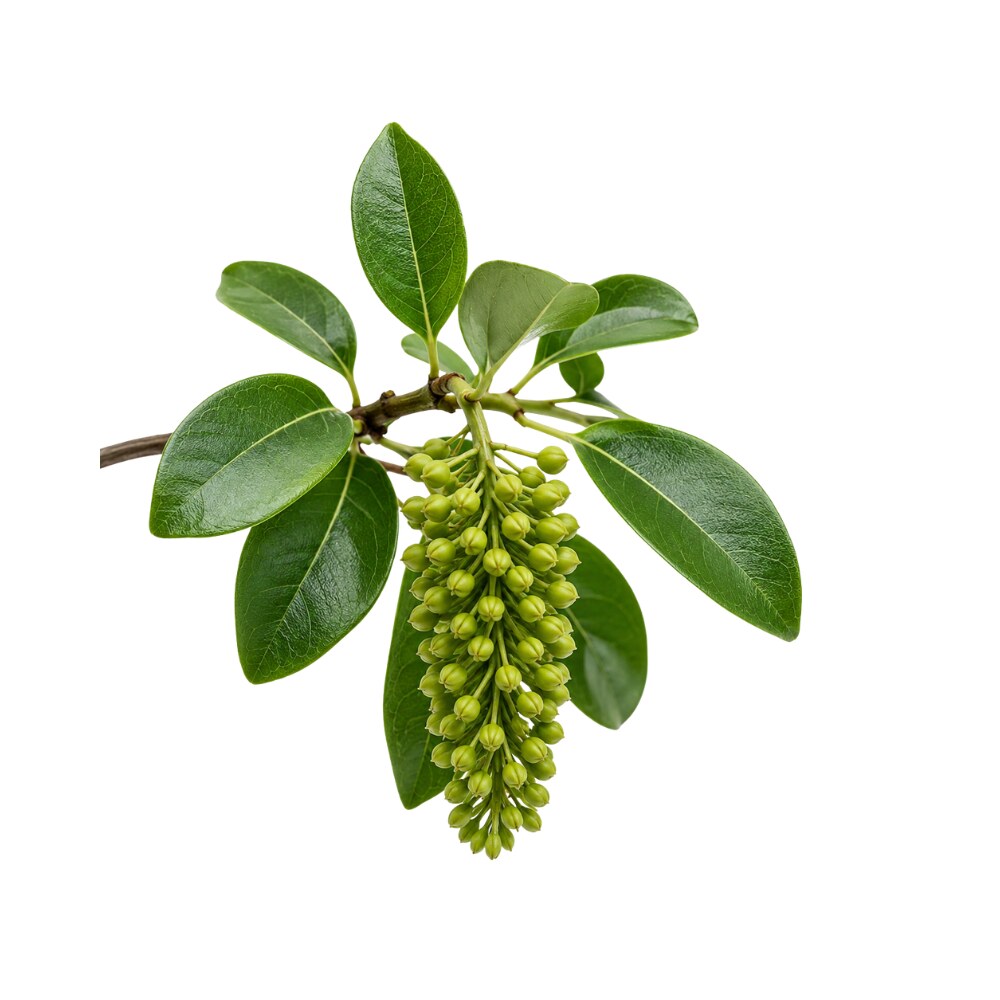 GriffoniaGriffonia simplicifoliaModerate
A double-blind placebo-controlled RCT (n=50) and a 90-day open study found 5-HTP significantly improved tender-point count, pain, sleep, anxiety and fatigue via serotonergic central pain modulation 3,
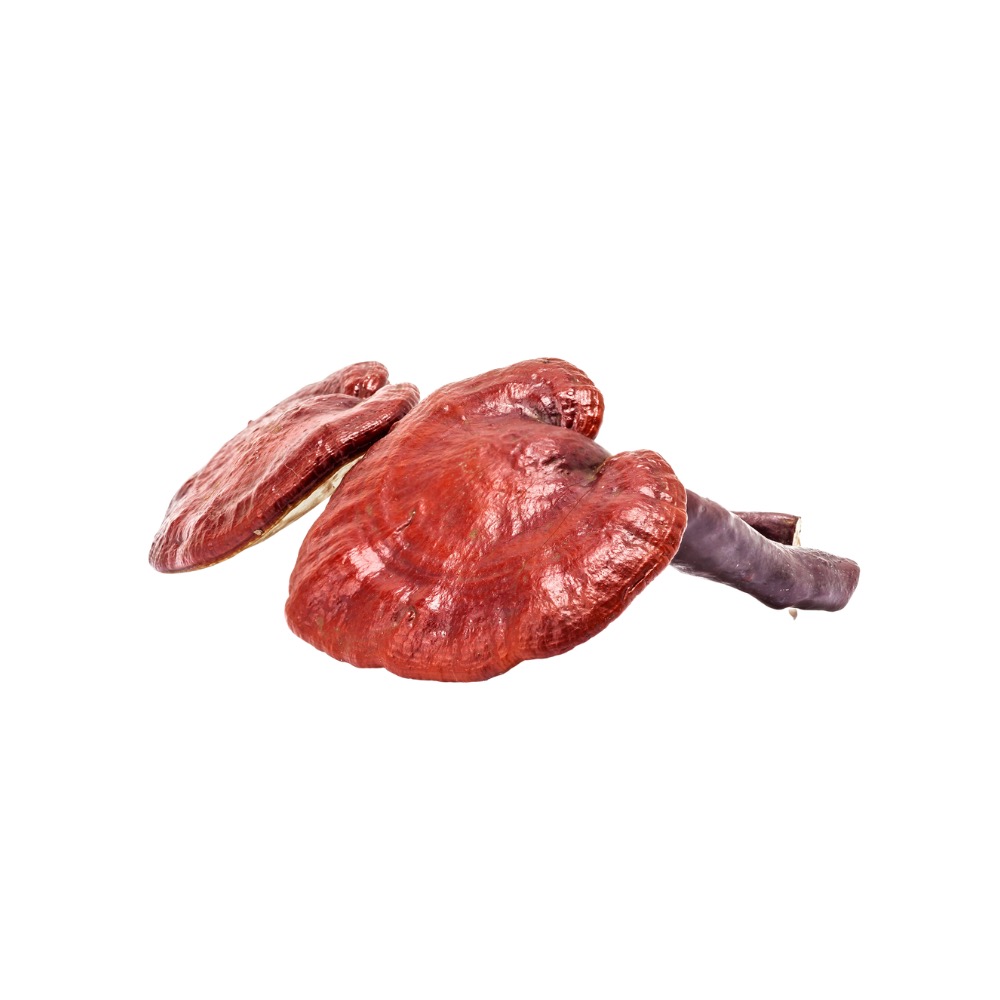 ReishiGanoderma lucidumModerate
Reishi is the one herb with a randomised trial run in fibromyalgia patients. In it, 64 women given 6 g/day of Ganoderma lucidum for six weeks improved on aerobic endurance, flexibility and movement velocity versus control 5Reference 5RCTGanoderma lucidum improves physical fitness in women with fibromyalgia — randomised controlled trialView study →.
The endpoints were physical-fitness measures, not pain, tenderness, sleep or the Fibromyalgia Impact Questionnaire, so the trial shows improved function rather than reduced pain, a different and still useful result. It sits within a consistent small-trial pattern for reishi and fatigue: a multicentre RCT in 132 patients with neurasthenia reduced fatigue and improved wellbeing 6Reference 6RCTA randomised, double-blind and placebo-controlled study of a Ganoderma lucidum polysaccharide extract in neurasthenia — randomised controlled trialView study →, and a pilot RCT in breast-cancer patients improved cancer-related fatigue 7Reference 7Clinical trialSpore powder of Ganoderma lucidum improves cancer-related fatigue in breast cancer patients undergoing endocrine therapy: a pilot clinical trialView study →.
The fibromyalgia evidence is a single trial: six weeks, no replication, no pain endpoint, and reishi preparations are not standardised across products.
Full monograph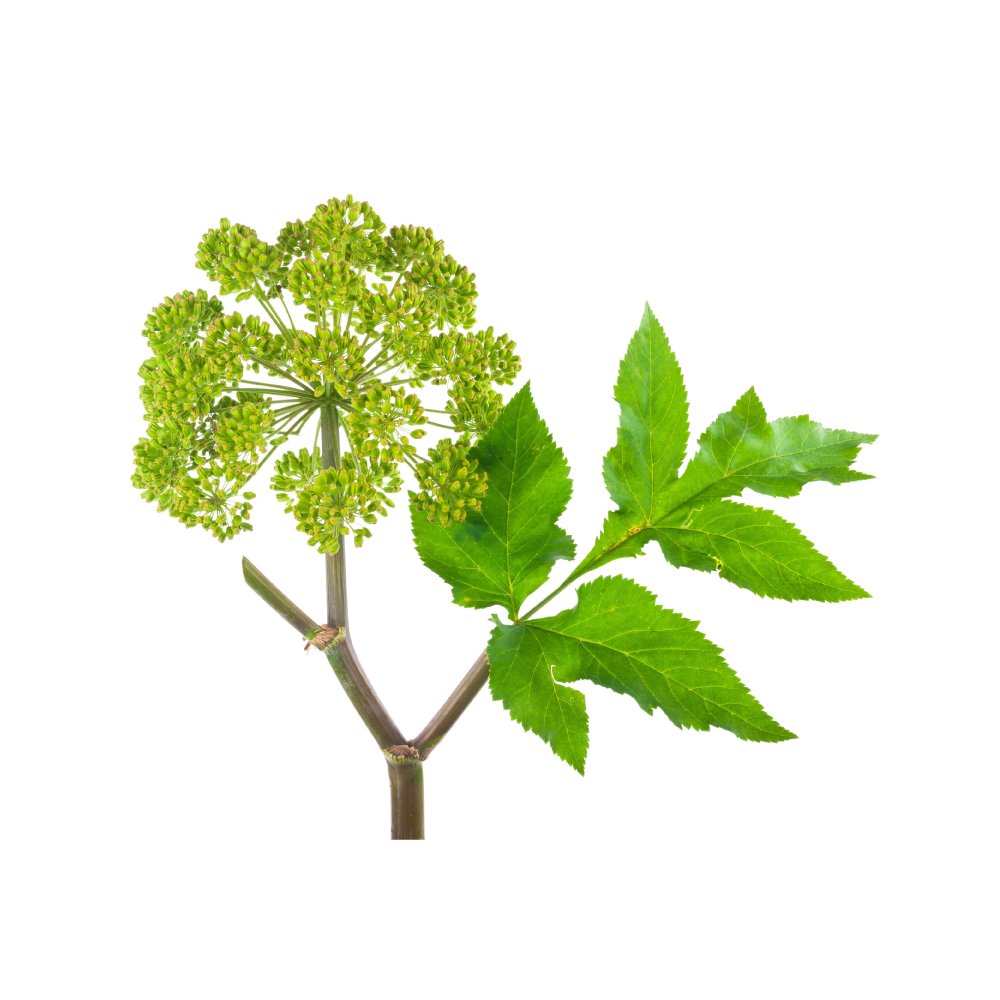 AngelicaAngelica archangelicaPreclinical
Angelica’s evidence comes from animals, in a fibromyalgia-specific model. In a reserpine- induced fibromyalgia model in mice, optimised A. archangelica extract reduced serum inflammatory cytokines and brain oxidative-stress markers 1Reference 1AnimalOptimization of extraction conditions of Angelica archangelica extract and activity evaluation in experimental fibromyalgia — animal model (mouse)View study →; a separate rat study found the herb antihyperalgesic in alloxan-induced diabetic neuropathy, lowering TNF-α and IL-6 2Reference 2AnimalEvaluation of the antihyperalgesic potential of Morus alba, Angelica archangelica, Valeriana officinalis, and Passiflora incarnata in alloxan-induced diabetic neuropathy in rats — animal model (rat)View study →.
Both point at the same plausible target — the cytokine and oxidative-stress component of centralised pain — and reserpine-depletion is the standard rodent proxy for the monoamine deficit proposed in fibromyalgia.
There are no human data of any kind for pain, and the effective doses are not mapped to achievable human exposure. Angelica’s furanocoumarins carry real phototoxicity and drug-interaction risks.
Full monographSupplementation
Supplementation
Supplements, nutrients and compounds used for fibromyalgia.
References
- Kaur A, Singh N, Bhatti MS, Bhatti R (2020). Optimization of extraction conditions of Angelica archangelica extract and activity evaluation in experimental fibromyalgia — animal model (mouse). J Food Sci. https://pubmed.ncbi.nlm.nih.gov/33047814/
- Suciu F, Pușcașu C, Mihai DP, Ungurianu A, et al. (2025). Evaluation of the antihyperalgesic potential of Morus alba, Angelica archangelica, Valeriana officinalis, and Passiflora incarnata in alloxan-induced diabetic neuropathy in rats — animal model (rat). Curr Issues Mol Biol. https://pubmed.ncbi.nlm.nih.gov/41020842/
- Caruso I, Sarzi Puttini P, Cazzola M, Azzolini V. (1990). Double-blind study of 5-hydroxytryptophan versus placebo in the treatment of primary fibromyalgia syndrome — randomised controlled trial. Journal of International Medical Research. https://pubmed.ncbi.nlm.nih.gov/2193835/
- Sarzi Puttini P, Caruso I. (1992). Primary fibromyalgia syndrome and 5-hydroxy-L-tryptophan: a 90-day open study. Journal of International Medical Research. https://pubmed.ncbi.nlm.nih.gov/1521674/
- Collado-Mateo D, Pazzi F, Domínguez-Muñoz FJ, et al. (2015). Ganoderma lucidum improves physical fitness in women with fibromyalgia — randomised controlled trial. Nutr Hosp. https://pubmed.ncbi.nlm.nih.gov/26545669/
- Tang W, Gao Y, Chen G, et al. (2005). A randomised, double-blind and placebo-controlled study of a Ganoderma lucidum polysaccharide extract in neurasthenia — randomised controlled trial. J Med Food. https://pubmed.ncbi.nlm.nih.gov/15857210/
- Zhao H, Zhang Q, Zhao L, et al. (2012). Spore powder of Ganoderma lucidum improves cancer-related fatigue in breast cancer patients undergoing endocrine therapy: a pilot clinical trial. Evid Based Complement Alternat Med. https://pubmed.ncbi.nlm.nih.gov/22203880/
- Wolfe, F., Clauw, D. J., Fitzcharles, M. A., et al. (2016). 2016 revisions to the 2010/2011 fibromyalgia diagnostic criteria — diagnostic criteria revision. Seminars in Arthritis and Rheumatism, 46(3), 319–329. https://pubmed.ncbi.nlm.nih.gov/27916278/
- Macfarlane, G. J., Kronisch, C., Dean, L. E., et al. (2017). EULAR revised recommendations for the management of fibromyalgia — clinical practice guideline. Annals of the Rheumatic Diseases, 76(2), 318–328. https://pubmed.ncbi.nlm.nih.gov/27377815/