
Ginkgo
Ginkgo biloba
Plant Family
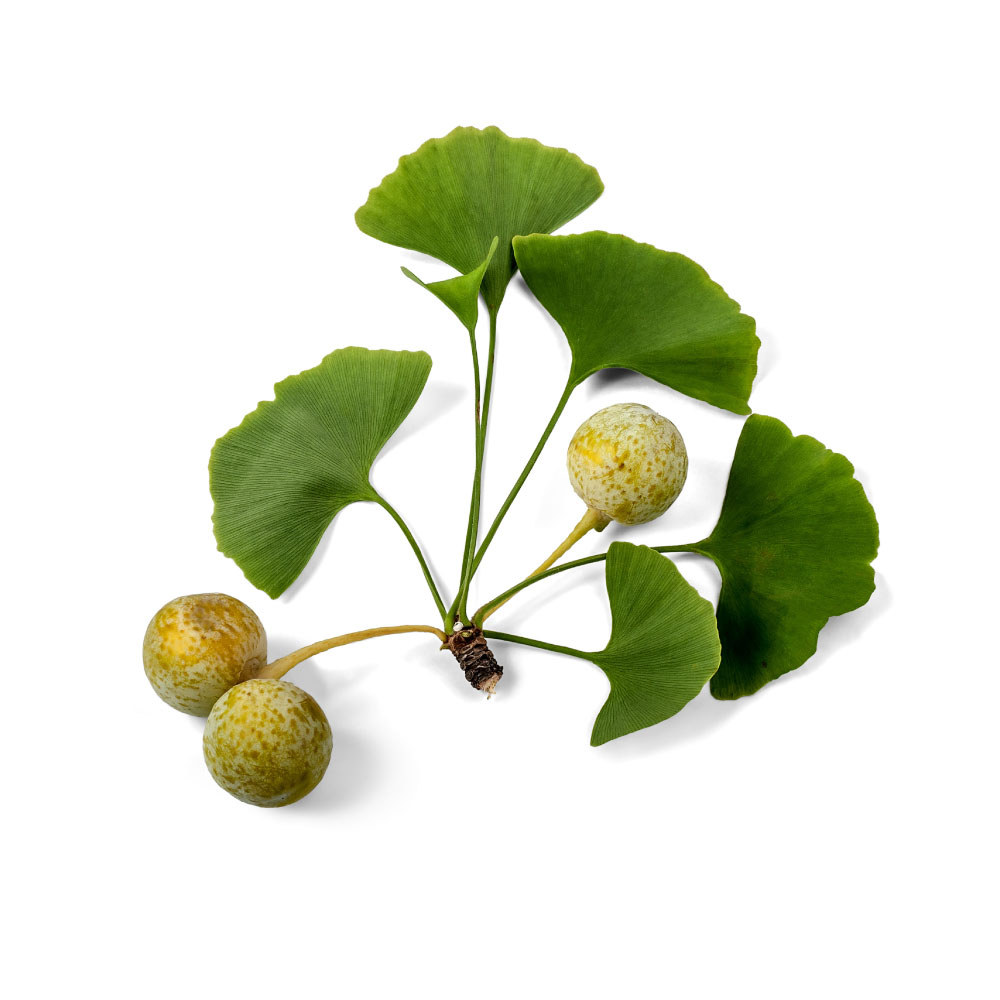
Pictured: Ginkgo
Ginkgo family
A living fossil family reduced to a single species, chemically unique for its ginkgolide terpene trilactones and among the most extensively trialled herbal extracts.
1 Herb // 14 Constituents // 1 Notable Member
Overview
A family with exactly one living species. Ginkgoaceae was diverse and globally distributed through the Jurassic and Cretaceous, and everything in it went extinct except Ginkgo biloba, which survived in a small area of China and was preserved in cultivation around temples. It is a gymnosperm, not a flowering plant — more closely related to conifers and cycads than to anything else here — and its motile sperm are a reproductive relic found almost nowhere else among seed plants.
Shared Traits
In Practice
Ginkgo is among the most extensively studied herbal medicines in the world, and the form matters enormously: virtually all the credible research uses standardised leaf extract (typically EGb 761, standardised to 24% flavone glycosides and 6% terpene lactones), not crude leaf or tea.
The two proposed mechanisms are complementary. Flavonoid glycosides provide antioxidant and vascular effects; the terpene trilactones — ginkgolides A, B, C and bilobalide — are the family’s chemical signature and occur nowhere else in nature. Ginkgolide B in particular is a potent platelet-activating factor (PAF) antagonist, which underlies both the circulatory effects and the bleeding caution.
The evidence is genuinely mixed and worth reading honestly. For dementia and cognitive impairment in patients who already have it, meta-analyses of standardised extract report modest benefit on cognition and activities of daily living. For prevention of dementia in healthy older adults, the two large long-term trials (GEM and GuidAge) were negative — ginkgo does not appear to stop dementia developing. Evidence in intermittent claudication and tinnitus is weak to modest. The popular framing of ginkgo as a general memory enhancer in healthy young adults is not supported.
Safety centres on bleeding risk via PAF antagonism — relevant with anticoagulants, antiplatelets, and before surgery — and on the seed, which contains ginkgotoxin (4’-O-methylpyridoxine), a vitamin B6 antagonist that has caused seizures after eating large quantities of the nuts. The fleshy seed coat also contains ginkgolic acids, potent contact allergens related to those in poison ivy.
Materia Medica
The monograph in the database whose Ginkgoaceae membership is recorded on the herb itself — so this list keeps itself current as new herbs land.
Ginkgo biloba
Phytochemistry
Terpene trilactones — the ginkgolides and bilobalide — are unique to this genus and are the family’s defining constituents. Alongside them: flavonol glycosides (quercetin, kaempferol, isorhamnetin conjugates), biflavones, proanthocyanidins, and the ginkgolic acids of the seed coat.
The compounds recorded for this family's single member, grouped by class.
Beyond the Database
Notable members without a monograph yet.
Keep Exploring