Materia Medica
Spikenard
Aralia racemosa
American spikenard (Aralia racemosa) is a large woodland herb of the ginseng family, native to eastern North America. Its aromatic, balsamic root is a traditional remedy for coughs and chest complaints, and Native American peoples used it widely for lung disease, wounds and as a tonic.
What Is Spikenard?
American spikenard is a large woodland herb of the ginseng family, whose thick, aromatic root is a traditional medicine for coughs and the chest. The Eclectic physicians used it for a weak, irritated cough and for catarrh 16Reference 16Aralia racemosa — SpikenardView study →.
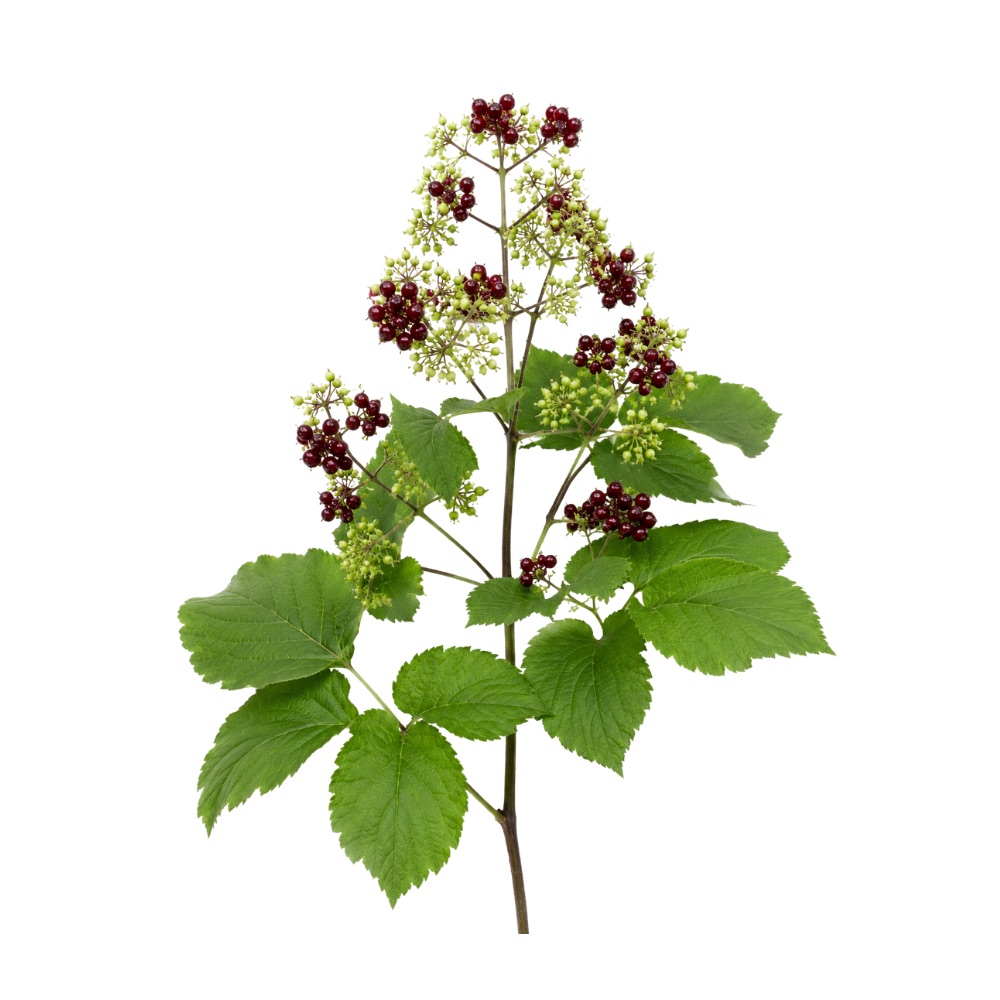
Aralia racemosa grows up to 2 m tall in rich, moist woods across eastern North America, and bears clusters of dark purple berries in autumn 16,
The root has a spicy, balsamic taste and aroma 16Reference 16Aralia racemosa — SpikenardView study →. Research on the plant itself has so far only mapped its chemistry, and the pharmacology rests on single compounds and related Aralia species 1,
The spikenard of Old World perfumery is a different plant, Nardostachys jatamansi, in the honeysuckle family 19Reference 19GBIF Backbone Taxonomy — Aralia racemosa LView study →.
How Is Spikenard Used?
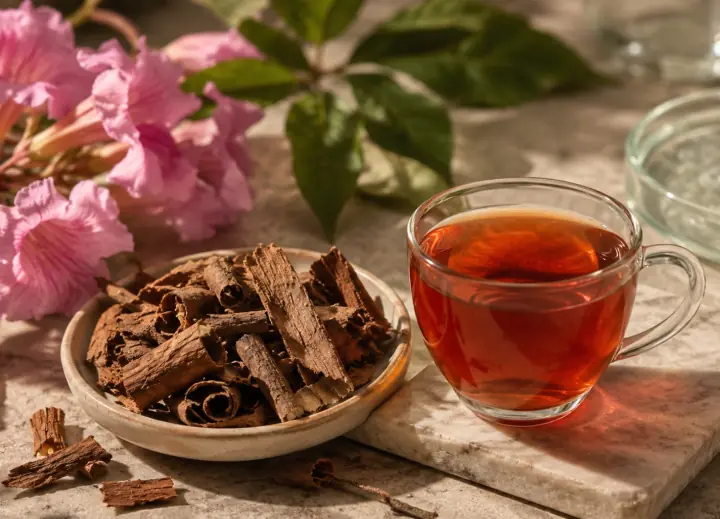
- Tincture or fluid extract — the Eclectics’ “specific aralia racemosa” was given at 5–30 drops in water, four times a day 16Reference 16Aralia racemosa — SpikenardView study →.
- Infusion — half an ounce of root to a pint of water, taken in doses of half an ounce to two ounces 16Reference 16Aralia racemosa — SpikenardView study →.
- Syrup — the root was an ingredient of the compound syrup of spikenard 16Reference 16Aralia racemosa — SpikenardView study →.
- Poultice — the pounded root was applied to wounds, burns, boils and sprains in Native American practice 18Reference 18Moerman, D. E. Aralia racemosa L. — ethnobotanical uses (Algonquin, Cherokee, Chippewa, Choctaw, Iroquois, Malecite and others). Native American Ethnobotany Database, Botanical Research Institute of Texas. http://naeb.brit.org/uses/search/?string=Aralia+racemosaView study →.
In modern Western herbalism it is usually combined with other lung herbs such as elecampane, licorice and mullein.
Traditional Uses
Native American Medicine
Spikenard root was used by many Native American peoples 18Reference 18Moerman, D. E. Aralia racemosa L. — ethnobotanical uses (Algonquin, Cherokee, Chippewa, Choctaw, Iroquois, Malecite and others). Native American Ethnobotany Database, Botanical Research Institute of Texas. http://naeb.brit.org/uses/search/?string=Aralia+racemosaView study →.
- Lungs — the Cherokee took it for coughs, asthma and lung disease and as an expectorant. The Chippewa and Iroquois took a root decoction for coughs, the Iroquois for whooping cough and threatened consumption, and the Algonquin an infusion for tuberculosis. The Malecite used an infusion for head colds 18Reference 18Moerman, D. E. Aralia racemosa L. — ethnobotanical uses (Algonquin, Cherokee, Chippewa, Choctaw, Iroquois, Malecite and others). Native American Ethnobotany Database, Botanical Research Institute of Texas. http://naeb.brit.org/uses/search/?string=Aralia+racemosaView study →.
- Skin and injuries — the Cherokee washed burns with the ooze of the beaten root and poulticed swellings and fresh cuts. The Chippewa poulticed boils, sprains and fractures, and the Iroquois washed and poulticed deep cuts 18Reference 18Moerman, D. E. Aralia racemosa L. — ethnobotanical uses (Algonquin, Cherokee, Chippewa, Choctaw, Iroquois, Malecite and others). Native American Ethnobotany Database, Botanical Research Institute of Texas. http://naeb.brit.org/uses/search/?string=Aralia+racemosaView study →.
- Women’s health — the Cherokee took it for menstrual problems. The Chippewa and Iroquois used it to bring on stopped menstruation, and Iroquois women took a compound decoction as a tonic 18Reference 18Moerman, D. E. Aralia racemosa L. — ethnobotanical uses (Algonquin, Cherokee, Chippewa, Choctaw, Iroquois, Malecite and others). Native American Ethnobotany Database, Botanical Research Institute of Texas. http://naeb.brit.org/uses/search/?string=Aralia+racemosaView study →.
- Tonic and other uses — the Cherokee drank an infusion of root and berries as a tonic and to bring on sweating, and the Iroquois took it for strength, rheumatism, diarrhoea and as a blood purifier. The Choctaw gave a sweetened decoction to children for colic 18Reference 18Moerman, D. E. Aralia racemosa L. — ethnobotanical uses (Algonquin, Cherokee, Chippewa, Choctaw, Iroquois, Malecite and others). Native American Ethnobotany Database, Botanical Research Institute of Texas. http://naeb.brit.org/uses/search/?string=Aralia+racemosaView study →.
Eclectic Medicine
The Eclectic physicians used spikenard root mainly for lung complaints, and it was an ingredient of the compound syrup of spikenard 16Reference 16Aralia racemosa — SpikenardView study →.
King’s American Dispensatory (1898) gives its specific indications as weak, atonic states with cough and irritation of the bronchial tubes and lungs, and catarrh. It regarded the root as similar in action to wild sarsaparilla, Aralia nudicaulis 16Reference 16Aralia racemosa — SpikenardView study →.
Indications
- Cough with a weak, irritated chest [root; Eclectic, Cherokee, Chippewa and Iroquois use]
- Catarrh and head colds [root; Eclectic and Malecite use]
- Tuberculosis and chronic lung disease [root; Algonquin, Iroquois and Cherokee use]
- Asthma [root; Cherokee use]
- Whooping cough [root; Iroquois use]
- Burns, cuts, boils and sprains [root poultice or wash; Cherokee, Chippewa and Iroquois use]
- Rheumatism [root; Iroquois use]
- General weakness, as a tonic [root; Cherokee and Iroquois use]
Botany
American spikenard is a large herbaceous perennial of the ginseng family (Araliaceae) 19Reference 19GBIF Backbone Taxonomy — Aralia racemosa LView study →. Its smooth, widely branched stems grow up to 2 m tall and are dark green or reddish 16,
The leaves are large, alternate and compound. Each leaf divides into three parts, and each part carries three to seven toothed, pointed, oval leaflets 16,
The flowers are small and greenish-white, with five petals, and are borne in many small umbels arranged in branching clusters from the leaf axils. They open in midsummer and are followed by purple berries, 5–6 mm long 16,
The rhizome is thick and fleshy, 10–20 cm long, light brown outside and white inside, and marked with deep scars where the stems of earlier years grew. The roots can reach 60–90 cm. The whole plant gives off a balsamic scent when bruised 16Reference 16Aralia racemosa — SpikenardView study →.
Distribution
American spikenard grows from Canada south to Georgia and west across the United States. It grows in rich woods and rocky places, often in the crevices of rocky slopes 16Reference 16Aralia racemosa — SpikenardView study →.
In New England it grows mainly in moist deciduous forests and at forest edges. It is found in all six New England states, but it is ranked extremely rare in Rhode Island 17Reference 17Aralia racemosa — American spikenard — species description, habitat and New England conservation statusView study →.
Growing Conditions
Cultivation snapshot for Spikenard
- A shade-loving woodland plant — happiest in part shade to full shade, much like its ginseng-family cousins.
- Wants consistently moist, rich, humus-heavy soil; avoid hot, dry or fully exposed sites.
- Hardy across a wide cold range (roughly USDA zones 3–8), so winter cold is rarely the limiting factor.
- Given room, it slowly forms loose thickets by self-seeding and by spreading rhizome — allow space for its 3–5 ft height and spread.
Grow it yourself
Farm Wiki is our cultivation-focused sister site, also run by Justin Cooke.
Pharmacology & Research
The studies of Aralia racemosa itself have mapped its chemistry. One isolated diterpenoids and acetylenic lipids from the whole plant, and one profiled the plant and its tissue cultures 1,
The rest of the pharmacology comes from related species. Most of it concerns pimaradienoic acid, the main diterpene of the rhizome of the Asian Aralia cordata, studied in cells and rodents 3,
-
Best-supported: anti-inflammatory activity of pimaradienoic acid, a diterpene of A. cordata, through NF-κB and iNOS suppression, in cells and in mice 3,
5, .6Reference 3In vitroEnt-pimara-8(14),15-dien-19-oic acid from the roots of Aralia cordata inhibits inflammatory mediators by blocking NF-κB activation and MAPK pathways — in vitroView study →Reference 5AnimalPimaradienoic acid inhibits carrageenan-induced inflammatory leukocyte recruitment and edema in mice: inhibition of oxidative stress, nitric oxide, and cytokine production — mouse in vivoView study →Reference 6In vitroDiterpenes in Aralia cordata rhizomes suppress proinflammatory and extracellular-matrix-degradation genes in ATDC5 cells — in vitroView study → -
Emerging, worth watching: pain-relieving and blood-pressure-lowering effects of the same A. cordata diterpene in rodents 4,
15Reference 4AnimalPimaradienoic acid inhibits inflammatory pain: NF-κB inhibition, reduced cytokine production, and NO–cyclic-GMP–protein-kinase-G–ATP-sensitive-potassium-channel activation — mouse in vivoView study →Reference 15AnimalPimaradienoic acid inhibits vascular contraction and induces hypotension in normotensive rats — rat in vivoView study → ; activity of Aralia diynes against mycobacteria 12Reference 12In vitroAnti-mycobacterial diynes (falcarinol, panaxydol) from the Canadian medicinal plant Aralia nudicaulis — in vitroView study →. - Mechanistically thin: the expectorant, tonic and alterative uses have not been tested experimentally.
-
The caveat: there are no human data, no study of an A. racemosa root preparation, and the best-studied compound has not been found in A. racemosa 1,
2Reference 1Diterpenoids and acetylenic lipids from Aralia racemosa — phytochemical analysisView study →Reference 2In vitroExploring the biosynthetic efficiency of Aralia racemosa L. (Araliaceae): assessment of triterpenoid saponins and phenolic compounds production in plantlets, callus, and cell suspension cultures — plant organs and in vitro culturesView study → .
The findings come from purified compounds and related Aralia species, often at doses and by routes unlike a root decoction or tincture. The most-studied compound, pimaradienoic acid, belongs to A. cordata, not to spikenard.
1. Anti-Inflammatory
Pimaradienoic acid (ent-pimara-8(14),15-dien-19-oic acid) is the main diterpene of the rhizome of the related Asian Aralia cordata 6Reference 6In vitroDiterpenes in Aralia cordata rhizomes suppress proinflammatory and extracellular-matrix-degradation genes in ATDC5 cells — in vitroView study →. It has not been reported from A. racemosa, whose reported pimarane-type diterpene is acanthoic acid 1Reference 1Diterpenoids and acetylenic lipids from Aralia racemosa — phytochemical analysisView study →.
Isolated from the root of A. cordata, it blocked the production of nitric oxide, PGE₂ and IL-6 in stimulated macrophages. It did so by preventing IκBα breakdown and NF-κB activation, and by blocking p38 and ERK signalling 3Reference 3In vitroEnt-pimara-8(14),15-dien-19-oic acid from the roots of Aralia cordata inhibits inflammatory mediators by blocking NF-κB activation and MAPK pathways — in vitroView study →.
In mice, it reduced carrageenan-induced white-cell recruitment and paw oedema, and lowered TNF-α, IL-1β, superoxide and nitric oxide 5Reference 5AnimalPimaradienoic acid inhibits carrageenan-induced inflammatory leukocyte recruitment and edema in mice: inhibition of oxidative stress, nitric oxide, and cytokine production — mouse in vivoView study →.
A 2026 study found it to be the most abundant diterpene in an extract of A. cordata rhizome. It suppressed nitric oxide production in rat liver cells and lowered the expression of iNOS and cartilage-degrading genes in mouse cartilage cells 6Reference 6In vitroDiterpenes in Aralia cordata rhizomes suppress proinflammatory and extracellular-matrix-degradation genes in ATDC5 cells — in vitroView study →.
Several diterpenes from A. cordata root also inhibited the COX-1 enzyme in the laboratory, while most had only weak effects on COX-2 8Reference 8In vitroInhibitory constituents against cyclooxygenases from Aralia cordata Thunb. — in vitroView study →.
Gap: every result is from an A. cordata compound or extract. No spikenard compound or root preparation has been tested for inflammation.
2. Antioxidant
A 2025 study of A. racemosa plants and tissue cultures found phenolic acids, flavonoids and triterpenoid saponins, and reported strong antioxidant activity for the extracts tested 2Reference 2In vitroExploring the biosynthetic efficiency of Aralia racemosa L. (Araliaceae): assessment of triterpenoid saponins and phenolic compounds production in plantlets, callus, and cell suspension cultures — plant organs and in vitro culturesView study →.
Chlorogenic acid is a well-characterised radical scavenger. A 2026 study using electron paramagnetic resonance spectroscopy showed that it quenches DPPH and hydroxyl radicals 9Reference 9In vitroAntioxidant activity of chlorogenic acid evaluated via EPR spectroscopy — in vitroView study →.
In a DPPH assay, pimaradienoic acid, the A. cordata diterpene, showed no antioxidant activity 7Reference 7In vitroIn vitro and in vivo genotoxic and antigenotoxic effects of pimaradienoic acid, with DPPH radical-scavenging assessment — mammalian cells and mouseView study →.
Gap: no antioxidant assay of a spikenard-root extract has been published.
3. Analgesic
In mice, pimaradienoic acid, the A. cordata diterpene, given by mouth at 1–10 mg/kg reduced acetic-acid writhing. It also reduced formalin- and adjuvant-induced paw flinching and licking, and carrageenan-, CFA- and PGE₂-induced pain sensitivity, without raising liver enzymes 4Reference 4AnimalPimaradienoic acid inhibits inflammatory pain: NF-κB inhibition, reduced cytokine production, and NO–cyclic-GMP–protein-kinase-G–ATP-sensitive-potassium-channel activation — mouse in vivoView study →.
The effect involved NF-κB inhibition, lower cytokine production and activation of the NO–cyclic GMP–protein kinase G–ATP-sensitive potassium channel pathway 4Reference 4AnimalPimaradienoic acid inhibits inflammatory pain: NF-κB inhibition, reduced cytokine production, and NO–cyclic-GMP–protein-kinase-G–ATP-sensitive-potassium-channel activation — mouse in vivoView study →.
Pimaradienoic acid occurs in several plants, including the Brazilian Vigueira arenaria 4Reference 4AnimalPimaradienoic acid inhibits inflammatory pain: NF-κB inhibition, reduced cytokine production, and NO–cyclic-GMP–protein-kinase-G–ATP-sensitive-potassium-channel activation — mouse in vivoView study →.
Gap: single-compound work from one laboratory, on a compound not reported from spikenard, with nothing on the herb.
4. Antimicrobial
Wild sarsaparilla, Aralia nudicaulis, is used by the Iroquois and Algonquin as a cough and tuberculosis remedy. Two C17 polyacetylenes, falcarinol and panaxydol, isolated from its rhizome inhibited Mycobacterium tuberculosis H37Ra, with MICs of 25.6 and 36.0 µM 12Reference 12In vitroAnti-mycobacterial diynes (falcarinol, panaxydol) from the Canadian medicinal plant Aralia nudicaulis — in vitroView study →.
Two known acetylenic lipids have been isolated from the whole plant of A. racemosa. They are known from many plants of the ginseng and carrot families 1Reference 1Diterpenoids and acetylenic lipids from Aralia racemosa — phytochemical analysisView study →.
In a 2010 screen of five plants used for lung complaints, including A. nudicaulis, only the calamus and cow parsnip extracts showed antimycobacterial activity comparable to the drug rifampin 10Reference 10In vitroAntimycobacterial screening of traditional medicinal plants including Aralia nudicaulis using the microplate resazurin assay — in vitroView study →.
Extracts of devil’s walking stick, Aralia spinosa, used as a wound antiseptic during the American Civil War, inhibited biofilm formation and quorum sensing in multidrug-resistant Staphylococcus aureus, but did not inhibit bacterial growth 11Reference 11In vitroAmerican Civil War plant medicines, including Aralia spinosa, inhibit growth, biofilm formation, and quorum sensing by multidrug-resistant bacteria — in vitroView study →.
Gap: A. racemosa itself has not been tested against microbes.
5. Vasorelaxant / Hypotensive
In rat aorta stripped of its lining, pimaradienoic acid, the A. cordata diterpene, inhibited contraction caused by phenylephrine and potassium chloride by blocking calcium entry into the muscle cells. Injected in conscious rats at 1–15 mg/kg, it lowered mean arterial pressure in proportion to the dose 15Reference 15AnimalPimaradienoic acid inhibits vascular contraction and induces hypotension in normotensive rats — rat in vivoView study →.
In a head-to-head comparison it was a more effective vasorelaxant than the related diterpene kaurenoic acid 13Reference 13In vitroPharmacological comparison of the vasorelaxant action of kaurenoic acid and pimaradienoic acid — rat aorta, in vitroView study →.
A different diterpene from A. cordata, pimaric acid, reduced TNF-α-driven MMP-9 production and the migration of human aortic smooth-muscle cells 14Reference 14In vitroPimaric acid from Aralia cordata has an inhibitory effect on TNF-α-induced MMP-9 production and HASMC migration via down-regulated NF-κB and AP-1 — in vitroView study →.
Gap: isolated compounds, not reported from spikenard, at high concentrations or injected doses in rats. Spikenard has no traditional use for the heart or circulation.
Mechanisms
Pimaradienoic acid, a diterpene of the related A. cordata that has not been reported from spikenard, has been studied for its suppression of NF-κB-driven inflammatory signalling, its activation of a nitric-oxide pain pathway, and its blocking of calcium entry into blood-vessel muscle.
The C17 polyacetylenes of the genus have been studied against mycobacteria, and phenolic acids such as chlorogenic acid as radical scavengers.
| Mechanism | Drives | Key compounds |
|---|---|---|
| NF-κB ↓, IκBα stabilisation | anti-inflammatoryanalgesic | pimaradienoic acid (A. cordata) |
| iNOS ↓ (NO), COX-2 ↓ (PGE₂), IL-6/TNF-α/IL-1β ↓ | anti-inflammatory | pimaradienoic acid (A. cordata) |
| p38 / ERK MAPK ↓ | anti-inflammatory | pimaradienoic acid (A. cordata) |
| Free-radical scavenging | antioxidant | chlorogenic acid |
| NO–cGMP–PKG–K_ATP channel activation | analgesic (peripheral) | pimaradienoic acid (A. cordata) |
| Extracellular Ca²⁺ influx block | vasorelaxanthypotensive | pimaradienoic acid (A. cordata) |
| Antimycobacterial activity | antimicrobial | falcarinol, panaxydol |
Clinical Trials
No clinical trials of Aralia racemosa have been registered.
| Completed | Planned | Terminated | Preclinical |
|---|---|---|---|
| 0 | 0 | 0 | ~12 |
Last checked: September 2026.
Phytochemistry
A 2013 study of the dried whole plant, collected in Buncombe County, North Carolina, in 2007, isolated three known diterpenoids and two known acetylenic lipids 1Reference 1Diterpenoids and acetylenic lipids from Aralia racemosa — phytochemical analysisView study →. It was the first report from A. racemosa of acanthoic acid, a diterpene previously known only from Acanthopanax, Croton, Rollinia and Annona 1Reference 1Diterpenoids and acetylenic lipids from Aralia racemosa — phytochemical analysisView study →.
The same study was the first to report (16R)-17-hydroxy-ent-kauran-19-al from the plant, with corrected NMR data. The compound oxidised on its own to its carboxylic acid during handling. The third diterpenoid was a further known ent-kaurane 1Reference 1Diterpenoids and acetylenic lipids from Aralia racemosa — phytochemical analysisView study →. The 2013 paper notes that diterpenoids had already been reported from A. racemosa in 1970 1Reference 1Diterpenoids and acetylenic lipids from Aralia racemosa — phytochemical analysisView study →.
A 2025 study of whole plants and tissue cultures detected 195 compounds and identified 96 of them. They included phenolic acids, flavonoids and triterpenoid saponins, particularly calendulosides, elatosides and aralosides. The plant organs had a more varied chemistry than the cultures, which were richer in phenolics 2Reference 2In vitroExploring the biosynthetic efficiency of Aralia racemosa L. (Araliaceae): assessment of triterpenoid saponins and phenolic compounds production in plantlets, callus, and cell suspension cultures — plant organs and in vitro culturesView study →.
The phenolic acids reported for the plant include chlorogenic acid and isochlorogenic acid A 2Reference 2In vitroExploring the biosynthetic efficiency of Aralia racemosa L. (Araliaceae): assessment of triterpenoid saponins and phenolic compounds production in plantlets, callus, and cell suspension cultures — plant organs and in vitro culturesView study →.
The root tastes spicy and balsamic, and the whole plant gives off a balsamic scent when bruised 16Reference 16Aralia racemosa — SpikenardView study →.
Constituent Summary
No quantities have been published for these compounds.
Diterpenes2 compounds2 with data
Saponins1 compound1 with data
Phenolic Acids2 compounds2 with data
Dosage
No human dose has been tested in research, and no research dose of spikenard itself exists.
Traditional Dosage
| System | Preparation | Dose |
|---|---|---|
| Eclectic (King’s, 1898) | Specific medicine (concentrated tincture) | 5–30 drops in water, 4 times daily 16Reference 16Aralia racemosa — SpikenardView study → |
| Eclectic (King’s, 1898) | Infusion, ½ oz root to 1 pint water | ½–2 fl oz per dose 16Reference 16Aralia racemosa — SpikenardView study → |
| Western herbal | Liquid extract (1:2) | 20–40 mL/week |
| Western herbal | Tincture (1:5) | 2–5 mL, up to 3× daily |
| Western herbal | Decoction (dried root) | 2–6 g daily |
Safety & Pregnancy
Spikenard has a long record of traditional use, but it has no formal safety studies.
- Long traditional use. The root was widely used as a medicine and tonic by Native American peoples and by the Eclectic physicians 16,
18Reference 16Aralia racemosa — SpikenardView study →Reference 18Moerman, D. E. Aralia racemosa L. — ethnobotanical uses (Algonquin, Cherokee, Chippewa, Choctaw, Iroquois, Malecite and others). Native American Ethnobotany Database, Botanical Research Institute of Texas. http://naeb.brit.org/uses/search/?string=Aralia+racemosaView study → . - No formal safety data. No toxicology, interaction or human safety study of the herb exists.
- Pregnancy. Several Native American peoples used the root to bring on delayed menstruation, so it is best avoided in pregnancy 18Reference 18Moerman, D. E. Aralia racemosa L. — ethnobotanical uses (Algonquin, Cherokee, Chippewa, Choctaw, Iroquois, Malecite and others). Native American Ethnobotany Database, Botanical Research Institute of Texas. http://naeb.brit.org/uses/search/?string=Aralia+racemosaView study →.
- Ginseng-family sensitivity. People sensitive to plants of the ginseng family should take care.
Full Safety Detail
General use. No toxicology, interaction or human safety study of spikenard has been published. Excessive doses may cause nausea or digestive upset.
Pimaradienoic acid. This diterpene of the related A. cordata has not been reported from spikenard. Tested as the isolated compound, it damaged DNA in hamster lung cells at 2.5 µg/mL and above, and in the liver cells of mice given 80 mg/kg, the highest dose tested. It did not increase micronuclei in either test, and it reduced the DNA damage caused by two known mutagens 7Reference 7In vitroIn vitro and in vivo genotoxic and antigenotoxic effects of pimaradienoic acid, with DPPH radical-scavenging assessment — mammalian cells and mouseView study →.
Blood pressure. Injected pimaradienoic acid, the A. cordata diterpene, lowered blood pressure in rats 15Reference 15AnimalPimaradienoic acid inhibits vascular contraction and induces hypotension in normotensive rats — rat in vivoView study →. Spikenard’s own effect on blood pressure has not been studied, so an additive effect with blood-pressure medicines cannot be ruled out.
Ginseng family. People with a known sensitivity to plants of the ginseng family (Araliaceae) should take care.
Spikenard is best avoided in pregnancy. It has not been studied in pregnancy, and the Chippewa and Iroquois used the root to bring on stopped menstruation 18Reference 18Moerman, D. E. Aralia racemosa L. — ethnobotanical uses (Algonquin, Cherokee, Chippewa, Choctaw, Iroquois, Malecite and others). Native American Ethnobotany Database, Botanical Research Institute of Texas. http://naeb.brit.org/uses/search/?string=Aralia+racemosaView study →.
It has not been studied while breastfeeding, and is best avoided.
References
- Clement, J. A., Flood, M. J., Bleich, R. M., Willis, T. J., Kelly, R. M., & Schmitt, J. D. (2013). Diterpenoids and acetylenic lipids from Aralia racemosa — phytochemical analysis. Biochemical Systematics and Ecology, 51, 4–7. https://doi.org/10.1016/j.bse.2013.06.009
- Kiełkiewicz, R. M., Obrębski, M., Śliwińska, A. A., et al. (2025). Exploring the biosynthetic efficiency of Aralia racemosa L. (Araliaceae): assessment of triterpenoid saponins and phenolic compounds production in plantlets, callus, and cell suspension cultures — plant organs and in vitro cultures. Industrial Crops and Products, 234, 121632. https://doi.org/10.1016/j.indcrop.2025.121632
- Kang, O. H., et al. (2008). Ent-pimara-8(14),15-dien-19-oic acid from the roots of Aralia cordata inhibits inflammatory mediators by blocking NF-κB activation and MAPK pathways — in vitro. European Journal of Pharmacology. https://pubmed.ncbi.nlm.nih.gov/18938152/
- Possebon, M. I., et al. (2014). Pimaradienoic acid inhibits inflammatory pain: NF-κB inhibition, reduced cytokine production, and NO–cyclic-GMP–protein-kinase-G–ATP-sensitive-potassium-channel activation — mouse in vivo. Journal of Natural Products. https://pubmed.ncbi.nlm.nih.gov/25394199/
- Mizokami, S. S., et al. (2016). Pimaradienoic acid inhibits carrageenan-induced inflammatory leukocyte recruitment and edema in mice: inhibition of oxidative stress, nitric oxide, and cytokine production — mouse in vivo. PLoS ONE. https://pubmed.ncbi.nlm.nih.gov/26895409/
- Tanaka, R., et al. (2026). Diterpenes in Aralia cordata rhizomes suppress proinflammatory and extracellular-matrix-degradation genes in ATDC5 cells — in vitro. Biological & Pharmaceutical Bulletin. https://pubmed.ncbi.nlm.nih.gov/41936451/
- Kato, F. H., et al. (2012). In vitro and in vivo genotoxic and antigenotoxic effects of pimaradienoic acid, with DPPH radical-scavenging assessment — mammalian cells and mouse. Mutation Research. https://pubmed.ncbi.nlm.nih.gov/22985806/
- Dang, N. H., et al. (2005). Inhibitory constituents against cyclooxygenases from Aralia cordata Thunb. — in vitro. Archives of Pharmacal Research. https://pubmed.ncbi.nlm.nih.gov/15742804/
- Quan, L., et al. (2026). Antioxidant activity of chlorogenic acid evaluated via EPR spectroscopy — in vitro. Nutrients. https://pubmed.ncbi.nlm.nih.gov/42074995/
- Webster, D., et al. (2010). Antimycobacterial screening of traditional medicinal plants including Aralia nudicaulis using the microplate resazurin assay — in vitro. Canadian Journal of Microbiology. https://pubmed.ncbi.nlm.nih.gov/20657619/
- Dettweiler, M., et al. (2019). American Civil War plant medicines, including Aralia spinosa, inhibit growth, biofilm formation, and quorum sensing by multidrug-resistant bacteria — in vitro. Scientific Reports. https://pubmed.ncbi.nlm.nih.gov/31118466/
- Li, H., et al. (2012). Anti-mycobacterial diynes (falcarinol, panaxydol) from the Canadian medicinal plant Aralia nudicaulis — in vitro. Journal of Ethnopharmacology. https://pubmed.ncbi.nlm.nih.gov/22234257/
- Tirapelli, C. R., et al. (2005). Pharmacological comparison of the vasorelaxant action of kaurenoic acid and pimaradienoic acid — rat aorta, in vitro. Journal of Pharmacy and Pharmacology. https://pubmed.ncbi.nlm.nih.gov/16102255/
- Suh, S. J., et al. (2012). Pimaric acid from Aralia cordata has an inhibitory effect on TNF-α-induced MMP-9 production and HASMC migration via down-regulated NF-κB and AP-1 — in vitro. Chemico-Biological Interactions, 199(2), 112–119. https://pubmed.ncbi.nlm.nih.gov/22705379/
- Tirapelli, C. R., et al. (2008). Pimaradienoic acid inhibits vascular contraction and induces hypotension in normotensive rats — rat in vivo. Journal of Pharmacy and Pharmacology. https://pubmed.ncbi.nlm.nih.gov/18380917/
- Felter, H. W., & Lloyd, J. U. (1898). Aralia racemosa — Spikenard. In King’s American Dispensatory — historical materia medica. Henriette’s Herbal Homepage. https://www.henriettes-herb.com/eclectic/kings/aralia-race.html
- Native Plant Trust. Aralia racemosa — American spikenard — species description, habitat and New England conservation status. Go Botany. https://gobotany.nativeplanttrust.org/species/aralia/racemosa/
- Moerman, D. E. Aralia racemosa L. — ethnobotanical uses (Algonquin, Cherokee, Chippewa, Choctaw, Iroquois, Malecite and others). Native American Ethnobotany Database, Botanical Research Institute of Texas. http://naeb.brit.org/uses/search/?string=Aralia+racemosa
- GBIF Secretariat. GBIF Backbone Taxonomy — Aralia racemosa L. (Araliaceae) and Nardostachys jatamansi (D.Don) DC. (Caprifoliaceae) — accepted names. https://www.gbif.org/species/3036958 ; https://www.gbif.org/species/4095989