
Compound Monograph
8-O-Acetylharpagide
8-O-Acetylharpagide is the signature iridoid glycoside of bugle (Ajuga) and wood betony (Stachys/Betonica) — the acetyl ester of harpagide and a structural sibling of devil's-claw's marker iridoid harpagoside. Preclinical work reports anti-inflammatory (NF-κB), anti-tumour-promoting, vasoactive and insect-hormone activity, but there is no human data and it is metabolised back to harpagide after oral dosing.

Sources · 9
Where Does It Come From?
8-O-Acetylharpagide is a naturally occurring iridoid glycoside (harpagide ester), found in Bugle — aerial parts, Bugleweed — whole herb, Wood betony — aerial parts and 6 other sources. It is well tolerated orally (low toxicity).
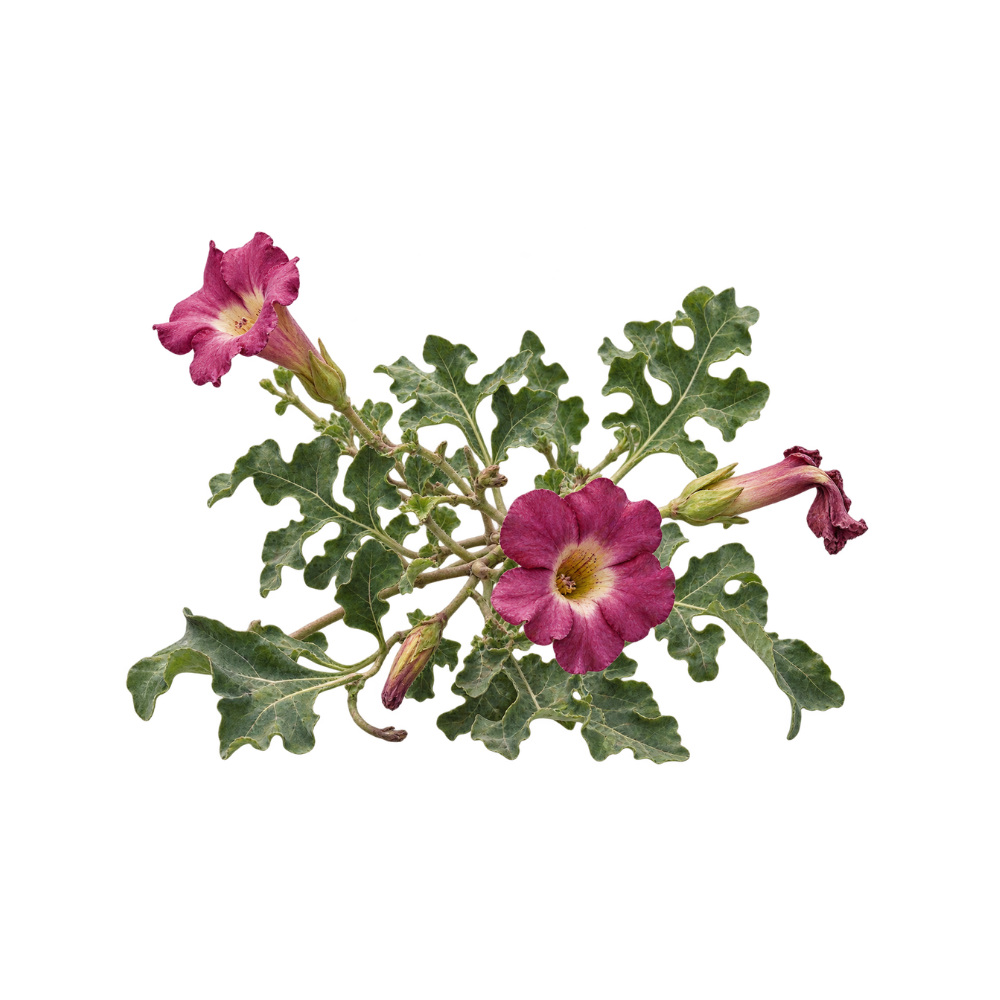 Source Devil's Claw Harpagophytum procumbens Herb monograph →
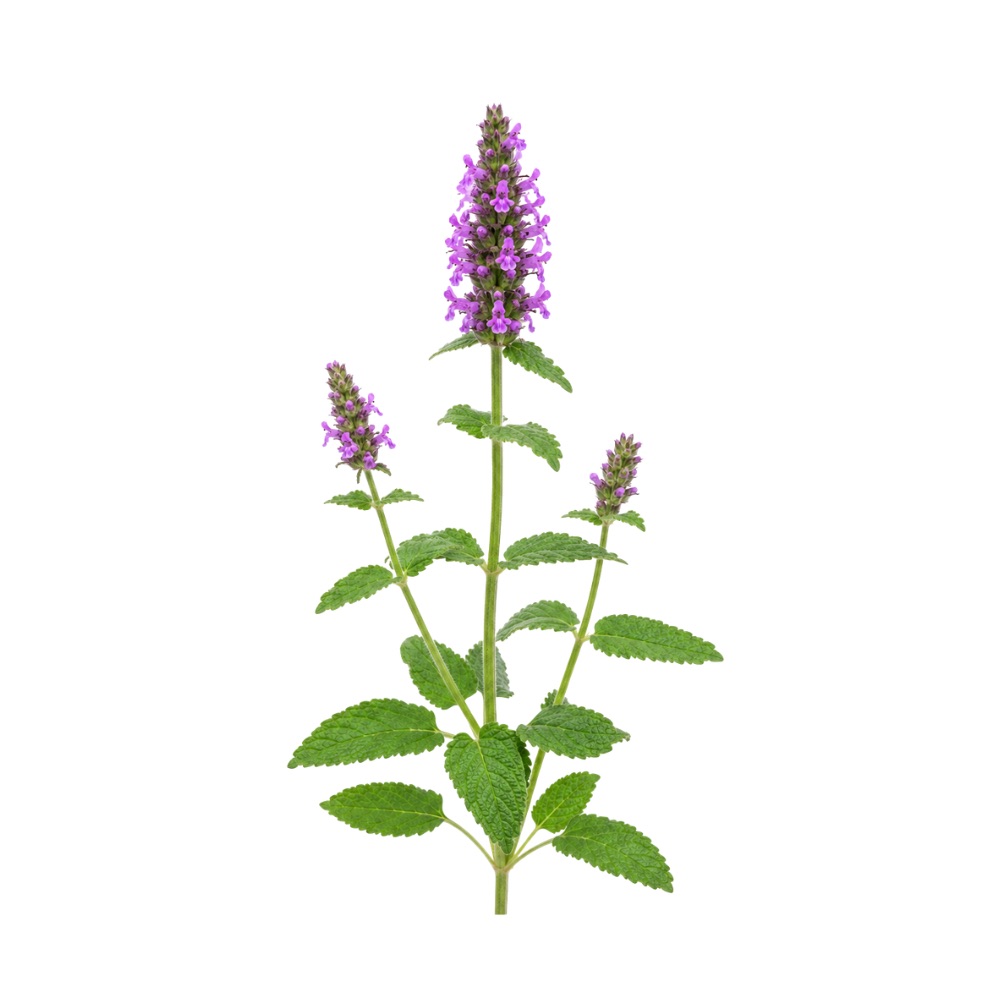 Source Wood Betony Stachys officinalis Herb monograph →
Concentration
Content by Source
Concentrations not reported. No percent-dry-weight or mg/g figures have been published for this compound in its source plants.
8-O-Acetylharpagide at a Glance
8-O-Acetylharpagide is an iridoid glycoside and the acetyl ester of harpagide — the same parent iridoid that, esterified with cinnamic acid, becomes harpagoside, the marker to which devil’s-claw extracts are standardised. It is the signature iridoid of bugle (Ajuga spp.) and of wood betony (Stachys/Betonica officinalis) and related mints, where it co-occurs with harpagide itself.
Unlike its data-thin siblings, this ester has a modest but genuine preclinical record. Isolated-compound studies report anti-inflammatory activity through NF-κB suppression in a mouse lung-injury model 5Reference 5AnimalAcetylharpagide protects mice from Staphylococcus aureus-induced acute lung injury by inhibiting NF-κB signaling pathwayView study →, anti-tumour-promoting and chemopreventive activity in mouse skin and mammary models 3,
The honest headline is that all of this is preclinical — in-vitro and animal, with no human trials — and a pharmacokinetic wrinkle blunts it further: after oral dosing, 8-O-acetylharpagide is hydrolysed back to harpagide, so much of what the intact ester does in a dish may not survive first-pass metabolism in the body 1Reference 1AnimalPharmacokinetics of 8-O-acetylharpagide and harpagide after oral administration of Ajuga decumbens Thunb extract in ratsView study →.
8-O-Acetylharpagide Among the Harpagide Iridoids
This molecule is best understood through its family, because its identity is defined by a single acetyl group.
It is an ester of harpagide. Harpagide is the parent iridoid (named for Harpagophytum, devil’s claw); attaching different acyl groups to its 8-position gives an ester series. Attach an acetyl group and you get 8-O-acetylharpagide; attach cinnamic acid and you get harpagoside, the devil’s-claw standardisation marker; attach p-coumaric acid and you get 8-p-coumaroylharpagide. These near-isomers differ only in that acyl cap, which is why they co-occur and behave similarly in several assays.
Different plants, same chemistry. Where harpagoside and the coumaroyl ester are chiefly devil’s-claw root iridoids, 8-O-acetylharpagide is chiefly a Lamiaceae aerial-part iridoid — the characteristic bitter iridoid of Ajuga (bugle/bugleweed) and of Stachys/Betonica (wood betony), alongside harpagide, aucubin and catalpol 9Reference 9Antiinflammatory activities of Hungarian Stachys species and their iridoidsView study →. It is the most-studied member of the ester series in its own right: much of the pharmacology cited generically for “harpagide esters” is, on close reading, specifically for this acetyl ester rather than for harpagoside or the p-coumaroyl sibling.
A prodrug for harpagide. The acetyl group is also the compound’s pharmacokinetic weak point. In rats given Ajuga decumbens extract, 8-O-acetylharpagide was metabolised to harpagide, altering harpagide’s own plasma profile 1Reference 1AnimalPharmacokinetics of 8-O-acetylharpagide and harpagide after oral administration of Ajuga decumbens Thunb extract in ratsView study → — so in vivo the ester behaves partly as a delivery form of the parent iridoid, and its anticancer effect has been explicitly framed as prodrug-like, acting through downstream metabolites 8Reference 8AnimalMetabolism and excretion of 8-O-acetylharpagide in rats and identification of its potential anti-breast cancer active metabolitesView study →.
What It's Used For
Direct evidence for the isolated molecule is broader than for most harpagide esters — it spans in-vitro assays, isolated organs and several animal models — but stops short of any human trial.
Support is an experimental score — weighted by study type (human > animal > in vitro) and volume. A beta, not a validated metric. Every row rests on preclinical (in-vitro or animal) isolate data, so scores are modest by design.
The best-developed signal, and one of the few tested in vivo. In mice with Staphylococcus aureus-induced acute lung injury, isolated acetylharpagide (from Ajuga decumbens) alleviated pathological lung damage, protected the blood–gas barrier and improved survival; mechanistically it suppressed NF-κB signalling by inhibiting the interaction between polyubiquitinated RIP1 and NEMO, and lowered myeloperoxidase activity and pro-inflammatory cytokines 5Reference 5AnimalAcetylharpagide protects mice from Staphylococcus aureus-induced acute lung injury by inhibiting NF-κB signaling pathwayView study →.
This fits the broader picture from Hungarian Stachys screening, where the herb’s iridoid fraction (harpagide, acetylharpagide, harpagoside) carried dose-dependent antiphlogistic activity in the rat paw-oedema model, with aucubin and harpagoside the standout congeners 9Reference 9Antiinflammatory activities of Hungarian Stachys species and their iridoidsView study →.
Gap: the strong result is a single mouse infection-model study; there is no human confirmation, no dose-response outside that model, and the NF-κB mechanism overlaps that claimed for its siblings, so the effect is not clearly unique to this ester.
A recurring but preclinical anticancer thread. In classic anti-tumour-promoter screening of Ajuga decumbens, 8-acetylharpagide showed strong inhibition of EBV-EA induction and potent anti-tumour-promoting activity in two-stage mouse-skin (and lung/hepatic) carcinogenesis assays 3,
Gap: all animal/in-vitro; no human oncology data, no defined effective systemic exposure, and the “prodrug” framing means the parent ester’s own in-vitro potency may misstate the in-vivo actor.
The compound-distinctive isolated-organ signal. On isolated smooth-muscle preparations, 8-O-acetylharpagide from Ajuga reptans showed vasoconstrictor activity, offered by the authors as a partial rationale for Ajuga’s traditional uses 2Reference 2Vasoconstrictor activity of 8-O-acetylharpagide from Ajuga reptansView study →. Reviews additionally attribute spasmolytic and cardiotonic effects on isolated tissue to the compound, but the primary, peer-verified finding is the vasoconstrictor one 2Reference 2Vasoconstrictor activity of 8-O-acetylharpagide from Ajuga reptansView study →.
Gap: a single isolated-tissue study; no whole-animal cardiovascular data, no receptor-level mechanism confirmed in a primary source, and no human relevance established. Broader β-adrenergic/anti-arrhythmic claims for this molecule are not supported by a verifiable primary study and are treated here as unconfirmed.
Mechanisms
| Target / pathway | Effect | Relevant to |
|---|---|---|
| RIP1–NEMO interaction / NF-κB | blocks polyubiquitinated RIP1 binding NEMO → suppresses NF-κB-driven inflammation (mouse lung injury) | anti-inflammatory |
| Myeloperoxidase / pro-inflammatory cytokines | reduced in infected lung tissue | anti-inflammatory |
| EBV early-antigen (EBV-EA) induction | strong inhibition → anti-tumour-promoting readout | chemoprevention |
| AKT / NF-κB / MMP9 axis | suppressed in 4T1 mammary tumours (via active metabolites) | anti-tumour |
| Isolated smooth muscle (vascular) | vasoconstrictor activity | cardiovascular / smooth-muscle |
| Insect ecdysteroid receptor | nonsteroidal ecdysteroid agonist (mimics moulting hormone) | insect biology (not human pharmacology) |
The load-bearing caveat is pharmacokinetic: the intact ester is hydrolysed to harpagide after oral dosing 1Reference 1AnimalPharmacokinetics of 8-O-acetylharpagide and harpagide after oral administration of Ajuga decumbens Thunb extract in ratsView study →, so several of these mechanisms — demonstrated on the intact molecule in vitro — may be delivered in vivo by harpagide or downstream metabolites rather than by 8-O-acetylharpagide itself.
Pharmacokinetics
A rare strength for a minor iridoid: this molecule has been studied pharmacokinetically. Given as Ajuga decumbens extract to rats, 8-O-acetylharpagide and harpagide were quickly absorbed orally and showed dose-dependent exposure, but the ester was metabolised to harpagide, which in turn reshaped harpagide’s own plasma profile — a conversion that did not occur identically when the compounds were dosed pure, implicating the extract matrix 1Reference 1AnimalPharmacokinetics of 8-O-acetylharpagide and harpagide after oral administration of Ajuga decumbens Thunb extract in ratsView study →. A companion study in beagle dogs reported a time-to-peak of roughly 1.6 h, with species differences from the rat data 1Reference 1AnimalPharmacokinetics of 8-O-acetylharpagide and harpagide after oral administration of Ajuga decumbens Thunb extract in ratsView study →. A 2025 rat metabolism/excretion study catalogued 21 metabolites, with demethylation, hydrolysis and glucuronidation the primary routes, and concluded the compound behaves as a prodrug whose activity is carried substantially by its metabolites 8Reference 8AnimalMetabolism and excretion of 8-O-acetylharpagide in rats and identification of its potential anti-breast cancer active metabolitesView study →. As a polar glycoside, poor absorption of the intact molecule is the expected class limitation; here the added twist is deacetylation to the parent iridoid.
Clinical Trials
There are no clinical trials of 8-O-acetylharpagide (or of acetylharpagide-standardised extract). Human evidence does not exist for this molecule; the entire record is in-vitro and animal.
| Completed | Planned | Terminated | Preclinical |
|---|---|---|---|
| None | — | — | Anti-inflammatory (mouse), anticancer (mouse 4T1 + skin/EBV), vasoconstrictor (isolated tissue), rat/dog PK |
Last checked: July 2026.
Isolate vs. Plant Studies
Unusually for a harpagide ester, most of the evidence here is the isolate. The lung-injury, chemoprevention and mammary-tumour studies all tested purified 8-O-acetylharpagide (typically sourced from Ajuga decumbens or A. reptans), and the vasoconstrictor and ecdysteroid-agonist work used the isolated compound 2,
Its Role in Plants & Insects
In its source plants the harpagide-ester iridoids function as chemical defences, and 8-O-acetylharpagide is the textbook case. Isolated from Ajuga reptans, it is a nonsteroidal ecdysteroid agonist: it binds the insect ecdysteroid receptor and mimics the moulting hormone (20-hydroxyecdysone) in a transactivation assay (EC₅₀ in the low-micromolar range), a mode of action that can disrupt insect development and underlies the use of Ajuga extracts as insect growth inhibitors 7Reference 7Elbrecht A, Chen Y, Jurgens T, Hensens OD, Zink DL, Beck HT, Balick MJ, Borris R (1996). 8-O-acetylharpagide is a nonsteroidal ecdysteroid agonist. Insect Biochemistry and Molecular Biology. https://pubmed.ncbi.nlm.nih.gov/8969463/View study →. Together with the phytoecdysteroids that Ajuga also produces, this makes the genus chemically hostile to feeding larvae.
As always, an insect-hormone or plant-defence role says nothing about human pharmacology — a molecule that agonises the insect moulting receptor has no corresponding human target.
Prevalence in Nature
8-O-Acetylharpagide is a Lamiaceae aerial-part iridoid. Its best-documented sources are the bugle genus Ajuga — A. reptans, A. decumbens (the Chinese bugleweed of most of the pharmacology) and A. taiwanensis 2,
Absolute concentrations are not well quantified in the literature; reported figures are qualitative (a “characteristic” or “major” iridoid of the aerial parts) rather than measured percentages of dry weight, and content varies with species, plant part and season.
Discovery & Synthesis
8-O-Acetylharpagide was characterised as an Ajuga iridoid during twentieth-century phytochemical study of the Lamiaceae (CAS 6926-14-3). Its name is purely descriptive: it is harpagide — itself named for Harpagophytum — bearing an acetyl ester at the 8-position, the simplest member of the harpagide-ester series that includes harpagoside (cinnamoyl) and 8-p-coumaroylharpagide (p-coumaroyl). Its distinct biological activities were reported progressively: vasoconstrictor activity in 1992 (Breschi and colleagues, Ajuga reptans) 2Reference 2Vasoconstrictor activity of 8-O-acetylharpagide from Ajuga reptansView study →, anti-tumour-promoting/EBV-EA inhibition from 1999–2000 (Takasaki, Konoshima and colleagues, Ajuga decumbens) 3,
There is no notable total synthesis on record; as a minor, un-commercialised iridoid it is obtained by chromatographic isolation from Ajuga or Stachys plant material for research and analytical use rather than manufactured, and it is not produced as a stand-alone supplement ingredient.
Patents: not yet researched.
Toxicity & Safety
8-O-Acetylharpagide carries a low flag. It is a minor iridoid of long-used herbs — bugle and wood betony — with no isolate-specific toxicity signal reported, and in the animal efficacy studies it was administered without notable acute toxicity at the doses used 5,
- No isolate-specific toxicity signal, and the parent herbs (bugle, wood betony) have a long record of traditional use and general tolerability.
- Herb-level cautions carry over. Any caution attached to Ajuga or Stachys preparations (and their bitter iridoids) belongs to the herb and product pages, where intake is decided — not to this molecule page.
- The isolate is largely uncharacterised for safety. No dedicated toxicology, genotoxicity, interaction or reproductive-toxicity data exist for 8-O-acetylharpagide specifically; absence of a signal is not evidence of safety.
Reproductive and pregnancy safety have not been assessed for this isolated compound. Pregnancy and lactation decisions belong to the herb or product monograph where intake is actually decided, not to this molecule-level page.
Dosage
There is no established or recommended dose for isolated 8-O-acetylharpagide — it is not sold or used as an isolate, and no human dosing exists. Preclinical work used experimental doses in mice and rats that do not translate to human recommendations 5,
These are research figures for the isolated molecule and its source herbs, not a personal recommendation.
References
- Wen B, He R, Li P, Xu Q, Lu Y, Peng B, Li J (2013). Pharmacokinetics of 8-O-acetylharpagide and harpagide after oral administration of Ajuga decumbens Thunb extract in rats. Journal of Ethnopharmacology. https://pubmed.ncbi.nlm.nih.gov/23545457/
- Breschi MC, Martinotti E, Catalano S, Flamini G, Morelli I, Pagni AM (1992). Vasoconstrictor activity of 8-O-acetylharpagide from Ajuga reptans. Journal of Natural Products. https://pubmed.ncbi.nlm.nih.gov/1431938/
- Takasaki M, Tokuda H, Nishino H, Konoshima T (1999). Cancer chemopreventive agents (antitumor-promoters) from Ajuga decumbens. Journal of Natural Products. https://pubmed.ncbi.nlm.nih.gov/10425119/
- Konoshima T, Takasaki M, Tokuda H, Nishino H (2000). Cancer chemopreventive activity of an iridoid glycoside, 8-acetylharpagide, from Ajuga decumbens. Cancer Letters. https://pubmed.ncbi.nlm.nih.gov/10893446/
- Zhang Z, Wang Y, Shan Y, Yin W (2020). Acetylharpagide protects mice from Staphylococcus aureus-induced acute lung injury by inhibiting NF-κB signaling pathway. Molecules. https://pubmed.ncbi.nlm.nih.gov/33255656/
- Hsu WH, Lin BZ, Leu JD, Lo PH, Yu HY, Chen CT, Tu YH, Lin YL, Lee YJ (2020). Involvement of 8-O-acetylharpagide for Ajuga taiwanensis mediated suppression of senescent phenotypes in human dermal fibroblasts. Scientific Reports. https://pubmed.ncbi.nlm.nih.gov/33184359/
- Elbrecht A, Chen Y, Jurgens T, Hensens OD, Zink DL, Beck HT, Balick MJ, Borris R (1996). 8-O-acetylharpagide is a nonsteroidal ecdysteroid agonist. Insect Biochemistry and Molecular Biology. https://pubmed.ncbi.nlm.nih.gov/8969463/
- Zhao X, Su S, Zhou J, Gao J, Tang X, Wen B (2025). Metabolism and excretion of 8-O-acetylharpagide in rats and identification of its potential anti-breast cancer active metabolites. Drug Design, Development and Therapy. https://pubmed.ncbi.nlm.nih.gov/40231196/
- Háznagy-Radnai E, Balogh Á, Czigle S, Máthé I, Hohmann J, Blazsó G (2012). Antiinflammatory activities of Hungarian Stachys species and their iridoids. Phytotherapy Research. https://pubmed.ncbi.nlm.nih.gov/21887806/



