
Condition
Multiple Sclerosis
Multiple sclerosis is an autoimmune disease in which the myelin sheath of nerves in the brain and spinal cord is progressively damaged, disrupting nerve signaling.

Overview
Aetiology
Multiple sclerosis involves gradual, or remissive degeneration of the myelin sheath within the brain and spinal cord. Though there is no specific cause, it’s been correlated with previous viral infection (such as EBV), chronic inflammation, and low levels of sunlight (vitamin D). It’s also more common in women than men, and appears to have some genetic influence (roughly 15% have family members with the condition).
Primary Progressive Multiple Sclerosis (PPMS)
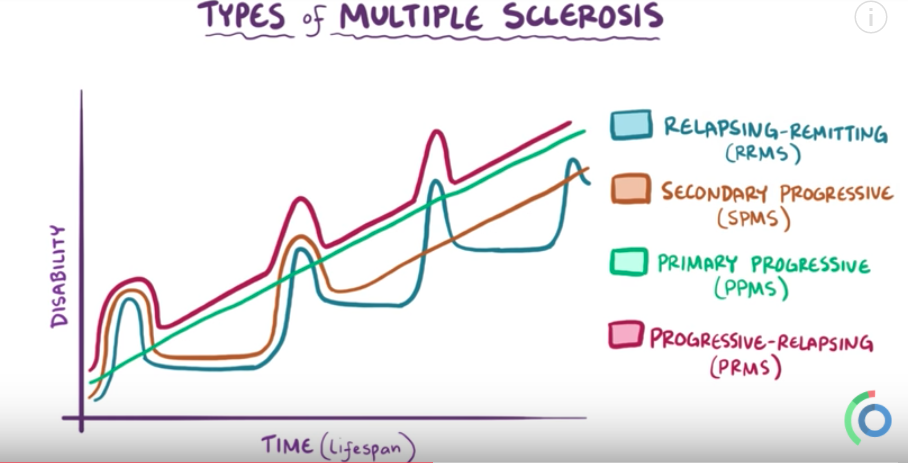
A constant, steady attack with a progressive decrease in function from the outset. There may be plateaus where symptoms do not appear to be getting worse, but there are no clear triggers or distinct exacerbations.
Secondary Progressive Multiple Sclerosis (SPMS)
Starts out similarly to relapsing and remitting MS, but eventually the immune attack becomes constant, resulting in a steady increase in dizability.
Relapsing and Remitting Multiple Sclerosis (RRMS)
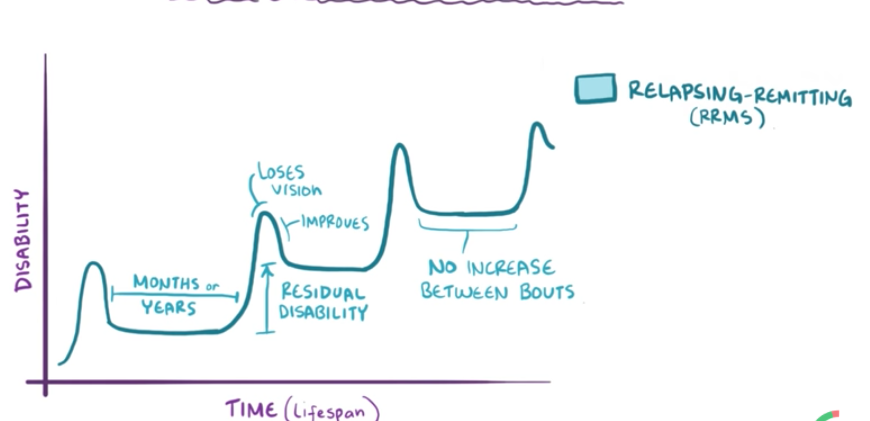
The most common type of MS, characterized by bouts of demyelination followed by remission that allows some remyelination and reduction in symptoms. Remissions may last weeks, months, or years, and relapses may appear spontaneously or after a viral or bacterial infection. This type causes gradual degradation of neuronal tissue with bouts of increased attacks that can be months or years apart.
Progressive Relapsing Multiple Sclerosis (PRMS)
Steady degeneration and increase in dizability along with bouts of increased attacks similar in nature to RRMS.
Presentation
Symptoms
Symptoms are highly variable and depend on which nerves are affected. Common features include fatigue, numbness or tingling, muscle weakness and spasticity, problems with balance and coordination, visual disturbances such as optic neuritis or double vision, bladder and bowel dysfunction, and cognitive changes.
Assessment
Diagnostic Considerations
-
Genetic factors
-
Genes encoding for HLA-DR2
- Identifies and binds to foreign molecules.
-
-
Vitamin D deficiency
-
CSF lymphocytes and antibodies
-
Scans:
- MRI to look for initial lesion
Assessment
Differential Diagnosis
- MRI
- Antibodies in the cerebrospinal fluid
- Visual evoked potential
Conventional Treatments
- Withania
- Passiflora
- Astragalus
- Andrographis
- Echinacea
- St Johns wort
- Taraxacum
- Silybum, Bupleurum
Supplementation
Nutritional Considerations
- Vitamin D
- CoQ10
- Polyunsaturated fatty acids
- Omegas 3
- Antioxidants
- Selenium
- B complex
- Iron
- Flavonoids
- Vitamins A, C, & E
The Herbs
Materia Medica (2)
Herbs traditionally or clinically used for multiple sclerosis.

Supplementation
Supplementation (1)
Supplements, nutrients and compounds used for multiple sclerosis.
Vitamin D3 (Cholecalciferol)
Vitamin
A fat-soluble secosteroid made in skin from sunlight, essential for calcium absorption and bone health. Correcting deficiency matters; routine extra dosing in already-replete people is mostly null.