
Materia Medica
Lobelia
Lobelia inflata
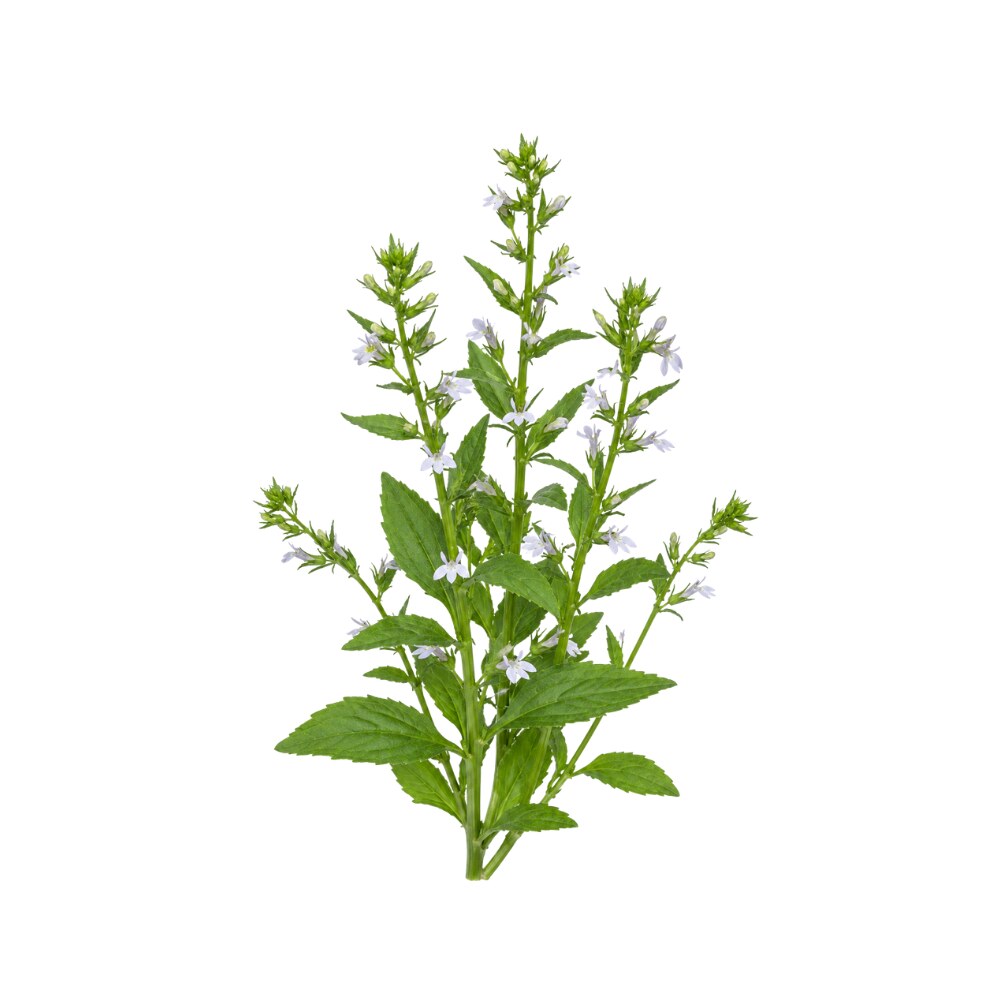
Lobelia, or Indian tobacco, is an annual herb of eastern North America used in Eclectic medicine for asthma and spasmodic cough and, in larger doses, as an emetic. Its main alkaloid is lobeline, and the margin between a useful dose and a toxic one is narrow.
What Is Lobelia?
Lobelia, or Indian tobacco, is a small annual herb of eastern North America with pale blue flowers and inflated seed pods. It was one of the most important remedies of nineteenth-century Thomsonian and Eclectic medicine, used for asthma and spasmodic cough and, in larger doses, as an emetic 21Reference 21Lobelia (UView study →.
It grows in fields, open woods and along roadsides from southern Canada to Georgia and west to Kansas 23Reference 23Lady Bird Johnson Wildflower Center. (n.d.). Lobelia inflata (Indian tobacco) — plant database entry. Native Plant Information Network, University of Texas at Austin. https://www.wildflower.org/plants/result.php?id_plant=LOINView study →. The whole plant has a sharp, acrid taste like tobacco, which is the likeliest source of the name Indian tobacco 21Reference 21Lobelia (UView study →.
Its main alkaloid is lobeline. Research has moved from smoking cessation, where a large trial found no benefit, to lobeline’s action on dopamine storage in the brain, studied in animal models of addiction and depression 1,
A close relative, spiked lobelia (Lobelia spicata), looks similar but has larger flowers and pods that barely swell 22Reference 22Native Plant Trust. (n.d.). Lobelia inflata (bladder-pod lobelia, Indian-tobacco) — species account. Go Botany. https://gobotany.nativeplanttrust.org/species/lobelia/inflata/View study →.
How Is Lobelia Used?
Lobelia is used as the dried leaves, tops and seed pods, gathered once some of the pods have swollen. It is given in small, measured doses, usually as a tincture, for spasmodic breathing and cough 21Reference 21Lobelia (UView study →.
- Tincture — low drop doses, roughly 0.2–0.6 mL, up to about 1 mL, three times daily.
- Dried herb — about 50–200 mg as a single low dose.
- External use — an infusion or tincture applied to sprains, bruises and skin rashes, including poison ivy 21Reference 21Lobelia (UView study →.
Traditional Uses
Native American Medicine
The Iroquois used the root for venereal disease, ulcers and leg sores, and applied the mashed leaves as a poultice to an abscess at the side of the neck. The Cherokee made a poultice of the mashed roots for body aches, and rubbed the leaves on sores, aches, stiff necks and chapped skin. The Crow used the plant in religious ceremony 24Reference 24Indian tobacco, Lobelia inflata L. — plant guideView study →.
Native peoples were said to have smoked and chewed the leaves 23Reference 23Lady Bird Johnson Wildflower Center. (n.d.). Lobelia inflata (Indian tobacco) — plant database entry. Native Plant Information Network, University of Texas at Austin. https://www.wildflower.org/plants/result.php?id_plant=LOINView study →. The Penobscot knew the plant, and it was used in New England home medicine before Samuel Thomson made it famous 21Reference 21Lobelia (UView study →.
Thomsonian & Eclectic Medicine
Samuel Thomson and Manasseh Cutler brought lobelia into medical practice in the late eighteenth and early nineteenth centuries. They called it emetic weed and emetic herb, and the names puke weed and vomit weed followed. Cutler, who suffered from asthma, found it gave him more relief than any other remedy, and published the first account of it in 1785 21Reference 21Lobelia (UView study →.
Thomson was tried after a patient, Ezra Lovett, died under his care, and the prosecution accused him of killing Lovett with lobelia. Thomson said the drug had been marsh rosemary, the powder produced in court proved to be marsh rosemary, and the judge directed the jury to acquit. A second physician, R. K. Frost of New York, was convicted of manslaughter in 1837 after a patient died under lobelia treatment 21Reference 21Lobelia (UView study →.
Lobelia was official in the first United States Pharmacopoeia of 1820 21Reference 21Lobelia (UView study →. King’s American Dispensatory (1898) calls it the first of remedies for spasmodic asthma, and records its use for whooping cough, croup, bronchitis, pleurisy and chronic cough. It was also given as a relaxant for muscle spasm and convulsions, and in small doses for indigestion 21Reference 21Lobelia (UView study →.
The Eclectics valued it as an emetic, given in small repeated doses until nausea set in and then pushed to vomiting. King’s warns that heat destroys lobeline, so a decoction or hot infusion was considered irrational 21Reference 21Lobelia (UView study →.
Indications
- Asthma and spasmodic cough [leaves, tops and seed; Eclectic medicine]
- Bronchitis, croup and whooping cough [leaves, tops and seed; Eclectic medicine]
- Emetic [leaves, tops and seed; Thomsonian and Eclectic medicine]
- Muscle spasm and rigidity [leaves and tops; Eclectic medicine]
- Indigestion [small doses; Eclectic medicine]
- Sores, aches and stiff necks [leaves, applied to the skin; Cherokee use]
- Sprains, bruises and poison ivy rash [infusion or tincture, applied to the skin; Eclectic medicine]
- Smoking cessation [lobeline] Caution: A Phase 3 trial in 750 smokers found no benefit, and a Cochrane review found no long-term evidence that lobeline helps people stop smoking 1,
2 .
Botany
Indian tobacco is an annual herb of the bellflower family (Campanulaceae), growing up to 1 m tall 22,
The leaves are alternate and stalkless, oval to oblong, 5–8 cm long, toothed and hairy 22,
After flowering, the base of each flower swells into a papery, balloon-like pod 6–11 mm long 21,
The whole plant has an acrid taste like tobacco 21Reference 21Lobelia (UView study →. Spiked lobelia (L. spicata) is told apart by its larger petals (7–11 mm), a floral tube that barely swells in fruit, and narrower leaves 22Reference 22Native Plant Trust. (n.d.). Lobelia inflata (bladder-pod lobelia, Indian-tobacco) — species account. Go Botany. https://gobotany.nativeplanttrust.org/species/lobelia/inflata/View study →.
Distribution
Indian tobacco is native to eastern North America. It grows across southern Canada, south to Georgia and west to Arkansas and eastern Kansas 23Reference 23Lady Bird Johnson Wildflower Center. (n.d.). Lobelia inflata (Indian tobacco) — plant database entry. Native Plant Information Network, University of Texas at Austin. https://www.wildflower.org/plants/result.php?id_plant=LOINView study →.
It grows in fields, open woods, roadsides, forest clearings, trail edges, ledges and shorelines 22,
It is widespread and common. Massachusetts ranks it S5, the most secure grade 22Reference 22Native Plant Trust. (n.d.). Lobelia inflata (bladder-pod lobelia, Indian-tobacco) — species account. Go Botany. https://gobotany.nativeplanttrust.org/species/lobelia/inflata/View study →. In the late nineteenth century much of the commercial supply came from the mountains of North Carolina 21Reference 21Lobelia (UView study →.
Growing Conditions
Cultivation snapshot for Lobelia
- Grow as a hardy annual (roughly USDA zones 3–9); it completes its cycle in one season and keeps itself going by prolific self-seeding.
- Happy in full sun to part shade; tolerates open exposure but does well with the light shelter of a woodland edge.
- Prefers average, moist but well-drained soil and adapts readily to poor, acid or disturbed ground.
- Sow the very fine seed on the surface (it needs light to germinate); autumn sowing or cold stratification and open, disturbed soil improve establishment.
Grow it yourself
Farm Wiki is our cultivation-focused sister site, also run by Justin Cooke.
Pharmacology & Research
Almost all modern research on lobelia is on one molecule, its main alkaloid lobeline, and most of it is preclinical.
The most-tested human use is smoking cessation. A multicentre Phase 3 trial in 750 people found no benefit over placebo, and a Cochrane review found no long-term evidence 1,
The main recent work is in addiction and mood. In rats, lobeline reduces methamphetamine self-administration, and in mice it reduces depression-like behaviour in stress and withdrawal models. These effects are linked to its action on the vesicular monoamine transporter, VMAT2, rather than on nicotinic receptors 3,
-
Best-supported: reduced methamphetamine self-administration in rats, with a VMAT2 mechanism mapped in detail 3,
4, ; reflex stimulation of breathing through the carotid-body chemoreceptors 17,5Reference 3AnimalLobeline attenuates d-methamphetamine self-administration in rats — animal modelView study →Reference 4ReviewA novel mechanism of action and potential use for lobeline as a treatment for psychostimulant abuse — reviewView study →Reference 5In vitroLobeline displaces [3H]dihydrotetrabenazine binding and releases [3H]dopamine from rat striatal synaptic vesicles — in vitroView study → 18Reference 17AnimalEffects of dopamine, isoproterenol, and lobeline on cranial and phrenic motoneurons — in vivo (cat)View study →Reference 18Search for evidence of lung chemoreflexes in man: respiratory and circulatory effects of phenyldiguanide and lobeline — human physiologyView study → . -
Emerging: antidepressant-like activity in three mouse models of stress and withdrawal 8,
9, ; a modest working-memory signal in a small study of adults with ADHD 11Reference 11Lobeline effects on cognitive performance in adult ADHD — human proof-of-concept studyView study →.10Reference 8AnimalThe effects of lobeline on depression-like behavior and hippocampal cell proliferation following chronic stress in mice — animal modelView study →Reference 9AnimalThe effects of lobeline on nicotine withdrawal-induced depression-like behavior in mice — animal modelView study →Reference 10AnimalLobeline attenuates ethanol abstinence-induced depression-like behavior in mice — animal modelView study → -
Thin: cholinesterase inhibition (in silico and in vitro) and reversal of multidrug resistance in tumour cell lines 14,
15, .16Reference 14In vitroLobeline, a piperidine alkaloid from Lobelia, can reverse P-gp dependent multidrug resistance in tumor cells — in vitroView study →Reference 15In vitroReversal effect and mechanism of lobeline on the multidrug-resistance of human breast cancer cells MCF-7/ADM — in vitroView study →Reference 16In vitroLobeline: a multifunctional alkaloid modulates cholinergic and glutamatergic activities — in silico and in vitroView study → -
Limits: smoking cessation was tested in a large trial and failed 1,
2Reference 1RCTA multicenter phase 3 trial of lobeline sulfate for smoking cessation — randomised, double-blind, placebo-controlled trialView study →Reference 2Systematic reviewLobeline for smoking cessation — systematic review (Cochrane)View study → . Almost all the positive findings are animal data on isolated lobeline, and there is no standardised whole-herb dose.
The research is on isolated lobeline at measured doses, not on the whole herb. Traditional lobelia is an acrid tincture given in drops, and none of the animal findings has been tested with it.
1. Psychostimulant Abuse
In rats trained to self-administer intravenous methamphetamine, a single dose of lobeline (0.3–3.0 mg/kg) reduced responding for both the drug and sucrose. With repeated dosing, tolerance developed to the effect on sucrose, but the reduction in methamphetamine taking persisted, and raising the methamphetamine dose did not overcome it 3Reference 3AnimalLobeline attenuates d-methamphetamine self-administration in rats — animal modelView study →.
Lobeline binds the tetrabenazine site on the vesicular monoamine transporter (VMAT2) and blocks dopamine uptake into synaptic vesicles 5Reference 5In vitroLobeline displaces [3H]dihydrotetrabenazine binding and releases [3H]dopamine from rat striatal synaptic vesicles — in vitroView study →. This, rather than an action on nicotinic receptors, is now regarded as its main mechanism. Lobeline blocked amphetamine-induced dopamine release, hyperactivity and self-administration, and rats did not self-administer lobeline itself 4Reference 4ReviewA novel mechanism of action and potential use for lobeline as a treatment for psychostimulant abuse — reviewView study →.
Lobeline did not change methamphetamine-induced dopamine release in the rat striatum. It did lessen the fall in VMAT2 and the long-term loss of striatal dopamine and serotonin, partly by blunting methamphetamine’s rise in body temperature and partly independently of it 6Reference 6AnimalLobeline attenuates methamphetamine-induced changes in vesicular monoamine transporter 2 and monoamine depletions in the striatum — ratView study →.
In microdialysis of the nucleus accumbens, lobeline did not alter methamphetamine’s effect on dopamine, but it prolonged the fall in its metabolite DOPAC 7Reference 7AnimalEffects of VMAT2 inhibitors lobeline and GZ-793A on methamphetamine-induced dopamine release in vivo — rat microdialysisView study →.
Gap: Entirely preclinical. No human study has tested lobeline for stimulant-use disorder.
2. Respiratory Stimulant
In 14 anaesthetised cats, lobeline injected into the lingual arteries increased the activity of the phrenic, hypoglossal and recurrent laryngeal nerves, with the largest effect on the hypoglossal nerve. The effect disappeared once the vagus and carotid sinus nerves were cut, which places it at the peripheral chemoreceptors 17Reference 17AnimalEffects of dopamine, isoproterenol, and lobeline on cranial and phrenic motoneurons — in vivo (cat)View study →.
Lobeline has also been used to probe lung chemoreflexes in human breathing studies 18Reference 18Search for evidence of lung chemoreflexes in man: respiratory and circulatory effects of phenyldiguanide and lobeline — human physiologyView study →.
In anaesthetised rats, lobeline injections containing 36.9% of the trans isomer had a 50.2% weaker effect on breathing than cis-lobeline. Heat and pH drive the one-way conversion from cis to trans 20Reference 20AnimalFrom cis-lobeline to trans-lobeline: study on the pharmacodynamics and isomerization factors — rat respiratory modelView study →. Lobeline injection has been used as a first-aid respiratory stimulant, now largely displaced by ventilators 20Reference 20AnimalFrom cis-lobeline to trans-lobeline: study on the pharmacodynamics and isomerization factors — rat respiratory modelView study →.
At high doses the picture reverses. King’s American Dispensatory states that death from lobeline results from respiratory paralysis 21Reference 21Lobelia (UView study →.
Gap: No controlled clinical trial in any respiratory disease. The data are decades-old physiology.
3. Antidepressant-Like
A set of mouse studies from one research group reports that lobeline reduces depression-like behaviour.
In mice under six weeks of chronic unpredictable stress, lobeline (1 mg/kg) reduced immobility in the forced-swim test and prevented the stress-induced fall in hippocampal BDNF and cell proliferation 8Reference 8AnimalThe effects of lobeline on depression-like behavior and hippocampal cell proliferation following chronic stress in mice — animal modelView study →.
During nicotine withdrawal, lobeline reduced forced-swim immobility and lessened the rise in noradrenaline in the prefrontal cortex and hippocampus 9Reference 9AnimalThe effects of lobeline on nicotine withdrawal-induced depression-like behavior in mice — animal modelView study →. After chronic alcohol, it reduced immobility at 24 hours and 14 days of abstinence and reversed the fall in hippocampal serotonin 10Reference 10AnimalLobeline attenuates ethanol abstinence-induced depression-like behavior in mice — animal modelView study →.
The authors attribute the effects to nicotinic-receptor signalling feeding into monoamine and BDNF pathways 8,
Gap: No human data. The work comes largely from one laboratory, and forced-swim immobility is a screening test, not clinical depression.
4. Cognition & Memory
In rats, lobeline given after training improved retention in a passive-avoidance task, and given before training it improved the performance of rats with septal lesions in a spatial water maze. The effective dose in the avoidance task was about 10 times higher than that reported for nicotine; in the water maze the two were similar 12Reference 12AnimalEffects of lobeline, a nicotinic receptor agonist, on learning and memory — ratView study →.
The one human study was a laboratory proof-of-concept in nine adults with ADHD, given sublingual lobeline at 7.5, 15 or 30 mg. It suggested a modest improvement in working memory, with no significant effect on attention, and lobeline caused mild nausea 11Reference 11Lobeline effects on cognitive performance in adult ADHD — human proof-of-concept studyView study →.
Gap: A single nine-person study with a working-memory-only effect, and no adequately powered trial.
5. Anticonvulsant & Neuroprotective
In mice with pilocarpine-induced seizures, lobeline lengthened the time to the first seizure and reduced the share of animals that seized, much as diazepam did. It also reduced seizure-related DNA damage in the hippocampus and cortex and brought hippocampal catalase activity back to normal 13Reference 13AnimalDNA damage and oxidative stress induced by seizures are decreased by anticonvulsant and neuroprotective effects of lobeline — mouse modelView study →.
This is a single study in one seizure model, without replication, and nothing shows the whole herb reproduces it.
6. Multidrug-Resistance Reversal
In drug-resistant tumour cells, lobeline inhibited P-glycoprotein-mediated efflux and re-sensitised doxorubicin-resistant cells at non-toxic concentrations. It did not block the BCRP transporter 14Reference 14In vitroLobeline, a piperidine alkaloid from Lobelia, can reverse P-gp dependent multidrug resistance in tumor cells — in vitroView study →.
In doxorubicin-resistant MCF-7 breast-cancer cells, lobeline cut the IC₅₀ of doxorubicin from 44.8 to 16.7 mg/L. At 20 µmol/L its reversal effect was 71.6% of that of verapamil 15Reference 15In vitroReversal effect and mechanism of lobeline on the multidrug-resistance of human breast cancer cells MCF-7/ADM — in vitroView study →.
Both are cell-line studies, with no animal tumour model. P-glycoprotein inhibition also points to a possible drug interaction.
7. Cholinesterase Inhibition
A computational search for targets identified lobeline as a cholinesterase inhibitor, because it resembles donepezil in structure. In silico, in vitro and biophysical assays confirmed that it inhibits acetylcholinesterase, with higher affinity than for butyrylcholinesterase. In rat cortical neurons it also protected against glutamate damage by blocking NMDA receptors 16Reference 16In vitroLobeline: a multifunctional alkaloid modulates cholinergic and glutamatergic activities — in silico and in vitroView study →.
These are enzyme and cell findings on isolated lobeline, with no data in whole animals.
8. Smoking Cessation
Because lobeline was considered a partial nicotine agonist, it was sold in a range of stop-smoking products 2Reference 2Systematic reviewLobeline for smoking cessation — systematic review (Cochrane)View study →. A multicentre, double-blind, placebo-controlled Phase 3 trial randomised 750 smokers to sublingual lobeline sulfate or placebo and found no benefit (P=0.62) 1Reference 1RCTA multicenter phase 3 trial of lobeline sulfate for smoking cessation — randomised, double-blind, placebo-controlled trialView study →.
A Cochrane review found no trial with long-term follow-up, and noted that the one large trial found no effect even on short-term abstinence 2Reference 2Systematic reviewLobeline for smoking cessation — systematic review (Cochrane)View study →.
Lobeline acts as an antagonist at α4β2 and α3β2 nicotinic receptors and works mainly through VMAT2, so it does not substitute for nicotine 4,
Mechanisms
Lobeline is a piperidine alkaloid 14Reference 14In vitroLobeline, a piperidine alkaloid from Lobelia, can reverse P-gp dependent multidrug resistance in tumor cells — in vitroView study →. Its best-characterised action is at VMAT2, where it blocks the loading of dopamine into storage vesicles; this is the basis of the addiction and mood research 4,
At nicotinic receptors it blocks rather than activates 4,
| Mechanism | Drives | Key compounds |
|---|---|---|
| VMAT2 inhibition (↓ vesicular dopamine storage, ↑ intraneuronal metabolism) | psychostimulant abuseantidepressant-like | lobeline |
| Nicotinic AChR modulation (α4β2/α3β2 antagonist; α4β4 higher affinity) | smoking cessationcognitionrespiratory | lobeline |
| Carotid-body chemoreceptor stimulation → ↑ respiratory drive | respiratory stimulant | lobeline |
| Monoamine (NE, 5-HT) + BDNF/CREB signalling | antidepressant-like | lobeline |
| P-glycoprotein efflux inhibition | multidrug-resistance reversal | lobeline |
| Cholinesterase (AChE) inhibition; NMDA receptor block | cholinergic/cognition | lobeline |
| Antioxidant / anti-seizure (↓ DNA damage) | anticonvulsantneuroprotective | lobeline |
Clinical Trials
One human efficacy trial exists, the negative Phase 3 for smoking cessation 1Reference 1RCTA multicenter phase 3 trial of lobeline sulfate for smoking cessation — randomised, double-blind, placebo-controlled trialView study →. No lobeline-intervention trials are currently registered on ClinicalTrials.gov.
| Completed | Planned | Terminated | Preclinical |
|---|---|---|---|
| 1 | 0 | 0 | ~40+ |
Last checked: July 2026.
Phytochemistry
Lobelia’s alkaloids are piperidine alkaloids, led by lobeline 14Reference 14In vitroLobeline, a piperidine alkaloid from Lobelia, can reverse P-gp dependent multidrug resistance in tumor cells — in vitroView study →. Lobeline was first obtained by William Procter in 1838, and John Uri Lloyd later prepared it from the seeds 21Reference 21Lobelia (UView study →.
Lobeline is unstable once separated from the plant, and heat destroys it in both water and alcohol preparations 21Reference 21Lobelia (UView study →.
The related alkaloids lobelanine, lobelanidine, isolobelanine and lobelidine accompany it, along with the coumarin scopoletin and the flavonoid quercetin.
The seeds yield a fixed oil 21Reference 21Lobelia (UView study →. Lobeline occurs in both cis and trans forms, and the cis form converts to the weaker trans form with heat 20Reference 20AnimalFrom cis-lobeline to trans-lobeline: study on the pharmacodynamics and isomerization factors — rat respiratory modelView study →.
Constituent Summary
Lobeline is the main alkaloid; amounts of the others have not been measured.
Other Alkaloids4 compounds4 with data
Coumarins1 compoundno data
Flavonoids1 compoundno data
Dosage
Every human and animal study used isolated lobeline or lobeline sulfate at measured doses, not the herb. Traditional practice gives lobelia in small drop doses because of its narrow margin.
| Indication | Preparation | Dose | Est. dried-herb equivalent | Source |
|---|---|---|---|---|
| ADHD / working memory | Sublingual lobeline | 7.5, 15 or 30 mg | Isolated alkaloid | 11Reference 11Lobeline effects on cognitive performance in adult ADHD — human proof-of-concept studyView study → |
| Psychostimulant abuse (rat) | Lobeline | 0.3–3.0 mg/kg | Animal dose | 3Reference 3AnimalLobeline attenuates d-methamphetamine self-administration in rats — animal modelView study → |
Traditional Dosage
These are the single doses in the British Pharmaceutical Codex of 1911 25Reference 25Lobelia, B.P. — description, action and uses, doses and preparations — pharmacopoeiaView study →.
| System | Preparation | Dose |
|---|---|---|
| British (B.P.C. 1911) | Dried flowering herb | 0.2–0.6 g |
| British (B.P. 1885) | Tincture (1:8 in 60% alcohol) | 0.5–2 mL |
| British (B.P.) | Ethereal tincture (1:5 in spirit of ether) | 0.3–1 mL |
| American (U.S.P.) | Fluidextract (1:1, acetic) | 0.5 mL (average) |
| American (U.S.P.) | Tincture (1:10 in 49% alcohol) | 1 mL (average, as an expectorant) |
Safety & Pregnancy
Lobelia has a narrow margin between a useful dose and a toxic one. It is used only in small, measured doses under expert guidance.
- Narrow therapeutic window. Overdose causes violent vomiting, tremor and falling blood pressure; very high doses can produce respiratory depression, convulsions and collapse.
- Contraindicated. Avoid in pregnancy, in children, and in people with heart disease.
- Expert use only. Use only in small, carefully measured doses under an experienced practitioner.
Full Safety & Interactions Detail
Overdose. Excess doses cause nausea and violent vomiting, sweating, dizziness, tremor, a rapid then weak pulse and falling blood pressure. Very high doses can produce respiratory depression, convulsions and collapse. All parts of the plant are poisonous in large amounts, and reported symptoms include vomiting, diarrhoea, salivation, exhaustion and weakness, dilated pupils, convulsions and coma 23Reference 23Lady Bird Johnson Wildflower Center. (n.d.). Lobelia inflata (Indian tobacco) — plant database entry. Native Plant Information Network, University of Texas at Austin. https://www.wildflower.org/plants/result.php?id_plant=LOINView study →. Death from lobeline is attributed to respiratory paralysis 21Reference 21Lobelia (UView study →.
Vomiting as a warning sign. Vomiting was an intended effect in Thomsonian and Eclectic practice, and it is also the first sign of too high a dose 21Reference 21Lobelia (UView study →.
Heart disease. Lobeline’s nicotine-like effects on heart rate and blood pressure make lobelia unsuitable for people with heart disease. Large doses weaken the circulation 21Reference 21Lobelia (UView study →.
Who should avoid it. Avoid in pregnancy, in children and in people with heart disease. It is used only in small, carefully measured doses, ideally under an experienced practitioner.
Drug interactions. These have barely been studied. In cell studies, lobeline inhibits P-glycoprotein-mediated drug efflux 14,
Avoid. Lobelia is contraindicated in pregnancy because of its nicotine-like alkaloids and strong emetic action.
There is no data on use while breastfeeding. Given the herb’s toxicity, it should be avoided.
References
- Glover, E. D., et al. (2010). A multicenter phase 3 trial of lobeline sulfate for smoking cessation — randomised, double-blind, placebo-controlled trial. American Journal of Health Behavior. https://pubmed.ncbi.nlm.nih.gov/19663757/
- Stead, L. F., & Hughes, J. R. (2012). Lobeline for smoking cessation — systematic review (Cochrane). Cochrane Database of Systematic Reviews. https://pubmed.ncbi.nlm.nih.gov/22336780/
- Harrod, S. B., et al. (2001). Lobeline attenuates d-methamphetamine self-administration in rats — animal model. Journal of Pharmacology and Experimental Therapeutics. https://pubmed.ncbi.nlm.nih.gov/11408539/
- Dwoskin, L. P., & Crooks, P. A. (2002). A novel mechanism of action and potential use for lobeline as a treatment for psychostimulant abuse — review. Biochemical Pharmacology. https://pubmed.ncbi.nlm.nih.gov/11841781/
- Teng, L., et al. (1998). Lobeline displaces [3H]dihydrotetrabenazine binding and releases [3H]dopamine from rat striatal synaptic vesicles — in vitro. Journal of Neurochemistry. https://pubmed.ncbi.nlm.nih.gov/9648873/
- Eyerman, D. J., & Yamamoto, B. K. (2005). Lobeline attenuates methamphetamine-induced changes in vesicular monoamine transporter 2 and monoamine depletions in the striatum — rat. Journal of Pharmacology and Experimental Therapeutics. https://pubmed.ncbi.nlm.nih.gov/15331654/
- Meyer, A. C., et al. (2013). Effects of VMAT2 inhibitors lobeline and GZ-793A on methamphetamine-induced dopamine release in vivo — rat microdialysis. Journal of Neurochemistry. https://pubmed.ncbi.nlm.nih.gov/23875705/
- Roni, M. A., & Rahman, S. (2015). The effects of lobeline on depression-like behavior and hippocampal cell proliferation following chronic stress in mice — animal model. Neuroscience Letters. https://pubmed.ncbi.nlm.nih.gov/25451721/
- Roni, M. A., & Rahman, S. (2014). The effects of lobeline on nicotine withdrawal-induced depression-like behavior in mice — animal model. Psychopharmacology. https://pubmed.ncbi.nlm.nih.gov/24682499/
- Roni, M. A., & Rahman, S. (2017). Lobeline attenuates ethanol abstinence-induced depression-like behavior in mice — animal model. Alcohol. https://pubmed.ncbi.nlm.nih.gov/28554528/
- Martin, C. A., et al. (2018). Lobeline effects on cognitive performance in adult ADHD — human proof-of-concept study. Journal of Attention Disorders. https://pubmed.ncbi.nlm.nih.gov/23966351/
- Decker, M. W., et al. (1993). Effects of lobeline, a nicotinic receptor agonist, on learning and memory — rat. Pharmacology, Biochemistry, and Behavior. https://pubmed.ncbi.nlm.nih.gov/8332618/
- da Costa e Silva, L. D., et al. (2018). DNA damage and oxidative stress induced by seizures are decreased by anticonvulsant and neuroprotective effects of lobeline — mouse model. Metabolic Brain Disease. https://pubmed.ncbi.nlm.nih.gov/29032429/
- Ma, Y., & Wink, M. (2008). Lobeline, a piperidine alkaloid from Lobelia, can reverse P-gp dependent multidrug resistance in tumor cells — in vitro. Phytomedicine. https://pubmed.ncbi.nlm.nih.gov/18222670/
- Chen, J., et al. (2009). Reversal effect and mechanism of lobeline on the multidrug-resistance of human breast cancer cells MCF-7/ADM — in vitro. Journal of Central South University (Medical Sciences). https://pubmed.ncbi.nlm.nih.gov/19734580/
- Remya, C., et al. (2023). Lobeline: a multifunctional alkaloid modulates cholinergic and glutamatergic activities — in silico and in vitro. IUBMB Life. https://pubmed.ncbi.nlm.nih.gov/37335270/
- van Lunteren, E., et al. (1984). Effects of dopamine, isoproterenol, and lobeline on cranial and phrenic motoneurons — in vivo (cat). Journal of Applied Physiology. https://pubmed.ncbi.nlm.nih.gov/6706779/
- Jain, S. K., et al. (1972). Search for evidence of lung chemoreflexes in man: respiratory and circulatory effects of phenyldiguanide and lobeline — human physiology. Clinical Science. https://pubmed.ncbi.nlm.nih.gov/5058571/
- Arias, H. R., et al. (2015). Functional and structural interaction of (-)-lobeline with human α4β2 and α4β4 nicotinic acetylcholine receptor subtypes — in vitro. International Journal of Biochemistry & Cell Biology. https://pubmed.ncbi.nlm.nih.gov/25794424/
- Xu, H. H., et al. (2022). From cis-lobeline to trans-lobeline: study on the pharmacodynamics and isomerization factors — rat respiratory model. Molecules. https://pubmed.ncbi.nlm.nih.gov/36234790/
- Felter, H. W., & Lloyd, J. U. (1898). Lobelia (U. S. P.) — Lobelia. King’s American Dispensatory. https://www.henriettes-herb.com/eclectic/kings/lobelia.html
- Native Plant Trust. (n.d.). Lobelia inflata (bladder-pod lobelia, Indian-tobacco) — species account. Go Botany. https://gobotany.nativeplanttrust.org/species/lobelia/inflata/
- Lady Bird Johnson Wildflower Center. (n.d.). Lobelia inflata (Indian tobacco) — plant database entry. Native Plant Information Network, University of Texas at Austin. https://www.wildflower.org/plants/result.php?id_plant=LOIN
- Anderson, M. K. (2000). Indian tobacco, Lobelia inflata L. — plant guide. USDA NRCS National Plant Data Center. https://plants.sc.egov.usda.gov/DocumentLibrary/plantguide/pdf/pg_loin.pdf
- Pharmaceutical Society of Great Britain. (1911). Lobelia, B.P. — description, action and uses, doses and preparations — pharmacopoeia. The British Pharmaceutical Codex 1911, via Henriette’s Herbal Homepage. https://www.henriettes-herb.com/eclectic/bpc1911/lobelia.html



