
Compound Monograph
Cryptoheptine
Cryptoheptine is a minor alkaloid of the West African antimalarial root Cryptolepis sanguinolenta. Structurally it is the family's odd one out — an indolobenzazepine rather than an indoloquinoline — and it is a potent in-vitro antiplasmodial that, unusually, does not share the chloroquine cross-resistance of its indoloquinoline relatives.

Sources · 1
Where Does It Come From?
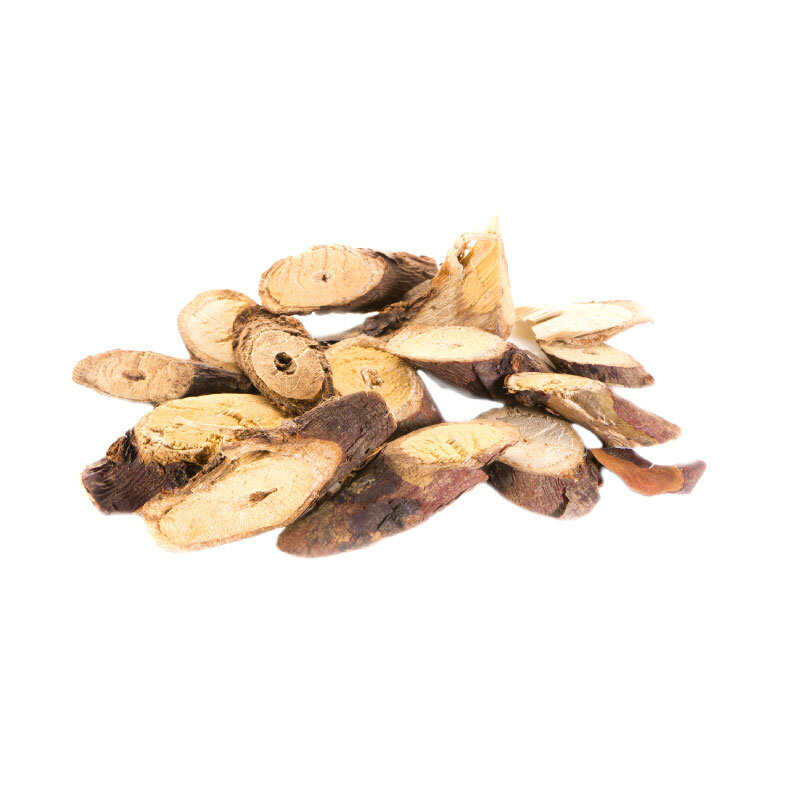
Cryptoheptine is a naturally occurring indolobenzazepine alkaloid (cryptolepis alkaloid group), found in Cryptolepis. It is flagged as moderately toxic.
Concentration
Content by Source
Concentrations not reported. No percent-dry-weight or mg/g figures have been published for this compound in its source plants.
Cryptoheptine at a Glance
Cryptoheptine is a minor alkaloid of Cryptolepis sanguinolenta — the West African “yellow-dye root” (Ghanaian nibima, kadze) long used as a bitter antimalarial decoction. It sits in the shadow of cryptolepine, the root’s dominant and most-studied alkaloid.
What makes cryptoheptine worth its own page is structural. Almost every well-known Cryptolepis alkaloid — cryptolepine, quindoline, neocryptolepine, isocryptolepine — is an indoloquinoline (a fused indole + quinoline, six-membered rings). Cryptoheptine is instead an indolobenzazepine: the same indole fused to a seven-membered azepine ring 1Reference 1Antiplasmodial activity of Cryptolepis sanguinolenta alkaloids from leaves and rootsView study →. That difference is not cosmetic. When a panel of the root’s alkaloids was screened against the malaria parasite, cryptoheptine was a potent antiplasmodial and, alone among them, it did not show cross-resistance with chloroquine — a hint that it may act by a different route than the DNA-intercalating indoloquinolines 1Reference 1Antiplasmodial activity of Cryptolepis sanguinolenta alkaloids from leaves and rootsView study →.
The evidence beyond that is thin. There are no human data, no pharmacokinetics, and no dedicated toxicology for cryptoheptine specifically — this is an isolated-molecule, in-vitro story, and the page is deliberately short to match.
An Indolobenzazepine, Not an Indoloquinoline
This is the point of the page, so it is worth stating plainly. The Cryptolepis alkaloids are usually described as a family of indoloquinolines built on a flat, planar four-ring core — the geometry that lets cryptolepine slide between DNA base pairs (intercalation) and inhibit topoisomerase II. Cryptoheptine breaks that mould: its central ring is a seven-membered azepine rather than a six-membered pyridine/quinoline, making it an indolo-benzazepine 1Reference 1Antiplasmodial activity of Cryptolepis sanguinolenta alkaloids from leaves and rootsView study →.
The functional consequence showed up in the antiplasmodial screen. Every indoloquinoline alkaloid tested was cross-resistant with chloroquine — the chloroquine-resistant parasite strain (K1) also resisted them, pointing to a shared, chloroquine-like liability. Cryptoheptine did not. As the isolating study put it, all the indoloquinoline alkaloids showed cross-resistance with chloroquine “but not the indolobenzazepine alkaloid” cryptoheptine 1Reference 1Antiplasmodial activity of Cryptolepis sanguinolenta alkaloids from leaves and rootsView study →. A drug that stays active against chloroquine-resistant malaria is exactly what the field wants, and cryptoheptine’s distinct ring system is the most plausible reason it behaves differently. The mechanism itself, however, has not been worked out — the cross-resistance data only tell us it is probably not the same as its indoloquinoline cousins.
What It's Used For
The research record for cryptoheptine is essentially a single, well-characterised finding — potent in-vitro antiplasmodial activity — set against a near-total absence of everything else.
Support is an experimental score — weighted by study type (human > animal > in vitro) and volume. A beta, not a validated metric. Cryptoheptine’s single score reflects a potent but purely in-vitro isolate signal with no animal or human follow-up.
The only characterised activity. Tested as an isolated alkaloid against Plasmodium falciparum, cryptoheptine inhibited parasite growth with IC50 values of roughly 0.8 µM against the chloroquine-resistant K1 strain and 1.2 µM against the T996 strain, ranking it the second most potent of the Cryptolepis alkaloids screened, after cryptolepine 1Reference 1Antiplasmodial activity of Cryptolepis sanguinolenta alkaloids from leaves and rootsView study →.
Critically, it was the only alkaloid in the panel that did not cross-resist with chloroquine — it kept its potency against the resistant parasite — which the authors attributed to its distinct indolobenzazepine structure 1Reference 1Antiplasmodial activity of Cryptolepis sanguinolenta alkaloids from leaves and rootsView study →.
This is a purely isolate result; the traditional preparation is a whole-root water decoction, in which cryptoheptine is a minor component.
Gap: there is no in-vivo (animal) confirmation, no evidence that meaningful amounts survive a water decoction or reach the bloodstream, and no work on the actual antiplasmodial mechanism. The activity is real in a dish and unproven anywhere else.
Mechanisms
| Target / pathway | Effect | Relevant to |
|---|---|---|
| Plasmodium falciparum (blood-stage, K1 & T996) | growth inhibition at low-µM concentrations; retains activity against chloroquine-resistant parasites | antimalarial |
| Molecular target | not established — the lack of chloroquine cross-resistance argues against a shared chloroquine-like mechanism, and its non-planar indolobenzazepine core makes the DNA-intercalation route of the indoloquinolines less likely, but no direct target has been identified | antimalarial (mechanism unknown) |
Unlike its flat indoloquinoline relatives (cryptolepine → DNA intercalation / topoisomerase II), cryptoheptine’s seven-membered ring changes the shape of the molecule, and its resistance profile suggests it does not simply copy cryptolepine’s mechanism. Beyond that, the target is genuinely uncharacterised.
Pharmacokinetics
None reported. There are no absorption, bioavailability, distribution, metabolism or half-life data for cryptoheptine — human or animal. Because the traditional remedy is a water decoction and cryptoheptine is a minor root alkaloid, it is unknown whether it is extracted, absorbed, or reaches antiplasmodial concentrations in vivo at all. The in-vitro IC50 values should be read with that unknown firmly in mind.
Clinical Trials
There are no clinical trials of cryptoheptine, and none of the isolated molecule as a drug candidate. Human evidence for the plant belongs to Cryptolepis sanguinolenta extracts standardised to cryptolepine, not to this minor congener.
| Completed | Planned | Terminated | Preclinical |
|---|---|---|---|
| — | — | — | In-vitro antiplasmodial (isolate) only 1Reference 1Antiplasmodial activity of Cryptolepis sanguinolenta alkaloids from leaves and rootsView study → |
Last checked: July 2026.
Isolate vs. Plant Studies
All the cryptoheptine-specific evidence is isolate evidence: the molecule was purified from the root and tested on its own 1Reference 1Antiplasmodial activity of Cryptolepis sanguinolenta alkaloids from leaves and rootsView study →. That is a double-edged fact. It cleanly attributes the potent antiplasmodial IC50 and the chloroquine-independent activity to cryptoheptine itself — but it says nothing about the whole-root decoction people actually use, in which cryptoheptine is a minor alkaloid overshadowed by cryptolepine. Whether a traditional water preparation extracts and delivers cryptoheptine in any meaningful amount is untested. The plant-level antimalarial reputation of Cryptolepis sanguinolenta rests on the extract and on cryptolepine, not on this compound.
Prevalence in Nature
Cryptoheptine is, as far as the literature records, specific to Cryptolepis sanguinolenta — the scrambling shrub of West and Central African savanna whose bright-yellow root and root bark carry the alkaloids 1Reference 1Antiplasmodial activity of Cryptolepis sanguinolenta alkaloids from leaves and rootsView study →. It is one of a large set of structurally related root alkaloids (cryptolepine, quindoline, neocryptolepine, isocryptolepine, hydroxycryptolepine, cryptolepinone, cryptoquindoline, biscryptolepine and others), within which it is a minor component — cryptolepine dominates the root’s alkaloid load. No quantified concentration for cryptoheptine (percent dry weight or similar) has been published, and it has not been reported outside this species.
Discovery & Synthesis
Cryptoheptine emerged from the intensive phytochemical mining of Cryptolepis sanguinolenta that followed interest in the root’s antimalarial cryptolepine. It was characterised pharmacologically by Paulo and colleagues (2000), whose antiplasmodial survey of the root’s leaf and root alkaloids identified it as an indolobenzazepine and reported its distinctive activity profile 1Reference 1Antiplasmodial activity of Cryptolepis sanguinolenta alkaloids from leaves and rootsView study →. The precise first-isolation report — who first named and structurally solved cryptoheptine, and in what year — is not well documented in sources that could be verified, and no total synthesis of cryptoheptine appears to have been reported; the medicinal-chemistry synthetic effort around this plant has concentrated on the indoloquinoline scaffold (cryptolepine, neocryptolepine, isocryptolepine), not on the indolobenzazepine.
Patents: not yet researched.
Toxicity & Safety
There is no dedicated toxicology for cryptoheptine — no genotoxicity, cytotoxicity, repeat-dose or reproductive data for the isolated molecule. That silence is not reassurance. Its close relative cryptolepine is a DNA-intercalating, cytotoxic and genotoxic alkaloid that is embryotoxic in zebrafish, and cryptoheptine is a potent low-micromolar bioactive from the same root. On that basis the page carries a conservative moderate flag: not because harm is documented, but because a bioactive alkaloid with no safety data, from a family with a known cytotoxic member, should not be assumed benign.
- No safety data at all. Cryptoheptine has no published toxicology — the moderate flag is a conservative placeholder, not a measured risk.
- Bioactive alkaloid, family with a cytotoxic member. Its relative cryptolepine is genotoxic/cytotoxic and embryotoxic in zebrafish; assume cryptoheptine deserves similar caution until tested.
- Not for self-use. This is a research-stage isolated molecule with no established human dose, route, or safety margin.
Pregnancy, lactation and drug-interaction questions cannot be answered for cryptoheptine — no relevant data exist, and any such decision belongs to the Cryptolepis sanguinolenta herb page, where whole-plant intake is actually considered, not to this molecule page.
Dosage
There is no established or studied dose of cryptoheptine in people. It exists in the literature only as a purified alkaloid tested in laboratory antiplasmodial assays (in-vitro IC50 ≈ 0.8–1.2 µM) 1Reference 1Antiplasmodial activity of Cryptolepis sanguinolenta alkaloids from leaves and rootsView study →. Human exposure, if any, is indirect and unquantified — as a minor alkaloid of the traditional Cryptolepis sanguinolenta root decoction. No figure here is a recommendation.
References
- Paulo A, Gomes ET, Steele J, Warhurst DC, Houghton PJ (2000). Antiplasmodial activity of Cryptolepis sanguinolenta alkaloids from leaves and roots. Planta Medica. https://pubmed.ncbi.nlm.nih.gov/10705730/



