
Materia Medica
Syrian Rue
Peganum harmala
Syrian rue is a hardy desert perennial whose seeds are rich in harmine and harmaline, alkaloids that block the enzyme MAO-A. The seeds are burned as a protective incense across the Middle East and Central Asia, and are used in ayahuasca analogues.
What Is Syrian Rue?
Syrian rue is a hardy, bushy perennial of dry country whose small seeds are rich in harmala alkaloids. Across Iran, Turkey and Central Asia the seeds are burned as a protective incense, known in Persian as esfand.
Peganum harmala grows from North Africa and southern Europe through western and Central Asia to northern China, on dry and slightly saline ground 42,
The seeds’ main alkaloids, harmine and harmaline, reach 4.3% and 5.6% of the dry seed and reversibly inhibit the enzyme monoamine oxidase A (MAO-A) 1Reference 1In vitroHerraiz, T., González, D., Ancín-Azpilicueta, C., Arán, V. J., & Guillén, H. (2010). β-Carboline alkaloids in Peganum harmala and inhibition of human monoamine oxidase (MAO) — in vitro. Food and Chemical Toxicology. https://pubmed.ncbi.nlm.nih.gov/20036304/View study →. Research is almost entirely in the laboratory and in animals; the one human trial tested the safety of purified harmine 3Reference 3RCTA Phase 1 single ascending dose study of pure oral harmine in healthy volunteers — randomised Phase 1 clinical trialView study →.
Despite its name, Syrian rue is unrelated to garden rue (Ruta graveolens). In the United States it is known as African rue 44Reference 44McDaniel, K., & Duncan, K. (rev. Beck, L., 2025). African Rue Control: Ground Applications — description, introduction to New Mexico and livestock toxicity — extension guide B-821. New Mexico State University. https://pubs.nmsu.edu/_b/B821/index.htmlView study →.
How Is Syrian Rue Used?
- Incense — the seeds are thrown onto hot coals and the smoke passed through a room, over a person or around a doorway.
- Wound fumigation — seeds and leaves are burned and the smoke applied to wounds 43Reference 43Peganum harmala LinnView study →.
- Seed powder or decoction — taken in folk medicine for asthma, colic, fever and throat complaints 43Reference 43Peganum harmala LinnView study →.
- MAO inhibitor in ayahuasca analogues — the seed is combined with DMT-containing plants in modern psychedelic practice.
Taken by mouth, the seed has a small margin between an active dose and a poisonous one.
Traditional Uses
Persian, Turkish & Central Asian Folk Practice
The seed is esfand in Persian and harmal in Arabic, and its best-known traditional use is as smoke rather than medicine. The seeds are thrown onto hot coals and the smoke passed through a room, over a person or around a doorway as protection against the evil eye, at weddings, births and house-movings across Iran, Turkey and Central Asia.
It is used against misfortune and illness in general rather than against a named complaint, and the smoke also serves as a disinfectant and insect repellent for the room.
The plant is a longstanding and contested candidate for the ancient Indo-Iranian sacrament soma/haoma.
Traditional Iranian Medicine
In traditional Iranian medicine the seed is the main medicinal part. It is described as carminative, galactagogue, diuretic, emmenagogue, antithrombotic and analgesic 36Reference 36ReviewMedicinal properties of Peganum harmala L. in traditional Iranian medicine and modern phytotherapy: a reviewView study →. It has also been taken for heavy menstrual bleeding 40Reference 40Case reportPeganum harmala intoxication, a case reportView study →.
North African Folk Medicine
Across the Middle East and North Africa, including Morocco, the seed is used as an emmenagogue and abortifacient 38Reference 38Case reportPeganum harmala L. poisoning and pregnancy: two cases in Morocco — case reportView study →. In Moroccan traditional medicine it is also used as a sedative 39Reference 39Case reportPeganum harmala L. intoxication in a pregnant woman — case reportView study →.
South Asian Folk Medicine
In Pakistan the plant is known as harmal or ispand. The seed powder is used for asthma, colic and jaundice, as a remedy for tapeworm, and to lower the fever of chronic malaria 43Reference 43Peganum harmala LinnView study →.
A decoction of the seeds is given for laryngitis. The seeds are also regarded as a lactagogue, a stimulant and an abortifacient 43Reference 43Peganum harmala LinnView study →.
The smoke is considered antiseptic, and wounds are fumigated with burning seeds and leaves 43Reference 43Peganum harmala LinnView study →.
Modern Entheogenic Use
In recent psychedelic practice the seed is taken by mouth for its MAO-inhibiting alkaloids. Because the β-carbolines reversibly inhibit monoamine oxidase A, they prevent the breakdown of DMT in the gut, and the seed is combined with DMT-containing plants such as chacruna to make orally active ayahuasca analogues (“anahuasca”).
The doses used overlap the seed’s toxic range. The same MAO inhibition also makes the combination interact dangerously with serotonergic drugs and tyramine-rich foods.
Indications
- Protective and purifying fumigation [burned seed; Persian, Turkish and Central Asian folk practice]
- Wounds [smoke of burned seed and leaf; South Asian folk medicine]
- Asthma, colic and jaundice [seed powder; South Asian folk medicine]
- Tapeworm [seed powder; South Asian folk medicine]
- Laryngitis [seed decoction; South Asian folk medicine]
- Pain [seed; traditional Iranian medicine]
- Low milk supply [seed; traditional Iranian and South Asian folk medicine] Caution: Use while breastfeeding has not been studied, and the seed alkaloids are potent MAO inhibitors 1.
- Delayed or heavy menstruation [seed; Middle Eastern and North African folk medicine] Caution: The seed is abortifacient, and several reported cases of serious poisoning followed this use 38,
39, .40
Botany
Syrian rue is a bushy, much-branched perennial herb in the Nitrariaceae. Older floras place it in the Zygophyllaceae or in its own family, the Peganaceae 42,
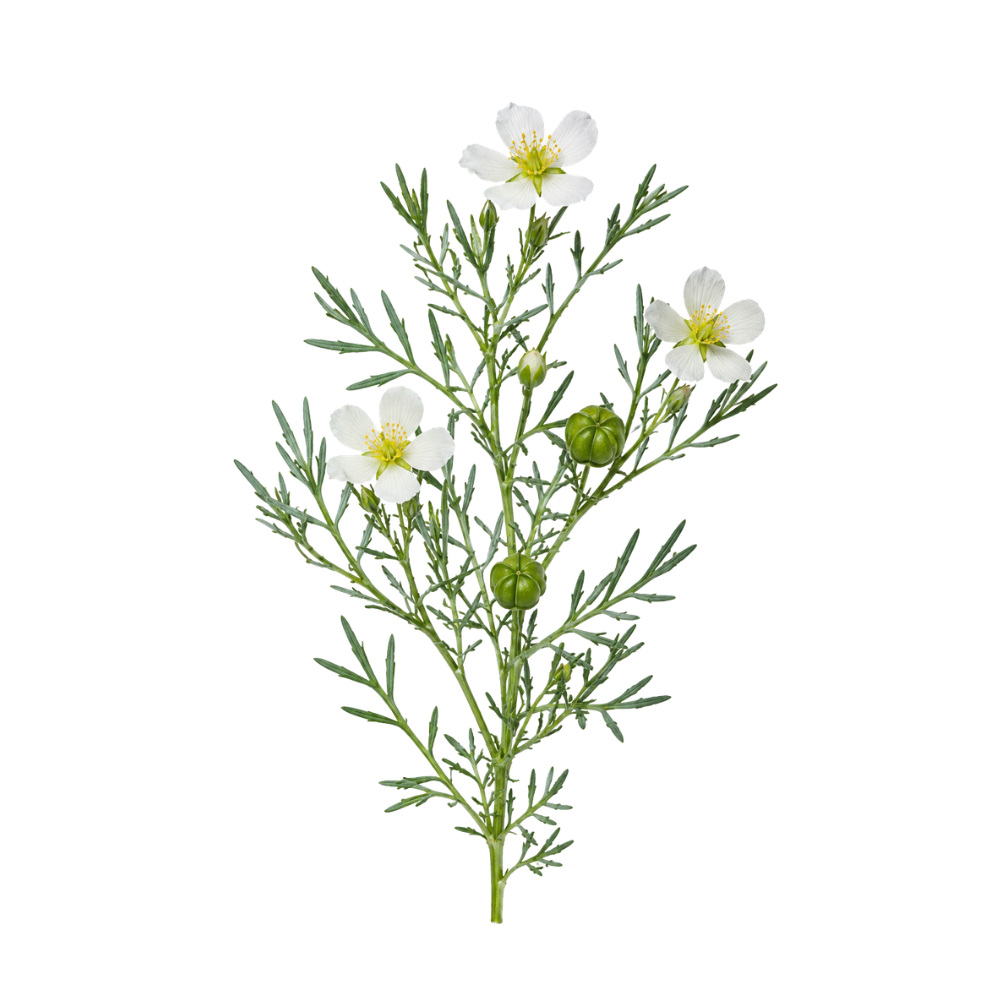
It grows 25–70 cm tall and is smooth and hairless 42,
The leaves are alternate and deeply divided into three to five narrow, linear lobes 42,
The flowers grow singly, opposite the leaves near the tips of the branches 42Reference 42Peganum harmala Linnaeus and the genus Peganum — species description and distribution — floraView study →. They are white to yellowish white and about 2–2.5 cm across, with five petals and usually fifteen stamens 42,
The fruit is a rounded, three-chambered capsule 6–10 mm across 42,
Below ground it has a deep, robust perennial root system, with roots up to 2 cm thick 42,
Distribution
Syrian rue grows from North Africa and southern Europe through western Asia to Central Asia, Pakistan, India, Tibet, Mongolia and northern China 42,
It has escaped in desert areas around the world and is a noxious weed 42Reference 42Peganum harmala Linnaeus and the genus Peganum — species description and distribution — floraView study →. It reached the United States around the 1920s and was first noticed near Deming, New Mexico. It is now common across southern New Mexico and is spreading north 44Reference 44McDaniel, K., & Duncan, K. (rev. Beck, L., 2025). African Rue Control: Ground Applications — description, introduction to New Mexico and livestock toxicity — extension guide B-821. New Mexico State University. https://pubs.nmsu.edu/_b/B821/index.htmlView study →.
It is poisonous to cattle, sheep and horses, and its seeds are the most toxic part 44Reference 44McDaniel, K., & Duncan, K. (rev. Beck, L., 2025). African Rue Control: Ground Applications — description, introduction to New Mexico and livestock toxicity — extension guide B-821. New Mexico State University. https://pubs.nmsu.edu/_b/B821/index.htmlView study →.
Sourcing: Syrian rue has no conservation concern. Where it grows as an invasive weed, harvesting it helps keep it in check.
Growing Conditions
Cultivation snapshot for Syrian Rue
Noxious-weed flagit is a listed noxious weed in Arizona, California, Colorado, Nevada, New Mexico and Oregon, where selling or planting it is illegal — do not plant it in the US, and note it is toxic to livestock.
- Wants full sun and dry, well-drained, often sandy or saline soil; it tolerates poor, disturbed ground and is a facultative halophyte.
- Extremely drought-hardy thanks to its deep taproot — it needs little or no watering once established (roughly USDA zones 7–11); the top dies back and resprouts from the root.
- Grown from seed, which germinates readily in warm, dry conditions and establishes fast on open ground.
Grow it yourself
Farm Wiki is our cultivation-focused sister site, also run by Justin Cooke.
Phytochemistry
The seeds and roots hold most of the plant’s alkaloids. The stems and leaves contain little, and the flowers none 1Reference 1In vitroHerraiz, T., González, D., Ancín-Azpilicueta, C., Arán, V. J., & Guillén, H. (2010). β-Carboline alkaloids in Peganum harmala and inhibition of human monoamine oxidase (MAO) — in vitro. Food and Chemical Toxicology. https://pubmed.ncbi.nlm.nih.gov/20036304/View study →.
In the seed, the main alkaloids are the β-carbolines harmaline and harmine, at 5.6% and 4.3% of dry weight in one analysis 1Reference 1In vitroHerraiz, T., González, D., Ancín-Azpilicueta, C., Arán, V. J., & Guillén, H. (2010). β-Carboline alkaloids in Peganum harmala and inhibition of human monoamine oxidase (MAO) — in vitro. Food and Chemical Toxicology. https://pubmed.ncbi.nlm.nih.gov/20036304/View study →. Smaller amounts of harmalol (0.6%) and tetrahydroharmine (0.1%) are also present 1Reference 1In vitroHerraiz, T., González, D., Ancín-Azpilicueta, C., Arán, V. J., & Guillén, H. (2010). β-Carboline alkaloids in Peganum harmala and inhibition of human monoamine oxidase (MAO) — in vitro. Food and Chemical Toxicology. https://pubmed.ncbi.nlm.nih.gov/20036304/View study →. The roots contain harmine (2.0%) and harmol (1.4%) 1Reference 1In vitroHerraiz, T., González, D., Ancín-Azpilicueta, C., Arán, V. J., & Guillén, H. (2010). β-Carboline alkaloids in Peganum harmala and inhibition of human monoamine oxidase (MAO) — in vitro. Food and Chemical Toxicology. https://pubmed.ncbi.nlm.nih.gov/20036304/View study →.
The amounts vary widely between seed samples. A seed sample analysed in India held only 0.44% harmine and 0.096% harmaline, along with 0.25% of the quinazoline alkaloid vasicine (peganine) 45Reference 45High-performance thin-layer chromatography densitometric method for the quantification of harmine, harmaline, vasicine, and vasicinone in Peganum harmala — analytical study (seed)View study →.
Harmol is harmine with its methoxy group replaced by a hydroxyl, and harmalol stands in the same relation to harmaline. Both also form in the body as metabolites of their parent alkaloids.
Seed extracts inhibit MAO-A mainly through harmaline and harmine, and root extracts through harmine 1Reference 1In vitroHerraiz, T., González, D., Ancín-Azpilicueta, C., Arán, V. J., & Guillén, H. (2010). β-Carboline alkaloids in Peganum harmala and inhibition of human monoamine oxidase (MAO) — in vitro. Food and Chemical Toxicology. https://pubmed.ncbi.nlm.nih.gov/20036304/View study →.
The seeds also contain a separate family of quinazoline alkaloids: vasicine (peganine), vasicinone and deoxyvasicine 34Reference 34In vitroIdentification, occurrence and activity of quinazoline alkaloids in Peganum harmala — in vitroView study →.
Much of the pharmacology has been done on purified harmine, and those results should be read separately from studies of the whole seed 2,
Constituent Summary
Approximate percentages of dry seed; values vary with origin and between studies.
Indole Alkaloid5 compounds5 with data
Other Alkaloid2 compounds2 with data
Pharmacology & Research
The β-carbolines harmine and harmaline are potent, reversible, competitive inhibitors of monoamine oxidase A, shown directly on the human enzyme 1Reference 1In vitroHerraiz, T., González, D., Ancín-Azpilicueta, C., Arán, V. J., & Guillén, H. (2010). β-Carboline alkaloids in Peganum harmala and inhibition of human monoamine oxidase (MAO) — in vitro. Food and Chemical Toxicology. https://pubmed.ncbi.nlm.nih.gov/20036304/View study →. This one mechanism underlies the seed’s psychoactivity, its use with DMT, and its proposed antidepressant action.
Dozens of cell and rodent studies also report antidepressant, anti-inflammatory, anticancer, antidiabetic, antiparasitic and bone-protective effects 2Reference 2ReviewPharmacological and therapeutic effects of Peganum harmala and its main alkaloids — reviewView study →. Most used isolated harmine rather than the whole seed.
One human trial exists: a Phase 1 single-ascending-dose study of pharmaceutical harmine that measured safety, not efficacy 3Reference 3RCTA Phase 1 single ascending dose study of pure oral harmine in healthy volunteers — randomised Phase 1 clinical trialView study →.
-
Best-supported: reversible MAO-A inhibition by the seed β-carbolines, confirmed on the human enzyme 1Reference 1In vitroHerraiz, T., González, D., Ancín-Azpilicueta, C., Arán, V. J., & Guillén, H. (2010). β-Carboline alkaloids in Peganum harmala and inhibition of human monoamine oxidase (MAO) — in vitro. Food and Chemical Toxicology. https://pubmed.ncbi.nlm.nih.gov/20036304/View study →; antidepressant-like and anti-inflammatory activity across multiple rodent models 4,
7Reference 4AnimalPeganum harmala L. seed extract attenuates anxiety and depression in rats by reducing neuroinflammation and restoring BDNF/TrkB signalling and monoamines after chronic unpredictable mild stress — rat in vivoView study →Reference 7In vitroHarmine is an inflammatory inhibitor through the suppression of NF-κB signalling — mouse in vivo / in vitroView study → . -
Emerging, worth watching: harmine’s DYRK1A-dependent effects on cancer-cell growth and on pancreatic β-cell regeneration — an active translational area, but preclinical 14,
19Reference 14In vitroHarmine suppresses pancreatic cancer through DYRK1A-mediated hyper-activated RAS/MAPK inhibition — in vitro / in vivoView study →Reference 19AnimalHarmine and exendin-4 combination therapy safely expands human β-cell mass in vivo in a mouse xenograft system — mouse in vivoView study → . -
Mechanistically thin: antioxidant and vasorelaxant claims rest largely on in vitro assays and isolated-tissue baths 32,
33Reference 32In vitroVasorelaxant effects of harmine and harmaline extracted from Peganum harmala L. seeds in isolated rat aorta — in vitro (isolated tissue)View study →Reference 33In vitroAlkaloids from the seeds of Peganum harmala showing antiplasmodial and vasorelaxant activities — in vitroView study → . - The caveat: no efficacy trial exists for any indication, and most data are for purified harmine at controlled doses, not the crude seed.
Most of the research uses purified harmine, not the seed. The seed’s alkaloid content varies, and in the seed an active MAO-inhibiting dose and a poisonous one lie close together, so results for harmine do not translate into a seed dose 1,
1. Antidepressant
Seed extracts inhibit human MAO-A with an IC₅₀ of about 27 µg/L, an effect attributed quantitatively to harmaline and harmine 1Reference 1In vitroHerraiz, T., González, D., Ancín-Azpilicueta, C., Arán, V. J., & Guillén, H. (2010). β-Carboline alkaloids in Peganum harmala and inhibition of human monoamine oxidase (MAO) — in vitro. Food and Chemical Toxicology. https://pubmed.ncbi.nlm.nih.gov/20036304/View study →. Inhibiting MAO-A raises synaptic serotonin, dopamine and noradrenaline, as a pharmaceutical MAOI does.
In rats exposed to chronic unpredictable mild stress, P. harmala seed extract at 150 mg/kg reduced depressive-like behaviour, lowered brain MAO-A and corticosterone, and restored monoamines and BDNF/TrkB signalling 4Reference 4AnimalPeganum harmala L. seed extract attenuates anxiety and depression in rats by reducing neuroinflammation and restoring BDNF/TrkB signalling and monoamines after chronic unpredictable mild stress — rat in vivoView study →.
Isolated harmine reproduces antidepressant-like and antioxidant effects in rat prefrontal cortex and hippocampus 5Reference 5AnimalHarmine and imipramine promote antioxidant activities in prefrontal cortex and hippocampus — rat in vivoView study →, though a controlled/socially-defeated rat study found its behavioural benefit was delayed and modest 6Reference 6AnimalChronic harmine treatment has a delayed effect on mobility in control and socially defeated rats — rat in vivoView study →.
The one human study, a Phase 1 trial of oral harmine, found that it can be given with minimal side effects below 2.7 mg/kg. It did not test whether harmine treats depression 3Reference 3RCTA Phase 1 single ascending dose study of pure oral harmine in healthy volunteers — randomised Phase 1 clinical trialView study →.
Gap: every efficacy signal is preclinical or extrapolated from MAO pharmacology; no trial has tested Syrian rue or harmine as a treatment for depression, and the seed’s MAOI toxicity makes self-medication dangerous.
2. Anti-Inflammatory
The main anti-inflammatory mechanism is suppression of NF-κB signalling by harmine: screening the seven main P. harmala alkaloids, harmine (with harmol) blocked TNF-α– and LPS-induced NF-κB activation in macrophages and cut IL-1β, IL-6 and TNF-α in an LPS-challenged mouse 7Reference 7In vitroHarmine is an inflammatory inhibitor through the suppression of NF-κB signalling — mouse in vivo / in vitroView study →.
The signal is replicated across disease models — a methanolic leaf extract (200–600 mg/kg) reduced paw oedema, arthritis scores and inflammatory markers in adjuvant-induced arthritic rats 8Reference 8AnimalAppraisal of anti-arthritic and anti-inflammatory potential of the folkloric medicinal plant Peganum harmala — rat in vivoView study →, harmine alleviated LPS-induced acute lung injury in mice via the CSF3/MAPK/NF-κB axis 9Reference 9AnimalHarmine alleviates LPS-induced acute lung injury by inhibiting CSF3-mediated MAPK/NF-κB signalling — mouse in vivoView study →, and it attenuated cardiac hypertrophy in hypertensive rats through the same NF-κB inhibition, independent of blood pressure 10Reference 10AnimalHarmine is an effective therapeutic small molecule for the treatment of cardiac hypertrophy — rat in vivoView study →.
All of this work is in rodents, and apart from the leaf-extract study, all of it uses harmine.
3. Anticancer
This is the largest body of preclinical work, almost all on harmine as a single molecule rather than the seed. Across independent studies harmine dose-dependently suppresses proliferation, migration, invasion and epithelial–mesenchymal transition in breast (via PI3K) 11Reference 11In vitroHarmine suppresses the malignant phenotypes and PI3K activity in breast cancer — in vitroView study →, ovarian (via HDAC7/RECK restoration) 12Reference 12In vitroHarmine inhibits ovarian cancer migration, invasion and EMT by inhibiting HDAC7 to restore RECK expression — in vitro / in vivoView study → and pancreatic cancer (via DYRK1A-mediated RAS/MAPK inhibition) 14Reference 14In vitroHarmine suppresses pancreatic cancer through DYRK1A-mediated hyper-activated RAS/MAPK inhibition — in vitro / in vivoView study →, and it induces homologous-recombination deficiency by targeting CDK9, synergising with PARP inhibitors in ovarian-cancer cells 13Reference 13In vitroTargeting CDK9 with harmine induces homologous recombination deficiency and synergizes with PARP inhibitors in ovarian cancer — in vitro / in silicoView study →. The β-carboline scaffold’s anticancer chemistry — kinase, topoisomerase and tubulin interactions — is reviewed in depth 15Reference 15ReviewAaghaz, S., et al. (2021). β-Carbolines as potential anticancer agents — review. European Journal of Medicinal Chemistry. https://pubmed.ncbi.nlm.nih.gov/33684825/View study →.
Gap: entirely in vitro and xenograft, at purified-harmine doses unrelated to crude-seed exposure; no clinical oncology data exist, and harmine’s MAO-inhibiting toxicity would complicate any therapeutic use.
4. Antidiabetic
Rodent evidence is consistent: hydroalcoholic seed extract (30–120 mg/kg) lowered glucose, HbA1c and lipids in streptozotocin-diabetic rats 16Reference 16AnimalEvaluation of antidiabetic and antihyperlipidemic effects of Peganum harmala seeds in diabetic rats — rat in vivoView study →, separate STZ-rat work showed antidiabetic and β-cell-regenerative effects 17Reference 17AnimalAntidiabetic effects of Peganum harmala seed extract on streptozotocin-induced diabetes in rats — rat in vivoView study →, and an ethanolic extract cut blood glucose comparably to metformin in normal and diabetic rats 18Reference 18AnimalPreliminary studies on the hypoglycemic effect of Peganum harmala L. seeds ethanol extract on normal and streptozotocin-induced diabetic rats — rat in vivoView study →. Harmine also inhibits DYRK1A: combined with a GLP-1 receptor agonist it expanded human β-cell mass in a mouse xenograft, one of the few agents shown to increase human β-cell numbers in vivo 19Reference 19AnimalHarmine and exendin-4 combination therapy safely expands human β-cell mass in vivo in a mouse xenograft system — mouse in vivoView study →.
Gap: whole-seed data are rodent-only; the β-cell result is for isolated harmine in a xenograft model, not the herb, and no human antidiabetic trial exists.
5. Antileishmanial
Antiparasitic activity is documented both in vitro and in animals. Crude seed extract reduced Leishmania major promastigotes with an IC₅₀ near 59 µg/mL and, applied topically, shrank cutaneous lesions and parasite counts in infected mice 20Reference 20In vitroIn vitro and in vivo activities of Peganum harmala extract against Leishmania major — animal in vivoView study →.
Other work confirms in vitro/ex vivo activity against L. major 21Reference 21In vitroPeganum harmala and Nigella sativa: anti-leishmanial activity against Leishmania major promastigotes and amastigotes — in vitro / ex vivoView study →.
Purified constituents carry it further in vivo: the quinazoline vasicine (peganine) was orally active against visceral leishmaniasis in hamsters (~80% at 100 mg/kg) 22Reference 22AnimalPeganine hydrochloride dihydrate, an orally active antileishmanial agent — animal in vivoView study →, and harmine reduced hamster spleen parasite load, with efficacy improving in liposomal and nanoparticle carriers 23Reference 23AnimalHarmine: evaluation of its antileishmanial properties in various vesicular delivery systems — animal in vivoView study →.
The effective doses were either high or given in delivery formulations, not as the seed.
6. Osteoprotective
Harmine shows a reproducible anti-resorptive effect. It inhibits RANKL-induced osteoclast differentiation and bone resorption in vitro and prevented bone loss in ovariectomised osteoporosis-model mice at 10 mg/kg/day, acting through c-Fos/NFATc1 suppression 25Reference 25In vitroHarmine, a β-carboline alkaloid, inhibits osteoclast differentiation and bone resorption in vitro and in vivo — animal in vivoView study →.
A separate group found harmine additionally promotes bone-sparing “type H” vessel formation via preosteoclast PDGF-BB in ovariectomised mice 24Reference 24AnimalHarmine enhances type H vessel formation and prevents bone loss in ovariectomized mice — mouse in vivoView study →.
None of this has been tested with the whole seed.
7. Analgesic
Antinociception is dose-dependent and reproducible in mice. A total alkaloid seed extract produced up to 100% pain reduction in the formalin test (ED₅₀ ≈ 25–28 mg/kg), tracking with harmaline content 26Reference 26AnimalAntinociceptive effects of Peganum harmala L. alkaloid extract on mouse formalin test — mouse in vivoView study →, and a separate alkaloid extract (12.5–25 mg/kg) was active across writhing, formalin and hot-plate models, partly reversed by naloxone — indicating a central, partly opioid-mediated component alongside a peripheral one 27Reference 27AnimalEvaluation of the analgesic effect of alkaloid extract of Peganum harmala L.: possible mechanisms involved — mouse in vivoView study →.
Gap: rodent behavioural models only; no human analgesic data, and the active doses overlap the herb’s toxic/psychoactive range.
8. Antibacterial
An n-butanol seed extract was bactericidal against multidrug-resistant Pseudomonas aeruginosa (MIC 500 µg/mL, ~100% kill at 24 h) and disrupted biofilm, with the active compound identified as harmaline 28Reference 28In vitroAntibacterial and antibiofilm activity of Peganum harmala seed extract against multidrug-resistant Pseudomonas aeruginosa — in vitroView study →.
Alkaloids from fruit and flower likewise showed selective antibacterial effects in vitro 29Reference 29In vitroChemical composition and antibacterial properties of Peganum harmala — in vitroView study →.
The MICs are high relative to any likely blood level, and no infection model has been run.
9. Neuroprotective
Beyond mood, the alkaloids show cognitive/anti-amnesic effects in rodents. An aerial-part extract and its alkaloid fraction reversed scopolamine-induced memory deficits in mice, correlating with acetylcholinesterase inhibition and raised acetylcholine 30Reference 30AnimalAnti-amnesic effect of extract and alkaloid fraction from aerial parts of Peganum harmala on scopolamine-induced memory deficits in mice — mouse in vivoView study →, and isolated harmine extracts were cerebroprotective against sodium-nitrite hypoxia and ethanol neurodegeneration in young mice, improving memory and MAO-A inhibition without neurotoxicity at the doses used 31Reference 31AnimalCerebroprotective effect of isolated harmine alkaloids extracts of seeds of Peganum harmala L. on sodium-nitrite-induced hypoxia and ethanol-induced neurodegeneration in young mice — mouse in vivoView study →.
The same MAO-A and acetylcholinesterase inhibition is also the source of the herb’s interaction and toxicity risk.
10. Antioxidant
Seed extracts and the β-carbolines scavenge DPPH and other radicals in vitro 32Reference 32In vitroVasorelaxant effects of harmine and harmaline extracted from Peganum harmala L. seeds in isolated rat aorta — in vitro (isolated tissue)View study →, and in vivo harmine raised superoxide dismutase and catalase and lowered lipid/protein oxidation in rat brain 5Reference 5AnimalHarmine and imipramine promote antioxidant activities in prefrontal cortex and hippocampus — rat in vivoView study →.
In the arthritis model the extract’s DPPH activity paralleled its anti-inflammatory effect 8Reference 8AnimalAppraisal of anti-arthritic and anti-inflammatory potential of the folkloric medicinal plant Peganum harmala — rat in vivoView study →.
The quinazoline alkaloids are weak scavengers, so the activity belongs to the β-carbolines and the polyphenols.
11. Vasorelaxant
Harmine and harmaline relaxed noradrenaline- or KCl-precontracted rat aorta in a dose-dependent manner; harmaline’s effect was partly endothelium/NO-dependent while harmine’s was not, both involving L-type calcium-channel and phosphodiesterase mechanisms 32Reference 32In vitroVasorelaxant effects of harmine and harmaline extracted from Peganum harmala L. seeds in isolated rat aorta — in vitro (isolated tissue)View study →. The quinazoline vasicinone showed a separate vasorelaxant action against phenylephrine-induced contraction 33Reference 33In vitroAlkaloids from the seeds of Peganum harmala showing antiplasmodial and vasorelaxant activities — in vitroView study →.
Gap: isolated-tissue organ-bath data only — no whole-animal blood-pressure study and no human data.
Mechanisms
Harmine and harmaline reversibly inhibit monoamine oxidase A. This raises synaptic monoamines, which is linked to the antidepressant and psychoactive effects. It also blocks the breakdown of DMT and of dietary tyramine in the gut, which is why the seed potentiates ayahuasca analogues and interacts with serotonergic drugs and aged foods.
Harmine has also been studied for NF-κB suppression, DYRK1A inhibition and anti-osteoclast signalling. These activities were found in isolated harmine, not in the seed as taken.
| Mechanism | Drives | Key compounds |
|---|---|---|
| Reversible MAO-A inhibition | antidepressantpsychoactivityoral-DMT potentiationneuroprotective | harmine, harmaline, harmalol |
| NF-κB ↓, cytokine ↓ | anti-inflammatoryanticancer | harmine, harmol |
| DYRK1A inhibition | anticancerβ-cell regeneration (antidiabetic) | harmine |
| Acetylcholinesterase inhibition | neuroprotectivepro-cognitive | alkaloid fraction, harmine |
| RANKL / c-Fos / NFATc1 ↓ | osteoprotective (anti-osteoclast) | harmine |
| L-type Ca²⁺ channel / PDE / NO modulation | vasorelaxant | harmine, harmaline, vasicinone |
| Opioid + non-opioid antinociception | analgesic | harmaline, alkaloid fraction |
Clinical Trials
One interventional human trial has been run: a Phase 1 single-ascending-dose safety study of pharmaceutical-grade harmine, not the whole herb 3Reference 3RCTA Phase 1 single ascending dose study of pure oral harmine in healthy volunteers — randomised Phase 1 clinical trialView study →. Every other indication rests on animal or in vitro work.
| Completed | Planned | Terminated | Preclinical |
|---|---|---|---|
| 1(Phase 1, harmine safety) | 0identified | 0identified | ~40+ |
Last checked: August 2026.
Dosage
No safe oral dose of Syrian rue has been established. Its ingested traditional uses, as an emmenagogue and abortifacient and as a psychoactive, reach doses at or near those that cause poisoning. The figures below are tested doses, not recommendations.
| Indication | Preparation | Dose | Est. dried-herb equivalent | Source |
|---|---|---|---|---|
| Human tolerability | Pharmaceutical harmine HCl, oral | MTD ~100–200 mg single dose; DLT >2.7 mg/kg | ~2.5 g seed (assuming ~4% harmine) — illustrative only | 3Reference 3RCTA Phase 1 single ascending dose study of pure oral harmine in healthy volunteers — randomised Phase 1 clinical trialView study → |
| Antidepressant (behavioural) | Seed extract, i.p. (rat) | 75–150 mg/kg | — | 4Reference 4AnimalPeganum harmala L. seed extract attenuates anxiety and depression in rats by reducing neuroinflammation and restoring BDNF/TrkB signalling and monoamines after chronic unpredictable mild stress — rat in vivoView study → |
| Antidiabetic | Hydroalcoholic seed extract, oral (rat) | 30–120 mg/kg/day, 4 weeks | — | 16Reference 16AnimalEvaluation of antidiabetic and antihyperlipidemic effects of Peganum harmala seeds in diabetic rats — rat in vivoView study → |
| Analgesic | Total alkaloid extract, i.p. (mouse) | ED₅₀ ≈ 25–28 mg/kg | — | 26Reference 26AnimalAntinociceptive effects of Peganum harmala L. alkaloid extract on mouse formalin test — mouse in vivoView study → |
| Anti-inflammatory (arthritis) | Methanolic leaf extract, oral (rat) | 200–600 mg/kg/day, 21 days | — | 8Reference 8AnimalAppraisal of anti-arthritic and anti-inflammatory potential of the folkloric medicinal plant Peganum harmala — rat in vivoView study → |
The harmine row assumes dry seed carries about 4% harmine 1Reference 1In vitroHerraiz, T., González, D., Ancín-Azpilicueta, C., Arán, V. J., & Guillén, H. (2010). β-Carboline alkaloids in Peganum harmala and inhibition of human monoamine oxidase (MAO) — in vitro. Food and Chemical Toxicology. https://pubmed.ncbi.nlm.nih.gov/20036304/View study →, and shows that a couple of grams of seed can deliver an MAO-inhibiting dose. The rodent doses have no human oral equivalent.
Traditional Dosage
| System | Preparation | Dose |
|---|---|---|
| Middle Eastern / Central Asian (esfand, harmal) | Seed burned as protective incense and fumigant | Not ingested |
| Middle Eastern / North African folk | Seed, as emmenagogue / abortifacient | Not quantified |
| Modern entheogenic (“anahuasca”) | Seed, oral, as an MAOI to potentiate DMT | Not quantified |
Safety & Pregnancy
Syrian rue seeds are potent, reversible inhibitors of monoamine oxidase A, through the β-carbolines harmine and harmaline 1Reference 1In vitroHerraiz, T., González, D., Ancín-Azpilicueta, C., Arán, V. J., & Guillén, H. (2010). β-Carboline alkaloids in Peganum harmala and inhibition of human monoamine oxidase (MAO) — in vitro. Food and Chemical Toxicology. https://pubmed.ncbi.nlm.nih.gov/20036304/View study →. This is the source of both their psychoactivity and their most serious risks.
- Potent MAOI. While MAO is inhibited, tyramine-rich foods and many serotonergic or sympathomimetic drugs and supplements can precipitate hypertensive crisis or serotonin syndrome 36Reference 36ReviewMedicinal properties of Peganum harmala L. in traditional Iranian medicine and modern phytotherapy: a reviewView study →.
- Poisonous in overdose. Case reports describe vomiting, agitation, tremor, ataxia, low blood pressure, and kidney and liver injury; one followed about 50 g of seed 37,
39, .40Reference 37Case reportFatal poisoning of pregnant women by Peganum harmala L.: a case reportView study →Reference 39Case reportPeganum harmala L. intoxication in a pregnant woman — case reportView study →Reference 40Case reportPeganum harmala intoxication, a case reportView study → - Abortifacient — avoid in pregnancy. Case reports describe uterine contractions and loss of the pregnancy after poisoning 39Reference 39Case reportPeganum harmala L. intoxication in a pregnant woman — case reportView study →.
- Small margin. An MAO-inhibiting dose is on the order of a couple of grams of seed 1,
3Reference 1In vitroHerraiz, T., González, D., Ancín-Azpilicueta, C., Arán, V. J., & Guillén, H. (2010). β-Carboline alkaloids in Peganum harmala and inhibition of human monoamine oxidase (MAO) — in vitro. Food and Chemical Toxicology. https://pubmed.ncbi.nlm.nih.gov/20036304/View study →Reference 3RCTA Phase 1 single ascending dose study of pure oral harmine in healthy volunteers — randomised Phase 1 clinical trialView study → ; one reported poisoning followed about 50 g 40Reference 40Case reportPeganum harmala intoxication, a case reportView study →. - Psychoactive combinations. Combining harmala alkaloids with other psychoactive substances carries a high risk of interaction.
- Toxicity with repeated dosing. A 28-day rat study showed dose-dependent tremor and excitotoxic signs from total alkaloid extract 35Reference 35AnimalSubchronic toxicity and concomitant toxicokinetics of long-term oral administration of total alkaloid extracts from seeds of Peganum harmala Linn: a 28-day study in rats — rat in vivoView study →.
Full Safety & Interactions Detail
MAO inhibition. Harmine and harmaline are potent, reversible, competitive MAO-A inhibitors, shown directly on the human enzyme 1Reference 1In vitroHerraiz, T., González, D., Ancín-Azpilicueta, C., Arán, V. J., & Guillén, H. (2010). β-Carboline alkaloids in Peganum harmala and inhibition of human monoamine oxidase (MAO) — in vitro. Food and Chemical Toxicology. https://pubmed.ncbi.nlm.nih.gov/20036304/View study →. While MAO-A is inhibited, tyramine-rich foods (aged cheese, cured meats, fermented products) and many medicines and supplements — SSRIs and other antidepressants, certain stimulants, over-the-counter cold remedies — can trigger a hypertensive crisis or serotonin syndrome 36Reference 36ReviewMedicinal properties of Peganum harmala L. in traditional Iranian medicine and modern phytotherapy: a reviewView study →. Because the inhibition is reversible, the window is shorter than with irreversible pharmaceutical MAOIs, but the interaction is still dangerous.
Overdose. A woman who took about 50 g of seed for heavy menstrual bleeding developed nausea, vomiting, dizziness, tremor, ataxia, confusion and low blood pressure, and recovered within a day 40Reference 40Case reportPeganum harmala intoxication, a case reportView study →. More severe cases have involved kidney failure needing dialysis, liver injury, and bleeding and ischaemia in the brain 37,
Pregnancy. In rats, a methanol extract of the aerial parts reduced litter size in a dose-dependent way 41Reference 41AnimalAbortifacient potential for the epigeal parts of Peganum harmala — rat in vivoView study →. Several of the human poisonings were in pregnant women. One woman, 22 weeks pregnant, developed uterine contractions and lost the pregnancy, and was left with cerebellar ataxia and nerve damage 39Reference 39Case reportPeganum harmala L. intoxication in a pregnant woman — case reportView study →. Two other pregnant women in Morocco recovered, with good outcomes for mother and child 38Reference 38Case reportPeganum harmala L. poisoning and pregnancy: two cases in Morocco — case reportView study →.
Drug metabolism. In human liver microsomes, harmaline and harmine inhibited CYP2D6 and harmine inhibited CYP3A4 46Reference 46In vitroInhibition of human cytochrome P450 enzymes 3A4 and 2D6 by β-carboline alkaloids, harmine derivatives — in vitroView study →. The two alkaloids are themselves broken down mainly by CYP2D6 and CYP1A2, and mice carrying the human CYP2D6 gene cleared both faster 46,
In liver cancer cells, a seed extract raised gene expression of CYP1A2, CYP2C19 and CYP3A4 and lowered that of CYP2B6, CYP2D6 and CYP2E1; enzyme activity was not measured 48Reference 48In vitroPeganum harmala L. differentially modulates cytochrome P450 gene expression in human hepatoma HepG2 cells — in vitroView study →. Reviews cite this as a reason the plant may alter levels of drugs these enzymes clear 36Reference 36ReviewMedicinal properties of Peganum harmala L. in traditional Iranian medicine and modern phytotherapy: a reviewView study →. MAO-A inhibition remains the interaction that matters most.
Avoid. The seed is a traditional emmenagogue and abortifacient. In rats, extracts reduced litter size 41Reference 41AnimalAbortifacient potential for the epigeal parts of Peganum harmala — rat in vivoView study →, and case reports describe uterine contractions and loss of the pregnancy after poisoning in pregnant women 37,
It has not been studied while breastfeeding. Because its alkaloids are potent MAO inhibitors, it is best avoided while breastfeeding as well.
References
- Herraiz, T., González, D., Ancín-Azpilicueta, C., Arán, V. J., & Guillén, H. (2010). β-Carboline alkaloids in Peganum harmala and inhibition of human monoamine oxidase (MAO) — in vitro. Food and Chemical Toxicology. https://pubmed.ncbi.nlm.nih.gov/20036304/
- Moloudizargari, M., Mikaili, P., Aghajanshakeri, S., Asghari, M. H., & Shayegh, J. (2013). Pharmacological and therapeutic effects of Peganum harmala and its main alkaloids — review. Pharmacognosy Reviews. https://pubmed.ncbi.nlm.nih.gov/24347928/
- Ables, J. L., et al. (2024). A Phase 1 single ascending dose study of pure oral harmine in healthy volunteers — randomised Phase 1 clinical trial. Journal of Psychopharmacology. https://pubmed.ncbi.nlm.nih.gov/39301926/
- Tekşen, Y., et al. (2024). Peganum harmala L. seed extract attenuates anxiety and depression in rats by reducing neuroinflammation and restoring BDNF/TrkB signalling and monoamines after chronic unpredictable mild stress — rat in vivo. Metabolic Brain Disease. https://pubmed.ncbi.nlm.nih.gov/39172328/
- Réus, G. Z., et al. (2010). Harmine and imipramine promote antioxidant activities in prefrontal cortex and hippocampus — rat in vivo. Oxidative Medicine and Cellular Longevity. https://pubmed.ncbi.nlm.nih.gov/21150338/
- Giacobbo, B. L., et al. (2020). Chronic harmine treatment has a delayed effect on mobility in control and socially defeated rats — rat in vivo. Psychopharmacology. https://pubmed.ncbi.nlm.nih.gov/32088835/
- Liu, X., et al. (2017). Harmine is an inflammatory inhibitor through the suppression of NF-κB signalling — mouse in vivo / in vitro. Biochemical and Biophysical Research Communications. https://pubmed.ncbi.nlm.nih.gov/28551404/
- Akhtar, M. F., et al. (2022). Appraisal of anti-arthritic and anti-inflammatory potential of the folkloric medicinal plant Peganum harmala — rat in vivo. Endocrine, Metabolic & Immune Disorders Drug Targets. https://pubmed.ncbi.nlm.nih.gov/33563161/
- Zhai, Y., et al. (2025). Harmine alleviates LPS-induced acute lung injury by inhibiting CSF3-mediated MAPK/NF-κB signalling — mouse in vivo. Respir Res. https://pubmed.ncbi.nlm.nih.gov/40156005/
- Huang, J., et al. (2022). Harmine is an effective therapeutic small molecule for the treatment of cardiac hypertrophy — rat in vivo. Acta Pharmacol Sin. https://pubmed.ncbi.nlm.nih.gov/33785860/
- Yao, P., et al. (2023). Harmine suppresses the malignant phenotypes and PI3K activity in breast cancer — in vitro. Anti-Cancer Drugs. https://pubmed.ncbi.nlm.nih.gov/36656035/
- Bao, Y., et al. (2025). Harmine inhibits ovarian cancer migration, invasion and EMT by inhibiting HDAC7 to restore RECK expression — in vitro / in vivo. Biochemical Pharmacology. https://pubmed.ncbi.nlm.nih.gov/41061932/
- Zhang, H., et al. (2025). Targeting CDK9 with harmine induces homologous recombination deficiency and synergizes with PARP inhibitors in ovarian cancer — in vitro / in silico. Phytotherapy Research. https://pubmed.ncbi.nlm.nih.gov/40629910/
- Liu, C., et al. (2025). Harmine suppresses pancreatic cancer through DYRK1A-mediated hyper-activated RAS/MAPK inhibition — in vitro / in vivo. Biochemical Pharmacology. https://pubmed.ncbi.nlm.nih.gov/40886852/
- Aaghaz, S., et al. (2021). β-Carbolines as potential anticancer agents — review. European Journal of Medicinal Chemistry. https://pubmed.ncbi.nlm.nih.gov/33684825/
- Komeili, G., Hashemi, M., & Bameri-Niafar, M. (2016). Evaluation of antidiabetic and antihyperlipidemic effects of Peganum harmala seeds in diabetic rats — rat in vivo. Cholesterol / Journal of Pharmacy and Pharmacology. https://pubmed.ncbi.nlm.nih.gov/27190643/
- Khazaei, M., et al. (2025). Antidiabetic effects of Peganum harmala seed extract on streptozotocin-induced diabetes in rats — rat in vivo. Avicenna Journal of Phytomedicine. https://pubmed.ncbi.nlm.nih.gov/40365181/
- Singh, A. B., et al. (2008). Preliminary studies on the hypoglycemic effect of Peganum harmala L. seeds ethanol extract on normal and streptozotocin-induced diabetic rats — rat in vivo. Indian Journal of Clinical Biochemistry. https://pubmed.ncbi.nlm.nih.gov/23105794/
- Rosselot, C., et al. (2024). Harmine and exendin-4 combination therapy safely expands human β-cell mass in vivo in a mouse xenograft system — mouse in vivo. Science Translational Medicine. https://pubmed.ncbi.nlm.nih.gov/38985854/
- Rahimi-Moghaddam, P., et al. (2011). In vitro and in vivo activities of Peganum harmala extract against Leishmania major — animal in vivo. J Res Med Sci. https://pubmed.ncbi.nlm.nih.gov/22279479/
- Rokni, N., et al. (2021). Peganum harmala and Nigella sativa: anti-leishmanial activity against Leishmania major promastigotes and amastigotes — in vitro / ex vivo. Annals of Parasitology. https://pubmed.ncbi.nlm.nih.gov/34598403/
- Khaliq, T., et al. (2009). Peganine hydrochloride dihydrate, an orally active antileishmanial agent — animal in vivo. Bioorganic & Medicinal Chemistry Letters. https://pubmed.ncbi.nlm.nih.gov/19339182/
- Lala, S., et al. (2004). Harmine: evaluation of its antileishmanial properties in various vesicular delivery systems — animal in vivo. Journal of Drug Targeting. https://pubmed.ncbi.nlm.nih.gov/15203896/
- Huang, J., et al. (2018). Harmine enhances type H vessel formation and prevents bone loss in ovariectomized mice — mouse in vivo. Theranostics. https://pubmed.ncbi.nlm.nih.gov/29721090/
- Yonezawa, T., et al. (2011). Harmine, a β-carboline alkaloid, inhibits osteoclast differentiation and bone resorption in vitro and in vivo — animal in vivo. European Journal of Pharmacology. https://pubmed.ncbi.nlm.nih.gov/21047508/
- Monsef, H. R., et al. (2004). Antinociceptive effects of Peganum harmala L. alkaloid extract on mouse formalin test — mouse in vivo. Journal of Pharmacy and Pharmaceutical Sciences. https://pubmed.ncbi.nlm.nih.gov/15144736/
- Farouk, L., et al. (2008). Evaluation of the analgesic effect of alkaloid extract of Peganum harmala L.: possible mechanisms involved — mouse in vivo. Journal of Ethnopharmacology. https://pubmed.ncbi.nlm.nih.gov/18054186/
- Khadraoui, N., et al. (2022). Antibacterial and antibiofilm activity of Peganum harmala seed extract against multidrug-resistant Pseudomonas aeruginosa — in vitro. Arch Microbiol. https://pubmed.ncbi.nlm.nih.gov/34999965/
- Iranshahy, M., et al. (2019). Chemical composition and antibacterial properties of Peganum harmala — in vitro. Avicenna Journal of Phytomedicine. https://pubmed.ncbi.nlm.nih.gov/31763212/
- Liu, W., et al. (2017). Anti-amnesic effect of extract and alkaloid fraction from aerial parts of Peganum harmala on scopolamine-induced memory deficits in mice — mouse in vivo. Journal of Ethnopharmacology. https://pubmed.ncbi.nlm.nih.gov/28442406/
- Biradar, S. M., et al. (2013). Cerebroprotective effect of isolated harmine alkaloids extracts of seeds of Peganum harmala L. on sodium-nitrite-induced hypoxia and ethanol-induced neurodegeneration in young mice — mouse in vivo. Pakistan Journal of Biological Sciences. https://pubmed.ncbi.nlm.nih.gov/24506035/
- Berrougui, H., et al. (2006). Vasorelaxant effects of harmine and harmaline extracted from Peganum harmala L. seeds in isolated rat aorta — in vitro (isolated tissue). Pharmacological Research. https://pubmed.ncbi.nlm.nih.gov/16750635/
- Astulla, A., et al. (2008). Alkaloids from the seeds of Peganum harmala showing antiplasmodial and vasorelaxant activities — in vitro. Journal of Natural Medicines. https://pubmed.ncbi.nlm.nih.gov/18523842/
- Herraiz, T., & Guillén, H. (2017). Identification, occurrence and activity of quinazoline alkaloids in Peganum harmala — in vitro. Food and Chemical Toxicology. https://pubmed.ncbi.nlm.nih.gov/28279698/
- Wang, Y., et al. (2019). Subchronic toxicity and concomitant toxicokinetics of long-term oral administration of total alkaloid extracts from seeds of Peganum harmala Linn: a 28-day study in rats — rat in vivo. Journal of Ethnopharmacology. https://pubmed.ncbi.nlm.nih.gov/30970283/
- Mina, C. N., Farzaei, M. H., Gholamreza, A. (2015). Medicinal properties of Peganum harmala L. in traditional Iranian medicine and modern phytotherapy: a review. Journal of Traditional Chinese Medicine. https://pubmed.ncbi.nlm.nih.gov/25842736/
- El Amri, G., et al. (2021). Fatal poisoning of pregnant women by Peganum harmala L.: a case report. Annals of Medicine and Surgery. https://pubmed.ncbi.nlm.nih.gov/34401132/
- Achour, S., et al. (2012). Peganum harmala L. poisoning and pregnancy: two cases in Morocco — case report. Médecine et Santé Tropicales. https://pubmed.ncbi.nlm.nih.gov/22868734/
- Berdai, M. A., Labib, S., & Harandou, M. (2014). Peganum harmala L. intoxication in a pregnant woman — case report. Case Reports in Emergency Medicine. https://pubmed.ncbi.nlm.nih.gov/24955262/
- Moshiri, M., et al. (2013). Peganum harmala intoxication, a case report. Avicenna J Phytomed. https://pubmed.ncbi.nlm.nih.gov/25050285/
- Shapira, Z., et al. (1989). Abortifacient potential for the epigeal parts of Peganum harmala — rat in vivo. Journal of Ethnopharmacology. https://pubmed.ncbi.nlm.nih.gov/2615437/
- Liu, Y., & Zhou, L. (2008). Peganum harmala Linnaeus and the genus Peganum — species description and distribution — flora. In Wu, Z. Y., Raven, P. H., & Hong, D. Y. (eds.), Flora of China, Vol. 11 (Peganaceae). http://www.efloras.org/florataxon.aspx?flora_id=2&taxon_id=200012416
- Ghafoor, A. Peganum harmala Linn. — species description, distribution and uses — flora. In Flora of Pakistan, Zygophyllaceae. http://www.efloras.org/florataxon.aspx?flora_id=5&taxon_id=200012416
- McDaniel, K., & Duncan, K. (rev. Beck, L., 2025). African Rue Control: Ground Applications — description, introduction to New Mexico and livestock toxicity — extension guide B-821. New Mexico State University. https://pubs.nmsu.edu/_b/B821/index.html
- Pulpati, H., Biradar, Y. S., & Rajani, M. (2008). High-performance thin-layer chromatography densitometric method for the quantification of harmine, harmaline, vasicine, and vasicinone in Peganum harmala — analytical study (seed). Journal of AOAC International. https://pubmed.ncbi.nlm.nih.gov/18980138/
- Zhao, T., He, Y. Q., Wang, J., et al. (2011). Inhibition of human cytochrome P450 enzymes 3A4 and 2D6 by β-carboline alkaloids, harmine derivatives — in vitro. Phytotherapy Research. https://pubmed.ncbi.nlm.nih.gov/21433154/
- Yu, A. M., Idle, J. R., Krausz, K. W., et al. (2003). Contribution of individual cytochrome P450 isozymes to the O-demethylation of the psychotropic beta-carboline alkaloids harmaline and harmine — in vitro / mouse in vivo. Journal of Pharmacology and Experimental Therapeutics. https://pubmed.ncbi.nlm.nih.gov/12649384/
- El Gendy, M. A., & El-Kadi, A. O. (2009). Peganum harmala L. differentially modulates cytochrome P450 gene expression in human hepatoma HepG2 cells — in vitro. Drug Metabolism Letters. https://pubmed.ncbi.nlm.nih.gov/20041830/



