Overview
MAO Inhibitor at a Glance
MAO inhibitors are herbs that slow the breakdown of serotonin, dopamine, and noradrenaline.
They do this by inhibiting monoamine oxidase, the enzyme responsible for clearing these neurotransmitters.
There are two main forms of the enzyme.
MAO-A acts especially on serotonin and noradrenaline and is also important in the gut, where it helps break down dietary tyramine.
MAO-B contributes more to dopamine and phenylethylamine metabolism and is the main target of several Parkinson’s drugs.
The principal herbal MAO inhibitors are Syrian rue and the ayahuasca vine, both rich in the β-carbolines harmine, harmaline, and related compounds.
Their activity is mainly reversible MAO-A inhibition.
This is also what allows normally inactive oral tryptamines such as DMT to survive first-pass metabolism when combined with an MAO-inhibiting plant.
MAO inhibition overlaps with antidepressant, dopaminergic, and psychedelic actions, but the defining effect is simply slowing monoamine breakdown.
The mechanism is old in practice and new in description.
In the Amazon the caapi vine is the vine of the soul, the enabling half of ayahuasca; across Iran and Central Asia Syrian rue is esfand, burned as a protective incense and taken medicinally, in a use recorded since antiquity.
Neither plant has ever been given to people under controlled conditions for this effect. The enzyme work is in vitro, the traditions are ceremonial, and no trial of either as an antidepressant exists.
Caution
Never with serotonergic drugs — an MAO-inhibiting herb must not be combined with antidepressants, tramadol, triptans, St John's wort, 5-HTP or tryptophan.
Aged foods can spike blood pressure — matured cheese, cured meat, soy sauce and yeast extracts can drive a hypertensive crisis while gut MAO-A is inhibited.
Not with decongestants or stimulants — pseudoephedrine, phenylephrine and the stimulants in pre-workout and weight-loss products compound the same risk.
Mechanisms
How It Works
01
Reversible MAO-A Inhibition
Reversible competitive inhibition slows the enzyme without destroying it, so activity returns as the inhibitor washes out.
The β-carbolines do this. Harmine, harmaline and tetrahydroharmine are the active alkaloids in both plants, and syrian rue seed extract inhibits human MAO-A with an IC₅₀ around 27 µg/L, attributed quantitatively to its harmine content 7Reference 7In vitroHerraiz, T., González, D., Ancín-Azpilicueta, C., Arán, V. J., & Guillén, H. (2010). β-Carboline alkaloids in Peganum harmala and inhibition of human monoamine oxidase (MAO) — in vitro. Food and Chemical Toxicology. https://pubmed.ncbi.nlm.nih.gov/20036304/View study →.
That is a stronger form of evidence than most herbal mechanism claims carry. It was measured against the human enzyme rather than inferred from a rodent or from a related species.
Reversibility shortens the interaction window compared with the irreversible pharmaceutical inhibitors. It does not remove the window, and it does not make a serotonergic combination survivable.
Herbs: Ayahuasca VineSyrian Rue
Key compounds: HarmineHarmalineTetrahydroharmine
02
First-Pass Protection of Oral Substrates
Blocking gut and liver MAO lets a substrate survive digestion that otherwise would not.
N,N-DMT is the case that matters. It is destroyed before it reaches the circulation, so a DMT-bearing plant swallowed alone does nothing; add an MAO-A inhibitor and it reaches the brain.
Chacruna, jurema, bundleflower and yopo are all gated on this, which is why the psychedelic page and this one describe the same brew from opposite ends.
The vine contributes no DMT and the admixture plant contributes no inhibitor, so neither half is orally active for this purpose without the other.
The same gate is what admits dietary tyramine. A mechanism that lets one blocked molecule through lets others through with it, and that is not selective for the intended one.
Herbs: Ayahuasca VineSyrian Rue
The Molecules
Pharmacology
What produces an MAO-inhibiting effect at the molecular level. The herbs carry these molecules in different combinations and amounts, which is most of why their potency differs. Roles describe how central a molecule is to the action across plants generally, not how strong any one herb is.
Chiefly Coumarins1
Carries the action largely on its own — the effect is attributed to the molecule, not just the extract it came from.
Adds to a plant's effect and is often present in quantity, but rarely accounts for it alone.
Real but narrow — one pathway, one tissue, or evidence too thin to lean on.
Urolithin B Coumarins Primary mover Targets Direct inhibition of MAO-A, mixed-mode; MAO-B unaffected
Urolithin B is not made by a plant at all — gut bacteria produce it from the ellagitannins in pomegranate and walnuts.
Screened against recombinant human MAO-A and MAO-B, it was the best MAO-A inhibitor of the urolithins and ellagic acid tested, with an IC₅₀ of 0.88 µM and a mixed mode of inhibition.
Every compound tested was effectively inactive against MAO-B 1Reference 1Microbial metabolite urolithin B inhibits recombinant human monoamine oxidase A enzymeView study →.
That is sub-micromolar, isoform-selective inhibition of a purified human enzyme by a metabolite formed inside the human colon, and it has never been tested in an animal.
Three limits sit on it.
The assay used the free aglycone rather than the circulating glucuronide, which is inert where the two have been compared 2,
Peak human plasma urolithin B is about 100 nM as a conjugate 4Reference 4Constituents and metabolites of a French oak wood extract (Robuvit®) in serum and blood cell samples of women undergoing hysterectomyView study →, roughly ninefold below the IC₅₀ before conjugation is considered, and no behavioural, brain-penetration or tyramine-challenge study exists.
The authors hold a patent application on the finding 1Reference 1Microbial metabolite urolithin B inhibits recombinant human monoamine oxidase A enzymeView study →.
Materia Medica
MAO-Inhibiting Herbs by Potency
The MAO inhibitor herbs, ordered by the relative strength of the effect rather than by how well studied it is. Each herb is described by the mechanism behind its effect and the evidence for it.
None of this is a substitute for professional care.
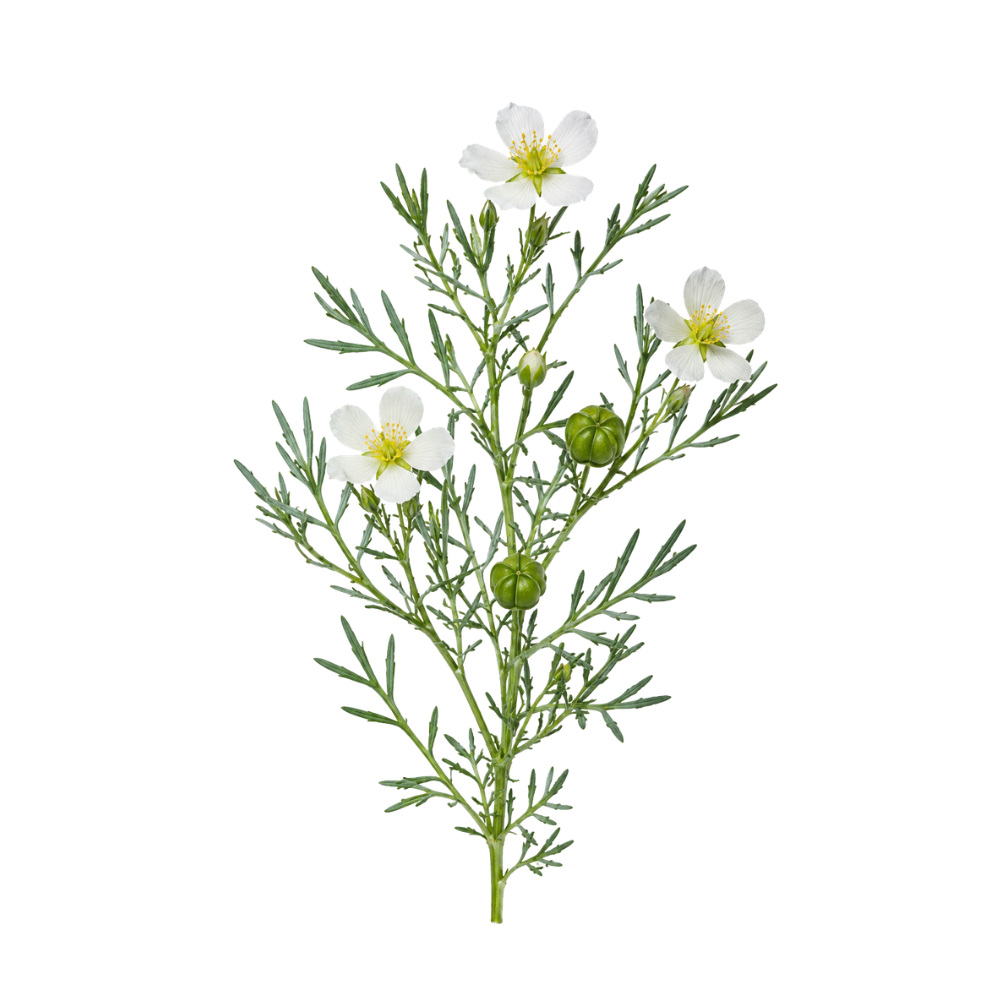 PotentPotentSyrian RuePeganum harmalaSeed at 2–6% β-carboline alkaloids, with MAO-A inhibition measured directly against the human enzyme.Mechanismreversible competitive MAO-A inhibition by harmine and harmaline, confirmed directly on the human enzyme (seed extract IC50 ~27 ug/L)Read the evidenceShow lessMonograph →
The seeds are dominated by harmine, harmaline and harmalol. Seed extract inhibits human MAO-A with an IC₅₀ around 27 µg/L, an effect attributed quantitatively to the harmine content 7Reference 7In vitroHerraiz, T., González, D., Ancín-Azpilicueta, C., Arán, V. J., & Guillén, H. (2010). β-Carboline alkaloids in Peganum harmala and inhibition of human monoamine oxidase (MAO) — in vitro. Food and Chemical Toxicology. https://pubmed.ncbi.nlm.nih.gov/20036304/View study → — not inferred from a rodent, not extrapolated from a related species.
Inhibition is reversible and competitive, which distinguishes it from the irreversible pharmaceutical MAO inhibitors and shortens the duration of the interaction risk without removing it.
The functional significance is potentiation. Chacruna, jurema, bundleflower and yopo are gated on exactly this mechanism: their N,N-DMT is destroyed by gut and liver MAO and they are inert taken by mouth alone.
Syrian rue is the Old World plant filling the role Banisteriopsis caapi fills in the Amazon.
Concentration and directness together are what set it apart. The seed is roughly an order of magnitude richer in β-carbolines than caapi stem, and an MAO-inhibiting dose is only about 2.5 g of seed, which is also why its margin is the narrowest here.
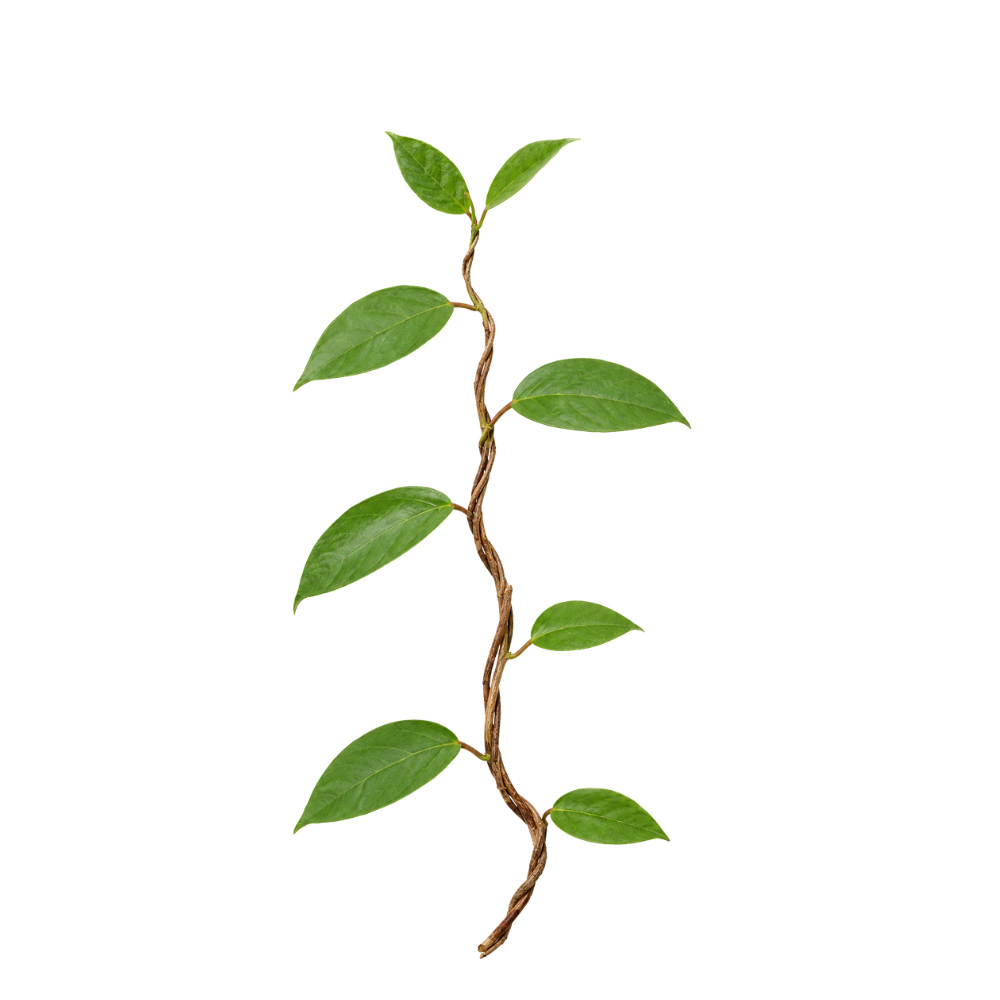 StrongStrongAyahuasca VineBanisteriopsis caapiThe enabling half of ayahuasca — reversible MAO-A inhibition is what lets orally fragile DMT survive digestion.Mechanismreversible MAO-A inhibition by the stem beta-carbolines; the enabling half of the two-plant ayahuasca brewRead the evidenceShow lessMonograph →
The vine’s β-carbolines — harmine, tetrahydroharmine and harmaline — are reversible inhibitors of monoamine oxidase A 5,
The vine contributes no DMT and the admixture plant contributes no inhibitor, so neither is orally active for this purpose without the other.
Dried stem carries roughly 0.1–0.8% total β-carbolines, with harmine commonly 40–96% of that 5Reference 5Phytochemical analyses of Banisteriopsis caapi and Psychotria viridisView study →, against syrian rue’s 2–6% seed alkaloid content. That order-of-magnitude gap is why a caapi dose is poorly defined and varies widely between preparations, and why traditional preparation is a long-decoction craft rather than a weight from a scale.
The MAO pharmacology cited for the vine comes from its chemistry 5,
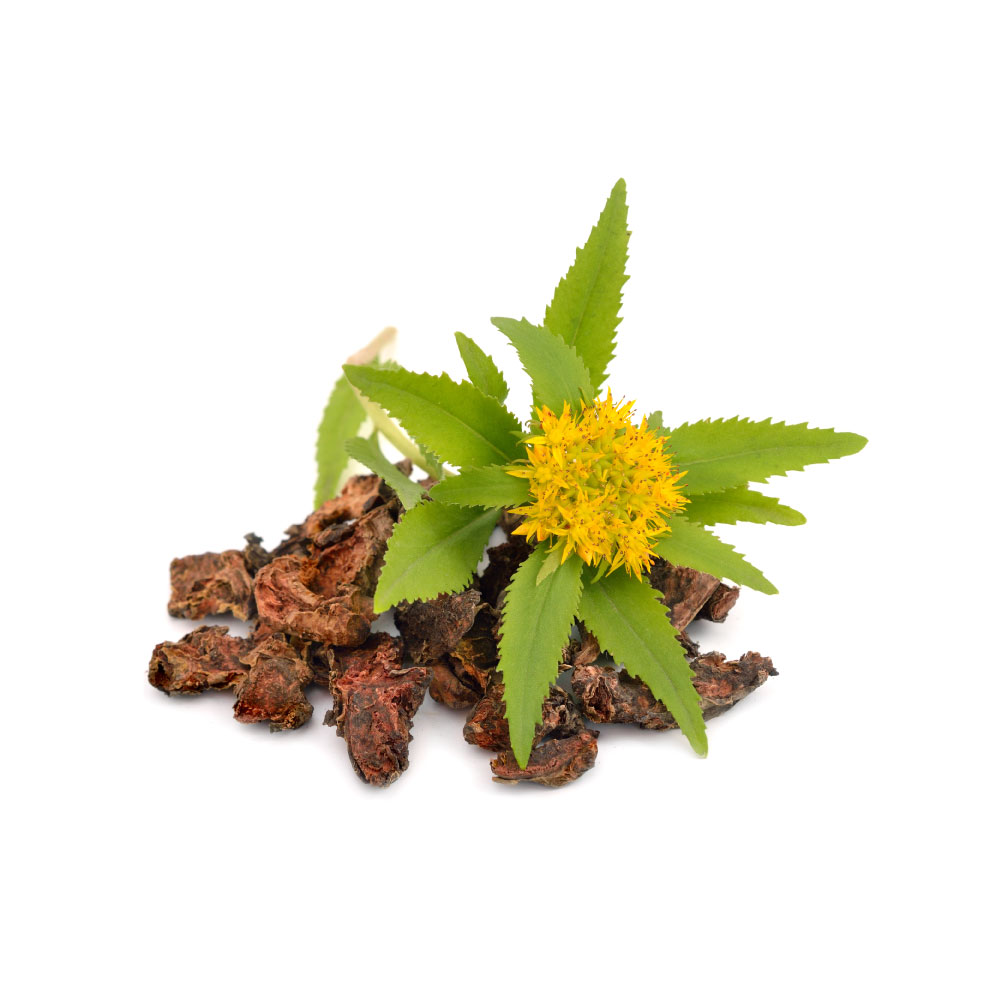 ModerateModerateRhodiolaRhodiola roseaRoot extracts inhibit both MAO-A and MAO-B ex vivo, an activity carried by salidroside and offered as the rationale behind the herb's mood effects.MechanismMAO-A and MAO-B inhibition ex vivo (salidroside); poor oral bioavailability limits translationRead the evidenceShow lessMonograph →
Rhodiola root extracts inhibit monoamine oxidase A and B ex vivo. The activity is attributed to salidroside, a phenylethanoid glycoside whose aglycone is tyrosol, and it is the same constituent behind most of the herb’s preclinical neuroprotection.
Inhibiting MAO is the mechanism usually put forward for rhodiola’s effect on mood, alongside its broader neuroendocrine activity.
Salidroside’s oral bioavailability is poor, which limits how far an ex-vivo enzyme result translates to a person taking the root. Nothing has measured monoamine oxidase activity in humans given rhodiola, and the herb is not used or dosed as a monoamine oxidase inhibitor.
No herbs match these filters.
Safety
- An MAO-inhibiting herb must never be combined with SSRIs, SNRIs, tricyclics, other MAO inhibitors, tramadol, pethidine, dextromethorphan, triptans, linezolid, lithium, St John’s wort, 5-HTP or tryptophan.
- Switching between an MAO inhibitor and an antidepressant needs a washout period, and its direction and length are a prescriber’s decision.
- Aged and fermented foods — matured cheese, cured meat, soy sauce, miso, yeast extracts, tap and home-brewed beer — can drive a hypertensive crisis while gut MAO-A is inhibited.
- Sudden severe headache, chest pain, palpitations or visual disturbance after eating is a medical emergency, and the treating clinician needs to know an MAO inhibitor is involved.
- Sympathomimetics compound the same risk, including pseudoephedrine and phenylephrine in cold remedies and the stimulants in pre-workout and weight-loss products.
- Reversible inhibition shortens the interaction window but does not close it, and it does not make a serotonergic combination survivable.
- The dose that inhibits the enzyme and the dose that causes serious harm sit within the same order of magnitude, so titrating upward by experiment is how the harm happens.
- These herbs are inappropriate in pregnancy and lactation; the β-carboline plants are emmenagogic and neither has safety data.
- Tell any clinician treating you, particularly before surgery, anaesthesia or dental work, and say specifically that it is an MAO inhibitor.
References
- Singh R, Chandrashekharappa S, Vemula PK, Haribabu B, Jala VR (2020). Microbial metabolite urolithin B inhibits recombinant human monoamine oxidase A enzyme. Metabolites, 10(6), 258. https://pubmed.ncbi.nlm.nih.gov/32575435/
- Bobowska A, Granica S, Filipek A, Melzig MF, Moeslinger T, Zentek J, Kruk A, Piwowarski JP (2021). Comparative studies of urolithins and their phase II metabolites on macrophage and neutrophil functions. European Journal of Nutrition, 60(4), 1957–1972. https://pubmed.ncbi.nlm.nih.gov/32960290/
- Giménez-Bastida JA, González-Sarrías A, Espín JC, Schneider C (2020). Inhibition of 5-lipoxygenase-derived leukotrienes and hemiketals as a novel anti-inflammatory mechanism of urolithins. Molecular Nutrition & Food Research, 64(11), e2000129. https://pubmed.ncbi.nlm.nih.gov/32306507/
- Volpp L, Ferianec V, Ježovičová M, Ďuračková Z, Scherf-Clavel O, Högger P (2020). Constituents and metabolites of a French oak wood extract (Robuvit®) in serum and blood cell samples of women undergoing hysterectomy. Frontiers in Pharmacology, 11, 74. https://pubmed.ncbi.nlm.nih.gov/32174825/
- Callaway, J. C., Brito, G. S., & Neves, E. S. (2005). Phytochemical analyses of Banisteriopsis caapi and Psychotria viridis. Journal of Psychoactive Drugs. https://pubmed.ncbi.nlm.nih.gov/16149327/
- Wang, Y. H., Samoylenko, V., Tekwani, B. L., et al. (2010). Composition, standardization and chemical profiling of Banisteriopsis caapi — in vitro. Journal of Ethnopharmacology. https://pubmed.ncbi.nlm.nih.gov/20219660/
- Herraiz, T., González, D., Ancín-Azpilicueta, C., Arán, V. J., & Guillén, H. (2010). β-Carboline alkaloids in Peganum harmala and inhibition of human monoamine oxidase (MAO) — in vitro. Food and Chemical Toxicology. https://pubmed.ncbi.nlm.nih.gov/20036304/
Keep Exploring