

Overview
Psychoactive at a Glance
Psychoactive herbs are plants that alter mood, perception, cognition, or consciousness through effects on the central nervous system.
The term covers a very wide range of experiences.
Psychedelics such as magic mushrooms and chacruna produce major changes in perception and thought while usually preserving awareness that the experience is drug-induced.
Deliriants such as datura and mandrake are very different. They can produce profound confusion, realistic hallucinations, loss of insight, and poor memory for the experience.
Other psychoactive herbs produce subtler states.
Oneirogens such as mugwort and blue lotus mainly affect dreaming, while kanna is better described as an empathogenic or mood-altering herb.
Tobacco produces stimulation and mild euphoria through nicotinic receptors.
The mechanisms are equally varied. Psychoactive plants may act through serotonin, dopamine, acetylcholine, GABA, glutamate, opioid, or other signalling systems, so the category describes an outcome rather than one shared pharmacological action.
Many psychoactive plants also have long ceremonial or ritual histories, although several remain much better documented ethnobotanically than they are pharmacologically.
Ceremonial use of these plants is old and well recorded. Dioscorides described mandrake wine given before surgery in the first century, and tobacco was sacred across the Americas long before it was recreational. The Amazonian and Mesoamerican entheogen traditions are older than the written record.
Mexican tarragon, dagga, sinicuichi and osteophloeum are all psychoactive by long report, with no controlled human research behind any of them.
Caution
Deliriants are not psychedelics — deliriants are especially dangerous, and reaching for one in place of a psychedelic is the most dangerous mistake in this area.
MAO inhibitors clash with antidepressants — any MAO-inhibiting plant interacts with SSRIs, SNRIs, triptans and tyramine-rich foods, and with a serotonergic medication risks serotonin syndrome.
Not with psychosis or bipolar history — a personal or strong family history of either calls for particular caution with strongly consciousness-altering plants.
Mechanisms
How It Works
01
GABA-A and NMDA
Direct agonism at the GABA-A receptor produces deep inhibition; agonism at glutamate receptors produces the opposite.
Fly agaric carries both. Muscimol is a structural analogue of GABA and a potent GABA-A agonist, while its precursor ibotenic acid is an analogue of glutamic acid and an agonist at NMDA and other glutamate receptors. One mushroom pulls the brain in two directions at once.
The ratio is not fixed. Drying and gentle heating decarboxylate ibotenic acid to muscimol, so preparation changes which compound is present rather than only how much.
A direct GABA-A agonist has none of the ceiling the modulators on the sedative page have, which is why this is a poisonous mushroom rather than a sleep herb.
Herbs: Fly Agaric
Key compounds: MuscimolIbotenic Acid
02
Nicotinic Agonism
Nicotine is an agonist at nicotinic acetylcholine receptors, producing alertness, mild euphoria and, at higher doses, nausea and vomiting.
Tobacco and mapacho work this way. Nicotiana rustica, the ceremonial species, carries several times the nicotine of the commercial plant, which is why its traditional use is stimulant, emetic and purgative rather than visionary.
The receptor pharmacology is identical to that of a cigarette, including the dependence liability, and the ceremonial preparation does not change it.
Key compounds: Nicotine
03
Monoamine Reuptake and PDE4 Inhibition
Blocking serotonin reuptake raises synaptic serotonin; inhibiting phosphodiesterase-4 raises intracellular cAMP.
Kanna’s mesembrine alkaloids do both, which is the pharmacological basis of the empathogen description and of the calm, socially open state the herb is used for.
It is not hallucinogenic at any ordinary dose.
Because the first mechanism is the one SSRIs use, kanna is the psychoactive herb most likely to interact with a prescribed antidepressant.
Herbs: Kanna
Key compounds: Mesembrine
04
Unresolved Routes
Several plants have a consistent reported effect and no identified target.
Maconha brava’s only pharmacological evidence is one in-vitro study on cultured rat cortical neurons. Sinicuichi produces a distinctive auditory alteration reported consistently across Mexican accounts. Mexican tarragon has an Aztec ritual record, dagga a euphoriant reputation, and osteophloeum a place in Amazonian snuff preparations.
None has a receptor, a transporter or an enzyme attached to it.
A reported effect with no mechanism is a different kind of uncertainty from a mechanism with no measured effect, and most of this group falls into the first.
Herbs: DaggaMaconha BravaMexican TarragonOsteophloeumSinicuichi
More Specific Actions
Sub-Actions
Psychoactive is a parent action, and most herbs tagged with it belong more precisely to one of the narrower actions below.
Deliriant
4 herbsProduces genuine delirium — confusion, no insight and usually no recall — rather than an altered but self-aware state. The tropane alkaloids of the nightshade family are the usual route, and the gap between an active and a lethal dose is narrow.
Dissociative
1 herb · SalviaProduces a sense of detachment from the body and from the surroundings. Here it is a single plant, salvia, reaching that state through the κ-opioid receptor rather than through the NMDA blockade the dissociative drugs use.
Empathogen
1 herb · KannaHeightens empathy, emotional openness and the sense of connection to other people. Kanna is the herbal example, and its serotonin reuptake inhibition is at least consistent with the description.
Euphoriant
1 herb · DaggaLifts the mood, producing a sense of pleasure or well-being. The habit-forming members of the group carry the caution that goes with that.
Oneirogenic
8 herbsPromotes vivid, lucid or memorable dreaming, acting during sleep rather than on waking perception. Most of the group are traditional dream herbs with a long record and almost no measurement behind them.
Psychedelic
14 herbsProduces profound shifts in perception, mood and thought while insight and recall stay intact. Nearly all of them are 5-HT2A agonists, and several are not orally active without a second, MAO-inhibiting plant.
The Molecules
Pharmacology
What produces a psychoactive effect at the molecular level. The herbs carry these molecules in different combinations and amounts, which is most of why their potency differs. Roles describe how central a molecule is to the action across plants generally, not how strong any one herb is.
Chiefly Amines & Protoalkaloids1
Carries the action largely on its own — the effect is attributed to the molecule, not just the extract it came from.
Adds to a plant's effect and is often present in quantity, but rarely accounts for it alone.
Real but narrow — one pathway, one tissue, or evidence too thin to lean on.
Phenethylamine Amines & Protoalkaloids Minor role Targets TAAR1; monoamine release
Phenethylamine has genuine CNS activity when injected into animals, and the receptor is legitimate enough that a synthetic TAAR1 agonist, ulotaront, reached phase 3 development for schizophrenia 1Reference 1ReviewUlotaront: review of preliminary evidence for the efficacy and safety of a TAAR1 agonist in schizophreniaView study →.
As a plant and food constituent the action is minor to absent.
Dark chocolate carries 0–1.1 mg/kg, and in some analytical surveys it falls below a 3 mg/kg detection limit entirely 2,
Giving chocolate cravers cocoa capsules containing the full pharmacological fraction produced no effect where sensory white chocolate did 4Reference 4Pharmacological versus sensory factors in the satiation of chocolate cravingView study →, and the associated migraine claim failed its one methodologically conclusive oral-challenge test 5Reference 5ReviewIntolerance to dietary biogenic amines: a reviewView study →.
The molecular mechanism is real; the dietary route has been tested and does not carry it.
Cacao is the plant source.
Found in Cacao
Full Phenethylamine profile →What It's For
Indications
- Ceremonial and traditional ritual use
- Therapeutic and psychotherapeutic contexts
- Exploration of consciousness and perception
Materia Medica
Psychoactive Herbs by Potency
The psychoactive herbs, ordered by the relative strength of the effect rather than by how well studied it is. Each herb is described by the mechanism behind its effect and the evidence for it.
None of this is a substitute for professional care.
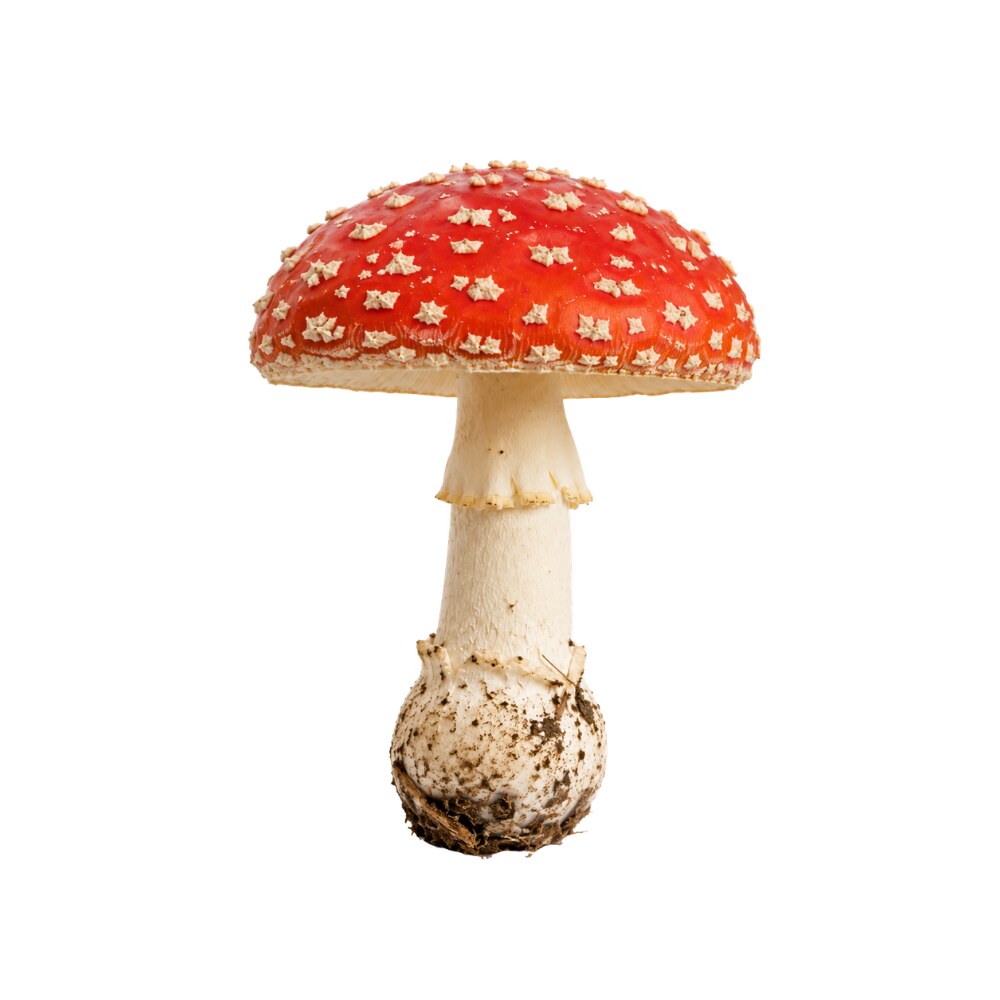 PotentPotentFly AgaricAmanita muscariaTwo opposing CNS drugs in one mushroom — GABA-A sedation and glutamate excitotoxicity — and drying shifts the balance toward the first.MechanismGABA-A receptor agonism (muscimol); glutamate/NMDA receptor agonism (ibotenic acid); thermal decarboxylation of ibotenic acid → muscimolRead the evidenceShow lessMonograph →
Muscimol is a structural analogue of GABA and a potent GABA-A agonist. Ibotenic acid is a structural analogue of glutamic acid and an agonist at glutamate receptors including NMDA 6Reference 6Novel 5-substituted 1-pyrazolol analogues of ibotenic acid: synthesis and pharmacology at glutamate receptorsView study →.
Acting on the brain’s two master volume controls at once, in opposite directions, is pharmacology nothing else in this group has.
It reaches neither of the usual psychoactive targets — not 5-HT2A, not κ-opioid or NMDA-antagonist dissociation — and how simultaneous inhibition and excitation produces the observed state is still not understood 7Reference 7ReviewAmanita muscaria: chemistry, biology, toxicology, and ethnomycology — reviewView study →.
Preparation dominates dose. Fresh raw caps carry maximal ibotenic acid and minimal muscimol, while drying and gentle heating, often in mild acid, decarboxylate much of the ibotenic acid to muscimol, shifting the picture from sickness toward sedation.
The conversion is incomplete and unpredictable, so residual ibotenic acid always remains.
Dried cap runs roughly 2.6–4.2 mg/g ibotenic acid against about 1 mg/g muscimol 8Reference 8In vitroAnalysis of the ibotenic acid, muscimol, and ergosterol content of an Amanita muscaria hydroalcoholic extract and evaluation of its cytotoxic effect against lung cell lines — in vitroView study →, so even prepared material is the toxin-heavy of the two. Content varies several-fold between specimens with rainfall, host tree, altitude, age and drying, and no dose is transferable between caps.
The trace muscarine present, at around 3 mg/kg fresh or less, is not the driver of the experience despite the name 7Reference 7ReviewAmanita muscaria: chemistry, biology, toxicology, and ethnomycology — reviewView study →.
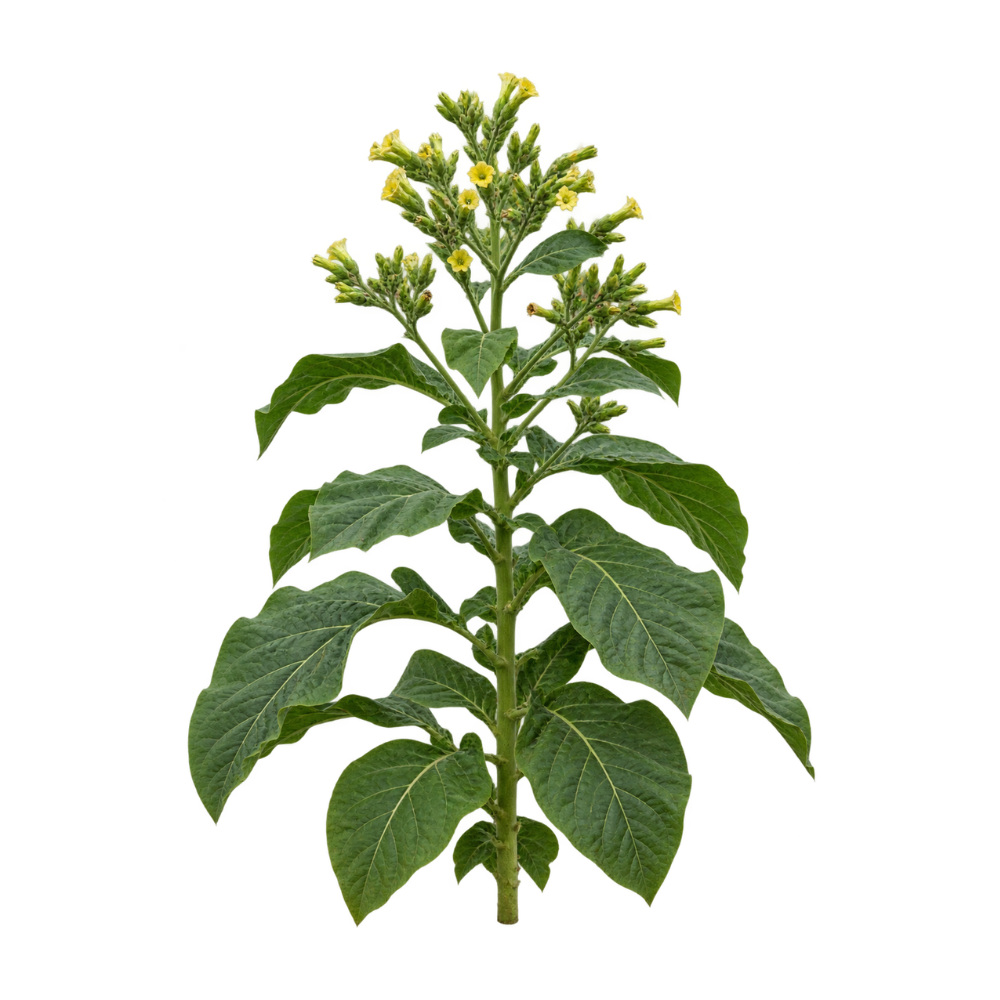 StrongStrongMapachoNicotiana rusticaCeremonial tobacco, several times stronger in nicotine than the commercial plant, used as a stimulant, emetic and purgative.Mechanismnicotinic agonism; not hallucinogenicRead the evidenceShow lessMonograph →
Nicotiana rustica is the tobacco of Amazonian practice, and its role alongside ayahuasca, chacruna, yopo and jurema is to stimulate, purge and induce vomiting rather than to produce visions.
Human accounts of that use exist only as ethnography: a qualitative study of a Peruvian maestro tabaquero 11Reference 11Berlowitz, I., et al. (2020). “Tobacco is the chief medicinal plant in my work”: therapeutic uses of tobacco in Peruvian Amazonian medicine exemplified by the work of a maestro tabaquero — qualitative ethnographic study. Frontiers in Pharmacology. https://pubmed.ncbi.nlm.nih.gov/33117182/View study → and a mixed-methods case report of ritual ingestion for mood and anxiety 12Reference 12Case reportIndigenous-Amazonian traditional medicine’s usage of the tobacco plant: a transdisciplinary ethnopsychological mixed-methods case study — case report (n=1, N. rustica ingestion)View study →. Neither tests whether anything works.
The nicotine load is high enough that acute poisoning is a real risk with ingested preparations.
Show 7 more herbs with a mild psychoactive action
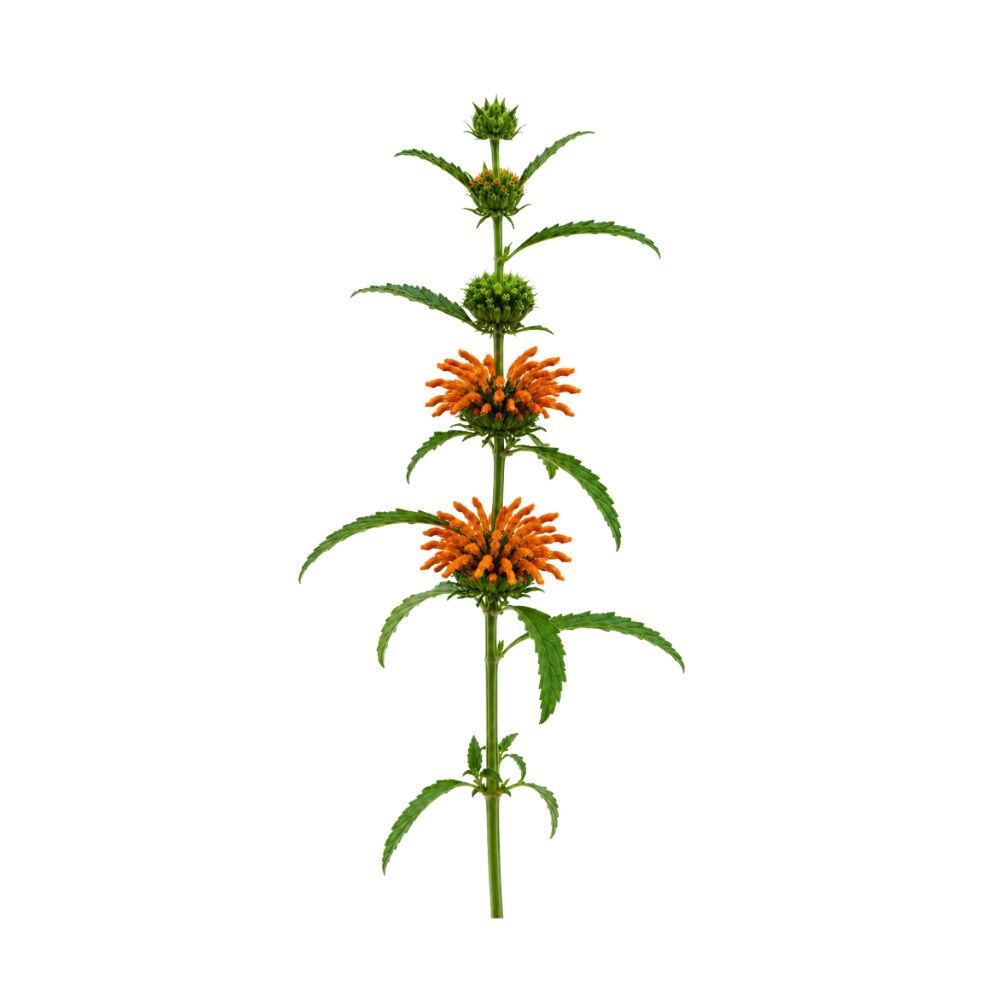 MildMildDaggaLeonotis nepetifoliaWild dagga carries a euphoriant reputation across southern African use, with no controlled data behind it.Read the evidenceShow lessMonograph →
Leonotis leonurus is smoked and drunk as a mild euphoriant, and that reputation is most of its popular identity.
No controlled study of the effect exists. The common name invites confusion with cannabis; they are unrelated plants.
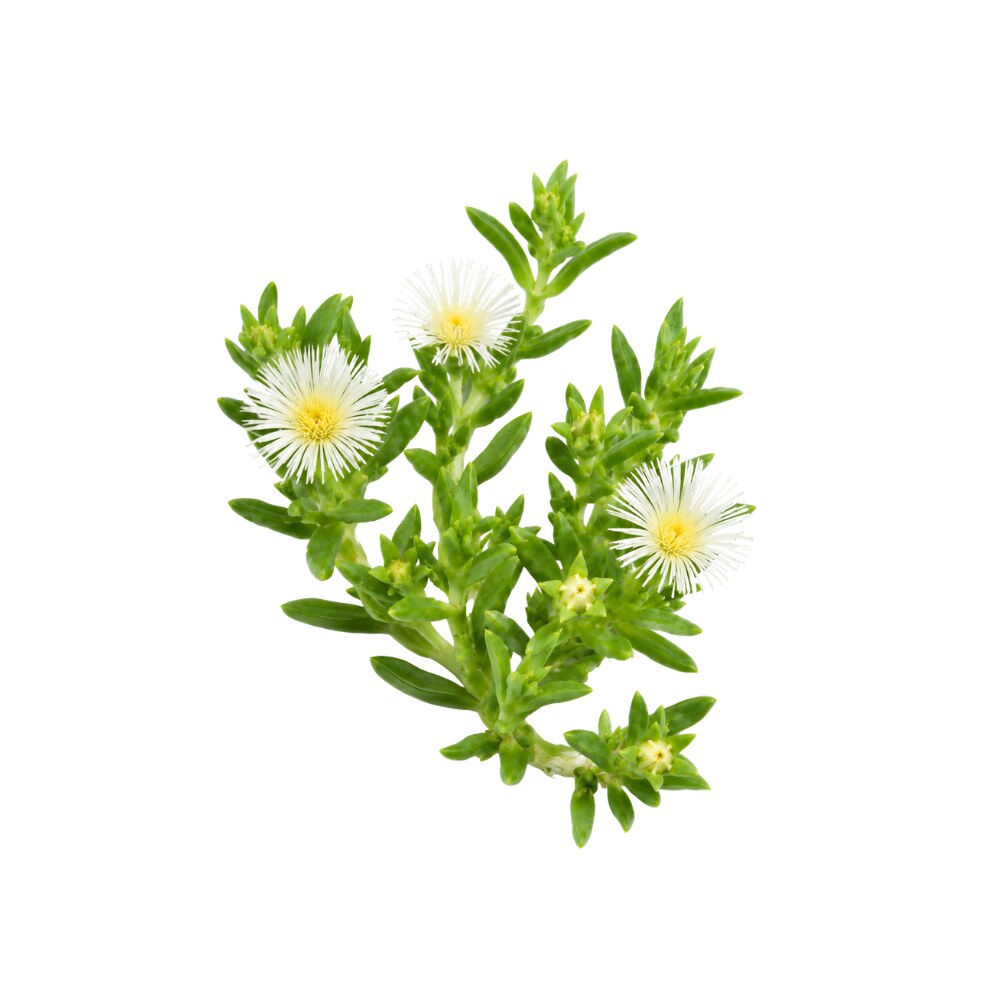 MildMildKannaSceletium tortuosumSerotonin reuptake inhibition plus PDE4 inhibition, producing a calm, socially open state rather than any perceptual change.Read the evidenceShow lessMonograph →
Sceletium tortuosum is popularly called an empathogen, and the mesembrine alkaloids give that description a mechanism to sit on.
Kanna is not hallucinogenic, which is why it sits at the mild end of this action rather than among the psychedelics.
The serotonin reuptake inhibition is the practical caution: it is the same mechanism an SSRI uses.
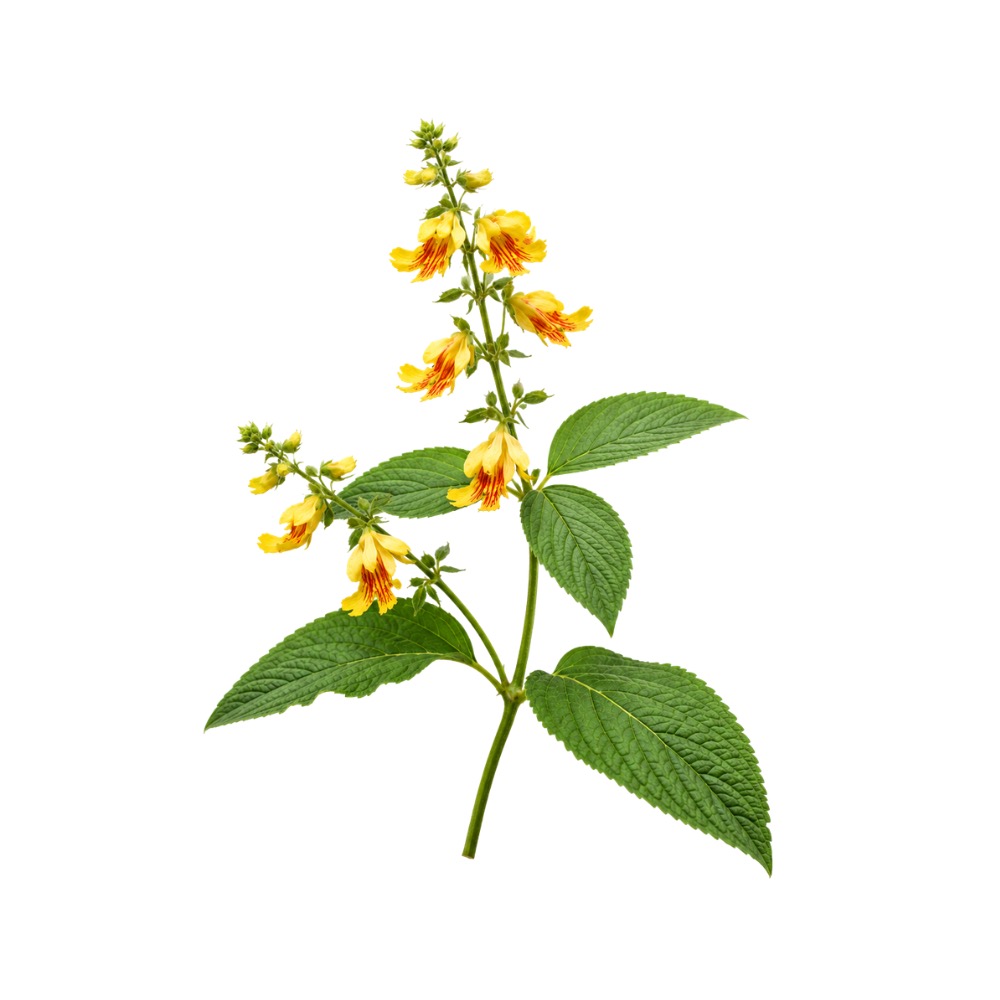 MildMildMaconha BravaZornia latifoliaOne in-vitro dataset on rat cortical neurons stands behind a reputation as a cannabis substitute.Mechanismcortical network firing/bursting suppression (↓ MFR, ↓ MBR on MEA) — receptor target not establishedRead the evidenceShow lessMonograph →
The plant’s entire pharmacological case is a single 2022 multielectrode-array study. A lipophilic aglycone fraction of a 2-propanol extract of the aerial parts significantly inhibited mean firing rate and mean bursting rate in cultured rat cortical neurons, while the hydrophilic glycoside fraction did nothing 9Reference 9In vitroCannabis-like activity of Zornia latifolia Sm. detected in vitro on rat cortical neurons: major role of the flavone syzalterin — in vitroView study →.
The chemotype detail is the interesting part. Apigenin and genistein standards, the two abundant flavonoids, were inactive; activity tracked the rare minor flavone syzalterin, alone or mixed with genistein, at a magnitude the authors compared to high-THC hashish 9Reference 9In vitroCannabis-like activity of Zornia latifolia Sm. detected in vitro on rat cortical neurons: major role of the flavone syzalterin — in vitroView study →.
No receptor or transporter target was identified, and there is no behavioural, animal or human confirmation, no pharmacokinetics, and no evidence that syzalterin survives combustion or reaches the brain by smoking 9Reference 9In vitroCannabis-like activity of Zornia latifolia Sm. detected in vitro on rat cortical neurons: major role of the flavone syzalterin — in vitroView study →.
Commercial material is frequently not even the right species 10Reference 10Zornia latifolia: a smart drug being adulterated by Stylosanthes guianensis — analytical study, DNA barcodingView study →.
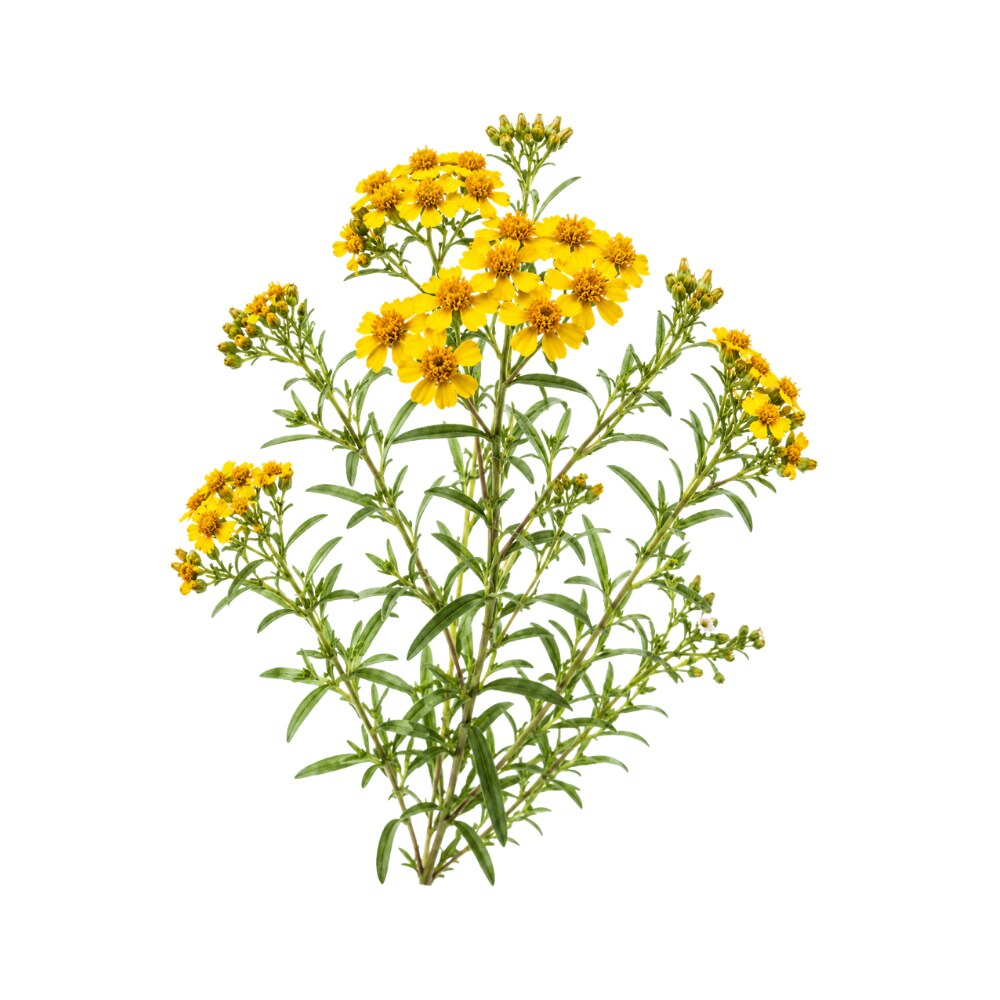 MildMildMexican TarragonTagetes lucidaAn Aztec ritual herb whose psychoactive reputation is its most repeated folk claim and its least tested one.Read the evidenceShow lessMonograph →
Tagetes lucida has a documented ritual history in Mesoamerica, where it was smoked and taken as an infusion.
No research supports the psychoactive claim. The plant’s measured pharmacology is anxiolytic and antimicrobial.
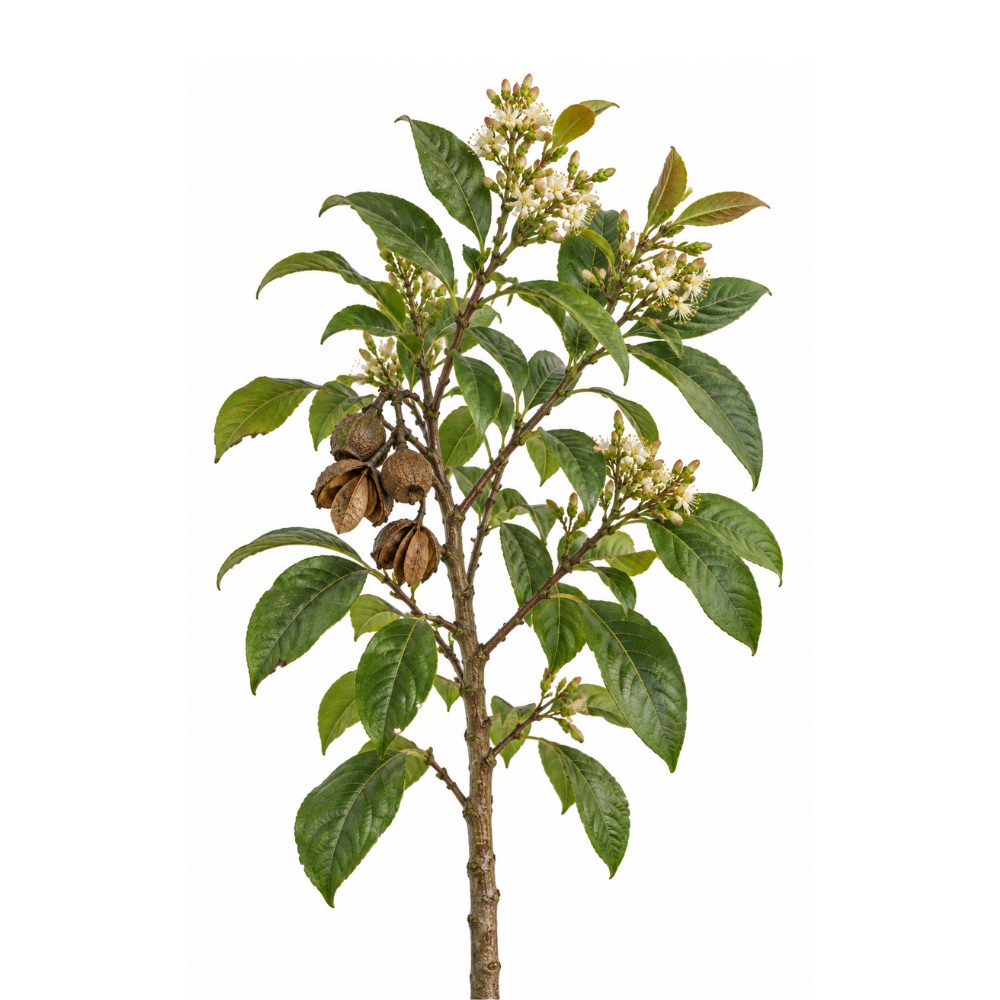 MildMildOsteophloeum platyspermumOsteophloeum platyspermumA tryptamine-bearing Amazonian tree of the nutmeg family, recorded in snuff preparations.Read the evidenceShow less
The species belongs to the Myristicaceae alongside the Virola trees, and the same tryptamine chemistry is reported from its bark resin.
Documentation is thin and no research addresses the species.
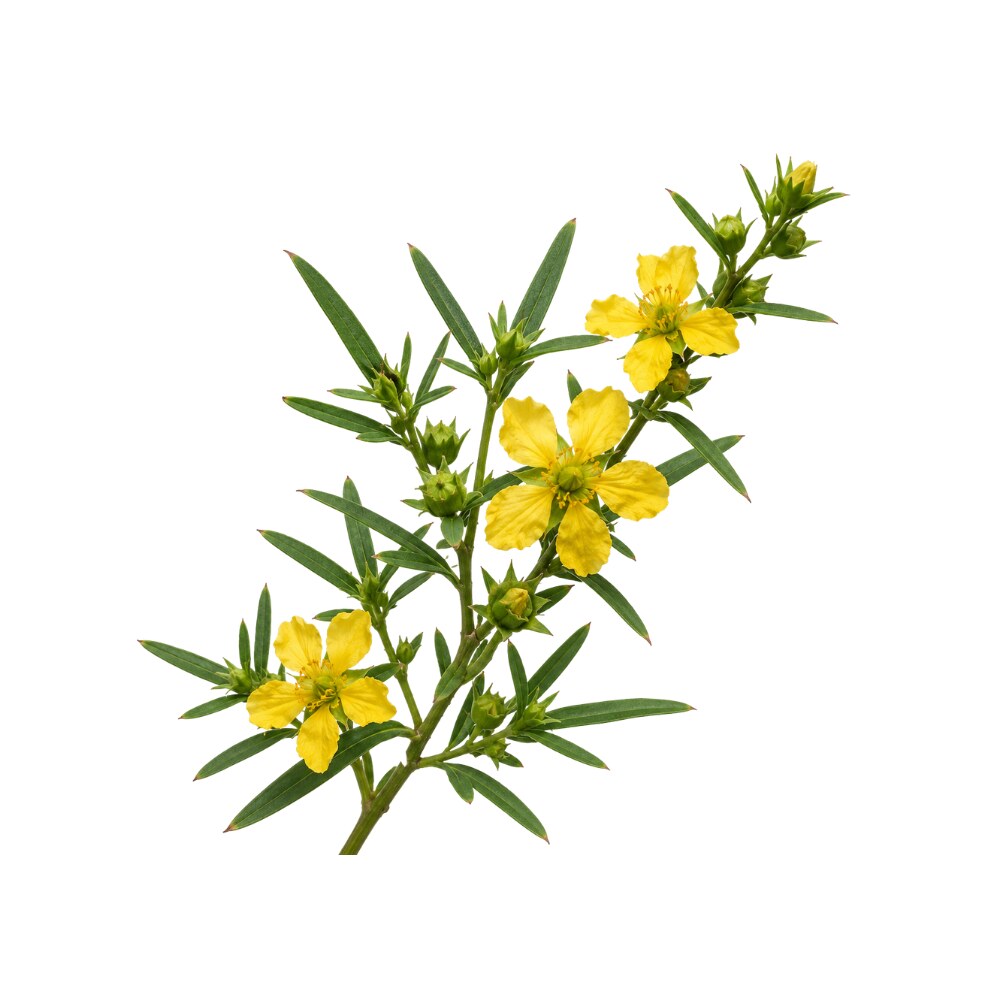 MildMildSinicuichiHeimia salicifoliaThe 'sun opener' of Mexican tradition, reported consistently to produce a distinctive alteration of hearing.Read the evidenceShow lessMonograph →
Heimia salicifolia is taken as a fermented leaf infusion, and the auditory effect described in Mexican accounts is specific enough to be unusual among traditional reports.
There is no controlled human research on it at all.
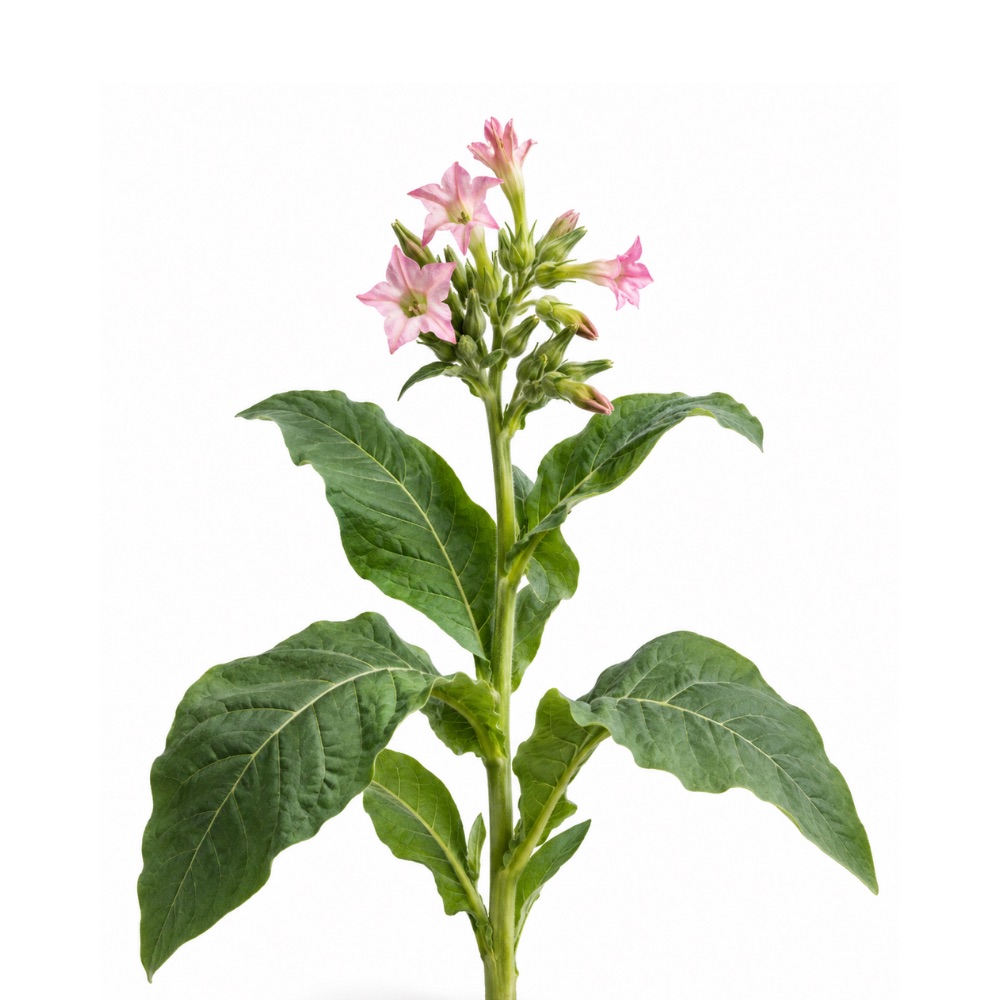 MildMildTobaccoNicotiana tabacumPsychoactive through nicotine, and a sacred plant across the Americas long before it was a recreational one.Read the evidenceShow lessMonograph →
Ceremonial tobacco is a different preparation and a different practice from a cigarette, and its use across the Americas long predates recreational smoking.
The pharmacology is nicotinic agonism either way, and so is the dependence liability.
No herbs match these filters.
Safety
- Deliriants are not psychedelics, and reaching for one in place of the other is the most dangerous mistake in this area.
- Any MAO-inhibiting plant interacts with SSRIs, SNRIs, triptans and tyramine-rich foods regardless of why it was taken.
- Combining an MAO-inhibiting plant with a serotonergic medication risks serotonin syndrome.
- A personal or family history of psychosis or bipolar disorder is an exclusion criterion in every clinical trial of these compounds.
- Drying and heating change which alkaloids a psychoactive plant contains, not merely how much, so a preparation is not interchangeable with the raw material.
- A sober sitter is a physical safety requirement for any preparation that impairs judgement or coordination.
- Legal status varies enormously by jurisdiction, and several of these plants are controlled substances.
References
- Achtyes ED, et al. (2023). Ulotaront: review of preliminary evidence for the efficacy and safety of a TAAR1 agonist in schizophrenia. European Archives of Psychiatry and Clinical Neuroscience. https://pubmed.ncbi.nlm.nih.gov/37165101/
- Pastore P, et al. (2005). Determination of biogenic amines in chocolate by ion chromatographic separation and pulsed integrated amperometric detection. Journal of Chromatography A. https://pubmed.ncbi.nlm.nih.gov/16314166/
- Paparella A, Schirone M, López CC (2025). The health impact of cocoa from cultivation to the formation of biogenic amines: an updated review. Foods. https://pubmed.ncbi.nlm.nih.gov/39856922/
- Michener W, Rozin P (1994). Pharmacological versus sensory factors in the satiation of chocolate craving. Physiology & Behavior. https://pubmed.ncbi.nlm.nih.gov/7972390/
- Jansen SC, et al. (2003). Intolerance to dietary biogenic amines: a review. Annals of Allergy, Asthma & Immunology. https://pubmed.ncbi.nlm.nih.gov/14533654/
- Jørgensen, C. G., Bräuner-Osborne, H., Nielsen, B., et al. (2007). Novel 5-substituted 1-pyrazolol analogues of ibotenic acid: synthesis and pharmacology at glutamate receptors. Bioorganic & Medicinal Chemistry. https://pubmed.ncbi.nlm.nih.gov/17376693/
- Michelot, D., & Melendez-Howell, L. M. (2003). Amanita muscaria: chemistry, biology, toxicology, and ethnomycology — review. Mycological Research. https://pubmed.ncbi.nlm.nih.gov/12747324/
- Dushkov, A., Vosáhlová, Z., Tzintzarov, A., et al. (2023). Analysis of the ibotenic acid, muscimol, and ergosterol content of an Amanita muscaria hydroalcoholic extract and evaluation of its cytotoxic effect against lung cell lines — in vitro. Molecules. https://pubmed.ncbi.nlm.nih.gov/37836667/
- Alloisio, S., Clericuzio, M., Nobile, M., Salis, A., Damonte, G., Canali, C., Fortuna-Perez, A. P., Cornara, L., & Burlando, B. (2022). Cannabis-like activity of Zornia latifolia Sm. detected in vitro on rat cortical neurons: major role of the flavone syzalterin — in vitro. Drug and Chemical Toxicology. https://pubmed.ncbi.nlm.nih.gov/32628037/
- Cornara, L., Fortuna-Perez, A. P., Bruni, I., Salis, A., Damonte, G., Borghesi, B., & Clericuzio, M. (2018). Zornia latifolia: a smart drug being adulterated by Stylosanthes guianensis — analytical study, DNA barcoding. International Journal of Legal Medicine. https://pubmed.ncbi.nlm.nih.gov/29362872/
- Berlowitz, I., et al. (2020). “Tobacco is the chief medicinal plant in my work”: therapeutic uses of tobacco in Peruvian Amazonian medicine exemplified by the work of a maestro tabaquero — qualitative ethnographic study. Frontiers in Pharmacology. https://pubmed.ncbi.nlm.nih.gov/33117182/
- Berlowitz, I., et al. (2023). Indigenous-Amazonian traditional medicine’s usage of the tobacco plant: a transdisciplinary ethnopsychological mixed-methods case study — case report (n=1, N. rustica ingestion). Plants. https://pubmed.ncbi.nlm.nih.gov/36679060/
Keep Exploring