
Materia Medica
Maritime Pine
Pinus pinaster
Maritime pine is a Mediterranean and Atlantic pine whose bark is the source of Pycnogenol, a standardised extract rich in procyanidins. The extract has been studied for venous insufficiency, blood pressure, blood sugar and joint pain.
What Is Maritime Pine?
Maritime pine is a Mediterranean and Atlantic pine whose bark is the source of a standardised extract sold as Pycnogenol®. The extract is rich in procyanidins, chains built from catechin and epicatechin units, and it has been tested in dozens of human trials 3,
Pinus pinaster grows around the western Mediterranean, along the Atlantic coast of Portugal, Spain and France, and in North Africa 1Reference 1Pinus pinaster — species description, distribution, subspecies and conservation status — reference databaseView study →. It can reach 40 m 1Reference 1Pinus pinaster — species description, distribution, subspecies and conservation status — reference databaseView study →. It is one of the most important forest trees in France, Portugal and Spain, grown for timber, pulp and, historically, resin 1Reference 1Pinus pinaster — species description, distribution, subspecies and conservation status — reference databaseView study →.
Pycnogenol is made from the outer bark of trees grown in coastal southwest France and is standardised to 65–75% procyanidins 5Reference 5ReviewReview of the pharmacokinetics of French maritime pine bark extract (Pycnogenol®) in humans — reviewView study →. Trials have explored venous insufficiency, blood pressure, blood sugar and joint pain, though a 2020 Cochrane review judged the evidence too small and too poorly reported for firm conclusions 3Reference 3Systematic reviewPine bark (Pinus spp.) extract for treating chronic disorders — systematic review of 27 RCTs, 1,641 participantsView study →.
The bark extract is a different material from pine needle tea, pine resin and pine pollen, which are covered on the pine page.
How Is Maritime Pine Used?
- Standardised bark extract — Pycnogenol®, taken as capsules or tablets. The trials described here used 80–300 mg a day 13,
17, .21, 24Reference 13RCTPycnogenol in chronic venous insufficiency — randomised placebo-controlledView study →Reference 17RCTAntidiabetic effect of Pycnogenol French maritime pine bark extract in patients with diabetes type II — randomised placebo-controlledView study →Reference 21Clinical trialTreatment of erectile dysfunction with pycnogenol and L-arginine — clinical trialView study →Reference 24Clinical trialPycnogenol® improves cognitive function, attention, mental performance and specific professional skills in healthy professionals aged 35-55 — clinical trialView study → - Resin — tapped from the trunk and distilled into rosin and turpentine. Spain’s resin industry was built on this species 1Reference 1Pinus pinaster — species description, distribution, subspecies and conservation status — reference databaseView study →.
- Needles and whole bark — used as other pines are used. See pine.
Traditional Uses
Resin Tapping in Spain
Maritime pine was the pine most often tapped for resin in Spain, where the industry ran from the 1840s until low prices ended it in the 1970s. Resin became one of the country’s most important non-timber forest products, and trees scarred by tapping are still common there 1Reference 1Pinus pinaster — species description, distribution, subspecies and conservation status — reference databaseView study →.
Botany
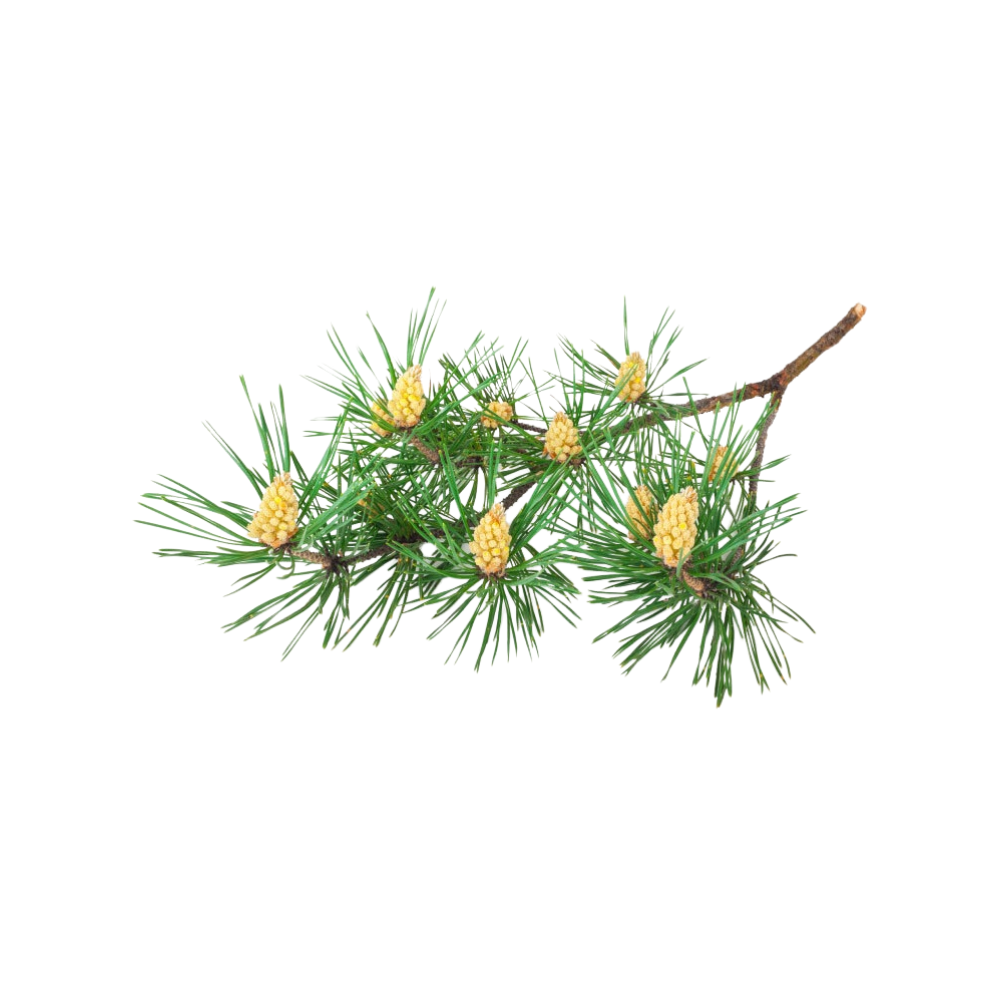
Maritime pine is an evergreen tree that grows to 40 m tall 1Reference 1Pinus pinaster — species description, distribution, subspecies and conservation status — reference databaseView study →. Its trunk is often somewhat sinuous, and its crown is usually open, with regular, upswept, candelabra-like branches 1Reference 1Pinus pinaster — species description, distribution, subspecies and conservation status — reference databaseView study →. The bark is very thick, scaly and fissured, patterned red-brown, blackish and buff 1Reference 1Pinus pinaster — species description, distribution, subspecies and conservation status — reference databaseView study →.
Its needles grow mostly in pairs, with some in threes. They are stout, 12–25 cm long and about 2 mm thick, and stay on the tree for one and a half to three years 1Reference 1Pinus pinaster — species description, distribution, subspecies and conservation status — reference databaseView study →.
The seed cones are hard, heavy and ovoid-conic, usually 9–18 cm long. They ripen a glossy chestnut-brown two years after pollination, and open the same summer or stay closed for up to 10 years 1Reference 1Pinus pinaster — species description, distribution, subspecies and conservation status — reference databaseView study →. Each seed is 7–11 mm long, with a wing about 2 cm long 1Reference 1Pinus pinaster — species description, distribution, subspecies and conservation status — reference databaseView study →.
Three subspecies are recognised. Subsp. pinaster grows on the Atlantic coast and subsp. escarena around the western Mediterranean; the two are very similar, and both are assessed as Least Concern 1Reference 1Pinus pinaster — species description, distribution, subspecies and conservation status — reference databaseView study →. Subsp. renoui, in Morocco, Algeria and Tunisia, is the most distinct. It was assessed as Endangered in 2011, with only two small, widely separated populations, ongoing logging and a risk of hybridising with planted European trees 1Reference 1Pinus pinaster — species description, distribution, subspecies and conservation status — reference databaseView study →.
Distribution
Maritime pine grows in Portugal, Spain, France, Italy, Malta, Monaco, Gibraltar, Morocco, Algeria and Tunisia 1Reference 1Pinus pinaster — species description, distribution, subspecies and conservation status — reference databaseView study →. It occurs from sea level in France to 900 m in Corsica, 1,500–1,700 m in southeast Spain and 2,000–2,200 m in Morocco’s Atlas Mountains, on sandy, limestone and ultramafic soils and on dunes 1Reference 1Pinus pinaster — species description, distribution, subspecies and conservation status — reference databaseView study →. Its original range in Europe is not precisely known, because people have grown it for timber and resin for thousands of years 1Reference 1Pinus pinaster — species description, distribution, subspecies and conservation status — reference databaseView study →. It is the most abundant conifer in Portugal 1Reference 1Pinus pinaster — species description, distribution, subspecies and conservation status — reference databaseView study →.
The Landes de Gascogne on the Atlantic coast of southwest France was planted with maritime pine from 1789 to hold back shifting sand dunes, and was expanded under Napoleon III. At about 8,200 km² it is the largest artificial forest in Europe 1Reference 1Pinus pinaster — species description, distribution, subspecies and conservation status — reference databaseView study →. Pycnogenol is made from trees grown in coastal southwest France 5Reference 5ReviewReview of the pharmacokinetics of French maritime pine bark extract (Pycnogenol®) in humans — reviewView study →, so the bark used for the extract comes from planted forest rather than wild trees.
Since the 1950s the species has been planted throughout its native range and on every continent except Antarctica. It is naturalised in South Africa and regarded as invasive in parts of South America and Africa 1Reference 1Pinus pinaster — species description, distribution, subspecies and conservation status — reference databaseView study →.
Growing Conditions
Cultivation snapshot for Maritime Pine
A coastal and lowland pine of acid, sandy, free-draining soils, tolerant of salt wind and poor ground — the qualities that made it the dune-stabilisation species of choice. It is fast-growing, fire-adapted and frost-sensitive relative to the northern pines.
Grow it yourself
Farm Wiki is our cultivation-focused sister site, also run by Justin Cooke.
Indications
- Chronic venous insufficiency and leg swelling [standardised bark extract]
- High blood pressure [standardised bark extract] Caution: A meta-analysis limited to seven double-blind, placebo-controlled trials found no significant change in blood pressure 10.
- Type 2 diabetes and blood sugar [standardised bark extract] Caution: In the main 12-week trial, HbA1c differed significantly from placebo only in the first month 17.
- High cholesterol [standardised bark extract] Caution: Two meta-analyses found no effect on total or LDL cholesterol; one found a small rise in HDL 11,
12 . - Early diabetic retinopathy [standardised bark extract]
- Erectile dysfunction [standardised bark extract, often with L-arginine]
- Osteoarthritis pain [standardised bark extract]
- Asthma, alongside standard treatment [standardised bark extract]
- Attention and ADHD [standardised bark extract] Caution: The cognition studies were open comparisons, and the ADHD evidence is of low quality 3,
23, .24, 25
Pharmacology & Research
Most of the research on maritime pine concerns one preparation, the standardised bark extract. A 2020 Cochrane review pooled 27 randomised trials with 1,641 participants across ten chronic conditions 3Reference 3Systematic reviewPine bark (Pinus spp.) extract for treating chronic disorders — systematic review of 27 RCTs, 1,641 participantsView study →. Later meta-analyses have added cardiometabolic data, with small reductions in blood pressure, fasting glucose and HbA1c in some analyses and none in others 7,
Most trials are small and short. Several reviews of the extract were written by, or received funding from, its manufacturer 5,
-
Best-supported: the standardised bark extract reduces leg swelling in chronic venous insufficiency 13,
14Reference 13RCTPycnogenol in chronic venous insufficiency — randomised placebo-controlledView study →Reference 14ReviewPycnogenol® in chronic venous insufficiency and related venous disorders — reviewView study → , modestly lowers blood pressure in pooled analyses 7,8, , and lowers fasting glucose and HbA1c 7,9Reference 7Meta-analysisEffects of pycnogenol on cardiometabolic health: a systematic review and meta-analysis of randomized controlled trials — meta-analysisView study →Reference 8Meta-analysisDoes supplementation with pine bark extract improve cardiometabolic risk factors? A systematic review and meta-analysis — meta-analysisView study →Reference 9Meta-analysisEffect of pycnogenol supplementation on blood pressure: a systematic review and meta-analysis of clinical trials — meta-analysisView study → 8, .17Reference 7Meta-analysisEffects of pycnogenol on cardiometabolic health: a systematic review and meta-analysis of randomized controlled trials — meta-analysisView study →Reference 8Meta-analysisDoes supplementation with pine bark extract improve cardiometabolic risk factors? A systematic review and meta-analysis — meta-analysisView study →Reference 17RCTAntidiabetic effect of Pycnogenol French maritime pine bark extract in patients with diabetes type II — randomised placebo-controlledView study → -
Emerging, worth watching: early diabetic retinopathy 15,
16Reference 15RCTPycnogenol improves microcirculation, retinal edema, and visual acuity in early diabetic retinopathy — randomised controlled trialView study →Reference 16ReviewPycnogenol for diabetic retinopathy: a review — reviewView study → and cognition and attention 23,24, .25Reference 23Clinical trialPycnogenol® supplementation improves cognitive function, attention and mental performance in students — clinical trialView study →Reference 24Clinical trialPycnogenol® improves cognitive function, attention, mental performance and specific professional skills in healthy professionals aged 35-55 — clinical trialView study →Reference 25Meta-analysisSafety and efficacy of antioxidant therapy in children and adolescents with attention deficit hyperactivity disorder: a systematic review and network meta-analysis — systematic reviewView study → -
The counter-evidence: a meta-analysis restricted to seven double-blind trials found no significant blood-pressure change 10Reference 10Meta-analysisEffect of Pycnogenol on blood pressure: findings from a PRISMA compliant systematic review and meta-analysis of randomized, double-blind, placebo-controlled clinical studies — meta-analysisView study →, and the lipid meta-analyses were largely null 11,
12Reference 11Meta-analysisA systematic review and meta-analysis of the effects of pycnogenol on plasma lipids — meta-analysisView study →Reference 12Meta-analysisThe impact of pycnogenol supplementation on plasma lipids in humans: a systematic review and meta-analysis of clinical trials — meta-analysisView study → . - The caveat: the Cochrane review rated nearly every finding very low certainty 3Reference 3Systematic reviewPine bark (Pinus spp.) extract for treating chronic disorders — systematic review of 27 RCTs, 1,641 participantsView study →.
All of this evidence belongs to a proprietary, procyanidin-standardised bark extract. It does not carry over to needle tea, resin, pine pollen or bark prepared at home.
1. Venous Insufficiency & Edema
In a double-blind RCT, 40 people with chronic venous insufficiency took 100 mg of the extract three times a day or placebo for two months. The extract significantly reduced edema, leg heaviness and pain, and about 60% of treated patients lost their edema and pain completely. The placebo group showed no change, and venous blood flow did not change in either group 13Reference 13RCTPycnogenol in chronic venous insufficiency — randomised placebo-controlledView study →.
A review from the manufacturer’s research arm collects further trials in venous insufficiency, flight-related leg edema, venous ulcers and hemorrhoids 14Reference 14ReviewPycnogenol® in chronic venous insufficiency and related venous disorders — reviewView study →. The Cochrane review included two venous trials with 60 participants and rated the pain and treatment-efficacy findings very low certainty 3Reference 3Systematic reviewPine bark (Pinus spp.) extract for treating chronic disorders — systematic review of 27 RCTs, 1,641 participantsView study →.
A 2025 meta-analysis of newer venous drugs found benefit from the extract for pain and skin blood flow, with less consistent effects on edema 6Reference 6Meta-analysisEmerging pharmacological interventions for chronic venous insufficiency: systematic review and meta-analysis — meta-analysisView study →.
Gap: trials are small, short and mostly industry-sponsored. No large independent trial or comparison with compression has been run.
2. Blood Pressure & Cardiometabolic
A 2019 meta-analysis of 24 RCTs (1,594 participants) found small falls in systolic (−2.5 mmHg) and diastolic (−1.8 mmHg) blood pressure, with lower fasting glucose, HbA1c, BMI and LDL and higher HDL 7Reference 7Meta-analysisEffects of pycnogenol on cardiometabolic health: a systematic review and meta-analysis of randomized controlled trials — meta-analysisView study →.
A 2025 meta-analysis of 27 RCTs found similar falls in blood pressure, fasting glucose, HbA1c, body weight and LDL, but no change in BMI or HDL 8Reference 8Meta-analysisDoes supplementation with pine bark extract improve cardiometabolic risk factors? A systematic review and meta-analysis — meta-analysisView study →.
A blood-pressure meta-analysis of 12 trials found a diastolic effect only in trials longer than 12 weeks 9Reference 9Meta-analysisEffect of pycnogenol supplementation on blood pressure: a systematic review and meta-analysis of clinical trials — meta-analysisView study →.
⚠ A meta-analysis restricted to seven double-blind, placebo-controlled trials (626 participants) found no significant change in blood pressure 10Reference 10Meta-analysisEffect of Pycnogenol on blood pressure: findings from a PRISMA compliant systematic review and meta-analysis of randomized, double-blind, placebo-controlled clinical studies — meta-analysisView study →.
Two lipid meta-analyses found no change in total or LDL cholesterol; one found a small rise in HDL 11,
3. Antioxidant
The bark’s procyanidins scavenge free radicals, and in cell studies the extract doubled the synthesis of antioxidant enzymes 2Reference 2ReviewA review of the French maritime pine bark extract (Pycnogenol), a herbal medication with a diverse clinical pharmacology — reviewView study →.
Taken by mouth, it reduced UV-induced skin reddening in a clinical study 2Reference 2ReviewA review of the French maritime pine bark extract (Pycnogenol), a herbal medication with a diverse clinical pharmacology — reviewView study →. Later work reports effects on skin pigmentation, barrier function and the skin’s extracellular matrix 30Reference 30ReviewFrench maritime pine bark extract (Pycnogenol®) effects on human skin: clinical and molecular evidence — reviewView study →.
In a 12-week registry study of healthy professionals, 150 mg/day lowered plasma free radicals by about 30%, with no change in controls 24Reference 24Clinical trialPycnogenol® improves cognitive function, attention, mental performance and specific professional skills in healthy professionals aged 35-55 — clinical trialView study →.
Gap: these biomarker changes have not been linked to a clinical outcome.
4. Glycemic Control
A double-blind RCT in 77 people with type 2 diabetes found that 100 mg a day for 12 weeks, alongside standard treatment, lowered plasma glucose against placebo. HbA1c also fell, but the difference from placebo was significant only in the first month 17Reference 17RCTAntidiabetic effect of Pycnogenol French maritime pine bark extract in patients with diabetes type II — randomised placebo-controlledView study →.
In 46 people with type 2 diabetes and microalbuminuria, 100 mg a day for eight weeks lowered HbA1c, total cholesterol and urinary albumin. Fasting glucose did not change significantly 18Reference 18RCTEffect of French maritime pine bark extract supplementation on metabolic status and serum vascular cell adhesion molecule-1 levels in patients with type 2 diabetes and microalbuminuria — randomised controlled trialView study →.
The pooled analyses found small reductions in fasting glucose and HbA1c 7,
A laboratory-made ethanol extract of pine bark, not the standardised extract, inhibited α-glucosidase and α-amylase and blunted blood-sugar rises in diabetic mice 19Reference 19In vitroInhibitory effect of pine extract on alpha-glucosidase activity and postprandial hyperglycemia — in vitroView study →.
Gap: the trials are short add-on studies of 12 weeks or less, with no hard endpoints and no trial of the extract used alone.
5. Anti-Inflammatory
In human cartilage cells and joint-lining cells, the extract blocked urate-crystal-induced COX-2, IL-8 and iNOS and the activation of NF-κB. In rats it reduced joint inflammation after urate crystals were injected into the joint 27Reference 27AnimalPycnogenol attenuates the inflammatory and nitrosative stress on joint inflammation induced by urate crystals — animal modelView study →.
The extract inhibits 5-lipoxygenase expression and lowers leukotriene levels in people with asthma 29Reference 29Clinical trialPycnogenol® improvements in asthma management — controlled clinical study, n=76View study →.
In a double-blind crossover trial in 26 people with asthma, 22 completed, almost all responded favourably to the extract, and serum leukotrienes fell against placebo 28Reference 28RCTPycnogenol® in the management of asthma — randomised placebo-controlledView study →.
In a six-month controlled study of 76 people with allergic asthma on inhaled steroids, 55% of those adding 100 mg/day of the extract moved to a lower steroid dose, against 6% of those on steroids alone 29Reference 29Clinical trialPycnogenol® improvements in asthma management — controlled clinical study, n=76View study →.
Gap: the human evidence is these asthma studies. The joint work is cell and animal only.
6. Diabetic Retinopathy
In an RCT in 46 people with early diabetic retinopathy, three months of the extract improved retinal edema, retinal thickness and blood flow in the central retinal artery. Visual acuity improved from 14/20 to 17/20, with no change in the placebo group 15Reference 15RCTPycnogenol improves microcirculation, retinal edema, and visual acuity in early diabetic retinopathy — randomised controlled trialView study →.
A review of five trials with 1,289 patients, run since the late 1960s and mostly published in French or German, reported slower progression of retinopathy. One trial was controlled against calcium dobesilate and one against placebo 16Reference 16ReviewPycnogenol for diabetic retinopathy: a review — reviewView study →.
Gap: the trials are small or old, and several predate modern retinopathy treatment.
7. Erectile Dysfunction
A 2023 meta-analysis of three trials (184 men) found that the extract combined with L-arginine improved erectile function, satisfaction, orgasmic function and desire scores. Testosterone did not change 20Reference 20Meta-analysisEfficacy of L-arginine and Pycnogenol® in the treatment of male erectile dysfunction: a systematic review and meta-analysis — meta-analysisView study →.
In one of those trials, 40 men took 1.7 g/day of L-arginine for a month, and 2 had a normal erection. Adding 80 mg/day of the extract in the second month raised that to 80%, and 120 mg/day in the third month to 92.5% 21Reference 21Clinical trialTreatment of erectile dysfunction with pycnogenol and L-arginine — clinical trialView study →.
One placebo-controlled trial tested the extract alone. In 53 men with erectile dysfunction, three months of the extract improved erectile-function scores by 45% in those with diabetes and 22% in those without, and lowered total and LDL cholesterol in the diabetic group 22Reference 22RCTNatural polyphenols improve erectile function and lipid profile in patients suffering from erectile dysfunction — randomised controlled trialView study →.
Gap: the combination trials cannot separate the extract’s effect from that of L-arginine 20,
8. Cognitive Function & Attention
In an 8-week study, 53 healthy students taking the extract improved on tests of sustained attention, memory and executive function against a comparison group. They also failed fewer university exams (6.25% against 10.71%) 23Reference 23Clinical trialPycnogenol® supplementation improves cognitive function, attention and mental performance in students — clinical trialView study →.
In a 12-week registry study, 30 professionals aged 35–55 taking 150 mg/day improved on several cognitive tests and on mood against 29 controls 24Reference 24Clinical trialPycnogenol® improves cognitive function, attention, mental performance and specific professional skills in healthy professionals aged 35-55 — clinical trialView study →.
In a network meta-analysis of antioxidant treatments for children and adolescents with ADHD, pycnogenol ranked among the most effective for attention on parent and teacher rating scales. The authors noted the low quality of the included studies 25Reference 25Meta-analysisSafety and efficacy of antioxidant therapy in children and adolescents with attention deficit hyperactivity disorder: a systematic review and network meta-analysis — systematic reviewView study →. The one ADHD trial in the Cochrane review (61 children) gave very low-certainty evidence 3Reference 3Systematic reviewPine bark (Pinus spp.) extract for treating chronic disorders — systematic review of 27 RCTs, 1,641 participantsView study →.
Gap: both cognition studies were open comparisons rather than blinded randomised trials 23,
9. Osteoarthritis & Joint
A meta-analysis of 69 trials of dietary supplements for osteoarthritis listed pycnogenol among seven supplements with large, clinically important effects on pain in the short term. The overall quality of the evidence was very low 26Reference 26Meta-analysisDietary supplements for treating osteoarthritis: a systematic review and meta-analysis — meta-analysisView study →.
The one knee osteoarthritis trial pooled by Cochrane (37 participants) reported better WOMAC scores and less use of anti-inflammatory painkillers, at very low certainty 3Reference 3Systematic reviewPine bark (Pinus spp.) extract for treating chronic disorders — systematic review of 27 RCTs, 1,641 participantsView study →.
In rats, the extract reduced joint inflammation caused by urate crystals 27Reference 27AnimalPycnogenol attenuates the inflammatory and nitrosative stress on joint inflammation induced by urate crystals — animal modelView study →.
Gap: there is no large independent trial.
Mechanisms
The standardised extract is mostly procyanidins, with smaller amounts of taxifolin and phenolic acids 5Reference 5ReviewReview of the pharmacokinetics of French maritime pine bark extract (Pycnogenol®) in humans — reviewView study →. The small molecules are absorbed from the small intestine. The procyanidin chains are broken down by gut bacteria into small metabolites, such as a valerolactone, which reach the blood, joint fluid and blood cells 5Reference 5ReviewReview of the pharmacokinetics of French maritime pine bark extract (Pycnogenol®) in humans — reviewView study →.
The extract has been studied for its effects on endothelial nitric oxide synthase, on inflammatory signalling through NF-κB, COX-2 and 5-lipoxygenase, on antioxidant enzymes, and on capillary resistance 2,
| Mechanism | Drives | Key compounds |
|---|---|---|
| NF-κB ↓, COX-2 ↓, 5-LOX ↓ | anti-inflammatoryasthmajoint | procyanidins, taxifolin |
| eNOS ↑ → nitric-oxide-mediated vasodilation | blood pressureerectile functionretinopathy | procyanidins, ferulic acid |
| Free-radical scavenging, ↑ antioxidant enzymes | antioxidantskin | procyanidins, caffeic acid |
| Capillary sealing / collagen stabilization | venous insufficiencyedemaretinopathy | procyanidins |
| α-glucosidase / α-amylase inhibition (laboratory pine bark extract) | glycemic control | pine bark polyphenols |
Clinical Trials
ClinicalTrials.gov lists about 132 records under “Pycnogenol” and about 96 under “pine bark extract”, covering venous, cardiometabolic, eye, cognitive and joint conditions.
| Completed | Planned | Terminated | Preclinical |
|---|---|---|---|
| ~35 | ~2 | ~3 | ~50+ |
Last checked: July 2026.
Phytochemistry
Maritime pine bark contains condensed tannins, the procyanidins, built from catechin and epicatechin units. The standardised extract contains 65–75% procyanidins 5Reference 5ReviewReview of the pharmacokinetics of French maritime pine bark extract (Pycnogenol®) in humans — reviewView study →. It also contains the flavonoids catechin, epicatechin and taxifolin; the benzoic acids protocatechuic, vanillic and gallic acid; and the cinnamic acids ferulic, caffeic and p-coumaric acid 5Reference 5ReviewReview of the pharmacokinetics of French maritime pine bark extract (Pycnogenol®) in humans — reviewView study →. The phenolic acids occur as glucosides, glucose esters and free acids 5Reference 5ReviewReview of the pharmacokinetics of French maritime pine bark extract (Pycnogenol®) in humans — reviewView study →.
The procyanidins range from single units to chains of seven or more 2Reference 2ReviewA review of the French maritime pine bark extract (Pycnogenol), a herbal medication with a diverse clinical pharmacology — reviewView study →. Ferulic acid and taxifolin are absorbed quickly, while the longer chains are broken down by gut bacteria before absorption 2,
Procyanidins are also the most widespread tannins in the bark of other European conifers, including Scots pine 4Reference 4Characterization of condensed tannins and carbohydrates in hot water bark extracts of European softwood species — analyticalView study →.
Research on other pine bark extracts, or on single compounds such as taxifolin or ferulic acid, should be read separately from studies of the standardised maritime pine extract.
Constituent Summary
Figures are for the standardised bark extract.
Tannin1 compound1 with data
Flavanol2 compounds2 with data
Flavonoid1 compound1 with data
Phenolic Acid4 compounds4 with data
Dosage
All doses below are for the standardised bark extract (Pycnogenol®). No conversion to raw bark, needles or resin exists.
| Indication | Preparation | Dose | Est. dried-herb equivalent | Source |
|---|---|---|---|---|
| Venous insufficiency & edema | Standardised bark extract | 100 mg 3×/day (300 mg/day), 2 months | — | 13Reference 13RCTPycnogenol in chronic venous insufficiency — randomised placebo-controlledView study → |
| Type 2 diabetes (glucose) | Standardised bark extract | 100 mg/day, 12 weeks | — | 17Reference 17RCTAntidiabetic effect of Pycnogenol French maritime pine bark extract in patients with diabetes type II — randomised placebo-controlledView study → |
| Type 2 diabetes with microalbuminuria | Standardised bark extract | 50 mg 2×/day, 8 weeks | — | 18Reference 18RCTEffect of French maritime pine bark extract supplementation on metabolic status and serum vascular cell adhesion molecule-1 levels in patients with type 2 diabetes and microalbuminuria — randomised controlled trialView study → |
| Asthma, alongside inhaled steroids | Standardised bark extract | 50 mg 2×/day, 6 months | — | 29Reference 29Clinical trialPycnogenol® improvements in asthma management — controlled clinical study, n=76View study → |
| Cognition / attention | Standardised bark extract | 150 mg/day, 12 weeks | — | 24Reference 24Clinical trialPycnogenol® improves cognitive function, attention, mental performance and specific professional skills in healthy professionals aged 35-55 — clinical trialView study → |
| Erectile dysfunction | Standardised bark extract + L-arginine (1.7 g/day) | 80–120 mg/day | — | 21Reference 21Clinical trialTreatment of erectile dysfunction with pycnogenol and L-arginine — clinical trialView study → |
Safety & Pregnancy
The standardised bark extract is well tolerated at trial doses. Pregnancy, breastfeeding and long-term use have barely been studied.
- Well tolerated in trials. Side effects were rare and mild, mostly stomach discomfort 2,
16Reference 2ReviewA review of the French maritime pine bark extract (Pycnogenol), a herbal medication with a diverse clinical pharmacology — reviewView study →Reference 16ReviewPycnogenol for diabetic retinopathy: a review — reviewView study → . - Safety reporting is thin. Most trials in the Cochrane review did not report serious adverse events 3Reference 3Systematic reviewPine bark (Pinus spp.) extract for treating chronic disorders — systematic review of 27 RCTs, 1,641 participantsView study →.
- Pregnancy. One small trial used 30 mg/day in the third trimester with no unwanted effects 31Reference 31Clinical trialPycnogenol alleviates pain associated with pregnancy — controlled clinical study (third trimester, 30 mg/day)View study →. Higher doses have not been studied.
- Breastfeeding. Not studied.
- Long-term use. Trials lasted four weeks to six months 3Reference 3Systematic reviewPine bark (Pinus spp.) extract for treating chronic disorders — systematic review of 27 RCTs, 1,641 participantsView study →.
- Blood-pressure and diabetes medicines. The extract may add to their effects 7,
17Reference 7Meta-analysisEffects of pycnogenol on cardiometabolic health: a systematic review and meta-analysis of randomized controlled trials — meta-analysisView study →Reference 17RCTAntidiabetic effect of Pycnogenol French maritime pine bark extract in patients with diabetes type II — randomised placebo-controlledView study → .
Full Safety Detail
Side effects. Across the trials, unwanted effects were mild and occurred in a small percentage of people, mostly as stomach discomfort 2,
Safety reporting. Most trials in the Cochrane review did not report serious adverse events or hospital admissions, so the safety record is incomplete 3Reference 3Systematic reviewPine bark (Pinus spp.) extract for treating chronic disorders — systematic review of 27 RCTs, 1,641 participantsView study →.
Pregnancy. In one small trial, women in the third trimester took 30 mg/day for back, hip, pelvic and leg pain until delivery, with no unwanted effects reported 31Reference 31Clinical trialPycnogenol alleviates pain associated with pregnancy — controlled clinical study (third trimester, 30 mg/day)View study →. That dose is below the range used in most trials.
Immune conditions. The extract has shown immune-modulating effects in animals and in patients with lupus 2Reference 2ReviewA review of the French maritime pine bark extract (Pycnogenol), a herbal medication with a diverse clinical pharmacology — reviewView study →. This is the basis of a caution sometimes given for autoimmune disease; no clinical problem has been reported.
Drug interactions. No drug-interaction study of the extract was found. It lowers glucose in people with diabetes and has a small effect on blood pressure, so blood sugar and blood pressure are worth watching alongside medicines for either 7,
Resin and turpentine. The tolerability record belongs to the purified bark extract. Concentrated resin and turpentine are gastrointestinal irritants when taken internally.
One small trial gave 30 mg/day of the bark extract to women in the third trimester for pregnancy-related pain, with no unwanted effects reported 31Reference 31Clinical trialPycnogenol alleviates pain associated with pregnancy — controlled clinical study (third trimester, 30 mg/day)View study →. That dose is below the usual supplement range, and the extract has not otherwise been studied in pregnancy.
Breastfeeding has not been studied.
References
- Earle, C. J. (ed.) (2023). Pinus pinaster — species description, distribution, subspecies and conservation status — reference database. The Gymnosperm Database. https://www.conifers.org/pi/Pinus_pinaster.php
- Rohdewald P (2002). A review of the French maritime pine bark extract (Pycnogenol), a herbal medication with a diverse clinical pharmacology — review. Int J Clin Pharmacol Ther, 40, 158-168. https://pubmed.ncbi.nlm.nih.gov/11996210/
- Robertson NU, Schoonees A, Brand A, Visser J (2020). Pine bark (Pinus spp.) extract for treating chronic disorders — systematic review of 27 RCTs, 1,641 participants. Cochrane Database Syst Rev, 9, CD008294. https://pubmed.ncbi.nlm.nih.gov/32990945/
- Bianchi S, Kroslakova I, Janzon R, Mayer I, et al. (2015). Characterization of condensed tannins and carbohydrates in hot water bark extracts of European softwood species — analytical. Phytochemistry, 120, 53-61. https://pubmed.ncbi.nlm.nih.gov/26547588/
- Bayer J, Högger P (2024). Review of the pharmacokinetics of French maritime pine bark extract (Pycnogenol®) in humans — review. Front Nutr, 11, 1389422. https://pubmed.ncbi.nlm.nih.gov/38757126/
- Miguel CB, Andrade RS, Mazurek L, Martins-de-Abreu MC, et al. (2025). Emerging pharmacological interventions for chronic venous insufficiency: systematic review and meta-analysis — meta-analysis. Pharmaceutics, 17, 59. https://pubmed.ncbi.nlm.nih.gov/39861707/
- Malekahmadi M, Moradi Moghaddam O, Firouzi S, Daryabeygi-Khotbehsara R, et al. (2019). Effects of pycnogenol on cardiometabolic health: a systematic review and meta-analysis of randomized controlled trials — meta-analysis. Pharmacol Res, 150, 104472. https://pubmed.ncbi.nlm.nih.gov/31585179/
- Mohammadi S, Fulop T, Khalil A, Ebrahimi S, et al. (2025). Does supplementation with pine bark extract improve cardiometabolic risk factors? A systematic review and meta-analysis — meta-analysis. BMC Complement Med Ther, 25, 71. https://pubmed.ncbi.nlm.nih.gov/39987124/
- Pourmasoumi M, Hadi A, Mohammadi H, Rouhani MH, et al. (2020). Effect of pycnogenol supplementation on blood pressure: a systematic review and meta-analysis of clinical trials — meta-analysis. Phytother Res, 34, 67-76. https://pubmed.ncbi.nlm.nih.gov/31637782/
- Fogacci F, Tocci G, Sahebkar A, Presta V, et al. (2020). Effect of Pycnogenol on blood pressure: findings from a PRISMA compliant systematic review and meta-analysis of randomized, double-blind, placebo-controlled clinical studies — meta-analysis. Angiology, 71, 217-225. https://pubmed.ncbi.nlm.nih.gov/31763928/
- Sahebkar A (2014). A systematic review and meta-analysis of the effects of pycnogenol on plasma lipids — meta-analysis. J Cardiovasc Pharmacol Ther, 19, 244-55. https://pubmed.ncbi.nlm.nih.gov/24346156/
- Hadi A, Pourmasoumi M, Mohammadi H, Javaheri A, et al. (2019). The impact of pycnogenol supplementation on plasma lipids in humans: a systematic review and meta-analysis of clinical trials — meta-analysis. Phytother Res, 33, 276-287. https://pubmed.ncbi.nlm.nih.gov/30456865/
- Arcangeli P (2000). Pycnogenol in chronic venous insufficiency — randomised placebo-controlled. Fitoterapia, 71, 236-44. https://pubmed.ncbi.nlm.nih.gov/10844161/
- Gulati OP (2014). Pycnogenol® in chronic venous insufficiency and related venous disorders — review. Phytother Res, 28, 348-62. https://pubmed.ncbi.nlm.nih.gov/23775628/
- Steigerwalt R, Belcaro G, Cesarone MR, Di Renzo A, et al. (2009). Pycnogenol improves microcirculation, retinal edema, and visual acuity in early diabetic retinopathy — randomised controlled trial. J Ocul Pharmacol Ther, 25, 537-40. https://pubmed.ncbi.nlm.nih.gov/19916788/
- Schönlau F, Rohdewald P (2001). Pycnogenol for diabetic retinopathy: a review — review. Int Ophthalmol, 24, 161-71. https://pubmed.ncbi.nlm.nih.gov/12498513/
- Liu X, Wei J, Tan F, Zhou S, et al. (2004). Antidiabetic effect of Pycnogenol French maritime pine bark extract in patients with diabetes type II — randomised placebo-controlled. Life Sci, 75, 2505-13. https://pubmed.ncbi.nlm.nih.gov/15363656/
- Navval-Esfahlan E, Rafraf M, Asghari S, Imani H, et al. (2021). Effect of French maritime pine bark extract supplementation on metabolic status and serum vascular cell adhesion molecule-1 levels in patients with type 2 diabetes and microalbuminuria — randomised controlled trial. Complement Ther Med, 58, 102689. https://pubmed.ncbi.nlm.nih.gov/33610726/
- Kim YM, Jeong YK, Wang MH, Lee WY, et al. (2005). Inhibitory effect of pine extract on alpha-glucosidase activity and postprandial hyperglycemia — in vitro. Nutrition, 21, 756-61. https://pubmed.ncbi.nlm.nih.gov/15925302/
- Tian Y, Zhou Q, Li W, Liu M, et al. (2023). Efficacy of L-arginine and Pycnogenol® in the treatment of male erectile dysfunction: a systematic review and meta-analysis — meta-analysis. Front Endocrinol (Lausanne), 14, 1211720. https://pubmed.ncbi.nlm.nih.gov/37908749/
- Stanislavov R, Nikolova V (2003). Treatment of erectile dysfunction with pycnogenol and L-arginine — clinical trial. J Sex Marital Ther, 29, 207-13. https://pubmed.ncbi.nlm.nih.gov/12851125/
- Trebaticky B, Muchova J, Ziaran S, Bujdak P, et al. (2019). Natural polyphenols improve erectile function and lipid profile in patients suffering from erectile dysfunction — randomised controlled trial. Bratisl Lek Listy, 120, 941-944. https://pubmed.ncbi.nlm.nih.gov/31855055/
- Luzzi R, Belcaro G, Zulli C, Cesarone MR, et al. (2011). Pycnogenol® supplementation improves cognitive function, attention and mental performance in students — clinical trial. Panminerva Med, 53, 75-82. https://pubmed.ncbi.nlm.nih.gov/22108481/
- Belcaro G, Luzzi R, Dugall M, Ippolito E, et al. (2014). Pycnogenol® improves cognitive function, attention, mental performance and specific professional skills in healthy professionals aged 35-55 — clinical trial. J Neurosurg Sci, 58, 239-48. https://pubmed.ncbi.nlm.nih.gov/24675223/
- Zhou P, Yu X, Song T, Hou X, et al. (2024). Safety and efficacy of antioxidant therapy in children and adolescents with attention deficit hyperactivity disorder: a systematic review and network meta-analysis — systematic review. PLoS One, 19, e0296926. https://pubmed.ncbi.nlm.nih.gov/38547138/
- Liu X, Machado GC, Eyles JP, Ravi V, et al. (2018). Dietary supplements for treating osteoarthritis: a systematic review and meta-analysis — meta-analysis. Br J Sports Med, 52, 167-175. https://pubmed.ncbi.nlm.nih.gov/29018060/
- Peng YJ, Lee CH, Wang CC, Salter DM, et al. (2012). Pycnogenol attenuates the inflammatory and nitrosative stress on joint inflammation induced by urate crystals — animal model. Free Radic Biol Med, 52, 765-74. https://pubmed.ncbi.nlm.nih.gov/22198264/
- Hosseini S, Pishnamazi S, Sadrzadeh SM, Farid F, et al. (2001). Pycnogenol® in the management of asthma — randomised placebo-controlled. J Med Food, 4, 201-209. https://pubmed.ncbi.nlm.nih.gov/12639402/
- Belcaro G, Luzzi R, Cesinaro Di Rocco P, Cesarone MR, et al. (2011). Pycnogenol® improvements in asthma management — controlled clinical study, n=76. Panminerva Med, 53, 57-64. https://pubmed.ncbi.nlm.nih.gov/22108478/
- Grether-Beck S, Marini A, Jaenicke T, Krutmann J, et al. (2016). French maritime pine bark extract (Pycnogenol®) effects on human skin: clinical and molecular evidence — review. Skin Pharmacol Physiol, 29, 13-7. https://pubmed.ncbi.nlm.nih.gov/26492562/
- Kohama, T., & Inoue, M. (2006). Pycnogenol alleviates pain associated with pregnancy — controlled clinical study (third trimester, 30 mg/day). Phytotherapy Research, 20(3), 232–234. https://pubmed.ncbi.nlm.nih.gov/16521117/



