Materia Medica
Korean Pine
Pinus koraiensis
Korean pine is a five-needled pine valued for its large edible seeds, sold as pine nuts. Its seed oil is rich in pinolenic acid, a fatty acid studied for its effects on digestion and metabolism.
What Is Korean Pine?
Korean pine is a five-needled pine valued for its large edible seeds, commonly sold as pine nuts. Its seed oil is especially rich in pinolenic acid, a fatty acid studied for its effects on digestion and metabolism.
Pinus koraiensis grows across northeastern Asia, from Korea and Manchuria to the Russian Far East and central Japan. It can reach 30 m in subalpine and mixed broadleaf forests 1Reference 1Pinus koraiensis — species description, distribution, habitat, conservation status and uses — reference databaseView study →. Its large, wingless seeds have long been eaten throughout the region.
The oil contains roughly 15–20% pinolenic acid, an unusual fatty acid found in few common foods 2Reference 2ReviewA review of the functional effects of pine nut oil, pinolenic acid and its derivative eicosatrienoic acid and their potential health benefits — reviewView study →. Researchers have studied how it interacts with receptors involved in gut hormone release 15Reference 15In vitroActivity of dietary fatty acids on FFA1 and FFA4 and characterisation of pinolenic acid as a dual FFA1/FFA4 agonist with potential effect against metabolic diseases — in vitro / animalView study →. Six small human trials have explored its effects on appetite, gut hormones and blood lipids after meals, though the findings have been mixed 3,
Korean pine is sometimes confused with Korean red pine (Pinus densiflora). Despite the similar names, they are different species with different medicinal uses.
How Is Korean Pine Used?
- Pine nuts — jat (잣) in Korean, hai song zi (海松子) in Chinese medicine. A food first, and a gentle medicine second.
- Pine nut oil — cold-pressed from the seed. The research material, and the basis of the branded appetite ingredient sold as PinnoThin.
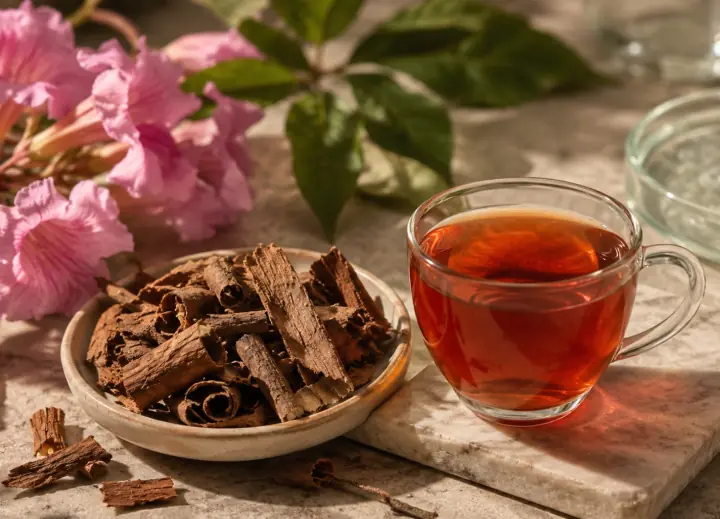
- Needles — jannip-cha (잣잎차), the needle tea, distinct in Korean usage from the solip-cha made from Korean red pine.
- Twigs and resin — minor, with a characterised lipophilic chemistry 5Reference 5Composition and bioactivity of lipophilic metabolites from needles and twigs of Korean and Siberian pines (Pinus koraiensis and P. sibirica) — analyticalView study →.
Traditional Uses
Korea — Jat
Korean pine nuts are a staple ingredient rather than a remedy: in porridges, sauces, confectionery and the garnish on almost everything. Where they are used medicinally it is as a strengthening, moistening food for convalescence and dryness.
The needle tea belongs to the same tradition as the rest of the Korean pine drinks, and is named separately from red pine needle tea.
Chinese Medicine — Hai Song Zi
In Chinese usage the pine nut is hai song zi (海松子), a moistening seed medicine: it is given for a dry, unproductive cough and for dryness-type constipation, particularly in the elderly and the depleted.
Botany
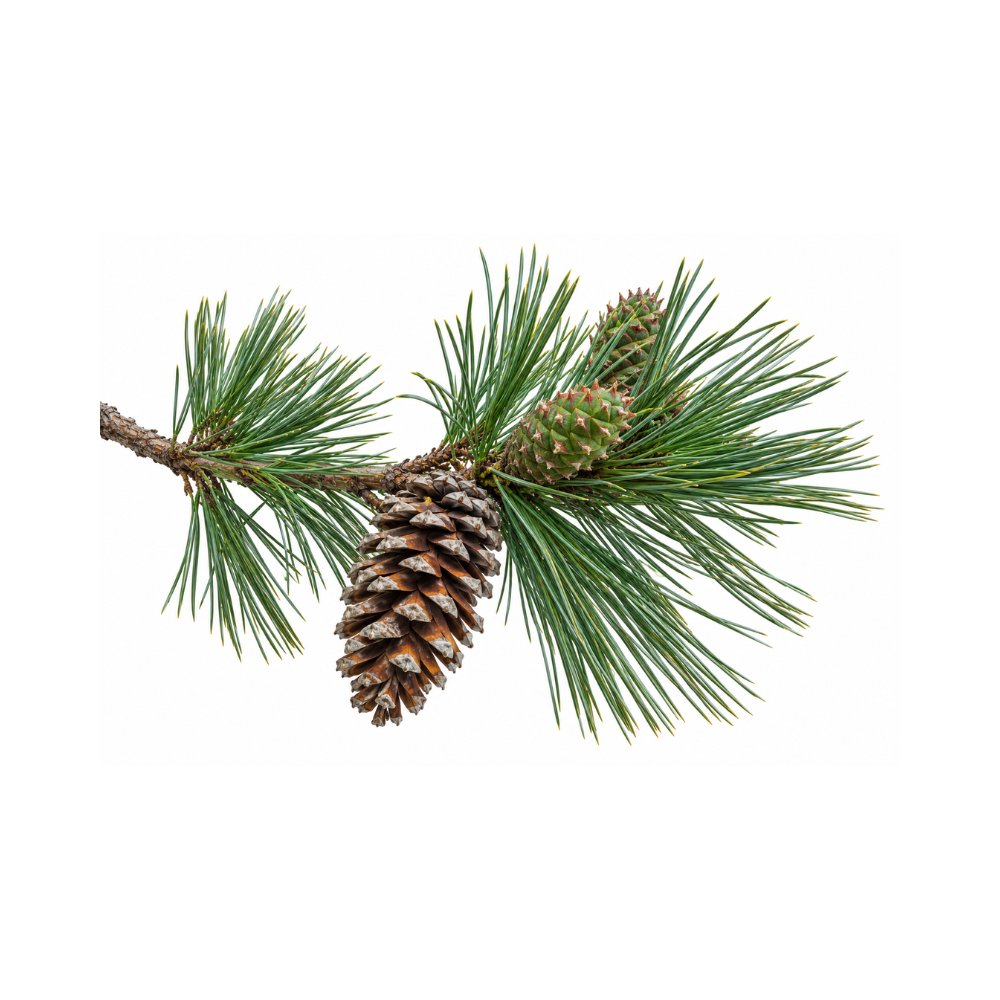
Korean pine is a large evergreen tree that can reach 30 m in height and 150 cm in trunk diameter. Its needles grow in bundles of five, a characteristic of the white-pine group. The cones are large and oval to cylindrical, measuring 9–11 cm long. Each contains seeds about 15 mm across, with no wings to carry them on the wind 1Reference 1Pinus koraiensis — species description, distribution, habitat, conservation status and uses — reference databaseView study →.
The tree tolerates temperatures as low as −40 °C and grows in subalpine forests, typically at elevations of 1,300–2,500 m 1Reference 1Pinus koraiensis — species description, distribution, habitat, conservation status and uses — reference databaseView study →.
Distribution
Korean pine grows in northeastern Korea, northeastern China and the Ussuri basin of the Russian Far East. It also occurs in central Honshu and Shikoku, Japan 1Reference 1Pinus koraiensis — species description, distribution, habitat, conservation status and uses — reference databaseView study →. In Russia’s Primorye region, it is a defining tree of the mixed broadleaf–Korean pine forest.
Its nuts are a long-established wild harvest, but the forest that produces them supports a much wider food web. Korean pine seeds feed wild boar and many other animals; wild boar, in turn, are an important prey species for the Amur tiger. Heavy commercial collection can leave less of the cone crop for wildlife.
The species is classified as Least Concern, although Russia banned industrial logging of Korean pine in 2010. Its CITES Appendix III listing regulates exports of Russian timber, including logs, sawn wood and veneer; it does not cover the nuts 1Reference 1Pinus koraiensis — species description, distribution, habitat, conservation status and uses — reference databaseView study →.
For wild-harvested pine nuts or oil, especially from the Russian Far East, it is worth asking where they came from and how they were collected.
Growing Conditions
Cultivation snapshot for Korean Pine
Cold, humid, continental; subalpine and montane mixed forest. Slow-growing, long-lived and slow to bear — a Korean pine takes decades to produce a useful cone crop, which is part of why the nuts are expensive and why the stands are not quickly replaced.
Grow it yourself
Farm Wiki is our cultivation-focused sister site, also run by Justin Cooke.
Indications
- Appetite and weight loss [seed oil] Caution: Small human trials have produced mixed results, and a weight-loss effect has not been established. EFSA did not accept the claim that pine nut oil reduces energy intake 3,
4, .11, 12, 13, 16 - Dry, unproductive cough [pine nuts; TCM]
- Constipation in older or debilitated people [pine nuts; TCM]
- Elevated triglycerides after meals [leaf extract]
- Elevated blood glucose after meals [seed oil] Caution: The two crossover trials measured short-term responses to hydrolysed seed oil taken before a meal. They did not assess long-term glucose control or HbA1c 11,
12 . - Convalescence and dryness [pine nuts; traditional Korean use]
Pharmacology & Research
Six human trials have been published: two 2008 appetite trials of the branded oil, one null trial of the triglyceride form, two 2021 crossover trials of delayed-release hydrolysed oil, and a 2024 trial of a leaf extract 3,
The rest is preclinical — rodent feeding studies and cell work built around pinolenic acid and its elongation products, plus a separate and smaller line on the essential oil of the needles and cones 17,
The mechanism is the most consistent part of it. Pinolenic acid is a dual agonist at the free-fatty-acid receptors FFA1 and FFA4, which raises cholecystokinin, GLP-1 and peptide YY and lowers ghrelin 15,
-
Best-supported: acute appetite and gut-hormone effects of the free-fatty-acid oil, and the FFA1/FFA4 receptor pharmacology behind them 3,
4, .11, 12, 15Reference 3RCTThe effect of Korean pine nut oil on in vitro CCK release, on appetite sensations and on gut hormones in post-menopausal overweight women — randomised crossover trial, n=18View study →Reference 4RCTThe effect of Korean pine nut oil (PinnoThin) on food intake, feeding behaviour and appetite — double-blind placebo-controlled trialView study →Reference 11RCTAcute effects of delayed-release hydrolyzed pine nut oil on glucose tolerance, incretins, ghrelin and appetite in healthy humans — randomised crossover trial (NCT03062592)View study →Reference 12RCTEffects of delayed-release olive oil and hydrolyzed pine nut oil on glucose tolerance, incretin secretion and appetite in humans — randomised crossover trial (NCT03305367)View study →Reference 15In vitroActivity of dietary fatty acids on FFA1 and FFA4 and characterisation of pinolenic acid as a dual FFA1/FFA4 agonist with potential effect against metabolic diseases — in vitro / animalView study → -
Emerging, worth watching: anti-inflammatory activity of pinolenic acid in cells taken from rheumatoid-arthritis patients 22,
23Reference 22In vitroPinolenic acid exhibits anti-inflammatory and anti-atherogenic effects in peripheral blood-derived monocytes from patients with rheumatoid arthritis — in vitro (human cells)View study →Reference 23In vitroAnti-inflammatory and immunoregulatory effects of pinolenic acid in rheumatoid arthritis — in vitro (human cells)View study → , and acute incretin-mediated glucose effects 11,12Reference 11RCTAcute effects of delayed-release hydrolyzed pine nut oil on glucose tolerance, incretins, ghrelin and appetite in healthy humans — randomised crossover trial (NCT03062592)View study →Reference 12RCTEffects of delayed-release olive oil and hydrolyzed pine nut oil on glucose tolerance, incretin secretion and appetite in humans — randomised crossover trial (NCT03305367)View study → . -
Mechanistically thin: antioxidant and anticancer claims rest on cell lines, and the cancer work uses the needle and cone essential oil rather than the seed 29,
30, .31Reference 29In vitroEffect of pinolenic acid on oxidative stress injury in HepG2 cells induced by hydrogen peroxide — in vitroView study →Reference 30In vitroEssential oil of Pinus koraiensis inhibits cell proliferation and migration via inhibition of the p21-activated kinase 1 pathway in HCT116 colorectal cancer cells — in vitroView study →Reference 31In vitroEssential oil from Pinus koraiensis pinecones inhibits gastric cancer cells via the HIPPO/YAP signalling pathway — in vitroView study → -
The caveat: the studied material is concentrated oil, usually hydrolysed and dosed before eating. None of it transfers to eating pine nuts, no trial has shown weight loss, one trial found nothing, and EFSA rejected the satiety claim 4,
13, .16Reference 4RCTThe effect of Korean pine nut oil (PinnoThin) on food intake, feeding behaviour and appetite — double-blind placebo-controlled trialView study →Reference 13RCTNo effects of Korean pine nut triacylglycerol on satiety and energy intake — randomised crossover trial (NCT01034605)View study →Reference 16ReviewScientific opinion on the substantiation of a health claim related to pine nut oil from Pinus koraiensis and an increase in satiety leading to a reduction in energy intake (ID 551) — regulatory reviewView study →
One limiter runs through everything: the effective preparation is a hydrolysed or free-fatty-acid oil taken before a meal, not the nut eaten as food. Roughly 10–14 g of oil would be needed to deliver the 2 g free-fatty-acid dose, which is not a food quantity.
1. Appetite and Satiety
Two 2008 randomised crossover trials established the effect.
In 18 overweight post-menopausal women, 3 g of Korean pine nut free fatty acids raised total plasma cholecystokinin by about 60% and GLP-1 by about 25% over four hours and lowered self-reported prospective food intake, while the triglyceride form was weaker 3Reference 3RCTThe effect of Korean pine nut oil on in vitro CCK release, on appetite sensations and on gut hormones in post-menopausal overweight women — randomised crossover trial, n=18View study →.
In 42 overweight women, 2 g of the free-fatty-acid oil taken 30 minutes before an ad-libitum buffet reduced food intake by about 9% against an olive-oil control 4Reference 4RCTThe effect of Korean pine nut oil (PinnoThin) on food intake, feeding behaviour and appetite — double-blind placebo-controlled trialView study →.
Two later crossover studies delivered hydrolysed oil to the small intestine in delayed-release capsules and reproduced the hormonal signal — GLP-1 up, ghrelin suppressed, with increased satiety and reduced prospective consumption at 6 g 11,
⚠⚠ A dedicated crossover trial of the triglyceride form found nothing. Three and six grams of PinnoThin triacylglycerol produced no effect on satiety or energy intake 13Reference 13RCTNo effects of Korean pine nut triacylglycerol on satiety and energy intake — randomised crossover trial (NCT01034605)View study →, which is a stronger and more accurate statement than saying the triglyceride form underperformed.
⚠ EFSA assessed the claim and rejected it. The panel concluded in 2011 that a cause-and-effect relationship between pine nut oil and increased satiety leading to reduced energy intake had not been established 16Reference 16ReviewScientific opinion on the substantiation of a health claim related to pine nut oil from Pinus koraiensis and an increase in satiety leading to a reduction in energy intake (ID 551) — regulatory reviewView study →.
Gap: the effect belongs to a hydrolysed or free-fatty-acid oil dosed before a meal. Eating pine nuts delivers a fraction of the 2–6 g trial dose, and no trial has run long enough to measure weight.
2. Blood Lipids
A 2024 randomised double-blind trial in 70 adults with normal-to-borderline triglycerides found four weeks of Pinus koraiensis leaf extract improved triglyceride area-under-curve after a high-fat challenge, with a trend toward lower ApoB100, concentrated in the heavier and higher-intake participants 14Reference 14RCTThe impact of Pinus koraiensis leaf extract consumption on postprandial ApoB100 and lipid metabolism after an oral high-fat challenge — randomised double-blind placebo-controlled trialView study →.
⚠ That is the leaf, not the nut. It is the only human trial of any Korean pine material other than the seed oil, and it does not transfer to either direction.
The preclinical base is broad and old. Dietary Korean pine seed oil was hypocholesterolaemic in rats as early as 1994, with activity between that of linoleic and α-linolenic acid 6Reference 6Influence of Korean pine (Pinus koraiensis)-seed oil containing cis-5,cis-9,cis-12-octadecatrienoic acid on polyunsaturated fatty acid metabolism — animalView study →.
Sciadonic acid — pinolenic acid’s Δ5 elongation product — cuts rat plasma triglycerides by roughly half by inhibiting hepatic Δ9-desaturase 18,
In HepG2 cells pinolenic acid downregulates the lipogenic genes SREBP1c, FAS and SCD1 and reduces lipid accumulation through AMPK and SIRT1 signalling 20,
3. Anti-Inflammatory
Pinolenic acid suppresses inflammatory mediators across several human cell systems, and the most clinically proximate of them uses cells from patients.
In monocytes and peripheral blood mononuclear cells taken from people with rheumatoid arthritis, it lowered TNF-α, IL-6, IL-1β and IL-8 by roughly 20–25% and reduced monocyte migration and oxidised-LDL uptake 22,
Part of the effect is carried by elongation products: pinolenic acid is converted to eicosatrienoic acid, and both reduce endothelial adhesion molecules 24Reference 24In vitroGamma-linolenic and pinolenic acids exert anti-inflammatory effects in cultured human endothelial cells through their elongation products — in vitroView study →.
Gap: the only in-vivo anti-inflammatory result used injected pinolenic acid. Oral dosing of the oil has never been tested against an inflammatory endpoint, and there is no clinical outcome in a patient.
4. Blood Glucose
In healthy and overweight volunteers, hydrolysed pine nut oil delivered to the small intestine augmented GLP-1 and GIP secretion and produced small reductions in glucose and insulin during an oral glucose tolerance test 11,
The mechanism is again FFA1 and FFA4 agonism by pinolenic acid, receptors tied to glucose-stimulated insulin secretion and incretin release 15Reference 15In vitroActivity of dietary fatty acids on FFA1 and FFA4 and characterisation of pinolenic acid as a dual FFA1/FFA4 agonist with potential effect against metabolic diseases — in vitro / animalView study →.
Preclinically, sciadonic acid improved insulin resistance in type-2-diabetic mice through PI3K/AKT signalling 25Reference 25AnimalAntidiabetic effect of sciadonic acid on type 2 diabetic mice through activating the PI3K-AKT signalling pathway and altering intestinal flora — animalView study →.
Gap: the human effects are acute and modest, measured across a single glucose load. No trial has measured HbA1c or any sustained glycaemic outcome.
5. Body Fat
Chronic feeding studies in rodents consistently show less weight gain and less fat accumulation on Korean pine nut oil than on soybean- or lard-based diets.
Mice gained about 17% less weight with less white adipose tissue 28Reference 28AnimalImpact of Korean pine nut oil on weight gain and immune responses in high-fat diet-induced obese mice — animalView study →, and accumulated 18–30% less body fat with altered hypothalamic satiety signalling 27Reference 27AnimalDietary supplementation with Korean pine nut oil decreases body fat accumulation and dysregulation of the appetite-suppressing pathway in the hypothalamus of high-fat diet-induced obese mice — animalView study →.
The oil also raised oxidative metabolism in skeletal muscle and brown fat, an effect linked to pinolenic acid activity at PPARα and PPARδ 26Reference 26Diet enriched with Korean pine nut oil improves mitochondrial oxidative metabolism in skeletal muscle and brown adipose tissue in diet-induced obesity — animalView study →.
Gap: this is entirely animal evidence. No human trial has measured body weight or composition, and an acute intake effect measured over a single meal does not establish weight change 4,
6. Cell-Line Findings
Antioxidant and anticancer activity for this species has never left cell culture, and the two lines do not even use the same material.
Pinolenic acid improved survival of HepG2 cells under peroxide-induced oxidative stress, lowering reactive oxygen species and malondialdehyde and raising superoxide dismutase and glutathione peroxidase 29Reference 29In vitroEffect of pinolenic acid on oxidative stress injury in HepG2 cells induced by hydrogen peroxide — in vitroView study →; in a steatosis model it upregulated the Nrf2/HO-1 pathway 21Reference 21In vitroPinolenic acid ameliorates oleic acid-induced lipogenesis and oxidative stress via AMPK/SIRT1 signalling in HepG2 cells — in vitroView study →.
The needle essential oil inhibited HCT116 colorectal cancer cell proliferation through the PAK1 pathway 30Reference 30In vitroEssential oil of Pinus koraiensis inhibits cell proliferation and migration via inhibition of the p21-activated kinase 1 pathway in HCT116 colorectal cancer cells — in vitroView study →, and the pinecone essential oil inhibited gastric cancer cells through HIPPO/YAP signalling 31Reference 31In vitroEssential oil from Pinus koraiensis pinecones inhibits gastric cancer cells via the HIPPO/YAP signalling pathway — in vitroView study →.
Gap: ⚠ the cancer results come from needle and cone essential oil, not the seed oil or the nut anyone eats, and nothing in either line has been tested beyond cultured cells.
Mechanisms
Pinolenic acid is an unusual omega-6 fatty acid with a double bond at the Δ5 position. This structure influences how it is metabolised: it can be elongated to eicosatrienoic and sciadonic acids rather than following the usual pathway toward arachidonic acid. Pinolenic acid has also been studied for its activity at receptors involved in appetite and glucose regulation, and for its effects on fatty acid desaturase enzymes and lipid metabolism.
Needle and cone essential oils contain monoterpenes. Their pharmacological activity is distinct from that of pinolenic acid in the seeds.
| Mechanism | Drives | Key compounds |
|---|---|---|
| FFA1 / FFA4 agonism → ↑ CCK, ↑ GLP-1, ↑ PYY, ↓ ghrelin | appetiteblood glucose | pinolenic acid |
| Δ9-desaturase inhibition; ↓ SREBP1c, FAS | blood lipidsbody fat | pinolenic acid, sciadonic acid |
| ↓ COX-2, ↓ PGE₂, ↓ TNF-α and IL-6; displacement of arachidonic acid | anti-inflammatory | pinolenic acid, eicosatrienoic acid |
| PPARα and PPARδ activation; ↑ fatty-acid oxidation | body fat | pinolenic acid |
| PAK1 and HIPPO/YAP suppression — essential oil, a separate mechanism | cell-line anticancer | alpha-pinene, limonene |
Clinical trials
Six completed human trials, none of them progressing to a weight or long-term metabolic endpoint: the two 2008 appetite trials, the 2011 null trial, the two 2021 incretin and glucose crossover trials, and the 2024 leaf-extract lipid trial 3,
| Completed | Planned | Terminated | Preclinical |
|---|---|---|---|
| 6 | 1 | 0 | ~40 |
Last checked: September 2026.
Phytochemistry
Korean pine seed oil contains roughly 15–20% pinolenic acid, an omega-6 fatty acid with double bonds at the Δ5, Δ9 and Δ12 positions. Other constituents include linoleic acid, oleic acid, α-linolenic acid, tocopherols and β-sitosterol 2,
Pinolenic acid’s Δ5 double bond affects its metabolism. It can be elongated to Δ5-eicosatrienoic acid, also called sciadonic acid, rather than following the usual omega-6 pathway toward arachidonic acid 2,
Δ5-unsaturated fatty acids occur in other pines as well. Mugo pine seed oil, for example, has been reported to contain about 28% pinolenic acid 7Reference 7Fatty acid profiling in the genus Pinus in relation to its chemotaxonomy and nutritional or pharmaceutical properties — analyticalView study →.
The needles and twigs contain terpenes and resin acids, including abietic acid. An analysis comparing Korean and Siberian pine identified lambertianic acid and bornyl p-coumarate as distinguishing constituents of Korean pine needles and twigs 5Reference 5Composition and bioactivity of lipophilic metabolites from needles and twigs of Korean and Siberian pines (Pinus koraiensis and P. sibirica) — analyticalView study →. In a separate analysis, pinecone oil contained about 41% α-pinene and 25% limonene 31Reference 31In vitroEssential oil from Pinus koraiensis pinecones inhibits gastric cancer cells via the HIPPO/YAP signalling pathway — in vitroView study →.
Research on sciadonic acid from other plant oils and on mixed-species pine nut oils should be interpreted separately from studies of Korean pine seed oil 18,
Constituent Summary
The nut and the oil are not interchangeable. A handful of pine nuts delivers a few hundred milligrams of pinolenic acid; the trials used 2–6 g of concentrated, usually hydrolysed oil taken before a meal. Nothing in the evidence suggests eating pine nuts will suppress appetite.
Fatty Acid4 compounds4 with data
Sterol1 compound1 with data
Monoterpene3 compounds3 with data
Diterpene1 compound1 with data
Tocopherols, the diterpene resin acids and the Δ5-unsaturated fatty acid class as a whole are compound classes and are described above.
Dosage
- Pine nut oil — the trials used 2–6 g taken about 30 minutes before a meal, with the free fatty acid or hydrolysed form the one that works; the intact triglyceride form failed in a dedicated trial 3,
4, .11, 12, 13Reference 3RCTThe effect of Korean pine nut oil on in vitro CCK release, on appetite sensations and on gut hormones in post-menopausal overweight women — randomised crossover trial, n=18View study →Reference 4RCTThe effect of Korean pine nut oil (PinnoThin) on food intake, feeding behaviour and appetite — double-blind placebo-controlled trialView study →Reference 11RCTAcute effects of delayed-release hydrolyzed pine nut oil on glucose tolerance, incretins, ghrelin and appetite in healthy humans — randomised crossover trial (NCT03062592)View study →Reference 12RCTEffects of delayed-release olive oil and hydrolyzed pine nut oil on glucose tolerance, incretin secretion and appetite in humans — randomised crossover trial (NCT03305367)View study →Reference 13RCTNo effects of Korean pine nut triacylglycerol on satiety and energy intake — randomised crossover trial (NCT01034605)View study → - Pine nuts — a food, eaten as one. The pinolenic acid content of a normal serving is far below the trial dose.
- Needle tea — traditional and unquantified.
| Indication | Preparation | Dose | Est. dried-herb equivalent | Source |
|---|---|---|---|---|
| Food intake | Seed oil, free fatty acid form, pre-meal | 2 g, 30 min before eating | — ~10–14 g oil, not a food quantity | 4Reference 4RCTThe effect of Korean pine nut oil (PinnoThin) on food intake, feeding behaviour and appetite — double-blind placebo-controlled trialView study → |
| Appetite and gut hormones | Seed oil, free fatty acid and triglyceride forms | 3 g, 30 min before eating | — | 3Reference 3RCTThe effect of Korean pine nut oil on in vitro CCK release, on appetite sensations and on gut hormones in post-menopausal overweight women — randomised crossover trial, n=18View study → |
| Glucose and incretins | Hydrolysed seed oil, delayed-release capsule | 3–6 g before a glucose load | — | 11, |
| Postprandial triglycerides | Leaf extract | Daily for 4 weeks | — leaf, not seed; no equivalence | 14Reference 14RCTThe impact of Pinus koraiensis leaf extract consumption on postprandial ApoB100 and lipid metabolism after an oral high-fat challenge — randomised double-blind placebo-controlled trialView study → |
⚠ No dried-herb equivalent is given for any row. The active preparations are concentrated, usually hydrolysed oil, or a leaf extract; back-converting them to nuts produces a quantity nobody eats.
Traditional Dosage
| System | Preparation | Dose |
|---|---|---|
| Korean food and folk use | Pine nuts (jat), eaten as food | A culinary portion; no medicinal dose established |
| Korean folk use | Needle tea (jannip-cha), infusion | Not quantified |
| Chinese medicine | Pine nut (hai song zi), for dry cough and dryness constipation | Not quantified |
Safety & Pregnancy
A food with a food’s safety record, and one famous problem that belongs to a different species.
- Pine nuts are an ordinary food with a long dietary record across northeast Asia.
- The seed oil passed a 13-week rat study. No adverse effect was seen at the highest dose tested — 15% of the diet, around 8,900–10,200 mg/kg/day — and the oil was not mutagenic in the Ames test 32Reference 32In vitroA sub-chronic (13 weeks) oral toxicity study in rats and an in vitro genotoxicity study with Korean pine nut oil (PinnoThin TG) — animal / in vitroView study →.
- The trials reported no significant adverse effects at 2–6 g of oil 3,
4, .11, 12Reference 3RCTThe effect of Korean pine nut oil on in vitro CCK release, on appetite sensations and on gut hormones in post-menopausal overweight women — randomised crossover trial, n=18View study →Reference 4RCTThe effect of Korean pine nut oil (PinnoThin) on food intake, feeding behaviour and appetite — double-blind placebo-controlled trialView study →Reference 11RCTAcute effects of delayed-release hydrolyzed pine nut oil on glucose tolerance, incretins, ghrelin and appetite in healthy humans — randomised crossover trial (NCT03062592)View study →Reference 12RCTEffects of delayed-release olive oil and hydrolyzed pine nut oil on glucose tolerance, incretin secretion and appetite in humans — randomised crossover trial (NCT03305367)View study → - Tree nut allergy. Pine nut allergy is well described and can be severe; it is not reliably predicted by other nut allergies.
- “Pine mouth” is a different species. The bitter metallic taste disturbance lasting one to four weeks after eating pine nuts is attributed to Pinus armandii, not to Korean pine 9,
10Reference 9A trial investigating the symptoms related to pine nut syndrome — clinicalView study →Reference 10ObservationalAn investigational report into the causes of pine mouth events in US consumers — analytical / epidemiologicalView study → — though mixed-species commercial lots complicate the attribution. - Interactions have not been studied. Pinolenic acid raises GLP-1 through the same receptors that GLP-1-based glucose-lowering drugs act on, which is a reason for care alongside them and not a measured interaction 15Reference 15In vitroActivity of dietary fatty acids on FFA1 and FFA4 and characterisation of pinolenic acid as a dual FFA1/FFA4 agonist with potential effect against metabolic diseases — in vitro / animalView study →.
- Concentrated oil in pregnancy is unstudied, even though the nut is eaten freely.
- The appetite effect is not a weight-loss claim. EFSA assessed it and did not accept it 16Reference 16ReviewScientific opinion on the substantiation of a health claim related to pine nut oil from Pinus koraiensis and an increase in satiety leading to a reduction in energy intake (ID 551) — regulatory reviewView study →.
Full Safety Detail
The food record does most of the safety work. Korean pine nuts have been a staple across Korea, Manchuria and the Russian Far East for a very long time, and nothing in the toxicological literature suggests a problem with eating them.
Pine nut allergy is real and is the substantive caution. It is an IgE-mediated tree nut allergy in its own right and reactions can be severe. It does not track reliably with other tree nut allergies, so an established nut allergy neither predicts nor excludes it.
★ Pine mouth deserves its own paragraph because it is so often pinned on the wrong tree. Pine nut syndrome — a bitter, metallic dysgeusia beginning 12–48 hours after eating pine nuts and lasting two to four weeks — has been traced principally to the seeds of Pinus armandii, the Chinese white pine 9Reference 9A trial investigating the symptoms related to pine nut syndrome — clinicalView study →. An investigation of US consumer events found taste disturbance associated with samples containing mixed Pinus species 10Reference 10ObservationalAn investigational report into the causes of pine mouth events in US consumers — analytical / epidemiologicalView study →, so commercial lots are the complicating factor rather than Korean pine itself. The syndrome is unpleasant and self-limiting, not dangerous, and the causative compound has never been identified.
The seed oil has a formal animal toxicology package, which most herbal materials do not. A 13-week GLP oral study in rats set the no-observed-adverse-effect level at the highest dose tested, 15% of the diet, and the oil was negative in the Ames test 32Reference 32In vitroA sub-chronic (13 weeks) oral toxicity study in rats and an in vitro genotoxicity study with Korean pine nut oil (PinnoThin TG) — animal / in vitroView study →. That is the citeable backbone under the food record.
The human record for the oil is still thin. Six small short trials, none designed to look for harm, are the whole of it 3,
Drug interactions have never been studied, in people or in animals. The one relevant pharmacology is pinolenic acid’s agonism at FFA1 and FFA4 and the GLP-1 release that follows 15Reference 15In vitroActivity of dietary fatty acids on FFA1 and FFA4 and characterisation of pinolenic acid as a dual FFA1/FFA4 agonist with potential effect against metabolic diseases — in vitro / animalView study →, which overlaps the mechanism of the incretin-based glucose-lowering drugs. Care alongside them is reasonable; nothing has been measured, and no effect should be assumed in either direction.
Pine nuts are eaten in pregnancy as an ordinary food, and nothing suggests a reason not to.
Concentrated pine nut oil at the trial doses has not been assessed in pregnancy or lactation. An appetite-suppressing supplement is in any case a poor idea in pregnancy, whatever its safety profile.
References
- Earle, C. J. (ed.) (2023). Pinus koraiensis — species description, distribution, habitat, conservation status and uses — reference database. The Gymnosperm Database. https://conifers.org/pi/Pinus_koraiensis.php
- Baker, E. J., Miles, E. A., & Calder, P. C. (2021). A review of the functional effects of pine nut oil, pinolenic acid and its derivative eicosatrienoic acid and their potential health benefits — review. Progress in Lipid Research, 82, 101097. https://pubmed.ncbi.nlm.nih.gov/33831456/
- Pasman, W. J., Heimerikx, J., Rubingh, C. M., van den Berg, R., & O’Shea, M. (2008). The effect of Korean pine nut oil on in vitro CCK release, on appetite sensations and on gut hormones in post-menopausal overweight women — randomised crossover trial, n=18. Lipids in Health and Disease, 7, 10. https://pubmed.ncbi.nlm.nih.gov/18355411/
- Hughes, G. M., Boyland, E. J., Williams, N. J., Mennen, L., & Scott, C. (2008). The effect of Korean pine nut oil (PinnoThin) on food intake, feeding behaviour and appetite — double-blind placebo-controlled trial. Lipids in Health and Disease, 7, 6. https://pubmed.ncbi.nlm.nih.gov/18307772/
- Shpatov, A. V., Popov, S. A., Salnikova, O. I., Kukina, T. P., & Shmidt, E. N. (2017). Composition and bioactivity of lipophilic metabolites from needles and twigs of Korean and Siberian pines (Pinus koraiensis and P. sibirica) — analytical. Chemistry & Biodiversity, 14(2). https://pubmed.ncbi.nlm.nih.gov/27449469/
- Sugano, M., Ikeda, I., Wakamatsu, K., & Oka, T. (1994). Influence of Korean pine (Pinus koraiensis)-seed oil containing cis-5,cis-9,cis-12-octadecatrienoic acid on polyunsaturated fatty acid metabolism — animal. British Journal of Nutrition, 72(5), 775–783. https://pubmed.ncbi.nlm.nih.gov/7826999/
- Lahlou, A., Lyashenko, S., Chileh-Chelh, T., Belarbi, E. H., & Torres-García, I. (2023). Fatty acid profiling in the genus Pinus in relation to its chemotaxonomy and nutritional or pharmaceutical properties — analytical. Phytochemistry, 206, 113517. https://pubmed.ncbi.nlm.nih.gov/36442579/
- Takala, R., Ramji, D. P., & Choy, E. (2023). The beneficial effects of pine nuts and its major fatty acid, pinolenic acid, on inflammation and metabolic perturbations — review. International Journal of Molecular Sciences, 24(2), 1171. https://pubmed.ncbi.nlm.nih.gov/36674687/
- Ballin, N. Z. (2012). A trial investigating the symptoms related to pine nut syndrome — clinical. Journal of Medical Toxicology, 8(3), 278–280. https://pubmed.ncbi.nlm.nih.gov/22351301/
- Kwegyir-Afful, E. E., Dejager, L. S., Handy, S. M., Wong, J., & Begley, T. H. (2013). An investigational report into the causes of pine mouth events in US consumers — analytical / epidemiological. Food and Chemical Toxicology, 60, 181–187. https://pubmed.ncbi.nlm.nih.gov/23891758/
- Sørensen, K. V., Korfitzen, S. S., Kaspersen, M. H., et al. (2021). Acute effects of delayed-release hydrolyzed pine nut oil on glucose tolerance, incretins, ghrelin and appetite in healthy humans — randomised crossover trial (NCT03062592). Clinical Nutrition, 40(4), 2169–2179. https://pubmed.ncbi.nlm.nih.gov/33059911/
- Sørensen, K. V., Kaspersen, M. H., Ekberg, J. H., et al. (2021). Effects of delayed-release olive oil and hydrolyzed pine nut oil on glucose tolerance, incretin secretion and appetite in humans — randomised crossover trial (NCT03305367). Nutrients, 13(10), 3407. https://pubmed.ncbi.nlm.nih.gov/34684407/
- Verhoef, S. P., & Westerterp, K. R. (2011). No effects of Korean pine nut triacylglycerol on satiety and energy intake — randomised crossover trial (NCT01034605). Nutrition & Metabolism, 8, 79. https://pubmed.ncbi.nlm.nih.gov/22074178/
- Park, S. Y., Park, T. G., Choi, K., et al. (2024). The impact of Pinus koraiensis leaf extract consumption on postprandial ApoB100 and lipid metabolism after an oral high-fat challenge — randomised double-blind placebo-controlled trial. Nutrients, 16(17), 2925. https://pubmed.ncbi.nlm.nih.gov/39275181/
- Christiansen, E., Watterson, K. R., Stocker, C. J., et al. (2015). Activity of dietary fatty acids on FFA1 and FFA4 and characterisation of pinolenic acid as a dual FFA1/FFA4 agonist with potential effect against metabolic diseases — in vitro / animal. British Journal of Nutrition, 113(11), 1677–1688. https://pubmed.ncbi.nlm.nih.gov/25916176/
- EFSA Panel on Dietetic Products, Nutrition and Allergies (2011). Scientific opinion on the substantiation of a health claim related to pine nut oil from Pinus koraiensis and an increase in satiety leading to a reduction in energy intake (ID 551) — regulatory review. EFSA Journal, 9(4), 2046. https://doi.org/10.2903/j.efsa.2011.2046
- Tough, I. R., Moodaley, R., & Cox, H. M. (2024). Enteroendocrine cell-derived peptide YY signalling is stimulated by pinolenic acid or Intralipid and involves coactivation of fatty acid receptors FFA1, FFA4 and GPR119 — in vitro. Neuropeptides, 108, 102476. https://pubmed.ncbi.nlm.nih.gov/39427565/
- Pédrono, F., Boulier-Monthéan, N., Boissel, F., et al. (2020). Sciadonic acid derived from pine nuts as a food component to reduce plasma triglycerides by inhibiting the rat hepatic Δ9-desaturase — animal. Scientific Reports, 10(1), 6034. https://pubmed.ncbi.nlm.nih.gov/32277113/
- Pédrono, F., Boulier-Monthéan, N., Boissel, F., et al. (2018). The hypotriglyceridemic effect of sciadonic acid is mediated by the inhibition of Δ9-desaturase expression and activity — in vitro / animal. Molecular Nutrition & Food Research, 62(5). https://pubmed.ncbi.nlm.nih.gov/29272066/
- Lee, A. R., & Han, S. N. (2016). Pinolenic acid downregulates lipid anabolic pathway in HepG2 cells — in vitro. Lipids, 51(7), 847–855. https://pubmed.ncbi.nlm.nih.gov/27084371/
- Zhang, J., Zhang, S. D., Wang, P., et al. (2019). Pinolenic acid ameliorates oleic acid-induced lipogenesis and oxidative stress via AMPK/SIRT1 signalling in HepG2 cells — in vitro. European Journal of Pharmacology, 861, 172618. https://pubmed.ncbi.nlm.nih.gov/31430456/
- Takala, R., Ramji, D. P., Andrews, R., et al. (2022). Pinolenic acid exhibits anti-inflammatory and anti-atherogenic effects in peripheral blood-derived monocytes from patients with rheumatoid arthritis — in vitro (human cells). Scientific Reports, 12(1), 8807. https://pubmed.ncbi.nlm.nih.gov/35614190/
- Takala, R., Ramji, D. P., Andrews, R., et al. (2022). Anti-inflammatory and immunoregulatory effects of pinolenic acid in rheumatoid arthritis — in vitro (human cells). Rheumatology (Oxford), 61(3), 992–1004. https://pubmed.ncbi.nlm.nih.gov/34080609/
- Baker, E. J., Valenzuela, C. A., van Dooremalen, W. T. M., et al. (2020). Gamma-linolenic and pinolenic acids exert anti-inflammatory effects in cultured human endothelial cells through their elongation products — in vitro. Molecular Nutrition & Food Research, 64(21), e2000382. https://pubmed.ncbi.nlm.nih.gov/32898315/
- Chen, L., Jiang, Q., Lu, H., et al. (2022). Antidiabetic effect of sciadonic acid on type 2 diabetic mice through activating the PI3K-AKT signalling pathway and altering intestinal flora — animal. Frontiers in Nutrition, 9, 1053022. https://pubmed.ncbi.nlm.nih.gov/36618687/
- Le, N. H., Shin, S., Tu, T. H., et al. (2012). Diet enriched with Korean pine nut oil improves mitochondrial oxidative metabolism in skeletal muscle and brown adipose tissue in diet-induced obesity — animal. Journal of Agricultural and Food Chemistry, 60(48), 11935–11941. https://pubmed.ncbi.nlm.nih.gov/23140571/
- Shin, S., Park, S., Lim, Y., et al. (2022). Dietary supplementation with Korean pine nut oil decreases body fat accumulation and dysregulation of the appetite-suppressing pathway in the hypothalamus of high-fat diet-induced obese mice — animal. Nutrition Research and Practice, 16(3), 291–303. https://pubmed.ncbi.nlm.nih.gov/35663443/
- Park, S., Lim, Y., Shin, S., et al. (2013). Impact of Korean pine nut oil on weight gain and immune responses in high-fat diet-induced obese mice — animal. Nutrition Research and Practice, 7(5), 352–358. https://pubmed.ncbi.nlm.nih.gov/24133613/
- Zhao, Y., Liu, S., Sheng, Z., et al. (2021). Effect of pinolenic acid on oxidative stress injury in HepG2 cells induced by hydrogen peroxide — in vitro. Food Science & Nutrition, 9(10), 5689–5697. https://pubmed.ncbi.nlm.nih.gov/34646537/
- Cho, S. M., Lee, E. O., Kim, S. H., et al. (2014). Essential oil of Pinus koraiensis inhibits cell proliferation and migration via inhibition of the p21-activated kinase 1 pathway in HCT116 colorectal cancer cells — in vitro. BMC Complementary and Alternative Medicine, 14, 275. https://pubmed.ncbi.nlm.nih.gov/25074784/
- Zhang, Y., Xin, C., Qiu, J., et al. (2019). Essential oil from Pinus koraiensis pinecones inhibits gastric cancer cells via the HIPPO/YAP signalling pathway — in vitro. Molecules, 24(21), 3851. https://pubmed.ncbi.nlm.nih.gov/31731517/
- Speijers, G. J., Dederen, L. H., & Keizer, H. (2009). A sub-chronic (13 weeks) oral toxicity study in rats and an in vitro genotoxicity study with Korean pine nut oil (PinnoThin TG) — animal / in vitro. Regulatory Toxicology and Pharmacology, 55(2), 158–165. https://pubmed.ncbi.nlm.nih.gov/19559745/