
Materia Medica
Monterey Pine
Pinus radiata
Monterey pine is a three-needled Californian pine, rare in the wild and planted for timber across the Southern Hemisphere. Its bark gives Enzogenol, a water extract rich in proanthocyanidins that has been studied for memory, recovery after brain injury and blood sugar after meals.
What Is Monterey Pine?
Monterey pine is a fast-growing three-needled pine from coastal California, valued for its timber and for a bark extract sold as Enzogenol®.
Pinus radiata grows wild in only five small populations: three on the central California coast and two on the Mexican islands of Guadalupe and Cedros 1Reference 1Pinus radiata — species description, native populations, conservation status, plantation extent and pitch canker — reference databaseView study →. It typically reaches 15–30 m in the wild. Planted in the Southern Hemisphere from the nineteenth century onward, it became probably the most widely planted plantation conifer in the world, covering more than 4 million hectares 1Reference 1Pinus radiata — species description, native populations, conservation status, plantation extent and pitch canker — reference databaseView study →.
Enzogenol is a water extract of the bark of New Zealand-grown trees 2,
Enzogenol is a different product from Pycnogenol, the bark extract of maritime pine.
How Is Monterey Pine Used?
- Bark extract (Enzogenol®) — a water extract of the bark, taken as a capsule, often together with vitamin C 2Reference 2Production, composition and toxicology studies of Enzogenol® Pinus radiata bark extract — analytical / toxicologyView study →.
- Needles and resin — not prepared commercially as medicine.
Botany
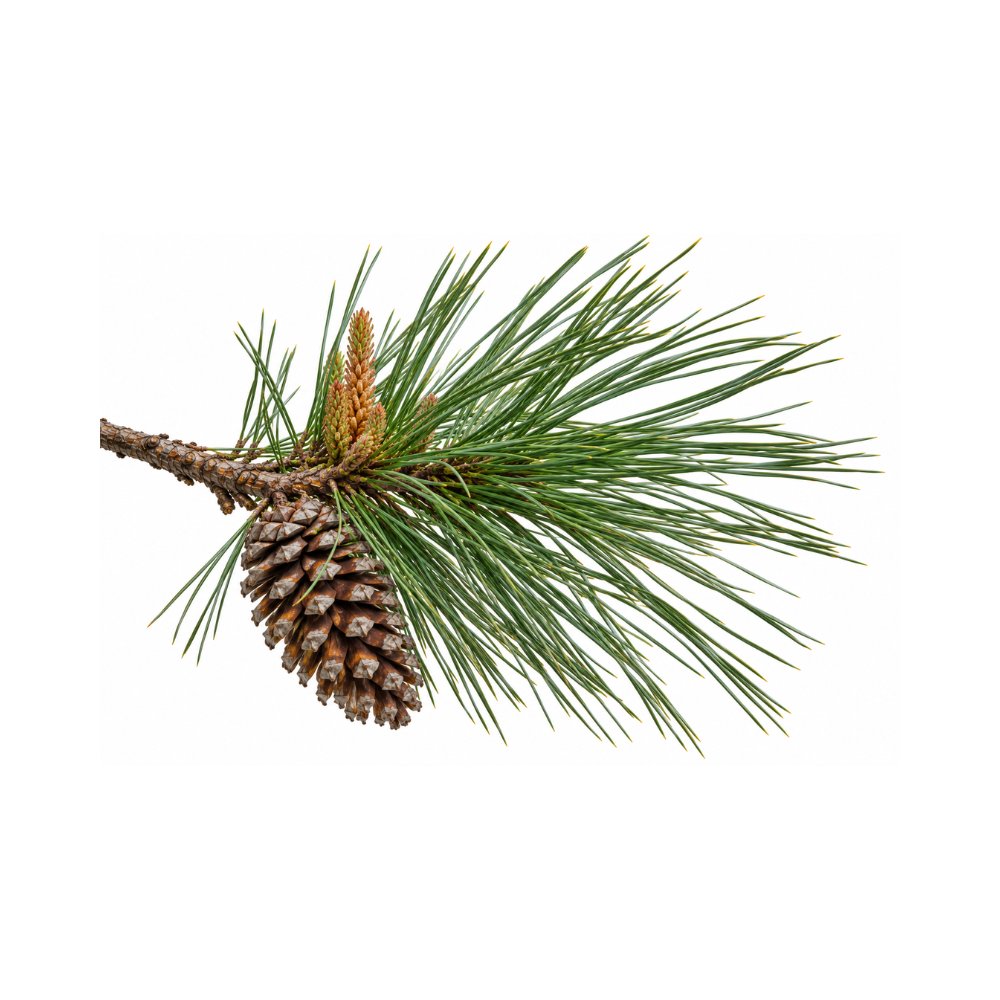
Monterey pine is an evergreen tree, usually 15–30 m tall and occasionally up to 64 m, with a trunk 30–90 cm across 1Reference 1Pinus radiata — species description, native populations, conservation status, plantation extent and pitch canker — reference databaseView study →. Its crown is broadly conical at first and becomes rounded or flattened with age. The bark is red-brown, turning grey, and furrowed between long scaly ridges 1Reference 1Pinus radiata — species description, native populations, conservation status, plantation extent and pitch canker — reference databaseView study →.
The needles grow in bundles of three in the mainland variety and two in the island variety. They are 9–15 cm long, deep yellow-green and finely toothed along the edges, and they stay on the tree for three to four years 1Reference 1Pinus radiata — species description, native populations, conservation status, plantation extent and pitch canker — reference databaseView study →.
The seed cones are 7–15 cm long, lopsided and glossy yellow-brown. They ripen two years after pollination and often stay closed on the branch for years. The heat of a forest fire, or sometimes hot weather, opens them and releases the seeds 1Reference 1Pinus radiata — species description, native populations, conservation status, plantation extent and pitch canker — reference databaseView study →.
In plantations the tree grows much larger than it does at home. A New Zealand tree planted around 1927 measured 68.7 m tall in 2024, while wild Californian trees seldom pass 40 m 1Reference 1Pinus radiata — species description, native populations, conservation status, plantation extent and pitch canker — reference databaseView study →.
Distribution
Monterey pine grows naturally in a coastal fog belt in central California, at 30–400 m, in three places: San Mateo and Santa Cruz counties, Monterey County, and San Luis Obispo County 1Reference 1Pinus radiata — species description, native populations, conservation status, plantation extent and pitch canker — reference databaseView study →. The island variety, var. binata, grows at 600–1,200 m on Isla Guadalupe and Isla Cedros off Baja California 1Reference 1Pinus radiata — species description, native populations, conservation status, plantation extent and pitch canker — reference databaseView study →.
The mainland variety is listed as Endangered on the IUCN Red List and the island variety as Vulnerable 1Reference 1Pinus radiata — species description, native populations, conservation status, plantation extent and pitch canker — reference databaseView study →. The three native Californian stands are threatened by pitch canker, a fungal disease introduced from the southeastern United States and found in California in 1986. In some stands 80–90% of trees are infected 1Reference 1Pinus radiata — species description, native populations, conservation status, plantation extent and pitch canker — reference databaseView study →.
It has been planted on a large scale in New Zealand, Australia, Chile, Argentina, Kenya, South Africa, Spain and Uruguay. In New Zealand it covers nearly 1.6 million hectares, 88% of the country’s tree plantations 1Reference 1Pinus radiata — species description, native populations, conservation status, plantation extent and pitch canker — reference databaseView study →. It has also escaped from cultivation along the California coast and is naturalising into southern Oregon 1Reference 1Pinus radiata — species description, native populations, conservation status, plantation extent and pitch canker — reference databaseView study →.
Enzogenol is made from the bark of New Zealand-grown trees 6,
Growing Conditions
Cultivation snapshot for Monterey Pine
Monterey pine is hardy to USDA zone 8, which puts its cold limit between about −12 °C and −7 °C 1Reference 1Pinus radiata — species description, native populations, conservation status, plantation extent and pitch canker — reference databaseView study →. In the wild it grows in a mild, foggy coastal climate. Its closed cones rely on fire to release seed and regenerate the stand 1Reference 1Pinus radiata — species description, native populations, conservation status, plantation extent and pitch canker — reference databaseView study →.
Grow it yourself
Farm Wiki is our cultivation-focused sister site, also run by Justin Cooke.
Indications
- Cognitive difficulty after mild traumatic brain injury [bark extract] Caution: One phase II trial found fewer self-reported cognitive failures. Memory tests and other measures did not differ significantly from placebo 5.
- Lingering symptoms after sport concussion [bark extract]
- Working memory in older adults [bark extract with vitamin C]
- Blood sugar after meals [bark extract] Caution: The two crossover trials measured single meals in healthy people. No trial has measured long-term glucose control 6,
9 . - Oxidative stress in smokers [bark extract with vitamin C]
- Migraine prevention [bark extract with vitamin C] Caution: The only study was open-label, with no placebo group 17.
- Blood pressure [bark extract with vitamin C] Caution: The fall in blood pressure came from a pilot study with no placebo group. In a controlled trial in smokers, the extract added nothing to vitamin C for blood-vessel function 3,
4, .7
Pharmacology & Research
Eight human studies of the bark extract have been published, six of them controlled. All were run in New Zealand, Australia or the United States 3,
The rest is preclinical: enzyme inhibition, cell studies, and work in diabetic mice, rodents and chickens 10,
-
Most credible: cognition after injury or in older adults, across three small controlled trials — traumatic brain injury, overweight older men, and sport concussion 4,
5, .8Reference 4RCTImproved cognitive performance after dietary supplementation with a Pinus radiata bark extract formulation — double-blind controlled trial, n=42View study →Reference 5RCTEnzogenol for cognitive functioning in traumatic brain injury: a pilot placebo-controlled RCT — phase II randomised controlled trial, n=60View study →Reference 8RCTEffect of Enzogenol® supplementation on cognitive, executive and vestibular/balance functioning in the chronic phase of concussion — placebo-controlled trial, n=42View study → -
Suggestive: lower blood sugar after a single meal in two crossover trials, with enzyme inhibition behind it 6,
9, .10Reference 6RCTAn acute, placebo-controlled, single-blind, crossover, dose-response, exploratory study to assess the effects of New Zealand pine bark extract (Enzogenol®) on glycaemic responses in healthy participants — crossover trial, n=25View study →Reference 9RCTThe hypoglycaemic effects of New Zealand pine bark extract on sucrose uptake and glycaemic responses in healthy adults — single-blind randomised placebo-controlled crossover trial, n=40View study →Reference 10In vitroThe inhibitory effects of New Zealand pine bark (Enzogenol®) on α-amylase, α-glucosidase and dipeptidyl peptidase-4 — in vitroView study → - Emerging: endothelial and NF-κB signalling in vitro 12Reference 12In vitroPine bark extract Enzogenol attenuated tumour necrosis factor-alpha-induced endothelial cell adhesion and monocyte transmigration — in vitroView study →, metabolic effects in diabetic mice 11Reference 11AnimalEnzogenol improves diabetes-related metabolic change in C57BL/KsJ-db/db mice, a model of type 2 diabetes mellitus — animalView study →, and mast-cell stabilisation in rodents 13Reference 13Proanthocyanidin-rich Pinus radiata bark extract inhibits mast cell-mediated anaphylaxis-like reactions — animalView study →.
- Weakest: the cardiovascular findings come from an uncontrolled 24-person pilot 3Reference 3Pilot study on the clinical effects of dietary supplementation with Enzogenol, a flavonoid extract of pine bark, and vitamin C — uncontrolled pilot, n=24View study →. Where a controlled blood-vessel endpoint was measured, the extract added nothing over vitamin C alone 7Reference 7RCTComparative effects of Enzogenol and vitamin C supplementation versus vitamin C alone on endothelial function and biochemical markers of oxidative stress and inflammation in chronic smokers — randomised controlled trial, n=44View study →.
Every human study is small and none has been independently replicated. Two of the best designed gave the extract with vitamin C, so the extract’s own contribution is clear only where vitamin C alone was the comparison 4,
1. Cognition
Three controlled trials have tested the extract on cognition.
Sixty adults with persistent cognitive difficulties 3–12 months after a mild traumatic brain injury were randomised to 1,000 mg/day of the extract or placebo for six weeks. All then took the extract for a further six weeks, followed by placebo for four 5Reference 5RCTEnzogenol for cognitive functioning in traumatic brain injury: a pilot placebo-controlled RCT — phase II randomised controlled trial, n=60View study →. Self-reported cognitive failures fell significantly against placebo (mean CFQ difference −6.9, 95% CI −10.8 to −4.1), and the improvement was estimated to continue until about week 11. Working and episodic memory, post-concussive symptoms and mood showed some positive trends but no significant treatment effects. The authors graded it Class IIB evidence.
A double-blind study gave 42 men aged 50–65 with a BMI over 25 either the extract plus vitamin C or vitamin C alone for five weeks 4Reference 4RCTImproved cognitive performance after dietary supplementation with a Pinus radiata bark extract formulation — double-blind controlled trial, n=42View study →. Speed of response on spatial working memory and immediate recognition tasks improved in the extract group and not in the vitamin C group. Because vitamin C alone was the comparison, the difference can be attributed to the extract. Blood safety measures were unchanged.
A placebo-controlled trial in 42 student athletes with lingering symptoms after sport concussion found increased frontal-midline theta and decreased parietal theta on EEG after six weeks, along with self-reported reductions in mental fatigue and sleep problems 8Reference 8RCTEffect of Enzogenol® supplementation on cognitive, executive and vestibular/balance functioning in the chronic phase of concussion — placebo-controlled trial, n=42View study →.
Gap: ⚠⚠ across all three trials, the results that reached significance were questionnaires, reaction speed or EEG markers. Objective memory scores in the brain-injury trial showed trends without significance, and no finding has been independently replicated.
2. Antioxidant
In a 12-week randomised trial in 44 chronic smokers, 480 mg/day of the extract with 60 mg vitamin C significantly reduced protein carbonyls, a marker of oxidative damage to proteins, compared with vitamin C alone 7Reference 7RCTComparative effects of Enzogenol and vitamin C supplementation versus vitamin C alone on endothelial function and biochemical markers of oxidative stress and inflammation in chronic smokers — randomised controlled trial, n=44View study →.
The activity is attributed to the proanthocyanidins together with the minor flavonoids taxifolin, quercetin and myricetin and the phenolic acids gallic and caffeic acid 2Reference 2Production, composition and toxicology studies of Enzogenol® Pinus radiata bark extract — analytical / toxicologyView study →.
Gap: one controlled biomarker endpoint is not a clinical outcome.
3. Blood Glucose
Two acute crossover trials have tested the extract before a sugar load.
The first, in 25 healthy participants, tested 50 mg and 400 mg against placebo before an oral glucose tolerance test 6Reference 6RCTAn acute, placebo-controlled, single-blind, crossover, dose-response, exploratory study to assess the effects of New Zealand pine bark extract (Enzogenol®) on glycaemic responses in healthy participants — crossover trial, n=25View study →. In participants with a monophasic glucose curve, both doses significantly reduced the glucose incremental area under the curve, and 400 mg also lowered the peak and the 2-hour glucose. In participants with a complex curve, the area under the curve did not differ significantly. The authors described the study as exploratory.
A second single-blind randomised crossover trial in 40 healthy adults used a sucrose drink. The 400 mg dose reduced the glucose incremental area under the curve by 14.4%, while 50 mg did not reach significance. Insulin did not change 9Reference 9RCTThe hypoglycaemic effects of New Zealand pine bark extract on sucrose uptake and glycaemic responses in healthy adults — single-blind randomised placebo-controlled crossover trial, n=40View study →.
In vitro the extract inhibits α-amylase, α-glucosidase and dipeptidyl peptidase-4 10Reference 10In vitroThe inhibitory effects of New Zealand pine bark (Enzogenol®) on α-amylase, α-glucosidase and dipeptidyl peptidase-4 — in vitroView study →. In db/db diabetic mice it improved glucose tolerance, lowered HbA1c and raised liver AMPK activity 11Reference 11AnimalEnzogenol improves diabetes-related metabolic change in C57BL/KsJ-db/db mice, a model of type 2 diabetes mellitus — animalView study →.
Gap: ⚠ every human glucose result is a single-meal measurement in healthy people. No trial has measured HbA1c or fasting glucose over time.
4. Anti-Inflammatory
In the smoker trial, the extract plus vitamin C significantly reduced fibrinogen in heavy smokers compared with vitamin C alone 7Reference 7RCTComparative effects of Enzogenol and vitamin C supplementation versus vitamin C alone on endothelial function and biochemical markers of oxidative stress and inflammation in chronic smokers — randomised controlled trial, n=44View study →.
In human umbilical vein endothelial cells, the extract reduced TNF-α-induced adhesion molecules, including E-selectin, in a dose-dependent way. It also reduced monocyte adhesion and migration across the cell layer and blocked NF-κB from entering the nucleus 12Reference 12In vitroPine bark extract Enzogenol attenuated tumour necrosis factor-alpha-induced endothelial cell adhesion and monocyte transmigration — in vitroView study →.
Gap: no human inflammatory endpoint beyond fibrinogen has been measured.
5. Blood Pressure and Endothelium
⚠⚠ The cardiovascular claims rest on the weakest study, and one controlled test did not support them.
A 12-week pilot gave 24 healthy people aged 55–75 480 mg/day of the extract with 240 mg/day vitamin C 3Reference 3Pilot study on the clinical effects of dietary supplementation with Enzogenol, a flavonoid extract of pine bark, and vitamin C — uncontrolled pilot, n=24View study →. Body weight, body fat percentage, systolic blood pressure and plasma viscosity all fell significantly, and forearm blood flow rose. There was no placebo group, and the authors stated that the changes need to be confirmed by a placebo-controlled study.
The cognition trial noted a non-significant trend toward lower systolic blood pressure in the extract group 4Reference 4RCTImproved cognitive performance after dietary supplementation with a Pinus radiata bark extract formulation — double-blind controlled trial, n=42View study →.
⚠⚠ Where a controlled blood-vessel endpoint was measured, the extract added nothing. Flow-mediated dilation in smokers improved in both the extract-plus-vitamin-C and the vitamin-C-alone groups, with no difference between them 7Reference 7RCTComparative effects of Enzogenol and vitamin C supplementation versus vitamin C alone on endothelial function and biochemical markers of oxidative stress and inflammation in chronic smokers — randomised controlled trial, n=44View study →.
A 2025 meta-analysis of 27 randomised trials of pine bark extracts found small reductions in blood pressure, fasting glucose, HbA1c, body weight and LDL cholesterol 18Reference 18Meta-analysisDoes supplementation with pine bark extract improve cardiometabolic risk factors? A systematic review and meta-analysis of 27 RCTs — meta-analysisView study →. The trials pooled were mostly of maritime pine extract.
Gap: the headline cardiovascular findings come from an uncontrolled pilot, and the one controlled blood-vessel endpoint was negative.
6. Preclinical Findings
Mast-cell stabilisation. A proanthocyanidin-rich water extract of P. radiata bark reduced allergic-type skin reactions in mice. In rat mast cells it inhibited histamine release, reduced calcium uptake and raised cyclic AMP 13Reference 13Proanthocyanidin-rich Pinus radiata bark extract inhibits mast cell-mediated anaphylaxis-like reactions — animalView study →.
Immune effects in chickens. Two studies found that a proanthocyanidin-rich bark extract increased the proliferation of blood, spleen and thymus immune cells 14,
One cancer cell line. The extract caused a caspase-independent, apoptosis-like cell death in MCF-7 breast cancer cells, with lysosomal damage and endoplasmic-reticulum stress and no rise in reactive oxygen species 16Reference 16In vitroPinus radiata bark extract induces caspase-independent apoptosis-like cell death in MCF-7 human breast cancer cells — in vitroView study →. The authors called for further work on the mechanism, and there is no animal or human cancer evidence.
Mechanisms
The bark extract is mostly procyanidins, and its proposed activity is antioxidant and anti-inflammatory, studied through free-radical scavenging and NF-κB signalling in endothelial cells 2,
The effect on blood sugar has been linked to inhibition of the enzymes that digest starch and sugar. That fits the human finding of lower glucose without a change in insulin 9,
| Mechanism | Drives | Key compounds |
|---|---|---|
| Free-radical scavenging | antioxidant | proanthocyanidins, taxifolin |
| NF-κB ↓; endothelial adhesion molecules ↓ | anti-inflammatory | procyanidins, flavonoids |
| α-amylase, α-glucosidase and DPP-4 inhibition | blood sugar after meals | proanthocyanidins |
| Liver AMPK ↑ | metabolic effects in diabetic mice | proanthocyanidins |
| Mast-cell stabilisation (Ca²⁺ ↓, cyclic AMP ↑) | antiallergic activity in rodents | proanthocyanidins |
Clinical trials
| Completed | Planned | Terminated | Preclinical |
|---|---|---|---|
| 8 | 0 | 0 | ~20+ |
Eight published human studies, six controlled, all in New Zealand, Australia or the United States, all of the bark extract, and none independently replicated. Last checked: September 2026.
Phytochemistry
Enzogenol is made by water extraction of Pinus radiata bark. The dry powder contains more than 80% proanthocyanidins, 1–2% taxifolin, up to 8% other flavonoids and phenolic acids, and 5–10% carbohydrates 2Reference 2Production, composition and toxicology studies of Enzogenol® Pinus radiata bark extract — analytical / toxicologyView study →.
The proanthocyanidins are about 94% procyanidins and 6% prodelphinidins 2Reference 2Production, composition and toxicology studies of Enzogenol® Pinus radiata bark extract — analytical / toxicologyView study →. The minor flavonoids, phenolic acids and stilbenes include catechin, quercetin, myricetin, piceatannol, and gallic, ferulic, caffeic and protocatechuic acid 2Reference 2Production, composition and toxicology studies of Enzogenol® Pinus radiata bark extract — analytical / toxicologyView study →.
The needles carry the monoterpenes α-pinene, β-pinene, Δ3-carene and limonene, whose levels shift with the season 19Reference 19Seasonal terpene variation in needles of Pinus radiata (Pinales: Pinaceae) trees attacked by Tomicus piniperda (Coleoptera: Scolytinae) and the effect of limonene on beetle aggregation — field chemistry studyView study →.
The stem and needles of one-year-old seedlings hold diterpene resin acids: abietic, dehydroabietic, levopimaric and palustric, neoabietic, isopimaric, pimaric and sandaracopimaric acids 20Reference 20Resin acids as inducible chemical defences of pine seedlings against chewing insects — seedling chemistry studyView study →. Dehydroabietic acid was the most abundant in both, and pimaric acid was not found in the needles 20Reference 20Resin acids as inducible chemical defences of pine seedlings against chewing insects — seedling chemistry studyView study →.
Research on other pine bark extracts, including Pycnogenol, should be read separately from studies of Enzogenol 18Reference 18Meta-analysisDoes supplementation with pine bark extract improve cardiometabolic risk factors? A systematic review and meta-analysis of 27 RCTs — meta-analysisView study →.
Constituent Summary
The bark extract is the characterised material.
Tannin3 compounds3 with data
Flavonoid1 compound1 with data
Dosage
All figures are trial doses of the standardised bark extract.
| Indication | Preparation | Dose | Source |
|---|---|---|---|
| Cognition after mild brain injury | Enzogenol (bark extract) | 1,000 mg/day, 6–12 wk | 5Reference 5RCTEnzogenol for cognitive functioning in traumatic brain injury: a pilot placebo-controlled RCT — phase II randomised controlled trial, n=60View study → |
| Cognition, older adults | Enzogenol + vitamin C | extract with vitamin C, 5 wk | 4Reference 4RCTImproved cognitive performance after dietary supplementation with a Pinus radiata bark extract formulation — double-blind controlled trial, n=42View study → |
| Post-concussion symptoms | Enzogenol (bark extract) | 6 wk | 8Reference 8RCTEffect of Enzogenol® supplementation on cognitive, executive and vestibular/balance functioning in the chronic phase of concussion — placebo-controlled trial, n=42View study → |
| Oxidative stress, smokers | Enzogenol + vitamin C | 480 mg/day + 60 mg/day vitamin C, 12 wk | 7Reference 7RCTComparative effects of Enzogenol and vitamin C supplementation versus vitamin C alone on endothelial function and biochemical markers of oxidative stress and inflammation in chronic smokers — randomised controlled trial, n=44View study → |
| Cardiovascular risk factors | Enzogenol + vitamin C | 480 mg/day + 240 mg/day vitamin C, 12 wk | 3Reference 3Pilot study on the clinical effects of dietary supplementation with Enzogenol, a flavonoid extract of pine bark, and vitamin C — uncontrolled pilot, n=24View study → |
| Blood sugar after meals | Enzogenol (bark extract) | single 50–400 mg dose before a sugar load | 6, |
| Migraine prevention | Enzogenol + vitamin C | 1,200 mg/day + 150 mg/day vitamin C, 3 months | 17Reference 17Efficacy of Pinus radiata bark extract and vitamin C combination product as a prophylactic therapy for recalcitrant migraine — open-label study, n=50View study → |
Four of the eight studies gave the extract with vitamin C 3,
Safety & Pregnancy
The bark extract was well tolerated in every human study, and it has published animal toxicity data.
- Animal toxicity studies found no toxic effects. Rat and dog studies showed no changes in blood chemistry, blood counts or organs, and the extract was not mutagenic 2Reference 2Production, composition and toxicology studies of Enzogenol® Pinus radiata bark extract — analytical / toxicologyView study →.
- No adverse effects were reported in the human studies, including 1,000 mg/day in people recovering from brain injury 5Reference 5RCTEnzogenol for cognitive functioning in traumatic brain injury: a pilot placebo-controlled RCT — phase II randomised controlled trial, n=60View study →.
- Blood safety measures were unchanged in the cognition study and the pilot 3,
4Reference 3Pilot study on the clinical effects of dietary supplementation with Enzogenol, a flavonoid extract of pine bark, and vitamin C — uncontrolled pilot, n=24View study →Reference 4RCTImproved cognitive performance after dietary supplementation with a Pinus radiata bark extract formulation — double-blind controlled trial, n=42View study → . - Pregnancy and breastfeeding have not been studied.
- Use beyond a few months has little data. Controlled trials ran up to sixteen weeks; open-label use has continued for twelve months 2,
5, .17Reference 2Production, composition and toxicology studies of Enzogenol® Pinus radiata bark extract — analytical / toxicologyView study →Reference 5RCTEnzogenol for cognitive functioning in traumatic brain injury: a pilot placebo-controlled RCT — phase II randomised controlled trial, n=60View study →Reference 17Efficacy of Pinus radiata bark extract and vitamin C combination product as a prophylactic therapy for recalcitrant migraine — open-label study, n=50View study → - Glucose-lowering drugs. The extract inhibits α-amylase, α-glucosidase and DPP-4 10Reference 10In vitroThe inhibitory effects of New Zealand pine bark (Enzogenol®) on α-amylase, α-glucosidase and dipeptidyl peptidase-4 — in vitroView study →, the targets of several diabetes drugs, and has not been tested alongside them.
Full Safety & Interactions Detail
Toxicology. The manufacturer’s toxicology studies found no effects on body weight, blood chemistry, blood counts or organ weights in rats and dogs, and the extract was not mutagenic. The only adverse events were vomiting and diarrhoea in dogs, mostly at the highest dose on an empty stomach. The no-observed-adverse-effect level was 750 mg/kg/day 2Reference 2Production, composition and toxicology studies of Enzogenol® Pinus radiata bark extract — analytical / toxicologyView study →.
Human studies. The same report describes 480 mg/day for six months and 960 mg/day for five weeks with no effect on liver or kidney function or blood counts, and no adverse events 2Reference 2Production, composition and toxicology studies of Enzogenol® Pinus radiata bark extract — analytical / toxicologyView study →. The brain-injury trial found the extract safe and well tolerated at 1,000 mg/day 5Reference 5RCTEnzogenol for cognitive functioning in traumatic brain injury: a pilot placebo-controlled RCT — phase II randomised controlled trial, n=60View study →. The pilot found no change in any biochemical or blood measure 3Reference 3Pilot study on the clinical effects of dietary supplementation with Enzogenol, a flavonoid extract of pine bark, and vitamin C — uncontrolled pilot, n=24View study →. In the migraine study, patients who responded kept taking it for twelve months 17Reference 17Efficacy of Pinus radiata bark extract and vitamin C combination product as a prophylactic therapy for recalcitrant migraine — open-label study, n=50View study →.
Glucose-lowering drugs. In vitro the extract inhibits α-amylase, α-glucosidase and dipeptidyl peptidase-4 10Reference 10In vitroThe inhibitory effects of New Zealand pine bark (Enzogenol®) on α-amylase, α-glucosidase and dipeptidyl peptidase-4 — in vitroView study →, the targets of acarbose and the gliptins, and it lowers blood sugar after a meal 6,
Blood pressure. The falls reported came from an uncontrolled pilot 3Reference 3Pilot study on the clinical effects of dietary supplementation with Enzogenol, a flavonoid extract of pine bark, and vitamin C — uncontrolled pilot, n=24View study → and a non-significant trend 4Reference 4RCTImproved cognitive performance after dietary supplementation with a Pinus radiata bark extract formulation — double-blind controlled trial, n=42View study →, so no blood-pressure interaction is expected.
Pregnancy, breastfeeding and children. There are no data.
Not studied. No pregnancy or breastfeeding data exist for Monterey pine bark extract.
References
- Earle, C. J. (ed.) (2023). Pinus radiata — species description, native populations, conservation status, plantation extent and pitch canker — reference database. The Gymnosperm Database. https://www.conifers.org/pi/Pinus_radiata.php
- Frevel MA, Pipingas A, Grigsby WJ, Frampton CM, Gilchrist NL (2012). Production, composition and toxicology studies of Enzogenol® Pinus radiata bark extract — analytical / toxicology. Food Chem Toxicol, 50, 4316-24. https://pubmed.ncbi.nlm.nih.gov/22982471/
- Shand B, Strey C, Scott R, Morrison Z, Gieseg S (2003). Pilot study on the clinical effects of dietary supplementation with Enzogenol, a flavonoid extract of pine bark, and vitamin C — uncontrolled pilot, n=24. Phytother Res, 17, 490-4. https://pubmed.ncbi.nlm.nih.gov/12748985/
- Pipingas A, Silberstein RB, Vitetta L, Rooy CV, et al. (2008). Improved cognitive performance after dietary supplementation with a Pinus radiata bark extract formulation — double-blind controlled trial, n=42. Phytother Res, 22, 1168-74. https://pubmed.ncbi.nlm.nih.gov/18683195/
- Theadom A, Mahon S, Barker-Collo S, McPherson K, et al. (2013). Enzogenol for cognitive functioning in traumatic brain injury: a pilot placebo-controlled RCT — phase II randomised controlled trial, n=60. Eur J Neurol, 20, 1135-44. https://pubmed.ncbi.nlm.nih.gov/23384428/
- Lim WXJ, Chepulis L, von Hurst P, Gammon CS, Page RA (2020). An acute, placebo-controlled, single-blind, crossover, dose-response, exploratory study to assess the effects of New Zealand pine bark extract (Enzogenol®) on glycaemic responses in healthy participants — crossover trial, n=25. Nutrients, 12, 497. https://pubmed.ncbi.nlm.nih.gov/32075228/
- Young JM, Shand BI, McGregor PM, Scott RS, Frampton CM (2006). Comparative effects of Enzogenol and vitamin C supplementation versus vitamin C alone on endothelial function and biochemical markers of oxidative stress and inflammation in chronic smokers — randomised controlled trial, n=44. Free Radic Res, 40, 85-94. https://pubmed.ncbi.nlm.nih.gov/16298763/
- Walter A, Finelli K, Bai X, Arnett P, et al. (2017). Effect of Enzogenol® supplementation on cognitive, executive and vestibular/balance functioning in the chronic phase of concussion — placebo-controlled trial, n=42. Dev Neuropsychol, 42, 93-103. https://pubmed.ncbi.nlm.nih.gov/28452602/
- Lim WXJ, Page RA, Gammon CS, Moughan PJ (2025). The hypoglycaemic effects of New Zealand pine bark extract on sucrose uptake and glycaemic responses in healthy adults — single-blind randomised placebo-controlled crossover trial, n=40. Nutrients, 17, 2277. https://pubmed.ncbi.nlm.nih.gov/40732901/
- Lim WXJ, Gammon CS, von Hurst P, Chepulis L, Page RA (2022). The inhibitory effects of New Zealand pine bark (Enzogenol®) on α-amylase, α-glucosidase and dipeptidyl peptidase-4 — in vitro. Nutrients, 14, 1596. https://pubmed.ncbi.nlm.nih.gov/35458159/
- Bang CY, Choung SY (2014). Enzogenol improves diabetes-related metabolic change in C57BL/KsJ-db/db mice, a model of type 2 diabetes mellitus — animal. J Pharm Pharmacol, 66, 875-85. https://pubmed.ncbi.nlm.nih.gov/24611864/
- Kim DS, Kim MS, Kang SW, Sung HY, Kang YH (2010). Pine bark extract Enzogenol attenuated tumour necrosis factor-alpha-induced endothelial cell adhesion and monocyte transmigration — in vitro. J Agric Food Chem, 58, 7088-95. https://pubmed.ncbi.nlm.nih.gov/20465310/
- Choi YH, Song CH, Mun SP (2018). Proanthocyanidin-rich Pinus radiata bark extract inhibits mast cell-mediated anaphylaxis-like reactions — animal. Phytother Res, 32, 290-7. https://pubmed.ncbi.nlm.nih.gov/29210121/
- Park IJ, Cha SY, Kang M, Jang HK (2013). Immunomodulatory effect of a proanthocyanidin-rich extract from Pinus radiata bark by dosing period in chickens — veterinary. Poult Sci, 92, 352-7. https://pubmed.ncbi.nlm.nih.gov/23300300/
- Park IJ, Cha SY, Kang M, So YS, et al. (2011). Effect of proanthocyanidin-rich extract from Pinus radiata bark on immune response of specific-pathogen-free White Leghorn chickens — veterinary. Poult Sci, 90, 977-82. https://pubmed.ncbi.nlm.nih.gov/21489942/
- Venkatesan T, Choi YW, Mun SP, Kim YK (2016). Pinus radiata bark extract induces caspase-independent apoptosis-like cell death in MCF-7 human breast cancer cells — in vitro. Cell Biol Toxicol, 32, 451-64. https://pubmed.ncbi.nlm.nih.gov/27400986/
- Chayasirisobhon S (2013). Efficacy of Pinus radiata bark extract and vitamin C combination product as a prophylactic therapy for recalcitrant migraine — open-label study, n=50. Acta Neurol Taiwan, 22, 13-21. https://pubmed.ncbi.nlm.nih.gov/23479241/
- Mohammadi S, Fulop T, Khalil A, Ebrahimi S, et al. (2025). Does supplementation with pine bark extract improve cardiometabolic risk factors? A systematic review and meta-analysis of 27 RCTs — meta-analysis. BMC Complement Med Ther, 25, 71. https://pubmed.ncbi.nlm.nih.gov/39987124/
- Romón P, Aparicio D, Palacios F, Iturrondobeitia JC, Hance T, Goldarazena A (2017). Seasonal terpene variation in needles of Pinus radiata (Pinales: Pinaceae) trees attacked by Tomicus piniperda (Coleoptera: Scolytinae) and the effect of limonene on beetle aggregation — field chemistry study. J Insect Sci, 17(5), 98. https://pubmed.ncbi.nlm.nih.gov/29117373/
- López-Goldar X, Lundborg L, Borg-Karlson AK, Zas R, Sampedro L (2020). Resin acids as inducible chemical defences of pine seedlings against chewing insects — seedling chemistry study. PLoS One, 15(5), e0232692. https://pubmed.ncbi.nlm.nih.gov/32357193/



